



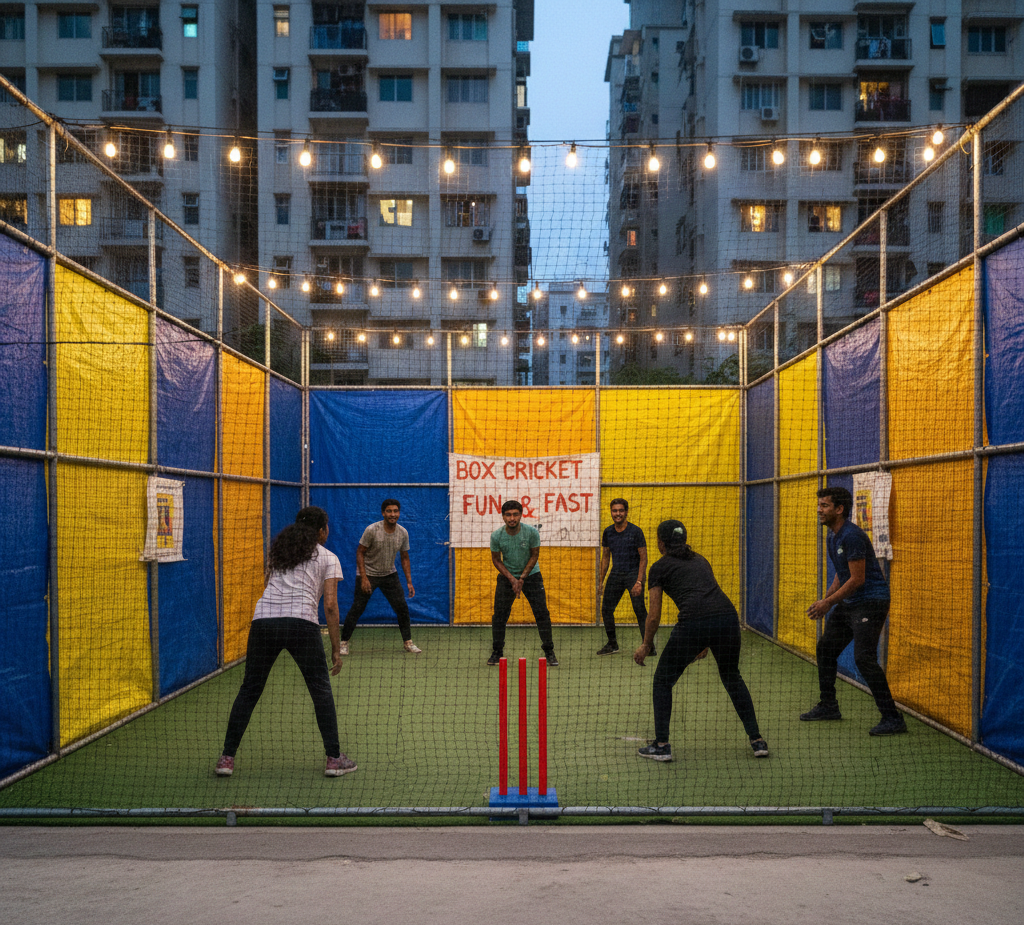
Introduction to Box Cricket
-
Definition of box cricket and its uniqueness compared to traditional cricket.
-
Origins and rise in popularity in urban areas.
-
Distinction between box cricket and street or backyard cricket.
-
Overview of rules, playing area, and player engagement.
-
Why box cricket has become a trend among youth and professional cricketers.
2. History and Evolution of Box Cricket
-
Early forms of indoor and small-scale cricket.
-
How box cricket evolved in India, UK, Australia, and other cricket-loving nations.
-
Role of urbanization and limited space in its growth.
-
Milestones in organized box cricket events.
-
Influence of media, TV, and online leagues in popularizing box cricket.
3. Playing Area and Setup
-
Dimensions of a standard box cricket court:
-
Length, width, and height restrictions.
-
-
Indoor vs outdoor box cricket arenas.
-
Types of walls and fencing:
-
Glass walls, net walls, or padded boundaries.
-
-
Flooring and surface types:
-
Synthetic turf, artificial grass, concrete, or rubberized mats.
-
-
Lighting considerations for indoor arenas.
4. Teams and Player Composition
-
Standard team size: 6-8 players per side.
-
Player roles and positions:
-
Batsmen, bowlers, fielders.
-
-
Substitutions and rotation rules.
-
Age groups and gender inclusivity.
-
Professional and amateur player participation.
5. Rules of Box Cricket
-
Simplified compared to traditional cricket.
-
Batting rules:
-
Scoring zones (walls, boundaries, and wickets).
-
No-ball, wide, and out-of-bound rules.
-
-
Bowling regulations:
-
Over limits, delivery styles, and no-bounce rules.
-
-
Fielding restrictions:
-
Wall rebounds, catching, and stopping the ball.
-
-
Game duration and innings structure:
-
Usually 6-8 overs per side.
-
-
Tie-breaker rules and super overs.
6. Equipment Used
-
Cricket bats:
-
Standard vs lightweight bats.
-
-
Balls:
-
Soft balls, tennis balls, or low-bounce cricket balls.
-
-
Protective gear:
-
Helmets, gloves, pads (optional depending on league).
-
-
Safety features in arena construction.
7. Formats and Variations
-
Standard box cricket.
-
6-a-side, 8-a-side, and mini leagues.
-
Indoor vs outdoor formats.
-
Rapid or “powerplay” versions.
-
Fun variants for schools, colleges, and corporate events.
8. Strategies and Gameplay
-
Batting strategies:
-
Utilizing walls for runs.
-
Targeting gaps in fielding zones.
-
-
Bowling strategies:
-
Yorkers, spin, and bounce variations.
-
-
Fielding strategies:
-
Zone defense, wall anticipation.
-
-
Importance of agility and reaction time.
-
Game planning in limited space scenarios.
9. Training and Fitness for Box Cricket
-
Physical benefits: agility, reflexes, hand-eye coordination.
-
Recommended fitness drills for players.
-
Injury prevention tips.
-
Differences from traditional cricket training.
-
Mental and strategic preparation.
10. Box Cricket Leagues and Competitions
-
Rise of professional box cricket leagues in India and abroad.
-
Example leagues: Box Cricket League (BCL) and regional tournaments.
-
Celebrity and professional player participation.
-
Sponsorship, media coverage, and fan engagement.
-
Grassroots and school-level competitions.
11. Benefits of Box Cricket
-
Encourages urban participation with limited space.
-
Improves fitness, coordination, and team skills.
-
Social interaction and community building.
-
Cost-effective compared to full-scale cricket grounds.
-
Promotes inclusivity and gender equality in sports.
12. Challenges and Safety Considerations
-
Injury risks in confined spaces.
-
Quality control of nets, walls, and flooring.
-
Managing crowd and player behavior.
-
Weather considerations for outdoor arenas.
-
Regulatory compliance and insurance.
13. Business and Entrepreneurship Opportunities
-
Opening a box cricket academy or arena.
-
Franchise and league-based business models.
-
Marketing and membership strategies.
-
Equipment and merchandise sales.
-
Event management and corporate tie-ups.
14. Cultural Impact
-
Influence of TV and social media.
-
Box cricket as an urban lifestyle trend.
-
Celebrity players and popular culture.
-
Influence on school sports and community fitness.
15. Future of Box Cricket
-
Expansion into rural and international markets.
-
Technological integration:
-
Scoreboards, live streaming, and AI-based player analysis.
-
-
Environmental considerations:
-
Eco-friendly arenas and sustainable equipment.
-
-
Potential for e-sports crossover and virtual cricket simulations.
16. Conclusion
-
Recap of box cricket’s significance, rules, and growth.
-
Why box cricket is ideal for urban players.
-
Long-term benefits for fitness, entertainment, and community sports.
-
Encouragement for wider adoption in schools, clubs, and recreational spaces.