
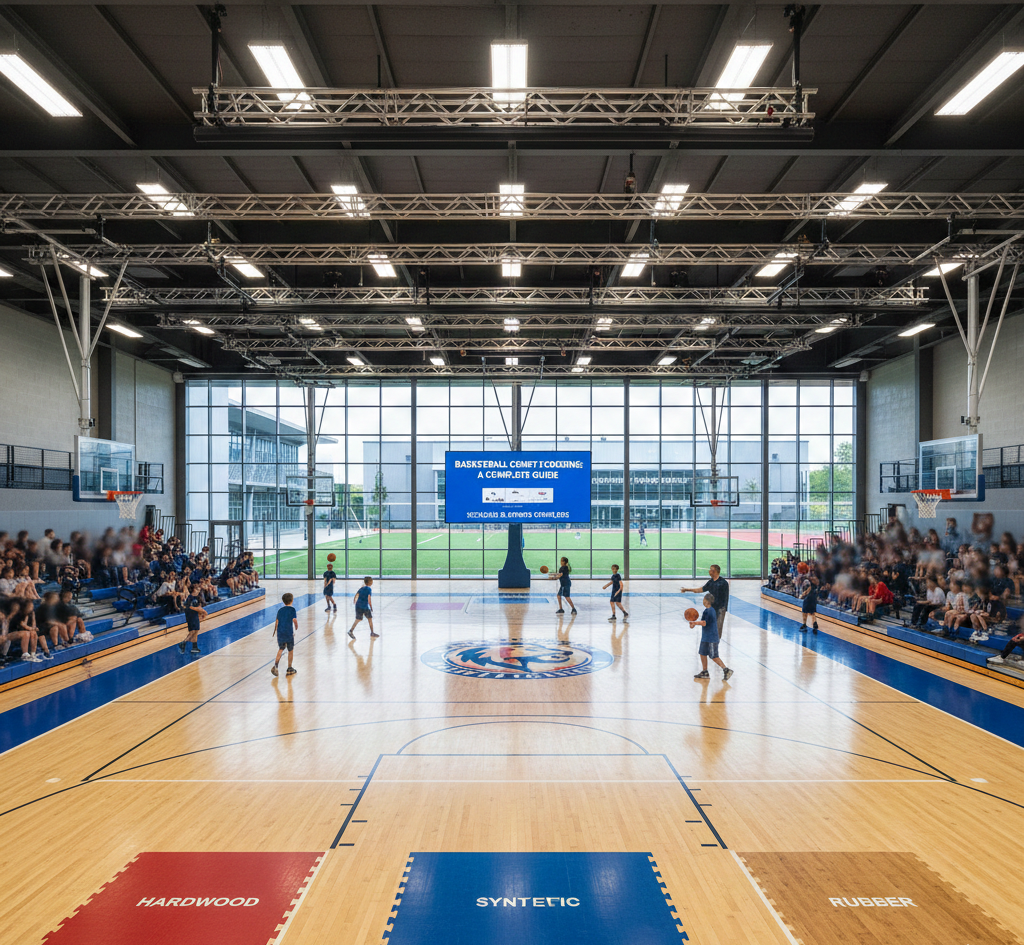
Basketball is one of the most popular sports in schools, colleges, and sports complexes worldwide. A well-designed basketball court not only enhances player performance but also ensures safety, durability, and long-term cost efficiency. One of the most critical elements of any basketball facility is the court flooring. Choosing the right basketball court flooring for schools and sports complexes can significantly impact gameplay quality, injury prevention, and maintenance costs.
This comprehensive guide explores different types of basketball court flooring, key selection factors, installation considerations, maintenance tips, and frequently asked questions to help institutions make informed decisions.
Importance of Quality Basketball Court Flooring
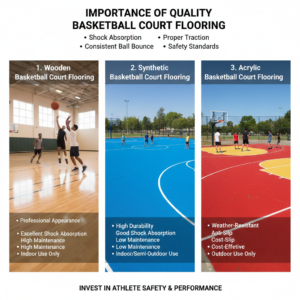
Basketball involves constant running, jumping, quick direction changes, and high-impact landings. Poor flooring can lead to injuries such as ankle sprains, knee strain, and stress fractures. High-quality basketball court flooring offers:
-
Shock absorption to reduce impact stress
-
Proper traction to prevent slipping
-
Consistent ball bounce for professional gameplay
-
Long-term durability under heavy foot traffic
-
Compliance with sports safety standards
For schools and sports complexes, investing in the right flooring is essential for athlete safety, performance, and institutional reputation.
Types of Basketball Court Flooring
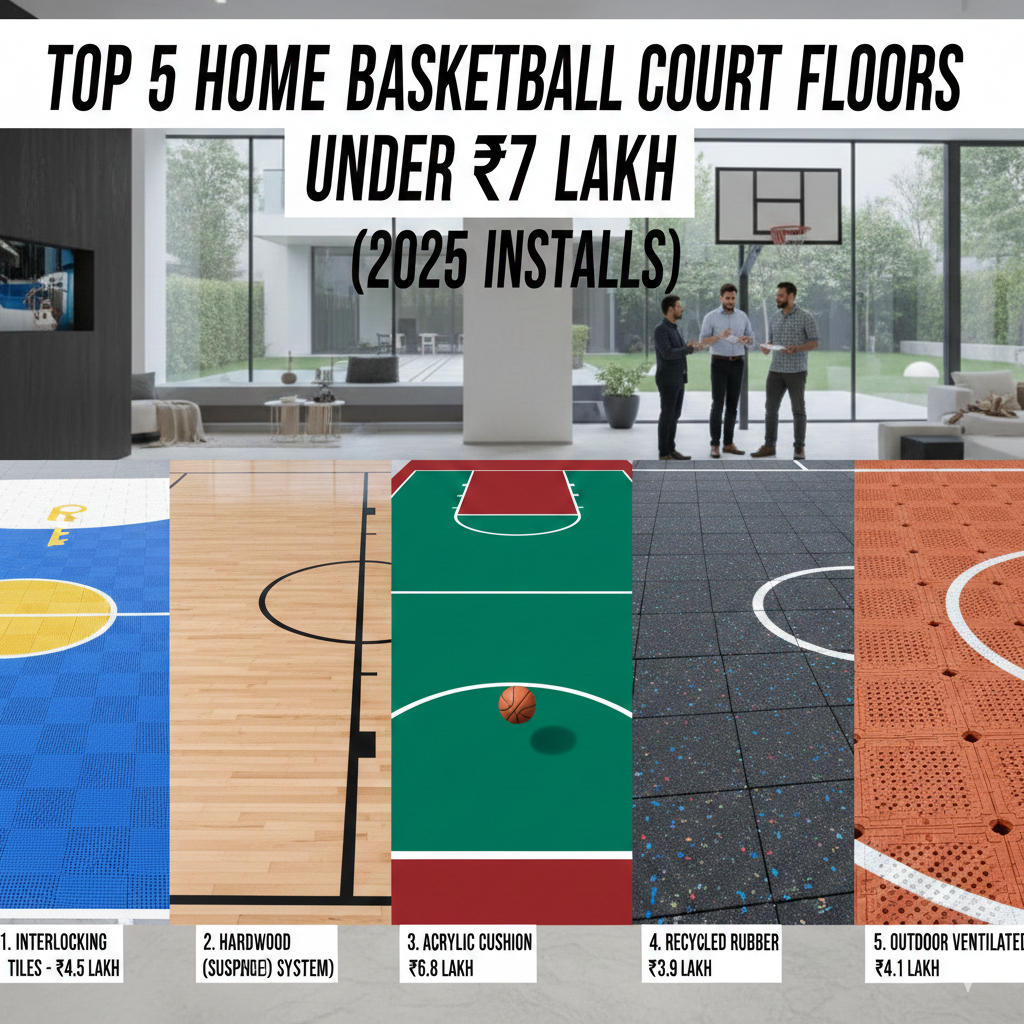
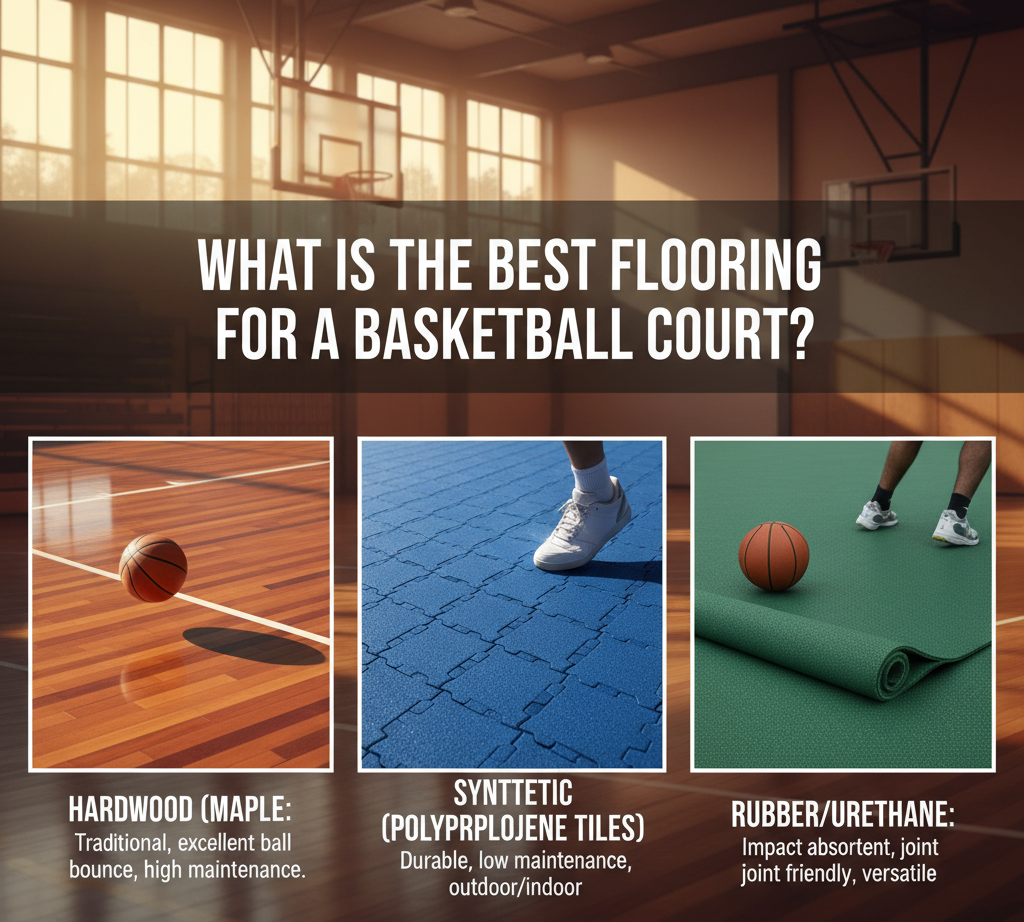
1. Wooden Basketball Court Flooring
Hardwood flooring, especially maple wood, is the traditional and most preferred surface for professional and indoor basketball courts.
Advantages:
-
Excellent shock absorption and ball response
-
Professional appearance and feel
-
Ideal for indoor sports complexes and school gymnasiums
Limitations:
-
Higher installation and maintenance costs
-
Sensitive to moisture and humidity
-
Requires regular polishing and refinishing
Wooden basketball flooring is best suited for indoor courts with controlled environments.
2. Synthetic Basketball Court Flooring
Synthetic flooring materials such as PVC, PU (polyurethane), and vinyl are widely used in schools and multi-purpose sports complexes.
Advantages:
-
High durability and wear resistance
-
Good shock absorption and slip resistance
-
Low maintenance compared to wooden floors
-
Suitable for both indoor and semi-outdoor use
Limitations:
-
Slightly less premium feel compared to hardwood
-
Quality varies depending on material grade
Synthetic basketball court flooring is a cost-effective and versatile option for educational institutions.
3. Acrylic Basketball Court Flooring
Acrylic flooring systems are commonly used for outdoor basketball courts in schools, colleges, and community sports areas.
Advantages:
-
Weather-resistant and UV-stable
-
Anti-slip textured surface
-
Long-lasting color and performance
-
Cost-effective for large outdoor courts
Limitations:
-
Limited shock absorption compared to indoor floors
-
Not ideal for professional indoor tournaments
Acrylic basketball court flooring is ideal for open playgrounds and outdoor sports complexes.
4. Modular Interlocking Sports Flooring
Modular sports flooring systems consist of interlocking tiles made from high-impact polypropylene.
Advantages:
-
Quick installation and easy replacement
-
Portable and customizable designs
-
Excellent drainage for outdoor courts
-
Minimal maintenance required
Limitations:
-
Higher upfront cost than acrylic coatings
-
Ball bounce may vary by tile quality
Modular basketball court flooring is increasingly popular in schools for both temporary and permanent courts.
Key Factors to Consider When Choosing Basketball Court Flooring
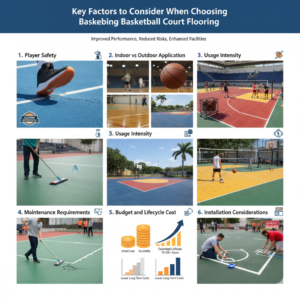
1. Player Safety
Safety should always be the top priority. Look for flooring with:
-
Shock-absorbing layers
-
Anti-slip surface texture
-
Certified sports performance standards
2. Indoor vs Outdoor Application
-
Indoor courts require controlled, cushioned flooring
-
Outdoor courts need weather-resistant and UV-stable surfaces
3. Usage Intensity
Schools and sports complexes experience heavy daily usage. Flooring should withstand:
-
High foot traffic
-
Sports equipment movement
-
Multi-sport activities
4. Maintenance Requirements
Low-maintenance flooring reduces long-term operational costs. Consider:
-
Ease of cleaning
-
Resistance to stains and moisture
-
Repair and replacement simplicity
5. Budget and Lifecycle Cost
Initial cost should be evaluated alongside:
-
Durability
-
Maintenance expenses
-
Expected lifespan
Installation Considerations
Proper installation is critical for basketball court performance and longevity.
-
Subfloor preparation must ensure a level and stable base
-
Expansion gaps are essential for temperature changes
-
Line marking should meet standard basketball dimensions
-
Professional installation ensures compliance with safety standards
For schools, installation should ideally be scheduled during vacations to avoid disruption.
Maintenance Tips for Basketball Court Flooring
Regular maintenance keeps the court safe and visually appealing:
-
Daily dry mopping to remove dust
-
Weekly damp cleaning with approved cleaners
-
Immediate removal of spills to prevent damage
-
Periodic inspection for cracks or wear
-
Recoating or resurfacing as recommended by flooring type
Well-maintained basketball court flooring can last 10–20 years or more, depending on usage and material.
Benefits of Investing in High-Quality Basketball Court Flooring
-
Improved student and athlete performance
-
Reduced injury risks
-
Enhanced facility aesthetics
-
Lower long-term maintenance costs
-
Increased facility utilization and reputation
For sports complexes, premium flooring can also attract tournaments, training camps, and community events.
Frequently Asked Questions (FAQ)
1. What is the best basketball court flooring for schools?
Synthetic and modular basketball court flooring are ideal for schools due to their durability, safety features, and low maintenance requirements.
2. Which flooring is best for outdoor basketball courts?
Acrylic and modular interlocking flooring systems are best suited for outdoor basketball courts because they are weather-resistant and anti-slip.
3. How long does basketball court flooring last?
Depending on the material and maintenance, basketball court flooring can last between 8 to 25 years.
4. Is wooden basketball flooring suitable for all climates?
Wooden flooring is best for indoor courts with controlled temperature and humidity. It is not recommended for outdoor or high-moisture environments.
5. How much maintenance does a basketball court require?
Routine cleaning and periodic inspections are sufficient. Wooden floors may require polishing and refinishing, while synthetic floors need minimal upkeep.
6. Can one basketball court be used for multiple sports?
Yes. Multi-purpose sports flooring systems are designed to support basketball, volleyball, badminton, and other indoor sports.
7. Does basketball court flooring affect ball bounce?
Yes. High-quality sports flooring ensures consistent ball rebound, which is essential for fair and professional gameplay.
Conclusion
Choosing the right basketball court flooring for schools and sports complexes is a long-term investment in safety, performance, and facility excellence. Whether opting for traditional wooden floors, modern synthetic systems, outdoor acrylic coatings, or modular tiles, decision-makers should consider usage, environment, budget, and maintenance needs.
A well-planned basketball court flooring system not only supports athletic development but also enhances the overall sporting culture within schools and sports complexes.