
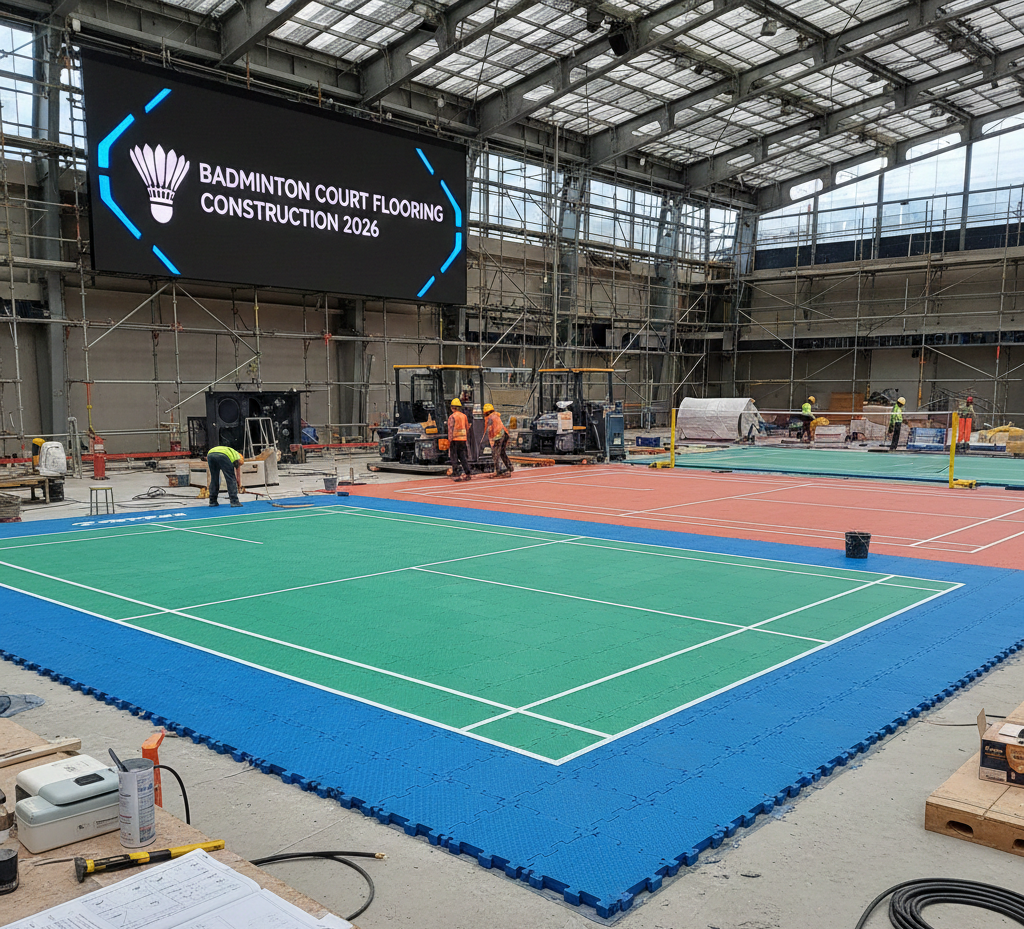
Badminton is no longer just a recreational sport; it has become a professional competitive game requiring top-notch facilities and world-class infrastructure. Whether you are a sports academy, school, club, or an individual looking to build a high-performance court, choosing the best badminton court flooring is critical to ensure player safety, durability, and optimal performance. In 2026, advancements in sports flooring technology have revolutionized how courts are constructed, combining safety, aesthetics, and longevity. In this complete guide, we’ll cover everything you need to know about badminton court flooring construction, including types of flooring, installation techniques, maintenance, and trends.
Why Badminton Court Flooring Matters
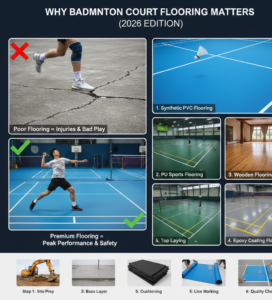
The flooring of a badminton court is more than just a surface—it directly impacts player performance, safety, and the lifespan of the court. A poorly constructed court can lead to injuries, uneven play, and increased maintenance costs. The ideal badminton court flooring provides:
-
Shock absorption to reduce stress on knees, ankles, and joints.
-
Slip resistance for safe movement and quick directional changes.
-
Durability to withstand heavy usage over time.
-
Professional aesthetics that enhance the look of indoor and outdoor facilities.
According to sports engineers, investing in premium badminton flooring ensures better gameplay, reduces injury risks, and increases the overall value of your facility.
Types of Badminton Court Flooring in 2026
In 2026, several advanced flooring options are available for professional and recreational badminton courts. Choosing the right type depends on your budget, indoor/outdoor environment, and usage intensity.
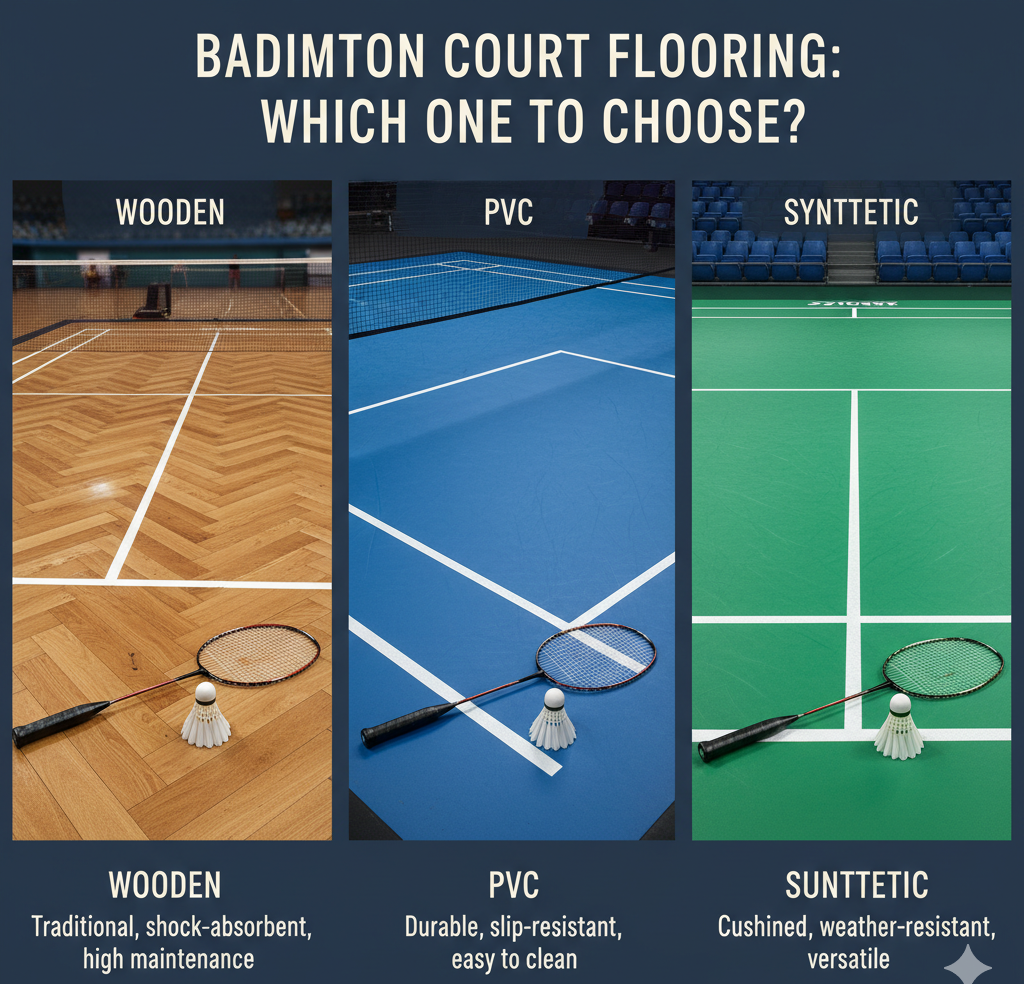
1. Synthetic PVC Flooring
PVC (Polyvinyl Chloride) flooring is the most popular choice for indoor badminton courts due to its combination of durability and performance. Features include:
-
Smooth, matte, and anti-slip finish.
-
Excellent shock absorption for high-intensity gameplay.
-
Available in vibrant colors like green, blue, and red.
-
Low maintenance and easy cleaning.
PVC courts are widely used in sports academies, multi-sport complexes, and international tournaments.
2. PU (Polyurethane) Sports Flooring
PU flooring is gaining traction in modern badminton facilities due to its premium performance characteristics:
-
Seamless surface that prevents dirt accumulation.
-
Superior elasticity and shock absorption.
-
High resistance to wear and tear.
-
Suitable for multi-purpose sports halls, including basketball and volleyball.
PU courts are ideal for high-performance professional centers and multi-use indoor facilities.
3. Wooden Flooring
Traditional wooden flooring continues to be a symbol of quality in badminton courts. Engineered wood or maple is commonly used. Features include:
-
Natural shock absorption and resilience.
-
Elegant aesthetics and warm finish.
-
Excellent for professional-level tournaments.
-
Requires regular maintenance and proper humidity control.
Wooden courts are perfect for elite clubs, national training centers, and international competitions.
4. Epoxy Coating Flooring
Epoxy-coated courts are durable and cost-effective solutions for high-traffic areas. Characteristics include:
-
Tough, seamless surface.
-
Resistant to scratches, stains, and moisture.
-
Easy to clean and maintain.
-
Often used in school sports halls or temporary setups.
Step-by-Step Badminton Court Flooring Construction Process
Building a professional badminton court involves multiple layers and precise installation techniques. Here’s a detailed step-by-step guide for 2026-standard construction:
Site Preparation
-
Select a level ground with proper drainage for outdoor courts.
-
Clear debris, rocks, or uneven areas to ensure a smooth base.
-
Conduct soil or ground testing for outdoor courts to prevent future cracks.
Base Layer Installation
-
For indoor courts, a reinforced concrete slab with proper curing is necessary.
-
For outdoor courts, consider asphalt or concrete base with moisture-proofing.
-
The base layer ensures stability and even weight distribution across the court.
Cushioning Layer Installation
-
Install a shock-absorbing underlay to reduce joint impact.
-
Materials include foam, rubber, or specialized sports padding.
-
Proper cushioning prevents injuries and increases player comfort.
Top Performance Layer
-
Lay the selected surface: PVC, PU, or wooden planks.
-
Ensure seamless alignment for wooden flooring or uniform adhesion for synthetic floors.
-
For multi-layered synthetic floors, roll out each sheet carefully, removing air bubbles.
Line Marking and Finishing
-
Accurately mark court boundaries and service lines using sports-grade paint or inlaid tape.
-
Ensure compliance with Badminton World Federation (BWF) standards:
-
Court length: 13.4 meters
-
Court width: 6.1 meters (doubles), 5.18 meters (singles)
-
Net height: 1.55 meters at edges
-
-
Install additional features like wall padding, LED lighting, or ventilation systems for indoor facilities.
Inspection and Quality Check
-
Inspect the surface for evenness, shock absorption, and slip resistance.
-
Test bounce and grip using standardized equipment.
-
Perform safety checks for moisture, adhesives, and edge finishing.
Maintenance Tips for Longevity
Even the best badminton court flooring requires proper maintenance to retain its performance:
-
Regular Cleaning – Sweep or mop to remove dust and debris.
-
Avoid Sharp Objects – Prevent scratches from shoes or equipment.
-
Humidity Control – Especially for wooden floors, maintain indoor humidity.
-
Periodic Inspection – Check for peeling, uneven spots, or worn-out areas.
-
Professional Servicing – Recoating or refinishing PU and PVC floors every few years.
Choosing the Right Flooring Contractor
Selecting the right contractor is as crucial as choosing the flooring type. In 2026, professional badminton court contractors offer:
-
End-to-end solutions: site survey, design, material supply, and installation.
-
Experience with international standard courts.
-
After-sales support for maintenance and warranty.
-
Expertise in both indoor and outdoor construction.
Always check previous projects, client reviews, and certifications before finalizing a contractor.
Trends in Badminton Court Flooring 2026
Modern badminton court construction is evolving rapidly. Some trends include:
-
Eco-friendly materials: Sustainable PU and PVC options with low VOC emissions.
-
Shock-absorption technology: Advanced cushioning layers reducing joint stress.
-
Smart courts: LED in-floor sensors for training analytics and player performance tracking.
-
Custom aesthetics: Unique color schemes, branding, and integrated lighting systems.
These innovations are making badminton facilities safer, more visually appealing, and technologically advanced.
Conclusion
Investing in the best badminton court flooring construction in 2026 ensures safety, high performance, and long-term durability.
Frequently Asked Questions (FAQ) – Badminton Court Flooring 2026
1. What is the best flooring for a badminton court?
The best flooring depends on usage and budget.
2. What are the standard dimensions of a badminton court?
-
Court length: 13.4 meters
-
Court width: 6.1 meters for doubles, 5.18 meters for singles
-
Net height: 1.55 meters at edges and 1.524 meters at the center
3. How long does it take to construct a badminton court?
Construction time varies based on flooring type and preparation:
-
Synthetic PVC/PU: 7–10 days for indoor courts
-
Wooden flooring: 10–15 days including acclimatization and finishing
-
Epoxy coating: 5–7 days for small or school courts
4. Can badminton courts be built outdoors?
Yes, outdoor courts are commonly constructed using asphalt or concrete base layers topped with synthetic flooring like PVC or PU. Outdoor courts require proper drainage, UV-resistant materials, and weather-proof finishes to maintain durability.
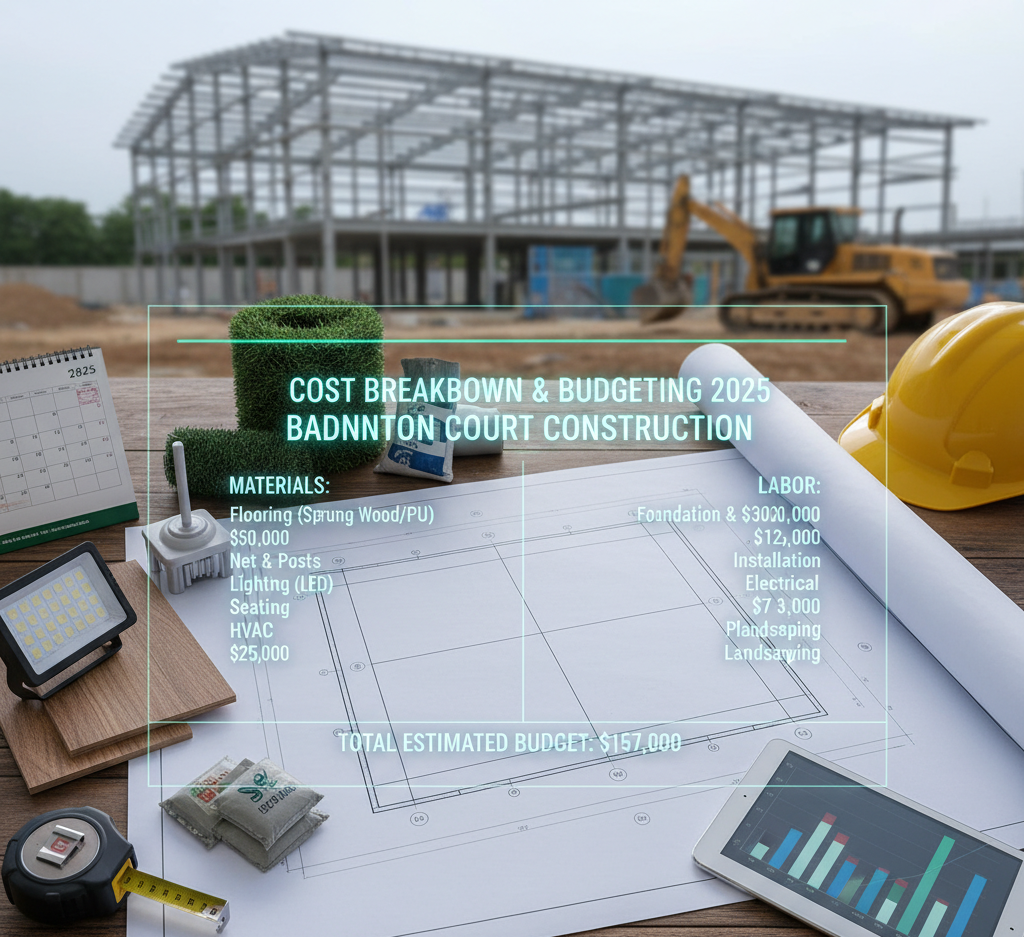
5. How much does it cost to build a professional badminton court?
Cost depends on flooring type, materials, and labor. Approximate estimates for 2026:
-
PVC flooring court: ₹7–12 lakh
-
PU flooring court: ₹10–15 lakh
-
Wooden flooring court: ₹15–25 lakh
-
Additional costs include line marking, installation, lighting, and accessories.
6. How do I maintain a badminton court?
-
Regular cleaning: Sweep or mop to remove dust and dirt
-
Avoid sharp objects: Prevent scratches from shoes or equipment
-
Check flooring regularly: Look for peeling or uneven areas
-
Control humidity: Essential for wooden courts to prevent warping
-
Professional servicing: Recoat PU/PVC floors every few years
7. What is the lifespan of a badminton court?
-
PVC/PU flooring: 10–15 years with proper maintenance
-
Wooden flooring: 15–20 years, depending on use and humidity control
-
Epoxy-coated courts: 5–10 years for high-traffic use
9. Can a court be multi-purpose for other sports?
Yes, PU and PVC flooring options allow courts to be multi-use for basketball, volleyball, and indoor fitness activities, making them ideal for schools, gyms, and sports complexes.
10. How do I choose the right contractor for badminton court construction?
-
Check previous projects and client reviews
-
Ensure experience with BWF standard courts
-
Confirm after-sales support and warranty
-
Verify expertise in indoor/outdoor construction and maintenance services