


introduction
Cricket has always been more than a sport—it is a spirit, an emotion, and a cultural identity that binds millions together. But as our cities grew crowded and traditional playgrounds shrank, passionate players needed a faster, more compact, more adrenaline-filled version of their favorite sport.
This demand led to the spectacular rise of Box Cricket—a modern, energetic adaptation of cricket designed for small courts, quick matches, and exhilarating action.
Today, box cricket isn’t just a pastime.
It is:
✔ A fitness activity
✔ A corporate bonding tool
✔ A competitive sport
✔ A recreational experience
✔ A fast-growing business opportunity
From local sports complexes to premium cricket arenas, box cricket has carved out a huge space in India’s sporting culture—and is rapidly catching on worldwide.
This detailed PlayGloba Blog edition is your complete 12,000-word guide to everything related to box cricket—its rules, setup, gameplay, equipment, strategy, and future.
Let’s begin the deep dive.
2. What Is Box Cricket?
Box cricket is a modified, fast-paced version of cricket played in a small, enclosed arena or “box” made using nets or walls. The enclosure prevents the ball from going out, which means nonstop gameplay, reduced breaks, and dynamic action.
Key Characteristics of Box Cricket
| Feature | Description |
|---|---|
| Playing Area | Small enclosed box with nets or walls |
| Team Size | Usually 6–8 players per team |
| Overs | 6–10 overs per side |
| Ball Used | Soft cricket ball, tennis ball, or lightweight rubber ball |
| Scoring | Includes wall rebounds, zones, bonus runs |
| Out Rules | Modified to suit shorter format |
Box cricket’s charm lies in its simplicity. Anyone—even without cricket experience—can participate and enjoy it. It requires limited space, minimal equipment, and quick setup, making it ideal for schools, societies, offices, and sports arenas.
3. The Rise of Box Cricket Across India & the World
Cricket’s massive popularity in South Asia created the perfect ecosystem for this new format. Box cricket started gaining momentum in early 2010s when sports complexes began integrating turf courts and enclosed nets for safer practice.
But the boom truly accelerated when:
1. Corporate Companies Adopted Box Cricket
Companies found it perfect for:
-
Team-building events
-
Corporate sports tournaments
-
Employee wellness programs
-
Cross-department socialization
2. Celebrity Box Cricket Leagues Became Popular
The “Box Cricket League (BCL)”—featuring film and TV stars—made box cricket a mainstream entertainment product. Millions watched as celebrities played in dramatic T20-style matches within nets.
3. Urbanization Shrunk Playgrounds
With fewer open fields, box cricket was the only convenient way to play cricket in cities like Mumbai, Bangalore, Delhi, Pune, and Hyderabad.
4. Sports Venues Realized Its Business Potential
For arena owners, box cricket offered:
-
Quick return on investment
-
High demand
-
Continuous hourly bookings
-
Corporate tie-ups
-
Weekend tournaments
Today, box cricket arenas exist in:
-
India
-
UAE
-
Australia
-
UK
-
Singapore
-
South Africa
-
Bangladesh
The trend is still growing, and its peak is yet to come.
Box Cricket Setup: Court, Turf & Arena Design
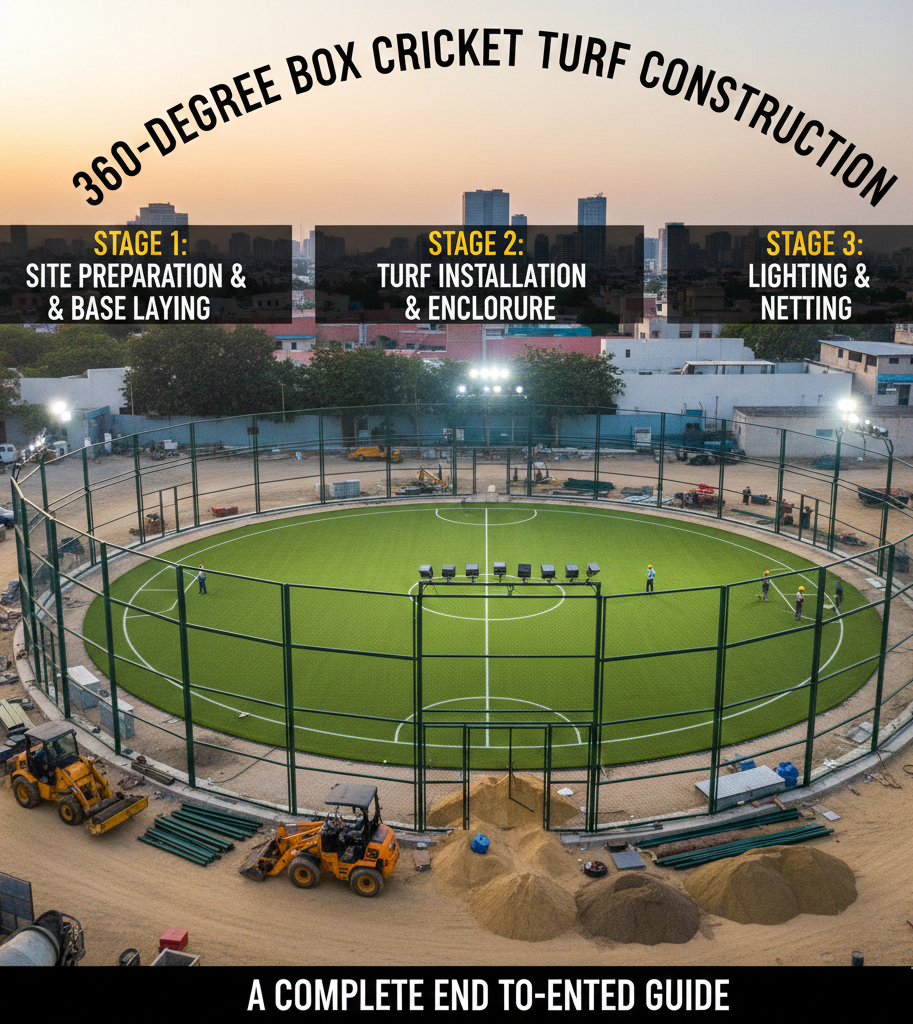
One of the reasons box cricket has become so popular is the flexibility in setting up a court. While traditional cricket demands a massive ground, box cricket requires only a compact, enclosed space with the right structure. The design of the playing space influences not only safety but also the style of gameplay. Players often tailor their strategies based on the size of the court, the height of the nets, and the layout of scoring zones.
Let’s explore this in detail.
5.1 Standard Dimensions of a Box Cricket Arena
Although box cricket does not have universally enforced dimensions, most professional arenas follow certain standardized measurements for consistency:
| Area | Typical Dimensions |
|---|---|
| Length | 60–90 feet |
| Width | 25–35 feet |
| Height of nets/walls | 12–20 feet |
5.2 Types of Arena Structures
Box cricket courts mainly fall into four design categories:
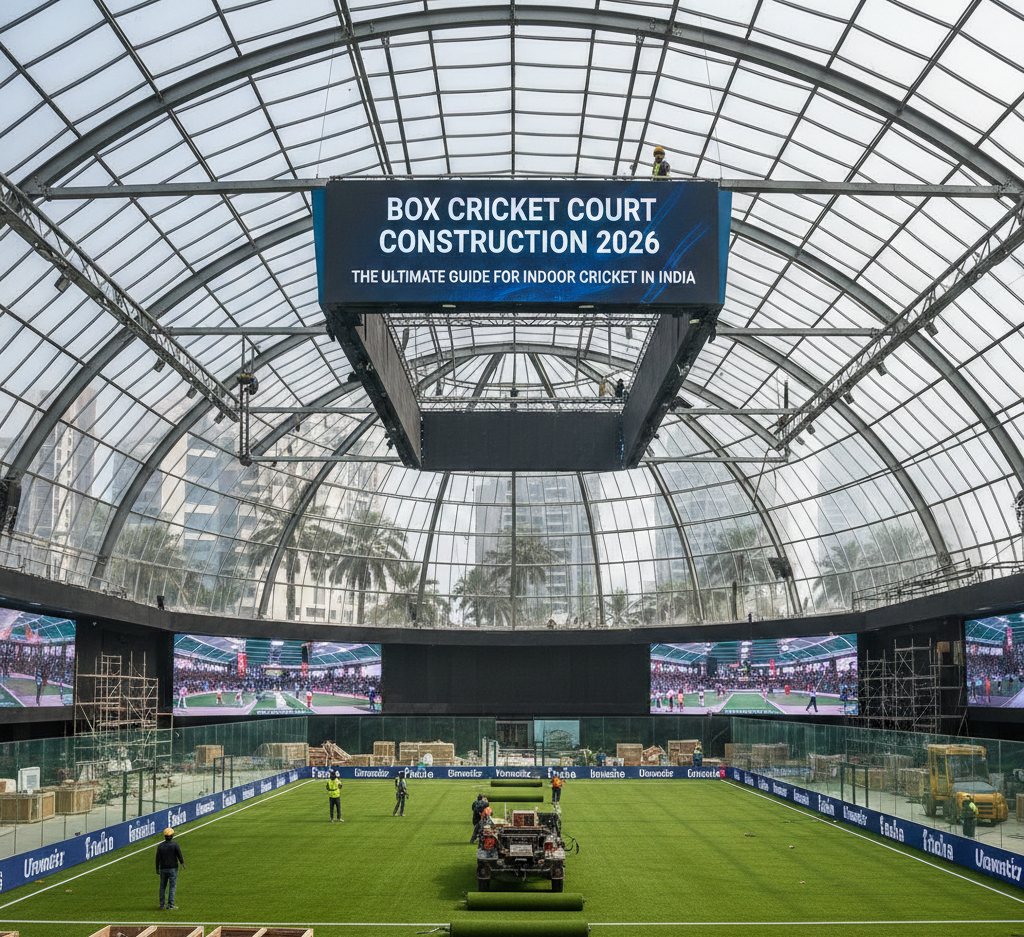
A. Fully Indoor Arenas
-
Located inside closed buildings or sports halls
-
Weather-proof
-
Great for corporate leagues and night tournaments
-
Typically equipped with LED lighting and climate control
Indoor arenas offer the fastest gameplay due to even surfaces and controlled bounce.
B. Semi-Indoor Arenas
-
Roofed but with open sides
-
Popular in cities with high rainfall
-
Players enjoy a mix of natural ventilation and protection
C. Outdoor Turf Arenas
-
Open to the sky
-
Surrounded by nets from all sides
-
Natural light enhances visibility
-
Preferred for large community tournaments
D. Rooftop Arenas
A booming trend in metropolitan areas where rooftop spaces on malls, towers, and office buildings are converted into premium sports venues.
They offer:
-
Great city views
-
Strong artificial turf
-
Reinforced fencing for safety
5.3 Flooring and Surface Options
Popular flooring types include:
A. Artificial Turf
The most widely used surface.
Benefits:
-
Soft on joints
-
Supports controlled bounce
-
Works well in enclosed nets
-
Weather-resistant
High-density turfs are preferred for professional leagues.
4. Why Box Cricket Became a Cultural Phenomenon
✔ Fast, Thrilling, High-Adrenaline Format
A full cricket match takes hours.
Box cricket compresses the intensity into 30–60 minutes.
Every ball matters.
>Every wicket changes the game.
✔ Playable Anywhere
Box cricket suits:
-
Rooftop arenas
-
Indoor sports halls
-
Small turf courts
-
Basement recreation zones
In urban areas, accessibility is everything—and box cricket wins.
✔ Safe & Controlled Environment
-
The ball doesn’t break windows
-
There’s zero traffic risk
-
Weather impact is minimal
-
Children can play safely
✔ Perfect for All Age Groups
Kids, adults, amateurs, professionals—everyone enjoys it.
✔ Community & Social Bonding
Box cricket has become a routine part of:
-
Weekends
-
Society events
-
School competitions
-
Birthday parties
-
Corporate tournaments
✔ Requires No Special Training
Anyone can pick up a bat and join.
✔ Entertainment + Fitness
It burns calories, boosts stamina, and improves reflexes—while keeping players entertained.
Conclusion
Box cricket has evolved from a simple urban pastime into a dynamic, structured, and highly engaging modern format of the sport. Its compact playing area, fast-paced rules, and inclusive nature have made it a preferred choice for cricket lovers across age groups, skill levels, and backgrounds.
As explored in this blog, the game’s appeal lies in its simplicity and excitement. The rules are straightforward enough for beginners to grasp quickly, yet thoughtfully designed to keep even seasoned players challenged. This blend of structure