
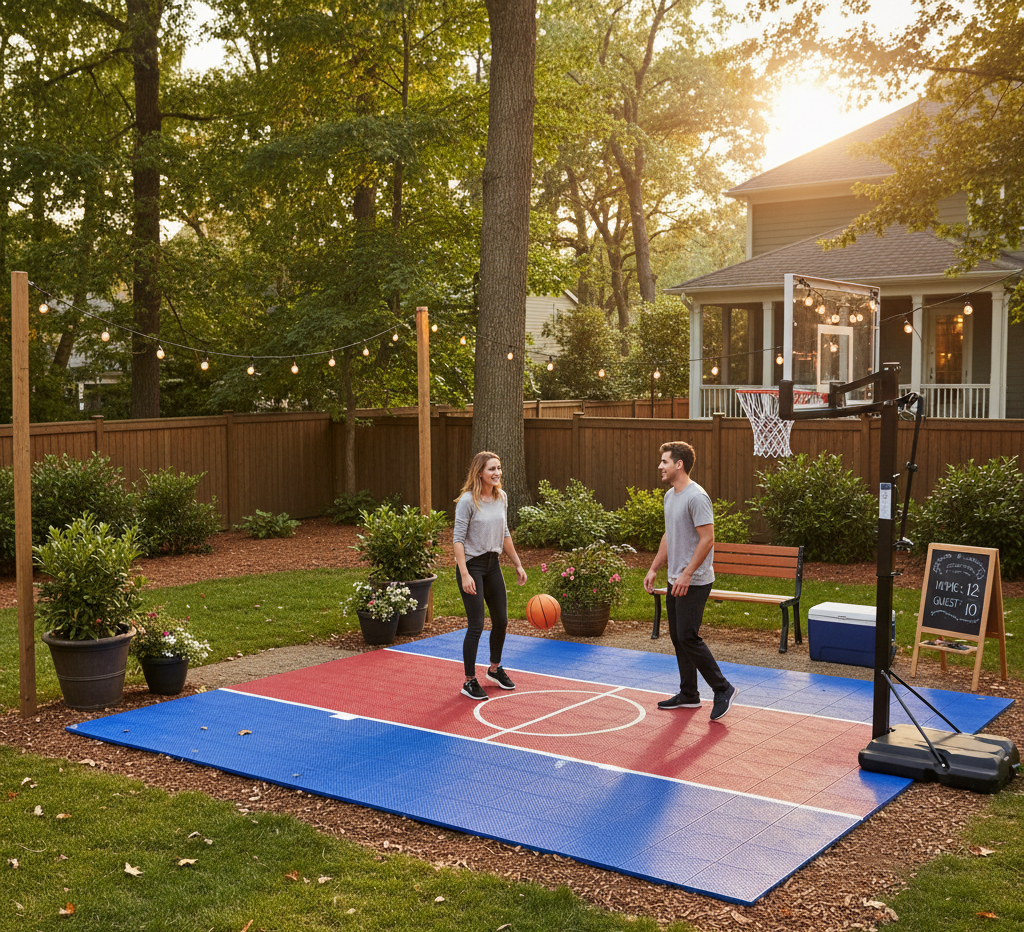
Building a backyard basketball court doesn’t always require pouring concrete or investing in expensive materials. With the right planning, surface selection, and layout, you can create a safe, durable, and enjoyable basketball space without concrete. A no-concrete backyard court is ideal for homeowners looking for a cost-effective, easy-to-install, and low-maintenance solution that still delivers a great playing experience.
Benefits of a Backyard Basketball Court Without Concrete
-
Cost-Effective: Avoiding concrete significantly reduces material and labor costs.
-
Easy Installation: DIY-friendly surfaces like modular tiles, asphalt alternatives, or synthetic turf can be installed quickly without heavy equipment.
-
Flexibility: You can design a court to fit any backyard size or shape. Modular surfaces also allow easy relocation or expansion.
-
Environmentally Friendly: No concrete means less impact on soil drainage and reduced carbon footprint.
-
Low Maintenance: Modern surface materials are weather-resistant, durable, and easy to clean.
Choosing the Right Surface
Several surfaces work well for a DIY backyard basketball court without concrete:
-
Interlocking Sports Tiles: Made from polypropylene or high-density plastic, these tiles snap together to form a smooth, non-slip surface. They are durable, easy to install, and provide good traction.
-
Asphalt or Crushed Stone Base: A compacted gravel or asphalt layer can serve as a stable base for tiles or synthetic surfaces without the need for concrete.
-
Synthetic Turf or Outdoor Rubber Mats: These options provide cushioning for joints and are ideal for homes looking for a softer, more forgiving playing surface.
-
Portable Courts: Pre-fabricated portable basketball courts with a shock-absorbent surface are an excellent option for temporary setups or rentals.
Planning Your Backyard Court
-
Measure Your Space: Decide on the court size. A full-size basketball court is 28 x 15 meters, but backyard courts can be customized to fit smaller spaces, often 14 x 7 meters or even half-court setups.
-
Level the Ground: Ensure the ground is flat and stable. A slight slope for drainage is acceptable, but avoid uneven surfaces that may affect gameplay.
-
Court Layout & Marking: Use chalk, removable paint, or the tile grid itself to mark boundaries, key areas, and free-throw lines.
-
Basketball Hoop Placement: Position a sturdy hoop or adjustable stand at the correct height (10 feet for standard play, lower for kids). Ensure a clear area around it for safety.
Installation Tips
-
Prepare the base by removing grass, rocks, or debris.
-
Compact the soil or gravel to create a stable foundation.
-
Lay modular tiles or rubber mats evenly, ensuring interlocking pieces are secure.
-
Assemble the hoop and backboard according to manufacturer instructions.
-
Test for evenness and traction before regular play.
Maintenance & Safety
-
Clean the court surface regularly to remove dirt and leaves.
-
Inspect tiles or mats for wear and replace damaged sections promptly.
-
Ensure the hoop remains stable and secure at all times.
-
Check for proper drainage to avoid water pooling after rain.
Conclusion
A DIY backyard basketball court without concrete is a practical, affordable, and fun solution for basketball enthusiasts of all ages. With the right surface, planning, and installation, you can enjoy a professional-like playing experience without the hassle of concrete work. Whether it’s for kids, family fun, or serious practice, a backyard court offers endless opportunities for fitness, recreation, and friendly competition.