
Basketball is more than a sport—it’s a symbol of teamwork, energy, and passion. As India’s sports culture continues to grow, the demand for high-quality basketball court construction has increased significantly. Whether for schools, colleges, housing societies, or commercial sports complexes, a well-built basketball court is essential for performance, safety, and long-term durability.
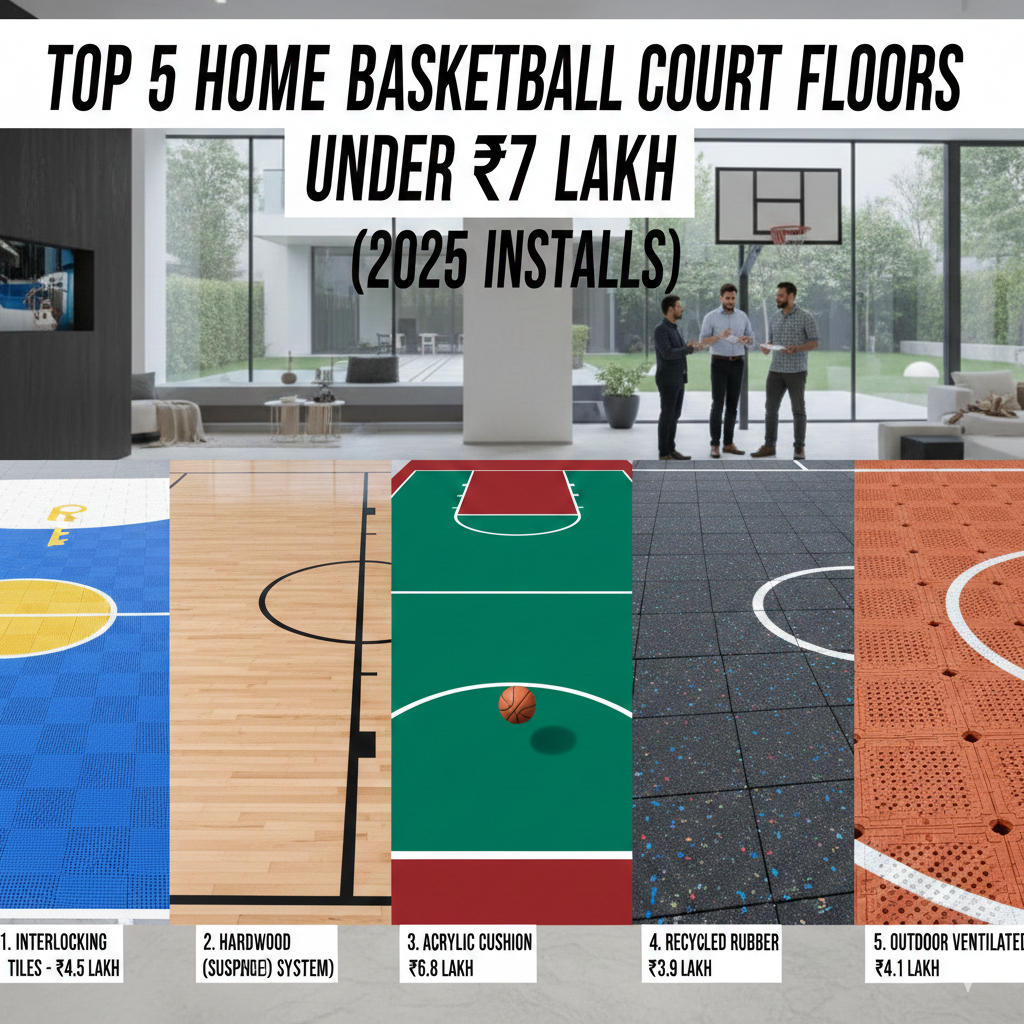
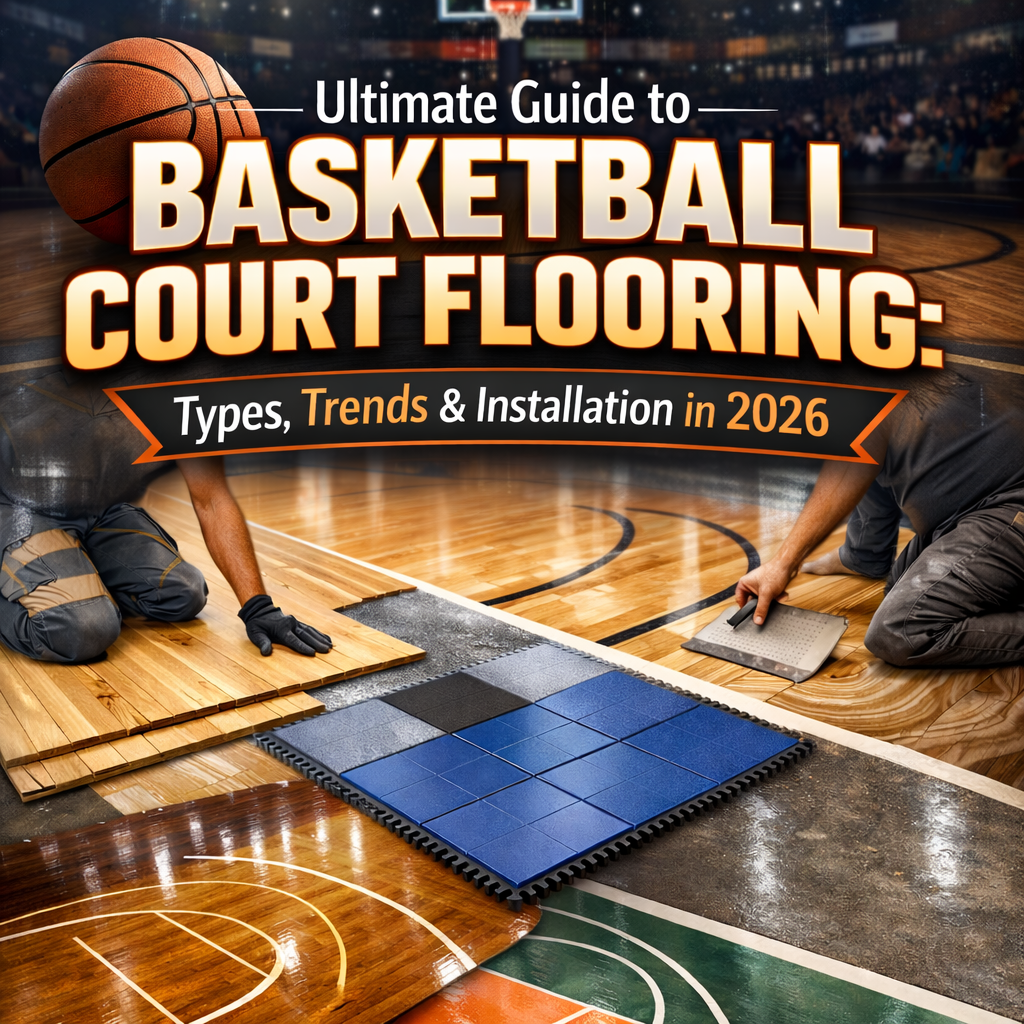
Modern basketball court construction involves advanced materials, smart engineering, and expert installation to meet international standards of playability and comfort. In this blog, we explore the Top 5 Basketball Court Construction Types and Techniques that define the future of basketball infrastructure.
1. Synthetic Basketball Court Construction – The All-Weather Favorite
Synthetic basketball courts have become the top choice for both indoor and outdoor installations because of their durability, low maintenance, and consistent performance. These courts are typically made using acrylic, polyurethane (PU), or EPDM rubber systems that provide excellent grip and shock absorption.
Key Features:
-
Perfect for outdoor weather conditions
-
UV-resistant and slip-proof surface
-
Excellent traction and player safety
-
Long-lasting performance with minimal upkeep
Why It’s Popular:
Synthetic courts offer uniform bounce, smooth movement, and superior comfort—all at an affordable cost. They are also highly customizable, allowing facility owners to choose different colors, markings, and logo designs.
Ideal For:
Schools, residential complexes, community centers, and multi-sport areas.
2. Wooden Basketball Court Construction – The Professional Standard
If you’ve ever stepped onto a professional basketball court, chances are you’ve played on a wooden surface. Known for its natural resilience, shock absorption, and aesthetic appeal, wooden courts remain the gold standard for indoor basketball arenas.
Key Features:
-
Made from premium-grade maple or teak wood
-
Provides perfect ball bounce and player comfort
-
Offers smooth finish and visual elegance
-
Long lifespan with proper maintenance
Why It’s Preferred:
Wooden courts are designed to handle intense gameplay and high-impact movement, providing superior joint protection for players. They are often used for competitive tournaments, indoor gyms, and professional training centers.
Ideal For:
Indoor stadiums, universities, and sports academies focused on high-performance basketball.
3. Modular Tile Basketball Court Construction – The Quick & Durable Option
Modular tile systems have revolutionized sports flooring technology. These are interlocking polypropylene tiles that can be easily assembled and disassembled, making them a popular choice for both permanent and temporary courts.
Key Features:
-
Fast installation with interlocking design
-
Can be relocated or reconfigured easily
-
Resistant to moisture and temperature variations
-
Low maintenance with long-term durability
Why It’s Popular:
This system is ideal for those who need flexibility and mobility without compromising performance. Modular tiles provide strong traction, superior drainage, and a uniform bounce similar to synthetic floors.
Ideal For:
Community sports centers, temporary event courts, and outdoor recreational spaces.
4. Concrete Basketball Court Construction – The Traditional & Cost-Effective Choice
Concrete basketball courts are among the most traditional forms of court construction, offering strength, longevity, and affordability. While they are not as forgiving on joints as modern synthetic or wooden floors, concrete surfaces are still widely used in public parks, schools, and urban playgrounds due to their simplicity and resilience.
Key Features:
-
Extremely strong and durable base
-
Cost-effective and easy to install
-
Low maintenance with high resistance to wear
-
Can be customized with acrylic coatings or paint
Why It’s Useful:
Concrete courts are perfect for high-traffic outdoor areas where durability is more important than comfort. When coated with a synthetic or acrylic top layer, they can achieve a professional finish with better grip and aesthetics.
Ideal For:
Outdoor playgrounds, municipal sports areas, and budget-conscious projects.
5. Asphalt Basketball Court Construction – The Outdoor Classic
Before synthetic systems gained popularity, asphalt basketball courts were the backbone of outdoor sports facilities. Even today, asphalt remains a preferred base for outdoor courts because of its affordability and ability to handle all-weather conditions.
Key Features:
-
Strong, weather-resistant base layer
-
Quick installation process
-
Can be finished with acrylic or PU coating
-
Supports heavy use and outdoor play
Why It’s Still Relevant:
When combined with an acrylic top coating, asphalt courts deliver a great balance between cost and performance. They offer excellent ball bounce and traction, making them ideal for community centers, schools, and sports clubs.
Ideal For:
Outdoor basketball facilities and multipurpose play zones.
Important Factors in Professional Basketball Court Construction
Building a basketball court is not just about laying flooring—it’s a process that requires engineering precision and sports science. Here are some key considerations every project should include:
1. Base Preparation
A strong base determines the court’s longevity. Proper excavation, leveling, and drainage systems prevent cracks and water accumulation.
2. Surface Material Selection
Choosing between synthetic, wooden, or modular systems depends on indoor/outdoor use, budget, and performance requirements.
3. Shock Absorption & Cushioning
High-quality underlays and padding layers reduce the impact on players’ joints, ensuring safety during high-intensity games.
4. Line Marking & Design
Accurate marking according to FIBA or NBA standards ensures fairness in play. Custom branding and color themes add visual appeal.
5. Lighting & Accessories
For evening play, LED floodlights and fencing systems enhance usability and safety. Proper lighting also supports professional-level matches.
6. Maintenance & Resurfacing
Every court needs periodic cleaning and resurfacing to maintain grip, bounce, and color consistency. Using protective coatings can extend lifespan by several years.
Advantages of Investing in a Quality Basketball Court
A well-constructed basketball court offers multiple long-term benefits, both functional and financial:
-
Enhances sports culture and physical activity in communities
-
Provides a safe and durable space for recreation
-
Adds property value to educational or residential facilities
-
Promotes youth engagement and local tournaments
-
Requires minimal annual maintenance when built correctly
Conclusion
The future of sports infrastructure in India is bright, and basketball is at the forefront of this transformation. From synthetic and wooden surfaces to modular and concrete systems, every type of basketball court construction serves a unique purpose—balancing performance, durability, and aesthetics