
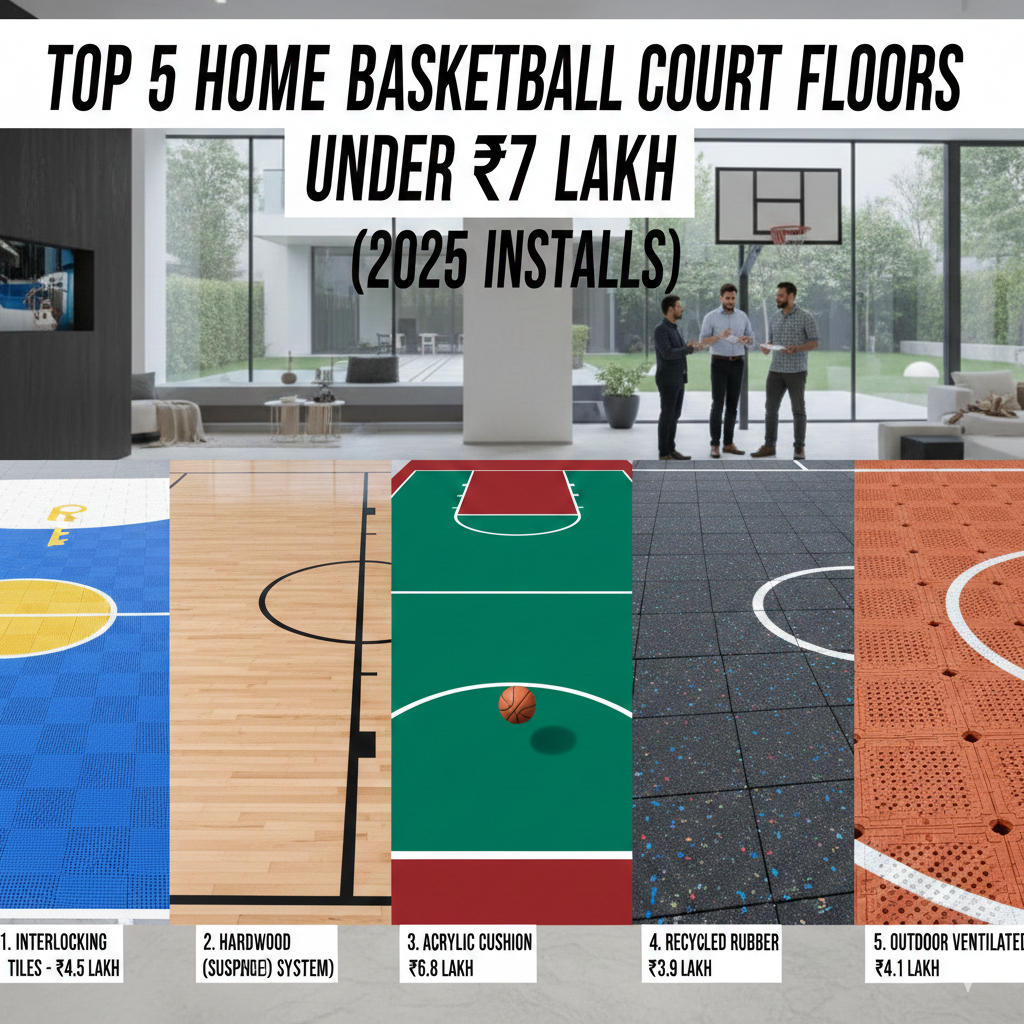
If you’re building a home basketball court in 2025 and want a great playing surface without blowing your budget, you’ll find several excellent options that balance performance, durability, and cost. Below are five flooring systems that can be installed for under ₹7,00,000, with realistic 2025 price estimates and practical buying advice.
Assumption used for pricing: estimates below assume a common home-court footprint of 50 ft × 30 ft (1,500 sq ft / ~139 sqm) — a typical driveway/yard half-to-three-quarter court used by homeowners. Estimates are for flooring material + professional installation only (hoops, lighting, fencing, surface preparation beyond standard leveling, or structural work are not included).
1) Interlocking Polypropylene (PP) Sports Tiles — Best value & lowest downtime
Estimated cost (1,500 sq ft): ₹1.2 lakh
Interlocking PP tiles (snap-together) are modular plastic tiles engineered for outdoor and indoor courts. They’re light, provide good grip, have excellent drainage (outdoor), and damaged tiles are easy to replace. Typical price points in India start very low — some manufacturers list interlocking tiles at around ₹75–120 per sq ft (installed), which keeps a 1,500-sqft install well under ₹7 lakh.
Why choose them
-
Quick DIY-friendly install — minimal curing time.
-
Good shock and traction for recreational play.
-
Easy spot repairs (swap single tiles).
Downsides
-
Not as “premium” underfoot as wood or high-grade PU.
-
Can feel slightly springy and may trap small debris between tiles.
Maintenance
-
Sweep regularly; hose for outdoor courts; lift and replace any warped tiles.
2) PVC / Sports Vinyl Flooring — Low maintenance, indoor/outdoor friendly
Estimated cost (1,500 sq ft): ₹1.8 lakh
PVC vinyl sports flooring is widely used in community courts and many school gyms. With installed prices often quoted around ₹90–150 per sq ft in India, a 1,500-sqft home court is comfortably below ₹7 lakh. Vinyl offers consistent traction, is easier on joints than plain concrete, and is available in thicker sports grades for better shock absorption.
Why choose it
-
Smooth, uniform playing surface that’s relatively comfortable for players.
-
Lower cost than hardwood; easy to clean and maintain.
Downsides
-
Can wear in high-traffic spots and is not as long-lived as premium hardwood.
-
Outdoor exposure to UV/heat shortens life unless UV-grade vinyl is used.
Maintenance
-
Dry mopping daily; periodic wet cleaning with manufacturer-recommended cleaners.
3) Pour-in-Place PU (Polyurethane) Sports Flooring — Durable, professional feel
Estimated cost (1,500 sq ft): ₹1.8 lakh
PU sports floors are installed in situ (poured over a prepared base) and deliver a sleek, resilient surface suitable for basketball and multipurpose courts. Price estimates for PU systems in India commonly sit around ₹99–₹200 per sq ft (installed), depending on thickness and layers, placing a 1,500-sqft install well under the ₹7-lakh cap for most mid-grade systems. PU is a favorite when you want longevity with a smaller budget than hardwood.
Why choose it
-
Excellent shock absorption and slip resistance.
-
Seamless finish — good for indoor home courts.
Downsides
-
Requires proper base prep and curing time.
-
Recoating may be necessary over years of heavy use.
Maintenance
-
Clean with neutral pH cleaners; re-coat as recommended by installer.
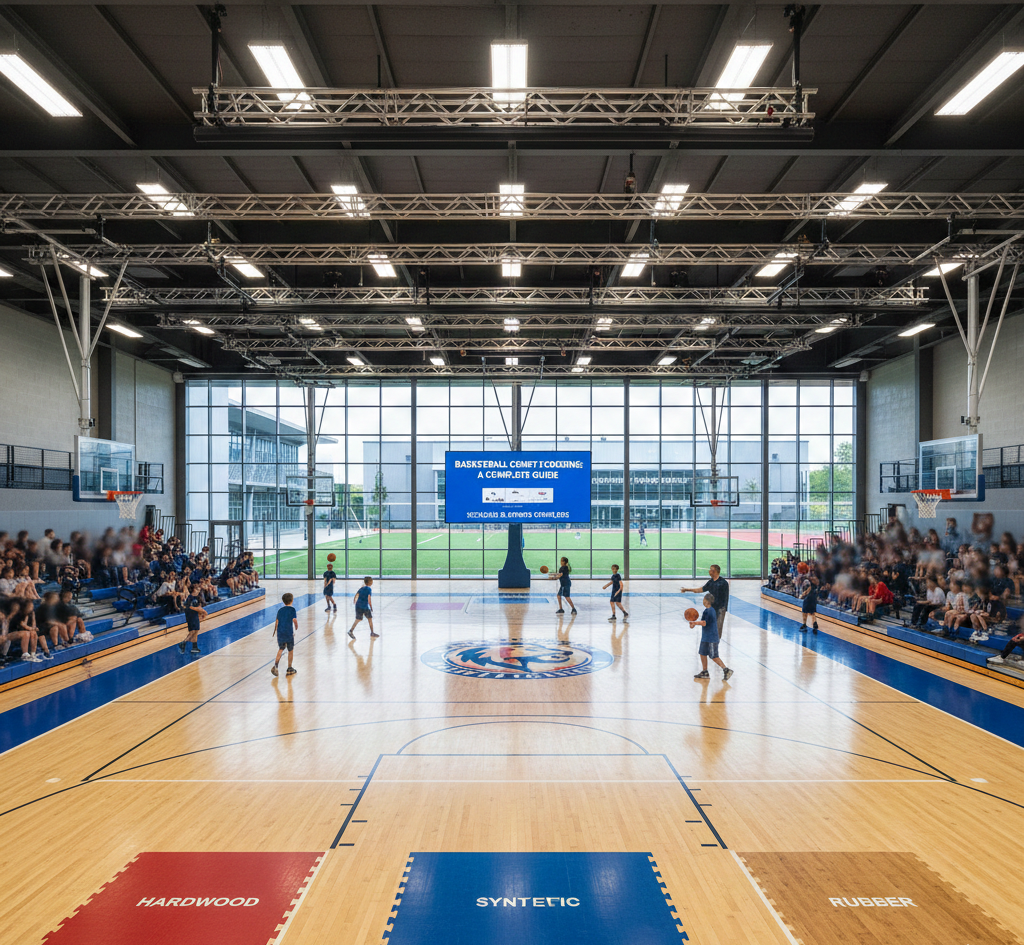
4) Engineered Maple Wooden Sports Flooring — “Pro” feel within budget
Estimated cost (1,500 sq ft): ₹4.88 lakh
If you want the classic hardwood bounce and feel but are constrained by a home budget, engineered maple sports flooring is often the best compromise. Manufacturers and suppliers in India show engineered/hybrid maple sports systems in the range of roughly ₹280–₹330 per sq ft installed — which yields an approximate total of ₹4.8–5.0 lakh for a 1,500-sqft court, comfortably under ₹7 lakh for a premium home install. This offers near-professional performance and the best underfoot experience for competitive players.
Why choose it
-
Superb ball bounce and player feedback; highly preferred for serious play.
-
Prestigious look and resale value.
Downsides
-
Heavier and needs climate control (humidity) and regular maintenance (polish/recoat).
-
Requires the most careful subfloor preparation.
Maintenance
-
Controlled indoor environment, regular cleaning, periodic sanding/varnish as usage demands.
5) Modular Snap-Together Sport Tiles (Premium brands) — Balanced performance & aesthetics
Estimated cost (1,500 sq ft): ₹3.0 lakh
Premium modular tiles (the Sport Court / VersaCourt style) combine the benefits of PP tiles with more refined mechanical properties and sport-specific engineering. Higher-end modular tiles in India commonly price around ₹120–₹250 per sq ft depending on brand and material, which for 1,500 sq ft gives a mid-range estimate near ₹3 lakh. These are excellent for homeowners who want a semi-professional finish, fast install, and good long-term durabilit
Why choose it
-
Professional look with less permanent installation effort.
-
Great drainage (outdoor) and cushioned play for joints.
Downsides
-
Higher initial cost than basic PP tiles; choose verified brands for longevity.
Maintenance
-
Sweep and inspect seams; replace tiles as needed.
Quick comparison & decision guide
-
Tightest budget, fastest install: Interlocking PP tiles.
-
Best combination of cost, grip & indoor finish: PVC / vinyl.
-
Great durability & pro feel without hardwood price: PU poured system.
-
Best for serious players who want hardwood feel: Engineered maple.
-
Best balanced upgrade (modular pro tiles): Premium snap-together tiles.
What’s included / excluded in the estimates
Included: material + standard professional installation (adhesives, seam-work, labor) for the assumed 1,500-sqft area.
Excluded: major concrete repair/leveling beyond standard prep, hoop systems, padding, lighting, drainage/fencing, landscaping, or permits.
Final tips for 2025 installs
-
Get multiple site surveys — installers can vary in base prep standards; ask for subfloor reports.
-
Ask for warranties — material and installation warranties vary widely.
-
Check full-area samples — don’t decide from a 6″ sample; see full panels or boards.
-
Insist on professional base prep — this is where most long-term failures originate.
-
Plan for maintenance — budget an annual maintenance check to keep performance and safety high.