
When it comes to designing or maintaining a basketball court, the flooring is arguably the most critical component. The right flooring not only affects the game’s performance but also ensures the safety and comfort of players. Whether you’re planning a professional arena, a school gymnasium, or a backyard court, choosing the correct flooring material is essential. In this blog, we will explore the best flooring options for basketball courts, highlighting their features, benefits, and considerations.
Why Flooring Matters in Basketball
Basketball is a high-impact sport that demands quick movements, sudden stops, and rapid changes in direction. The floor must absorb shock, provide traction, and minimize the risk of injuries. A poor-quality floor can lead to slips, sprains, and long-term joint problems. Moreover, the flooring influences the bounce of the basketball, which is crucial for fair play. A consistent and durable surface ensures smooth dribbling, accurate passes, and overall player satisfaction.
Factors to Consider When Choosing Basketball Court Flooring
Before diving into the types of flooring, it’s important to understand the key factors that influence your choice:
-
Durability: Basketball floors must withstand heavy use and resist wear over time. High traffic areas, such as professional or school courts, need materials that maintain their integrity for years.
-
Shock Absorption: Flooring should reduce the impact on joints and muscles, helping prevent injuries. Shock absorption is particularly important in competitive and training environments.
-
Traction: Players require proper grip to perform quick cuts, jumps, and pivots. Too much traction can cause stress injuries, while too little can lead to slips and falls.
-
Maintenance: Ease of cleaning and maintenance is critical, especially in gyms and multi-purpose facilities. Some materials require regular refinishing, while others are virtually maintenance-free.
-
Aesthetic Appeal: A polished, professional look enhances the player experience and can add value to the facility. Many facilities prefer flooring that combines functionality with style.
-
Cost: Budget considerations will influence the choice of material. While some options are more expensive upfront, they may offer long-term durability and lower maintenance costs.
Top Flooring Options for Basketball Courts
1. Hardwood Flooring
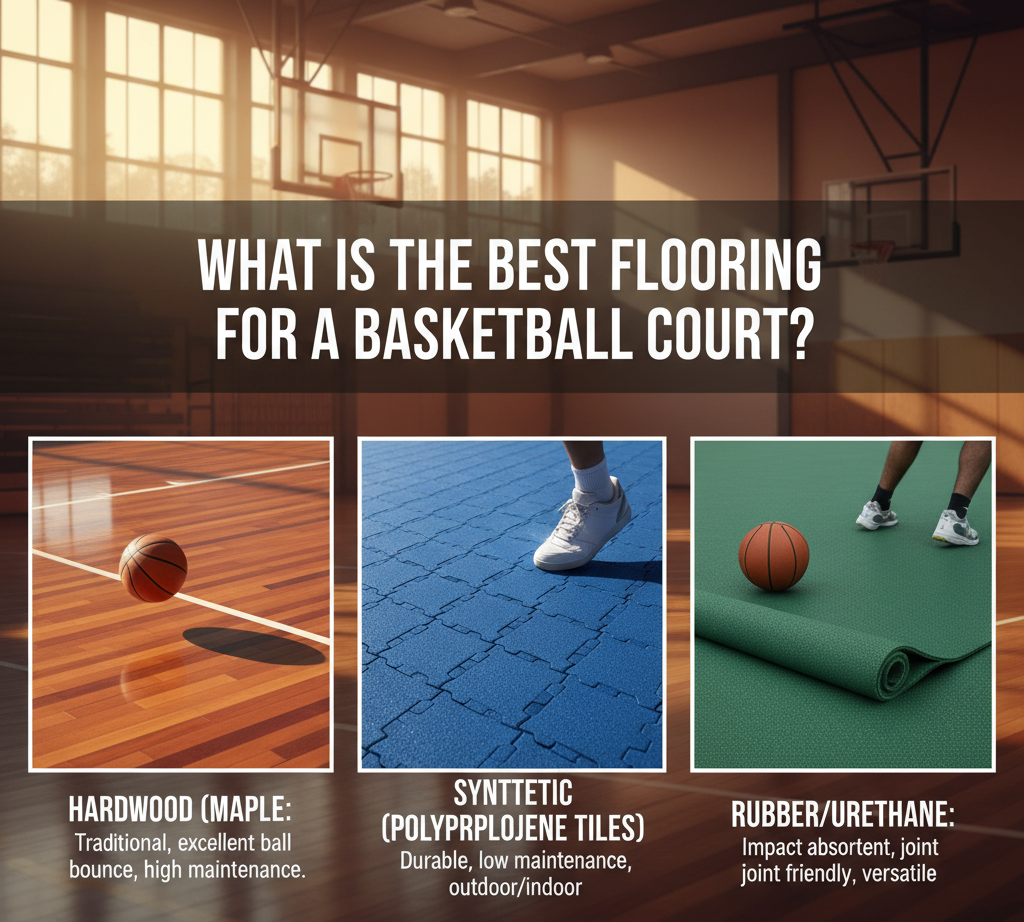
Hardwood, particularly maple, is the gold standard for professional basketball courts. The NBA, FIBA, and most high-level leagues use maple hardwood for its superior performance characteristics.
Advantages:
-
Durability: Maple hardwood is extremely hard, providing long-lasting performance.
-
Bounce Consistency: Ensures uniform ball bounce and predictable gameplay.
-
Shock Absorption: Offers moderate shock absorption, reducing strain on knees and ankles.
-
Aesthetic Appeal: Polished maple floors have a sleek, professional look that enhances the court’s visual appeal.
Considerations:
-
Cost: Hardwood is one of the more expensive flooring options.
-
Maintenance: Requires regular refinishing to maintain performance and appearance.
-
Moisture Sensitivity: Wood can warp or swell in humid conditions if not properly treated.
2. Engineered Wood Flooring
Engineered wood flooring combines a hardwood surface layer with multiple layers of plywood or high-density fiberboard. This construction enhances stability and reduces susceptibility to moisture damage.
Advantages:
-
Stability: Less likely to warp compared to solid hardwood.
-
Shock Absorption: Provides excellent comfort and impact reduction.
-
Aesthetic Variety: Can mimic the appearance of maple or other hardwoods.
Considerations:
-
Cost: Slightly lower than solid hardwood but still a premium choice.
-
Maintenance: Needs similar care as hardwood to preserve performance.
3. Synthetic or Vinyl Sports Flooring
For multi-purpose courts or budget-conscious projects, synthetic floors made of vinyl or polyurethane are popular. These materials are highly durable, low-maintenance, and resistant to moisture.
Advantages:
-
Durability: Resistant to scratches, dents, and heavy use.
-
Maintenance: Easy to clean and requires minimal upkeep.
-
Shock Absorption: Offers cushioned surfaces that reduce injury risk.
-
Cost-Effective: Less expensive than hardwood, making it ideal for schools or community gyms.
Considerations:
-
Aesthetic Limitation: May lack the premium look of hardwood.
-
Bounce Difference: Ball bounce may feel slightly different from traditional hardwood.
4. Rubber Flooring
Rubber flooring is another excellent option, especially for indoor multi-purpose courts or training areas. It is known for its slip resistance and shock absorption.
Advantages:
-
Safety: Excellent grip reduces slip-related injuries.
-
Comfort: Soft surface eases joint impact during high-intensity play.
-
Maintenance: Durable and easy to clean.
-
Environmental Options: Some rubber floors are made from recycled materials.
Considerations:
-
Performance: Not ideal for professional gameplay due to ball bounce inconsistencies.
-
Appearance: Less visually appealing than hardwood or vinyl.
5. Modular Interlocking Tiles
Modular interlocking sports tiles are increasingly popular for home and recreational courts. Made from polypropylene or other synthetic materials, these tiles snap together to create a playable surface.
Advantages:
-
Easy Installation: Can be installed without adhesives or professional help.
-
Portability: Tiles can be removed or replaced individually.
-
Cost-Effective: Affordable solution for backyard or community courts.
Considerations:
-
Professional Use: Not recommended for competitive basketball due to lower bounce consistency.
-
Aesthetic Appeal: Visual appeal varies depending on the material quality.
Conclusion
Choosing the best flooring for a basketball court depends on the type of facility, usage frequency, budget, and desired aesthetics. Hardwood, especially maple, remains the top choice for professional and high-level competitive courts due to its durability, consistent performance, and classic appearance. Engineered wood provides similar benefits with added stability, while synthetic vinyl, rubber, and modular tiles offer practical alternatives for recreational or multi-purpose courts.
Ultimately, the right flooring enhances player safety, game performance, and the overall experience. Investing in quality flooring is investing in the longevity of the court and the well-being of every player who steps on it. Whether you aim for professional standards or a durable home setup, understanding the characteristics and benefits of each flooring type ensures a court that performs exceptionally and lasts for years to come.