If you’re planning to build or renovate a basketball court — whether at a school, club, gym, or community ground — one of the first big questions is: “Where can I get proper basketball-court flooring from?” The floor makes more difference than many realize: it affects safety, bounce, traction, durability, and overall player experience.
In this guide, you’ll learn how to find and choose a good supplier, what types of flooring material are on offer, and examples of trusted flooring manufacturers/distributors from whom you can buy basketball court flooring.
Why Choosing the Right Supplier Matters
-
Quality & Standards: A proper basketball floor must meet criteria like shock absorption, non-slip surface, durability under heavy use, correct bounce, and safety for players. Suppliers with experience and good reputation are more likely to deliver flooring that meets these standards.
-
Material & Type Flexibility: Depending on your court (indoor vs outdoor, professional vs recreational), you may need hardwood, synthetic PVC, PU, acrylic, or interlocking tiles. A supplier that offers a variety helps you pick what suits your needs best.
-
Installation & After-sales Support: Good suppliers often provide installation services, maintenance advice, and warranties — which are vital for a long-lasting court.
-
Local Climate & Conditions: Especially in places like India, weather, humidity, and surface wear matter. A reputable supplier knows how to provide flooring suited for those conditions.
What Types of Suppliers / Sellers to Consider
When looking to buy basketball court flooring, you’ll typically find the following kinds of suppliers:
-
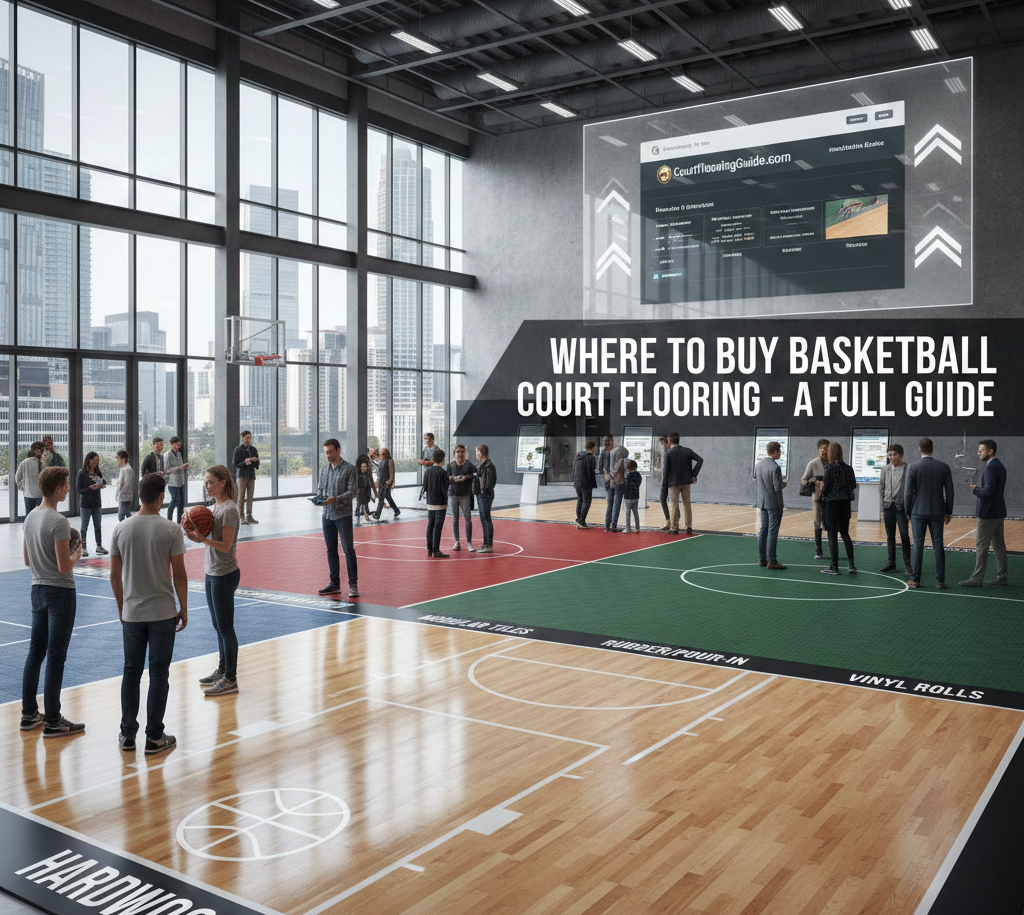
Dedicated sports-flooring manufacturers — companies whose core business is designing and producing sports court surfaces (wood, PVC, PU, acrylic, tiles).
-
Multi-sport flooring providers — firms offering flooring for basketball, badminton, volleyball, indoor/outdoor courts etc.
-
Distributors/importers/dealers — especially useful if you need off-the-shelf materials, modular tiles, or synthetic court solutions with easier ordering and shipping.
-
Local contractors or flooring specialists — they may offer supply + installation, including site inspection, sub-base preparation, finishing, and aftercare.
What to Check When Buying Basketball Court Flooring
Before committing to a supplier or product, make sure to check:
-
Material type & suitability (hardwood, PU, PVC, acrylic, interlocking tiles).
-
Shock absorption, grip, and slip resistance — critical for player safety and performance.
-
Bounce consistency and surface evenness.
-
Durability / Wear resistance, especially under heavy traffic.
-
Maintenance requirements — easier-to-maintain floors save costs long-term.
-
Warranty, installation support, and after-sales services.
-
Compliance with relevant standards / suitability for indoor vs outdoor, climate conditions, etc.
-
Size availability, customization (colors, logos), and cost per square foot (or per square metre).
Where to Buy: Notable Suppliers & Manufacturers (India & Global Options)
Here are some suppliers and manufacturers you can consider — from full-court solutions to modular/outdoor tile options:
sports-FACILITY(lucknow)
-
A large, established manufacturer in India providing basketball court flooring (wooden, synthetic, PVC, PP tiles) for both indoor and outdoor courts.\
-
Offers end-to-end services: design, material supply, installation, and maintenance — which is handy if you want a turnkey solution.
sport_facility (India / Global-focused)
-
Specializes in synthetic acrylic sport flooring — suitable for outdoor basketball, tennis, multi-sport courts.
-
Offers materials like acrylic resurfacer, primers, cushion layers, and color coats. Their flooring is weather-resistant and designed for durability – a good choice for outdoor courts.
-
sport_facility (India)
-
Supplies indoor/outdoor sports flooring — wooden sports flooring, PVC sports floorings, modular court tiles, and more.
-
Offers options at various budget levels, which can fit schools or community centers looking for cost-effective solutions.
sports_facility (lucknow, India)
-
Offers synthetic basketball court flooring (PVC/PU) for indoor use — useful for smaller gyms, academies, or institutions.
best basketball court flooring
-
Provides outdoor interlocking basketball court tiles and rubber flooring designed to endure weather conditions, with easy installation and reasonable maintenance.
Through directories and sports-flooring distributors (e.g. local “sports flooring distributors” lists), you may find local dealers offering PVC, rubber, vinyl, and synthetic court floors — useful for small-scale or budget projects.
Indoor vs Outdoor: What Supplier to Choose
-
For Indoor Courts (Gymnasiums, Stadiums, Schools, Clubs):
Hardwood (maple) floors from full-service manufacturers like Sundek, or synthetic PVC/PU options from Indiana Sports, Neo Sports, etc. are ideal. These floors provide excellent shock absorption, consistent bounce, and professional finish. -
For Outdoor Courts (Parks, Community Grounds, Schools):
Synthetic acrylic flooring (from Pacecourt), interlocking PP/rubber tiles (from NWT Sports or similar), or outdoor-grade PVC/rubber flooring. These are weather-resistant, slip-resistant, and low-maintenance. -
For Multi-sport & Budget-Friendly Projects:
PVC / rubber / modular tile flooring — easier to install, lower cost, and suitable for many different sports besides basketball.
Tips to Buy Basketball Court Flooring Wisely
-
Get a Site Survey Before Ordering: Ensure the base (concrete/asphalt) is level and prepared suitably; many suppliers offer base-preparation services too.
-
Ask for Warranty and Maintenance Guidelines: Good suppliers offer after-sales support, including resurfacing advice, cleaning, and re-coating schedules.
-
Request Customization if Needed: For logos, team colours, court markings – many suppliers offer customized painting or branding.
-
Compare Cost vs Quality vs Usage: For professional use, investing in high-end hardwood or PU floors pays off; for casual community courts, mid-range synthetic or tile floors may be more cost-effective.
-
Check for Climate Compatibility: In humid or monsoon-prone areas (like many parts of India), choose flooring that resists moisture swelling or weather damage (synthetic or treated hardwood).
-
Plan for Installation & Maintenance Time: High-end floors (hardwood or PU) need expert installation; outdoor tiles or acrylic floors are quicker to lay and easier to maintain.
Conclusion
Buying basketball court flooring is not just about picking a material — it’s about choosing the right supplier, ensuring installation quality, and matching the court’s design to its intended use. A well-chosen floor brings safety, performance, durability, and looks — a cramped or cheap floor brings risks, poor bounce, and maintenance hassles.
If you’re building a new court or upgrading an old one, consider suppliers like Sundek Sports, Pacecourt, Indiana Sports Infra, Neo Sports, or NWT Sports depending on indoor/outdoor use and budget.
If you like — I can pull up a list of 8–12 reliable global & India-based basketball court flooring suppliers (with contact info, price range, and pros/cons) so you can directly shortlist vendors.
Do you want me to build that list now for you?