



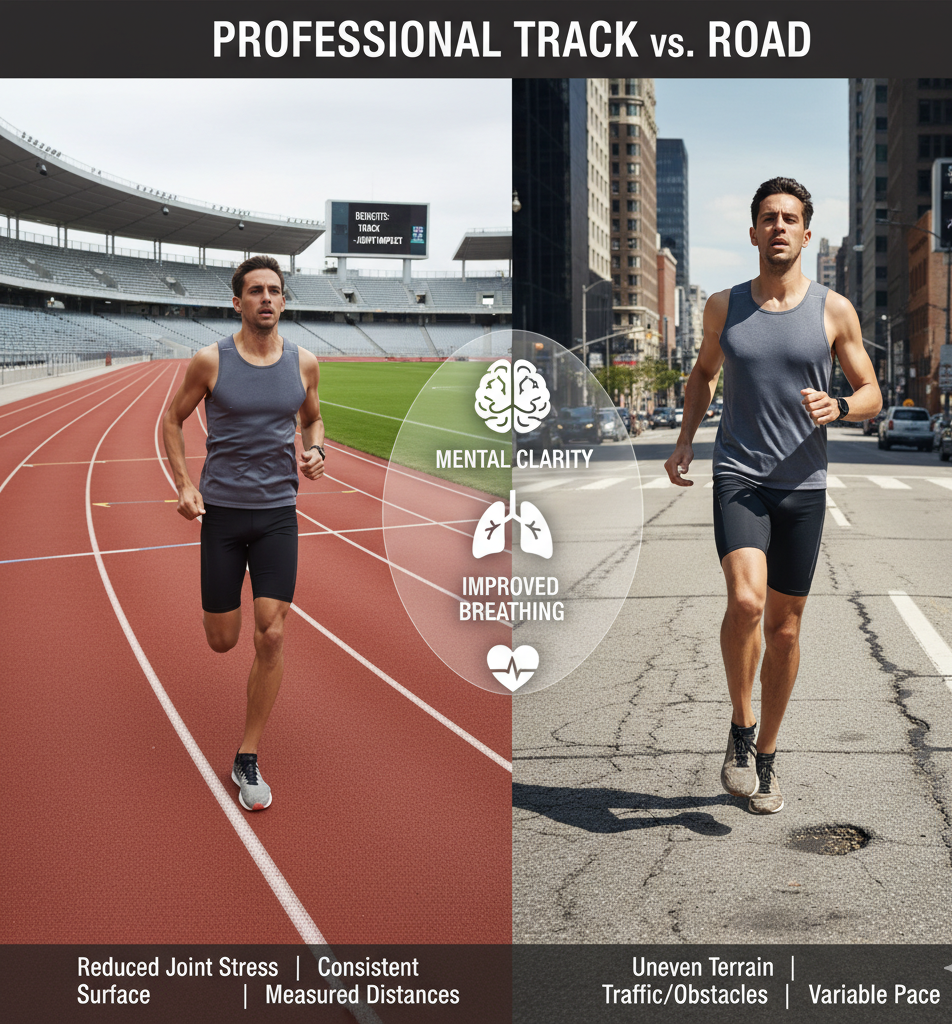
Running is one of the most accessible forms of exercise, benefiting both body and mind. It improves cardiovascular health, strengthens muscles, boosts metabolism, and alleviates stress. However, the surface you choose for running can significantly affect your performance, safety, and overall experience. Two popular options are professional running tracks and roads. Each has its advantages, and understanding these can help you optimize your training and reduce injury risks.
Surface Quality and Impact on Joints
Professional Track:
Professional tracks are designed with synthetic materials such as polyurethane or rubber, which provide a smooth and consistent running surface. This cushioning reduces the impact on joints, making it safer for runners who are prone to injuries or those training for longer distances. The shock absorption helps protect knees, hips, and ankles, reducing the likelihood of overuse injuries.
Road Running:
Roads, typically made of asphalt or concrete, are harder and less forgiving. The repeated impact on hard surfaces can strain joints and increase the risk of stress fractures or chronic pain. Road surfaces may also have cracks, potholes, or uneven sections, which can challenge your balance and increase injury risk if not navigated carefully.
Key Takeaway: For long-term joint health and injury prevention, a professional track offers a safer, low-impact option. Roads, while accessible, require careful attention to foot placement and may necessitate cushioned running shoes.
Consistency and Predictability
Professional Track:
One of the main advantages of a professional track is its consistency. Tracks are flat, well-maintained, and precisely measured, making them ideal for structured training, interval workouts, and speed sessions. Runners can track lap times accurately and maintain a steady pace without worrying about variations in the surface.
Road Running:
Road running introduces unpredictability—elevations, uneven terrain, traffic, and obstacles can affect your rhythm and pacing. While this unpredictability can simulate real race conditions, it may interfere with specific performance training goals, such as timed sprints or interval sessions.
Key Takeaway: Runners seeking structured workouts and precise measurements will benefit most from tracks, while road running is better suited for endurance and adapting to varied terrains.
Safety Considerations
Professional Track:
Running tracks are typically located in controlled environments, free from vehicle traffic and other hazards. This controlled setting reduces accident risks and allows runners to focus on performance without distractions or safety concerns.
Road Running:
Road running comes with inherent safety risks, including cars, bicycles, pedestrians, and uneven surfaces. Early morning or evening runs require reflective clothing, headlamps, or other safety precautions. Weather conditions can further complicate road running, with wet roads increasing the chance of slipping.
Key Takeaway: For beginners, night runners, or those focused purely on performance, tracks provide a safer, controlled environment.
Performance and Speed Training
Professional Track:
The smooth, even surface of a track makes it perfect for speed training. Athletes can perform interval workouts, sprints, and timed laps with minimal disruption. Tracks allow precise monitoring of performance improvements, making them invaluable for competitive runners preparing for events.
Road Running:
While road running is excellent for building endurance and stamina, terrain variations and slopes can slow speed workouts. Running uphill requires more effort, while downhill sections may cause additional strain on joints. Despite these challenges, roads are ideal for marathon training, as they simulate race conditions better than tracks.
Key Takeaway: For structured speed training, professional tracks are superior. Roads, on the other hand, are invaluable for endurance training and real-world running conditions.
Psychological Benefits and Motivation
Professional Track:
Tracks provide a structured, motivating environment. Visible lane markings, lap counters, and other runners can foster a sense of accountability and healthy competition. This environment encourages mental focus and discipline, crucial for achieving performance goals.
Road Running:
Running outdoors on roads offers mental variety and freedom. Scenic routes, fresh air, and changing surroundings can reduce stress, improve mood, and make running more enjoyable. For runners who seek relaxation or mental rejuvenation, roads provide an ideal setting.
Key Takeaway: Tracks boost discipline and motivation for serious training, while roads provide mental relief and a connection with nature.
Accessibility and Convenience
Professional Track:
Access to a professional track may be limited, requiring membership at a sports club or local athletic facility. Operating hours and location may restrict use, but the benefits of a controlled, high-quality surface often outweigh these limitations.
Road Running:
Road running is highly accessible and flexible. You can start from your doorstep, explore different routes, and adjust distances on the go. For those with tight schedules or limited access to athletic facilities, roads are the most convenient option.
Key Takeaway: Tracks offer superior training conditions, while roads are unmatched in convenience and flexibility.
Additional Benefits of Running on Each Surface
Professional Track:
-
Reduced Injury Risk: Cushioned surface absorbs impact.
-
Consistent Performance Tracking: Ideal for monitoring lap times and progress.
-
Controlled Environment: Fewer distractions and hazards.
-
Structured Training: Perfect for interval workouts, sprints, and pacing practice.
Road Running:
-
Endurance Building: Elevation changes and varied surfaces improve stamina.
-
Mental Stimulation: Scenic routes reduce boredom and increase motivation.
-
Real-world Conditions: Prepares runners for races that occur on roads.
-
Accessibility: No membership or special facilities required.
Tips for Maximizing Benefits
-
Wear Appropriate Footwear:
Use cushioned running shoes for road running to minimize joint impact. For track workouts, lightweight shoes with good grip can improve speed and stability. -
Warm Up and Stretch:
Always perform dynamic stretches before running and static stretches afterward. This helps prevent injuries, improves flexibility, and enhances recovery. -
Mix Surfaces:
A hybrid approach—using tracks for speed workouts and roads for endurance—combines the benefits of both surfaces. -
Hydration and Nutrition:
Proper hydration is crucial for long runs, whether on tracks or roads. Fuel your body with balanced meals to maximize energy and recovery. -
Weather Considerations:
Avoid running on wet, icy, or extremely hot roads. Tracks are generally safer in controlled environments during adverse weather.
Conclusion
Both professional tracks and roads offer unique advantages for runners. Tracks are ideal for performance training, joint safety, and structured workouts, while roads provide accessibility, variety, and real-world running conditions. Runners who combine both surfaces can enjoy the best of both worlds: improved speed and endurance, reduced injury risk, and an enjoyable running experience.