
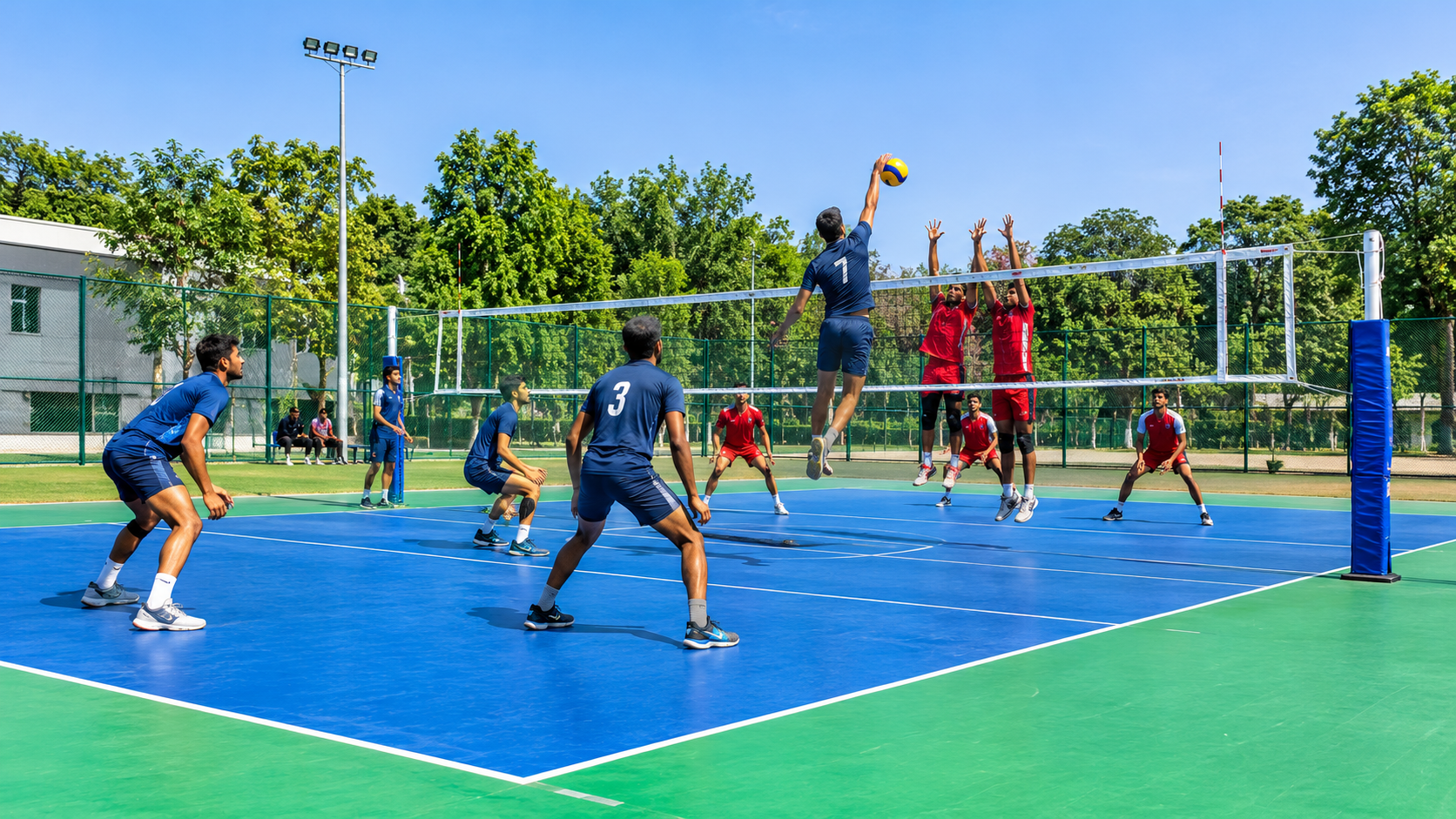
Outdoor volleyball courts are a great addition to schools, sports academies, colleges, residential communities, clubs, and recreational facilities. They provide players with a dedicated space to practise, compete, and enjoy the game. However, building an outdoor volleyball court requires more than installing a net and marking the playing area. One of the most important decisions is selecting the right outdoor volleyball court flooring.
Unlike indoor sports surfaces, outdoor volleyball flooring must withstand changing weather conditions, direct sunlight, rain, moisture, dust, and regular player activity. The surface should offer excellent grip, comfortable movement, reliable shock absorption, and long-term durability. Choosing the wrong flooring can lead to slippery conditions, surface damage, poor playing performance, and frequent maintenance expenses.
Whether you are planning a new volleyball court or upgrading an existing playing area, selecting a durable and weather-resistant flooring system can make a significant difference.
In this guide, we will explore different outdoor volleyball court flooring options, their benefits, important installation considerations, maintenance requirements, and how to choose the right surface for your facility.
Why Is the Right Outdoor Volleyball Court Flooring Important?
Volleyball involves frequent jumping, landing, running, sudden direction changes, and quick lateral movements. Players constantly move across the court, making the flooring an essential part of both performance and safety.
An unsuitable surface may increase the chances of slipping, discomfort, and unnecessary stress on players’ joints. On the other hand, a professionally designed volleyball court flooring system provides a stable and comfortable playing environment.
Here are some important reasons to invest in quality outdoor volleyball flooring:
1. Better Player Safety
A suitable sports flooring surface provides consistent traction and helps players maintain balance during fast movements. Proper shock absorption can also help reduce the impact associated with repeated jumping and landing.
2. Weather Resistance
Outdoor courts are exposed to harsh environmental conditions. Quality outdoor sports flooring should be designed to withstand UV exposure, rainfall, temperature variations, and moisture.
3. Improved Playing Performance
A level, well-finished surface allows players to move confidently and perform different volleyball techniques without unnecessary interruptions.
4. Long-Term Durability
High-quality outdoor volleyball flooring can handle regular usage and environmental exposure when correctly selected, installed, and maintained.
5. Lower Maintenance Requirements
Choosing the appropriate flooring material can reduce frequent repairs and help maintain the appearance and functionality of the court.
Best Outdoor Volleyball Court Flooring Options
Different flooring materials are available for outdoor volleyball courts. The right choice depends on the available budget, playing requirements, weather conditions, installation surface, and expected usage.
Let’s look at some popular outdoor volleyball court flooring solutions.
1. Acrylic Sports Flooring
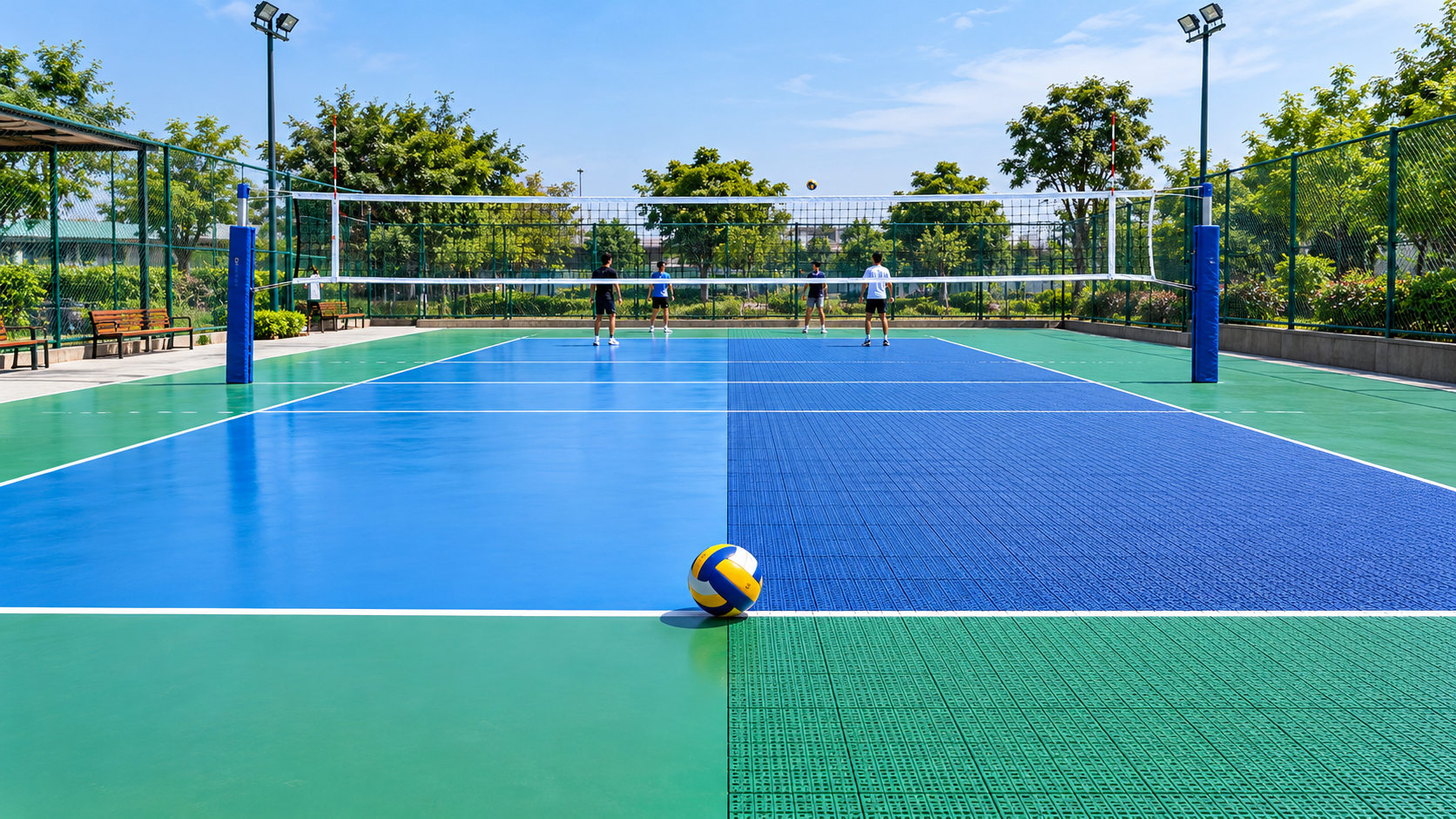
Acrylic sports flooring is a popular option for outdoor sports courts. It is commonly applied over properly prepared concrete or asphalt surfaces and creates a smooth, durable playing area.
This flooring system generally consists of multiple layers, including a suitable primer, resurfacer, cushioning layer where specified, and coloured acrylic finishing coats.
Key benefits of acrylic volleyball court flooring:
- Good resistance to outdoor weather conditions.
- UV-resistant coating options.
- Available in different colours.
- Suitable for multi-purpose sports courts.
- Easy to clean and maintain.
- Provides consistent surface texture when professionally installed.
- Can be customised with court markings.
Acrylic flooring is particularly suitable for schools, sports complexes, colleges, clubs, and recreational facilities looking for a durable outdoor sports surface.
2. Synthetic Sports Flooring
Synthetic sports flooring is another option for outdoor volleyball courts. Depending on the system, it may include specialised polyurethane-based coatings or other synthetic materials designed for sports applications.
These flooring systems can be selected according to the required playing characteristics, comfort, and environmental exposure.
Advantages of synthetic sports flooring:
- Customisable surface properties.
- Options with additional cushioning.
- Attractive and professional appearance.
- Good resistance to regular sports activity.
- Available in different finishes and colours.
When selecting synthetic flooring for outdoor volleyball, it is important to confirm that the particular product and complete system are specifically approved or recommended for outdoor exposure.
3. EPDM Rubber Flooring
EPDM rubber flooring is made using synthetic rubber granules and specialised binding materials. It is commonly used in playgrounds, recreational areas, and selected sports applications.
Its cushioning characteristics make it useful in areas where player comfort is an important consideration.
Benefits of EPDM flooring include:
- Flexible and resilient surface.
- Comfortable underfoot feel.
- Available in multiple colours.
- Good resistance to outdoor conditions when correctly formulated.
- Suitable for selected recreational sports areas.
However, not every EPDM system is suitable for competitive volleyball. The surface texture, ball response, traction, and overall playing characteristics should be assessed before installation.
4. Concrete and Asphalt Base Flooring
Concrete and asphalt are commonly used as foundation surfaces for outdoor volleyball courts. They provide the structural base required for many sports flooring systems.
A properly constructed base is essential for the performance and lifespan of the finished flooring.
Important considerations include:
- Proper surface levelling.
- Adequate drainage arrangements.
- Correct slope for water runoff.
- Structural stability.
- Suitable surface preparation before applying the final coating.
Concrete and asphalt alone may not provide the ideal playing characteristics for every volleyball facility. A suitable sports surface system can be installed over the prepared base to improve traction, playing comfort, and surface protection.
Important Features of High-Quality Outdoor Volleyball Court Flooring
Before selecting a flooring system, it is important to understand which features make a sports surface suitable for outdoor volleyball.
1. UV Resistance
Continuous exposure to sunlight can cause certain flooring materials to fade, deteriorate, or lose their original surface properties.
UV-resistant outdoor sports flooring helps maintain colour consistency and surface performance for longer periods.
2. Water Resistance and Proper Drainage
Rainwater can affect the playing surface and create slippery conditions. Outdoor volleyball court flooring should be selected and installed with moisture exposure in mind.
Proper drainage is equally important. The court should have an appropriate slope and drainage arrangement to prevent standing water.
It is important to remember that water-resistant flooring does not automatically mean a waterproof or non-slip surface in wet conditions.
3. Slip Resistance and Grip
Players need a surface that provides reliable traction during running, jumping, and sudden movements.
The flooring should offer an appropriate level of grip without being excessively rough. Both insufficient and excessive traction can affect player movement and comfort.
4. Shock Absorption
Volleyball players repeatedly jump and land throughout a match. Flooring with suitable cushioning characteristics can improve playing comfort and help manage impact forces.
The required cushioning depends on the intended level of play and the selected sports flooring system.
5. Colour Stability
A professional outdoor volleyball court should maintain its appearance even after prolonged exposure to sunlight and regular use.
High-quality colour coatings and suitable finishing materials help maintain the visual appeal of the court.
6. Easy Maintenance
Outdoor sports courts collect dust, leaves, mud, and other debris. A flooring system that is easy to clean can help facility managers maintain a safe and attractive playing area.
Indoor vs Outdoor Volleyball Court Flooring: What Is the Difference?
. Outdoor flooring must be selected to withstand these additional conditions.
Here is a simple comparison:
| Feature | Indoor Volleyball Flooring | Outdoor Volleyball Flooring |
|---|---|---|
| Weather exposure | Protected environment | Direct outdoor exposure |
| UV resistance | Usually less critical | Very important |
| Moisture protection | Controlled conditions | Essential consideration |
| Surface durability | Indoor sports usage | Outdoor sports usage |
| Drainage | Usually unnecessary | Important |
| Maintenance | Indoor cleaning | Outdoor cleaning and debris removal |
| Material selection | Indoor sports systems | Weather-resistant sports systems |
Choosing indoor flooring for an outdoor court without checking its environmental suitability can result in premature deterioration and additional repair costs.
How to Choose the Best Outdoor Volleyball Court Flooring
Selecting the right volleyball flooring requires careful planning. The best solution is not necessarily the most expensive one. It is the flooring system that meets the playing requirements, environmental conditions, and available budget.
Consider the following factors before making a decision.
1. Identify the Purpose of the Court
First, determine how the volleyball court will be used.
For example:
- Schools and colleges may require durable flooring for regular student activities.
- Sports academies may need a surface suitable for frequent training sessions.
- Residential societies may prefer low-maintenance recreational flooring.
- Professional sports facilities may require specialised flooring that meets relevant competition standards.
2. Consider Local Weather Conditions
The local climate plays an important role in flooring selection.
Areas experiencing intense sunlight require suitable UV-resistant materials. Regions with heavy rainfall need effective drainage and moisture-resistant flooring systems.
Temperature fluctuations should also be considered when choosing the flooring material and installation method.
3. Check the Existing Base Surface
Before installing outdoor volleyball flooring, inspect the existing concrete or asphalt base.
Cracks, uneven areas, loose material, and poor drainage should be addressed before applying the finishing system.
A high-quality topcoat cannot compensate for a poorly prepared foundation.
4. Evaluate Player Comfort and Safety
The selected surface should provide appropriate traction, ball response, and playing comfort.
If the court is intended for regular training or competitive use, consider a sports flooring system designed specifically for volleyball.
5. Understand the Maintenance Requirements
Every flooring system requires some level of maintenance. Ask about cleaning procedures, recoating intervals, repair requirements, and expected service life under the intended usage conditions.
6. Choose Experienced Installation Professionals
Proper installation is just as important as material quality.
An experienced sports flooring contractor can assess the site, recommend a suitable flooring system, prepare the base, and install the surface according to manufacturer specifications.
Outdoor Volleyball Court Flooring Installation Process
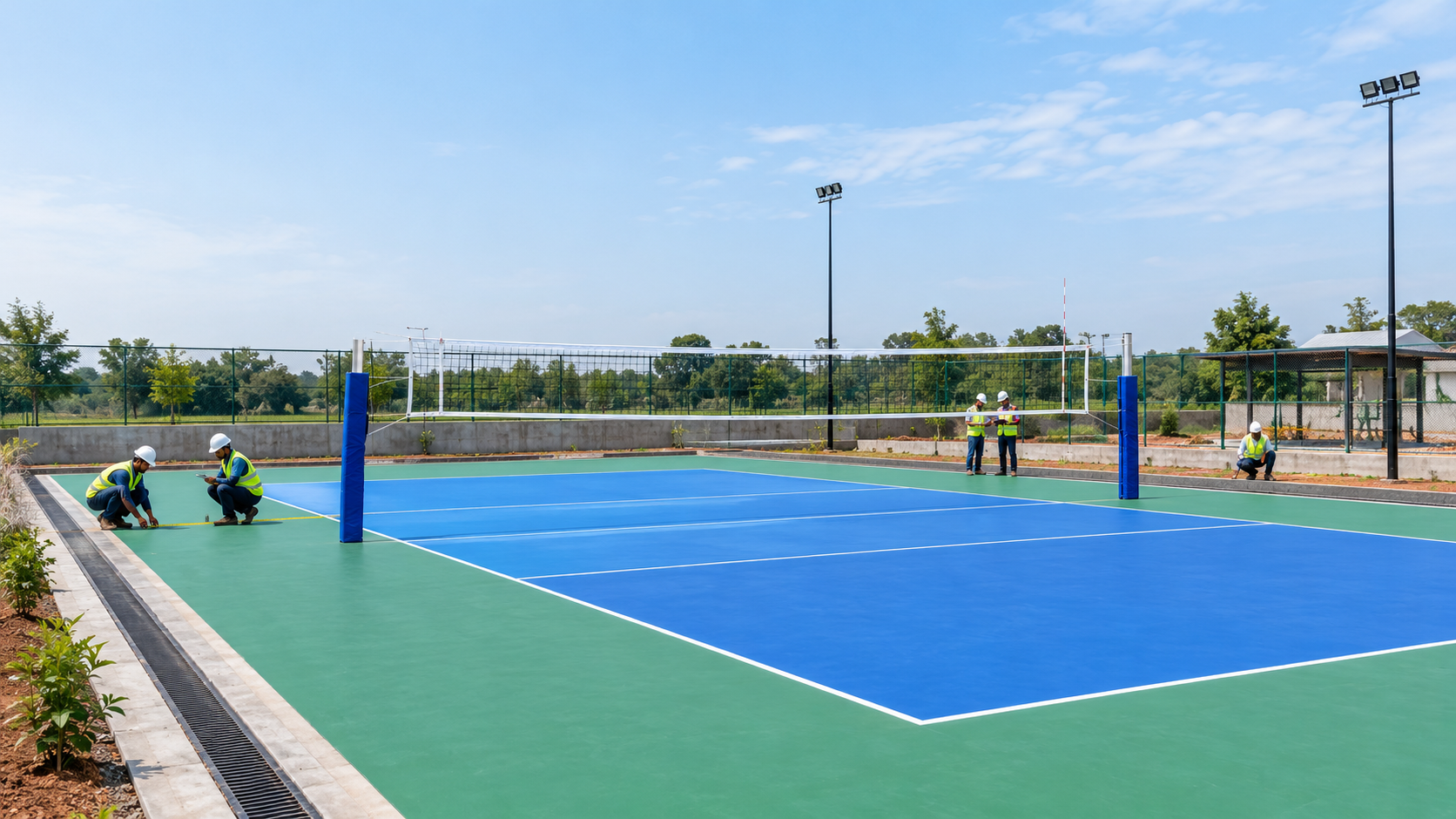
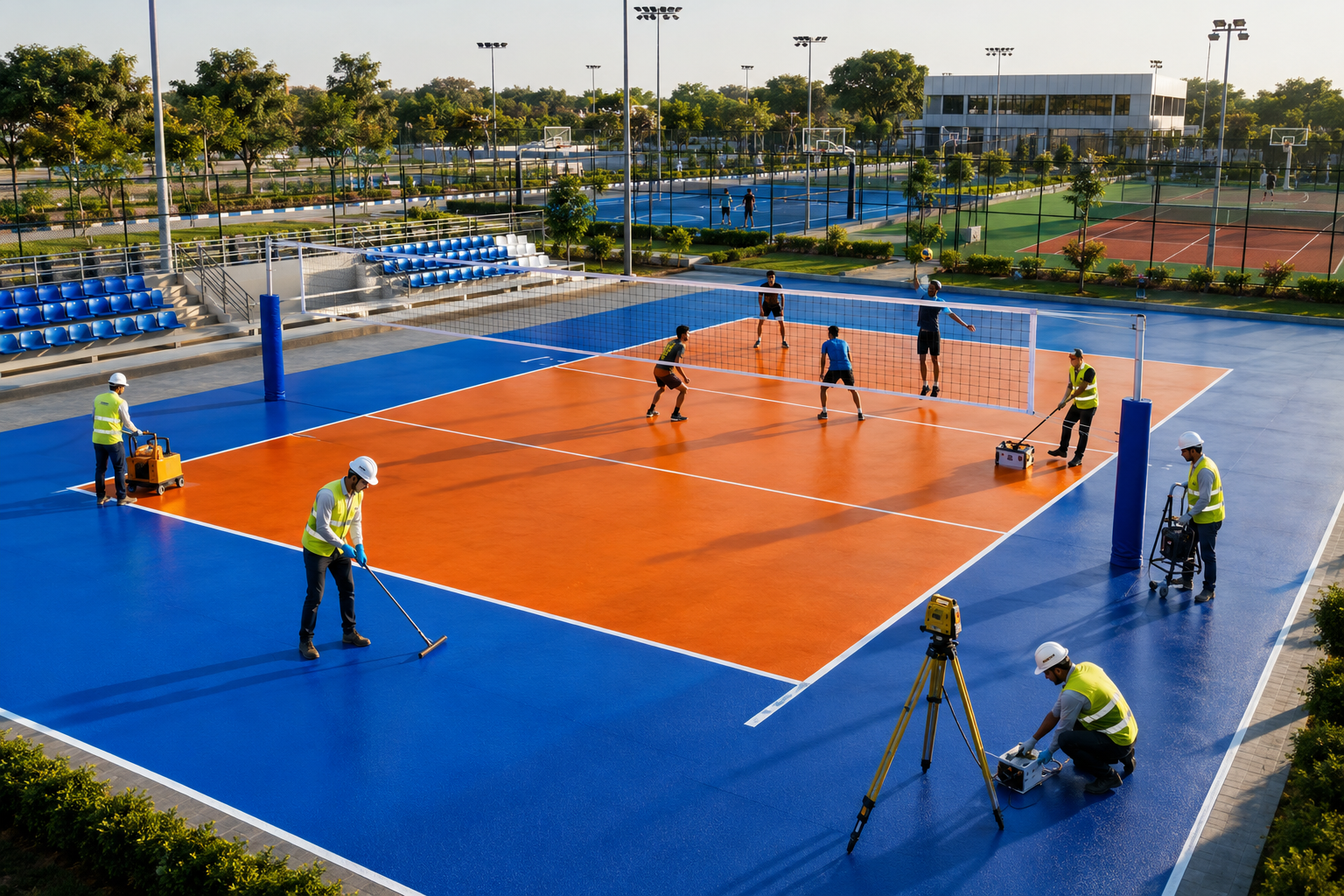
A professionally installed volleyball court requires a systematic approach. Each stage contributes to the final surface quality, durability, and playing performance.
Step 1: Site Inspection and Planning
The first step is to inspect the proposed court area. The contractor evaluates the available space, ground conditions, drainage, existing surface, and intended usage.
Step 2: Base Preparation
The concrete or asphalt base is checked for cracks, unevenness, dust, and loose particles.
Any required repairs are completed before proceeding with the flooring installation.
Step 3: Surface Levelling
The playing area should be properly levelled and have an appropriate drainage slope.
Standing water can damage certain flooring systems and interfere with court usability.
Step 4: Primer Application
Where required by the selected flooring system, a suitable primer is applied to improve bonding between the base and subsequent layers.
Step 5: Sports Flooring Application
The selected acrylic, synthetic, or other approved sports flooring system is applied according to the manufacturer’s recommended specifications.
The number of layers and application method depend on the product and the required performance characteristics.
Step 6: Colour Coating
The finishing coats provide the desired appearance and surface texture.
Different colours can be selected to create an attractive and clearly defined volleyball playing area.
Step 7: Court Line Marking
Accurate volleyball court markings are applied according to the intended playing requirements and applicable court dimensions.
Step 8: Final Inspection
The completed court is inspected for surface consistency, line accuracy, drainage, coating quality, and any visible defects.
The court should only be opened for use after the flooring has cured for the period specified by the manufacturer.
Standard Outdoor Volleyball Court Dimensions
Correct court dimensions are essential for creating a properly designed volleyball playing area.
According to standard indoor volleyball rules, the playing court measures:
- Court length: 18 metres.
- Court width: 9 metres.
- Each team’s playing area: 9 metres × 9 metres.
- Centre line: Divides the court into two equal halves.
- Attack line: Located 3 metres from the centre line on each side.
For outdoor recreational volleyball, the surrounding free playing area should also be planned according to the intended use.
If the facility is being developed for official competitions, consult the applicable volleyball regulations for court layout, free zone, net height, and other technical requirements.
How Much Does Outdoor Volleyball Court Flooring Cost?
The cost of outdoor volleyball court flooring depends on several factors. There is no single price that applies to every project because each site has different requirements.
Some of the major factors affecting the overall installation cost include:
1. Court Size: Larger playing areas require more flooring material and additional installation time.
2. Flooring Material: Acrylic, synthetic, EPDM, and other sports flooring systems have different material and application costs.
3. Base Preparation: Existing surface repairs, crack filling, levelling, and concrete or asphalt work can affect the overall budget.
4. Number of Flooring Layers: Different systems require different coating thicknesses and application stages.
5. Drainage Requirements: Additional drainage arrangements may increase the project cost.
6. Court Marking and Accessories: Line marking, volleyball posts, nets, fencing, and lighting may be included in the overall project budget.
7. Site Location: Transportation, labour availability, and project accessibility can also influence installation expenses.
For an accurate estimate, it is advisable to arrange a site inspection and request a detailed quotation covering materials, surface preparation, installation, and finishing.
Maintenance Tips for Outdoor Volleyball Court Flooring
Regular maintenance helps protect your investment and keeps the playing area in good condition.
Follow these simple maintenance practices:
- Sweep the court regularly to remove dust, leaves, and loose debris.
- Clean the surface using suitable cleaning products recommended by the flooring manufacturer.
- Avoid harsh chemicals that may damage the coating.
- Inspect the surface periodically for cracks, peeling, or damaged areas.
- Keep drainage channels free from leaves and other blockages.
- Remove standing water wherever possible.
- Avoid dragging heavy equipment across the finished surface.
- Repair minor damage before it develops into a larger problem.
- Reapply protective coatings when recommended by the flooring manufacturer.
Regular inspections are especially important during seasonal changes and after periods of heavy rainfall.
Common Mistakes to Avoid When Installing Outdoor Volleyball Flooring
Even good-quality flooring materials may not perform properly if the installation process is incorrect.
Here are some common mistakes to avoid:
Ignoring Drainage: Poor drainage can lead to standing water and premature surface deterioration.
Choosing Indoor Materials for Outdoor Use: Not every indoor sports flooring product is designed to withstand sunlight, rain, and temperature variations.
Skipping Base Preparation: Applying flooring over a damaged or uneven surface can cause bonding problems and visible defects.
Selecting Flooring Based Only on Price: Low-cost materials may not provide the durability or playing characteristics required for regular outdoor use.
Ignoring Surface Grip: The flooring must provide appropriate traction for volleyball movements.
Hiring Inexperienced Contractors: Improper mixing, application, curing, or line marking can affect the finished court quality.
Avoiding these mistakes can help create a more durable, functional, and attractive outdoor volleyball court.
Why Invest in Professional Outdoor Volleyball Court Flooring Services?
A volleyball court is a long-term investment for any educational institution, sports academy, club, or recreational facility.
Professional installation helps ensure that the flooring system is selected according to site conditions and applied using the correct procedures.
A reliable sports flooring service provider can assist with:
- Site inspection and technical consultation.
- Outdoor sports flooring recommendations.
- Concrete and asphalt base preparation.
- Surface levelling and crack repairs.
- Acrylic and synthetic sports flooring installation.
- Colour coating and court line marking.
- Quality inspection and finishing.
- Maintenance guidance.
From a new volleyball court installation to the renovation of an existing sports surface, professional expertise can help achieve better results and reduce avoidable maintenance issues.
Conclusion
Choosing the right outdoor volleyball court flooring is essential for creating a safe, durable, and comfortable sports environment. Since outdoor courts are continuously exposed to sunlight, rainfall, moisture, and regular physical activity, the flooring system must be selected carefully.
Acrylic sports flooring, synthetic sports surfaces, and selected EPDM systems can all serve different outdoor recreational and sports applications. However, the final choice should depend on the intended level of play, weather conditions, base preparation, traction requirements, and maintenance expectations.
A properly prepared foundation, suitable weather-resistant materials, professional installation, and regular maintenance can help extend the life of an outdoor volleyball court.
Whether you are developing a volleyball court for a school, college, sports academy, residential society, or professional sports facility, investing in the right flooring solution is a smart step towards building a better playing experience.
Looking for professional outdoor volleyball court flooring services? Choose a suitable sports flooring solution based on your project requirements and create an outdoor volleyball court built for durability, performance, and long-term use.
Frequently Asked Questions (FAQs)
1. Which flooring is best for an outdoor volleyball court?
Acrylic sports flooring is a popular option for outdoor volleyball courts because it offers good durability, colour stability, and weather-resistant coating options. The best choice depends on playing requirements, climate, and the condition of the base surface.
2. Is acrylic flooring suitable for outdoor volleyball courts?
Yes. Properly specified acrylic sports flooring is suitable for many outdoor volleyball applications. It provides a consistent playing surface and is available in UV-resistant systems designed for outdoor use.
3. Can synthetic flooring be installed outdoors?
Yes, but the specific synthetic flooring product must be designed for outdoor exposure. Its UV resistance, moisture performance, traction, and suitability for volleyball should be checked before installation.
4. How long does outdoor volleyball court flooring last?
The lifespan depends on the flooring material, installation quality, weather exposure, frequency of use, and maintenance. Regular inspections and timely repairs can help extend the service life.
5. Is outdoor volleyball court flooring waterproof?
Some flooring systems offer water-resistant properties, but the performance varies by material and installation method. Proper drainage is essential to prevent water accumulation.
6. How much does outdoor volleyball court flooring cost?
The cost depends on court dimensions, flooring material, base preparation, coating layers, drainage, and labour. A site inspection is recommended to obtain an accurate project quotation.
7. Can acrylic sports flooring be installed over concrete?
Yes. Acrylic sports flooring can generally be installed over a suitable concrete base after proper cleaning, repairs, levelling, and preparation according to the manufacturer’s specifications.
8. How do you maintain an outdoor volleyball court?
Regular sweeping, appropriate cleaning, drainage maintenance, periodic inspections, and timely surface repairs are important for maintaining outdoor volleyball court flooring.
9. Does outdoor volleyball flooring need shock absorption?
The requirement depends on the intended level of play and player comfort expectations. A suitable cushioned sports flooring system may be considered for facilities that require additional impact management.
10. Can outdoor volleyball court flooring be customised?
Yes. Many sports flooring systems are available in different colours and finishes. Court markings, playing zones, and additional facility features can also be customised according to project requirements.