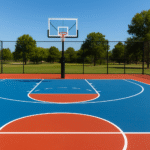


In today’s rapidly evolving sports and recreational infrastructure, multi-purpose courts have become a preferred solution for schools, colleges, residential complexes, sports academies, and community centers. These courts are designed to accommodate multiple sports such as basketball, tennis, badminton, volleyball, pickleball, and futsal within a single space. At the heart of their performance, safety, and durability lies one crucial element: synthetic acrylic sports flooring.
Synthetic acrylic sports flooring has emerged as a leading surface choice for multi-purpose courts due to its versatility, durability, and cost-effectiveness. This article explores the role of synthetic acrylic flooring, its benefits, performance characteristics, and why it has become an industry standard for modern sports facilities.
Understanding Synthetic Acrylic Sports Flooring
Synthetic acrylic sports flooring is a layered surface system made from acrylic resins, fillers, and specialized coatings applied over concrete or asphalt bases. These systems are engineered to provide a seamless, non-slip, and weather-resistant playing surface suitable for both indoor and outdoor environments.
Unlike single-sport flooring solutions, acrylic flooring systems can be customized in terms of texture, cushioning, color, and line markings, making them ideal for courts that host multiple sporting activities.
Why Multi-Purpose Courts Need Specialized Flooring
Multi-purpose courts face unique challenges compared to single-sport facilities. The flooring must:
-
Withstand varying movement patterns
-
Support different types of footwear
-
Offer consistent ball bounce for multiple sports
-
Provide player safety across all age groups
-
Maintain performance under changing weather conditions
Synthetic acrylic sports flooring addresses these demands effectively, making it a practical and long-term solution.
Key Benefits of Synthetic Acrylic Flooring in Multi-Purpose Courts
1. Versatility Across Multiple Sports
One of the strongest advantages of synthetic acrylic flooring is its adaptability. The surface supports a wide range of sports without compromising performance.
Different color zones and markings can be applied for each sport, enabling seamless transitions between games without confusion.
2. Excellent Player Safety
Safety is a top priority in any sports facility. Advanced systems also include cushion layers that absorb impact, minimizing stress on joints, knees, and ankles.
This makes synthetic acrylic flooring particularly suitable for:
-
Schools and colleges
-
Community sports courts
-
Training academies
-
Recreational facilities
3. Superior Durability and Longevity
Multi-purpose courts experience high foot traffic and frequent usage. Synthetic acrylic flooring is highly resistant to:
-
Abrasion
-
Cracking
-
UV radiation
-
Moisture and rain
When installed correctly and maintained periodically, acrylic flooring systems can last 8–10 years or more, making them a cost-effective investment over time.
4. All-Weather Performance
Outdoor multi-purpose courts must perform consistently in different climatic conditions. Synthetic acrylic flooring is UV-stable and water-resistant, ensuring that colors do not fade and surfaces do not deteriorate under sun or rain.
The quick-drying nature of acrylic surfaces allows play to resume shortly after rainfall, maximizing court availability.
5. Consistent Playing Characteristics
Consistency is critical for fair play. Acrylic sports flooring provides:
-
Uniform ball bounce
-
Predictable traction
-
Smooth yet controlled surface texture
These characteristics help athletes perform at their best regardless of the sport being played, making acrylic flooring suitable for both recreational use and competitive training.
Customization Options for Multi-Purpose Courts
Synthetic acrylic flooring systems offer extensive customization possibilities:
Surface Texture
Different textures can be created to balance speed and grip depending on the sports hosted.
Ease of Maintenance
Maintenance plays a major role in the long-term success of multi-purpose courts. Synthetic acrylic sports flooring requires minimal upkeep, typically involving:
-
Regular sweeping or washing
-
Periodic inspection
-
Occasional recoating
Unlike natural surfaces or modular tiles, acrylic flooring does not require frequent repairs or replacements, reducing operational costs.
Sustainability and Environmental Benefits
Low VOC content
-
Water-based coatings
-
Reduced material wastage
Their long lifespan and low maintenance needs also contribute to sustainability by minimizing resource consumption over time.
Applications of Synthetic Acrylic Flooring
Synthetic acrylic sports flooring is widely used in:
-
School and college campuses
-
Residential societies and townships
-
Sports academies and training centers
-
Public parks and community courts
-
Hotels and recreational clubs
Its adaptability makes it suitable for both professional and recreational environments.
Cost-Effectiveness for Facility Owners
From an investment perspective, synthetic acrylic flooring offers an excellent balance between initial cost and long-term value.
Installation and Quality Considerations
The performance of synthetic acrylic sports flooring heavily depends on proper installation. Key factors include:
-
Correct base preparation
-
Accurate layering thickness
-
Use of quality materials
-
Skilled application techniques
Choosing experienced professionals ensures that the flooring meets performance standards and delivers consistent results over time.
Conclusion
Synthetic acrylic sports flooring has transformed the way multi-purpose courts are designed and utilized. Its ability to support multiple sports, ensure player safety, withstand environmental challenges, and offer long-term cost benefits makes it an ideal choice for modern sports facilities.