Pickleball is becoming increasingly popular, and with its growing demand, more schools, sports clubs, residential communities, and recreational facilities are investing in professional pickleball courts. However, building a court is only the first step. Maintaining the playing surface is equally important for providing a safe, comfortable, and consistent playing experience.
Over time, pickleball court flooring can develop several problems due to regular gameplay, changing weather conditions, poor installation, improper drainage, and a lack of maintenance. Issues such as surface cracks, peeling paint, slippery flooring, uneven areas, and water accumulation can affect both player safety and court performance.
Whether you have an indoor or outdoor pickleball court, understanding these common flooring problems can help you identify early warning signs and prevent expensive repairs. The right maintenance practices and timely repair solutions can also extend the lifespan of your sports flooring.
In this guide, we will discuss the most common pickleball court flooring problems, why they occur, and how to fix them effectively.
1. Cracks on the Pickleball Court Surface
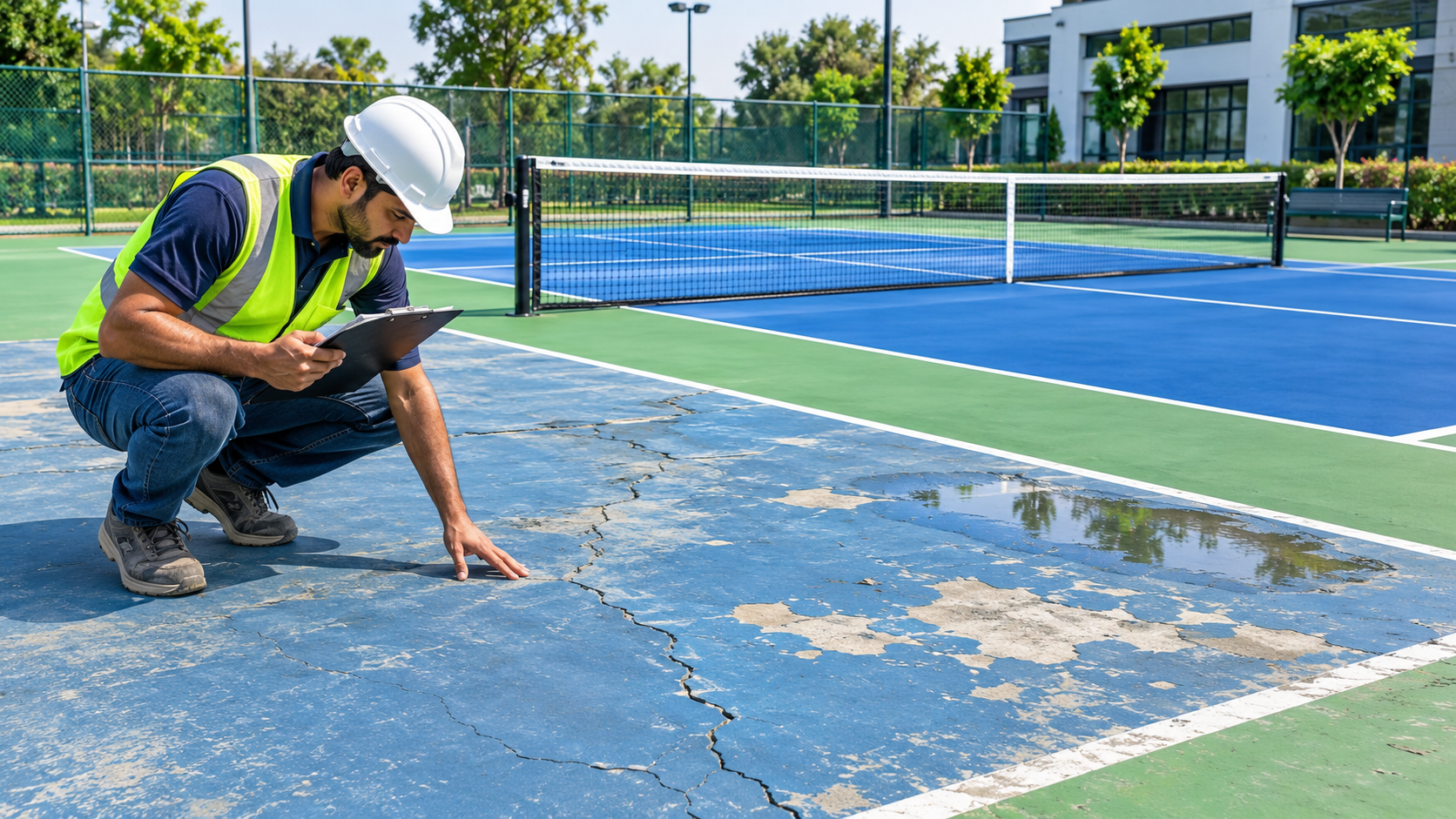
Cracks are among the most common problems found on outdoor pickleball courts. They can appear as small hairline cracks or develop into larger openings across the playing surface. Although minor cracks may initially seem harmless, ignoring them can lead to more serious flooring damage.
Why Do Pickleball Court Floors Develop Cracks?
Several factors contribute to cracking, including:
- Temperature changes that cause the underlying concrete or asphalt to expand and contract.
- Poor-quality base construction or inadequate surface preparation.
- Soil movement beneath the court.
- Water penetration into existing cracks.
- Heavy equipment or excessive loads during construction.
- Natural aging of the court surface.
In regions experiencing extreme summer heat and seasonal rainfall, temperature fluctuations and moisture can make surface cracking more noticeable.
How to Fix Cracks in Pickleball Court Flooring
The repair method depends on the size and depth of the crack.
For small hairline cracks, a compatible acrylic crack filler or suitable flexible repair compound can help restore the playing surface. Larger cracks may require professional crack repair systems, reinforcement, or more extensive resurfacing.
The repair process generally includes:
- Cleaning the damaged area and removing loose material.
- Preparing the crack according to the repair product’s specifications.
- Applying a compatible crack filler.
- Allowing the repair material to cure properly.
- Applying the appropriate resurfacing layers.
- Reapplying the court’s color coating and playing lines where necessary.
If cracks repeatedly return, the underlying base should be inspected. Simply covering the visible damage without addressing the root cause will usually result in another repair requirement.
2. Peeling and Flaking of Acrylic Court Coating
Acrylic coating is widely used for outdoor pickleball court flooring because it provides a durable, textured, and attractive playing surface. However, poor installation or unsuitable environmental conditions can cause the coating to peel, bubble, or flake.
Peeling coating affects the appearance of the court and may also create inconsistent ball bounce and uncomfortable playing conditions.
Common Causes of Peeling
Some of the most common reasons include:
- Applying acrylic coating over a dirty surface.
- Moisture trapped beneath the coating.
- Applying materials over an inadequately cured base.
- Using incompatible coating products.
- Incorrect mixing or application.
- Applying coatings during unsuitable weather conditions.
- Insufficient preparation of the existing surface.
How to Fix Peeling Court Coating
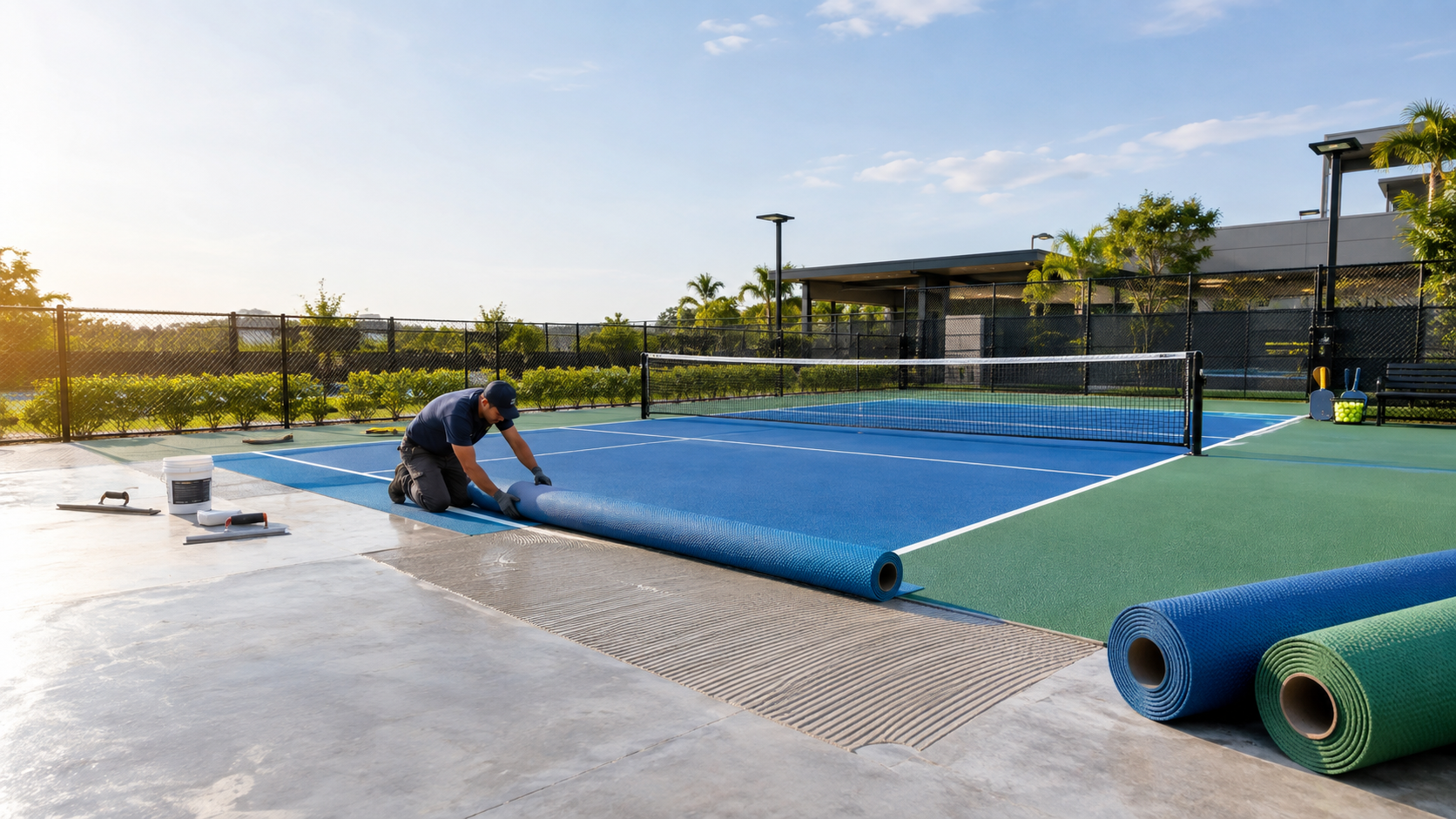
Start by identifying the affected areas. Loose, flaking, or damaged coating should be removed carefully. The surface must then be cleaned and allowed to dry completely.
A suitable acrylic resurfacer or compatible primer may be required depending on the condition of the existing surface and the manufacturer’s recommendations.
After preparation, apply the appropriate acrylic coating system in the specified number of layers. Allow sufficient drying time between applications.
For widespread peeling, professional pickleball court resurfacing is generally a better solution than repeatedly repairing small sections.
Proper surface preparation is essential because even premium-quality acrylic sports flooring materials cannot perform well when applied incorrectly.
3. Slippery Pickleball Court Flooring
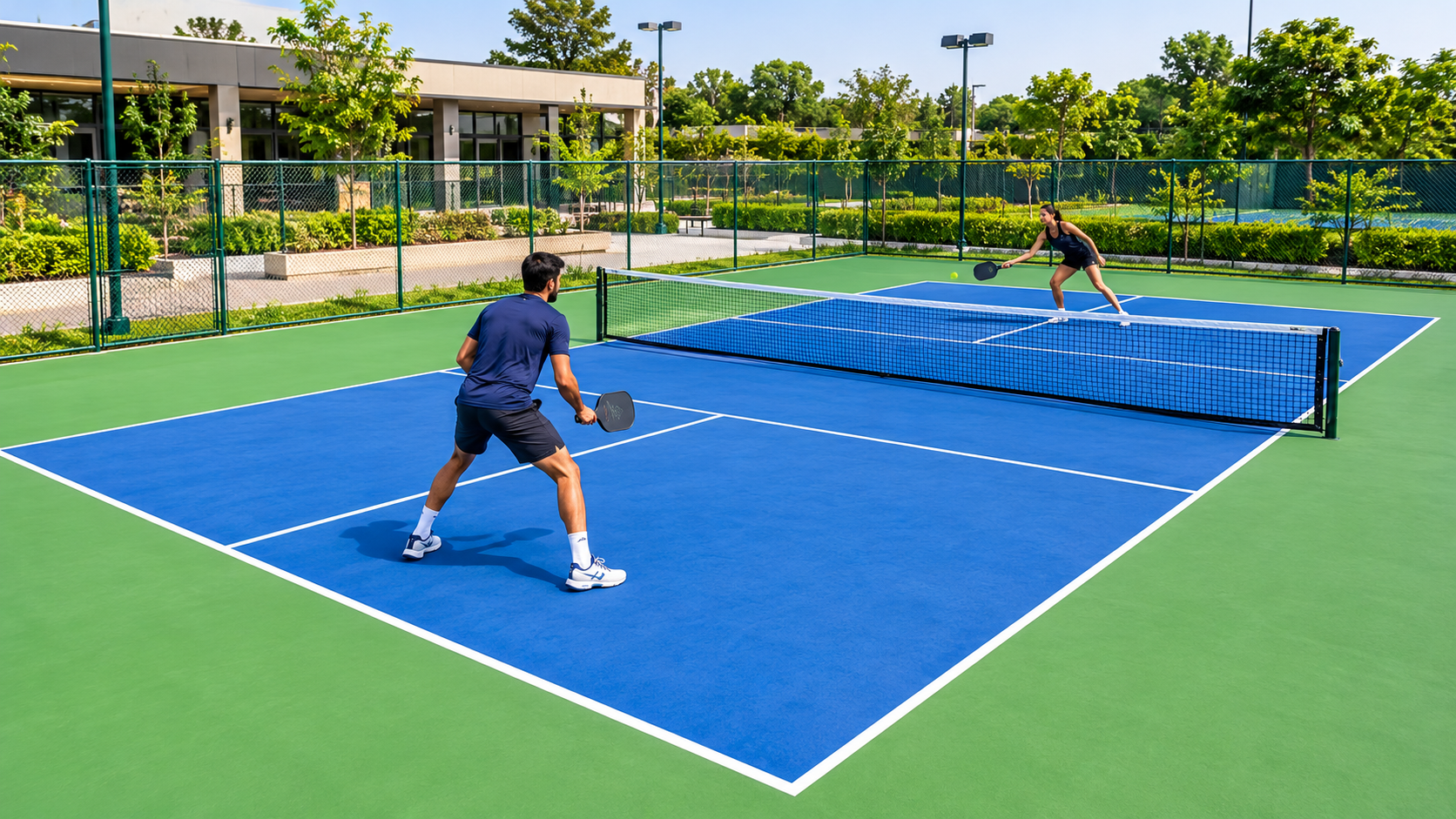
A slippery court is a serious concern because it increases the possibility of players losing their balance while running, changing direction, or reaching for difficult shots.
Pickleball involves frequent lateral movements, quick stops, and sudden changes in direction. Therefore, the playing surface must provide an appropriate level of traction without feeling excessively rough.
What Makes a Pickleball Court Slippery?
Common causes include:
- Dust and dirt accumulating on the surface.
- Algae or moss growth in damp outdoor areas.
- Water remaining on the court after rainfall.
- Worn-out acrylic texture.
- Oil, grease, or other contaminants.
- Incorrect coating materials.
- Excessively smooth or poorly finished flooring.
How to Fix a Slippery Court
The first step is to determine whether the slipperiness comes from surface contamination or coating deterioration.
For ordinary dirt and dust, clean the court using a soft-bristle broom and a suitable low-pressure washing method. Use cleaning products approved for the installed flooring system.
If algae or moss are present, use a compatible treatment recommended by the coating manufacturer. Avoid aggressive chemicals that could damage the acrylic surface.
When the original textured finish has worn away, applying a compatible resurfacing system with the appropriate texture may be necessary.
For indoor pickleball courts, check whether the floor cleaning process is leaving detergent residue. Excessive cleaning chemicals can make some sports flooring surfaces slippery.
Always allow the court to dry completely before reopening it for play.
4. Water Pooling and Poor Court Drainage
Water accumulation is one of the biggest challenges for outdoor pickleball court owners. After rainfall, water may collect in certain sections of the court instead of draining away naturally.
Standing water prevents players from using the court and can gradually damage the surface coating.
Why Does Water Collect on Pickleball Courts?
Water pooling may result from:
- Incorrect court slope.
- Poor drainage system design.
- Uneven construction of the base.
- Depressions or low spots in the playing surface.
- Blocked drainage channels.
- Settlement of the underlying soil.
- Damaged surrounding drainage arrangements.
A properly designed outdoor pickleball court should have a suitable slope that allows rainwater to move away without affecting the playing experience.
How to Fix Water Pooling Problems
Begin by observing where water collects after rainfall. Identify whether the issue is caused by isolated low spots or a larger drainage problem.
Minor surface depressions may sometimes be corrected using a compatible acrylic patching or leveling system designed for sports courts.
However, larger drainage issues may require professional grading, drainage improvements, or reconstruction of the affected base.
Simply applying another coating layer over a low spot will not correct the underlying problem.
It is also important to keep nearby drains and water channels clear of leaves, mud, and debris.
If you are planning a new pickleball court installation, drainage should be considered during the initial construction stage rather than treated as an afterthought.
5. Fading Court Colors and Loss of Appearance
Bright, clearly defined court colors improve visibility and help players identify playing zones. However, outdoor pickleball court colors can gradually fade because of constant sunlight, rainfall, dust, and regular use.
Faded colors can make an otherwise functional court look old and poorly maintained.
What Causes Court Color Fading?
The main reasons include:
- Long-term exposure to ultraviolet rays.
- Low-quality coating materials.
- Frequent cleaning with unsuitable chemicals.
- Continuous player movement.
- Weather exposure.
- Lack of periodic maintenance.
How to Restore Faded Pickleball Court Colors
If the surface is structurally sound but the colors have become dull, applying a fresh compatible acrylic color coating can improve its appearance.
Before resurfacing, clean the entire court and inspect it for cracks, peeling, and other surface defects.
Repair any damaged sections before applying the new color coating. This helps create a more consistent finish.
Choose outdoor sports flooring coatings designed for UV resistance and suitable for the local climate.
It is also worth remembering that applying fresh color coating over damaged or loose material will not provide a long-lasting result.
6. Uneven Court Surface and Inconsistent Ball Bounce
A consistent playing surface is essential for enjoyable pickleball gameplay. When the flooring contains bumps, depressions, or uneven patches, the ball may bounce unpredictably.
These inconsistencies can affect the quality of play and create potential tripping hazards.
Why Does Uneven Flooring Develop?
Common reasons include:
- Poor base preparation.
- Improper concrete or asphalt finishing.
- Soil settlement.
- Water-related base damage.
- Previous low-quality repairs.
- Uneven application of resurfacing materials.
How to Fix Uneven Pickleball Flooring
First, inspect the court to identify the location and extent of uneven areas.
Small surface imperfections may be corrected with a compatible acrylic leveling or patching compound. The material should be applied according to the manufacturer’s instructions.
If the unevenness is caused by a deeper base problem, surface-level repairs may only provide temporary improvement.
In such cases, a professional inspection is necessary to determine whether the base needs repair or partial reconstruction.
For newly constructed courts, proper grading, compaction, and finishing are important steps in avoiding uneven flooring problems later.
7. Peeling, Faded, or Damaged Court Line Markings
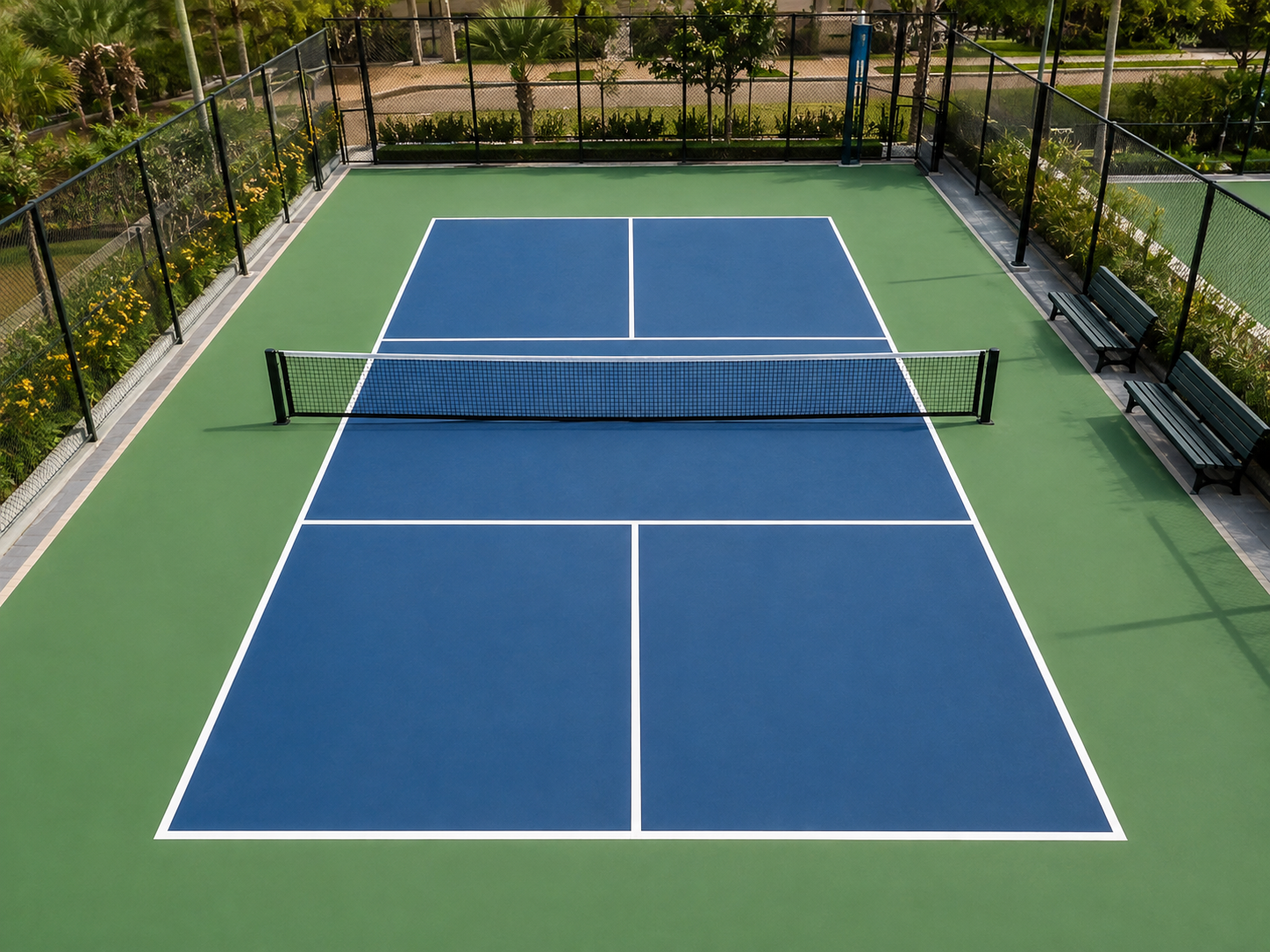
Court lines are essential for defining boundaries, service areas, and the non-volley zone, commonly known as the kitchen.
When the lines become faded, cracked, or start peeling, players may struggle to identify accurate boundaries during gameplay.
This can create confusion and affect the overall playing experience.
What Causes Court Line Damage?
- Poor-quality line marking paint.
- Incorrect surface preparation.
- Heavy foot traffic.
- Weather exposure.
- Applying paint over a damp surface.
- Incompatible coating materials.
- Natural wear and tear.
How to Fix Damaged Court Lines
Remove loose or deteriorated marking material and clean the affected area.
If the existing lines are severely damaged, they may need to be repainted using a suitable sports court line marking product.
Before applying new markings, confirm the official court dimensions and layout.
The standard pickleball court measures 20 feet wide and 44 feet long for both singles and doubles play. The recommended overall playing area should also provide sufficient space beyond the boundary lines for player movement.
Use appropriate masking techniques to achieve straight, clearly defined lines.
Professional line marking helps maintain accurate dimensions and a clean court appearance.
8. Blistering and Bubbles Beneath the Court Coating
Blisters or bubbles can sometimes appear beneath acrylic or other sports flooring coatings. These raised areas may become more visible as the surface ages.
Apart from affecting the appearance, blistering can eventually lead to peeling and surface deterioration.
Why Does Blistering Occur?
Common causes include:
- Moisture trapped beneath the coating.
- Excessive moisture in the concrete base.
- Applying coating over a wet surface.
- Poor adhesion between coating layers.
- Improper application techniques.
- Unsuitable weather conditions during installation.
How to Fix Court Surface Blistering
Blistered sections should be inspected carefully to identify the source of the moisture or adhesion problem.
Affected coating should be removed, and the underlying surface must be allowed to dry sufficiently.
If moisture is entering through the base, the source must be addressed before applying new flooring materials.
Once the surface is suitable, use a compatible repair and resurfacing system.
Do not simply puncture bubbles and cover them with fresh paint. This approach may hide the problem temporarily without restoring proper adhesion.
9. Excessive Surface Wear in High-Traffic Areas
Some sections of a pickleball court experience more activity than others. Areas near the kitchen line, service zones, and player movement paths may show signs of wear sooner.
Over time, the surface texture can become smooth, and the coating may lose its original appearance.
What Causes Excessive Wear?
- Frequent gameplay.
- High player traffic.
- Abrasive footwear.
- Regular dragging of sports equipment.
- Inadequate maintenance.
- Low-quality or unsuitable coating materials.
How to Prevent and Repair Surface Wear
Regular cleaning helps prevent abrasive dust and dirt from damaging the playing surface.
Inspect high-traffic areas periodically to identify early signs of coating deterioration.
Where the surface has become worn, a compatible acrylic resurfacing system may help restore the texture and appearance.
Avoid using hard brushes or aggressive cleaning equipment that could accelerate surface wear.
For facilities with heavy daily usage, a planned maintenance schedule can help reduce unexpected repair costs.
10. Poor Bonding Between Flooring Layers
A pickleball court flooring system generally consists of multiple layers, depending on the selected surface and construction method.
If these layers do not bond correctly, the surface may develop peeling, separation, flaking, or other coating failures.
Common Reasons for Poor Bonding
- Inadequate surface cleaning.
- Incorrect material mixing.
- Applying coatings outside recommended temperature conditions.
- Insufficient drying time.
- Incompatible products.
- Improper surface preparation.
- Applying new layers over damaged existing coatings.
How to Fix Bonding Problems
The affected areas should be inspected to determine which layers have lost adhesion.
Loose materials must be removed, and the base should be prepared according to the coating manufacturer’s specifications.
Use compatible primers, resurfacing compounds, and acrylic coatings where required.
For widespread bonding failure, removing the existing damaged coating and applying a new flooring system may be more effective than repeated patch repairs.
Choosing experienced sports flooring contractors can significantly reduce the chances of these problems during installation.
11. How to Maintain Pickleball Court Flooring and Prevent Future Problems
Although some flooring problems are unavoidable over time, proper maintenance can significantly reduce their frequency and severity.
A well-maintained pickleball court provides a better playing experience and can help delay expensive resurfacing or reconstruction work.
Here are some practical maintenance tips:
Clean the Court Regularly
Remove leaves, dust, sand, and other debris using a soft-bristle broom or suitable cleaning equipment.
Dirt accumulation can gradually affect surface texture and traction.
Inspect the Surface for Cracks
Check the playing surface regularly for hairline cracks, peeling, and damaged areas.
Early repairs are generally easier and less expensive than addressing widespread deterioration.
Keep Drainage Areas Clear
Make sure surrounding drainage channels remain free of mud, leaves, and other blockages.
Proper water movement helps protect outdoor sports flooring.
Avoid Harsh Cleaning Chemicals
Use cleaning products suitable for your particular flooring material.
Strong chemicals and unsuitable solvents can damage surface coatings and markings.
Use Appropriate Sports Footwear
Encourage players to wear non-marking sports shoes with suitable traction.
This helps protect the playing surface and supports safer movement.
Schedule Professional Inspections
A professional inspection can identify hidden surface problems, drainage concerns, and coating deterioration before they become major issues.
Facilities with frequent daily usage may benefit from more regular inspections.
12. When Should You Consider Pickleball Court Resurfacing?
Not every flooring problem requires complete court replacement. In many situations, professional repair or resurfacing can restore the playing surface.
However, if the court has widespread cracking, extensive coating failure, persistent water pooling, or significant surface deterioration, a more comprehensive solution may be necessary.
Consider professional pickleball court resurfacing when:
- The acrylic coating has become extensively worn.
- Multiple sections have developed cracks.
- The court surface has lost its original texture.
- Colors and line markings have deteriorated.
- Previous repairs have failed repeatedly.
- Surface irregularities are affecting ball bounce.
- Water-related damage is becoming more frequent.
The correct resurfacing method depends on the existing base, the extent of the damage, the flooring material, and the court’s intended usage.
An experienced sports flooring professional can evaluate these factors and recommend an appropriate repair or resurfacing system.
Conclusion
Pickleball court flooring plays an important role in player safety, gameplay quality, and the overall appearance of a sports facility. Problems such as cracks, slippery surfaces, peeling acrylic coatings, water pooling, fading colors, and uneven flooring can develop over time, particularly when installation quality and maintenance are overlooked.
The good news is that most surface-related problems can be managed with timely inspection, suitable repair materials, and proper maintenance practices.
Whether you are managing an existing pickleball court or planning a new installation, investing in quality flooring materials and professional workmanship can make a significant difference in long-term performance.
A properly constructed and maintained pickleball court not only looks better but also provides a more consistent and enjoyable playing experience for everyone.
Looking for a reliable solution for pickleball court flooring, repair, or resurfacing? Choose an experienced sports flooring specialist who understands court construction, surface preparation, drainage, acrylic coating systems, and long-term maintenance requirements.
Frequently Asked Questions (FAQs)
1. What is the most common problem with pickleball court flooring?
Surface cracking, coating deterioration, slippery areas, and water pooling are among the most common problems, particularly on outdoor pickleball courts.
2. How can I repair cracks in a pickleball court?
Small cracks can often be repaired using compatible acrylic crack fillers or sports court repair compounds. Larger cracks may require professional repair systems and an inspection of the underlying base.
3. Why is my pickleball court slippery?
Dust, algae, moisture, worn surface texture, and unsuitable cleaning products can make a pickleball court slippery. Cleaning the surface and restoring the appropriate texture can help resolve the issue.
4. How do I prevent water pooling on an outdoor pickleball court?
Proper court slope, effective drainage, and a well-prepared base are essential. Existing low spots may require professional leveling or more extensive drainage corrections.
5. Can faded pickleball court flooring be restored?
Yes. If the underlying surface is in good condition, cleaning, repairing damaged sections, and applying a compatible acrylic color coating can restore its appearance.
6. How often should a pickleball court be maintained?
Basic cleaning should be performed regularly, while detailed inspections should be scheduled periodically based on court usage and environmental conditions. High-traffic outdoor courts generally require more frequent attention.
7. Is acrylic flooring suitable for outdoor pickleball courts?
Yes. Acrylic sports court systems are commonly used for outdoor pickleball courts because they provide a textured playing surface, customizable colors, and weather-appropriate performance when properly installed and maintained.
8. When should a pickleball court be resurfaced?
Resurfacing should be considered when the coating becomes extensively worn, cracks appear across multiple areas, surface texture deteriorates, or the playing surface becomes inconsistent.
9. Can I repaint my pickleball court without repairing cracks?
It is not recommended. Existing cracks and damaged areas should be properly repaired before applying fresh coating. Otherwise, the new finish may deteriorate prematurely.
10. What is the best way to extend the lifespan of pickleball court flooring?
Regular cleaning, early crack repairs, proper drainage, suitable cleaning products, and periodic professional inspections can help extend the useful life of pickleball court flooring.