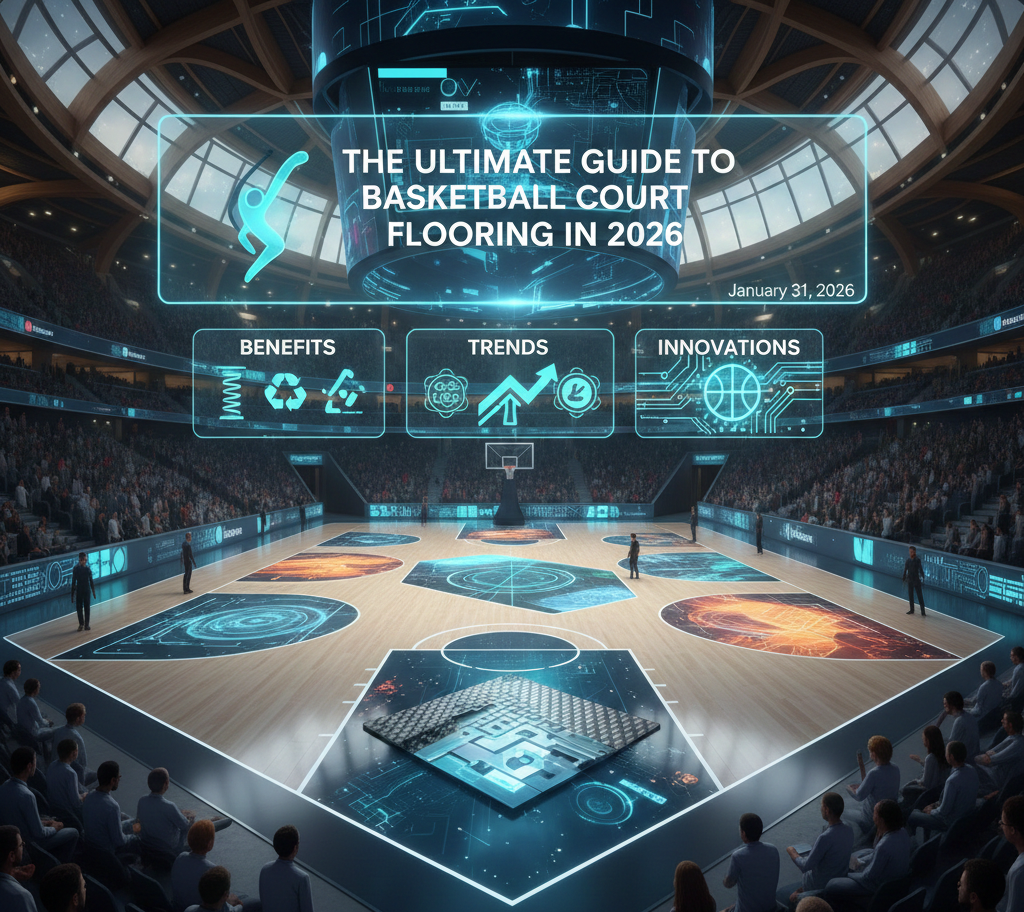

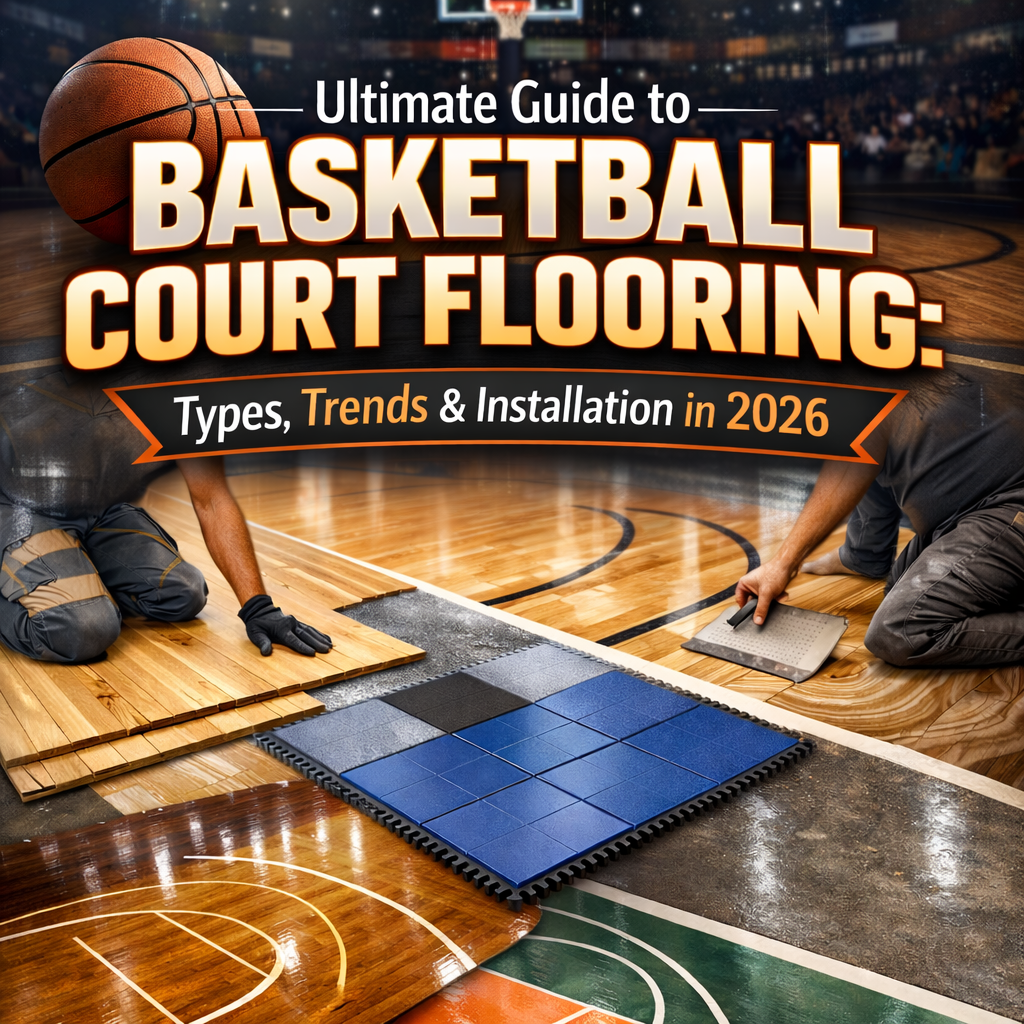
Basketball is one of the fastest-growing indoor and outdoor sports worldwide. Whether it’s for professional stadiums, school gyms, sports academies, or residential complexes, basketball court flooring plays a pivotal role in ensuring player performance, safety, and durability. In 2026, trends in basketball flooring are evolving, emphasizing advanced materials, eco-friendliness, and multi-purpose usage. This guide provides an in-depth overview of basketball flooring types, installation processes, technical specifications, and FAQs to help you make informed decisions for your sports facility.
Introduction: Why Basketball Court Flooring Matters
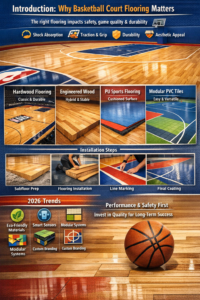
The flooring of a basketball court is more than just a surface; it directly affects player safety, game quality, and the longevity of your investment. Choosing the wrong flooring can lead to injuries, uneven bounce, and frequent maintenance issues. Key factors to consider include:
-
Shock absorption – Minimizes injuries and reduces fatigue.
-
Traction & grip – Prevents slipping during fast movements.
-
Durability – Withstands high-intensity play and heavy usage.
-
Aesthetic appeal – Reflects professionalism and modern design trends.
In 2026, sports facility owners are increasingly prioritizing modular, eco-friendly, and hybrid flooring systems that combine performance with sustainability.
Types of Basketball Court Flooring in 2026
Basketball court flooring can be broadly categorized into indoor and outdoor surfaces, each with unique materials and benefits.
1. Hardwood Basketball Flooring
Hardwood is the gold standard for professional indoor basketball courts, including NBA and FIBA arenas. Typically made from maple wood, hardwood floors offer:
-
High durability – Can last over 20 years with proper maintenance.
-
Excellent ball bounce consistency.
-
Shock absorption – Reduces strain on knees and joints.
Technical Specs:
-
Thickness: 20–25 mm
-
Subfloor: Multi-layer plywood with shock-absorbing pads
-
Finish: UV-cured polyurethane for scratch resistance
2. Engineered Wood Flooring
A modern alternative to solid hardwood, engineered wood flooring combines multiple wood layers with a hardwood veneer.
Advantages:
-
More stable under varying humidity and temperature
-
Easier installation
-
Eco-friendly due to reduced use of solid wood
Trending in 2026: Many gyms and multipurpose sports halls are adopting engineered wood for hybrid functionality.
3. Polyurethane (PU) Sports Flooring
Polyurethane sports flooring is gaining popularity due to its versatility and cushioning effect.
Key Features:
-
Shock absorption: 40–50%
-
Seamless surface reduces injury risks
-
Suitable for indoor and semi-outdoor courts
-
Available in custom colors and anti-slip textures
Technical Details:
-
Thickness: 4–7 mm for professional courts
-
Top layer: UV-resistant polyurethane
-
Base layer: EPDM or recycled rubber
4. Vinyl & PVC Modular Flooring
Modular PVC flooring systems are highly popular for schools, community centers, and temporary events.
Advantages:
-
Quick installation and easy maintenance
-
Can be disassembled and relocated
-
Water-resistant and durable
-
Available in multiple color patterns and branding options
2026 Trend: High-performance interlocking PVC tiles are replacing traditional rolled vinyl sheets due to enhanced grip and safety compliance.
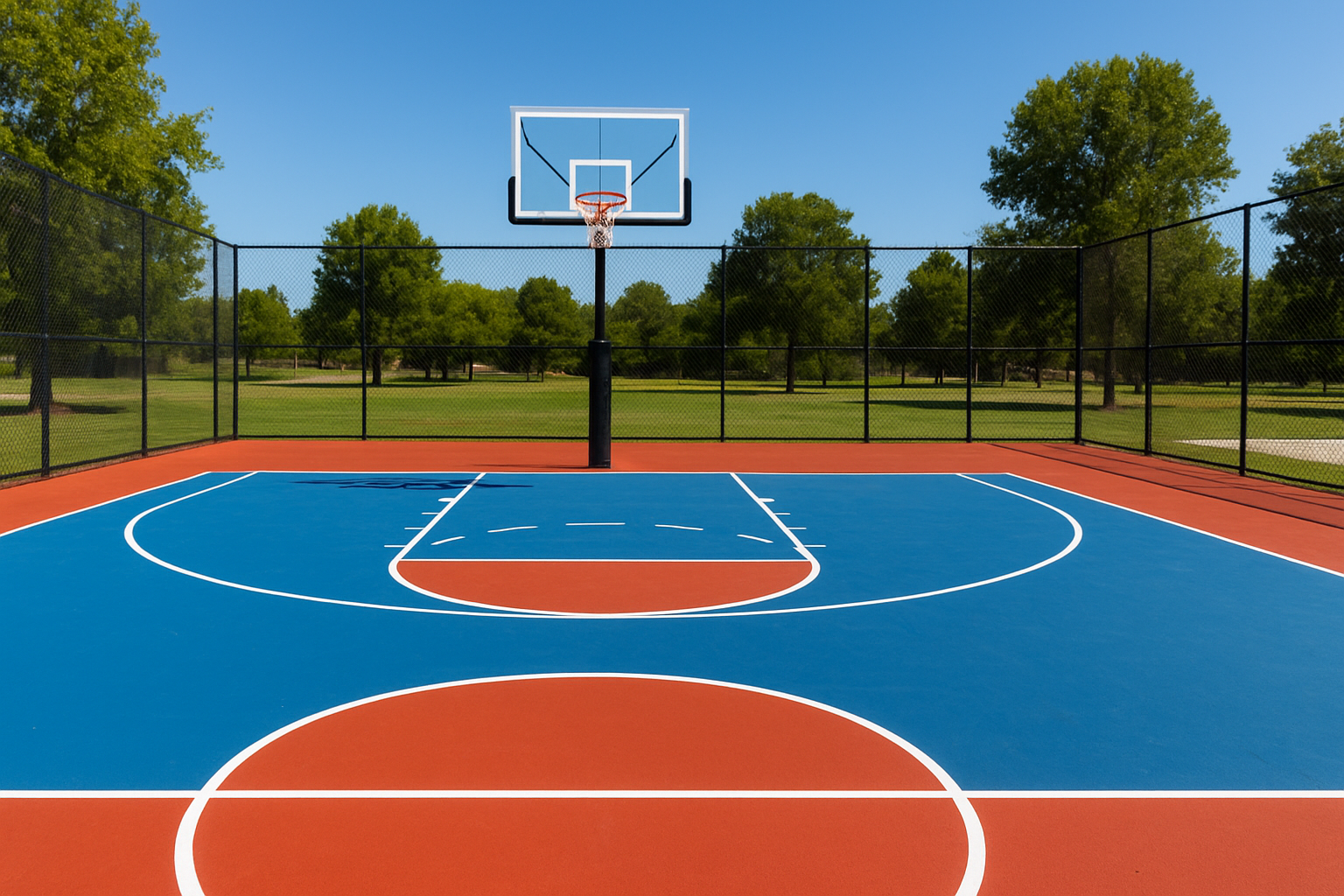
5. Outdoor Basketball Court Flooring
Outdoor courts demand weather-resistant surfaces. Common materials include:
-
Acrylic / Synthetic coatings – UV and water-resistant
-
Rubberized tiles – Shock absorption and slip resistance
-
Hybrid modular systems – Combine performance and durability
Tips: Ensure proper drainage and anti-UV coatings to prolong lifespan.
Step-by-Step Basketball Court Flooring Installation Guide
Installing a basketball court requires technical expertise to ensure durability and performance. Here’s a step-by-step outline for 2026-standard installations:
Step 1: Site Preparation
-
Clear the area of debris, dust, and uneven surfaces.
-
Check for levelness using a laser level; adjust subfloor accordingly.
-
For outdoor courts, ensure proper drainage slopes.
Step 2: Subfloor Installation
-
Hardwood / Engineered Wood: Lay moisture-resistant plywood and shock-absorbing pads.
-
PU / Vinyl: Prepare a smooth, self-leveling concrete base.
-
Ensure the subfloor is completely dry to prevent damage.
Step 3: Flooring Layer Installation
-
Hardwood: Lay planks in a staggered pattern; nail or glue down.
-
Engineered Wood: Floating installation or adhesive-based.
-
PU / Vinyl: Roll out sheets or interlock modular tiles.
-
Precision alignment is crucial for court markings.
Step 4: Surface Treatment
-
Apply polyurethane or protective coating for wood floors.
-
For synthetic floors, ensure UV and anti-slip finishes are applied.
-
Allow adequate curing time per manufacturer guidelines.
Step 5: Court Markings & Accessories
-
Paint lines according to FIBA or NBA regulations.
-
Install hoops, backboards, and safety padding.
-
Check bounce consistency and traction before use.
Step 6: Maintenance & Inspection
-
Regular cleaning with pH-neutral solutions
-
Periodic re-polishing for wooden floors
-
Inspect for loose tiles or surface damage
Top Trends in Basketball Court Flooring for 2026
-
Eco-friendly Materials: Sustainable woods, recycled PU, and PVC tiles are gaining traction.
-
Smart Flooring: Integrated sensors track player performance and footwork.
-
Modular Systems: Easy to install, relocate, and maintain.
-
Custom Branding: Personalized court colors, logos, and designs for sports academies and schools.
-
Hybrid Surfaces: Combining wood, PU, and rubber for indoor-outdoor multipurpose use.
Conclusion
Investing in high-quality basketball court flooring in 2026 goes beyond aesthetics. It’s about player safety, long-term durability, and performance optimization. Choosing the right flooring—whether hardwood, engineered wood, PU, PVC, or outdoor modular systems—requires understanding technical specifications, installation procedures, and current trends.
Frequently Asked Questions (FAQ)
Q1: What is the best flooring for professional basketball courts?
A: Solid maple hardwood remains the preferred choice for professional indoor courts due to its bounce consistency, durability, and shock absorption.
Q2: Can I install basketball flooring outdoors?
A: Yes, use acrylic, rubberized, or modular outdoor tiles with proper drainage and UV protection.
Q3: How long does basketball court flooring last?
A: Hardwood floors last 15–25 years with maintenance; PU and PVC surfaces last 8–15 years.
Q4: Is modular flooring suitable for multipurpose sports halls?
A: Absolutely. Modular PVC and hybrid tiles are ideal for multipurpose use and can be relocated or replaced easily.
Q5: How often should I maintain a basketball court?
A: Daily cleaning and annual inspection; wood floors may need polishing every 1–2 years.
Optimizing your sports facility with the right basketball court flooring is essential for player safety, performance, and aesthetics. With the trends of 2026 emphasizing modularity, sustainability, and smart technology, choosing a floor that aligns with these factors will keep your court ahead of the curve.