



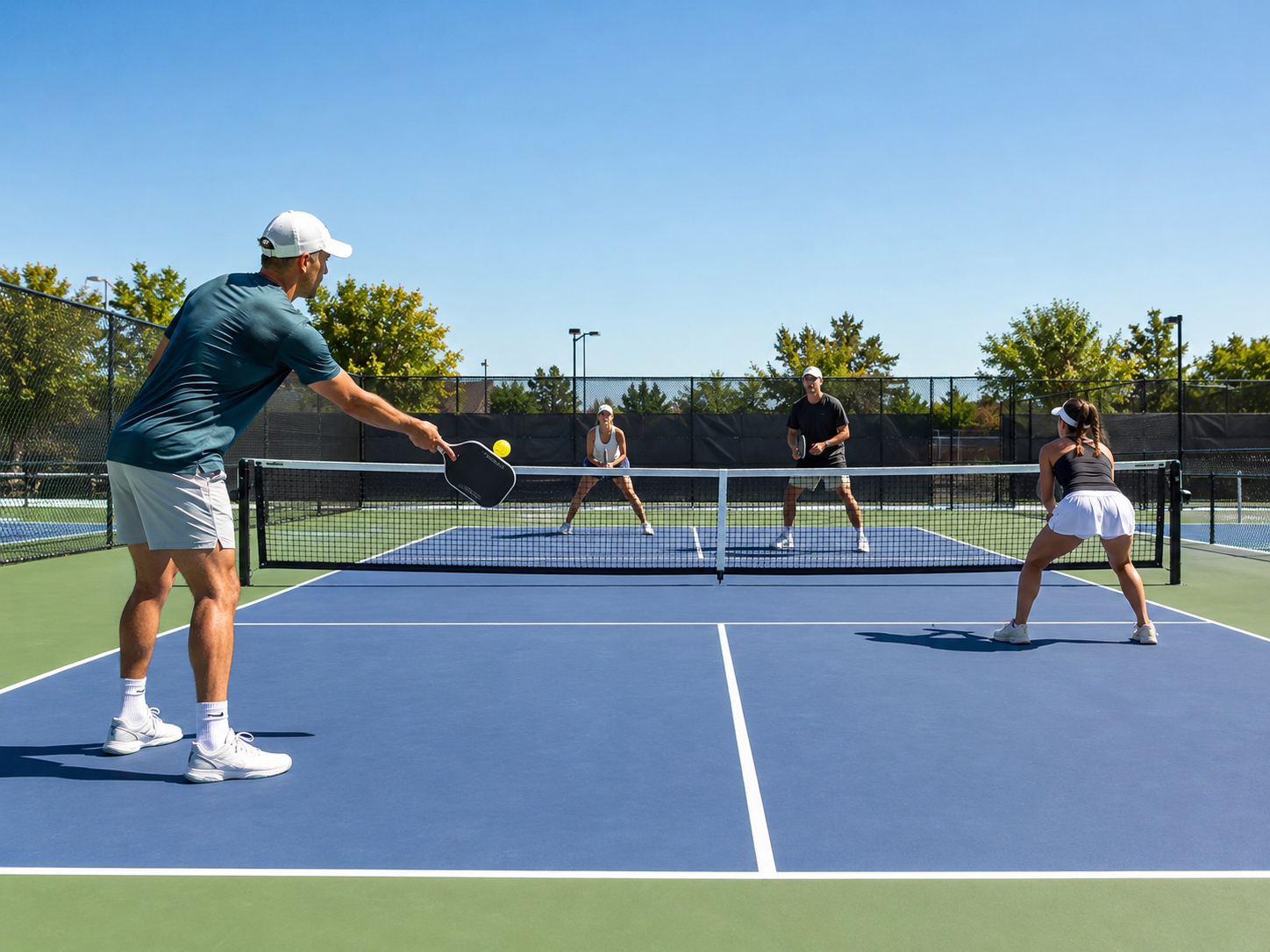
Pickleball has become one of the fastest-growing sports worldwide, creating a huge demand for professional pickleball court construction and high-quality pickleball net installation services. Whether you are developing a sports academy, school, residential society, club, hotel, university, stadium, or recreational park, choosing the right pickleball net service ensures player safety, excellent game performance, and long-lasting durability.
A professionally installed pickleball net not only meets official standards but also enhances the playing experience. From permanent in-ground systems to portable competition nets, selecting the appropriate net solution is essential for every facility.
This comprehensive guide explains everything about pickleball net services, installation, maintenance, costs, materials, and how to choose the best service provider.
What is a Pickleball Net Service?
A pickleball net service includes the supply, installation, maintenance, repair, replacement, and inspection of pickleball net systems for indoor and outdoor courts.
Professional services generally include:
- Site inspection
- Court measurements
- Pole installation
- Net assembly
- Tension adjustment
- Height calibration
- Safety inspection
- Annual maintenance
- Replacement of damaged parts
Professional installers ensure the net complies with USA Pickleball regulations and provides consistent playing conditions.
Importance of Professional Pickleball Net Installation
Installing a pickleball net may seem simple, but precision matters.
Professional installation provides:
- Accurate net height
- Proper center strap adjustment
- Strong pole foundations
- Long-lasting stability
- Smooth gameplay
- Better player safety
- Reduced maintenance costs
- Weather-resistant performance
Improper installation often leads to sagging nets, unstable poles, and uneven gameplay.
Official Pickleball Net Dimensions
According to international standards:
| Specification | Measurement |
|---|---|
| Net Height at Posts | 36 inches |
| Net Height at Center | 34 inches |
| Net Width | 22 feet |
| Pole Distance | Approximately 22 feet |
| Court Width | 20 feet |
| Court Length | 44 feet |
Maintaining these dimensions ensures fair competition and consistent ball bounce.
Types of Pickleball Nets
1. Permanent Pickleball Nets
Permanent nets are installed using concrete foundations.
Best for:
- Sports complexes
- Clubs
- Schools
- Universities
- Stadiums
- Residential communities
Advantages:
- Strong structure
- Professional appearance
- Long lifespan
- Low maintenance
- Excellent stability
2. Portable Pickleball Nets
Portable systems use wheeled or folding frames.
Ideal for:
- Indoor halls
- Temporary tournaments
- Community centers
- Recreational courts
- Multipurpose sports halls
Benefits:
- Easy transportation
- Quick setup
- Cost-effective
- Space-saving
3. Tournament Pickleball Nets
Professional tournaments require premium-grade net systems with:
- Heavy-duty steel poles
- Powder-coated finish
- Adjustable tension mechanism
- Reinforced net edges
- Official competition dimensions
Components of a Pickleball Net System
A complete system includes:
Steel Poles
Heavy galvanized or powder-coated steel poles resist corrosion and provide structural support.
Net Cable
Aircraft-grade steel cable ensures proper tension.
Pickleball Net
Constructed using UV-resistant polyethylene or polyester mesh.
Center Strap
Maintains the official 34-inch center height.
Ground Sleeves
Installed in concrete foundations for removable poles.
Winch Mechanism
Allows easy tension adjustment.
Hardware
Includes bolts, clamps, hooks, brackets, and fasteners.
Materials Used
Professional pickleball net systems use:
Galvanized Steel
Provides excellent corrosion resistance.
Powder-Coated Steel
Offers enhanced durability and aesthetic appeal.
Aluminum
Lightweight and rust-resistant.
Polyester Mesh
Highly durable and weather-resistant.
Polyethylene Netting
UV stabilized and suitable for outdoor environments.
Stainless Steel Hardware
Prevents rust and extends service life.
Installation Process
Step 1: Site Inspection
Engineers inspect:
- Court dimensions
- Surface level
- Concrete condition
- Drainage
- Pole locations
Step 2: Marking
Pole positions are marked according to official standards.
Step 3: Foundation Work
Concrete footings are excavated.
Typical depth:
- 450–600 mm
Concrete cures before pole installation.
Step 4: Pole Installation
Steel poles are aligned vertically using laser levels.
Step 5: Net Installation
The net is connected using steel cables and tension systems.
Step 6: Height Adjustment
Professional installers verify:
- 36 inches at posts
- 34 inches at center
Step 7: Final Inspection
Final checks include:
- Pole alignment
- Net tension
- Center strap
- Safety hardware
- Stability testing
Indoor Pickleball Net Services
Indoor courts require:
- Non-marking portable systems
- Rubber wheels
- Lightweight frames
- Quick assembly
- Smooth tension adjustment
Popular locations include:
- Sports halls
- Schools
- Universities
- Indoor arenas
- Community centers
Outdoor Pickleball Net Services
Outdoor installations require:
- UV-resistant nets
- Rust-proof poles
- Heavy-duty foundations
- Weather-resistant coatings
- Stainless steel hardware
Suitable for:
- Parks
- Resorts
- Clubs
- Housing societies
- Stadiums
Pickleball Net Maintenance Services
Regular maintenance increases the lifespan of the equipment.
Maintenance includes:
- Cleaning
- Cable inspection
- Pole repainting
- Hardware tightening
- Net replacement
- Winch lubrication
- Height calibration
Annual maintenance minimizes repair costs.
Common Pickleball Net Problems
Sagging Net
Cause:
Improper tension.
Solution:
Adjust the winch and center strap.
Rusty Poles
Cause:
Poor-quality steel.
Solution:
Use galvanized or powder-coated poles.
Broken Mesh
Cause:
UV damage or aging.
Solution:
Replace the net.
Loose Hardware
Cause:
Continuous play.
Solution:
Regular tightening and inspection.
Leaning Poles
Cause:
Weak foundations.
Solution:
Repair or reconstruct concrete footing.
Benefits of High-Quality Pickleball Net Systems
Professional systems provide:
- Longer lifespan
- Better appearance
- Consistent net height
- Enhanced player safety
- Tournament compliance
- Reduced maintenance
- Improved game quality
- Better return on investment
Applications
Professional pickleball net installation is suitable for:
- Schools
- Colleges
- Universities
- Sports clubs
- Fitness centers
- Public parks
- Residential townships
- Hotels
- Resorts
- Corporate campuses
- Government sports facilities
- Recreation centers
Choosing the Right Pickleball Net Service Provider
Consider the following factors:
Experience
Choose companies with proven expertise in sports infrastructure.
Quality Materials
Look for:
- Galvanized steel
- Powder coating
- UV-resistant nets
- Stainless hardware
Standards Compliance
Ensure installation follows official pickleball specifications.
Warranty
Select providers offering product and installation warranties.
After-Sales Support
Maintenance and replacement services should be readily available.
Estimated Installation Timeline
| Project | Time |
|---|---|
| Portable Net Setup | 30–60 minutes |
| Permanent Pole Installation | 1–2 days |
| Full Court Installation | 2–5 days |
| Multiple Courts | 1–2 weeks |
Timelines vary based on site conditions and project scope.
Maintenance Tips
To maximize the life of your pickleball net system:
- Check net tension weekly.
- Clean the net with mild soap and water.
- Inspect poles for rust or damage.
- Tighten loose hardware regularly.
- Remove the net during extreme weather if possible.
- Lubricate the winch mechanism periodically.
- Replace damaged cables immediately.
- Schedule annual professional inspections.
Why Invest in Professional Pickleball Net Services?
A professionally installed net system offers:
- Accurate gameplay
- Compliance with official standards
- Reduced long-term maintenance
- Improved durability
- Enhanced player experience
- Increased property value
- Safer sports environment
- Better aesthetics
Whether for recreational play or competitive tournaments, a quality net installation is a worthwhile investment.
Frequently Asked Questions (FAQs)
What is the official height of a pickleball net?
The net should measure 36 inches at the sidelines and 34 inches at the center.
How long does a pickleball net last?
A high-quality, well-maintained net system can last 8–15 years, depending on usage and environmental conditions.
Can a tennis court be converted into a pickleball court?
Yes. With proper court markings and a correctly installed pickleball net, many tennis courts can be adapted for pickleball.
Are portable pickleball nets suitable for tournaments?
Many premium portable systems meet tournament standards, provided they maintain the correct dimensions and net tension.
How often should a pickleball net be inspected?
Routine visual checks should be performed weekly, with a professional inspection recommended at least once a year.
Conclusion
A high-quality pickleball net is the centerpiece of every successful pickleball court. Investing in professional pickleball net services ensures correct installation, official dimensions, long-term durability, and a safe, enjoyable playing experience. Whether you need a permanent outdoor system or a portable indoor solution, working with experienced installers and using premium materials will help your court deliver reliable performance for years to come.
By selecting durable components, following official specifications, and maintaining the system regularly, schools, clubs, residential communities, and sports facilities can provide players with a professional-grade environment that supports both recreational and competitive pickleball. This investment not only enhances gameplay but also adds lasting value to any sports infrastructure project.