
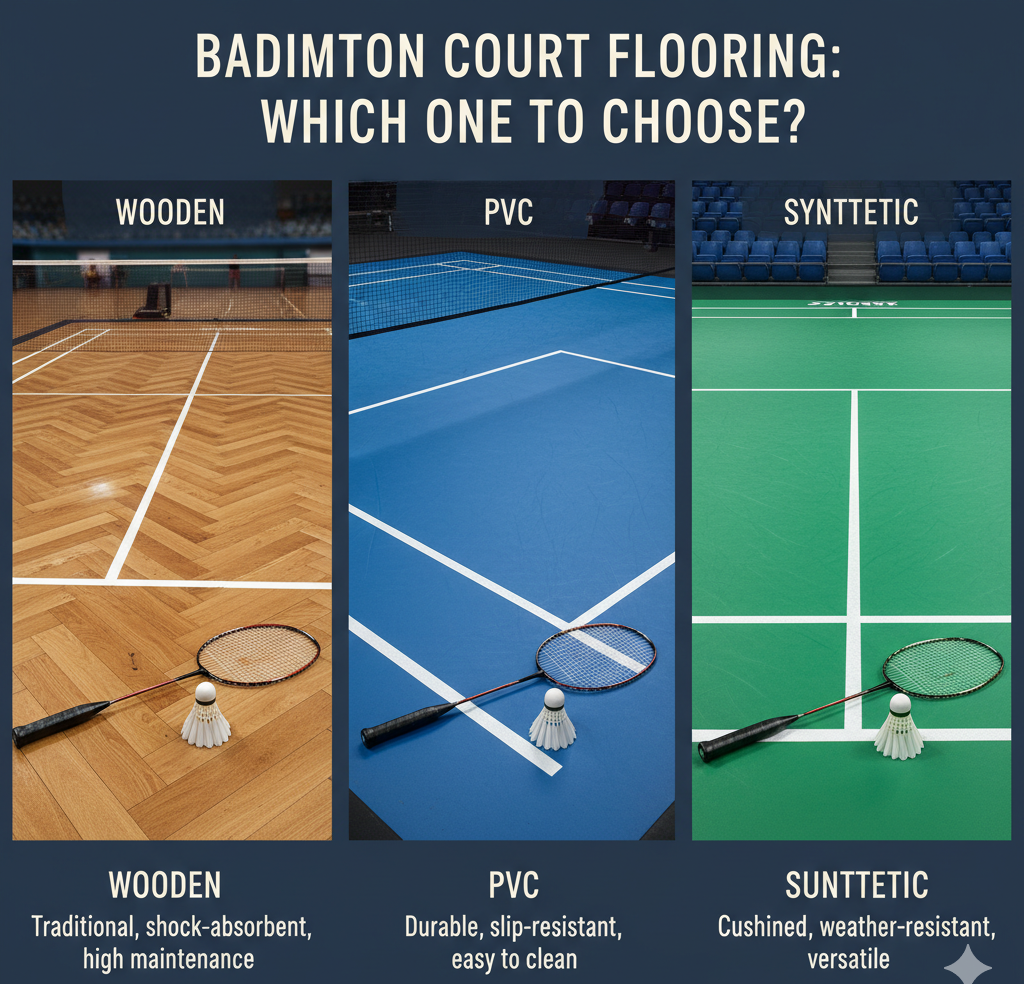
Badminton has evolved from a recreational backyard game to a highly competitive sport played professionally across the globe. With its growing popularity, the importance of the playing surface cannot be understated. The right badminton court flooring enhances performance, reduces injury risk, and ensures durability. However, choosing the right flooring can be confusing, as there are multiple options available: wooden, PVC, and synthetic. In this blog, we’ll break down the differences between these flooring types and help you make an informed choice.
1. Wooden Badminton Court Flooring
Wooden floors have long been considered the gold standard for indoor badminton courts, especially in professional settings. Typically made from high-quality hardwood such as maple or oak, wooden flooring offers a unique combination of performance and aesthetics.
Advantages of Wooden Flooring
-
Superior Shock Absorption: Wooden floors provide excellent shock absorption, which reduces the strain on players’ knees and joints during intense play.
-
Enhanced Grip and Control: The natural texture of wood allows for better grip, enabling players to make quick lateral movements and pivoting actions safely.
-
Professional Standard: Most international tournaments, including the Olympics and BWF events, prefer wooden flooring due to its consistent bounce and playing characteristics.
-
Aesthetic Appeal: Wooden floors bring a premium, elegant look to indoor courts, enhancing the overall atmosphere.
Disadvantages of Wooden Flooring
-
High Installation Cost: Hardwood flooring requires precision installation and a smooth subfloor, making it an expensive choice.
-
Maintenance Requirements: Wooden floors are prone to scratches, moisture damage, and warping if not maintained properly. Regular polishing and sealing are necessary.
-
Sensitivity to Environment: Changes in humidity and temperature can affect wooden flooring, requiring controlled indoor conditions.
Best For: Professional and semi-professional indoor courts, training academies, and sports complexes prioritizing performance and aesthetics.
2. PVC Badminton Court Flooring
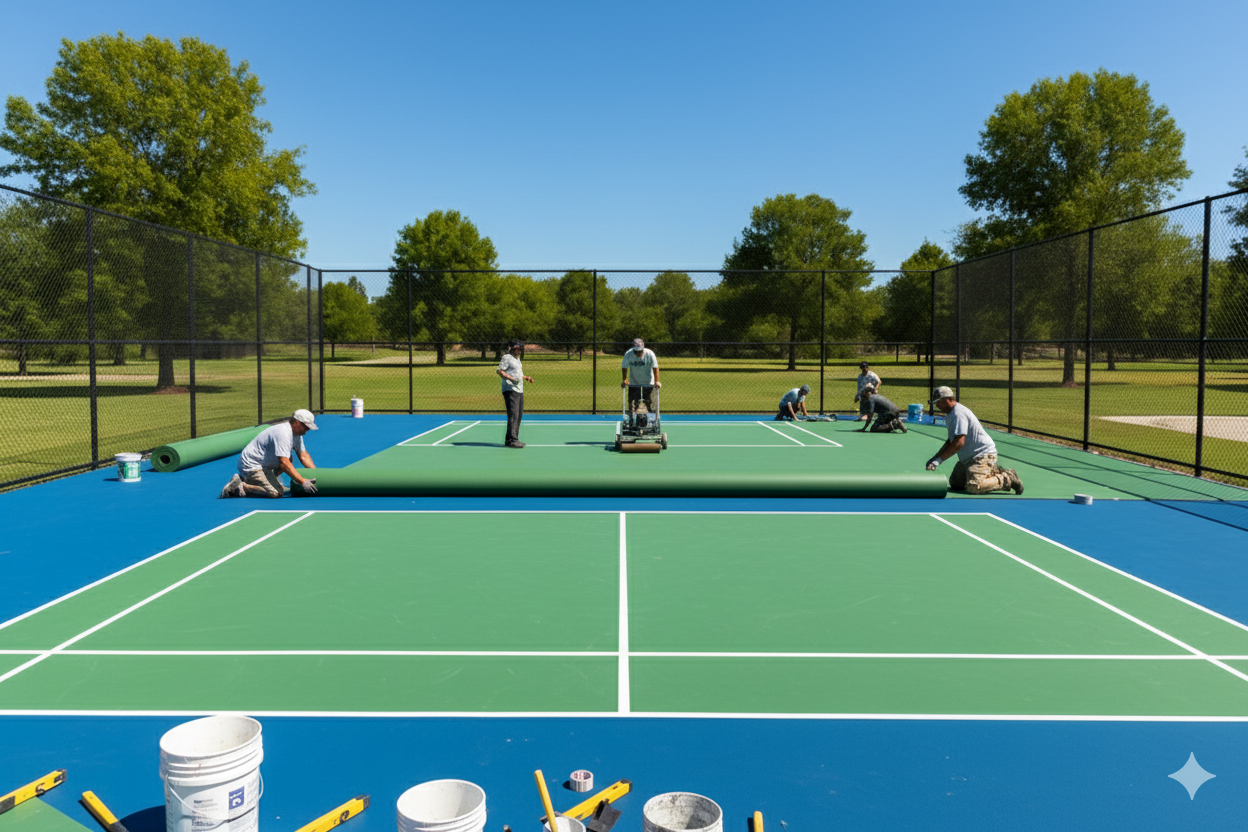
PVC (Polyvinyl Chloride) flooring has become increasingly popular in modern badminton arenas. It is a type of synthetic flooring made from high-quality plastic materials, designed specifically for sports.
Advantages of PVC Flooring
-
Cost-Effective: Compared to wooden floors, PVC is more affordable to purchase and install, making it suitable for schools, clubs, and budget-conscious facilities.
-
Low Maintenance: PVC floors are easy to clean and resistant to moisture, stains, and wear. There is no need for regular polishing.
-
Consistent Playing Surface: PVC surfaces offer a uniform bounce and smoothness, allowing players to focus entirely on the game.
-
Shock Absorption and Comfort: Many PVC floors come with cushioned layers that absorb impact, reducing the risk of joint injuries.
-
Variety of Colors and Designs: PVC flooring is available in multiple colors and textures, allowing courts to be customized aesthetically.
Disadvantages of PVC Flooring
-
Less Professional Feel: While PVC is suitable for recreational and semi-professional play, it lacks the natural grip and premium feel of wooden courts.
-
Durability Concerns: Lower-quality PVC may wear out faster and could show scratches or indentations over time.
-
Temperature Sensitivity: PVC can become slippery if it gets too hot or dusty, potentially affecting player safety.
Best For: Schools, colleges, indoor sports clubs, and multi-purpose halls where cost-effectiveness and low maintenance are priorities.
3. Synthetic Badminton Court Flooring
Synthetic flooring encompasses a broad category that includes polyurethane, vinyl, and hybrid materials. These floors are engineered for high-performance sports, offering a balance between wooden and PVC options.
Advantages of Synthetic Flooring
-
Durable and Long-Lasting: High-quality synthetic floors can withstand heavy use without significant wear and tear.
-
Customizable Shock Absorption: Synthetic flooring can be engineered with varying layers of cushioning, providing optimal protection for joints.
-
Versatile Use: Synthetic courts are ideal for both indoor and semi-outdoor settings, making them suitable for multi-purpose sports facilities.
-
Consistent Performance: These floors provide uniform bounce, traction, and slide control, ensuring fair and predictable gameplay.
Disadvantages of Synthetic Flooring
-
Moderate Cost: While cheaper than premium wooden flooring, synthetic options are generally more expensive than PVC.
-
Installation Complexity: Some synthetic floors require professional installation to ensure evenness and longevity.
-
Aesthetic Limitations: Though functional, synthetic floors may not match the visual appeal of polished wooden surfaces.
Best For: Indoor sports complexes, professional academies, and venues requiring durability and safety without the high maintenance of wooden flooring.
4. Key Differences Between Wooden, PVC & Synthetic Flooring
| Feature | Wooden Flooring | PVC Flooring | Synthetic Flooring |
|---|---|---|---|
| Cost | High | Low to Moderate | Moderate |
| Maintenance | High | Low | Moderate |
| Shock Absorption | Excellent | Good | Excellent (customizable) |
| Grip & Control | Superior | Moderate | High |
| Durability | Long-lasting with care | Moderate | Long-lasting |
| Professional Standard | Yes | No | Yes (depending on quality) |
| Aesthetic Appeal | Premium | Average | Functional |
5. Factors to Consider Before Choosing a Flooring Type
When selecting a badminton court flooring, it’s essential to evaluate your priorities:
-
Purpose of the Court: Are you building for recreational use, training, or professional competition?
-
Budget Constraints: Factor in both initial installation and ongoing maintenance costs.
-
Maintenance Capability: Do you have the resources to maintain wooden flooring, or do you prefer low-maintenance options like PVC?
-
Player Safety: Ensure the floor provides adequate shock absorption and slip resistance.
-
Longevity: Consider the expected lifespan of the flooring relative to your investment.
-
Aesthetic Preferences: The look and feel of the floor can enhance the overall sports experience.
6. Conclusion: Which Flooring Should You Choose?
-
Choose Wooden Flooring if you want a professional-standard, visually appealing court with superior performance and are ready to invest in maintenance.
-
Choose PVC Flooring if you’re budget-conscious, need low-maintenance, and are building courts for schools, clubs, or recreational use.
-
Choose Synthetic Flooring if you want a long-lasting, high-performance surface with customizable shock absorption and versatile use.
Ultimately, the best badminton court flooring depends on your priorities, whether it’s performance, cost, aesthetics, or maintenance. By understanding the differences between wooden, PVC, and synthetic options, you can make an informed decision that ensures a safe and enjoyable playing experience for all players.