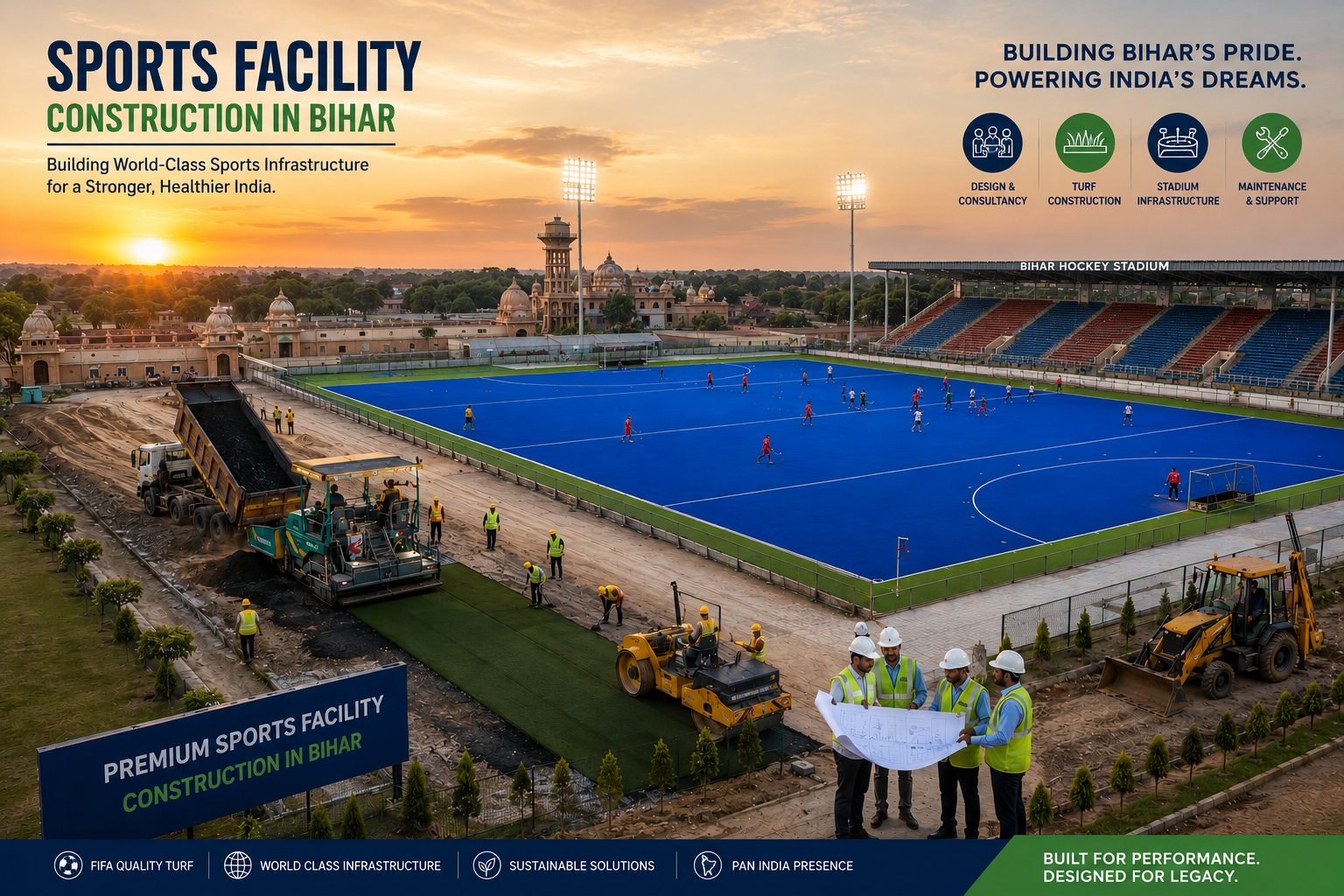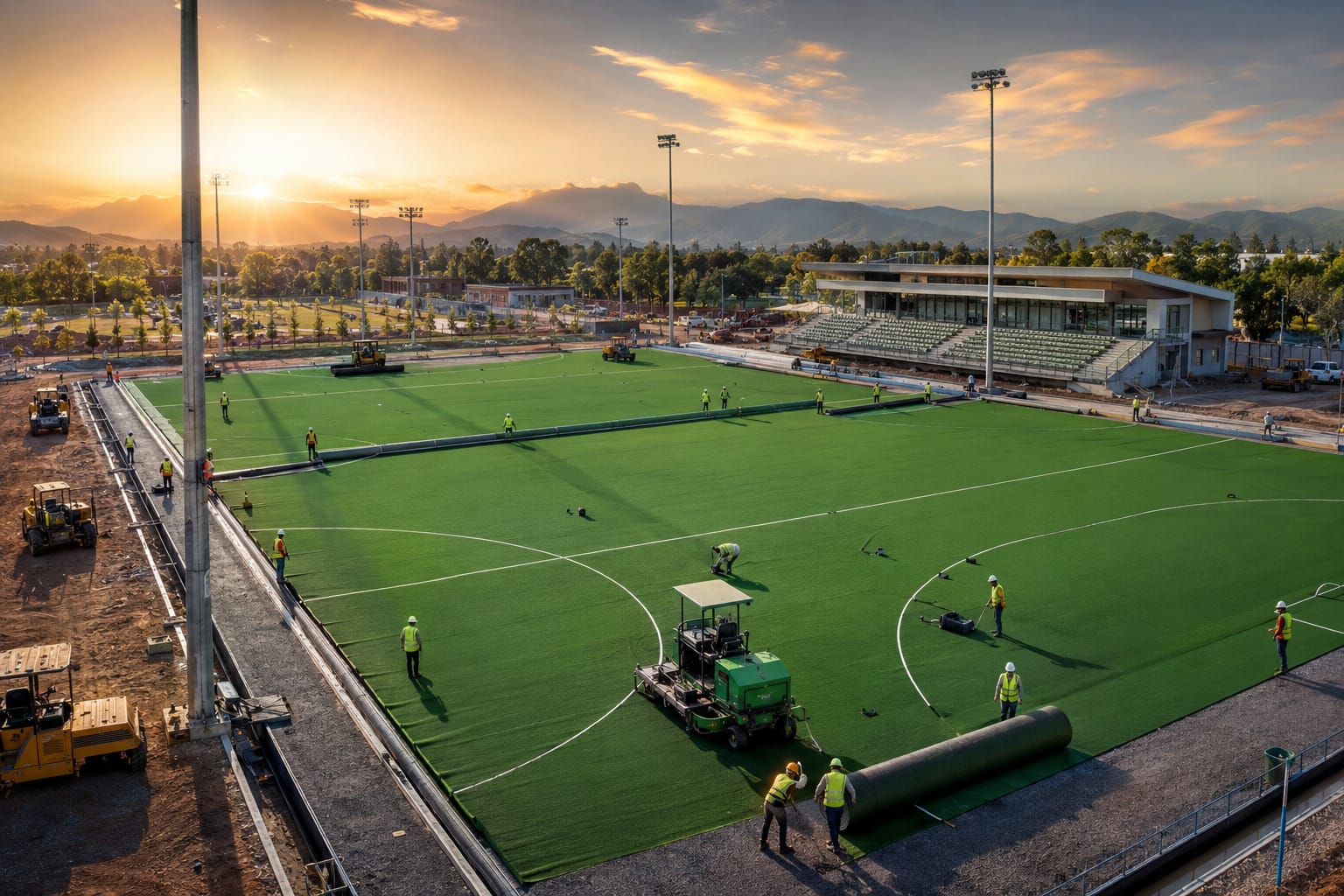
Building a professional hockey court is no longer just about laying a flat surface and marking lines. Today, it involves advanced engineering, international standards, precision materials, and expert construction techniques. Whether it is for schools, sports academies, stadiums, or private facilities, choosing the right hockey court builders plays a crucial role in performance, durability, and player safety.
This comprehensive guide explains everything about hockey court construction, materials, design standards, installation process, cost factors, and how professional builders transform a simple ground into a world-class playing surface.
1. Understanding Modern Hockey Court Construction
Modern hockey courts, especially field hockey pitches, are highly specialized sports surfaces designed to meet international performance standards. Unlike traditional grass fields, today’s courts mostly use synthetic turf systems that offer consistent ball speed, better grip, and improved durability.
Professional hockey court builders focus on creating surfaces that meet requirements set by global sports organizations, ensuring players can perform at competitive levels without injuries or performance inconsistencies.
There are mainly two types of hockey courts:
- Water-based synthetic turf courts
- Sand-dressed or sand-filled artificial turf courts
Each type serves a specific purpose depending on usage intensity, budget, and climate conditions.
2. Role of Professional Hockey Court Builders
Hockey court builders are specialized contractors who handle the entire lifecycle of sports infrastructure projects. Their responsibilities go beyond installation and include planning, design, material selection, and long-term maintenance support.
A professional builder typically provides:
- Site inspection and feasibility study
- Ground leveling and base preparation
- Drainage system installation
- Shock pad and sub-base construction
- Synthetic turf installation
- Line marking as per international standards
- Maintenance guidance and post-installation support
Their expertise ensures that the court performs consistently under heavy usage and extreme weather conditions.
3. Key Components of a High-Quality Hockey Court
A world-class hockey court is made up of multiple engineered layers, each contributing to performance and safety.
3.1 Sub-Base Layer
The foundation of the court. It is usually made of compacted stone aggregates or asphalt. This layer ensures stability and load distribution.
3.2 Drainage System
Efficient drainage is essential to prevent water accumulation. Builders install perforated pipes and slope-based systems to ensure quick water runoff.
3.3 Shock Pad Layer (Optional but Recommended)
This layer provides cushioning to reduce impact injuries. It enhances player comfort and reduces stress on joints.
3.4 Synthetic Turf Surface
The topmost playing surface made from polyethylene fibers. It is engineered to simulate natural grass but with improved durability and consistency.
3.5 Infill Material (if applicable)
Sand or rubber granules may be used depending on turf type to stabilize fibers and improve traction.
4. Types of Hockey Turf Used by Builders
4.1 Water-Based Artificial Turf
This is the premium choice used in international tournaments. The surface is watered before play to reduce friction and increase ball speed.
Advantages:
- Fast gameplay
- Excellent ball control
- Preferred for professional matches
Disadvantages:
- Requires water irrigation system
- Higher maintenance cost
4.2 Sand-Dressed Turf
Sand is lightly filled between fibers to support stability.
Advantages:
- Cost-effective
- Lower maintenance
- Suitable for schools and training centers
Disadvantages:
- Slightly slower gameplay compared to water-based turf
4.3 Sand-Filled Turf
Heavily filled with sand for maximum stability.
Advantages:
- Highly durable
- Budget-friendly
Disadvantages:
- Not suitable for professional-level tournaments
5. Step-by-Step Hockey Court Construction Process
Professional hockey court builders follow a systematic process to ensure precision and durability.
Site Evaluation
The construction begins with soil testing, land measurement, and environmental assessment.
Design and Planning
Engineers create a layout based on international hockey field dimensions (91.4m x 55m) and optimize drainage and orientation.
Earthwork and Excavation
The land is excavated and leveled using laser-guided machinery.
Base Layer Construction
Crushed stones or asphalt layers are compacted to create a strong foundation.
Drainage Installation
A network of pipes is installed to prevent water logging.
Shock Pad Installation
If required, shock-absorbing pads are laid for safety and performance.
Turf Installation
Artificial turf rolls are carefully unrolled, aligned, glued, and stitched together.
: Line Marking
White or colored markings are applied according to official hockey regulations.
: Final Testing
The surface is tested for ball roll, water drainage, and leveling accuracy.
6. Importance of Hiring Expert Hockey Court Builders
Choosing experienced builders can significantly impact the quality and lifespan of the hockey court.
6.1 Precision Engineering
Experts ensure that every millimeter of the surface is perfectly leveled.
6.2 Compliance with International Standards
Professional builders follow FIH (Fédération Internationale de Hockey) guidelines.
6.3 Long-Term Durability
High-quality construction reduces repair and maintenance costs.
6.4 Player Safety
Proper shock absorption and surface uniformity reduce injury risks.
6.5 Custom Solutions
Builders offer customized designs based on client needs, space availability, and budget.
7. Materials Used in Hockey Court Construction
Material selection is critical for performance and durability.
Artificial Turf Fibers
Made from polyethylene or polypropylene for flexibility and strength.
Adhesives
High-grade polyurethane adhesives ensure strong bonding between turf rolls.
Base Materials
Crushed stone, asphalt, or concrete depending on design requirements.
Line Paints
UV-resistant, non-toxic paints are used for markings.
8. Cost Factors in Hockey Court Construction
The cost of building a hockey court varies widely depending on several factors:
- Type of turf (water-based is most expensive)
- Size of the field
- Quality of base construction
- Drainage system complexity
- Location and transportation costs
- Additional features like lighting or seating
On average, premium hockey turf courts require a higher investment but offer long-term savings due to durability and low maintenance.
9. Maintenance of Hockey Courts
Proper maintenance ensures longevity and consistent performance.
Regular Maintenance Includes:
- Brushing the turf fibers
- Cleaning debris and dust
- Checking drainage systems
- Replacing worn-out turf sections
- Maintaining water irrigation systems (for water-based turf)
Neglecting maintenance can reduce surface quality and increase repair costs over time.
10. Applications of Hockey Courts
Modern hockey courts are used in multiple environments:
- Schools and educational institutions
- Sports academies
- National and international stadiums
- Training centers
- Private sports clubs
- Government sports complexes
The versatility of synthetic hockey turf makes it suitable for both professional and recreational use.
11. Emerging Trends in Hockey Court Construction
The sports infrastructure industry is evolving rapidly. Some modern trends include:
11.1 Eco-Friendly Turf Systems
Recyclable materials and water-saving technologies are becoming popular.
11.2 Smart Sports Surfaces
Sensors embedded in turf to track performance and movement.
11.3 Hybrid Turf Technology
Combining natural grass with synthetic fibers for enhanced durability.
11.4 Advanced Shock Absorption Systems
New materials reduce injury risks and improve comfort.
12. Choosing the Right Hockey Court Builders
When selecting a construction company, consider the following:
- Experience in sports infrastructure projects
- Portfolio of completed hockey courts
- Knowledge of international standards
- Quality of materials used
- Client reviews and reputation
- After-sales support and maintenance services
A reliable builder ensures not just construction but long-term performance and satisfaction.
Conclusion
Hockey court construction is a highly specialized field requiring engineering precision, quality materials, and professional expertise. From site preparation to turf installation, every stage impacts the final performance of the court.
Professional hockey court builders play a vital role in delivering world-class sports infrastructure that meets international standards and enhances player performance. Whether it is for schools, academies, or professional stadiums, investing in expert construction ensures durability, safety, and excellence for years to come.
A well-built hockey court is not just a sports facility—it is a foundation for talent development, athletic growth, and future champions.
FAQ – Hockey Court Builders
Q1. What do hockey court builders do?
They design, construct, and install professional hockey fields including base work, drainage, and synthetic turf installation.
Q2. Which surface is best for a hockey court?
Water-based synthetic turf is best for professional play, while sand-dressed turf is commonly used for schools and training centers.
Q3. How long does it take to build a hockey court?
On average, it takes 4–8 weeks depending on site conditions, materials, and project size.
Q4. What is the standard size of a hockey court?
A standard field hockey pitch is 91.4 meters long and 55 meters wide.
Q5. Is maintenance required for synthetic hockey turf?
Yes, regular brushing, cleaning, and periodic inspection are needed to maintain performance and durability.
Q6. Can hockey courts be built in any location?
Yes, they can be constructed on most flat lands with proper soil preparation and drainage systems.
Q7. What affects the cost of a hockey court?
Turf type, base construction