A modern hockey court construction company plays a crucial role in shaping the future of sports infrastructure by designing and building world-class hockey fields that meet international standards. Hockey is a fast-paced, skill-intensive game that requires a perfectly engineered playing surface to ensure safety, performance, and durability. With increasing demand for professional sports facilities in schools, academies, stadiums, and private sports complexes, specialized construction companies have become essential partners in delivering high-quality synthetic hockey turf installations.
This detailed guide explains everything about hockey court construction services, including planning, materials, installation process, benefits, cost factors, and why choosing an expert company makes a significant difference.
Understanding Modern Hockey Court Construction
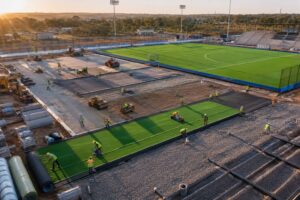
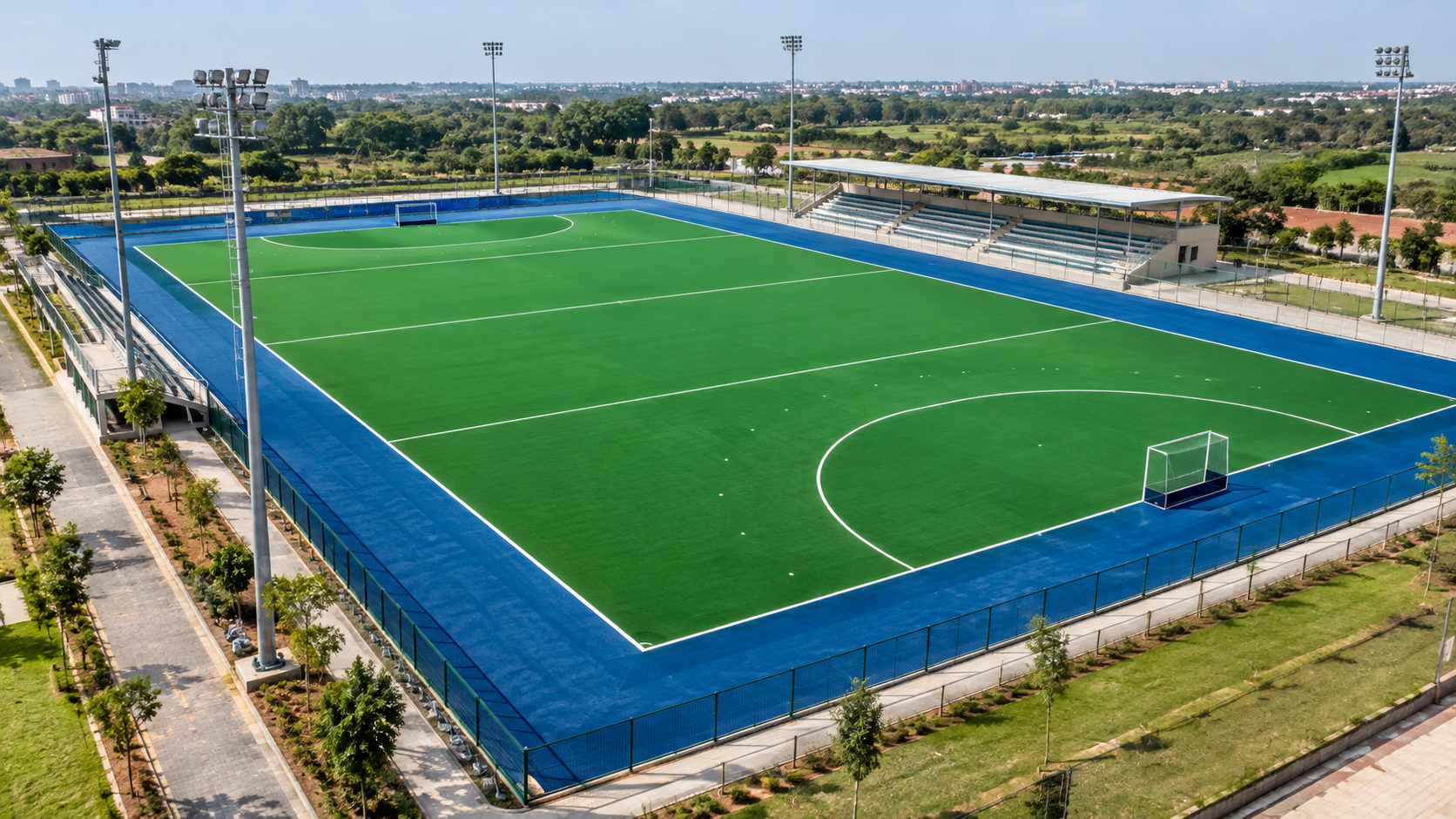
Hockey courts today are no longer simple grass fields. They are scientifically engineered synthetic surfaces designed to enhance speed, ball control, and player performance. A professional hockey court construction company focuses on creating surfaces that comply with standards set by global sports authorities such as the International Hockey Federation (FIH).
Modern hockey courts are typically made using artificial turf systems, which can be sand-filled, water-based, or hybrid synthetic turf depending on usage and budget. These surfaces are designed to provide consistent ball roll, reduce injuries, and withstand extreme weather conditions.
Key Components of Hockey Court Construction
Building a professional hockey ground involves multiple technical stages. Each layer contributes to the durability and performance of the final playing surface.
1. Site Survey and Planning
The construction process begins with a detailed site analysis. Engineers evaluate soil quality, drainage conditions, available space, and environmental factors. Accurate planning ensures long-term stability and prevents issues such as waterlogging or surface deformation.
2. Ground Preparation
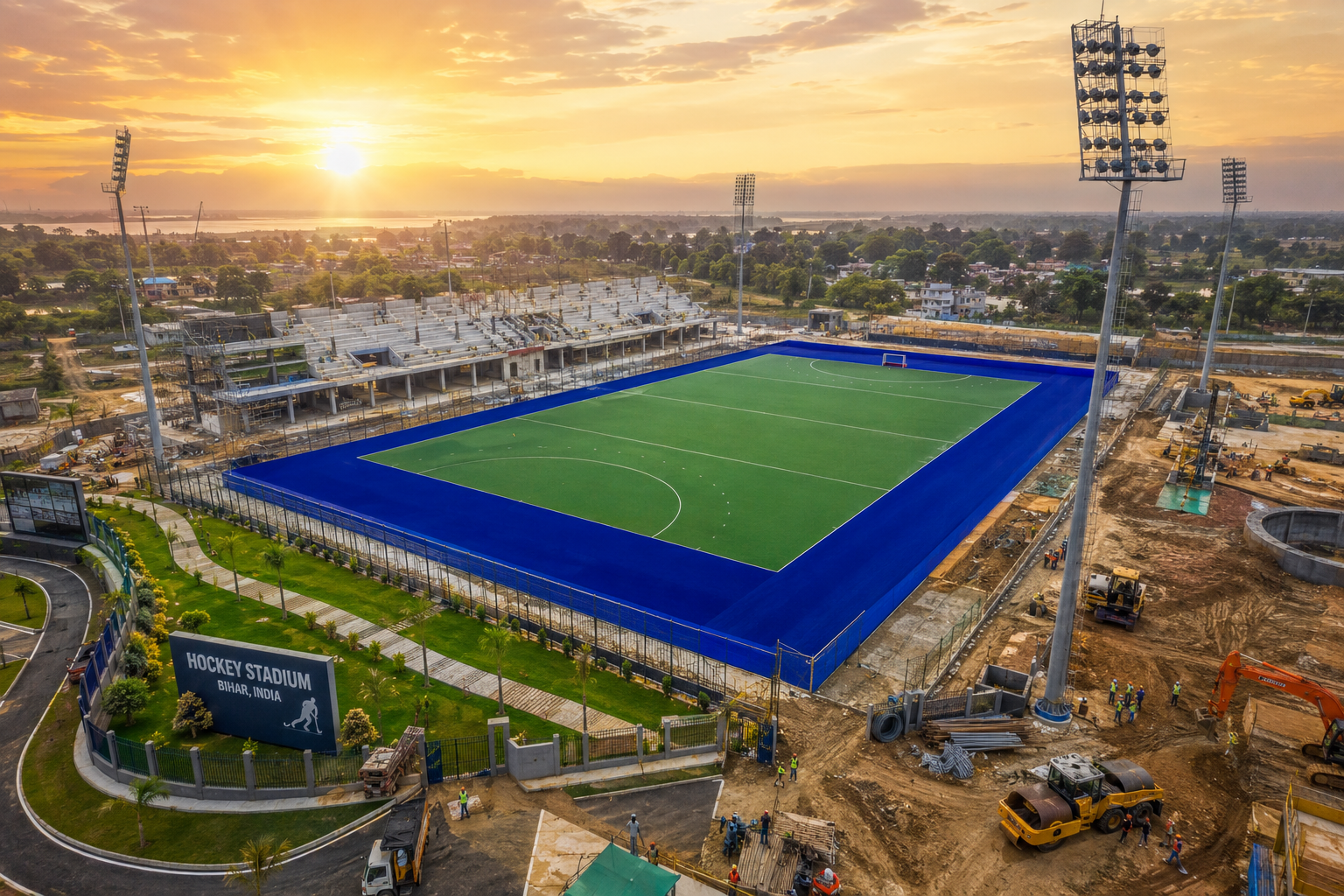
The ground is cleared of vegetation, debris, and uneven soil layers. Heavy machinery is used to level the base. Proper compaction is crucial to create a stable foundation for the layers above.
3. Sub-Base Installation
A sub-base layer is created using crushed stone or gravel. This layer provides structural strength and supports drainage. Laser leveling technology ensures perfect flatness across the entire field.
4. Drainage System Setup
Efficient drainage is essential for hockey courts. A well-designed drainage system ensures that rainwater does not accumulate on the surface. Pipes and outlets are installed beneath the surface to maintain dry and playable conditions at all times.
5. Asphalt or Concrete Base Layer
Depending on the design, a rigid base layer of asphalt or concrete is laid. This ensures long-term durability and prevents surface shifting. It also enhances the performance of the synthetic turf.
6. Shock Pad Installation (Optional)
Some premium hockey fields include a shock-absorbing layer. This reduces player fatigue and minimizes the risk of injuries during high-impact movements.
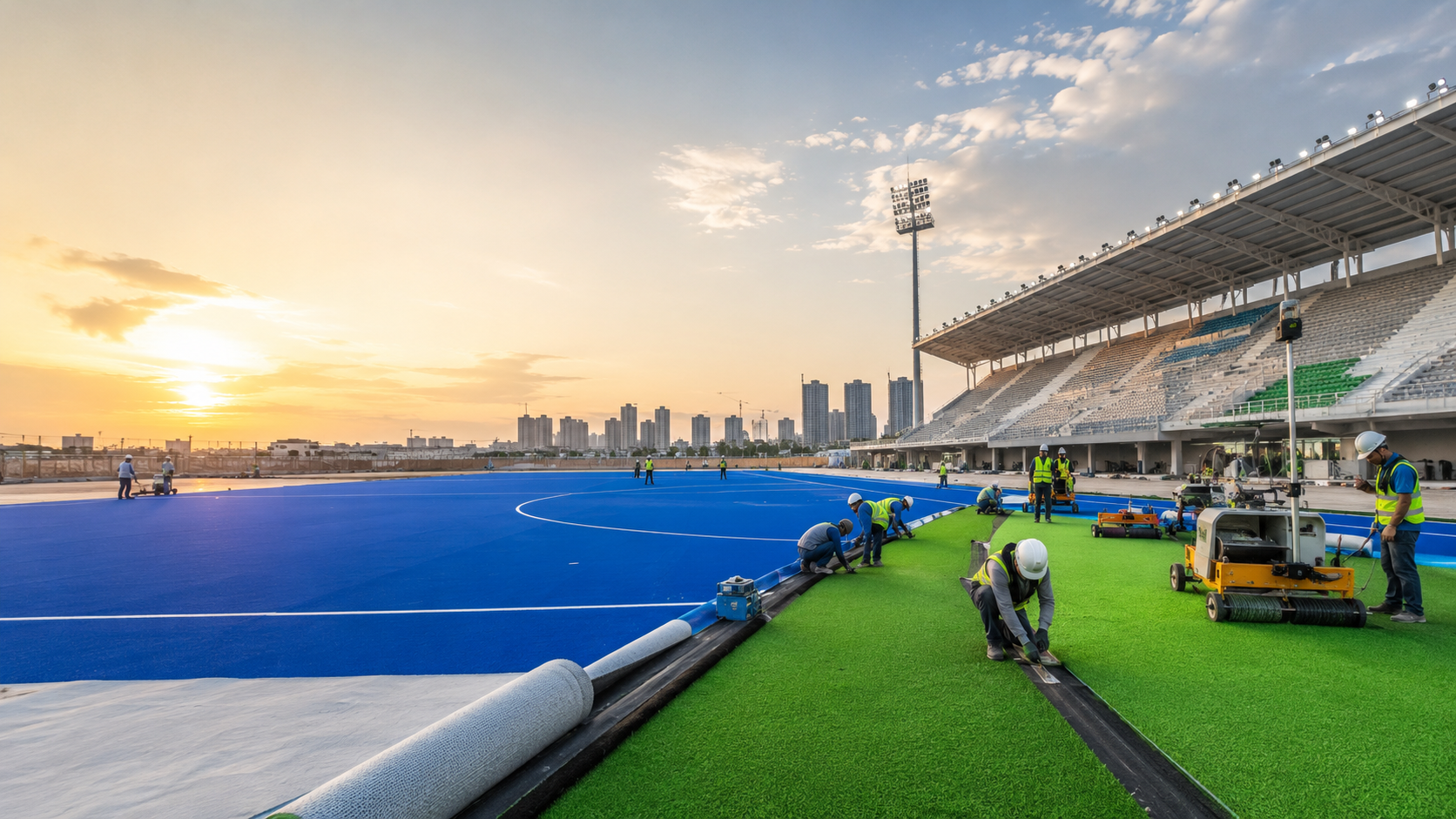
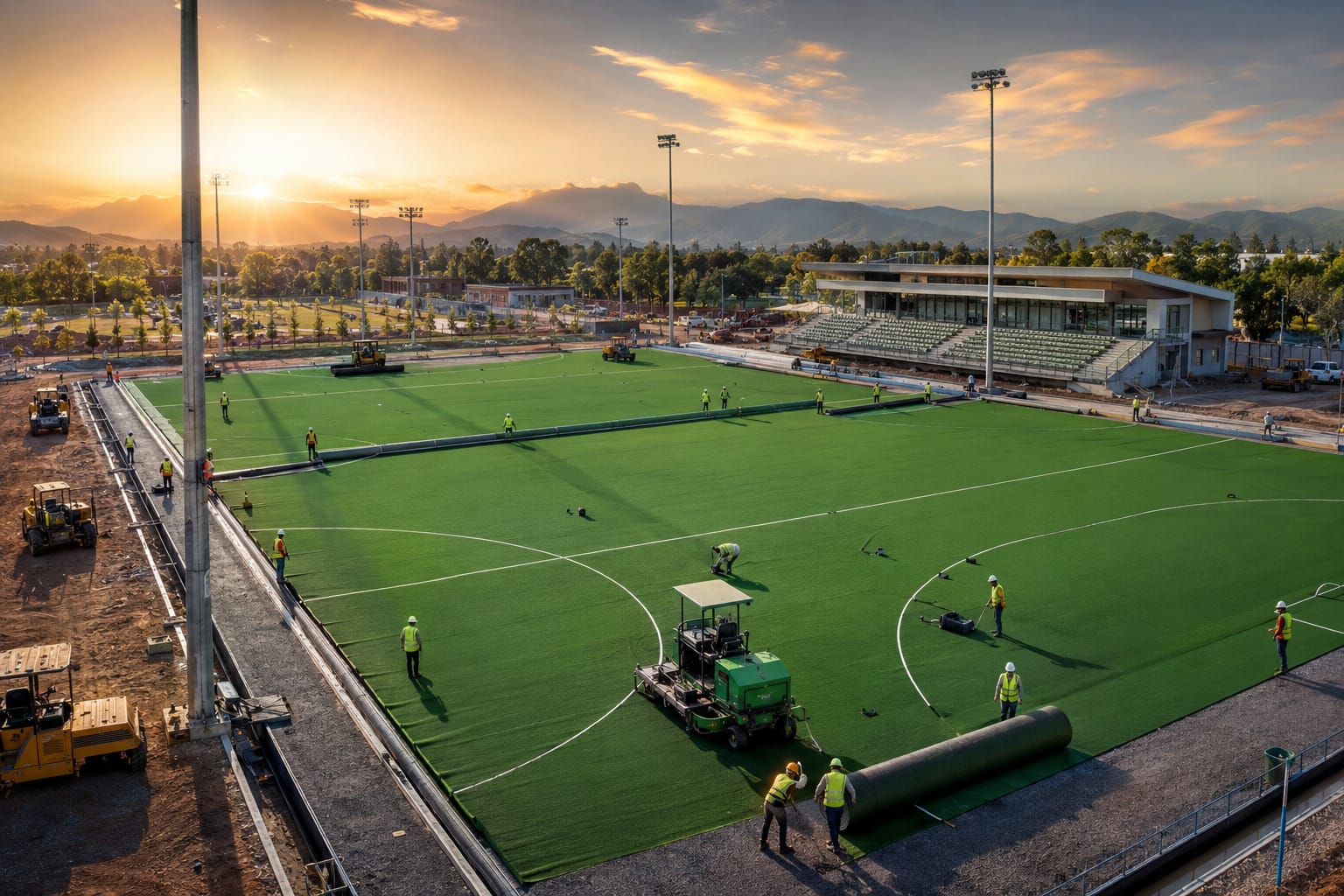
7. Synthetic Turf Installation
This is the most important stage. High-quality artificial turf is rolled out and carefully fixed using adhesives or seam tapes. The turf is aligned precisely to ensure smooth ball movement.
8. Infill Application
Sand or rubber infill is spread evenly across the turf fibers. This helps maintain stability, improve traction, and enhance playing characteristics.
9. Line Marking
White or colored markings are added according to official hockey regulations. These markings define boundaries, goal areas, and center lines.
10. Final Inspection and Testing
Before handing over the field, the construction company performs quality checks including surface evenness, ball roll speed, drainage performance, and safety standards.
Types of Hockey Turf Systems
A professional hockey court construction company offers different types of turf systems depending on client requirements:
1. Water-Based Hockey Turf
This is the most advanced system used in international tournaments. The surface is watered before play to reduce friction and increase speed.
2. Sand-Dressed Turf
This type has sand spread between fibers, providing stability and moderate speed. It is commonly used in schools and training academies.
3. Sand-Filled Turf
Here, the fibers are filled with sand, making the surface more rigid. It is a cost-effective solution suitable for recreational play.
4. Hybrid Turf
A combination of natural and synthetic fibers, offering durability and enhanced performance.
Importance of Professional Hockey Court Construction Company
Choosing an experienced construction company is essential for long-lasting and high-performance sports infrastructure. Here’s why professional expertise matters:
Precision Engineering
Hockey courts require exact slope, leveling, and surface uniformity. Even minor errors can affect gameplay.
High-Quality Materials
Professional companies use certified turf materials that meet international standards, ensuring durability and safety.
Advanced Technology
Modern tools like laser grading machines, automated turf cutters, and precision drainage systems are used for accurate installation.
Long-Term Performance
Proper construction ensures that the surface remains intact for years with minimal maintenance.
Safety Assurance
Well-constructed hockey fields reduce injuries caused by uneven surfaces or poor shock absorption.
Step-by-Step Hockey Court Construction Process
A reliable hockey court construction company follows a structured process:
- Client consultation and requirement analysis
- Site inspection and feasibility study
- Design and layout planning
- Budget estimation and approval
- Groundwork and base preparation
- Drainage system installation
- Base layer construction
- Turf installation and infill application
- Line marking and finishing
- Quality testing and project handover
Each step is executed under strict supervision to ensure world-class results.
Materials Used in Hockey Court Construction
The durability and performance of a hockey field depend on the materials used:
- High-density polyethylene (HDPE) turf fibers
- Polypropylene backing layers
- Crushed stone and gravel base
- Asphalt or concrete foundation
- Silica sand infill
- Rubber granules (for shock absorption)
- UV-resistant adhesives
High-quality materials ensure resistance to weather conditions, wear and tear, and heavy usage.
Benefits of Synthetic Hockey Fields
Modern synthetic hockey courts offer several advantages over natural grass fields:
1. Consistent Playing Surface
No uneven patches or grass growth issues affect gameplay.
2. All-Weather Usability
Synthetic turf courts can be used in all weather conditions without damage.
3. Low Maintenance
Unlike natural grass, artificial turf does not require watering, mowing, or fertilizing.
4. Enhanced Game Speed
The surface allows faster ball movement, improving game quality.
5. Long Lifespan
High-quality hockey turfs last 8–15 years depending on usage and maintenance.
Cost Factors in Hockey Court Construction
The cost of building a hockey court depends on multiple factors:
- Size of the field
- Type of turf system selected
- Quality of base construction
- Drainage system complexity
- Location and site conditions
- Additional features like lighting and fencing
On average, synthetic hockey field construction is a long-term investment that provides excellent value due to its durability and low maintenance requirements.
Maintenance of Hockey Courts
Even though synthetic hockey fields are low-maintenance, regular care is necessary:
- Brushing the turf to maintain fiber upright position
- Cleaning debris and dust
- Checking infill levels
- Inspecting drainage systems
- Repairing minor damages promptly
Proper maintenance extends the life of the surface and ensures optimal performance.
Applications of Hockey Court Construction Services
A hockey court construction company serves a wide range of clients:
- Schools and educational institutions
- Sports academies
- Government sports complexes
- Private clubs and stadiums
- Universities and colleges
- Training centers
- Corporate sports facilities
The growing popularity of hockey in India and globally has increased demand for professional infrastructure development.
Future of Hockey Court Construction Industry
The future of hockey infrastructure is moving toward advanced, eco-friendly, and technology-driven solutions. Innovations such as water-efficient turf systems, recyclable materials, and smart monitoring systems are being introduced.
Additionally, increasing government investment in sports infrastructure is driving growth in this sector. Modern hockey courts are now being designed with better sustainability, improved shock absorption, and enhanced player experience.
Conclusion
A professional hockey court construction company is essential for developing high-quality sports infrastructure that meets international standards. From initial planning to final installation, every step requires technical expertise, precision engineering, and high-grade materials. Whether for schools, stadiums, or training academies, synthetic hockey fields provide unmatched durability, safety, and performance.
As sports continue to grow in popularity, the demand for advanced hockey courts will also rise. Investing in a professionally built hockey field ensures long-term value, better gameplay, and a world-class sporting experience for athletes at all levels.
Short FAQ – Hockey Court Construction Company
1. What is a hockey court made of?
A modern hockey court is made of synthetic turf installed over a compacted base layer with proper drainage and line markings.
2. How long does hockey turf last?
High-quality synthetic hockey turf usually lasts around 8 to 15 years depending on usage and maintenance.
3. What is the cost of hockey court construction?
The cost varies based on size, turf type, base work, and location, but it is generally a long-term infrastructure investment.
4. Which turf is best for hockey courts?
Water-based synthetic turf is considered the best for professional and international-level hockey matches.
5. How much time is required to build a hockey court?
On average, construction takes 4 to 10 weeks depending on site conditions and project size.
6. Is maintenance required for synthetic hockey fields?
Yes, but it is minimal—regular cleaning, brushing, and occasional infill checks are usually enough.
7. Can hockey courts be built in all weather conditions?
Yes, synthetic hockey courts are designed for all-weather use and can be played on even after rain.
8. Where can hockey courts be constructed?
They can be built in schools, colleges, sports complexes, academies, and stadiums.