Introduction
Padel is rapidly becoming one of the most popular racket sports worldwide, and the demand for professionally constructed padel courts is growing across India. Sports clubs, hotels, resorts, schools, residential communities, fitness centres, commercial sports facilities, and private investors are increasingly adding padel courts to their properties.
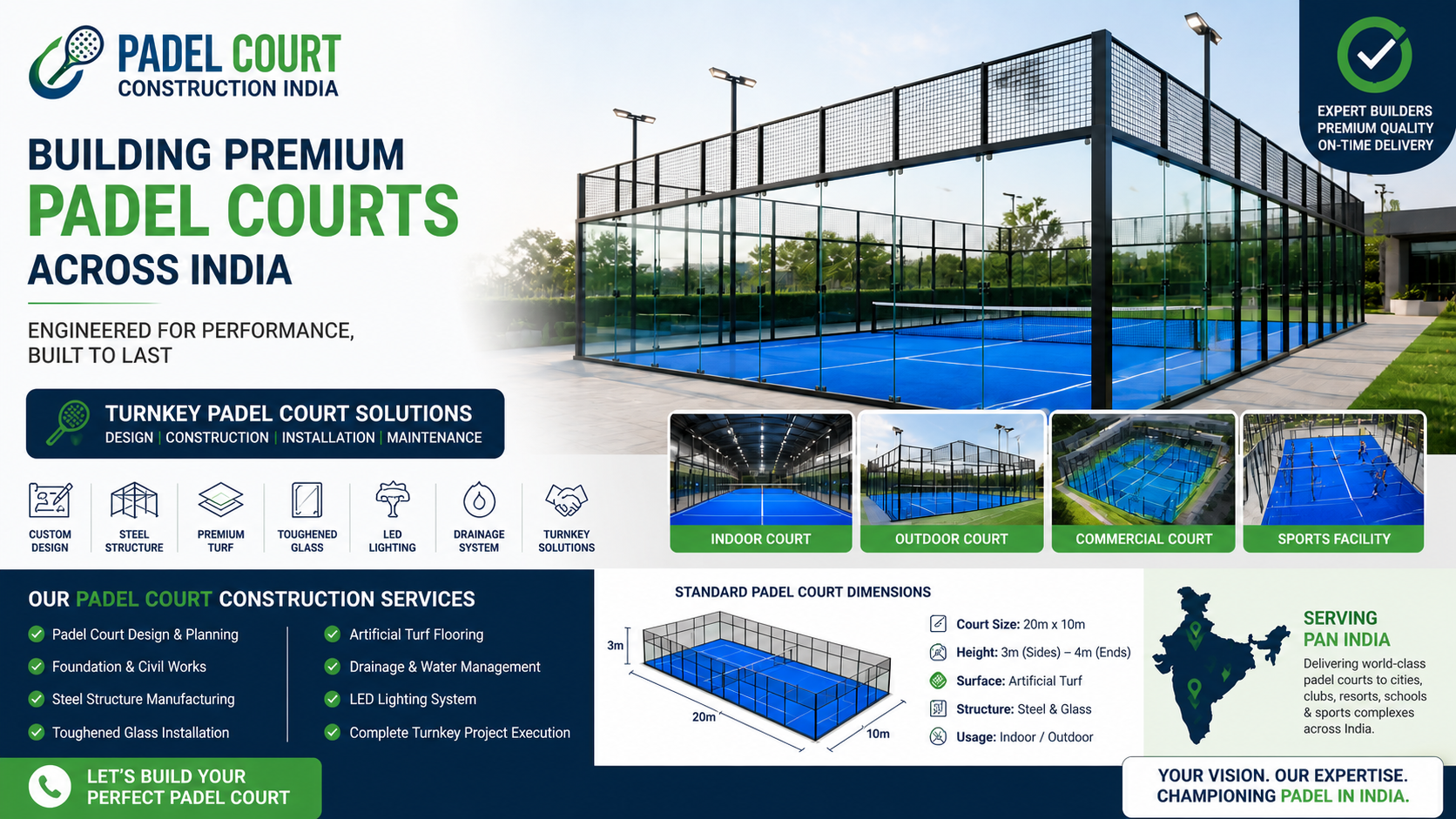
A professionally constructed padel court is more than a playing area. It requires proper site planning, foundation preparation, structural installation, sports flooring, glass panels, fencing, lighting, drainage, court markings, and quality sports equipment. Choosing an experienced padel court construction service provider helps ensure that every component is installed correctly for safety, durability, and long-term performance.
What Is a Padel Court?
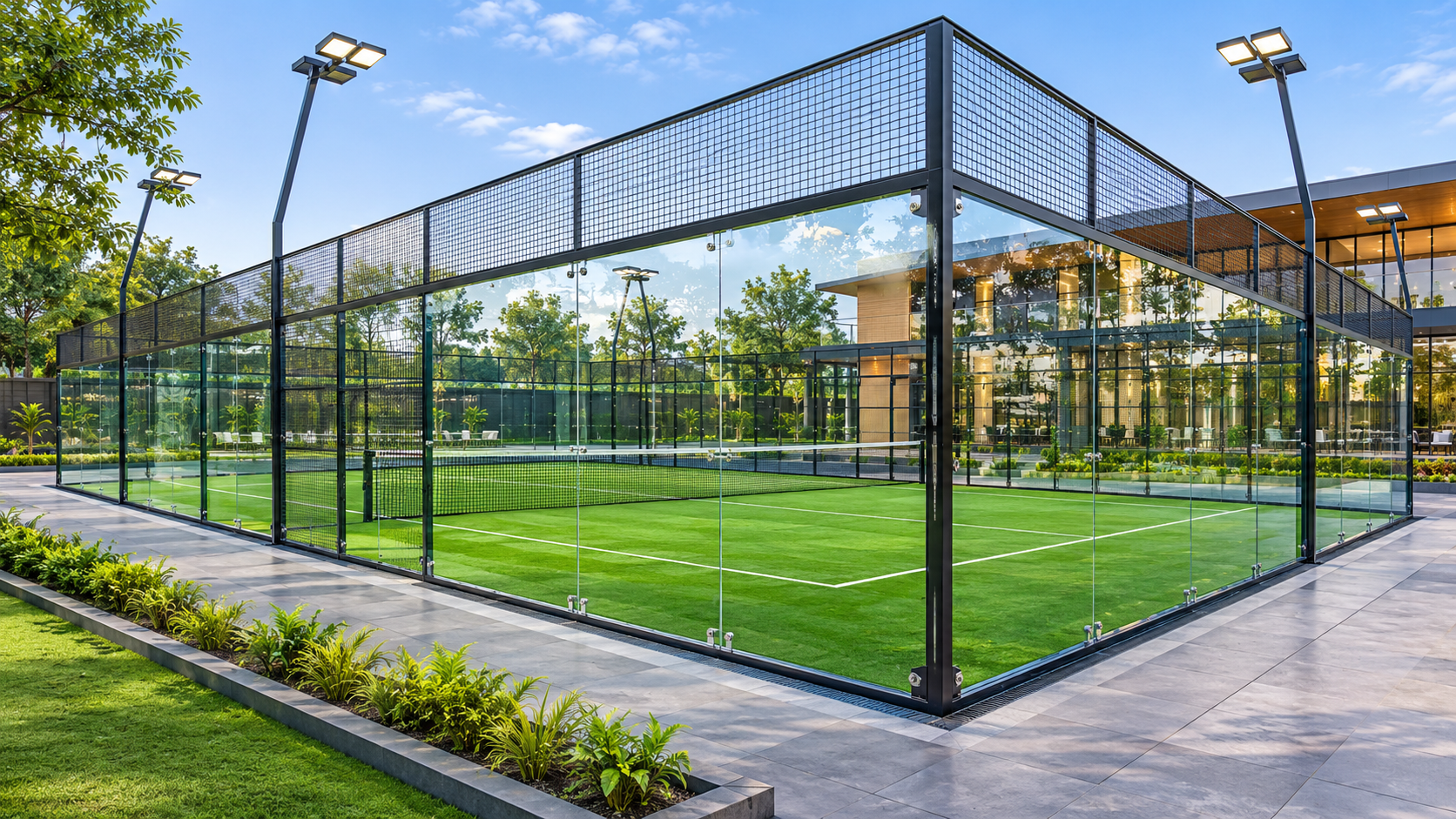
A padel court is an enclosed racket-sport facility designed specifically for padel gameplay. The court generally features a synthetic playing surface surrounded by a combination of tempered glass walls and metal fencing. Unlike traditional tennis, padel allows players to use the surrounding walls during rallies, making the design and construction of the enclosure particularly important.
A quality padel court should provide:
- A level and stable playing surface
- Durable artificial turf or suitable sports flooring
- Strong structural steel framework
- High-quality tempered glass panels
- Galvanized steel mesh fencing
- Professional padel net system
- Accurate court markings
- Adequate drainage for outdoor courts
- Proper LED sports lighting
- Safe player access and maintenance provisions
Professional Padel Court Construction Services
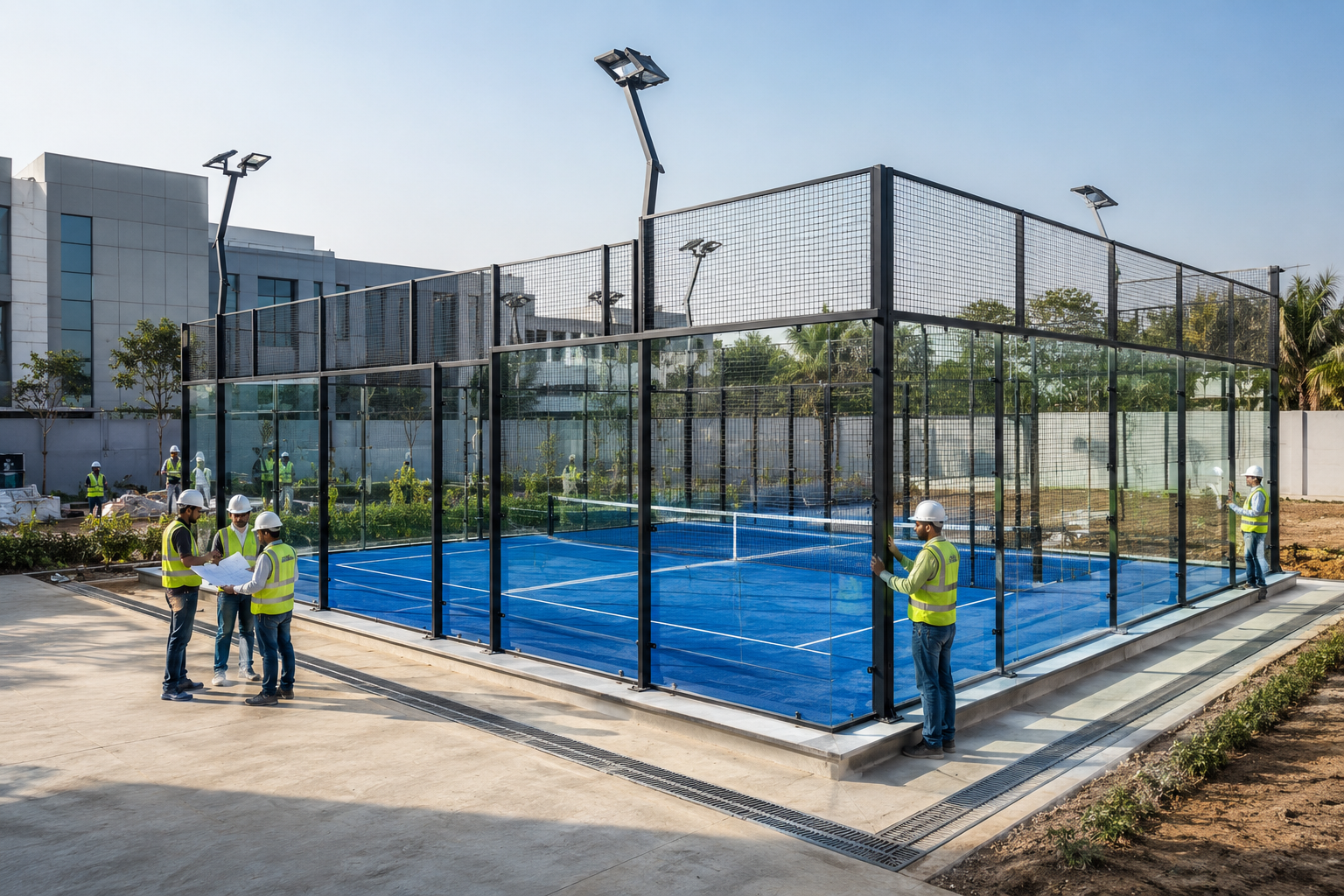
Professional padel court construction involves several stages, beginning with site evaluation and ending with final inspection and handover. Each project should be planned according to the available land, environmental conditions, intended usage, budget, and facility requirements.
A complete construction service may include:
1. Site Survey and Evaluation
The first stage is a detailed assessment of the proposed site. Contractors evaluate ground conditions, available dimensions, accessibility, drainage, existing structures, soil characteristics, and utility services.
Proper site evaluation helps identify potential construction challenges before installation begins.
2. Court Design and Layout Planning
The court layout is developed according to the intended playing configuration and project requirements. The design considers court orientation, player circulation, entry points, fencing, glass panels, lighting positions, drainage, and surrounding clearance.
For outdoor facilities, court orientation should also be planned carefully to reduce glare from direct sunlight during gameplay.
3. Foundation and Civil Work
A strong foundation is essential for a long-lasting padel court. Depending on the site, construction may involve excavation, levelling, soil compaction, concrete work, reinforcement, and preparation of a suitable base.
The foundation must be sufficiently stable to support the steel structure, glass panels, fencing, and playing surface.
4. Structural Steel Installation
The structural framework forms the primary support system of the court. High-quality galvanized or appropriately protected steel components are installed to provide strength and resistance against environmental exposure.
Precision during structural installation is important because the framework supports the glass and fencing system.
5. Tempered Glass Installation
Glass walls are one of the defining features of a padel court. High-quality safety glass is installed within the structural framework to provide visibility while withstanding normal playing conditions.
Proper alignment, secure fixing, and professional installation are essential for player safety and structural stability.
6. Fencing Installation
Metal mesh fencing is installed around the remaining sections of the court. The fencing should be durable, properly tensioned, and securely attached to the supporting structure.
Galvanized and corrosion-resistant components are particularly useful for outdoor courts exposed to rain and humidity.
7. Sports Flooring Installation
The playing surface has a direct impact on player comfort, traction, movement, and overall gameplay. Synthetic padel turf is commonly selected for professional installations because it provides suitable ball response and player grip.
The flooring installation process generally includes:
- Base surface preparation
- Levelling
- Turf installation
- Joint treatment
- Adhesive application where required
- Infill installation where applicable
- Final surface inspection
- Court line installation
8. Padel Net and Court Accessories
A professional court requires a suitable net system and properly positioned accessories. The net should be installed securely and maintained at the correct playing height.
Other accessories can include player gates, protective components, signage, benches, scoreboards, equipment storage, and safety features.
9. LED Sports Lighting
Lighting is essential for facilities intended for evening or extended-hour operation. LED sports lighting can provide efficient illumination while reducing energy consumption and maintenance requirements.
Lighting positions should be carefully planned to minimise shadows and glare and provide consistent visibility throughout the playing area.
10. Drainage and Water Management
Outdoor padel courts require effective water management. Poor drainage can lead to standing water, surface deterioration, and structural problems.
The drainage design may include appropriate slopes, channels, surface drainage, and connections to suitable discharge systems depending on the site conditions.
Benefits of Professional Padel Court Construction
Investing in professional construction provides several advantages.
Enhanced Player Safety
A properly designed court incorporates stable flooring, secure fencing, correctly installed glass panels, safe access points, and suitable playing conditions.
Better Playing Performance
Accurate dimensions, quality turf, appropriate ball response, and professional installation contribute to a consistent playing experience.
Long-Term Durability
Quality structural materials and proper foundation work help the court withstand regular usage and changing environmental conditions.
Attractive Facility Appearance
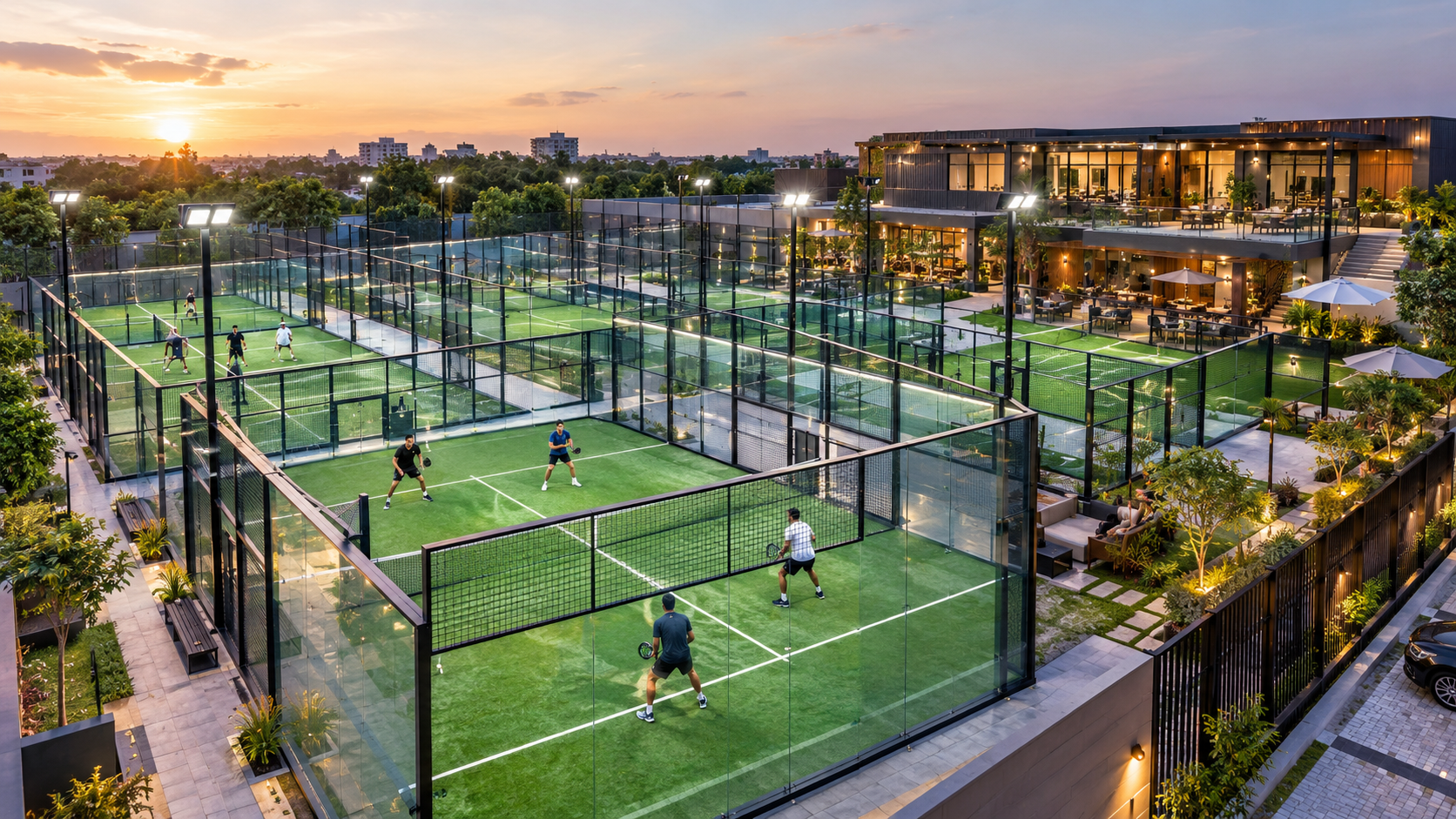
A modern padel court can significantly improve the appearance and commercial appeal of a sports facility, hotel, resort, club, or residential project.
Lower Maintenance Requirements
Correct installation and the use of durable materials can reduce the frequency of repairs and help maintain the court in good condition.
Commercial Revenue Potential
Padel courts can be used for memberships, hourly bookings, coaching programmes, tournaments, corporate events, and recreational activities, creating multiple potential revenue streams for commercial facilities.
Where Can Padel Courts Be Constructed?
Padel facilities are suitable for a wide range of locations and applications, including:
- Sports clubs
- Padel academies
- Fitness centres
- Schools and colleges
- Universities
- Hotels
- Resorts
- Residential townships
- Apartment communities
- Corporate campuses
- Private sports facilities
- Recreation centres
- Country clubs
- Commercial sports complexes
- Government sports facilities
Indoor vs Outdoor Padel Court Construction
Both indoor and outdoor padel courts can be developed depending on the available space and project objectives.
Outdoor Padel Courts
Outdoor courts require materials and construction systems capable of handling sunlight, rainfall, humidity, temperature changes, and wind exposure. Drainage, UV resistance, corrosion protection, and lighting should receive particular attention.
Indoor Padel Courts
Indoor installations provide greater protection from weather conditions and can offer more controlled playing conditions. However, adequate building height, ventilation, lighting, access, and structural clearance must be considered during planning.
Factors to Consider Before Building a Padel Court
Before beginning construction, property owners should consider:
Available Space: Sufficient space is required for the court and safe circulation around it.
Site Condition: Soil stability, existing paving, drainage, and access should be evaluated.
Court Orientation: Outdoor courts should be positioned carefully to manage sunlight and glare.
Flooring Selection: The playing surface should be selected according to expected usage, environmental conditions, and performance requirements.
Lighting: If the court will operate after sunset, professional sports lighting should be included in the design.
Budget: The project budget should account for civil work, structure, glass, fencing, turf, lighting, accessories, transportation, and installation.
Maintenance: A maintenance programme should be planned from the beginning to protect the investment.
Padel Court Construction Process
A professional project typically follows this workflow:
- Initial consultation
- Site inspection
- Technical assessment
- Court layout planning
- Design and engineering
- Cost estimation
- Site preparation
- Foundation and civil work
- Structural framework installation
- Glass and fencing installation
- Sports turf installation
- Court marking
- Net and accessories installation
- LED lighting installation
- Final quality inspection
- Project handover
Maintenance of a Padel Court
Regular maintenance helps preserve playing quality and extends the service life of the facility.
Recommended maintenance activities include:
- Regular cleaning of the playing surface
- Inspection of artificial turf and joints
- Checking glass panels for damage
- Inspection of structural connections
- Cleaning fencing and access gates
- Checking the net system
- Maintaining drainage channels
- Testing sports lighting
- Removing leaves and debris
- Periodic professional inspection
Early identification of minor defects can prevent more expensive repairs later.
Why Choose a Professional Padel Court Construction Company?
Selecting an experienced contractor is important because a padel court combines civil engineering, structural work, sports flooring, glass installation, fencing, lighting, and sports equipment.
A professional construction company can provide:
- Complete turnkey solutions
- Technical site evaluation
- Customized court planning
- Quality construction materials
- Professional installation
- Experienced project management
- Proper sports flooring systems
- Glass and fencing installation
- Lighting solutions
- Quality inspection
- Maintenance guidance
- Project support from planning to completion
Padel Court Construction in India
The growing popularity of padel is creating opportunities for new sports facilities across major cities and emerging markets in India. Professional padel court construction services can help property owners convert available spaces into modern recreational and commercial sports facilities.
Whether the project is a single private court or a multi-court sports complex, careful planning and professional execution are essential for achieving reliable performance and long-term value.
Frequently Asked Questions
How long does padel court construction take?
The construction timeline depends on site conditions, civil work requirements, court type, material availability, project size, and weather. A ready site can generally be completed faster than a project requiring extensive foundation and ground preparation.
What flooring is used for a padel court?
Synthetic sports turf is commonly used for padel courts. The final flooring specification should be selected according to the intended usage, climate, drainage requirements, and performance objectives.
Can a padel court be built outdoors?
Yes. Outdoor padel courts can be constructed with suitable foundations, weather-resistant structural components, appropriate sports turf, drainage, fencing, glass systems, and lighting.
Can padel courts be built indoors?
Yes. Indoor courts can be installed inside suitable sports halls and large commercial or recreational buildings, subject to adequate height, structural clearance, ventilation, lighting, and access.
Does a padel court require maintenance?
Yes. Regular cleaning, turf maintenance, glass inspection, fencing checks, drainage maintenance, net inspection, and lighting checks help maintain safe and consistent playing conditions.
Can existing sports facilities be converted into padel courts?
In many cases, existing spaces can be adapted for padel court installation. A technical site inspection is recommended to determine whether the existing surface, dimensions, drainage, and structural conditions are suitable.
Conclusion
A professionally constructed padel court can become a valuable addition to a sports club, hotel, resort, residential community, academy, fitness centre, or commercial recreation facility. From site preparation and foundation work to structural framing, tempered glass, fencing, synthetic turf, lighting, and final finishing, every component contributes to the overall quality of the facility.
Choosing a reliable provider ensures that the project is planned carefully, constructed using suitable materials, and completed with attention to safety, performance, durability, and appearance.
If you are planning a new padel court project in India, a professional site assessment and customized construction proposal can help determine the most suitable design, materials, specifications, and budget for your facility.