Introduction
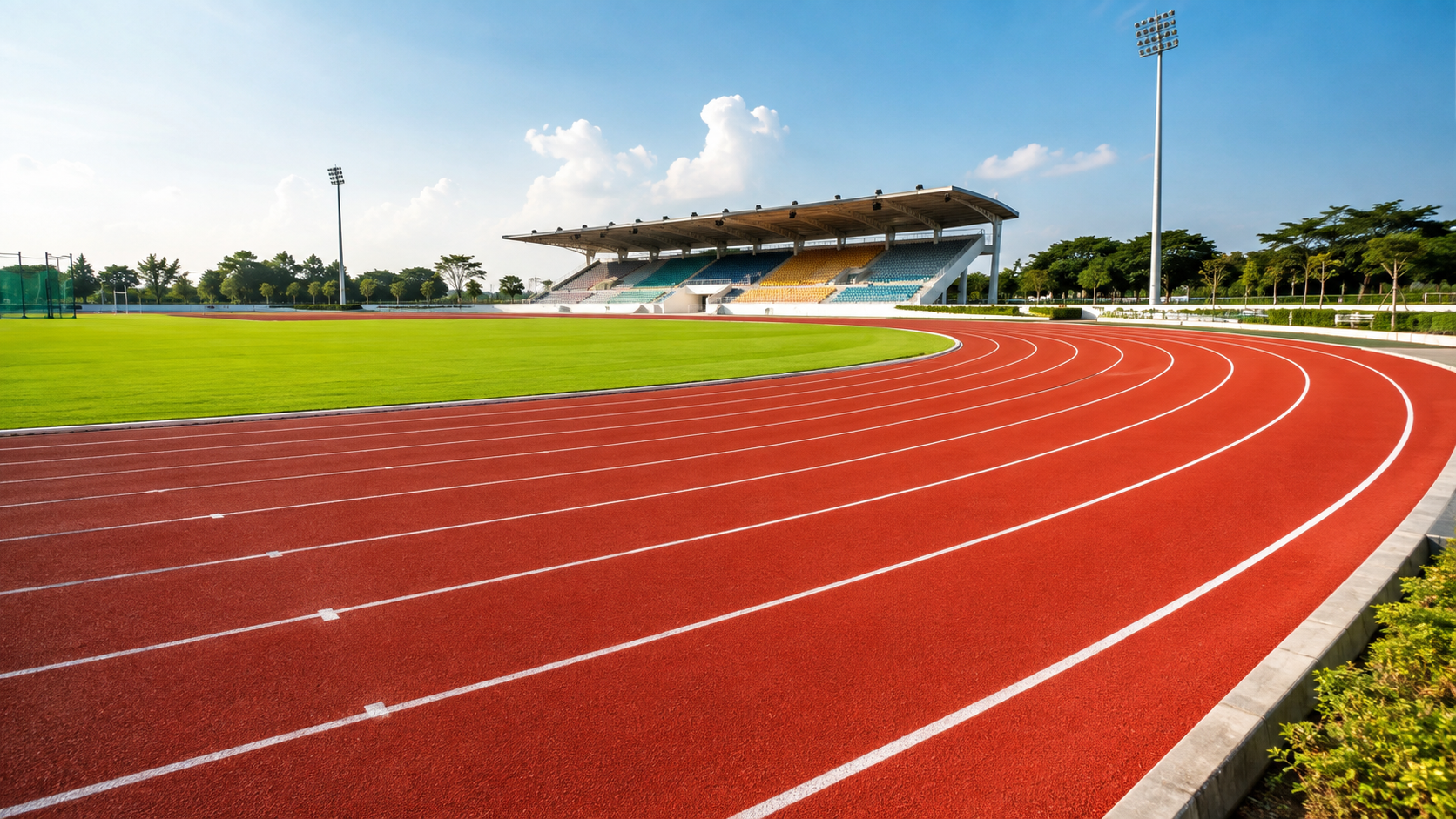
A running track is much more than a designated surface for athletes to run on. It is an essential sports infrastructure facility designed to provide safety, comfort, durability, and consistent athletic performance. Whether it is being developed for a school, college, university, sports academy, stadium, or professional athletic facility, selecting the right running track surface plays a significant role in the overall quality of the project.
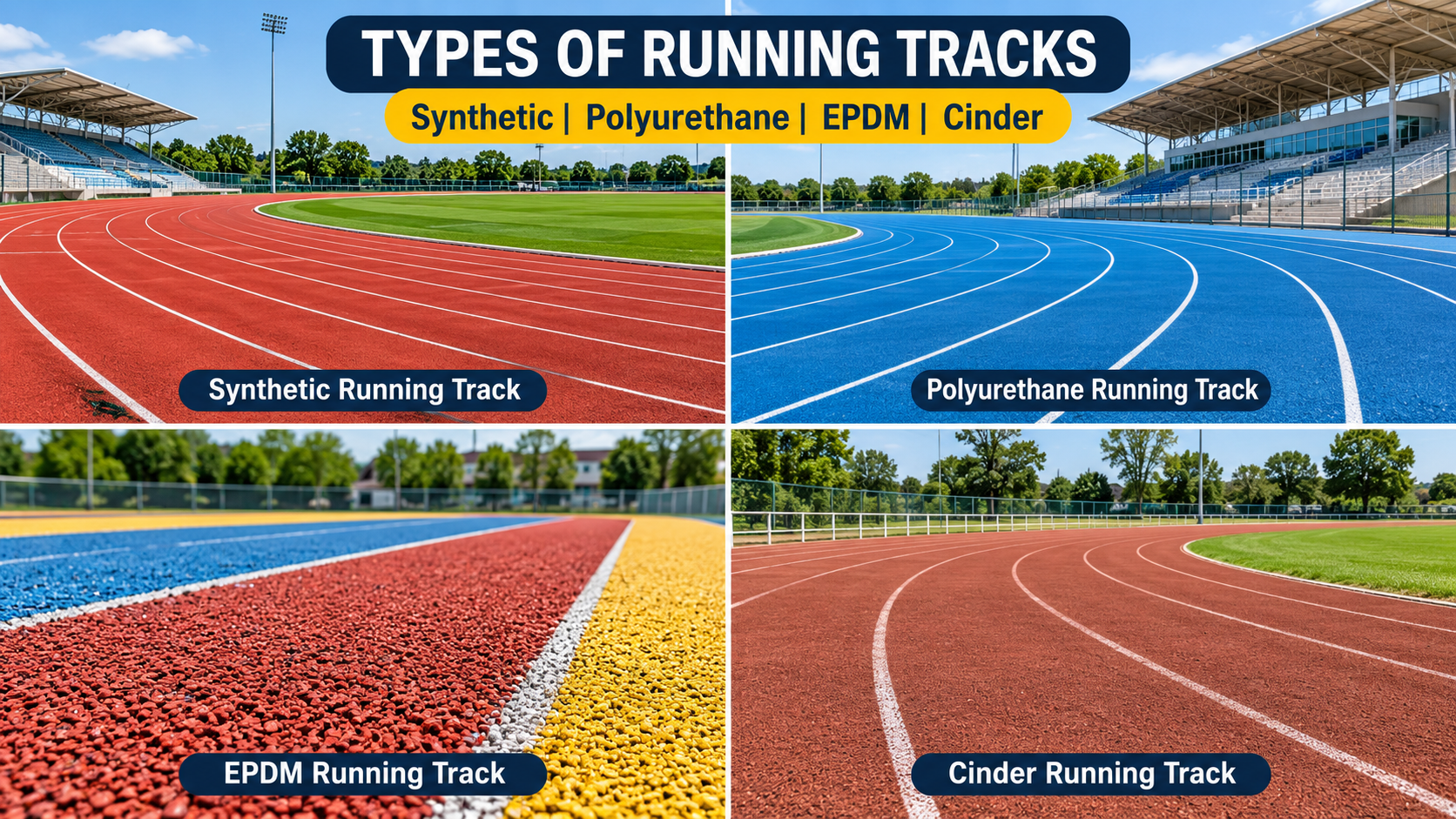
With the growing popularity of athletics, fitness activities, and professional sports infrastructure, the demand for high-quality running track construction has increased considerably. Today, several types of running track surfaces are available, including synthetic running tracks, polyurethane running tracks, EPDM running tracks, and traditional cinder tracks.
Each running track surface has its own characteristics, construction requirements, advantages, limitations, and maintenance needs. While some surfaces are designed for professional athletic competitions, others are more suitable for educational institutions, recreational facilities, and budget-conscious sports projects.
In this comprehensive guide, we will explore the major types of running tracks, their materials, construction methods, benefits, disadvantages, and applications. This will help sports authorities, architects, contractors, educational institutions, and project developers make informed decisions when planning a running track construction project.
1. Synthetic Running Track
A synthetic running track is one of the most popular choices for modern sports infrastructure. It is an engineered athletic surface manufactured using specially selected materials to provide better traction, shock absorption, flexibility, and weather resistance.
Unlike traditional natural surfaces such as grass, soil, or cinder, synthetic running tracks offer a more consistent running experience. They are widely used in professional stadiums, sports complexes, schools, universities, and athletic training centres.
Synthetic tracks are generally manufactured using polymer-based materials, rubber granules, polyurethane binders, and other specialised compounds. The final surface is designed to withstand continuous athletic activity and varying environmental conditions.
Types of Synthetic Running Tracks
Synthetic running tracks are available in different construction systems, including:
- Full polyurethane running tracks
- Sandwich-system synthetic running tracks
- Spray-coated synthetic running tracks
- EPDM rubber running tracks
- Poured-in-place rubber track systems
Each system differs in thickness, material composition, performance characteristics, installation technique, and cost.
Advantages of Synthetic Running Tracks
1. Excellent athletic performance: Synthetic surfaces provide consistent grip and energy response, helping athletes maintain their running rhythm.
2. Shock absorption: Properly designed synthetic systems can reduce the impact experienced by athletes while running.
3. Weather resistance: Quality synthetic running tracks are designed to withstand exposure to sunlight, rain, and regular outdoor conditions.
4. Low maintenance: Compared with traditional cinder surfaces, synthetic tracks generally require less frequent surface maintenance.
5. Long-term usability: When constructed using appropriate materials and installation techniques, synthetic tracks can provide many years of service.
Applications
Synthetic running tracks are commonly installed in:
- International and national sports stadiums
- School and college playgrounds
- University sports complexes
- Government sports facilities
- Athletic training academies
- Community sports centres
Synthetic running tracks are particularly suitable for facilities where regular athletic training and organised competitions take place.
2. Polyurethane Running Track
Polyurethane running tracks are among the most widely recognised surfaces used in professional athletics. They are manufactured using polyurethane-based resins combined with rubber granules or other specialised components.
Polyurethane is a versatile polymer material known for its elasticity, durability, flexibility, and resistance to environmental conditions. These properties make it suitable for developing high-performance athletic surfaces.
A polyurethane running track is designed to provide a balanced combination of grip, cushioning, surface consistency, and energy return. Depending on the construction system, it can be installed as a full polyurethane system, sandwich system, or spray-coated surface.
Different Polyurethane Track Systems
A. Full Polyurethane System
A full polyurethane running track generally consists of multiple polyurethane-based layers. The system may include a polyurethane primer, elastic base layer, structural or wear layers, and a final protective coating.
It is commonly selected for professional sports facilities because of its consistent performance and durable surface characteristics.
B. Sandwich System
A sandwich running track combines a resilient rubber base with a polyurethane sealing layer and a synthetic wear surface.
The lower elastic layer generally contains rubber granules bonded with polyurethane resin. The upper layer is finished with polyurethane material and EPDM granules.
This construction provides a combination of cushioning, durability, and surface grip.
C. Spray-Coated Polyurethane System
A spray-coated running track generally consists of a prepared rubber base with a polyurethane and EPDM granule spray-applied wearing layer.
It is often considered for training facilities, educational institutions, and recreational athletic surfaces, depending on the required performance specifications.
Benefits of Polyurethane Running Tracks
- Provides excellent surface consistency.
- Offers good traction and grip for athletes.
- Supports shock absorption and comfortable running.
- Can be designed for professional athletic requirements.
- Provides good resistance to regular wear and tear.
- Available in different colours and construction systems.
- Suitable for outdoor sports facilities.
Limitations
Polyurethane running tracks can involve a higher initial investment than basic cinder surfaces. Their performance also depends heavily on material quality, weather conditions during installation, substrate preparation, and workmanship.
Incorrect mixing ratios, inadequate curing, poor drainage, or improper installation can cause surface defects such as bubbling, cracking, or delamination.
Where Are Polyurethane Tracks Used?
Polyurethane running tracks are widely used in professional athletics stadiums, sports universities, training centres, and high-quality school sports facilities.
For projects requiring consistent athletic performance and long-term surface reliability, polyurethane systems are an important option to consider.
3. EPDM Running Track
EPDM stands for Ethylene Propylene Diene Monomer. It is a synthetic rubber material commonly used in sports flooring, playground surfaces, recreational areas, and running track construction.
EPDM granules are available in different colours, sizes, and grades. They are generally mixed with suitable polyurethane binders to produce a flexible and resilient surface.
EPDM running tracks are popular because they provide good weather resistance, colour stability, flexibility, and an attractive appearance.
The material is particularly useful in outdoor sports environments where surfaces are exposed to sunlight, temperature variations, and rainfall.
How Is an EPDM Running Track Constructed?
EPDM running track construction generally involves several important stages:
1. Surface Preparation
The existing base is inspected and prepared. Any loose material, dust, unevenness, or structural defects must be addressed before installation.
2. Base Layer Preparation
A suitable concrete or asphalt base is developed with appropriate levels and drainage provisions.
3. Primer Application
A compatible primer may be applied to improve bonding between the substrate and the subsequent surface layers.
4. Rubber Layer Installation
EPDM granules are mixed with a suitable polyurethane binder and applied according to the selected system specification.
5. Surface Finishing
The installed surface is levelled and finished to achieve the required thickness, texture, and appearance.
6. Curing and Inspection
The material is allowed to cure according to the manufacturer’s recommendations. The finished surface is then inspected for consistency, bonding, drainage, and workmanship.
Advantages of EPDM Running Tracks
Colour Options: EPDM granules are available in several colours, allowing sports facilities to achieve attractive surface designs.
UV Resistance: Quality EPDM materials offer good resistance to ultraviolet exposure and colour deterioration.
Flexibility: The rubber material provides flexibility and resilience, making it useful for athletic and recreational applications.
Weather Resistance: EPDM is suitable for outdoor environments when the complete system is properly designed and installed.
Surface Grip: Its textured finish can provide good traction for regular sports activities.
Versatility: EPDM is used in running tracks, jogging pathways, playgrounds, and other recreational surfaces.
Limitations of EPDM Running Tracks
Not every EPDM surface is suitable for professional athletics. Performance depends on the complete construction system, including the rubber grade, binder, thickness, compaction, and surface texture.
A basic EPDM rubber surface should not automatically be considered equivalent to a certified competition-grade polyurethane athletic track.
For professional running tracks, the selected system must meet the relevant performance and governing-body requirements.
4. Cinder Running Track
Cinder running tracks are among the oldest types of athletic running surfaces. Before the widespread adoption of modern synthetic track systems, cinder tracks were commonly used in schools, colleges, universities, and outdoor sports grounds.
These tracks are generally constructed using compacted crushed cinders, ash, fine aggregates, or similar granular materials.
Cinder surfaces became popular because they were relatively inexpensive to construct and did not require advanced polymer-based materials or specialised installation equipment.
Although many professional sports facilities have shifted towards synthetic running tracks, cinder surfaces are still found in some traditional sports grounds and budget-oriented recreational facilities.
Construction of Cinder Running Tracks
Cinder running track construction generally includes the following stages:
- Ground excavation and site preparation.
- Formation of the required track alignment and levels.
- Preparation of the subgrade.
- Installation of a suitable drainage and foundation layer.
- Placement of selected cinder or granular material.
- Watering, grading, and mechanical compaction.
- Final surface dressing and levelling.
The quality of the finished track depends on the grading, cleanliness, drainage, and compaction of the material used.
Advantages of Cinder Running Tracks
1. Economical Construction: Cinder tracks generally require a lower initial investment than advanced synthetic systems.
2. Simple Construction: Their construction process is comparatively straightforward.
3. Traditional Athletic Surface: Cinder tracks have a long history of use in athletics and outdoor sports facilities.
4. Repairability: Localised surface damage can often be corrected through grading, replacement, and compaction of the granular material.
5. Suitable for Basic Training: They can be considered for recreational running and basic athletic training where professional competition specifications are not required.
Disadvantages of Cinder Running Tracks
Despite their affordability, cinder tracks have several limitations.
- They require regular grading and maintenance.
- Rainfall can affect surface consistency.
- Loose particles may create dust during dry weather.
- The surface can become uneven after repeated use.
- Waterlogging may occur if drainage is inadequate.
- They generally provide less consistent performance than modern synthetic systems.
- Frequent maintenance can increase long-term operating costs.
For facilities that require regular competitions, consistent athletic performance, and reduced maintenance, modern synthetic running track systems may be a more suitable investment.
5. Difference Between Synthetic, Polyurethane, EPDM and Cinder Running Tracks
Selecting the right running track surface requires an understanding of how these materials and systems differ.
The following comparison highlights their major characteristics.
| Parameter | Synthetic Track | Polyurethane Track | EPDM Track | Cinder Track |
|---|---|---|---|---|
| Material | Polymer-based system | Polyurethane resin system | EPDM rubber granules | Granular cinder material |
| Surface Type | Engineered sports surface | Resilient synthetic surface | Rubber-based surface | Compacted granular surface |
| Shock Absorption | System-dependent | Generally very good | Good, depending on system | Variable |
| Weather Resistance | Generally good | Generally good | Generally good | More weather-sensitive |
| Colour Options | Multiple | Multiple | Multiple | Limited |
| Maintenance | Low to moderate | Low to moderate | Low to moderate | High |
| Initial Investment | System-dependent | Generally higher | System-dependent | Generally lower |
| Application | Schools and stadiums | Professional athletics | Recreational and athletic surfaces | Traditional sports grounds |
Important: Synthetic is an umbrella term for manufactured athletic surfaces. Polyurethane and EPDM are materials or components used in various synthetic track systems. Therefore, these categories can overlap rather than represent four entirely separate construction technologies.
6. Running Track Construction Process: Step-by-Step Guide
Regardless of the selected surface, proper construction is essential for achieving a safe, durable, and high-performing running track.
A professionally developed running track generally involves the following construction stages.
Site Inspection and Planning
The first stage involves inspecting the proposed construction site. Engineers assess the available land, soil conditions, existing ground levels, drainage requirements, and accessibility.
The running track layout is then developed according to the intended use of the facility.
For standard athletics facilities, the commonly used outdoor oval track has a 400-metre measurement along the designated measurement line. Detailed geometry, lane widths, markings, and safety zones must follow the applicable athletics standards.
Earthwork and Subgrade Preparation
The site is excavated and levelled according to the approved design.
The subgrade must be properly prepared and compacted to achieve the required stability. Weak soil, unsuitable material, and uneven areas should be corrected before further construction.
Base Course Construction
A suitable base is developed using specified granular materials, asphalt, or other engineered construction layers.
The base must provide adequate structural support and a consistent foundation for the synthetic surface.
Drainage Installation
An effective drainage system is essential for outdoor running tracks.
Drainage arrangements may include surface slopes, perimeter drains, channels, and underground drainage provisions.
Poor drainage can lead to water accumulation, damage to the running surface, and premature deterioration.
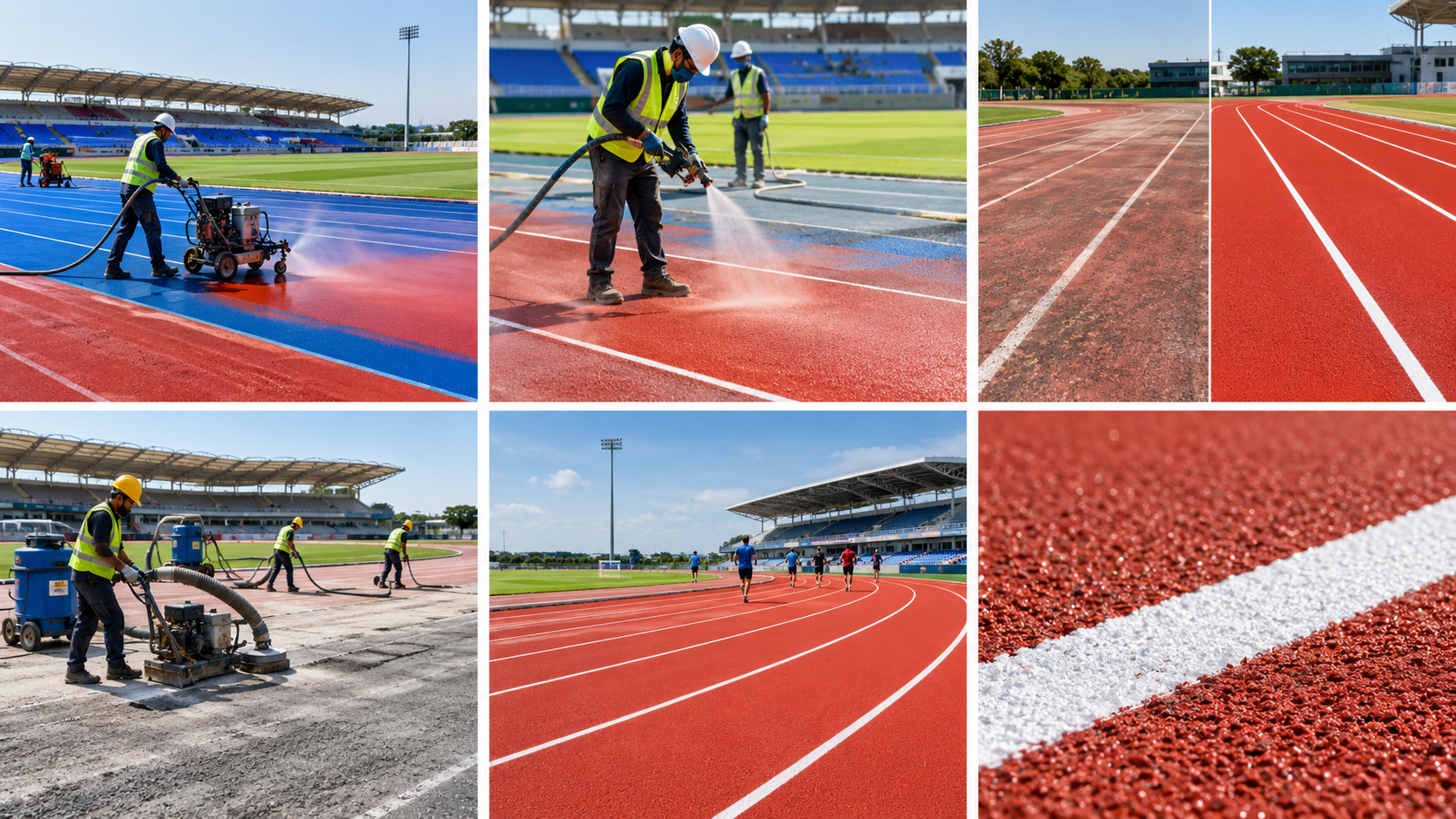
Step 5: Installation of the Running Track Surface
The selected running track system is installed according to the manufacturer’s technical specifications.
This may involve primer application, rubber base installation, polyurethane application, EPDM granule broadcasting, or spray coating.
Lane Marking and Finishing
Once the surface has cured, lane markings, start lines, finish lines, and other athletic markings are applied.
All measurements and markings must be checked against the approved layout and applicable athletics regulations.
Final Quality Inspection
The completed track should be inspected for:
- Surface thickness and uniformity.
- Surface flatness and levels.
- Drainage performance.
- Material bonding.
- Lane dimensions and markings.
- Surface texture and traction.
- Visible defects and workmanship.
For professional competition facilities, independent testing and certification may also be necessary.
7. Factors to Consider Before Choosing a Running Track Surface
Choosing the right running track is an important investment decision. The selection should be based on the purpose of the facility rather than simply the initial construction cost.
Here are some essential factors to consider.
1. Purpose of the Track
Determine whether the track will be used for professional competitions, school sports, regular athletic training, recreational jogging, or general fitness activities.
2. Project Budget
Consider both the initial construction investment and long-term maintenance expenditure. A lower-cost surface may require more frequent repairs and maintenance.
3. Climate and Weather Conditions
The selected materials should be suitable for local temperature variations, sunlight exposure, rainfall, and humidity.
4. Drainage Requirements
Good drainage is essential for maintaining the structural integrity and usability of an outdoor running track.
5. Material Quality
Always select materials from reliable manufacturers and verify their technical specifications, compatibility, and quality documentation.
6. Installation Expertise
Even high-quality materials can fail if the installation is not performed correctly. Experienced contractors and trained installation teams are important for achieving reliable results.
7. Maintenance Requirements
Consider the availability of maintenance services, cleaning procedures, inspection schedules, and repair materials.
8. Maintenance of Synthetic Running Tracks
Regular maintenance helps preserve the appearance, performance, and lifespan of running track surfaces.
Although synthetic tracks generally require less maintenance than cinder tracks, they still need periodic inspection and cleaning.
Recommended maintenance practices include:
- Remove leaves, dust, and debris regularly.
- Clean the surface using suitable equipment and approved cleaning methods.
- Prevent the growth of weeds around the track edges.
- Inspect drainage channels and outlets.
- Check for cracks, bubbles, and surface delamination.
- Repair damaged areas using compatible materials.
- Avoid heavy vehicles and unsuitable equipment on the running surface.
- Follow the manufacturer’s maintenance recommendations.
A planned maintenance programme can help prevent minor defects from becoming expensive repair problems.
9. Which Running Track Is Best for Your Project?
There is no single running track surface that is ideal for every sports facility. The right choice depends on the intended application, budget, performance requirements, and expected usage.
Here is a general selection guide:
Full polyurethane and other appropriately specified synthetic track systems are suitable options where professional performance standards are required.
Spray-coated or sandwich-system synthetic tracks may be considered depending on the available budget and sports requirements.
EPDM-based rubber surfaces can be a practical option for jogging pathways and recreational facilities.
Cinder tracks may be considered for basic training facilities where regular maintenance is acceptable.
Before finalising a system, compare the technical specifications, performance characteristics, installation requirements, and lifecycle costs.
Conclusion
Running track construction is an important part of modern sports infrastructure development. The selection of the right surface directly influences athlete comfort, running performance, safety, maintenance requirements, and the overall usability of the facility.
Synthetic running tracks, polyurethane surfaces, EPDM rubber systems, and traditional cinder tracks each offer different advantages and limitations.
While cinder tracks remain an economical option for basic recreational facilities, modern synthetic systems provide better opportunities for consistent athletic performance and specialised sports applications.
Polyurethane running tracks are particularly relevant for high-performance athletics, while EPDM rubber systems offer flexibility and versatility for recreational and selected athletic surfaces.
Ultimately, the best running track is one that matches the project’s technical requirements, environmental conditions, budget, and long-term objectives.
Investing in quality materials, professional installation, proper drainage, and regular maintenance can help develop a running track that supports athletes and sports communities for years to come.
Frequently Asked Questions (FAQs)
1. What are the main types of running tracks?
The main types include synthetic running tracks, polyurethane running tracks, EPDM rubber running tracks, and traditional cinder tracks. Natural grass and compacted earth surfaces are also used for certain recreational and training purposes.
2. Which material is used in synthetic running tracks?
Synthetic running tracks commonly use polyurethane resins, rubber granules, EPDM particles, and other specialised polymer-based materials. The exact composition depends on the selected track system.
3. What is the difference between polyurethane and EPDM running tracks?
Polyurethane is a polymer resin commonly used as a binder, coating, or structural component, while EPDM is a synthetic rubber material supplied in granule form. They are often combined to create resilient running track surfaces.
4. How long does a synthetic running track last?
The lifespan depends on material quality, construction standards, climatic conditions, usage intensity, and maintenance. A properly designed and maintained synthetic track can provide many years of service.
5. Is an EPDM running track suitable for outdoor use?
Yes. Quality EPDM materials offer good resistance to sunlight and weather exposure. However, the complete surface system must be designed and installed according to the intended outdoor application.
6. What is a cinder running track?
A cinder running track is a traditional athletic surface made from compacted granular materials such as cinders, ash, and selected aggregates. It is generally less expensive to construct but requires more frequent maintenance.
7. Which running track is best for schools?
The best option depends on the school’s budget, available space, expected usage, and athletic requirements. Synthetic spray-coated or sandwich systems may be considered for school sports facilities, while EPDM surfaces may suit recreational areas.
8. Why is drainage important in running track construction?
Proper drainage prevents water accumulation, protects the track foundation, reduces the risk of surface deterioration, and helps maintain a safe and usable running environment.
9. What is the standard length of an athletics running track?
A standard outdoor athletics track is generally 400 metres in length when measured along the designated measurement line of the inside lane, according to applicable World Athletics requirements.
10. How do I choose a running track construction contractor?
Choose a contractor with relevant sports infrastructure experience, trained installation personnel, quality material documentation, completed project references, and the ability to provide technical specifications and after-installation support.