Intoduction
A professionally designed running track is much more than a marked pathway for athletes. It is a carefully engineered sports surface that combines proper civil construction, drainage, shock absorption, traction, durability, and accurate lane markings to create a safe and high-performance environment for runners.
With the rapid development of schools, universities, sports academies, fitness centres, stadiums, residential communities, corporate campuses, and multi-sport facilities across India, the demand for professional running track construction companies is increasing significantly. Choosing the right sports facility construction company is therefore an important decision for anyone planning a new athletic track or upgrading an existing sports ground.
A reliable contractor should be capable of handling the complete project—from site assessment and design to base preparation, drainage, synthetic surfacing, lane marking, installation, and maintenance.
What Is Running Track Construction?
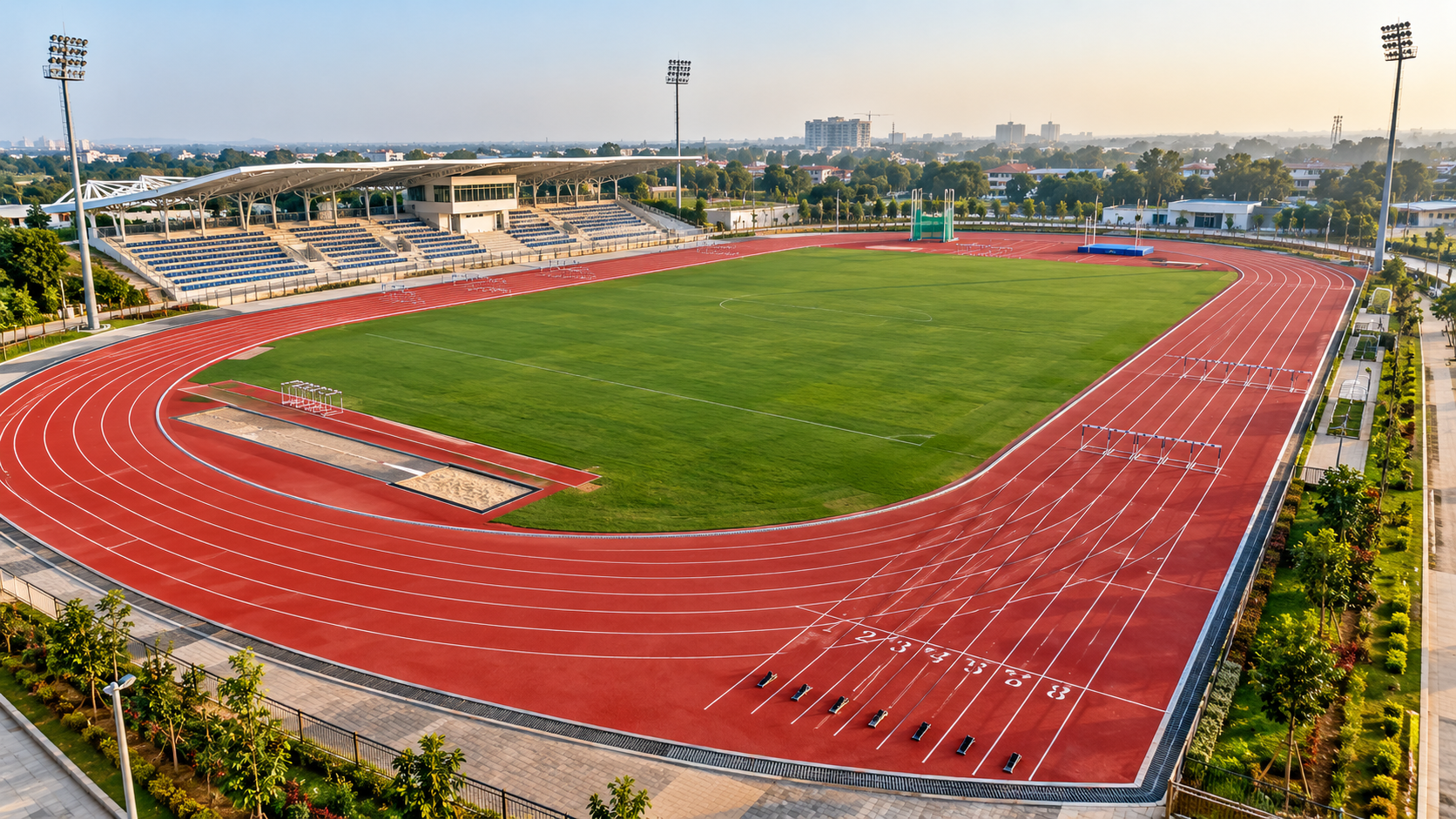
Running track construction is the process of designing and developing a dedicated athletic running surface according to the intended use of the facility. Depending on the project requirements, a track can be constructed for professional athletics, school sports, recreational running, jogging, fitness training, or multi-purpose sports facilities.
A professional running track normally includes several important components:
- Site survey and technical planning
- Earthwork and excavation
- Sub-base and base-course preparation
- Proper slope and surface leveling
- Drainage and water-management systems
- Shock-absorbing layers
- Synthetic PU or EPDM surfacing
- Precise lane marking
- Kerbing and finishing
- Quality inspection
- Maintenance and periodic resurfacing
The quality of each layer directly affects the performance and life of the finished track. A premium synthetic surface installed over a poorly prepared base can still develop cracks, uneven areas, water accumulation, or premature deterioration.
That is why selecting an experienced running track construction company is essential.
Why Choose a Professional Sports Facility Construction Company?
Sports infrastructure requires specialist knowledge. Unlike ordinary flooring or civil construction, an athletic track must provide consistent traction, controlled impact absorption, appropriate drainage, and reliable performance under repeated athletic activity.
A professional sports facility company understands how the sub-base, drainage, surfacing system, climate, usage level, and maintenance requirements work together.
Professional construction can provide:
1. Better Athlete Safety
Running involves repeated impact on the feet, ankles, knees, and other joints. A properly engineered synthetic track can provide controlled shock absorption and a more comfortable running experience than hard, uneven surfaces.
2. Consistent Performance
Athletes need predictable traction and surface response. Professional synthetic running track systems are designed to provide a relatively consistent surface across the running lanes.
3. Better Drainage
Water management is one of the most important aspects of outdoor track construction. Standing water can damage the surface and make the facility unsafe.
A professionally engineered drainage system helps move rainwater away from the track and reduces water-related deterioration.
4. Long-Term Durability
A high-quality track is designed to withstand repeated use, changing weather conditions, UV exposure, and regular athletic activity.
5. Professional Appearance
A properly finished athletic track gives a school, stadium, academy, or sports complex a modern and professional appearance while improving the overall value of the sports facility.
Types of Running Tracks
A major advantage of working with an experienced sports infrastructure company is the ability to select a track system based on the project’s requirements rather than using a one-size-fits-all solution.
Synthetic Running Track
Synthetic running tracks are widely used for schools, universities, stadiums, sports academies, and professional training facilities.
These systems can provide:
- Good traction
- Shock absorption
- Weather resistance
- Consistent surface characteristics
- Low maintenance requirements
- Professional appearance
Synthetic systems are particularly suitable for facilities that require regular use and reliable outdoor performance.
PU Running Track
Polyurethane, commonly known as PU, is widely used in high-performance athletic track systems.
PU-based running tracks can be designed with multiple layers to achieve the required combination of elasticity, durability, traction, and impact absorption.
They are suitable for demanding sports facilities where surface quality and athlete comfort are important considerations.
EPDM Running Track
EPDM granules are commonly incorporated into synthetic athletic surfaces because of their durability, flexibility, and resistance to outdoor environmental conditions.
An EPDM-based system can provide a resilient surface suitable for running, jogging, training, and recreational athletic applications.
Jogging Track
Not every project requires a full 400-metre athletics track.
Residential communities, parks, hotels, corporate campuses, fitness centres, and recreational facilities may benefit from dedicated jogging tracks.
Jogging tracks can be designed around available landscaping, walking areas, gardens, or existing recreational spaces.
Running Track Construction Process
A professional running track construction project should follow a systematic process.
Site Survey
The project begins with a detailed assessment of the proposed location.
The contractor evaluates:
- Available land area
- Existing ground conditions
- Soil characteristics
- Existing drainage
- Levels and slopes
- Accessibility
- Water accumulation
- Existing infrastructure
- Intended track dimensions
This information helps the engineering team develop an appropriate construction plan.
Track Design and Layout
The track layout is developed according to the available space and intended use.
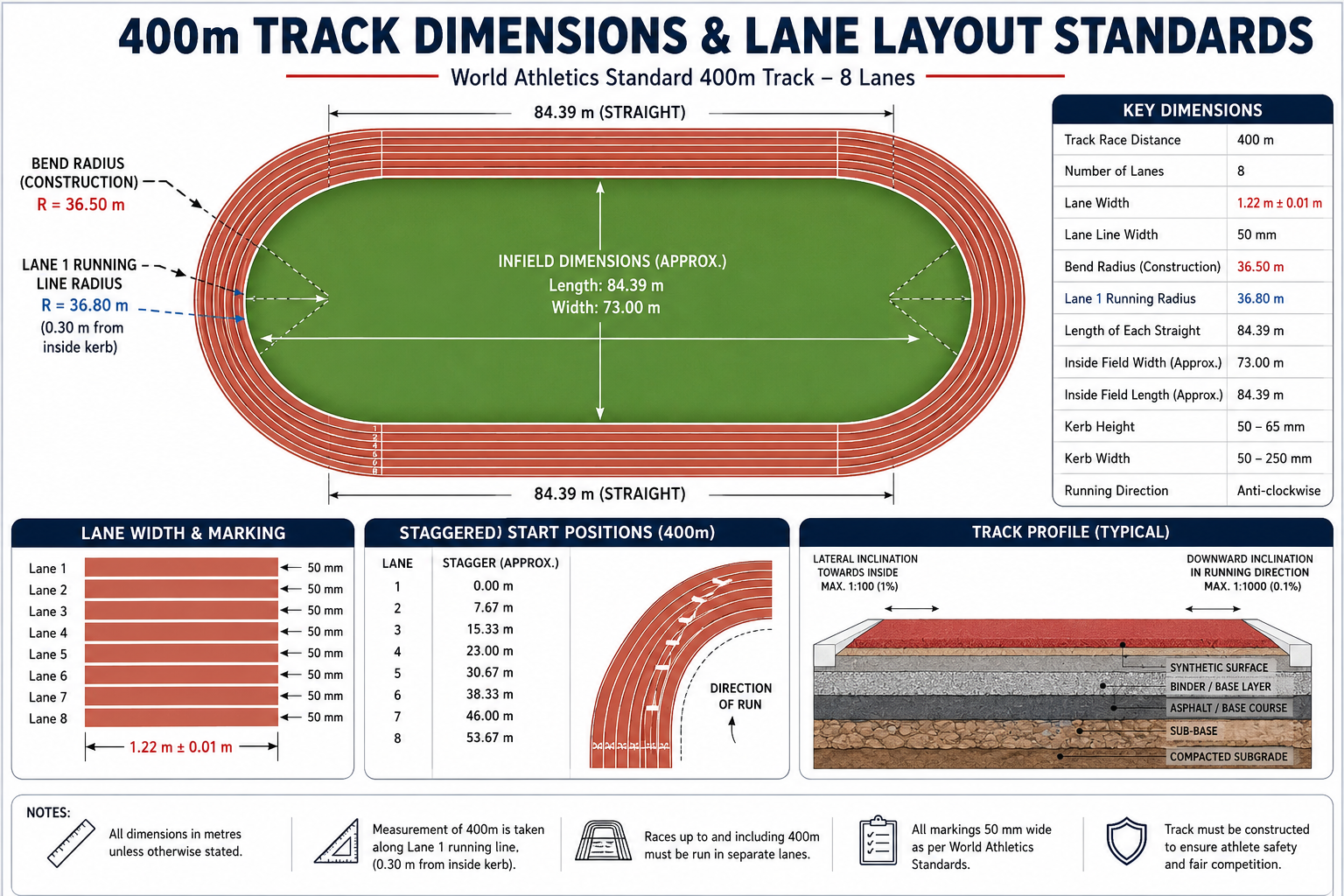
For professional athletics facilities, dimensions and lane arrangements must be carefully considered. For schools, residential developments, and fitness parks, the design can be customized according to the available area and expected usage.
A good design should also consider spectator areas, access routes, lighting, fencing, landscaping, and other sports facilities.
Earthwork and Excavation
The existing ground is prepared by removing unsuitable material and creating the required formation level.
Proper compaction at this stage is extremely important because movement in the underlying ground can eventually affect the finished surface.
Sub-Base Preparation
The sub-base provides structural support for the track.
Suitable aggregates are placed and compacted in controlled layers to create a stable foundation.
The quality of the sub-base directly influences the long-term performance of the running track.
Drainage Installation
Drainage is particularly important for outdoor running tracks.
The system should be planned to prevent water from remaining on or beneath the surface. Depending on the location and project requirements, drainage channels, perforated pipes, slopes, collection systems, and other water-management solutions may be incorporated.
This is especially important in cities and regions exposed to heavy seasonal rainfall.
Surface Leveling
The base is accurately leveled before the synthetic surface is installed.
Any significant irregularities at this stage can affect the final track, so professional contractors use appropriate surveying and leveling techniques to achieve the required profile.
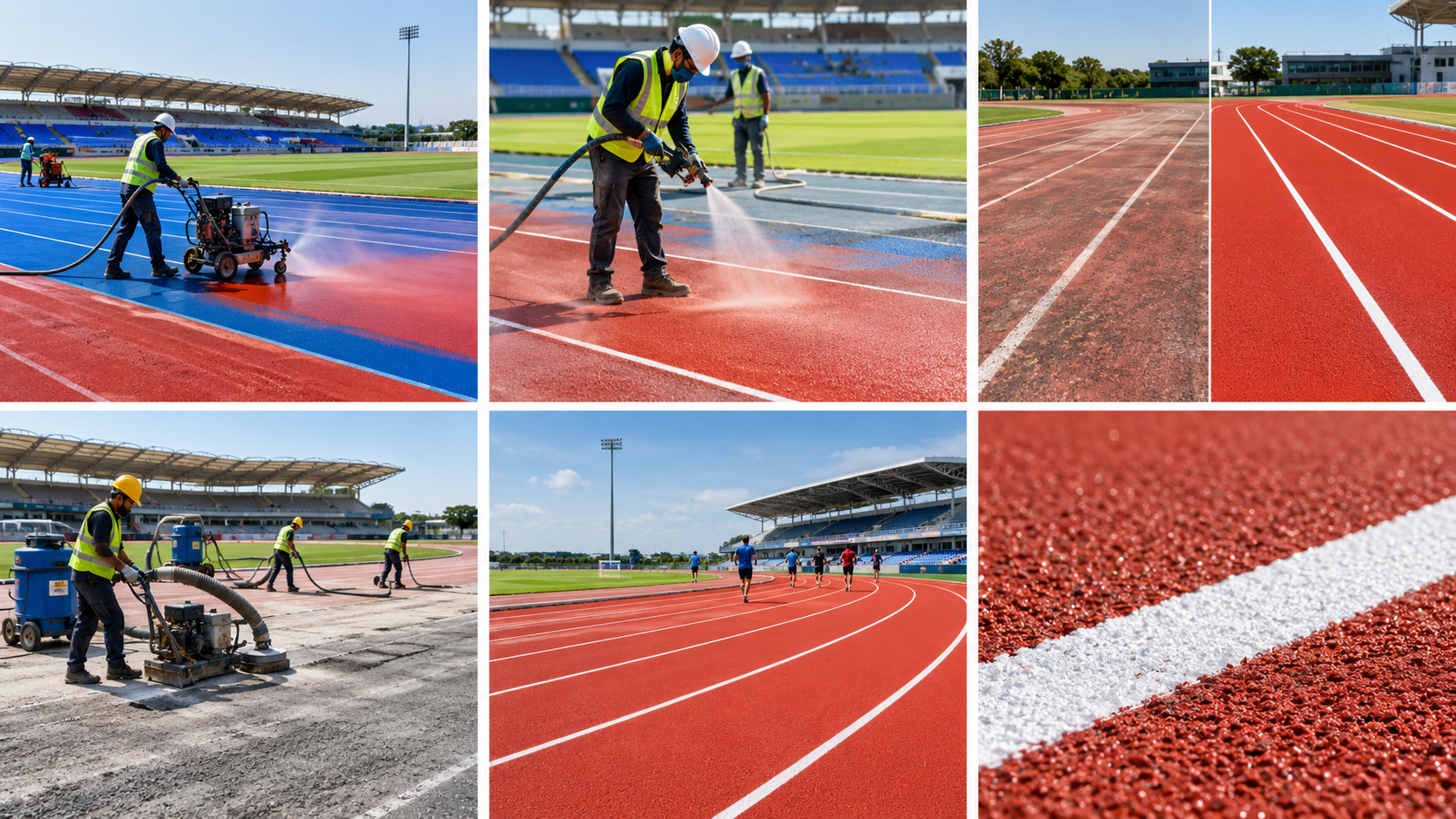
Installation of Synthetic Layers
The selected PU, EPDM, or other synthetic system is installed according to the manufacturer’s specifications and project requirements.
Depending on the system, multiple layers may be used to provide structural strength, elasticity, cushioning, and surface performance.
Lane Marking
Accurate lane markings are essential for an athletics track.
Professional-grade marking materials and appropriate measuring techniques are used to create clean and consistent lines.
For competition facilities, markings must be planned carefully according to the applicable athletic standards.
Quality Inspection
After installation, the completed track should be inspected for:
- Surface uniformity
- Drainage performance
- Lane marking accuracy
- Surface defects
- Adhesion
- Finishing quality
- Overall appearance
Only after the required quality checks should the facility be handed over for regular use.
Why Mumbai and Other Indian Cities Need Specialized Track Construction
India’s climatic conditions vary considerably from region to region. Mumbai, for example, experiences high humidity and heavy monsoon rainfall, making drainage and weather-resistant construction particularly important.
A sports infrastructure company working in such conditions should consider moisture management, surface durability, UV exposure, temperature variation, and rainwater drainage during the design stage.
The same principle applies across India: the track system should be selected according to the local climate, ground conditions, usage pattern, and maintenance capabilities.
For Mumbai projects, this is especially important because poor drainage or unsuitable construction can result in waterlogging and premature surface deterioration.
Applications of Running Tracks
A professionally constructed running track can be developed for many types of facilities.
Schools and Colleges
Athletic tracks provide students with a dedicated environment for physical education, athletics training, competitions, and recreational activities.
Universities
Universities can combine running tracks with football grounds, cricket facilities, outdoor gyms, basketball courts, and other sports infrastructure to create complete athletic campuses.
Sports Academies
Professional academies require durable surfaces capable of handling intensive training schedules.
Stadiums
Stadium projects often require professionally engineered athletic tracks integrated with football or other field sports.
Residential Societies
Modern residential developments increasingly include jogging tracks and fitness spaces as part of their lifestyle amenities.
Corporate Campuses
Companies can develop running and fitness facilities to encourage employee wellness and recreational activities.
Hotels and Resorts
Jogging tracks can add significant recreational value to premium hospitality properties.
Public Parks and Fitness Parks
Municipal and private parks can use synthetic jogging surfaces to provide safer and more comfortable running environments for the public.
How to Select the Best Running Track Construction Company
The phrase “best running track construction company” should not simply mean the company offering the lowest quotation.
A better selection process should evaluate technical capability, material quality, experience, project execution, and after-sales support.
Consider the following factors:
Experience
Look for a contractor with relevant experience in athletic tracks and sports infrastructure rather than only general civil construction.
Material Quality
Ask about the proposed PU, EPDM, synthetic, or other surface system and verify that the materials are appropriate for the intended application.
Complete Project Capability
A strong sports facility contractor should be able to coordinate civil works, drainage, base preparation, surfacing, markings, and finishing.
Project Portfolio
Review previous running track and sports infrastructure projects. Relevant project experience is one of the best ways to assess technical capability.
Customization
Every site is different. A good contractor should be able to customize the track according to land dimensions, usage, climate, budget, and performance requirements.
Maintenance Support
Even a premium track requires regular maintenance. Ask whether the company provides inspection, repair, cleaning, resurfacing, and maintenance services.
Transparent Quotation
A professional quotation should explain the proposed system, construction layers, materials, civil work, drainage, installation, markings, and applicable warranty or maintenance terms.
Running Track Construction Cost
The cost of running track construction depends on several factors, so there is no single price that applies to every project.
Important cost factors include:
- Total track area
- Number of lanes
- Track dimensions
- Existing ground condition
- Earthwork requirements
- Drainage requirements
- Base construction
- Synthetic surface system
- PU or EPDM specifications
- Lane markings
- Kerbing and finishing
- Lighting and fencing
- Site accessibility
- Location
- Maintenance requirements
A simple jogging track will generally have very different requirements from a competition-level athletics track.
Instead of selecting a contractor solely on the lowest initial price, facility owners should evaluate the total lifecycle value of the project.
A slightly higher-quality construction system can offer better durability, athlete comfort, appearance, and maintenance performance over the long term.
Maintenance of Synthetic Running Tracks
Regular maintenance helps preserve the performance and appearance of an athletic surface.
Recommended maintenance may include:
- Routine cleaning
- Removal of leaves and debris
- Inspection of drainage systems
- Checking for surface damage
- Repairing localized defects
- Maintaining lane markings
- Preventing contamination by oil or chemicals
- Periodic professional inspection
Drainage should receive particular attention after heavy rainfall. Blocked drains can cause water to remain around the track and may eventually affect the surrounding structure.
Why Choose Sports Facility for Running Track Construction?
Sports Facility provides professional running track and sports infrastructure solutions designed for different types of projects, including schools, sports academies, stadiums, universities, fitness parks, residential developments, and recreational facilities.
The company promotes synthetic, PU, and EPDM-based running track systems and turnkey construction services, including base preparation, surfacing, lane marking, and finishing. Its published information also highlights applications across schools, stadiums, universities, sports complexes, and other athletic facilities.
A successful running track project requires more than simply installing a synthetic surface. It requires proper planning, engineering, material selection, skilled installation, accurate finishing, and long-term maintenance.
For organizations looking to develop a complete sports environment, a specialist sports infrastructure company can also coordinate multiple facilities such as athletic tracks, jogging tracks, artificial turf, badminton courts, tennis courts, basketball courts, football grounds, and other sports surfaces.
Mumbai has several established sports-infrastructure providers offering athletic track and sports facility services. For example, Sports Facilities Co. states that it provides planning, design, and execution for athletic tracks, jogging tracks, football and hockey pitches, tennis, squash, badminton, volleyball, and other sports facilities.
Other Mumbai-area companies also advertise turnkey athletic-track and sports-infrastructure services, including Waghmare Group, A to Z Sports Infra, and Meckavo Sports.
Conclusion
Choosing the best running track construction company is an important investment decision for schools, universities, sports academies, stadiums, residential communities, corporate campuses, and fitness facilities.
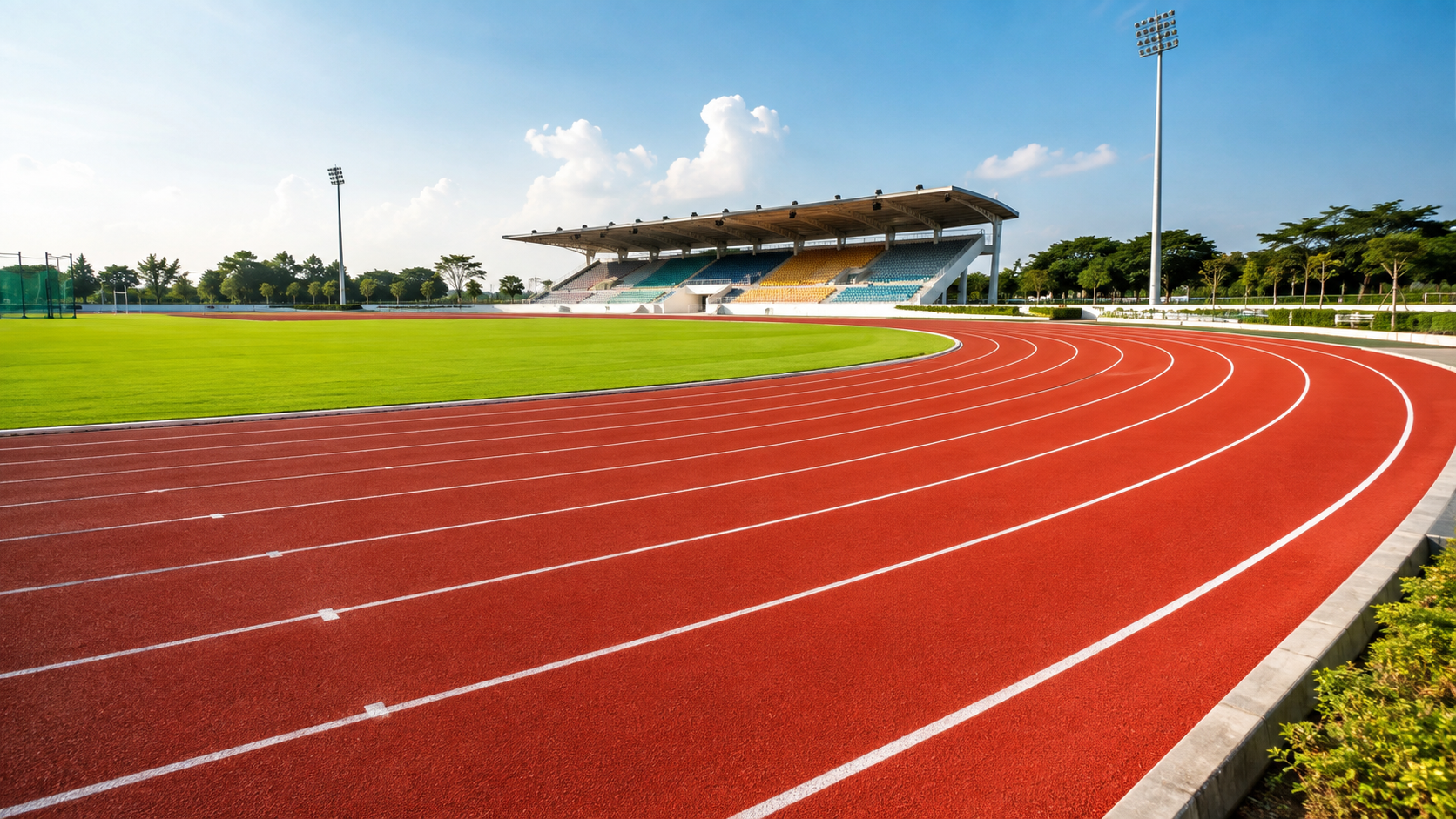
A professionally engineered running track combines a stable foundation, effective drainage, appropriate synthetic surfacing, shock absorption, reliable traction, accurate markings, and quality workmanship.
Whether you need a 400m athletic track, synthetic running track, PU running track, EPDM track, school running track, stadium track, or residential jogging track, the right sports facility partner can help transform an unused or outdated space into a safe, attractive, and high-performance sports environment.
The most successful projects begin with proper planning. Before construction starts, evaluate the site, define the intended use, select the appropriate surface system, understand drainage requirements, compare construction specifications, and choose a contractor with relevant sports infrastructure experience.
With the right combination of engineering, quality materials, skilled installation, and regular maintenance, a running track can provide years of reliable performance while supporting athlete development, fitness, recreation, and the overall growth of sports infrastructure in India.