
Introduction
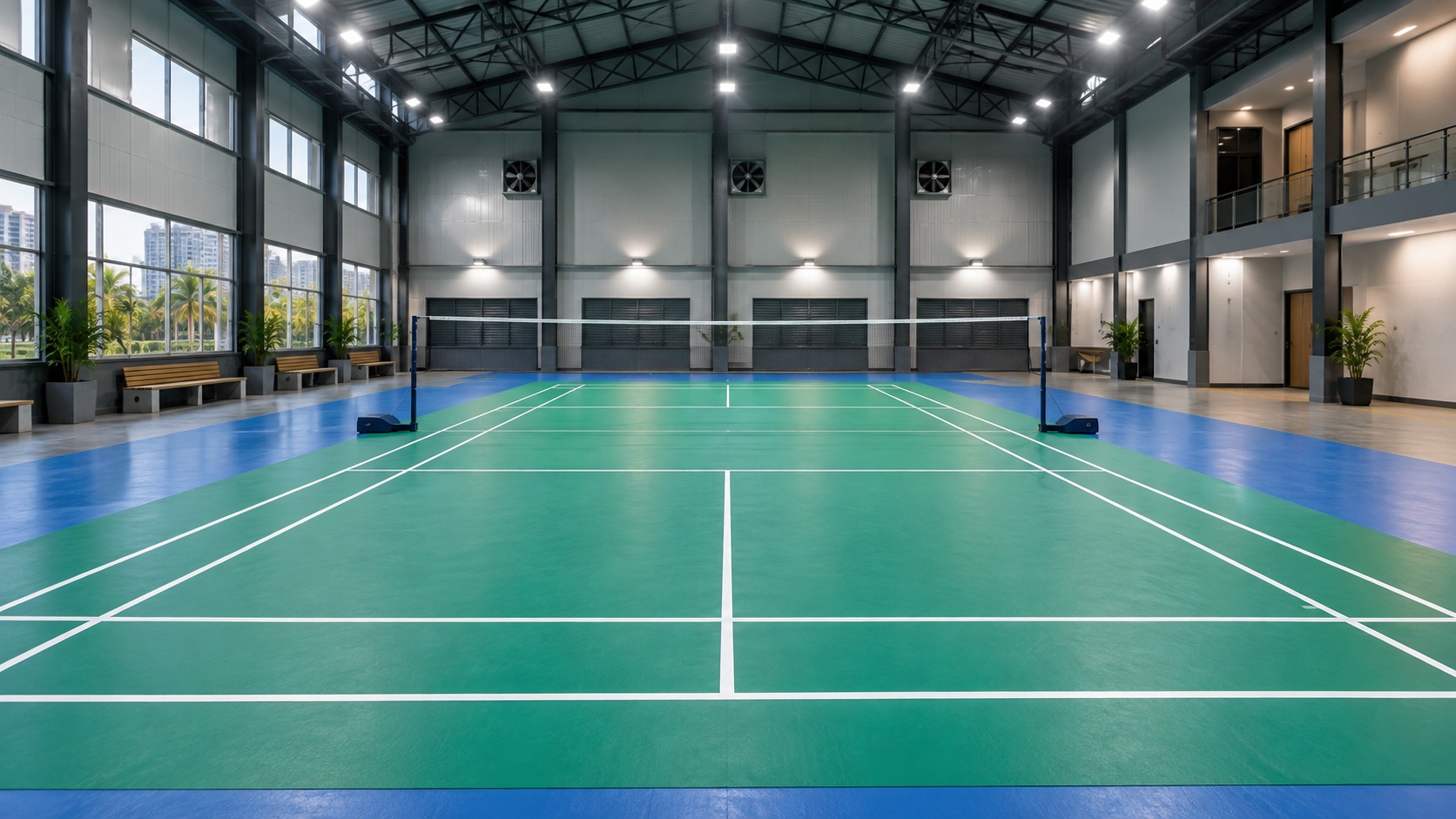
Badminton is a fast-paced sport that demands quick movement, sudden stops, jumps, and rapid changes in direction. While players often focus on rackets, shoes, and training, the badminton court flooring is equally important. The right flooring system can improve playing comfort, provide better traction, reduce the impact on joints, and create a safer environment for regular practice and competitive games.
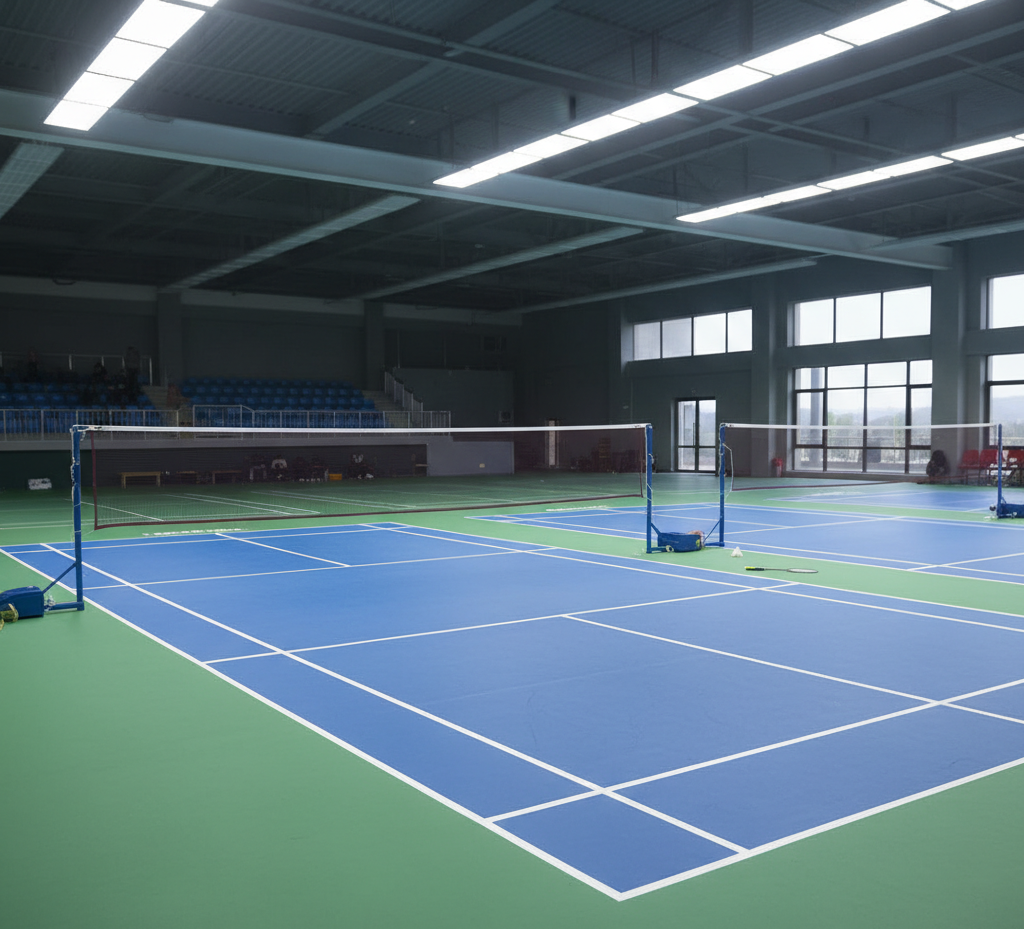
A professional badminton court flooring service involves much more than simply installing a colored surface. It includes site inspection, floor preparation, selection of the appropriate sports flooring system, installation, court marking, finishing, and quality checks. When these stages are handled correctly, the finished court can provide consistent performance and remain durable under frequent use.
Whether you are planning a badminton court for a sports academy, school, college, residential society, club, hotel, fitness centre, or private facility, selecting an experienced flooring service provider can make a significant difference.
What Is a Badminton Court Flooring Service?
A badminton court flooring service is a specialized process for designing, preparing, installing, and finishing a sports surface suitable for badminton.
Unlike ordinary flooring, badminton flooring must accommodate the physical demands of the game. Players constantly move forward, backward, sideways, and diagonally. They also perform lunges, jumps, quick turns, and sudden braking movements. A conventional concrete, tile, or excessively hard surface may not provide the required combination of grip and impact protection.
A professional flooring service generally includes:
- Site inspection and measurement
- Existing floor assessment
- Base preparation
- Moisture and surface-level evaluation
- Selection of suitable flooring material
- Installation of the sports flooring system
- Seam or joint treatment where required
- Court line marking
- Surface finishing
- Quality and safety inspection
- Maintenance recommendations
The objective is to create a surface that supports both player safety and sports performance.
Why Is Badminton Court Flooring Important?
The floor is one of the most frequently used parts of a badminton facility. Every movement made by a player is transferred through the feet to the playing surface.
A properly designed badminton floor can provide controlled traction without making movement unnecessarily difficult. It can also offer a degree of cushioning that helps reduce excessive impact during repeated activity.
For recreational players, this contributes to a more comfortable playing experience. For athletes and serious players, consistent flooring can help them develop predictable movement patterns and footwork.
Poorly selected flooring may create several problems, including:
- Excessive hardness
- Insufficient grip
- Slippery areas
- Uneven surfaces
- Premature surface damage
- Poor shock absorption
- Difficult maintenance
- Inconsistent playing conditions
This is why flooring should be treated as an important part of the overall court construction rather than as an afterthought.
Types of Badminton Court Flooring
There is no single flooring solution that is ideal for every badminton facility. The appropriate system depends on factors such as location, budget, expected usage, existing floor condition, maintenance requirements, and whether the court is indoor or outdoor.
PVC Sports Flooring
PVC sports flooring is widely considered for indoor badminton facilities because it can provide a smooth, resilient playing surface.
It is available in different thicknesses and construction formats. Depending on the system, the flooring can include layers designed for durability, cushioning, dimensional stability, and surface protection.
PVC flooring is particularly suitable for facilities where players use the court regularly and where consistent maintenance is expected.
Key advantages may include:
- Comfortable playing surface
- Good wear resistance
- Easy cleaning
- Professional appearance
- Consistent surface characteristics
- Availability in sports-specific designs
The correct installation method is essential because poor subfloor preparation can affect the performance and appearance of the finished flooring.
PU Sports Flooring
Polyurethane, commonly known as PU flooring, is another option for professional sports environments.
A PU sports flooring system can be designed with cushioning and protective layers to create a resilient surface. It is commonly considered for indoor sports facilities where durability and player comfort are important.
PU systems can be customized according to the requirements of the facility and may provide a seamless appearance when professionally installed.
Wooden Badminton Flooring
Wooden flooring is associated with premium indoor sports facilities and competition environments.
A properly engineered wooden sports floor can offer excellent playing characteristics when combined with the appropriate subfloor, cushioning structure, finishing system, and maintenance program.
However, wooden sports flooring requires careful planning. Humidity, moisture, temperature fluctuations, installation quality, and maintenance can all affect its long-term performance.
For premium badminton halls, a specialist assessment should be conducted before choosing a wooden system.
How Professional Badminton Court Flooring Is Installed
A quality flooring installation begins well before the first flooring material is placed.
1. Site Inspection
The flooring team first examines the location.
Important factors include:
- Court dimensions
- Existing floor condition
- Surface level
- Cracks and damaged areas
- Moisture conditions
- Drainage around the facility
- Indoor environmental conditions
- Expected player traffic
This assessment helps determine which flooring system is appropriate.
2. Base Preparation
The condition of the base has a direct impact on the finished court.
The floor may need cleaning, grinding, leveling, crack treatment, or other preparation before the sports flooring is installed.
Any major unevenness should be addressed during this stage. Installing premium flooring over a poor base can lead to visible imperfections and long-term performance problems.
3. Moisture Assessment
Moisture can become a serious concern, particularly in humid environments.
For facilities located in coastal or high-humidity areas, moisture management deserves additional attention. The flooring system and base should be selected and prepared according to the environmental conditions of the site.
4. Installation of the Flooring System
Once the base is ready, the selected sports flooring system is installed according to its technical requirements.
For sheet-based systems, joints need careful treatment. For synthetic systems, each layer must be applied or installed correctly to achieve the intended performance.
Professional workmanship is important because small installation errors can become noticeable once the court is in regular use.
5. Court Line Marking
Accurate court markings are essential for badminton.
The lines should be clearly visible, straight, correctly positioned, and appropriately finished for the selected flooring system.
Good line marking gives the court a professional appearance while helping players and officials identify the boundaries accurately.
6. Final Inspection
Before handing over the court, the installation should be inspected for:
- Surface consistency
- Visible defects
- Line accuracy
- Adhesion
- Joints
- Surface cleanliness
- Overall finishing
A final quality check helps ensure that the completed facility is ready for regular play.
Choosing Flooring Based on Court Usage
The best badminton flooring can vary depending on how the court will be used.
Residential Badminton Courts
Homeowners may want a practical flooring solution that combines comfort, appearance, durability, and manageable maintenance.
The available space, ventilation, existing floor, and frequency of play should be considered before selecting the system.
School and College Courts
Educational institutions often have high foot traffic. Flooring should therefore be selected with durability and routine maintenance in mind.
A good sports surface can support physical education programs, training sessions, and recreational activities.
Badminton Academies
Academies usually have intensive daily usage. Players may train for several hours, resulting in significantly higher floor traffic than a residential court.
For these facilities, durability, consistent traction, player comfort, and ease of maintenance become particularly important.
Clubs and Sports Complexes
Commercial sports facilities need flooring that can withstand regular bookings and repeated player movement.
The visual appearance also matters because a professionally finished court contributes to the overall quality of the facility.
Important Features of Quality Badminton Flooring
When comparing badminton court flooring services, consider more than just the installation price.
Shock Absorption
A sports floor should provide an appropriate level of impact management. This can make repeated movements more comfortable for players.
Controlled Traction
Badminton requires fast movement, but excessive slipperiness can increase the risk of losing balance. At the same time, an overly aggressive surface may interfere with natural movement.
A sports-specific flooring system should aim for controlled traction appropriate for badminton.
Surface Uniformity
Players need predictable movement across the entire court.
Differences in texture, level, or finish can affect the playing experience. Professional installation focuses on achieving a consistent surface.
Durability
A badminton court may experience thousands of foot movements over its service life.
The selected flooring should therefore be appropriate for the expected traffic level and maintenance routine.
Easy Maintenance
Sports flooring should be relatively easy to clean and maintain.
Regular dust removal and appropriate cleaning procedures help preserve the surface and maintain its appearance.
Badminton Court Flooring for Indian Climate Conditions
India has a wide range of climatic conditions, from dry regions to highly humid coastal areas.
In cities with high humidity, moisture management becomes particularly important. Flooring systems should be selected according to the actual site environment rather than based solely on appearance or initial cost.
For indoor courts, ventilation and humidity control can also influence the long-term condition of the flooring.
A professional flooring contractor should evaluate the site before recommending a system.
How Much Does Badminton Court Flooring Cost?
The cost of badminton court flooring varies considerably because several factors influence the total project price.
These can include:
- Type of flooring
- Flooring thickness
- Court size
- Base condition
- Required subfloor preparation
- Number of courts
- Installation complexity
- Court marking
- Material quality
- Location
- Transportation
- Maintenance requirements
PVC, PU, wooden, and other sports flooring systems can have different price structures.
For this reason, a reliable badminton court flooring service provider should ideally inspect the site before providing a final quotation.
Choosing solely on the lowest price can sometimes result in higher long-term expenses if the surface requires premature repair or replacement.
Common Mistakes to Avoid
Choosing Ordinary Flooring
Tiles, concrete, or generic commercial flooring may not provide the characteristics required for badminton.
Ignoring the Subfloor
Even high-quality sports flooring cannot compensate for a seriously defective base.
Selecting Flooring Only by Appearance
A visually attractive floor is not necessarily a suitable sports surface.
Performance, cushioning, traction, durability, and maintenance should all be considered.
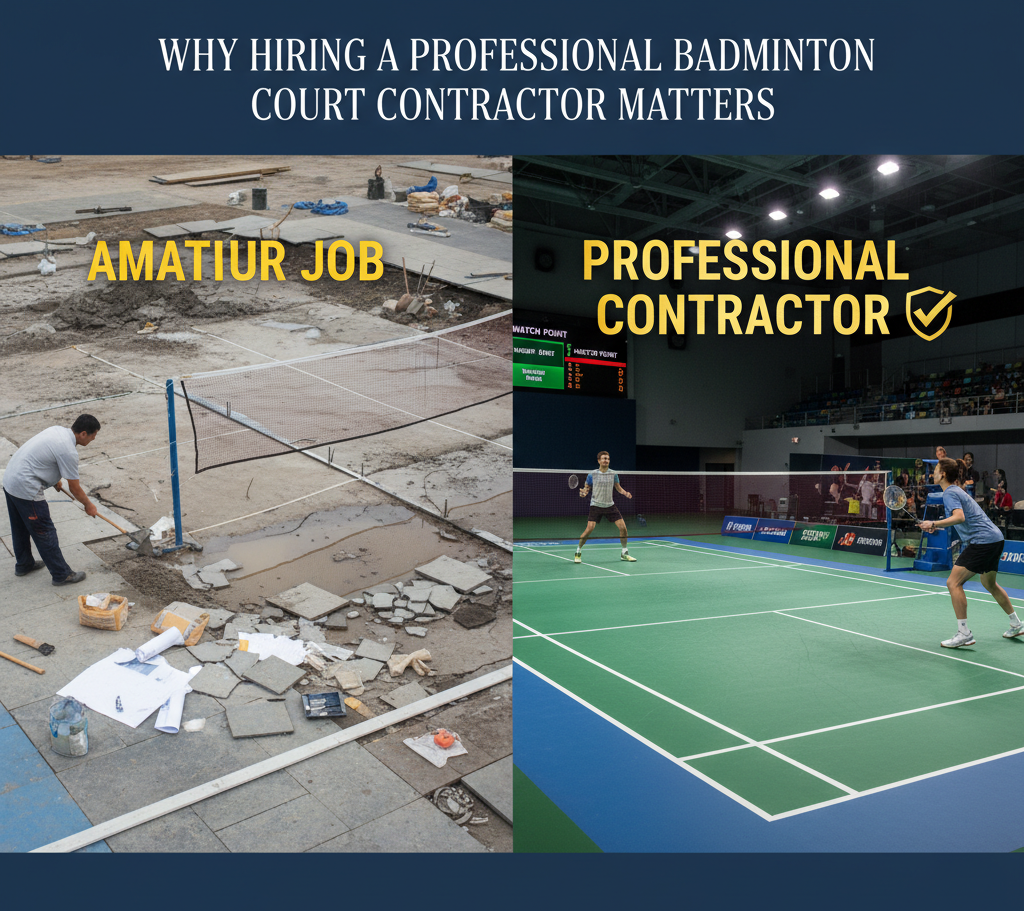
Using Inexperienced Installers
Sports flooring requires specialized installation knowledge. Poor workmanship can affect joints, adhesion, leveling, markings, and overall durability.
Neglecting Maintenance
Even premium flooring requires routine cleaning and appropriate care.
Maintenance Tips for Badminton Court Flooring
Regular maintenance can extend the useful life of the court.
Clean the Surface Regularly
Dust and dirt can accumulate through daily use. Routine cleaning helps maintain surface conditions.
Use Suitable Cleaning Products
Avoid harsh chemicals unless specifically recommended for the installed flooring system.
Control Moisture
Keep the court dry and address water leakage or moisture problems quickly.
Avoid Outdoor Footwear
Players should ideally use clean, non-marking indoor sports shoes appropriate for badminton.
Inspect the Surface
Regularly check for damaged areas, loose joints, surface wear, or other issues.
Early attention to minor problems can prevent them from becoming larger repair requirements.
Why Professional Installation Makes a Difference
A professional badminton court flooring service brings together technical knowledge, appropriate materials, installation experience, and attention to detail.
The goal is not simply to make the floor look like a badminton court. It is to develop a playing environment that works effectively for the people using it.
Professional installation can help with:
- Correct floor preparation
- Appropriate material selection
- Accurate installation
- Proper court marking
- Better surface consistency
- Long-term maintenance planning
- Improved overall facility appearance
For academies, schools, clubs, and commercial facilities, professional installation can also help protect the investment made in the sports infrastructure.
Badminton Court Flooring for New Court Construction
If you are building a new badminton court, flooring should be considered during the planning stage rather than after the civil work is completed.
The flooring choice can influence the required base preparation, floor levels, transitions, door clearances, drainage considerations, and overall construction planning.
Coordinating civil work and flooring installation from the beginning can produce a better finished result.
A complete badminton court project may include:
- Site planning
- Civil and base preparation
- Floor leveling
- Sports flooring installation
- Court marking
- Net post installation
- Lighting
- Ventilation
- Safety assessment
- Final quality inspection
This integrated approach helps create a functional sports facility rather than simply installing a floor inside an existing room.
Why Choose a Specialized Badminton Court Flooring Company?
A specialized company understands that sports flooring has different requirements from residential or commercial flooring.
Experienced professionals can evaluate the site, explain available flooring systems, estimate project requirements, and recommend a solution based on expected usage.
Before hiring a contractor, consider asking about:
- Previous sports flooring projects
- Flooring system specifications
- Installation process
- Warranty terms
- Maintenance requirements
- Expected service life
- Project timeline
- Material quality
- Base preparation methods
A transparent quotation should clearly explain what is included rather than presenting only a single per-square-foot number.
Final Thoughts
A badminton court is only as good as the environment in which players use it. Flooring plays a central role in comfort, movement, safety, durability, and the overall playing experience.
The right badminton court flooring service should begin with proper site assessment and continue through professional installation, accurate court marking, and long-term maintenance guidance.
Whether the project is for a home, school, sports academy, residential society, club, hotel, corporate facility, or commercial sports centre, investing in a suitable sports flooring system can significantly improve the quality and usability of the court.
Instead of selecting flooring purely on appearance or initial price, consider the complete picture: player comfort, traction, shock absorption, durability, environmental conditions, maintenance, installation quality, and long-term value.
With proper planning and professional execution, a badminton court can provide a reliable, comfortable, and high-quality playing environment for years of training and recreation.