
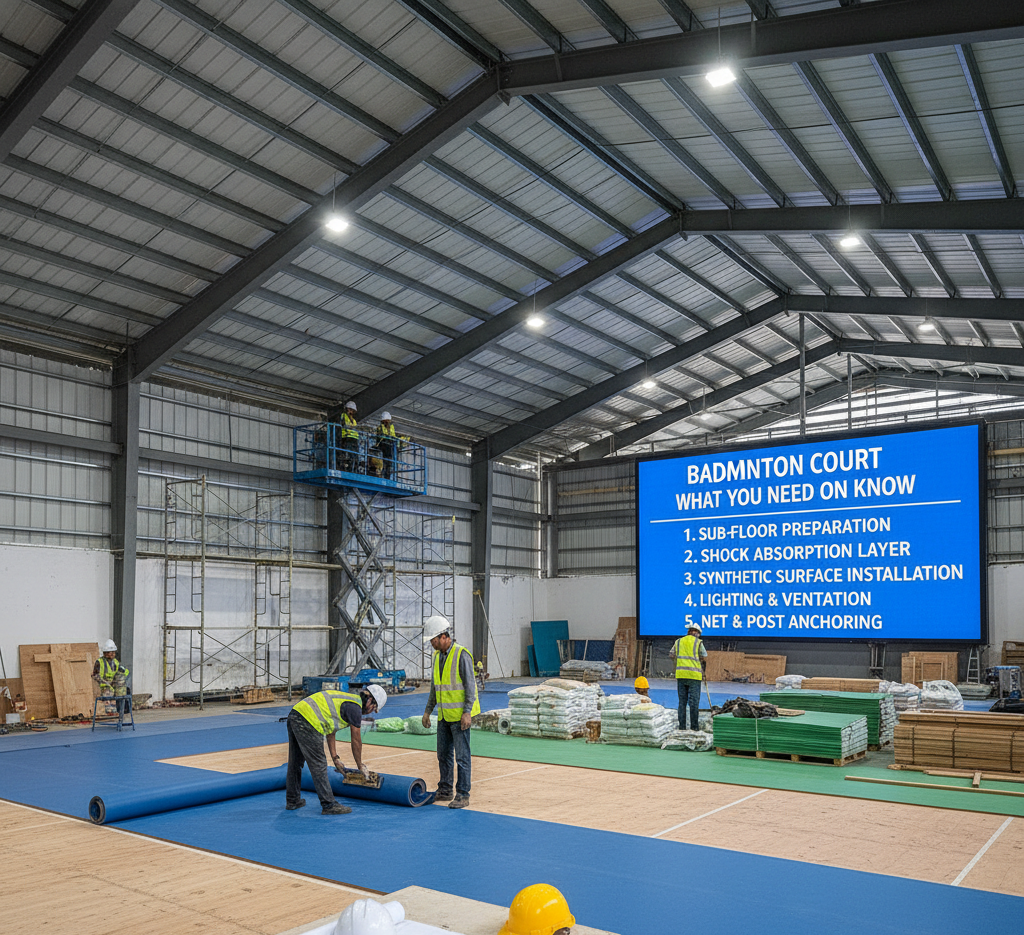
Badminton is one of the fastest-growing indoor sports in the world, loved for its speed, strategy, and accessibility. Whether you’re setting up a badminton facility for professional tournaments, an academy, a school, or even a private sports complex, understanding the complete process of badminton court construction is essential. From selecting the right surface to ensuring perfect lighting, every detail impacts player performance and safety.
In this blog, we’ll walk you through everything you need to know about badminton court construction — step-by-step.
🏗️ 1. Planning and Site Preparation
Before you begin construction, planning is the foundation for a successful project. The first step involves assessing the site location, available space, and intended purpose (recreational, professional, or training facility).
Key planning points include:
-
Space Requirements:
A standard badminton court measures 13.4 meters (length) and 6.1 meters (width) for doubles, with a minimum height clearance of 7.5 meters from the floor to the ceiling. -
Ventilation & Lighting:
Ensure proper air circulation and natural or artificial lighting. Badminton is a fast-paced game, so players should not face glare or shadows. -
Safety Zone:
Always maintain a minimum of 2 meters clearance around the court for player movement and safety.
Proper site leveling and moisture protection are critical before beginning flooring installation. The surface must be dry, flat, and stable.
🪵 2. Choosing the Right Flooring System
Flooring is the heart of any badminton court. The right surface ensures comfort, shock absorption, and better grip — minimizing injuries while improving gameplay.
Popular types of badminton flooring:
🔸 Wooden Flooring
The most preferred choice for professional and academy courts. Wooden flooring, especially maple or teak wood, offers:
-
Excellent shock absorption
-
Uniform bounce
-
High durability
-
Superior aesthetics
Recommended System:
-
Base layer of Polythene moisture barrier
-
Pinewood sleepers for cushioning
-
Teak or Maple wooden planks (19–22 mm thick)
-
PU (Polyurethane) or Melamine coating for anti-skid finish
This system is often referred to as the Air-Cush Wooden Flooring System, ideal for high-performance play.
🔸 Synthetic Flooring
PVC or synthetic surfaces are more budget-friendly and commonly used for schools or multipurpose halls. These are installed over a leveled cement base and are easy to maintain.
Advantages:
-
Low maintenance
-
Resistant to wear and tear
-
Available in multiple colors
-
Quick installation time
However, for professional matches, wooden flooring remains the gold standard.
⚙️ 3. Subfloor Construction
A well-constructed subfloor is crucial for long-term performance. A typical badminton court subfloor includes:
-
Concrete base (minimum 150 mm thick)
-
Moisture barrier layer
-
Sprung wooden sleeper system
-
Top wooden planks or PVC rolls
The sprung system absorbs impact during play, reducing stress on the player’s knees and ankles.
Tip: Always ensure the subfloor is level and free from dampness before laying the top surface.
💡 4. Lighting and Ceiling Design
Proper lighting is a game-changer in badminton. Uneven or harsh lighting can disrupt visibility and affect player concentration.
Ideal lighting setup:
-
Illumination level: 300–500 lux (for recreational) and 1000 lux (for tournament courts)
-
Fixtures should be placed above 7 meters to prevent glare
-
Use non-flicker LED lights with uniform brightness
Ceiling height should be a minimum of 7.5 meters for indoor courts to allow high shuttle trajectories. Avoid hanging fans or low fixtures directly above the play area.
🏗️ 5. Markings and Line Painting
Accurate line marking defines the gameplay area.
Lines are painted using PU-based or epoxy paints in white or yellow for clear visibility.
Standard marking details:
-
Court dimensions: 13.4m × 6.1m (doubles), 13.4m × 5.18m (singles)
-
Line width: 40 mm
-
Boundary, service, and center lines must be precisely aligned according to BWF (Badminton World Federation) standards.
Always ensure the floor surface is clean and dry before applying markings.
🧱 6. Wall and Color Schemes
Walls should be painted in non-glare, matte colors such as light green, blue, or grey.
Avoid bright white or reflective colors that can cause distraction or visibility issues during play.
Installing sound-absorbing wall panels helps control echo in indoor sports halls, ensuring a pleasant playing environment.
🧰 7. Equipment and Accessories
A complete badminton court setup includes:
-
Badminton poles and nets (as per BWF standards)
-
Court divider nets for multiple courts
-
Seating arrangements for players and spectators
-
Scoreboards, racks, and storage areas
For academies and clubs, adding training aids, shuttle dispensers, and video analysis setups enhances the professional experience.
🧽 8. Maintenance and Safety Tips
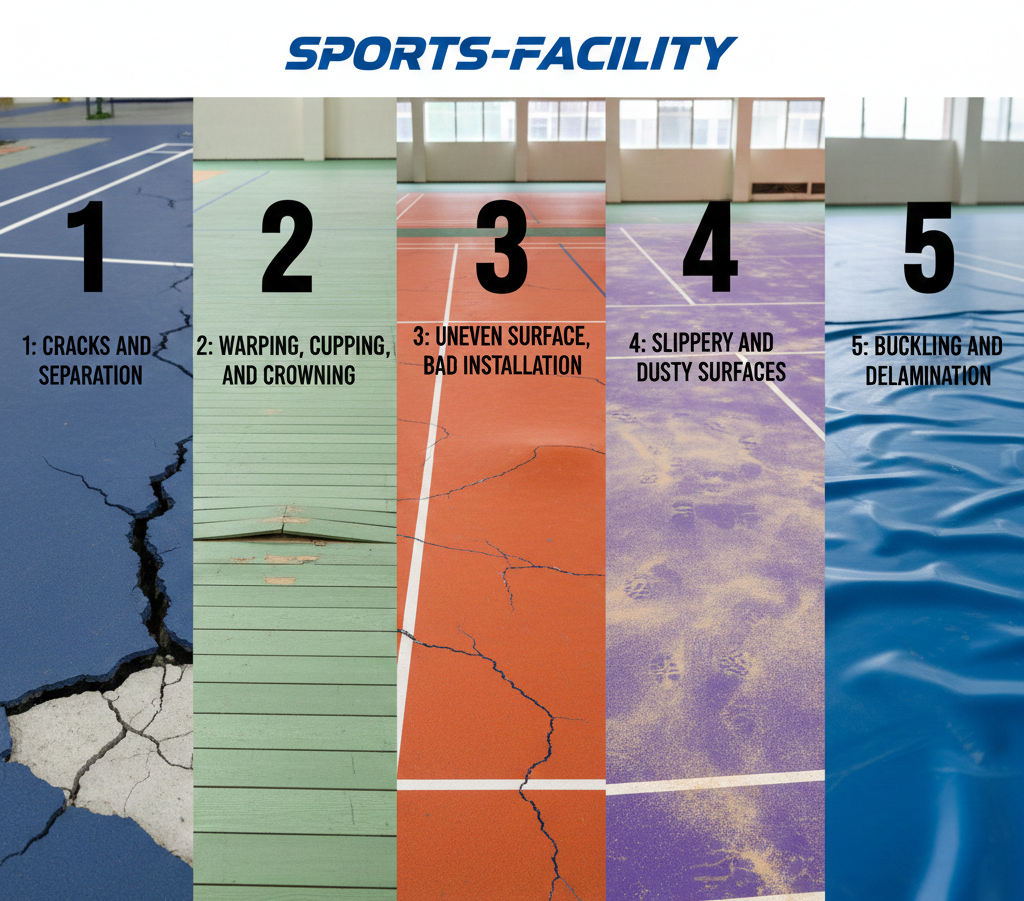
Even the best courts need regular care. Proper maintenance ensures durability and performance consistency.
Maintenance checklist:
-
Keep the surface clean and dry
-
Avoid dragging heavy objects across the court
-
Recoat the surface with PU finish every 3–5 years (for wooden courts)
-
Inspect lighting and net systems regularly
-
Control indoor humidity levels (ideally between 40–60%)
For synthetic courts, cleaning with mild detergent and soft mops keeps the surface in good condition.
🌱 9. Cost Factors in Badminton Court Construction
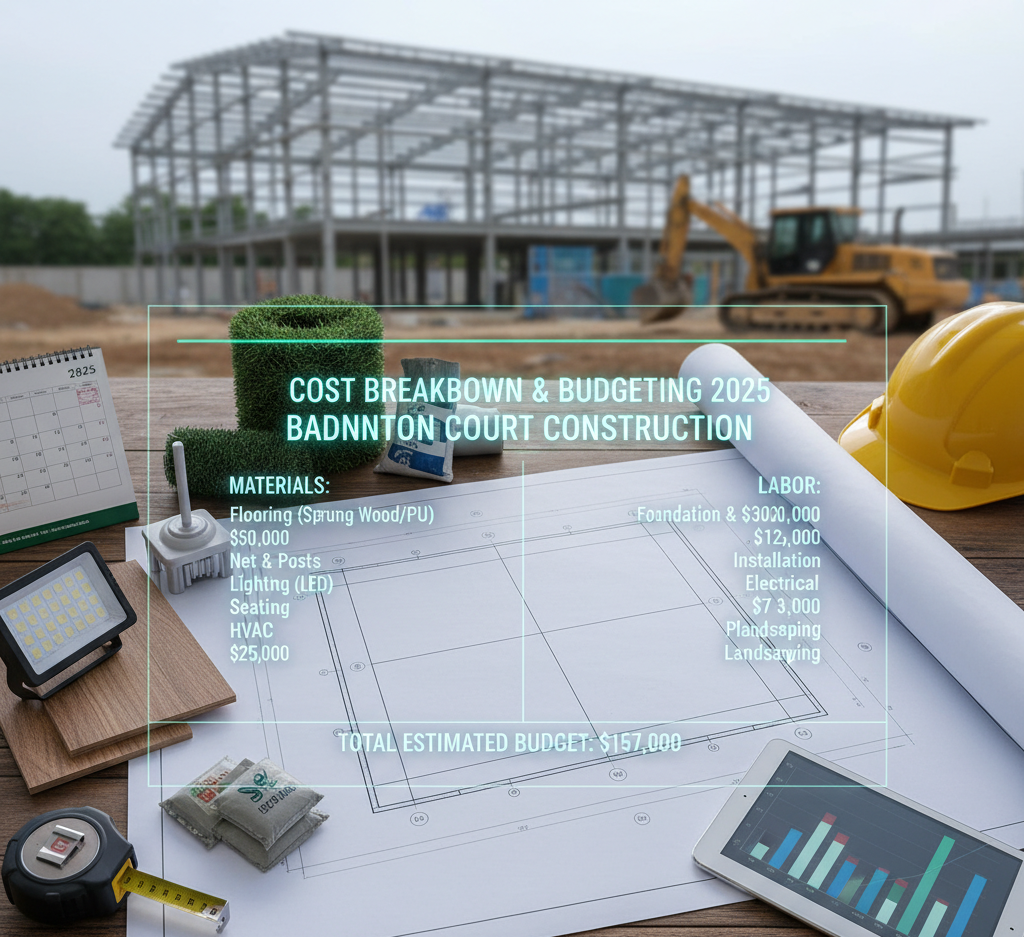
The total cost depends on materials, site conditions, and project scale.
Average cost breakdown (per court):
-
Wooden Flooring: ₹700–₹1,200 per sq. ft.
-
Synthetic Flooring: ₹350–₹700 per sq. ft.
-
Lighting & Fixtures: ₹80,000–₹1,50,000
-
Civil Work & Base Preparation: ₹2–₹4 lakh
-
Accessories & Installation: ₹50,000–₹1 lakh
Professional badminton academies may require additional investment in air-conditioning, soundproofing, and seating infrastructure.
🏆 10. Hiring a Professional Sports Infrastructure Company
Choosing an experienced sports flooring and infrastructure company ensures top-quality materials, precision installation, and long-term warranty.
Professional contractors handle:
-
Design consultation
-
Material selection (FIBA/BWF-approved)
-
Civil and flooring work
-
Turnkey badminton court setup
Always verify certifications, past projects, and customer reviews before finalizing your vendor.
🎯 Conclusion
Building a badminton court is not just about laying a surface — it’s about creating a safe, high-performance space that encourages athletes to excel. From foundation to finishing, each step plays a vital role in ensuring long-term quality and comfort.
Whether you’re constructing a school court, sports academy, or private indoor facility, investing in professional-grade materials and workmanship guarantees better playability and durability.
A perfectly built badminton court is a long-term asset that inspires players, fosters talent, and supports the growing passion for the sport across India and beyond.