Introduction
Modern construction projects demand flooring solutions that are durable, safe, visually appealing, and capable of withstanding harsh weather conditions. Whether it’s a public playground, jogging track, sports complex, gymnasium, school campus, or recreational park, selecting the right flooring material directly impacts safety, performance, and maintenance costs.
One of the most trusted and widely used surfacing materials today is EPDM rubber flooring. Known for its excellent shock absorption, anti-slip properties, UV resistance, and long service life, EPDM flooring has become the preferred choice for architects, contractors, municipalities, educational institutions, and sports infrastructure developers worldwide.
Unlike traditional concrete or asphalt surfaces, EPDM flooring offers a soft, resilient finish that minimizes injuries while providing superior comfort for walking, running, exercising, and playing. Available in numerous colors and customizable designs, it also enhances the visual appeal of outdoor and indoor spaces.
This comprehensive guide explains everything you need to know about EPDM rubber flooring, including its composition, benefits, applications, installation process, maintenance requirements, lifespan, cost considerations, and why it continues to be one of the best flooring investments in 2026.
What Is EPDM Rubber Flooring?
EPDM stands for Ethylene Propylene Diene Monomer, a high-performance synthetic rubber developed to withstand extreme environmental conditions. It is manufactured by combining ethylene, propylene, and a diene component to create a flexible, durable elastomer with exceptional weather resistance.
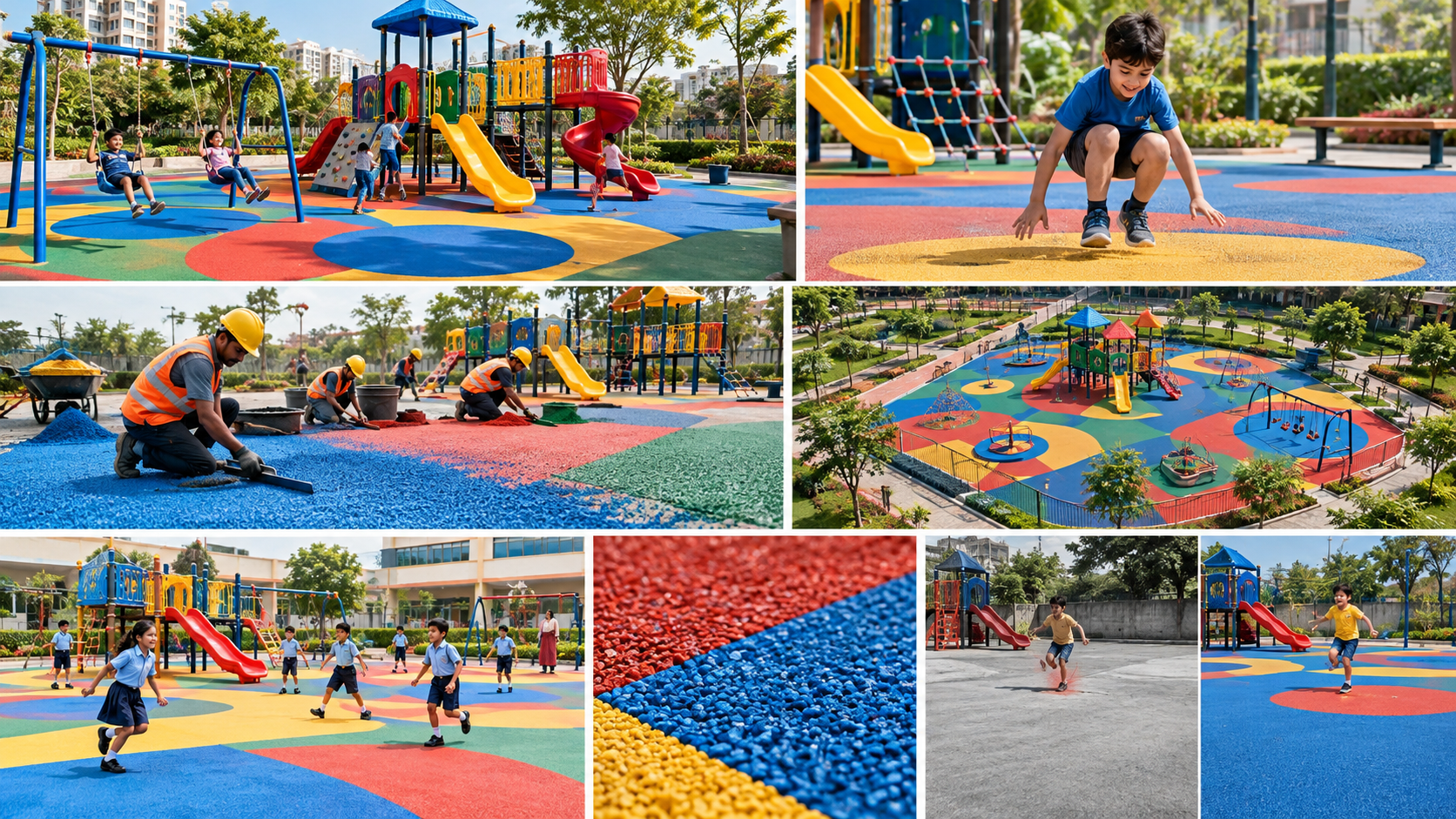
EPDM rubber flooring is produced using colored rubber granules mixed with a specialized polyurethane binder. These granules are installed over a prepared base, creating a seamless, cushioned, and slip-resistant surface.
The flooring can be installed in various thicknesses depending on the intended use. Sports facilities, playgrounds, jogging tracks, fitness zones, and recreational areas typically require different impact absorption levels, making EPDM an incredibly versatile flooring solution.
Why EPDM Rubber Flooring Is So Popular
Several qualities make EPDM flooring stand out from conventional flooring materials.
These include:
- Exceptional durability
- Excellent shock absorption
- Superior slip resistance
- UV stability
- Weather resistance
- Attractive color options
- Seamless finish
- Low maintenance
- Long service life
- Eco-friendly manufacturing
Because of these characteristics, EPDM has become a preferred flooring material across commercial, educational, municipal, and sports infrastructure projects.
Composition of EPDM Rubber Flooring
A professional EPDM flooring system generally consists of multiple layers.
1. Prepared Base
The base may include:
- Concrete
- Asphalt
- Compacted stone base
- PCC surface
The base must be level, dry, and structurally stable.
2. Primer Layer
A polyurethane primer enhances adhesion between the base and rubber layers.
3. Shock Absorption Layer
Many installations include an SBR rubber cushion layer beneath the EPDM surface.
Benefits include:
- Better impact resistance
- Improved cushioning
- Reduced joint stress
- Enhanced durability
4. EPDM Wear Layer
The top layer contains premium EPDM rubber granules mixed with polyurethane binder.
This provides:
- Color
- Texture
- Slip resistance
- UV protection
- Weather resistance
Major Benefits of EPDM Rubber Flooring
1. Excellent Shock Absorption
One of EPDM’s greatest strengths is its ability to absorb impact energy.
This makes it ideal for:
- Children’s playgrounds
- Running tracks
- Fitness areas
- Outdoor gyms
- Sports courts
The cushioning effect reduces injuries caused by falls while improving comfort during physical activities.
2. Outstanding Slip Resistance
Safety is essential in public areas.
EPDM surfaces maintain grip even during rainy weather.
This reduces accidents in:
- Parks
- Schools
- Swimming pool surroundings
- Jogging tracks
- Recreational spaces
3. Weather Resistance
Unlike many flooring materials, EPDM withstands:
- Heavy rain
- Snow
- Extreme sunlight
- Heat
- Cold temperatures
- Moisture
Its performance remains consistent across different climates.
4. UV Resistance
Many outdoor flooring products fade after prolonged sun exposure.
Premium EPDM granules retain their vibrant appearance because they resist ultraviolet degradation.
This means:
- Brighter colors
- Longer lifespan
- Lower replacement costs
5. High Durability
Professionally installed EPDM flooring easily lasts:
- 10–15 years
- Even longer with proper maintenance
Its resistance to cracking, abrasion, and heavy foot traffic makes it ideal for busy public spaces.
6. Comfortable Surface
The resilient nature of EPDM provides comfort for:
- Walking
- Running
- Exercising
- Playing
Users experience less fatigue compared to concrete surfaces.
7. Attractive Appearance
EPDM granules are available in numerous colors, including:
- Red
- Blue
- Green
- Yellow
- Orange
- Black
- Grey
- Purple
Designers can create:
- Logos
- Graphics
- Educational patterns
- Running lanes
- Children’s games
- Decorative pathways
8. Low Maintenance
Routine maintenance generally includes:
- Sweeping
- Water washing
- Mild detergent cleaning
- Periodic inspections
No polishing or resurfacing is typically required.
9. Eco-Friendly Material
Many EPDM flooring systems utilize recyclable materials while reducing long-term maintenance needs.
Its durability also minimizes waste generated from frequent replacements.
Common Applications of EPDM Rubber Flooring
Playgrounds
EPDM is widely used beneath:
- Swings
- Slides
- Climbing structures
- Seesaws
The cushioned surface significantly reduces injury risk.
Jogging Tracks
Municipal parks, residential communities, and sports facilities install EPDM jogging tracks because they provide:
- Comfort
- Grip
- Weather resistance
- Attractive aesthetics
Running Tracks
Athletic tracks benefit from EPDM’s:
- Energy return
- Cushioning
- Durability
- Consistent performance
Outdoor Gyms
Fitness equipment areas require flooring that absorbs impact while providing stable footing.
EPDM performs exceptionally well in these environments.
Schools
Educational institutions use EPDM for:
- Play areas
- Activity zones
- Running tracks
- Sports courts
Its safety features make it ideal for children.
Parks
Public parks increasingly feature EPDM pathways and exercise zones because they remain attractive throughout the year.
Sports Complexes
Many sports facilities install EPDM surfaces around:
- Courts
- Spectator areas
- Warm-up zones
- Walking paths
Swimming Pool Surroundings
Slip-resistant EPDM minimizes accidents around wet areas.
Residential Communities
Modern housing projects use EPDM in:
- Clubhouses
- Kids’ play zones
- Walking tracks
- Fitness parks
Step-by-Step EPDM Rubber Flooring Installation Process
Proper installation determines the performance and lifespan of EPDM flooring.
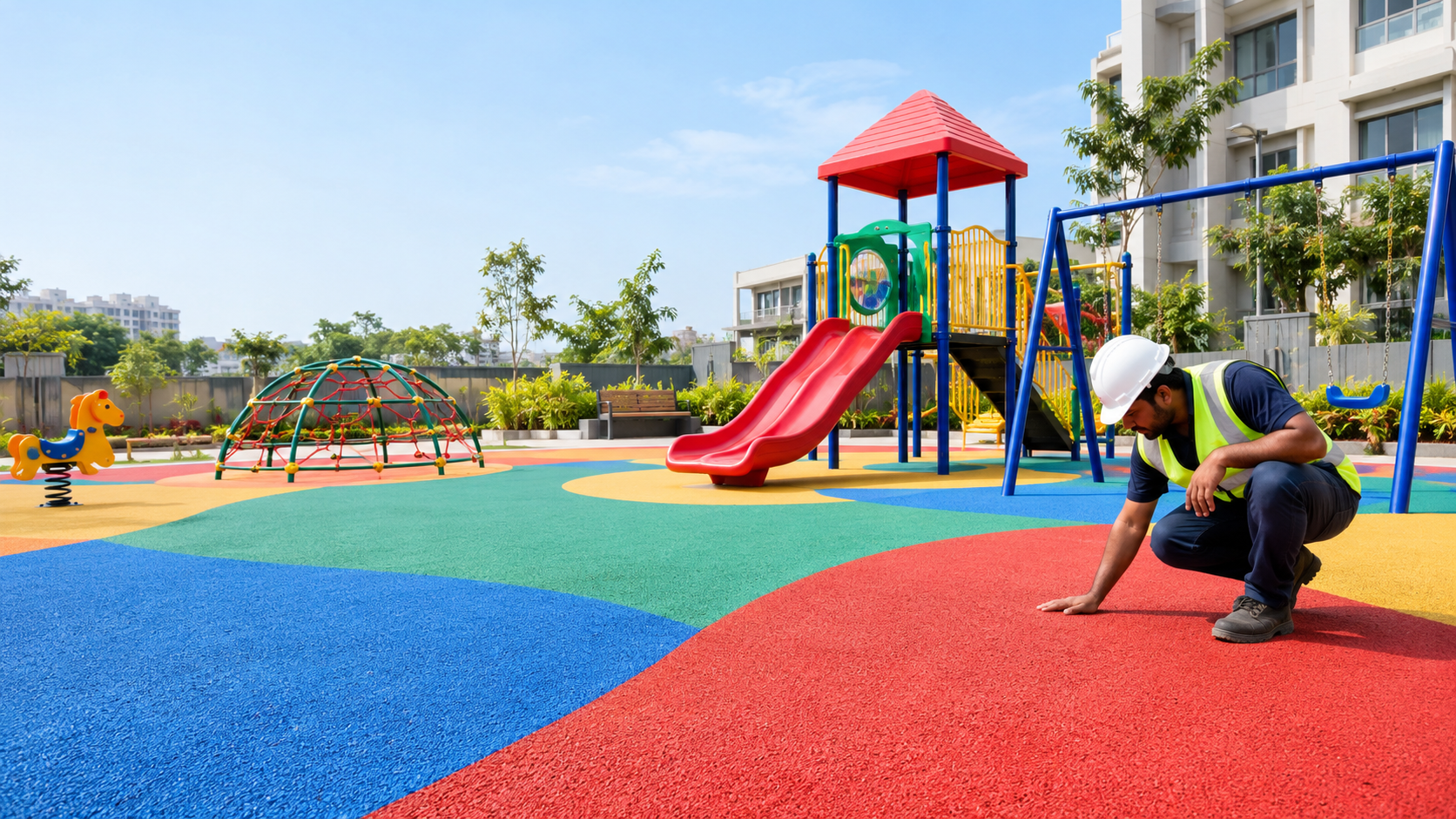
Step 1: Site Survey
Engineers inspect:
- Soil condition
- Drainage
- Surface levels
- Existing flooring
- Water flow
Measurements are recorded before construction begins.
Base Preparation
The surface is cleaned thoroughly.
Any defects such as:
- Cracks
- Uneven areas
- Loose particles
- Dust
are repaired before installation.
Base Construction
Depending on project requirements, contractors install:
- Concrete base
- Asphalt base
- Compacted granular base
Laser leveling ensures surface accuracy.
Primer Application
A polyurethane primer is evenly applied to improve adhesion.
The primer must cure properly before the next layer.
Installing SBR Cushion Layer
For sports and playground applications, SBR rubber granules are mixed with polyurethane binder.
The mixture is spread evenly using specialized tools.
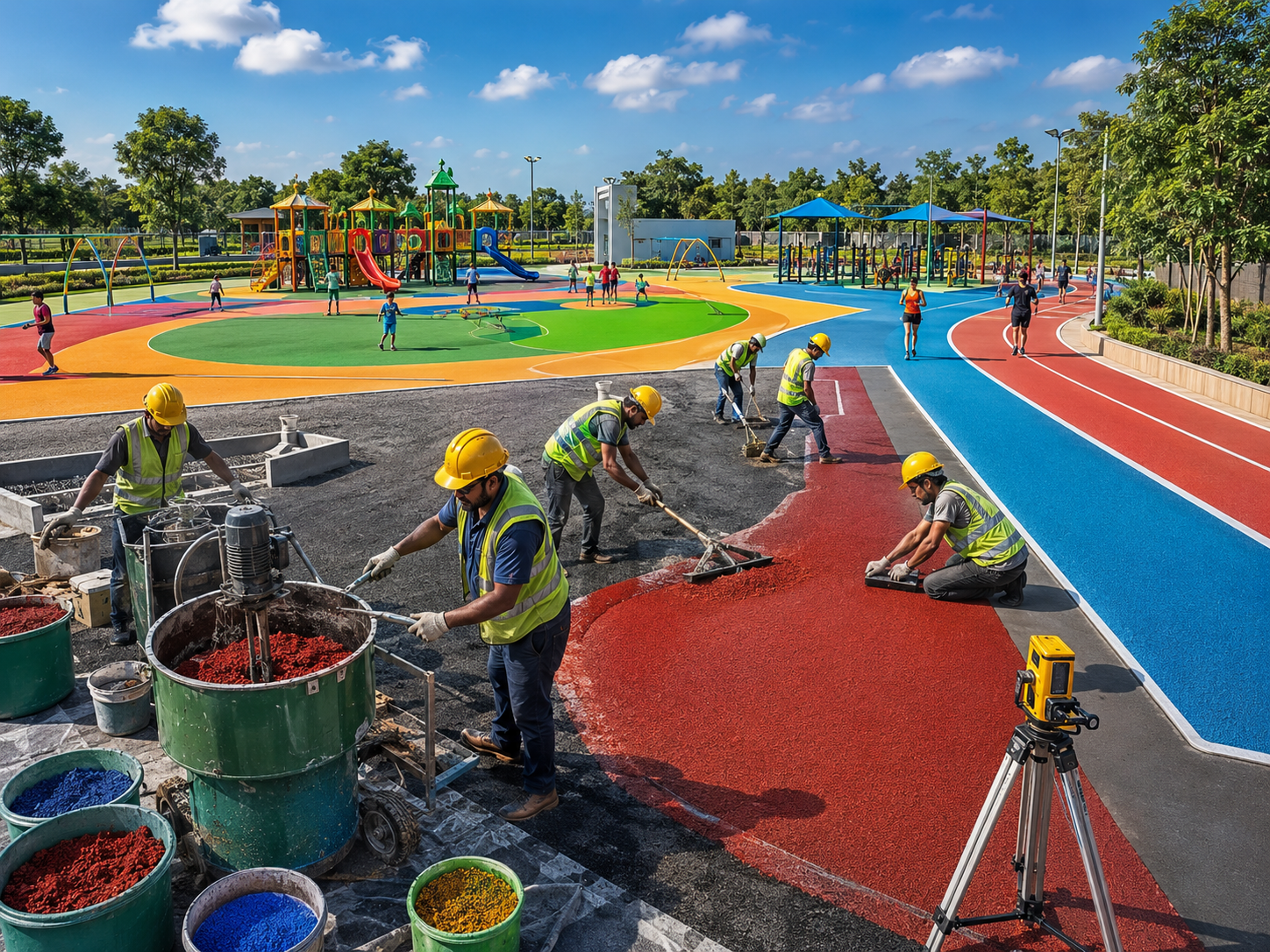
Mixing EPDM Granules
Colored EPDM granules are blended with polyurethane binder using industrial mixers.
Uniform mixing ensures:
- Consistent color
- Strong bonding
- Long-term durability
Surface Installation
The EPDM mixture is spread evenly over the prepared base.
Professional installers use:
- Trowels
- Rollers
- Screeds
to achieve uniform thickness.
Finishing
Edges are carefully finished.
Surface texture is inspected to ensure:
- Smoothness
- Uniformity
- Proper drainage
Curing
The flooring requires sufficient curing time before use.
Most installations are ready within 24 to 72 hours depending on weather conditions.
Final Inspection
Quality checks include:
- Thickness verification
- Bond strength
- Surface smoothness
- Drainage
- Color consistency
- Slip resistance
Equipment Used During Installation
Professional EPDM flooring contractors use:
- Laser level
- Concrete mixer
- Industrial rubber mixer
- Power trowel
- Hand trowel
- Screed bars
- Measuring tape
- Roller
- Surface grinder
- Moisture meter
- Edge finishing tools
Maintenance Tips
EPDM flooring requires very little maintenance.
Best practices include:
- Sweep regularly.
- Remove leaves and debris.
- Wash with clean water.
- Use mild detergent when necessary.
- Avoid harsh chemicals.
- Repair damaged sections promptly.
- Inspect drainage periodically.
Proper care significantly extends the flooring’s lifespan.
EPDM Flooring Thickness Guide
Different applications require different thicknesses.
| Application | Recommended Thickness |
|---|---|
| Walking Paths | 10–13 mm |
| Jogging Tracks | 13–15 mm |
| Outdoor Gyms | 15–20 mm |
| Children’s Playgrounds | 20–80 mm |
| Sports Areas | 13–25 mm |
Factors Affecting EPDM Flooring Cost
Several factors influence project pricing.
These include:
- Flooring thickness
- Area size
- Base preparation
- Design complexity
- Color selection
- Drainage work
- Site accessibility
- Material quality
- Labor charges
- Geographic location
Although EPDM has a higher initial investment than conventional surfaces, its low maintenance and long lifespan often make it more cost-effective over time.
Common Mistakes to Avoid
Many flooring failures occur because of installation errors.
Avoid:
- Poor drainage
- Uneven base preparation
- Low-quality binders
- Incorrect mixing ratios
- Insufficient curing
- Inexperienced installers
- Cheap EPDM granules
Choosing experienced professionals ensures long-lasting performance.
Why EPDM Flooring Is Better Than Traditional Concrete
| Feature | EPDM Rubber Flooring | Concrete |
|---|---|---|
| Shock Absorption | Excellent | Poor |
| Slip Resistance | High | Moderate |
| Safety | Excellent | Low |
| Weather Resistance | Excellent | Good |
| Comfort | Excellent | Poor |
| Maintenance | Low | Moderate |
| Color Options | Many | Limited |
| UV Resistance | Excellent | Moderate |
| Child Safety | Excellent | Poor |
Future Trends in EPDM Flooring (2026)
The flooring industry continues to evolve with innovations such as:
- Recycled EPDM materials
- Smart sports infrastructure
- Sustainable construction practices
- Custom digital surface designs
- Improved polyurethane binders
- Faster installation techniques
- Enhanced UV-resistant color technology
These advancements are making EPDM flooring even more durable, environmentally friendly, and visually appealing.
Frequently Asked Questions (FAQs)
Is EPDM rubber flooring waterproof?
EPDM itself is water-resistant, and professionally installed systems allow efficient drainage while maintaining surface integrity.
How long does EPDM flooring last?
With proper installation and maintenance, EPDM flooring typically lasts between 10 and 15 years, and often longer in moderate-use environments.
Can EPDM flooring be installed outdoors?
Yes. It is specifically designed to withstand sunlight, rain, heat, cold, and changing weather conditions.
Is EPDM flooring safe for children?
Yes. Its shock-absorbing and slip-resistant properties make it one of the safest surfaces for playgrounds and school activity areas.
Does EPDM flooring fade?
High-quality EPDM granules are UV-stable and retain their color much longer than many alternative surfacing materials.
Can damaged EPDM flooring be repaired?
Yes. Localized repairs can usually be carried out without replacing the entire surface, helping reduce maintenance costs.
Conclusion
EPDM rubber flooring has established itself as one of the most dependable, versatile, and long-lasting flooring solutions for modern sports and recreational infrastructure. Its combination of durability, impact absorption, weather resistance, slip protection, and aesthetic flexibility makes it an excellent investment for playgrounds, jogging tracks, parks, schools, gyms, sports complexes, and residential developments.
While the initial installation cost may be higher than conventional concrete or asphalt surfaces, the long service life, minimal maintenance requirements, and enhanced safety benefits deliver exceptional value over time. When installed by experienced professionals using high-quality materials, EPDM flooring provides a resilient, attractive surface that performs reliably in diverse climates and high-traffic environments.
Whether you’re planning a new sports facility or upgrading an existing recreational space, EPDM rubber flooring offers a future-ready solution that balances performance, safety, sustainability, and visual appeal—making it one of the smartest flooring choices for 2026 and beyond.