Introduction
Choosing the right sports flooring is one of the most important decisions when constructing or renovating a sports facility. Whether you’re building a basketball court, badminton arena, volleyball hall, school gymnasium, fitness center, or multi-purpose indoor sports complex, the flooring directly affects athlete performance, safety, maintenance costs, and the overall lifespan of the facility.
Today, two of the most popular choices dominate the sports flooring industry: wooden sports flooring and synthetic sports flooring. Both offer unique advantages, but selecting the right one depends on your sport, budget, expected usage, maintenance capabilities, and long-term investment goals.
Professional tournaments often use premium hardwood flooring because of its excellent ball bounce and natural playing feel. Meanwhile, schools, academies, recreational centers, and multi-purpose sports halls increasingly prefer synthetic flooring for its durability, lower maintenance requirements, and versatility.
This comprehensive guide explains everything you need to know about wooden and synthetic sports flooring, compares their performance across various factors, and helps you determine which option best suits your sports facility.
What Is Wooden Sports Flooring?
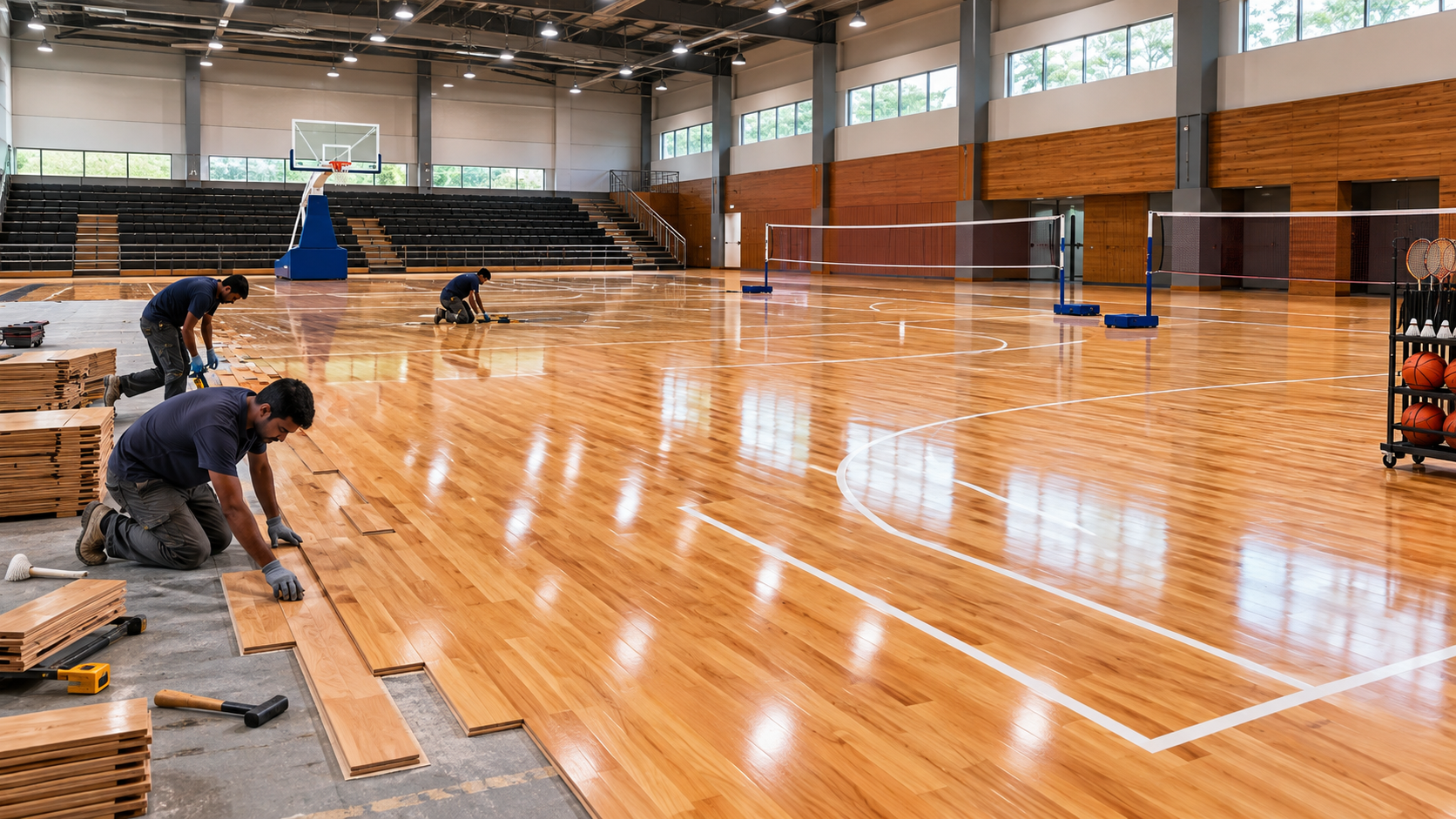
Wooden sports flooring is a specially engineered hardwood flooring system designed for indoor sports. Unlike ordinary wooden flooring, sports flooring incorporates shock absorption systems, subfloor structures, moisture barriers, and precision installation techniques that improve athlete safety and playing performance.
Most professional wooden sports floors are manufactured using hardwood species such as:
- Maple
- Oak
- Beech
- Ash
- Rubberwood
Among these, maple is widely recognized for its strength, uniform grain, durability, and excellent sports performance.
A standard wooden sports floor consists of:
- Moisture barrier
- Shock-absorbing understructure
- Engineered wooden battens
- Hardwood playing surface
- Sports-grade polyurethane finish
- Court line markings
This multi-layer construction provides excellent resilience while reducing stress on athletes’ joints.
What Is Synthetic Sports Flooring?
Synthetic sports flooring refers to engineered sports surfaces manufactured using advanced polymers, rubber, vinyl, polyurethane, acrylic, or PVC materials. These floors are designed to provide consistent athletic performance while requiring minimal maintenance.
Unlike wooden flooring, synthetic flooring comes in numerous designs, colors, textures, and performance levels.
Popular synthetic flooring types include:
- PVC Sports Flooring
- Polyurethane (PU) Flooring
- Vinyl Sports Flooring
- Rubber Sports Flooring
- Acrylic Sports Flooring
- Modular Sports Tiles
These systems are commonly installed in:
- Schools
- Indoor stadiums
- Community centers
- Fitness centers
- Multipurpose sports halls
- Badminton academies
- Table tennis centers
- Recreational facilities
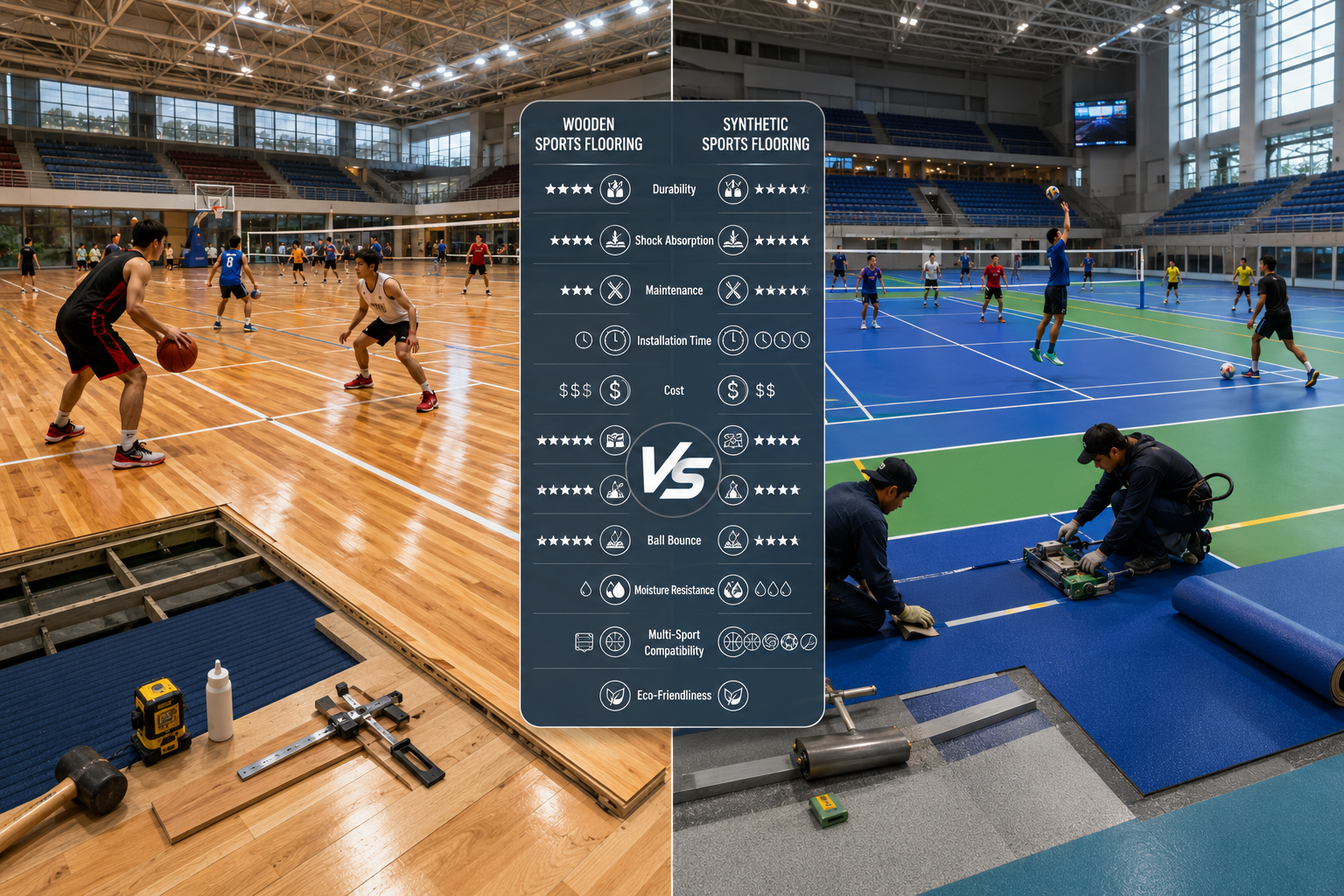
Wooden Sports Flooring vs Synthetic Sports Flooring
Let’s compare both flooring systems in detail.
1. Performance
Wooden Flooring
Wood provides a natural playing experience that professional athletes often prefer. It delivers excellent energy return, superior ball bounce, and consistent movement across the court.
Players appreciate wooden floors because they:
- Feel comfortable underfoot
- Improve movement control
- Enhance game performance
- Offer reliable traction
Professional basketball and volleyball tournaments commonly use hardwood courts for these reasons.
Synthetic Flooring
Modern synthetic floors also provide excellent playing characteristics. High-quality systems are engineered to deliver predictable ball response, slip resistance, and comfort.
Performance depends on:
- Material quality
- Thickness
- Installation method
- Shock absorption layer
Premium synthetic flooring performs exceptionally well for recreational and competitive sports.
Winner: Wooden flooring for elite-level competition.
2. Shock Absorption
Athlete safety depends heavily on how well a floor absorbs impact.
Wooden Flooring
Engineered wooden floors include shock pads and resilient substructures that absorb impact from running and jumping.
Benefits include:
- Reduced knee strain
- Less ankle fatigue
- Better landing comfort
- Improved injury prevention
Synthetic Flooring
Modern synthetic flooring also incorporates cushioned layers that minimize impact.
Rubber and PU systems especially provide:
- Excellent cushioning
- Reduced joint stress
- Comfortable walking
- Lower fatigue during extended play
Winner: Tie—both perform exceptionally when professionally installed.
3. Durability
Wooden Flooring
Hardwood floors can last over 40 years with proper maintenance.
However, they are sensitive to:
- Water
- Moisture
- Scratches
- Heavy furniture
- Poor maintenance
Periodic sanding and refinishing are necessary.
Synthetic Flooring
Synthetic sports flooring is highly resistant to:
- Moisture
- Chemicals
- Heavy usage
- Wear
- Daily foot traffic
Many systems maintain their appearance for 15–25 years with routine care.
Winner: Synthetic flooring.
4. Maintenance
Maintenance costs often influence purchasing decisions.
Wooden Flooring Requires
- Daily cleaning
- Controlled humidity
- Periodic polishing
- Refinishing every few years
- Scratch repairs
- Moisture monitoring
Synthetic Flooring Requires
- Sweeping
- Damp mopping
- Occasional deep cleaning
- Minimal repairs
- No sanding
Maintenance is significantly easier.
Winner: Synthetic flooring.
5. Installation Time
Wooden Flooring
Installation involves:
- Base preparation
- Moisture testing
- Shock pad installation
- Subfloor assembly
- Hardwood installation
- Sanding
- Finishing
- Line marking
Construction usually takes several weeks.
Synthetic Flooring
Synthetic flooring installation is generally faster because many products are supplied in rolls, sheets, or tiles.
Typical steps include:
- Surface preparation
- Adhesive application
- Flooring installation
- Welding or sealing joints
- Court markings
Projects often finish within days.
Winner: Synthetic flooring.
6. Appearance
Wooden Flooring
Wood creates a premium, elegant, and timeless appearance.
Its natural grain enhances:
- Professional stadiums
- School auditoriums
- University sports halls
- International arenas
Many sports facilities choose hardwood primarily for its visual appeal.
Synthetic Flooring
Synthetic flooring offers endless customization.
Available in:
- Blue
- Green
- Red
- Orange
- Grey
- Black
- Custom brand colors
Logos, graphics, and custom court designs can also be integrated.
Winner: Depends on design preference.
7. Cost
Budget is one of the biggest deciding factors.
Wooden Flooring Costs More Because Of
- Premium hardwood
- Complex installation
- Skilled craftsmanship
- Finishing materials
- Longer installation time
Synthetic Flooring
Generally offers a lower initial investment and reduced maintenance costs.
For schools, academies, and community centers, synthetic flooring often delivers better value.
Winner: Synthetic flooring.
8. Moisture Resistance
Wood naturally absorbs moisture.
High humidity may cause:
- Expansion
- Warping
- Gaps
- Surface damage
Synthetic flooring performs much better in humid climates and is less affected by water exposure.
Winner: Synthetic flooring.
9. Eco-Friendliness
Many hardwood sports floors are produced using sustainably sourced timber and can last for decades, reducing replacement frequency.
Some modern synthetic floors are recyclable and manufactured with low-emission materials, though they rely on engineered polymers.
Winner: Depends on the product and manufacturer.
10. Lifespan
Wooden Flooring
- 30–50 years with professional maintenance.
Synthetic Flooring
- 15–25 years depending on material quality and usage.
Winner: Wooden flooring.
Best Sports for Wooden Flooring
Wooden flooring is ideal for:
- Basketball
- Volleyball
- Badminton
- Squash
- Indoor handball
- Gymnasiums
- School sports halls
- Professional indoor arenas
Best Sports for Synthetic Flooring
Synthetic flooring is excellent for:
- Badminton
- Table Tennis
- Volleyball
- Futsal
- Multi-purpose halls
- Aerobics
- Yoga
- Fitness centers
- Martial arts
- Dance studios
Comparison Table
| Feature | Wooden Sports Flooring | Synthetic Sports Flooring |
|---|---|---|
| Performance | Excellent | Very Good |
| Ball Bounce | Excellent | Very Good |
| Athlete Comfort | Excellent | Excellent |
| Shock Absorption | Excellent | Excellent |
| Durability | Excellent | Excellent |
| Maintenance | High | Low |
| Moisture Resistance | Moderate | Excellent |
| Installation | Slower | Faster |
| Initial Cost | High | Moderate |
| Long-Term Life | 30–50 Years | 15–25 Years |
| Appearance | Premium Natural Finish | Wide Range of Colors |
| Multi-Sport Use | Good | Excellent |
Factors to Consider Before Choosing Sports Flooring
Before making a decision, evaluate the following:
Budget
Determine your available budget for installation, maintenance, and future repairs.
Type of Sport
Professional basketball courts may benefit from hardwood, while multipurpose facilities often perform better with synthetic flooring.
Expected Traffic
High-traffic facilities generally appreciate the resilience and easier upkeep of synthetic surfaces.
Maintenance Resources
Wood requires regular professional care, while synthetic flooring is simpler to maintain.
Climate
In regions with high humidity or moisture, synthetic flooring generally performs more consistently.
Future Expansion
If your facility may host multiple sports or events, versatile flooring systems can provide greater flexibility.
Common Mistakes to Avoid
Avoid these frequent errors:
- Choosing flooring based only on price
- Ignoring subfloor quality
- Hiring inexperienced installers
- Skipping moisture testing
- Using non-sports-grade materials
- Neglecting maintenance schedules
- Overlooking manufacturer recommendations
Proper planning ensures better long-term performance and value.
Maintenance Tips
Wooden Sports Flooring
- Sweep daily to remove dust and grit.
- Clean with approved wood-safe products.
- Maintain recommended indoor humidity levels.
- Avoid standing water.
- Use protective pads under equipment.
- Refinish the surface when wear becomes noticeable.
Synthetic Sports Flooring
- Sweep or vacuum regularly.
- Mop with manufacturer-approved cleaners.
- Wipe spills promptly.
- Inspect seams and edges periodically.
- Avoid dragging heavy equipment across the surface.
Which Flooring Is Best for Schools?
Schools typically need flooring that supports multiple sports while remaining easy to maintain.
Synthetic flooring is often a practical choice because it offers:
- Lower maintenance
- Good durability
- Comfortable play
- Cost efficiency
- Flexibility for different activities
However, schools focused on competitive indoor basketball or volleyball may prefer wooden flooring in dedicated sports halls.
Which Flooring Is Best for Professional Sports?
For elite indoor competitions, wooden sports flooring remains a preferred option due to its consistent ball response, premium feel, and long-standing use in professional arenas.
Synthetic flooring, however, is widely used in training facilities, academies, and multipurpose venues where versatility and easier maintenance are priorities.
Frequently Asked Questions (FAQs)
Is wooden sports flooring better than synthetic flooring?
Neither is universally better. Wooden flooring excels in professional indoor sports performance, while synthetic flooring offers easier maintenance, moisture resistance, and versatility.
Which flooring lasts longer?
Properly maintained hardwood sports flooring can last 30–50 years. High-quality synthetic flooring generally lasts 15–25 years.
Which flooring requires less maintenance?
Synthetic sports flooring requires significantly less maintenance than hardwood.
Can synthetic flooring be used for multiple sports?
Yes. Many synthetic systems are specifically designed for multi-purpose sports facilities.
Is wooden flooring suitable for humid areas?
Wood can be affected by high humidity unless environmental conditions are carefully controlled.
Which flooring is more affordable?
Synthetic flooring usually has a lower initial installation cost and reduced long-term maintenance expenses.
Final Verdict
Both wooden sports flooring and synthetic sports flooring are excellent choices, but the right option depends on your facility’s goals.
Choose wooden sports flooring if your priority is elite-level performance, premium aesthetics, exceptional ball response, and a long service life in a dedicated indoor sports venue.
Choose synthetic sports flooring if you need a cost-effective, durable, low-maintenance solution that supports multiple sports and performs well in schools, academies, recreation centers, and community facilities.
Rather than asking which flooring is universally better, consider which flooring best matches your sport, budget, expected usage, and maintenance capabilities. By evaluating these factors carefully, you can invest in a sports surface that delivers safety, performance, and value for many years.