Introduction
The sports infrastructure industry is experiencing remarkable growth in 2026. Schools, colleges, sports academies, residential communities, clubs, government organizations, and commercial developers are increasingly investing in high-quality sports courts that encourage fitness, competition, and community engagement. Whether it is a badminton court, basketball court, tennis court, pickleball court, volleyball court, or a multi-purpose sports arena, modern sports court construction focuses on durability, safety, performance, and sustainability.
Today’s sports flooring systems are designed using advanced engineering techniques, premium synthetic materials, precision laser leveling, and environmentally friendly construction practices. A professionally constructed sports court not only enhances athletic performance but also minimizes injuries, reduces maintenance costs, and provides years of reliable service.
This comprehensive guide explains everything you need to know about sports court construction in 2026—from planning and design to flooring options, construction processes, costs, maintenance, and the latest industry trends.
What is Sports Court Construction?
Sports court construction is the complete process of designing, engineering, and building a dedicated playing surface that meets professional or recreational standards. The construction includes:
- Site evaluation
- Ground preparation
- Drainage planning
- Base construction
- Sports flooring installation
- Court markings
- Lighting installation
- Sports equipment installation
- Quality testing
- Final inspection
Each stage directly affects the performance, durability, and safety of the completed court.
Why Professional Sports Court Construction Matters
A professionally constructed sports court offers numerous advantages over poorly designed or temporary surfaces.
Enhanced Player Safety
Modern sports flooring systems absorb impact efficiently, reducing stress on joints and lowering the risk of slips and injuries.
Better Playing Performance
Accurate leveling and premium flooring materials provide consistent ball bounce, proper traction, and improved athlete movement.
Long Service Life
Professional installation significantly increases the lifespan of the sports court, often exceeding 10–15 years with proper maintenance.
Lower Maintenance Costs
Quality materials and correct installation minimize cracks, water damage, and surface deterioration.
Increased Property Value
Schools, sports clubs, residential projects, and commercial developments benefit from improved property value and enhanced community appeal.
Types of Sports Courts in 2026
Badminton Courts
Indoor badminton courts commonly use PVC sports flooring, vinyl flooring, or polyurethane systems with excellent grip and cushioning.
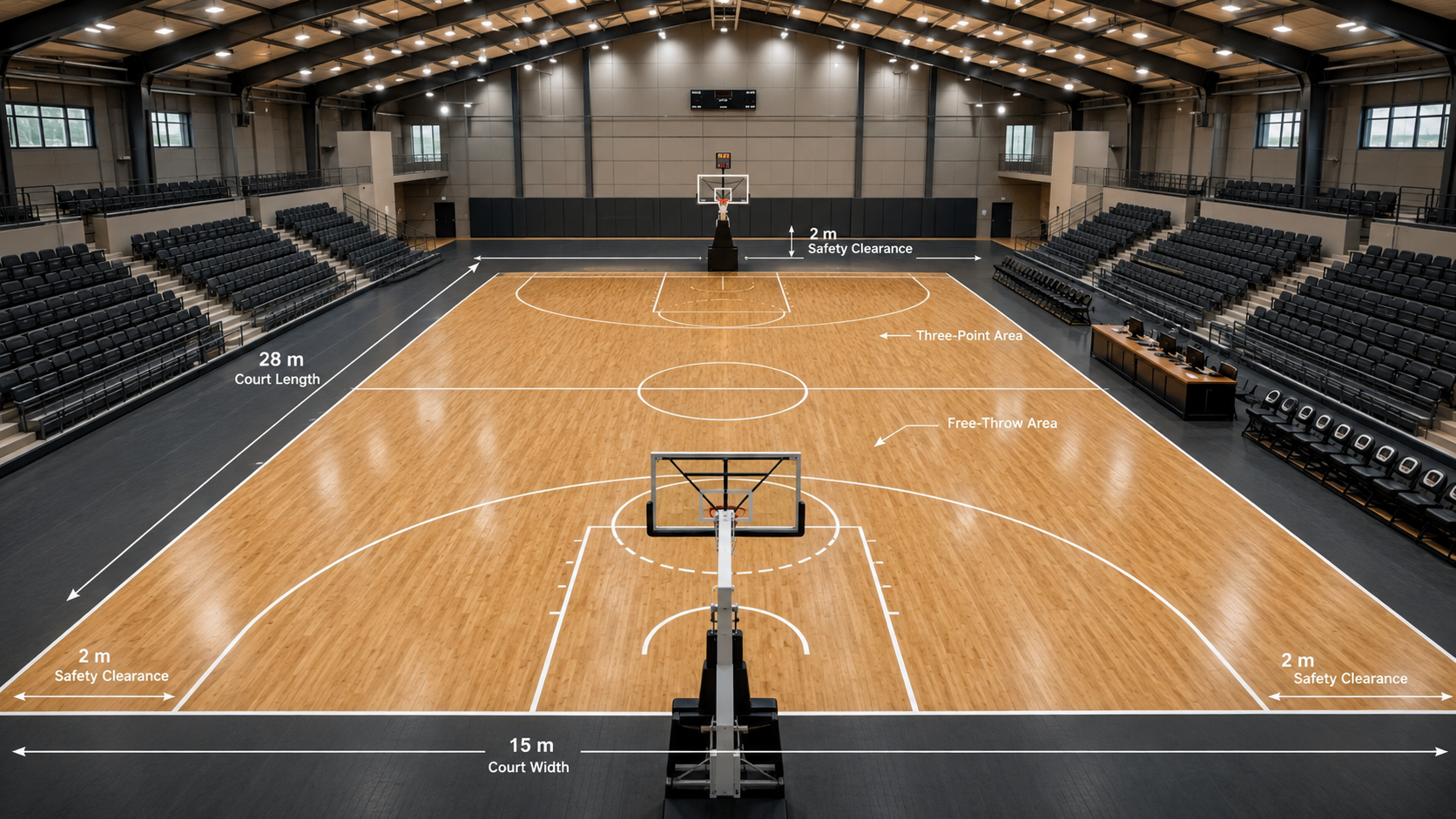
Basketball Courts
Outdoor basketball courts generally use acrylic sports flooring over asphalt or concrete, while indoor courts often feature hardwood or synthetic flooring.
Tennis Courts
Tennis courts are available in acrylic hard courts, synthetic turf, clay, and cushioned acrylic systems depending on playing preferences.
Pickleball Courts
Pickleball continues to grow rapidly in popularity. Acrylic-coated courts with precise dimensions are becoming standard worldwide.
Volleyball Courts
Volleyball courts may use PU flooring indoors or acrylic and synthetic surfaces outdoors.
Multi-Purpose Sports Courts
Many educational institutions and residential projects prefer multi-purpose courts that accommodate basketball, badminton, volleyball, futsal, and tennis on a single playing area.
Planning a Sports Court Project
Every successful sports court begins with proper planning.
Important considerations include:
- Available land area
- Intended sports
- Indoor or outdoor location
- Expected player traffic
- Local climate
- Budget
- Maintenance requirements
- Future expansion possibilities
A professional site survey helps identify drainage requirements, soil conditions, and grading needs before construction begins.
Site Selection and Ground Preparation
Ground preparation is the foundation of a durable sports court.
Typical preparation includes:
- Land clearing
- Excavation
- Soil compaction
- Removal of unsuitable soil
- Filling with granular material
- Compaction using vibratory rollers
- Laser leveling
- Slope creation for drainage
Poor ground preparation often causes settlement, cracks, and water accumulation.
Importance of Drainage Systems
Water is one of the biggest threats to outdoor sports courts.
Proper drainage systems include:
- Surface slope
- Side drains
- French drains
- Perforated pipes
- Drainage channels
- Gravel sub-base
- Water outlets
An efficient drainage system prevents standing water and significantly extends the court’s lifespan.
Base Construction
The base supports the entire flooring system.
Common base options include:
Concrete Base
Ideal for acrylic courts due to excellent stability and long-term durability.
Asphalt Base
Provides flexibility and is commonly used for tennis and basketball courts.
Engineered Stone Base
Suitable for synthetic flooring systems requiring additional drainage performance.
The base must be level, crack-free, and fully cured before flooring installation begins.
Best Sports Flooring Materials in 2026
Acrylic Sports Flooring
One of the most popular outdoor sports flooring systems.
Advantages:
- UV resistant
- Weather resistant
- Slip resistant
- Excellent ball bounce
- Low maintenance
- Available in multiple colors
Ideal for:
- Basketball
- Tennis
- Pickleball
- Multi-purpose courts
Polyurethane (PU) Sports Flooring
PU flooring provides exceptional comfort and shock absorption.
Advantages:
- Seamless surface
- High durability
- Comfortable underfoot
- Excellent impact absorption
- Professional appearance
Suitable for indoor sports complexes and high-performance facilities.
PVC Sports Flooring
PVC flooring remains a preferred solution for indoor badminton, table tennis, and multipurpose halls.
Benefits include:
- Quick installation
- Comfortable cushioning
- Anti-slip finish
- Easy maintenance
- Excellent durability
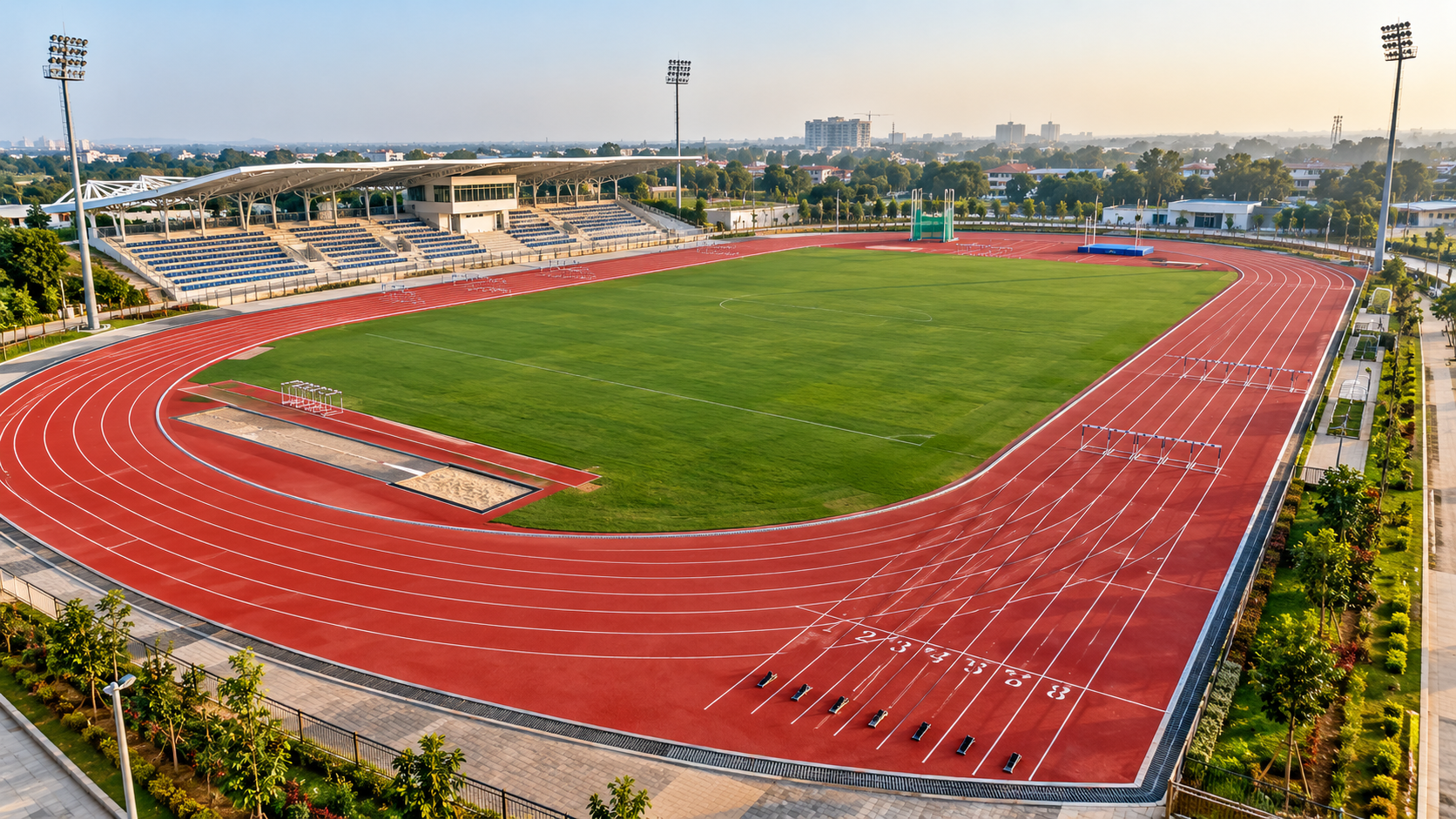
EPDM Rubber Flooring
EPDM flooring is commonly used in jogging tracks, children’s play areas, and recreational sports zones.
Advantages include:
- UV stability
- Color retention
- Soft landing surface
- Weather resistance
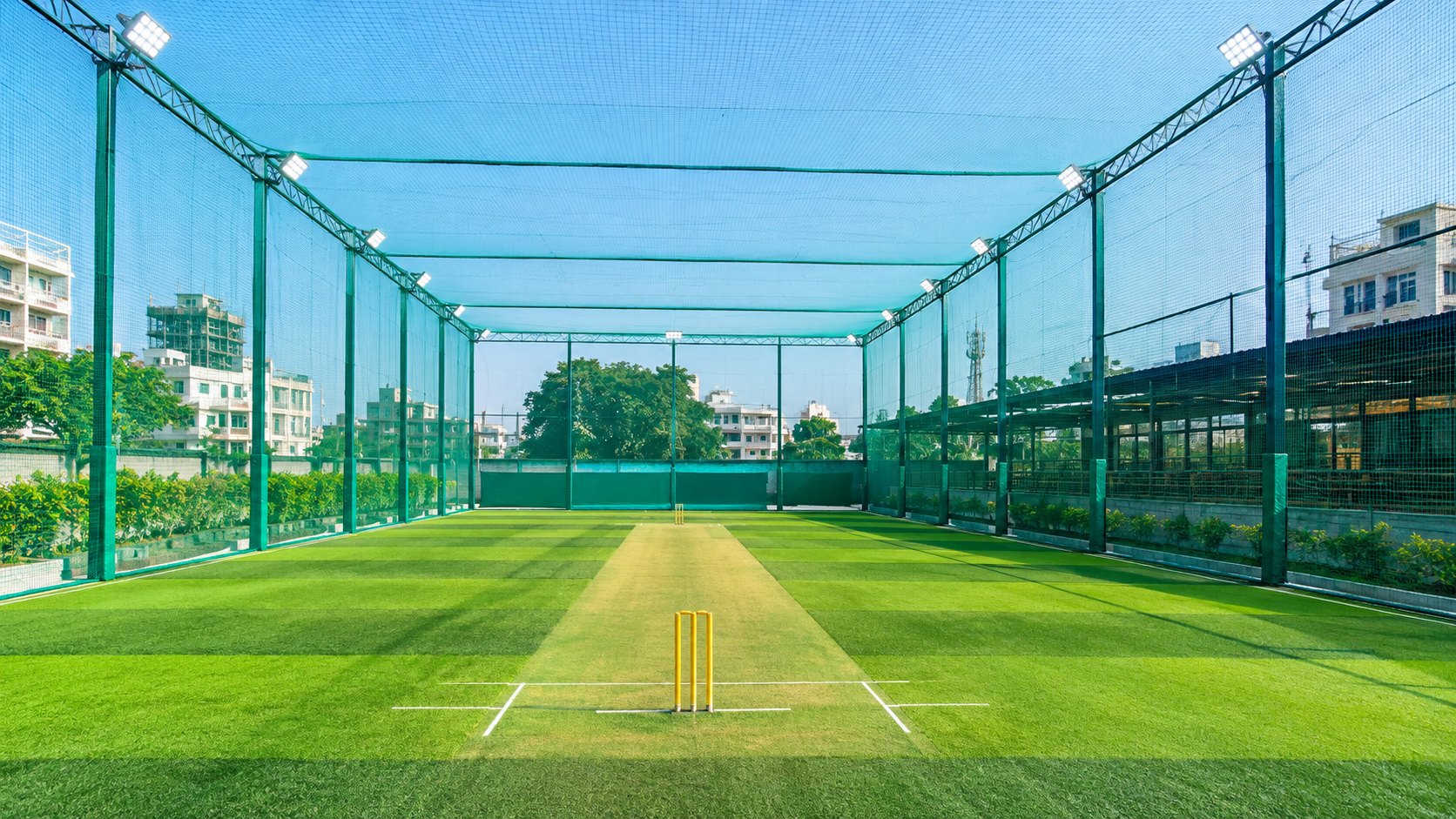
Artificial Turf
Synthetic grass provides a natural appearance with reduced maintenance.
Common applications include:
- Football
- Cricket practice
- Tennis
- Multi-sports recreation
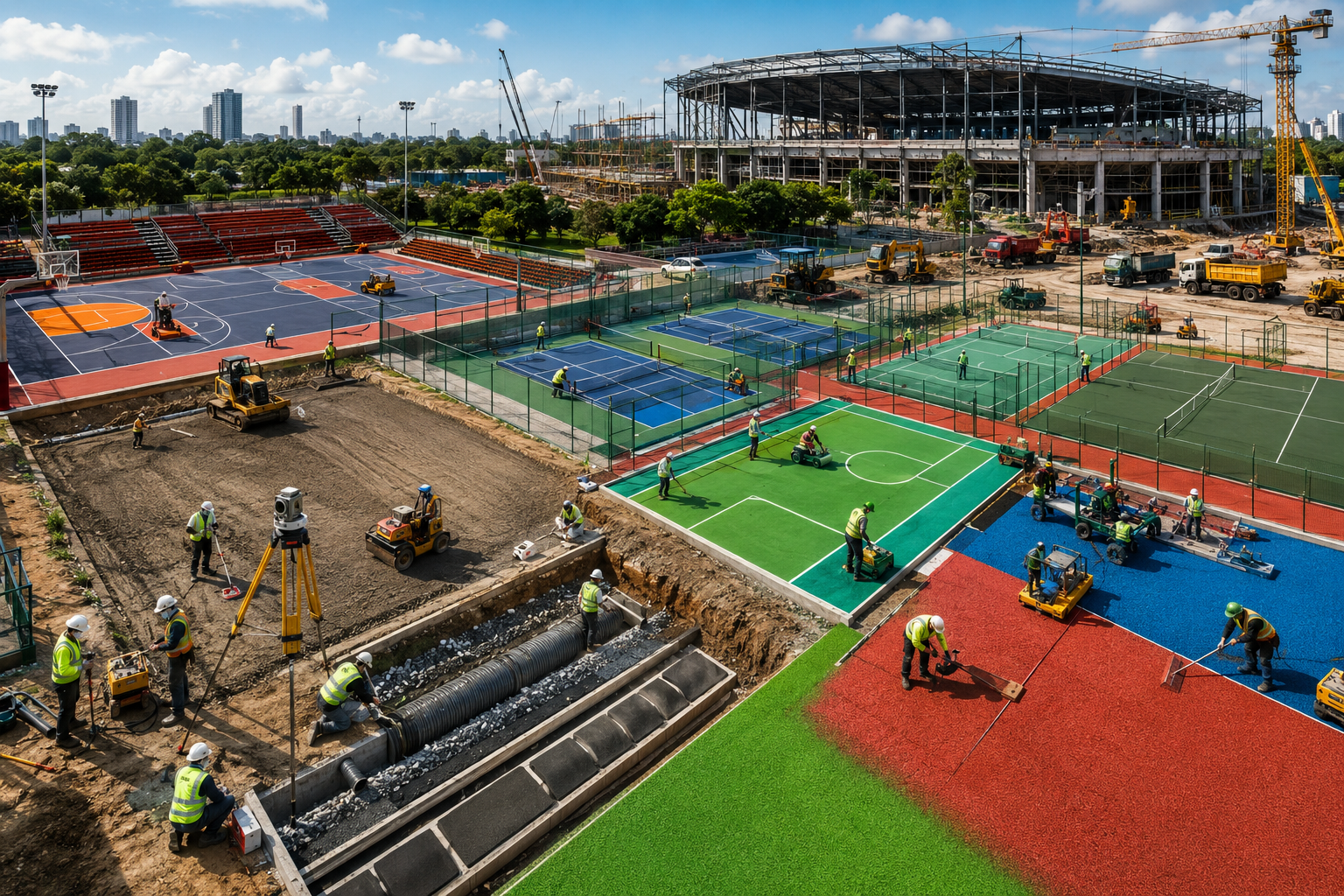
Sports Court Construction Process
Professional construction generally follows these steps:
– Site Inspection
Engineers evaluate soil conditions, dimensions, drainage, and accessibility.
– Layout Marking
Court dimensions are marked using precision surveying equipment.
– Excavation
The required depth is excavated according to engineering specifications.
– Base Preparation
Granular material is compacted to achieve the desired density.
– Concrete or Asphalt Installation
A strong base layer is constructed and allowed to cure properly.
– Surface Grinding
The base is ground to eliminate irregularities.
– Primer Application
A primer improves adhesion between the base and sports flooring.
– Flooring Installation
The selected flooring system is installed using specialized equipment.
– Court Line Marking
Professional sports-grade paints are used to mark official court dimensions.
– Equipment Installation
Posts, poles, nets, hoops, fencing, seating, and lighting are installed.
– Final Inspection
The completed court undergoes quality checks before handover.
Essential Equipment Used During Construction
Professional contractors typically use:
- Laser level
- Total station
- Plate compactor
- Vibratory roller
- Asphalt paver
- Power trowel
- Concrete mixer
- Rubber roller
- Surface grinder
- Line marking machine
- Moisture meter
- Measuring instruments
Modern equipment improves construction accuracy and efficiency.
Sports Court Dimensions
While dimensions vary depending on the sport, construction should always comply with recognized international standards wherever applicable.
Examples include:
- Basketball Court
- Tennis Court
- Badminton Court
- Volleyball Court
- Pickleball Court
- Multi-purpose Court
Accurate dimensions ensure fair competition and compatibility with organized events.
Lighting for Sports Courts
Proper lighting extends playing hours and improves visibility.
LED sports lighting offers:
- Energy efficiency
- Long lifespan
- Uniform illumination
- Reduced maintenance
- Lower electricity costs
Lighting layouts should minimize glare while providing consistent brightness across the playing area.
Sports Court Fencing
Fencing protects players and spectators while preventing balls from leaving the playing area.
Common fencing options include:
- Chain-link fencing
- Powder-coated fencing
- PVC-coated fencing
- Mesh fencing
Fence height varies depending on the sport and facility requirements.
Cost Factors in Sports Court Construction
Several factors influence construction costs:
- Court size
- Flooring material
- Base type
- Ground condition
- Drainage requirements
- Lighting system
- Fencing
- Sports equipment
- Labor
- Location
Obtaining a detailed quotation helps avoid unexpected expenses during construction.
Maintenance Tips
Proper maintenance ensures long-lasting performance.
Routine maintenance includes:
- Sweeping debris
- Washing surfaces
- Removing standing water
- Inspecting line markings
- Repairing minor cracks
- Cleaning drainage systems
- Checking sports equipment
- Annual professional inspection
Preventive maintenance significantly extends the lifespan of the sports court.
Common Construction Mistakes to Avoid
Many premature failures result from avoidable mistakes.
Avoid:
- Poor soil compaction
- Inadequate drainage
- Low-quality materials
- Incorrect surface slope
- Improper curing
- Inaccurate court markings
- Untrained installers
- Skipping quality inspections
Hiring experienced professionals minimizes these risks.
Sustainability Trends in 2026
Modern sports court construction increasingly embraces environmentally responsible practices.
Current trends include:
- Recycled rubber materials
- Low-VOC coatings
- Water-efficient drainage
- Solar-powered lighting
- Permeable surface systems
- Sustainable construction methods
- Long-life flooring materials
These innovations reduce environmental impact while improving operational efficiency.
Emerging Technologies
Technology continues to transform sports infrastructure.
Innovations include:
- AI-assisted design
- Drone-based site surveys
- Laser-guided grading
- Smart LED lighting controls
- Digital maintenance tracking
- Advanced shock-absorbing systems
- Weather-resistant coating technologies
These advancements improve construction quality and long-term facility performance.
Choosing the Right Sports Court Contractor
Selecting an experienced contractor is one of the most important decisions.
Look for:
- Proven project experience
- Skilled installation team
- Quality-certified materials
- Transparent pricing
- Warranty support
- Compliance with sports standards
- Strong client references
- After-sales maintenance services
A reputable contractor delivers a safer, more durable, and higher-performing sports facility.
Frequently Asked Questions
How long does sports court construction take?
Most projects are completed within 2 to 8 weeks, depending on court size, weather conditions, flooring type, and site preparation requirements.
Which flooring is best for outdoor courts?
Acrylic sports flooring remains one of the most popular choices because it offers excellent durability, weather resistance, slip resistance, and low maintenance.
How long does a sports court last?
A professionally constructed sports court can last 10 to 20 years or more with proper maintenance and periodic resurfacing.
Can existing courts be renovated?
Yes. Many older courts can be resurfaced, repaired, or upgraded with new sports flooring systems, improved drainage, fresh markings, and modern equipment.
Is regular maintenance necessary?
Yes. Routine cleaning, inspections, and timely repairs help maintain safety, appearance, and long-term performance while reducing lifecycle costs.
Conclusion
Sports court construction in 2026 is about far more than creating a flat playing surface. It combines engineering precision, high-performance materials, athlete safety, sustainability, and long-term value. Whether you are developing a basketball court, badminton court, tennis court, pickleball court, volleyball court, or a multi-purpose sports facility, every stage—from planning and drainage to flooring installation and maintenance—plays a critical role in the court’s success.
By investing in quality materials, professional construction practices, and regular maintenance, you can build a sports facility that delivers exceptional performance for years to come. As technology and sustainable construction methods continue to evolve, modern sports courts are becoming safer, more durable, and more environmentally responsible than ever before.
If you are planning a sports court project in 2026, partnering with experienced sports infrastructure specialists will ensure your investment meets international quality standards while providing athletes with a reliable, high-performance playing environment.