Introduction
Box cricket has transformed the way cricket is played in urban India. With limited open spaces and increasing demand for recreational sports, box cricket turf has become one of the most profitable and popular sports infrastructure investments. Whether it is a commercial sports arena, school facility, residential society, or corporate sports complex, box cricket offers a fast-paced, exciting, and space-efficient alternative to traditional cricket grounds.
One of the biggest decisions for anyone planning a box cricket turf construction project is choosing between an indoor box cricket turf and an outdoor box cricket turf. Both options have their own advantages, challenges, costs, and revenue potential. The right choice depends on factors such as budget, land availability, climate, target audience, and business goals.
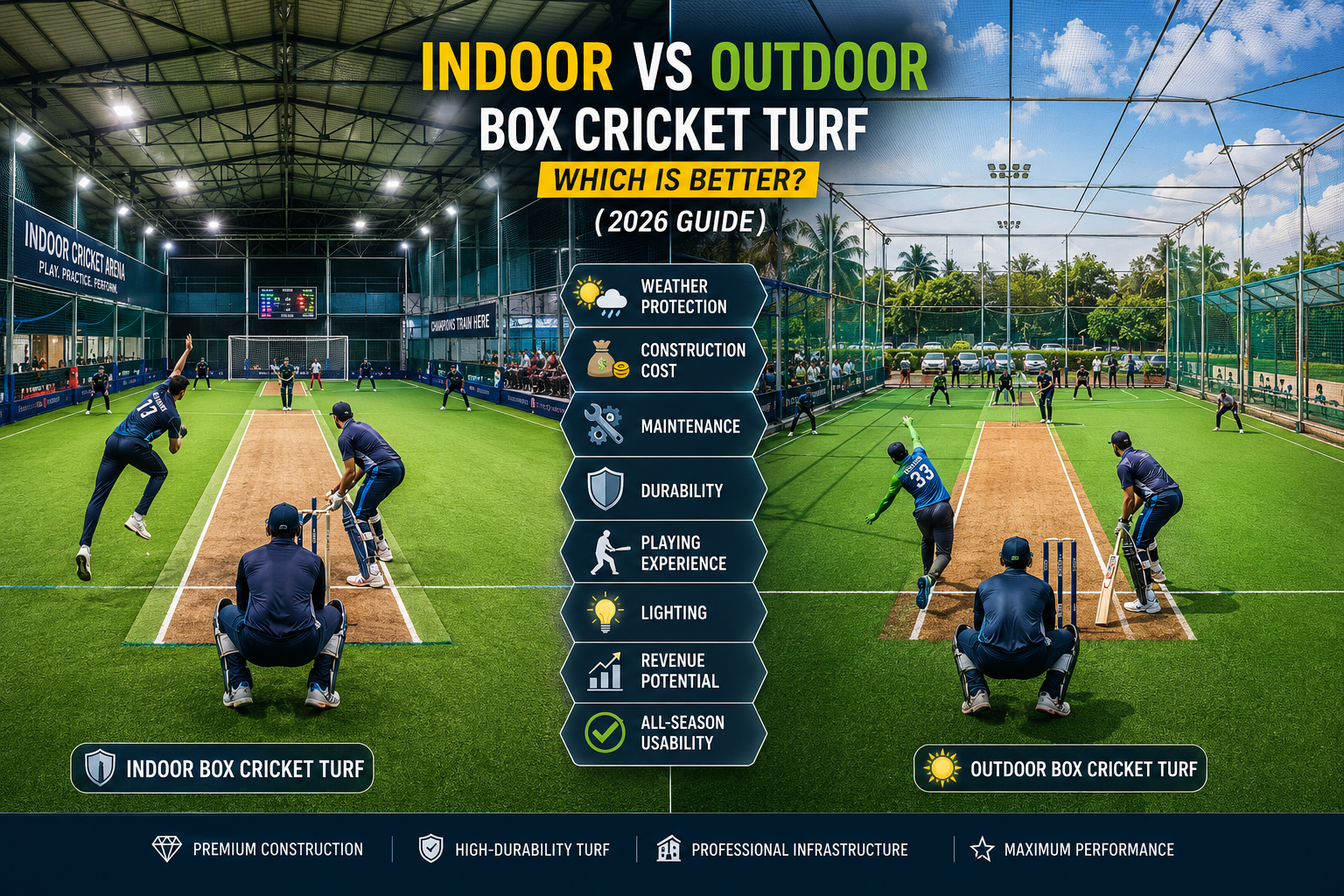
In this comprehensive 2026 guide, we will compare indoor and outdoor box cricket turfs in detail, covering construction, cost, maintenance, profitability, player experience, and long-term value. By the end of this blog, you will have a clear understanding of which type of cricket turf is better suited for your project.
What Is a Box Cricket Turf?
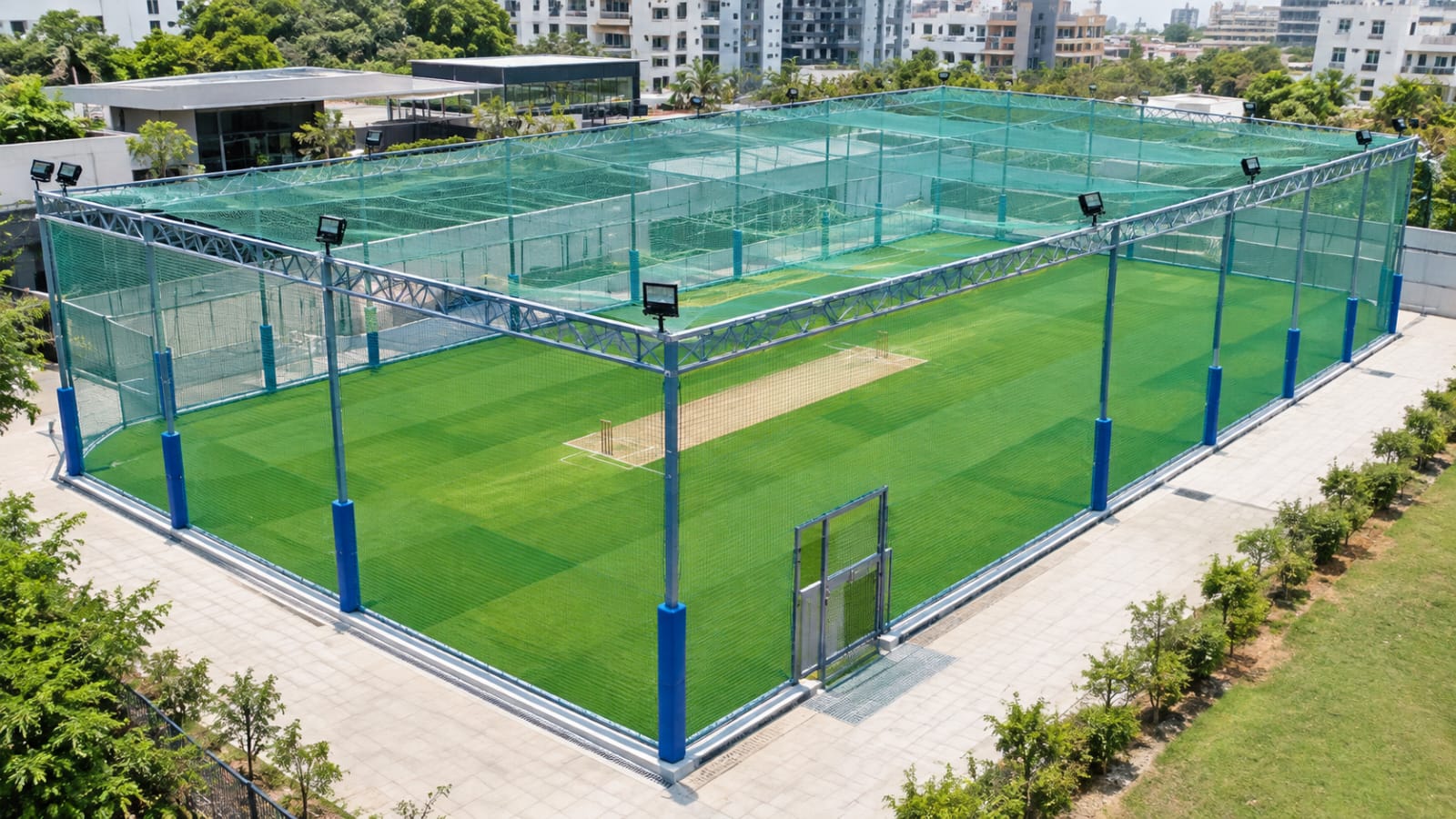
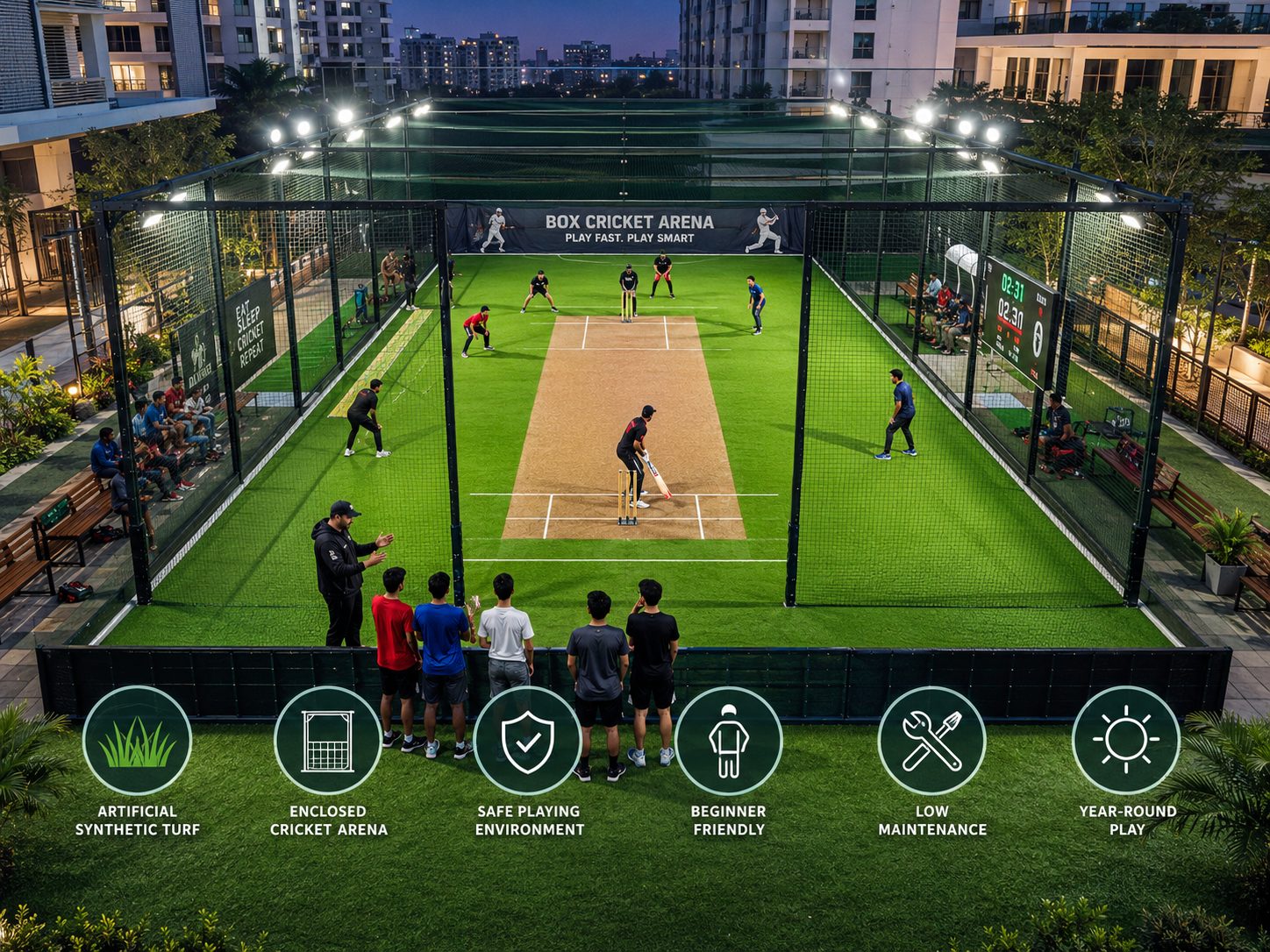
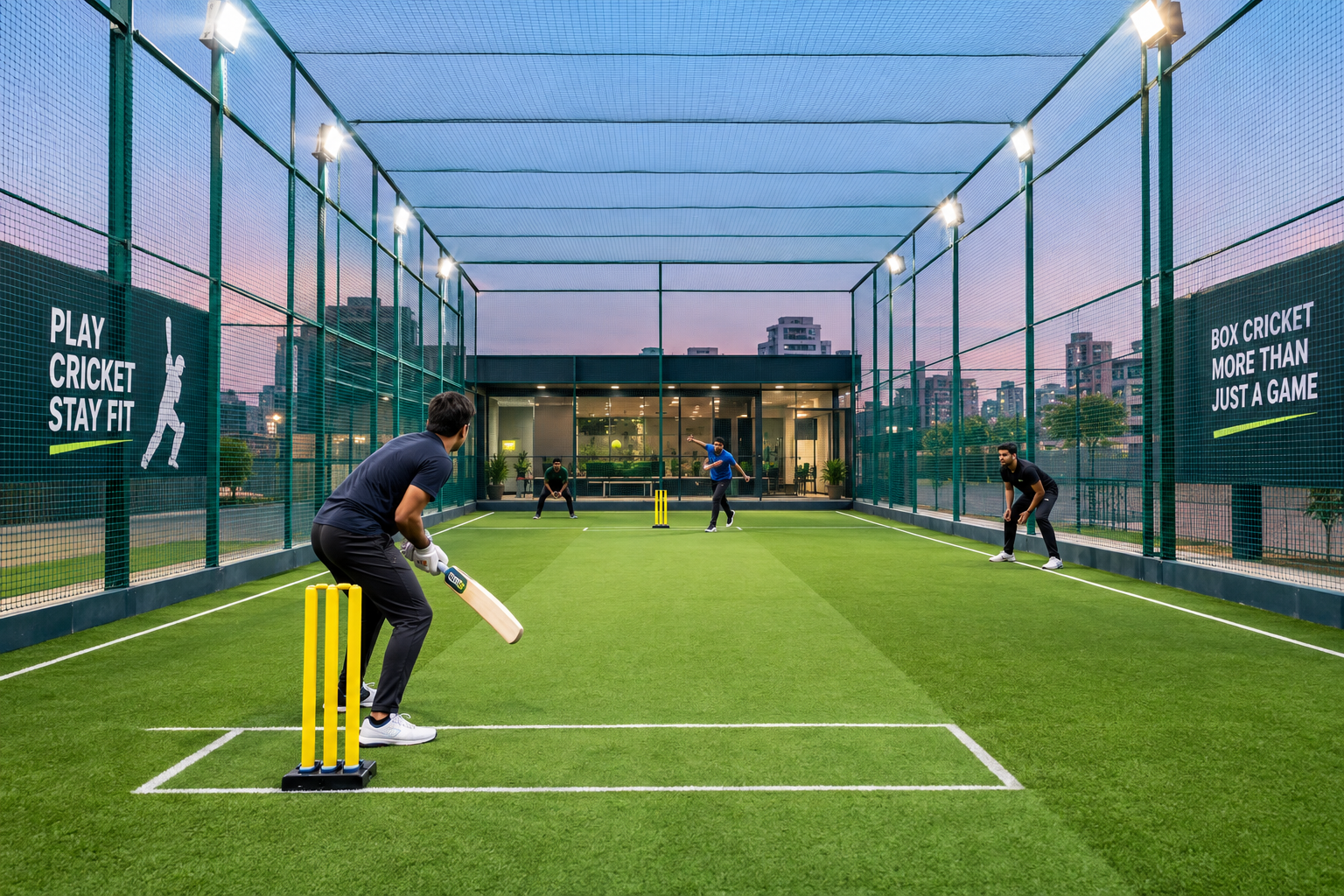
A box cricket turf is a compact cricket playing arena enclosed with safety netting and equipped with artificial cricket turf. Unlike traditional cricket grounds, box cricket is played in a smaller area, making it ideal for urban locations where land is limited.
A standard box cricket facility includes:
-
Artificial synthetic cricket turf
-
Protective side and roof netting
-
Galvanized steel support structure
-
LED floodlights
-
Cricket pitch markings
-
Drainage system (for outdoor facilities)
-
Player seating and spectator area
Box cricket is typically played with 6 to 8 players per side, making it faster, more engaging, and suitable for recreational, corporate, and tournament play.
What Is Indoor Box Cricket Turf?
An indoor box cricket turf is a cricket arena constructed inside a covered structure, such as a warehouse, sports complex, or purpose-built indoor facility. The entire playing area is protected from external weather conditions, allowing cricket to be played throughout the year.
Key Features of Indoor Box Cricket Turf
-
Fully covered roof structure
-
Artificial cricket turf with shock absorption
-
Controlled lighting system
-
Protective side and roof netting
-
Ventilation or air-conditioning (optional)
-
Weather-independent gameplay
Indoor box cricket facilities are becoming increasingly popular in metropolitan cities because they provide uninterrupted play regardless of rain, heat, or dust.
What Is Outdoor Box Cricket Turf?
An outdoor box cricket turf is an open-air cricket arena constructed on a prepared base with artificial turf, safety netting, and floodlighting. While it is exposed to natural weather conditions, a properly designed outdoor turf can still provide excellent playing performance.
Key Features of Outdoor Box Cricket Turf
-
Open-air playing environment
-
Artificial synthetic turf
-
Protective side and roof netting
-
LED floodlights for night play
-
Drainage system for rainwater management
-
Lower construction cost compared to indoor facilities
Outdoor box cricket turfs are widely used in schools, colleges, sports clubs, residential societies, and commercial sports arenas.
Indoor vs Outdoor Box Cricket Turf: A Detailed Comparison
Construction Cost
One of the most significant differences between indoor and outdoor box cricket turfs is the initial construction cost.
|
Factor |
Indoor Turf |
Outdoor Turf |
|---|---|---|
|
Roof Structure |
Required |
Not required |
|
Steel Framework |
Heavy-duty |
Moderate |
|
Ventilation |
Required |
Natural airflow |
|
Lighting |
Fully controlled |
Floodlights only |
|
Drainage |
Minimal |
Essential |
|
Overall Cost |
Higher |
Lower |
Indoor box cricket turf construction generally requires a higher investment due to roofing, ventilation, and additional structural work. Outdoor facilities are more affordable because they do not require a covered structure.
Weather Impact
Indoor Box Cricket Turf
Indoor facilities are completely protected from rain, extreme heat, dust storms, and harsh sunlight. This means players can enjoy cricket in all seasons without interruptions.
Outdoor Box Cricket Turf
Outdoor facilities are exposed to weather conditions. Heavy rainfall may temporarily affect gameplay, but a proper drainage system can minimize downtime.
Winner: Indoor box cricket turf for weather independence.
Player Experience
Indoor Box Cricket Turf
Indoor cricket provides a controlled environment with consistent lighting and temperature. Players can focus entirely on the game without being affected by wind, rain, or excessive heat.
Advantages:
-
Comfortable playing conditions
-
No weather interruptions
-
Consistent ball bounce
-
Better visibility under controlled lighting
Outdoor Box Cricket Turf
Outdoor cricket offers a more natural playing experience, similar to traditional cricket. Many players enjoy the open-air atmosphere and natural airflow.
Advantages:
-
Natural environment
-
Better ventilation
-
Authentic cricket feel
-
Lower indoor heat buildup
Winner: Depends on player preference. Indoor is better for comfort, while outdoor is better for a natural cricket experience.
Maintenance Requirements
Indoor Box Cricket Turf Maintenance
Indoor turfs are protected from rain, dust, and UV exposure, so they generally require less maintenance.
Common maintenance tasks include:
-
Regular brushing
-
Cleaning dust and debris
-
Inspecting netting
-
Checking lighting systems
Outdoor Box Cricket Turf Maintenance
Outdoor turfs require more frequent maintenance due to exposure to weather conditions.
Additional tasks include:
-
Cleaning drainage channels
-
Removing leaves and dirt
-
Inspecting for waterlogging
-
Checking UV-related wear
Winner: Indoor box cricket turf for lower maintenance.
Durability and Lifespan
Indoor artificial cricket turf usually lasts longer because it is protected from sunlight, rain, and temperature fluctuations. Outdoor turf, while durable, may experience faster wear due to constant exposure to the elements.
With proper maintenance:
-
Indoor turf lifespan: 8–10+ years
-
Outdoor turf lifespan: 6–8+ years
Winner: Indoor box cricket turf for longer lifespan.
Revenue Potential
Indoor Box Cricket Turf Revenue
Indoor facilities can operate throughout the year, regardless of weather conditions. This increases the number of bookable hours and reduces revenue loss during monsoon seasons.
Revenue sources include:
-
Hourly turf rentals
-
Corporate tournaments
-
Cricket coaching academies
-
Membership programs
-
Birthday parties and events
Outdoor Box Cricket Turf Revenue
Outdoor facilities can also generate substantial revenue, especially in cities with favorable weather conditions. However, heavy rainfall may reduce bookings during certain months.
Winner: Indoor box cricket turf for higher year-round revenue potential.
Energy Consumption
Indoor facilities often require:
-
LED lighting during all operating hours
-
Ventilation systems
-
Air-conditioning (optional)
Outdoor facilities primarily use floodlights for evening play, resulting in lower energy consumption.
Winner: Outdoor box cricket turf for lower operating costs.
Space Requirements
Indoor box cricket turfs can be constructed inside existing warehouses or commercial buildings, making them suitable for urban areas with limited open land.
Outdoor turfs require open land with proper drainage and access.
Winner: Indoor box cricket turf for flexible urban space utilization.
Cost Comparison: Indoor vs Outdoor Box Cricket Turf
The cost of box cricket turf construction in India (2026) varies depending on size, location, turf quality, lighting, and additional amenities.
|
Cost Component |
Indoor Turf |
Outdoor Turf |
|---|---|---|
|
Ground Preparation |
High |
Moderate |
|
Base Construction |
High |
Moderate |
|
Artificial Turf |
Same |
Same |
|
Roof Structure |
High |
Not required |
|
Drainage System |
Low |
High |
|
Lighting |
High |
Moderate |
|
Total Investment |
Higher |
Lower |
While indoor facilities require a larger initial investment, they often provide better long-term revenue stability.
Which Is Better for Commercial Investment?
For entrepreneurs planning a commercial box cricket arena, the choice depends on budget and target market.
Choose Indoor Box Cricket Turf If:
-
You want year-round operations.
-
Your city experiences heavy rainfall or extreme heat.
-
You have a higher investment budget.
-
You want to maximize hourly bookings.
-
You plan to run coaching academies and tournaments.
Choose Outdoor Box Cricket Turf If:
-
You have a limited budget.
-
You have access to open land.
-
Your city has favorable weather conditions.
-
You want lower operating costs.
-
You prefer a natural playing environment.
Which Is Better for Schools and Residential Societies?
Schools and Colleges
Outdoor box cricket turf is often the preferred choice for educational institutions because it is more affordable and provides students with a natural outdoor sports experience.
Residential Societies
Outdoor turfs are commonly installed in residential complexes due to their lower cost and easier maintenance.
Premium Sports Academies
Indoor turfs are better suited for professional coaching academies that require uninterrupted training throughout the year.
Common Mistakes When Choosing Between Indoor and Outdoor Turf
Ignoring Local Climate
In cities with heavy monsoon seasons, an outdoor turf without proper drainage can lead to frequent downtime.
Underestimating Operating Costs
Indoor facilities may have higher electricity and maintenance costs due to lighting and ventilation systems.
Choosing Low-Quality Turf
Regardless of whether the turf is indoor or outdoor, using poor-quality artificial grass can reduce durability and player satisfaction.
Poor Drainage Design
Outdoor facilities must have an efficient drainage system to prevent waterlogging and turf damage.
Inadequate Ventilation in Indoor Facilities
Indoor arenas should have proper airflow to ensure player comfort and prevent excessive heat buildup.
How to Choose the Right Construction Company
Selecting an experienced sports flooring company is crucial for both indoor and outdoor box cricket turf projects.
Look for a contractor who offers:
-
Proven experience in box cricket turf construction
-
High-quality artificial cricket turf
-
Galvanized steel structures
-
Professional drainage design
-
LED floodlighting solutions
-
Warranty on materials and installation
-
After-sales maintenance support
A reliable contractor will help you choose the most suitable turf type based on your budget, location, and business goals.
FAQs: Indoor vs Outdoor Box Cricket Turf
Which is more profitable, indoor or outdoor box cricket turf?
Indoor box cricket turf is generally more profitable because it can operate year-round without weather interruptions.
Is indoor box cricket turf more expensive?
Yes, indoor turf construction is more expensive due to roofing, ventilation, and additional structural requirements.
Which turf requires less maintenance?
Indoor box cricket turf requires less maintenance because it is protected from rain, sunlight, and dust.
Can outdoor box cricket turf be used during rain?
A well-designed outdoor turf with proper drainage can be used soon after rainfall, but heavy rain may temporarily interrupt gameplay.
Which is better for beginners?
Both indoor and outdoor turfs are suitable for beginners. Indoor turf provides a more controlled environment, while outdoor turf offers a natural cricket experience.
Conclusion: Which Is Better?
The answer to “Indoor vs Outdoor Box Cricket Turf: Which Is Better?” depends entirely on your specific requirements.
-
Indoor Box Cricket Turf is better for year-round operations, higher revenue potential, lower maintenance, and controlled playing conditions.
-
Outdoor Box Cricket Turf is better for lower construction costs, lower operating expenses, and a natural cricket-playing experience.
If your goal is to build a premium commercial sports facility with maximum booking potential, an indoor box cricket turf is the better investment. However, if you are looking for a cost-effective cricket turf solution for a school, residential society, or budget-friendly sports arena, an outdoor box cricket turf is an excellent choice.
Ultimately, the best option is the one that aligns with your budget, location, climate, target audience, and long-term business strategy.
Call to Action
Planning to build an Indoor or Outdoor Box Cricket Turf?
Partner with an experienced Box Cricket Turf Construction Company to design and install a world-class cricket facility tailored to your needs. From artificial turf installation and drainage systems to LED lighting and safety netting, professional sports flooring experts can help you create a durable, profitable, and high-performance box cricket arena.