Introduction
A professionally constructed sports court is much more than a playing surface—it is a carefully engineered facility designed to deliver safety, durability, performance, and long-term value. Whether you are building a basketball court, badminton court, tennis court, volleyball court, pickleball court, futsal court, or a multi-purpose sports arena, every stage of construction must be executed with precision.
With the increasing demand for modern sports infrastructure in schools, universities, sports academies, residential communities, clubs, commercial projects, and government facilities, sports court construction has become a specialized field requiring expert planning, advanced construction techniques, and premium-quality materials.
Modern sports courts are designed to withstand heavy foot traffic, changing weather conditions, and years of competitive play while maintaining consistent performance. From selecting the right location and preparing the ground to installing professional sports flooring and applying accurate game markings, every detail contributes to the quality of the finished court.
This comprehensive guide explains the complete step-by-step process of building a professional sports court in 2026. Whether you are a property developer, architect, contractor, school administrator, or sports facility owner, this guide will help you understand every stage of construction.
Why Professional Court Construction Matters
A professionally designed sports court offers significant advantages compared to ordinary paved surfaces.
Improved Player Safety
Modern sports flooring systems provide superior shock absorption, reducing stress on knees, ankles, and joints while minimizing slip hazards.
Enhanced Sports Performance
A level surface, proper friction, and consistent ball bounce create an ideal playing environment for athletes of all skill levels.
Long-Term Durability
Professional construction methods ensure the court can withstand years of intensive use with minimal structural issues.
Reduced Maintenance Costs
High-quality materials and proper installation reduce the likelihood of cracks, water damage, and premature wear.
Increased Property Value
Sports courts add functional and commercial value to schools, residential communities, clubs, resorts, and commercial developments.
Define the Purpose of the Sports Court
Before beginning construction, determine the intended use of the court.
Common options include:
- Basketball Court
- Badminton Court
- Tennis Court
- Volleyball Court
- Pickleball Court
- Futsal Court
- Multi-Purpose Sports Court
Understanding the primary sport helps determine the correct dimensions, flooring system, lighting, fencing, and equipment.
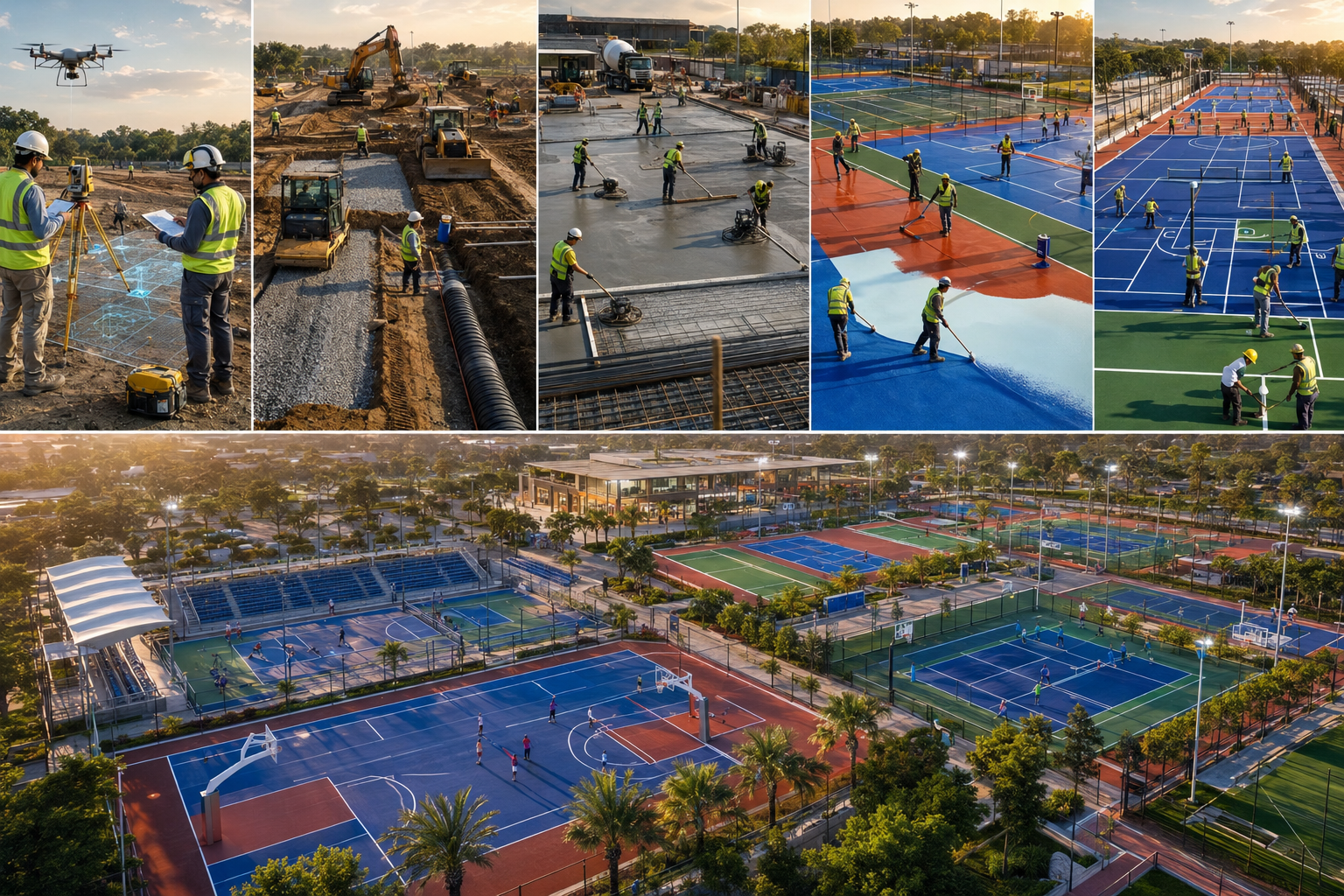
Conduct Site Inspection and Survey
A professional site inspection is essential before any construction begins.
Engineers evaluate:
- Soil strength
- Existing ground levels
- Water drainage
- Accessibility
- Utility connections
- Space availability
- Environmental conditions
Modern projects often use laser surveying equipment and total stations to obtain highly accurate site measurements.
Prepare the Construction Plan
Once the survey is complete, prepare a detailed construction plan.
The plan should include:
- Court dimensions
- Orientation
- Drainage layout
- Base construction details
- Flooring specification
- Lighting arrangement
- Fencing design
- Seating areas
- Landscaping
- Maintenance access
A detailed plan minimizes delays and improves construction quality.
Clear and Excavate the Site
The next stage is preparing the construction area.
This includes:
- Removing vegetation
- Clearing debris
- Excavating unsuitable soil
- Removing loose material
- Creating the required excavation depth
Proper excavation provides a stable foundation for the court.
Build a Strong Sub-Base
The sub-base is one of the most critical structural components.
Typical layers include:
- Compacted natural soil
- Geotextile fabric (where required)
- Crushed stone
- Granular aggregate
- Compacted base material
Each layer is compacted using vibratory rollers or plate compactors to achieve the required density.
A strong sub-base prevents settlement and structural failure.
Design an Effective Drainage System
Outdoor sports courts require efficient drainage.
Professional drainage systems include:
- Surface slopes
- Side drains
- French drains
- Perforated drainage pipes
- Gravel filtration
- Stormwater outlets
Proper drainage prevents water accumulation and protects the flooring from moisture damage.
Construct the Base Layer
The structural base is usually made of concrete or asphalt.
Concrete Base
Advantages include:
- Excellent strength
- Long service life
- Stable surface
- Ideal for acrylic sports flooring
Asphalt Base
Advantages include:
- Greater flexibility
- Faster installation
- Excellent performance for outdoor courts
The finished base should be smooth, level, and fully cured before flooring installation begins.
Check Surface Levels
Professional contractors use laser leveling equipment to verify surface accuracy.
The base must have:
- Uniform slope
- No depressions
- No standing water
- Smooth finish
- Correct elevation
Even small surface irregularities can affect sports performance.
Apply Primer
A high-quality primer improves adhesion between the structural base and sports flooring.
Benefits include:
- Better bonding
- Increased durability
- Reduced peeling
- Improved waterproofing
Primer selection depends on the flooring system being installed.
Install the Sports Flooring
The flooring system determines player comfort and overall court performance.
Acrylic Sports Flooring
Suitable for:
- Basketball
- Tennis
- Pickleball
- Multi-purpose courts
Benefits:
- UV resistant
- Weather resistant
- Anti-slip
- Durable
- Low maintenance
Polyurethane (PU) Flooring
Ideal for:
- Indoor sports halls
- Basketball
- Volleyball
- Badminton
Benefits:
- Seamless finish
- Excellent shock absorption
- Comfortable surface
- Professional appearance
PVC Sports Flooring
Commonly installed in:
- Indoor badminton courts
- Table tennis halls
- Multi-sport facilities
Benefits:
- Fast installation
- Cushioned surface
- Easy cleaning
- Long lifespan
EPDM Rubber Flooring
Often used for:
- Jogging tracks
- Recreational areas
- Children’s play zones
Benefits:
- Soft surface
- Weather resistant
- UV stable
- Slip resistant
Artificial Turf
Suitable for:
- Football
- Cricket
- Tennis
- Training facilities
Benefits:
- Natural appearance
- Low maintenance
- Excellent drainage
Apply Surface Coatings
Multiple coating layers improve durability and aesthetics.
Typical coating system includes:
- Base coat
- Cushion coat
- Texture coat
- Color coat
- Finish coat
These layers improve grip, weather resistance, and color stability.
Mark Court Lines
Professional court markings must follow recognized dimensions for each sport.
Line markings should be:
- Straight
- Accurate
- Durable
- Clearly visible
- Weather resistant
Specialized line marking machines ensure precise results.
Install Sports Equipment
Install all required sports accessories.
Examples include:
- Basketball poles
- Hoops
- Tennis posts
- Volleyball posts
- Badminton posts
- Nets
- Goal posts
- Protective padding
- Scoreboards
Equipment should be securely anchored according to manufacturer specifications.
Install Fencing
Sports fencing improves safety and protects surrounding areas.
Common fencing materials include:
- Chain-link fencing
- PVC-coated mesh
- Powder-coated steel
- Welded wire mesh
Fence height depends on the sport being played.
Install LED Sports Lighting
Modern LED lighting systems provide:
- Uniform brightness
- Energy efficiency
- Long lifespan
- Low maintenance
- Better visibility
Lighting design should eliminate dark spots and minimize glare.
Final Quality Inspection
Before opening the facility, conduct a detailed inspection.
Verify:
- Surface level
- Drainage performance
- Flooring adhesion
- Court dimensions
- Line markings
- Equipment installation
- Lighting performance
- Fence stability
- Surface finish
Any defects should be corrected before the court is handed over.
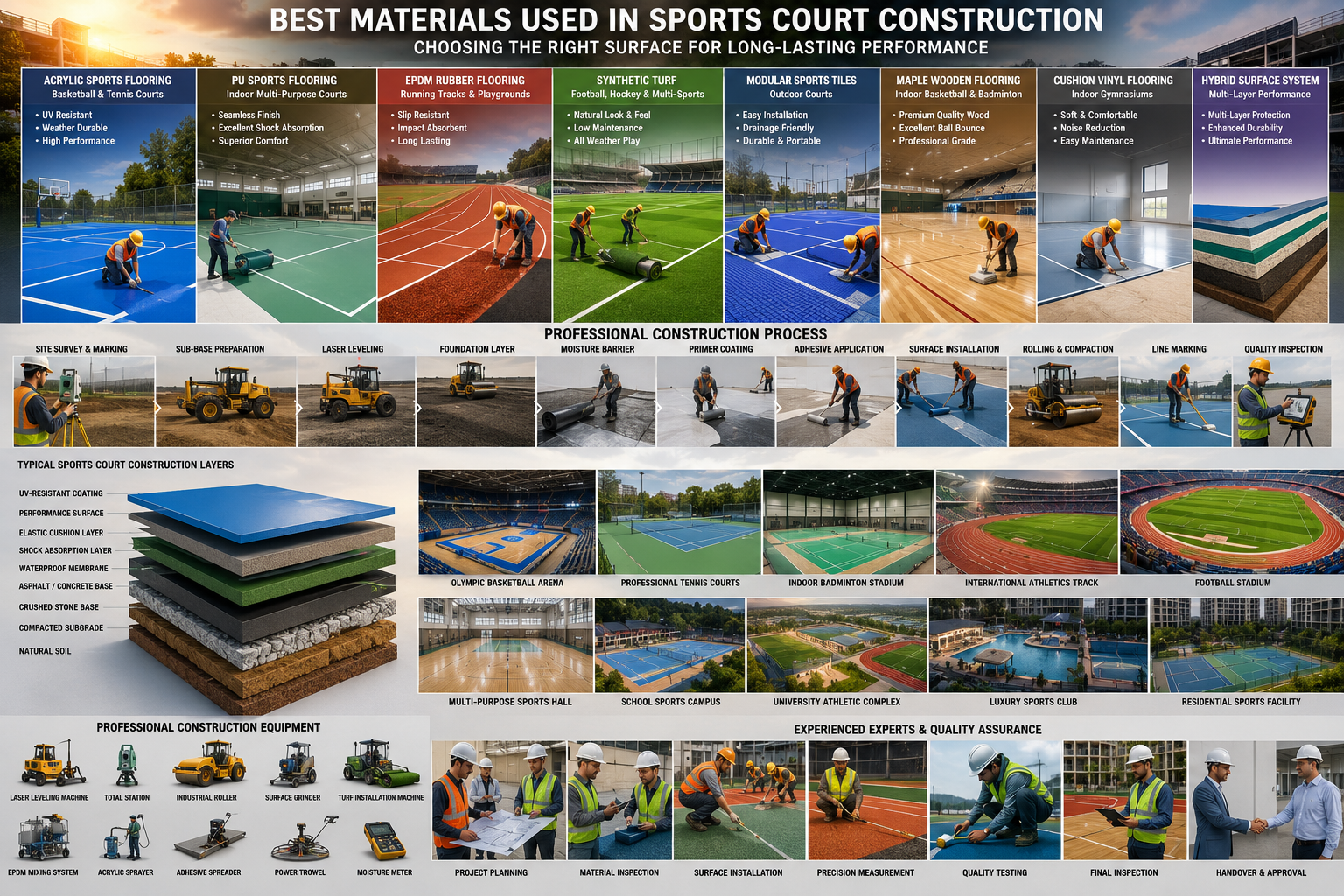
Best Materials for Professional Sports Courts
Choosing high-quality materials significantly improves the lifespan and performance of the court.
Recommended materials include:
- Acrylic sports coatings
- Polyurethane flooring systems
- PVC sports flooring
- EPDM rubber granules
- Synthetic turf
- Reinforced concrete
- Premium asphalt
- UV-resistant paints
- Polyurethane adhesives
- High-strength fencing
Using certified materials helps maintain consistent quality over time.
Equipment Used During Construction
Professional contractors use specialized machinery such as:
- Laser level
- Total station
- Excavator
- Plate compactor
- Vibratory roller
- Asphalt paver
- Concrete mixer
- Power trowel
- Surface grinder
- Rubber roller
- Line marking machine
- Moisture meter
Modern equipment ensures greater precision and efficiency.
Common Mistakes to Avoid
Avoid these common construction errors:
- Poor site drainage
- Weak soil compaction
- Low-quality materials
- Incorrect court dimensions
- Improper curing
- Uneven surface levels
- Inaccurate line markings
- Untrained installers
- Ignoring maintenance planning
Avoiding these issues helps maximize the lifespan of the facility.
Maintenance Tips
Regular maintenance keeps the court safe and visually appealing.
Maintenance tasks include:
- Sweeping leaves and debris
- Washing the surface
- Cleaning drainage channels
- Inspecting line markings
- Repairing minor cracks
- Checking sports equipment
- Removing moss or algae
- Annual professional inspection
Preventive maintenance reduces long-term repair costs.
Latest Trends in Sports Court Construction (2026)
The sports infrastructure industry continues to evolve with innovative technologies and sustainable practices.
Popular trends include:
- Smart LED lighting systems
- Eco-friendly construction materials
- Recycled rubber flooring
- AI-assisted design software
- Drone-based site surveys
- Cushioned acrylic systems
- Permeable sports surfaces
- Solar-powered sports facilities
- Digital maintenance management
- Multi-sport modular court designs
These advancements improve safety, sustainability, and long-term performance.
Benefits of Hiring a Professional Court Contractor
Working with experienced professionals offers several advantages:
- Expert project planning
- Compliance with sports standards
- High-quality materials
- Skilled installation
- Faster project completion
- Long-term warranty support
- Reliable after-sales service
- Better return on investment
Professional contractors help ensure the court meets performance expectations and remains durable for years.
Frequently Asked Questions
How long does sports court construction take?
Most professional sports court projects take between two and eight weeks, depending on the size, flooring system, weather, and site conditions.
Which sports flooring is best?
The best flooring depends on the intended use. Acrylic flooring is ideal for outdoor courts, while polyurethane and PVC flooring are preferred for many indoor sports facilities.
How long will a sports court last?
A professionally built sports court can provide excellent performance for 10–20 years or longer with regular maintenance and periodic resurfacing.
Can an old sports court be renovated?
Yes. Existing courts can often be resurfaced, repaired, and upgraded with new flooring, improved drainage, modern lighting, and fresh court markings.
Is routine maintenance necessary?
Yes. Regular cleaning, inspections, and timely repairs preserve safety, appearance, and performance while extending the court’s lifespan.
Conclusion
Building a professional sports court requires careful planning, technical expertise, quality materials, and precise execution. Every stage—from site inspection and ground preparation to drainage, base construction, flooring installation, lighting, fencing, and final quality checks—plays a vital role in creating a safe and durable sports facility.
Whether your project involves a basketball court, badminton court, tennis court, volleyball court, pickleball court, or a multi-purpose sports complex, following a structured construction process ensures outstanding results and long-term value. Investing in premium materials and experienced professionals not only enhances athletic performance but also minimizes maintenance costs and extends the life of the facility.
As sports infrastructure continues to evolve in 2026, adopting modern construction techniques, sustainable materials, and innovative technologies will help create world-class sports courts that meet the needs of athletes, institutions, and communities for years to come.