Introduction
Sports court construction has evolved significantly over the last decade. Modern sports facilities are no longer built with concrete alone—they incorporate advanced synthetic materials, shock-absorbing systems, weather-resistant coatings, and engineered drainage solutions to maximize athlete safety, durability, and performance.
Whether you are planning a basketball court, tennis court, pickleball court, badminton court, volleyball court, multi-purpose sports court, or running track, selecting the right construction material is the most important decision of the entire project.
The wrong flooring system can lead to:
- Cracks and uneven surfaces
- Poor ball bounce
- Athlete injuries
- Water accumulation
- High maintenance costs
- Reduced court lifespan
On the other hand, premium-quality materials ensure decades of reliable performance with minimal maintenance.
This guide explains the best materials used in sports court construction, their advantages, applications, installation process, maintenance requirements, and how to choose the ideal flooring system for your project.
Why Material Selection Matters
A sports court experiences constant stress from:
- Heavy player movement
- Weather exposure
- UV radiation
- Moisture
- Temperature fluctuations
- Sports equipment
- Regular cleaning
High-quality construction materials help achieve:
- Superior shock absorption
- Anti-slip performance
- Consistent ball bounce
- Long service life
- Excellent drainage
- Reduced maintenance
- Professional playing standards
Investing in premium materials also lowers lifetime ownership costs.
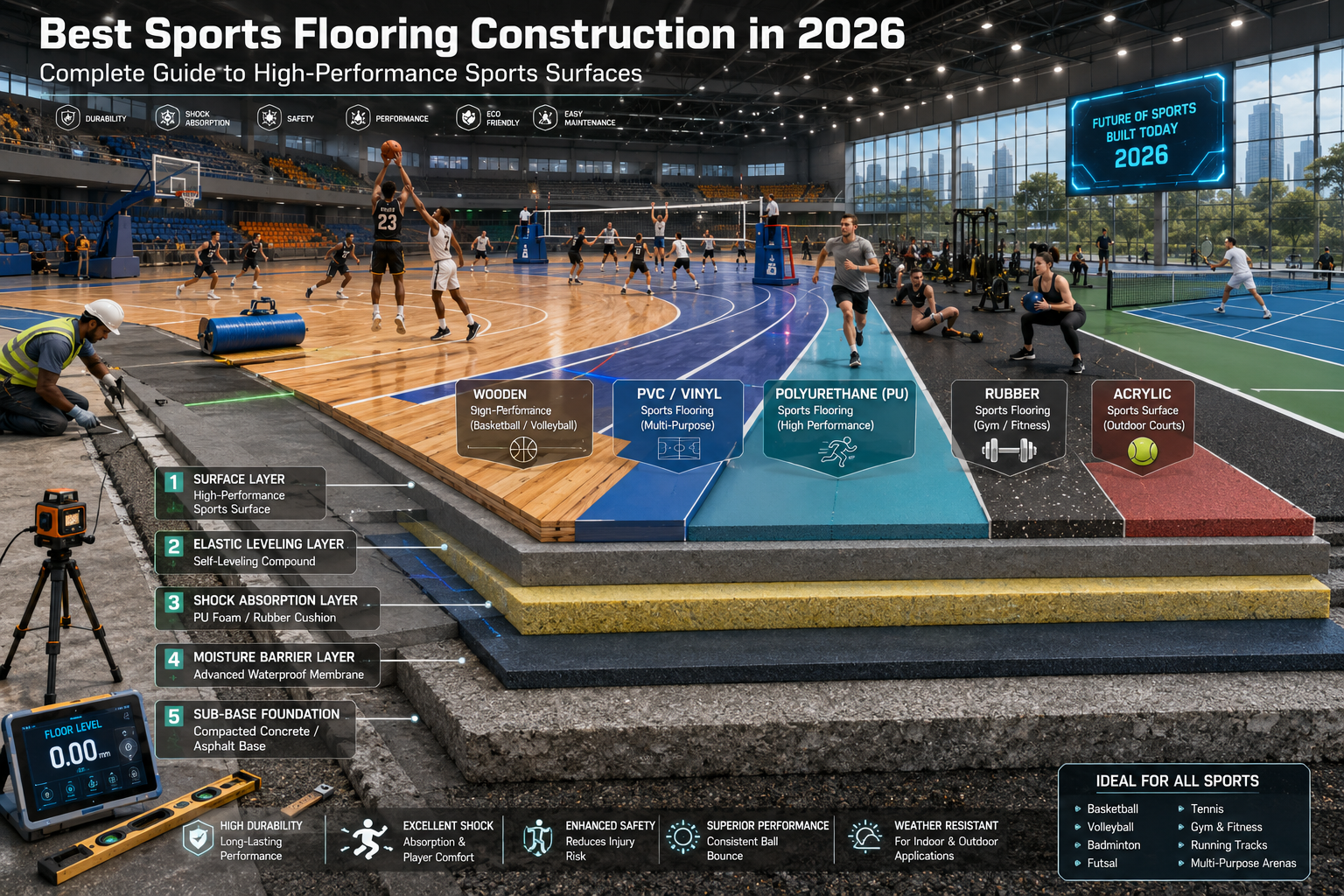
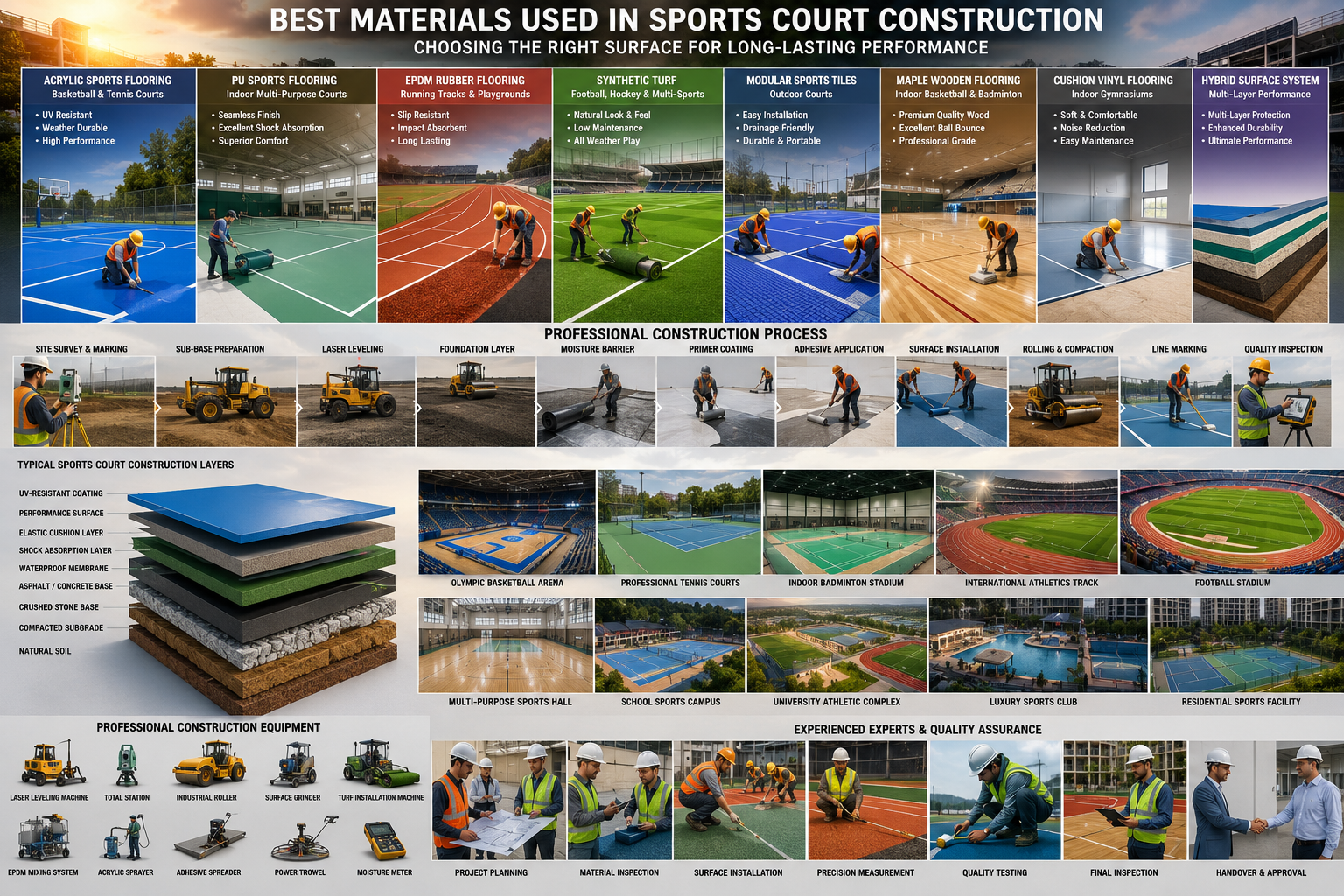
Main Layers of a Sports Court
Professional sports courts consist of multiple engineered layers.
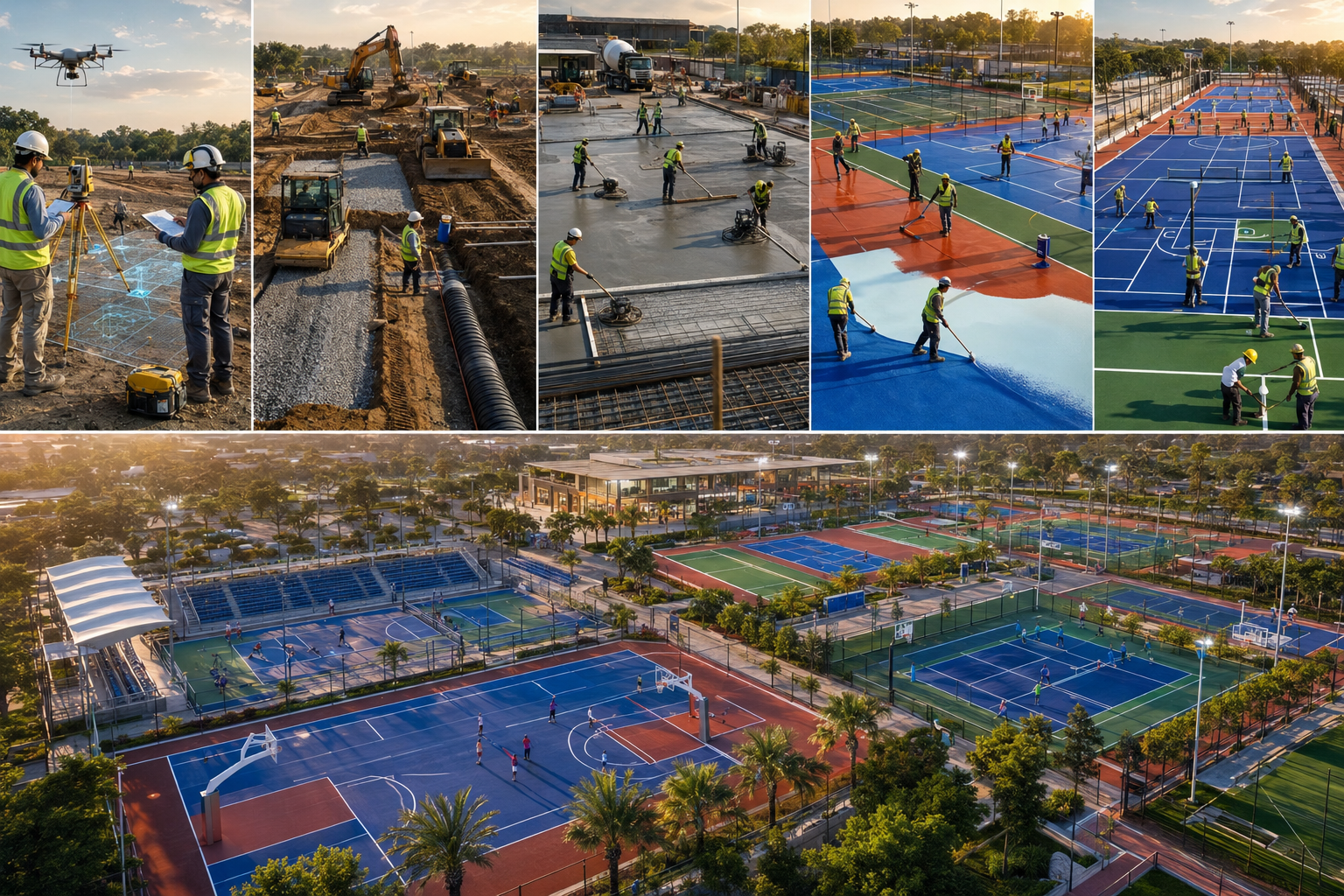
1. Ground Preparation
The foundation includes:
- Soil excavation
- Compaction
- Leveling
- Drainage planning
- Subgrade stabilization
Proper groundwork prevents future settlement and cracking.
2. Granular Sub Base
Common materials include:
- Crushed stone
- WMM (Wet Mix Macadam)
- Gravel
- Compacted aggregates
Purpose:
- Structural stability
- Load distribution
- Water drainage
3. Concrete or Asphalt Base
Two popular options are:
PCC/RCC Concrete
Advantages:
- High strength
- Long lifespan
- Suitable for indoor courts
- Smooth finish
Asphalt Base
Advantages:
- Flexible
- Crack resistant
- Ideal for outdoor courts
- Cost-effective
Best Surface Materials Used in Sports Court Construction
1. Acrylic Sports Flooring
Acrylic flooring is among the most widely used materials for outdoor sports courts.
Suitable for:
- Tennis courts
- Basketball courts
- Multi-purpose courts
- School playgrounds
Advantages
- UV resistant
- Waterproof
- Excellent traction
- Non-slip finish
- Low maintenance
- Long-lasting colors
Life Expectancy
8–12 years with proper maintenance.
2. Polyurethane (PU) Sports Flooring
PU flooring is considered one of the highest-performance sports flooring systems.
Commonly used in:
- Indoor stadiums
- Basketball courts
- Volleyball courts
- Handball courts
- Gymnasiums
Benefits
- Superior cushioning
- Excellent impact resistance
- Seamless finish
- Comfortable playing surface
- High durability
- Professional appearance
Ideal for professional athletes.
3. EPDM Rubber Flooring
EPDM (Ethylene Propylene Diene Monomer) is one of the safest synthetic rubber materials.
Used for:
- Jogging tracks
- Children’s play areas
- Walking paths
- Outdoor fitness zones
Benefits
- Soft cushioning
- Slip resistant
- UV stable
- Bright color options
- Weather resistant
- Excellent drainage
Perfect for outdoor recreational facilities.
4. Synthetic Turf
Artificial grass has become increasingly popular.
Applications:
- Football fields
- Hockey grounds
- Cricket practice areas
- Multi-sports arenas
Advantages
- Low maintenance
- Green all year
- Water efficient
- Soft playing surface
- Durable fibers
- Excellent drainage
Modern synthetic turf closely resembles natural grass.
5. Wooden Sports Flooring
Premium hardwood flooring remains the preferred choice for indoor sports.
Common woods include:
- Maple
- Oak
- Beech
Ideal for:
- Basketball
- Badminton
- Volleyball
- Indoor training halls
Benefits
- Professional ball bounce
- Natural appearance
- Comfortable underfoot
- Long lifespan
- Easy refinishing
Widely used in international indoor arenas.
6. Vinyl Sports Flooring
Vinyl flooring is commonly installed in schools and indoor sports facilities.
Advantages include:
- Affordable
- Cushioned
- Easy maintenance
- Slip resistant
- Hygienic
- Comfortable
Suitable for multipurpose halls.
7. Modular Sports Tiles
Interlocking polypropylene tiles have gained popularity.
Ideal for:
- Basketball courts
- Pickleball courts
- Rooftop courts
- Community sports areas
Advantages:
- Fast installation
- Easy replacement
- Weather resistant
- Portable
- Excellent drainage
- Anti-slip surface
8. PVC Sports Flooring
PVC flooring is frequently used for indoor sports.
Benefits include:
- Smooth finish
- Shock absorption
- Comfortable surface
- Easy cleaning
- Durable construction
Often installed in badminton academies and indoor courts.
Materials Used for Court Cushioning
High-performance courts require cushioning layers.
Common materials include:
SBR Rubber Granules
Features:
- Cost-effective
- Shock absorbing
- Flexible
- Strong base layer
Usually installed below EPDM.
PU Cushion Layers
Advantages:
- Better player comfort
- Reduced fatigue
- Enhanced performance
- Lower injury risk
Used in premium facilities.
Adhesives Used
Professional installations require industrial-grade adhesives.
Common options include:
- Polyurethane adhesive
- Acrylic bonding agents
- Epoxy adhesive
- Rubber flooring adhesive
These provide:
- Strong bonding
- Water resistance
- Long-term durability
Coating Materials
Protective coatings improve surface performance.
Popular coatings:
- Acrylic coating
- PU coating
- UV-resistant coating
- Anti-slip coating
Benefits:
- Color retention
- Scratch resistance
- Weather protection
- Easy maintenance
Line Marking Materials
Professional sports courts use:
- Acrylic line paint
- PU marking paint
- Thermoplastic marking systems
Features:
- Bright visibility
- Fade resistance
- Precise dimensions
- Long-lasting performance
Drainage Materials
Outdoor sports courts require effective drainage systems.
Common materials:
- PVC drainage pipes
- Perforated pipes
- Drainage channels
- Geotextile fabric
- Gravel filters
Proper drainage prevents:
- Waterlogging
- Surface damage
- Mold growth
- Frost-related cracking
Fencing Materials
Sports courts often include perimeter fencing.
Popular materials:
- Galvanized steel mesh
- Chain-link fencing
- Powder-coated fencing
- HDPE safety netting
Benefits:
- Ball containment
- Player safety
- Corrosion resistance
- Security
Lighting Materials
Professional courts use LED lighting systems.
Advantages:
- Energy efficient
- Uniform illumination
- Long lifespan
- Reduced maintenance
- Improved visibility
LED floodlights are ideal for evening play.
Sports Equipment Materials
Different sports require durable equipment.
Examples include:
- Tempered glass basketball backboards
- Stainless steel basketball poles
- Aluminum tennis posts
- Powder-coated volleyball poles
- Heavy-duty badminton posts
- Nylon sports nets
Premium equipment complements high-quality flooring.
Material Comparison Table
| Material | Indoor | Outdoor | Shock Absorption | Maintenance | Lifespan |
|---|---|---|---|---|---|
| Acrylic | No | Excellent | Medium | Low | 8–12 Years |
| PU Flooring | Excellent | Limited | Excellent | Low | 10–15 Years |
| Wooden Flooring | Excellent | No | Excellent | Medium | 25–40 Years |
| EPDM Rubber | Good | Excellent | Excellent | Low | 10–15 Years |
| Synthetic Turf | Good | Excellent | Good | Medium | 8–12 Years |
| Modular Tiles | Good | Excellent | Good | Very Low | 10–15 Years |
| PVC Flooring | Excellent | No | Good | Low | 10–12 Years |
| Vinyl Flooring | Excellent | No | Good | Low | 10–15 Years |
How to Choose the Right Material
Consider the following factors:
Sport Type
Different sports require different playing characteristics.
Indoor vs Outdoor
Outdoor courts require UV-resistant and weatherproof materials.
Budget
Higher-quality materials typically have higher upfront costs but lower long-term maintenance expenses.
Maintenance
Schools and community facilities often benefit from low-maintenance systems.
Athlete Safety
Shock absorption and slip resistance should be top priorities.
Climate
Choose materials that perform well under local weather conditions.
Common Mistakes to Avoid
- Choosing low-quality flooring
- Ignoring drainage design
- Using poor-quality adhesives
- Inadequate base preparation
- Incorrect court dimensions
- Improper slope
- Skipping expansion joints
- Selecting materials unsuitable for the local climate
Maintenance Tips
To maximize the life of your sports court:
- Sweep regularly
- Wash surfaces with mild cleaners
- Repair cracks promptly
- Repaint markings when needed
- Inspect drainage systems
- Remove standing water
- Avoid dragging heavy equipment
- Schedule annual professional inspections
Routine maintenance preserves appearance and performance.
Benefits of Using Premium Sports Court Materials
- Enhanced athlete safety
- Consistent playing conditions
- Improved aesthetics
- Better weather resistance
- Reduced maintenance costs
- Longer service life
- Compliance with international standards
- Higher return on investment
Applications
These materials are suitable for:
- Schools
- Colleges
- Universities
- Sports academies
- Residential communities
- Corporate campuses
- Hotels and resorts
- Public parks
- Government sports complexes
- Indoor stadiums
- Fitness centers
- Recreational clubs
Future Trends in Sports Court Materials (2026)
The sports flooring industry is moving toward smarter and more sustainable solutions, including:
- Eco-friendly recycled rubber flooring
- Low-VOC adhesives and coatings
- UV-stable color technology
- High-performance polyurethane systems
- Modular recyclable sports tiles
- AI-assisted court design and laser leveling
- Permeable sports surfaces for improved drainage
- Smart lighting integration with LED control systems
These innovations improve sustainability, durability, and the overall athlete experience.
Frequently Asked Questions
Which material is best for an outdoor sports court?
Acrylic flooring, modular sports tiles, synthetic turf, and EPDM rubber are among the best choices due to their weather resistance and durability.
Which sports flooring offers the best shock absorption?
Polyurethane (PU) flooring and EPDM rubber provide excellent cushioning and impact absorption.
How long does a sports court last?
A professionally constructed court can last 10–30 years or more, depending on the materials used, environmental conditions, and maintenance practices.
Is synthetic turf better than natural grass?
Synthetic turf requires less maintenance, uses less water, remains playable in various weather conditions, and offers consistent performance year-round.
Which flooring is best for indoor badminton courts?
Wooden flooring and high-quality PVC sports flooring are commonly preferred because they provide excellent traction, comfort, and consistent play.
Conclusion
Choosing the right materials is the foundation of a successful sports court construction project. From the engineered base and drainage system to the final sports surface, every layer contributes to safety, performance, and long-term durability.
Whether you’re developing a basketball court, tennis court, badminton court, pickleball court, volleyball court, multi-purpose sports facility, or running track, investing in high-quality materials ensures superior playability, lower maintenance costs, and a longer service life.
A well-designed sports court is more than just a playing surface—it’s a long-term investment in athlete performance, community engagement, and lasting infrastructure.