Introduction
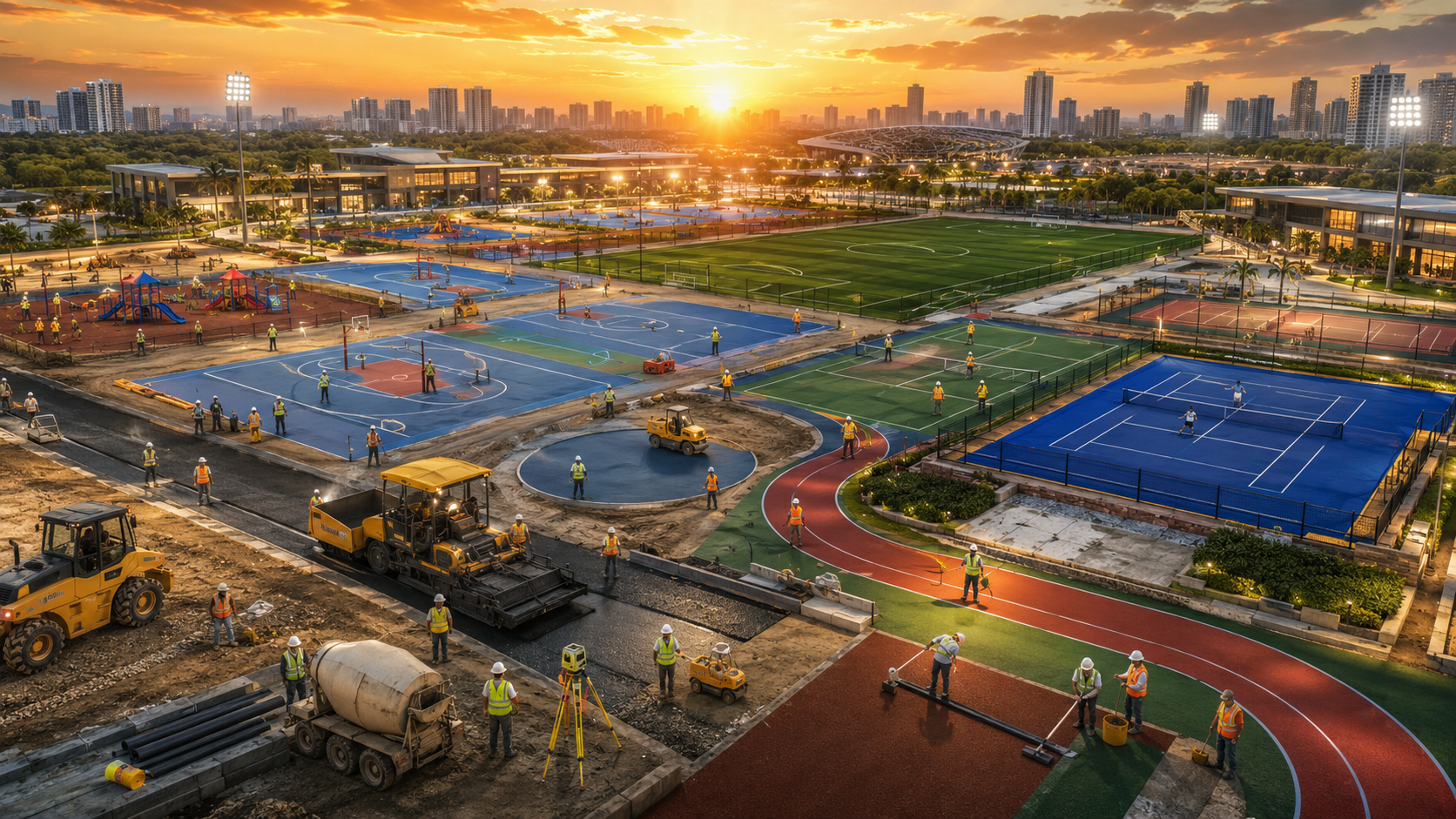
India’s sports infrastructure is evolving at an unprecedented pace. From international stadiums and sports academies to schools, universities, residential townships, corporate campuses, and commercial sports arenas, the demand for world-class sports courts continues to grow. Government initiatives promoting sports participation, increasing investment in fitness infrastructure, and the popularity of games like badminton, basketball, pickleball, tennis, futsal, and volleyball have accelerated the need for professional sports court construction across the country.
Building a premium sports court involves far more than laying a playing surface. It requires careful site planning, engineering, drainage design, base preparation, surface selection, accurate line marking, sports equipment installation, lighting, fencing, and long-term maintenance planning. Every stage directly impacts athlete safety, playing performance, and the lifespan of the facility.
This comprehensive 2026 guide explains everything you need to know before investing in a sports court—from choosing the right construction company and flooring material to understanding the complete construction process, quality standards, maintenance practices, and emerging trends shaping India’s sports infrastructure.
Why Professional Sports Court Construction Matters
A professionally designed sports court offers far more than visual appeal. It ensures:
- Consistent ball bounce
- Excellent player traction
- Proper shock absorption
- Reduced injury risk
- Superior drainage
- Weather resistance
- Long service life
- Lower maintenance costs
- Compliance with international sports standards
Poor construction often leads to surface cracks, waterlogging, uneven levels, fading, peeling coatings, and expensive repairs. Industry experience consistently shows that proper sub-base preparation and drainage are among the most important factors determining long-term court performance.
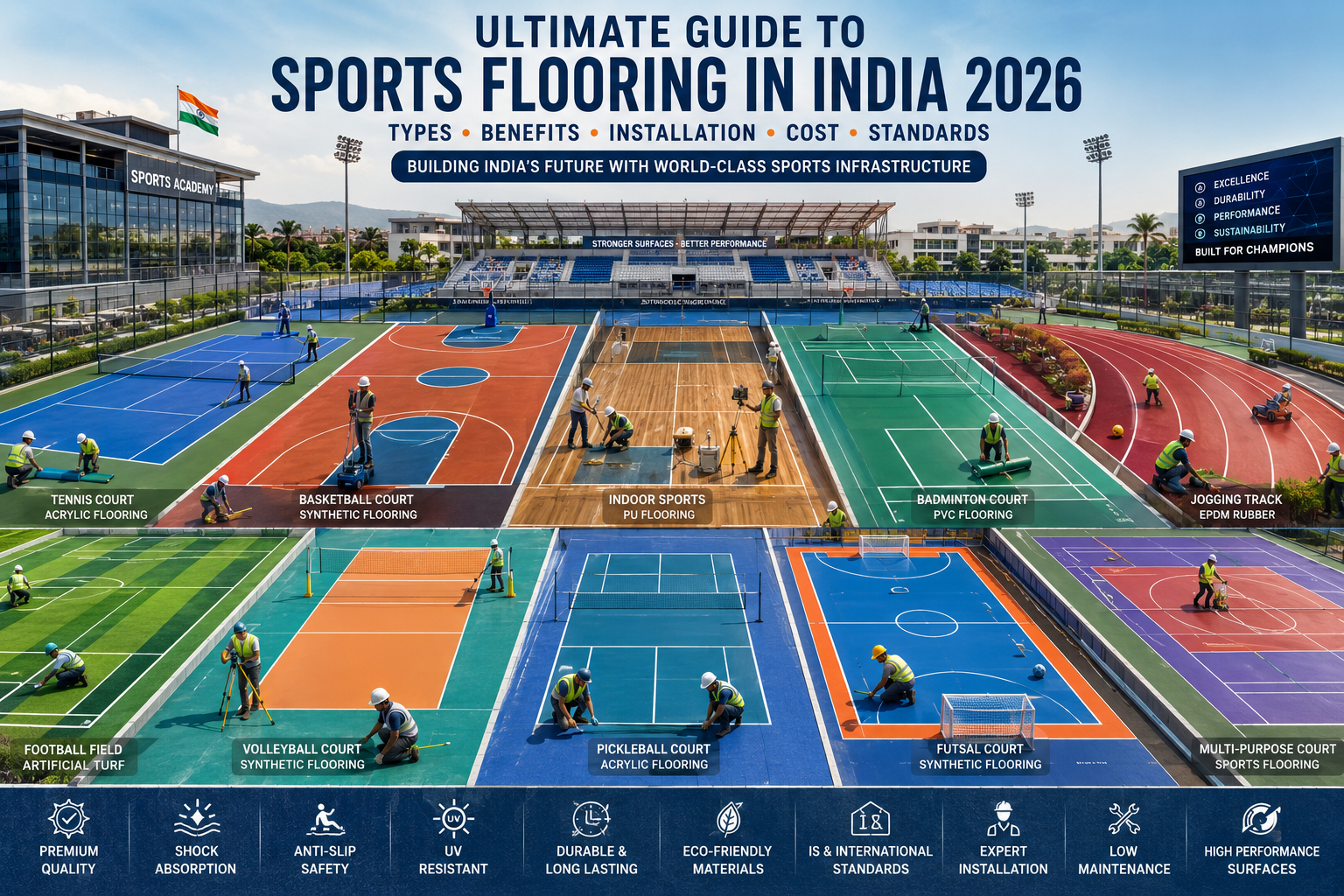
Types of Sports Courts Constructed in India
Modern sports infrastructure companies construct a wide range of indoor and outdoor courts.
Basketball Courts
- FIBA-standard courts
- Acrylic sports flooring
- PU flooring
- Modular PP tiles
- Indoor wooden flooring
Tennis Courts
- Acrylic hard courts
- Synthetic turf tennis courts
- Cushion acrylic systems
Badminton Courts
- Wooden flooring
- PVC sports flooring
- PU flooring
- Vinyl sports flooring
Pickleball Courts
One of India’s fastest-growing recreational sports, requiring:
- Acrylic coatings
- Modular tiles
- Professional net systems
Volleyball Courts
Suitable for:
- Schools
- Colleges
- Stadiums
- Community parks
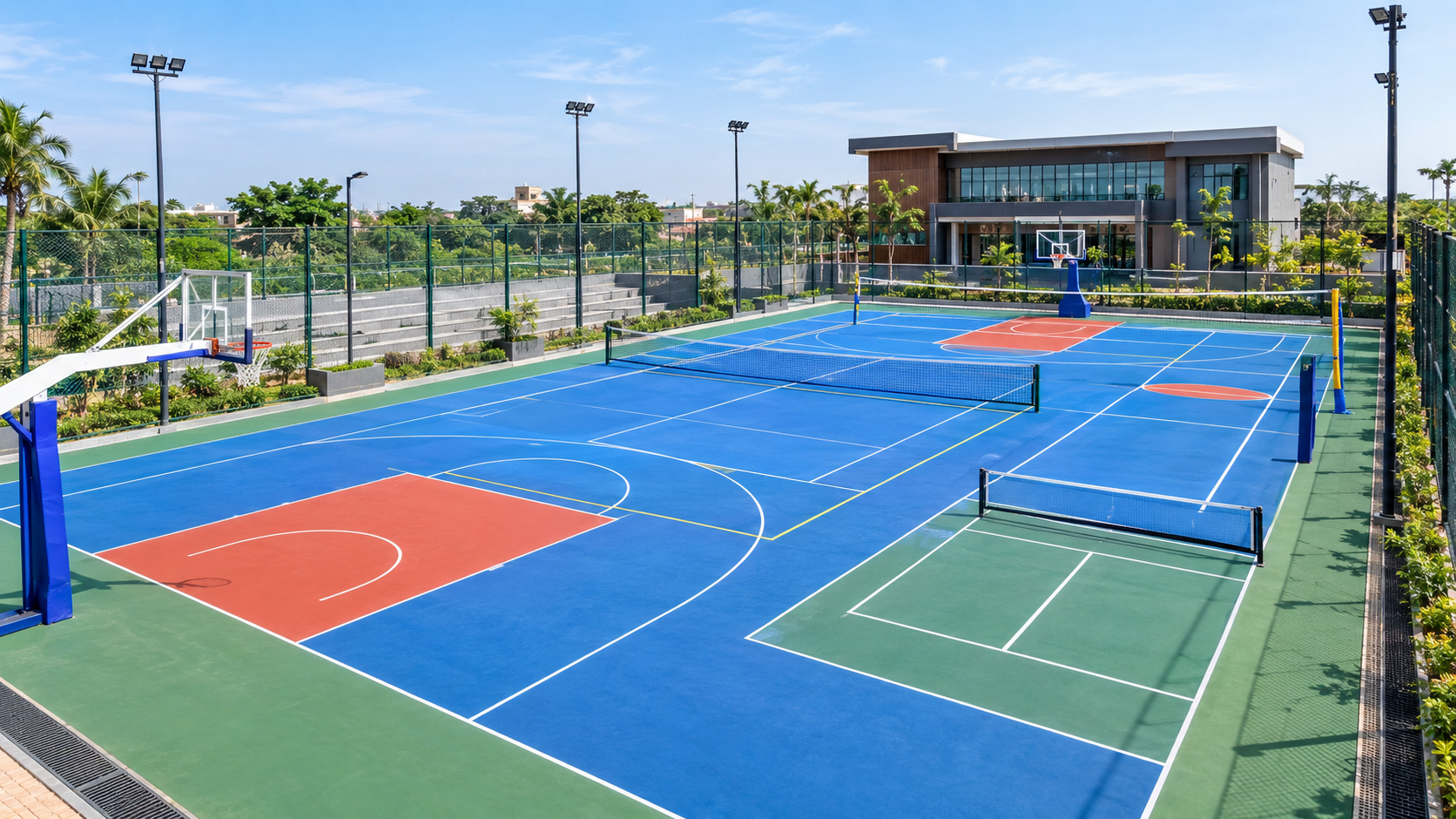
Multi-Purpose Sports Courts
Designed for multiple games such as:
- Basketball
- Volleyball
- Tennis
- Badminton
- Pickleball
- Futsal
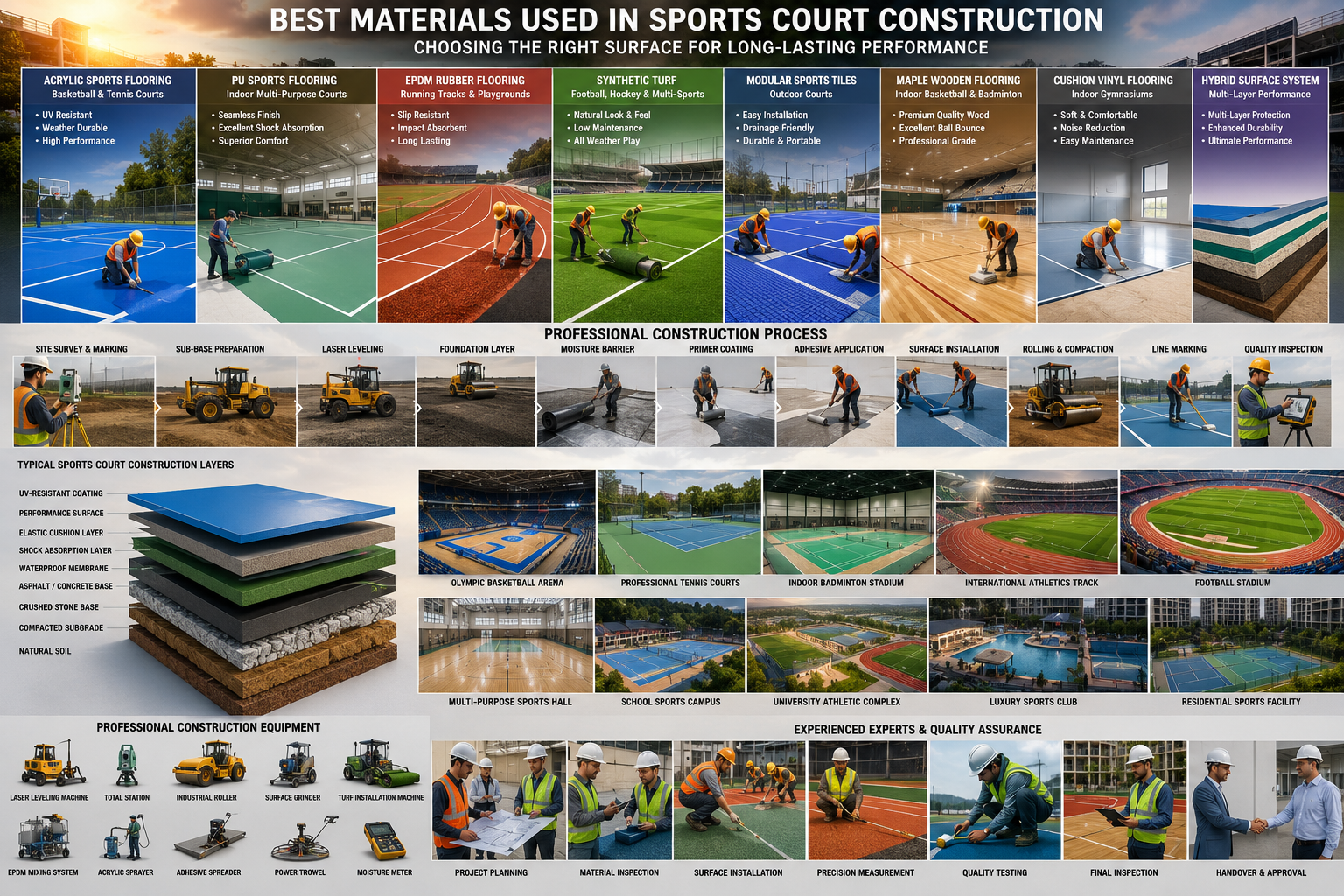
Popular Sports Flooring Options
Selecting the right flooring is one of the most important decisions during construction.
Acrylic Sports Flooring
Ideal for:
- Basketball
- Tennis
- Pickleball
- Multi-sport courts
Benefits:
- UV resistant
- Anti-slip finish
- Excellent durability
- Low maintenance
- Attractive appearance
Polyurethane (PU) Flooring
Suitable for:
- Indoor sports halls
- Basketball
- Volleyball
- Multipurpose arenas
Advantages include:
- High elasticity
- Excellent shock absorption
- Long lifespan
- Comfortable playing experience
EPDM Rubber Flooring
Widely used for:
- Jogging tracks
- Children’s play areas
- Outdoor fitness zones
Features:
- Soft impact absorption
- Slip resistance
- Bright colour options
- Weather resistance
Modular Interlocking Tiles
Increasingly popular because they offer:
- Quick installation
- Easy replacement
- Excellent drainage
- Low maintenance
They are especially suitable for schools, rooftop courts, and recreational facilities.
Synthetic Turf
Used for:
- Football
- Cricket practice nets
- Hockey
- Multi-sports
Advantages:
- Natural grass appearance
- Minimal maintenance
- Year-round usability
Wooden Sports Flooring
Preferred for:
- Professional badminton
- Indoor basketball
- Squash
- Gymnasiums
Benefits:
- Superior player comfort
- Natural shock absorption
- Premium aesthetics
Step-by-Step Sports Court Construction Process
1. Site Inspection
Professional engineers evaluate:
- Soil condition
- Available space
- Water drainage
- Existing surface
- Accessibility
2. Design and Planning
The layout includes:
- Court dimensions
- Orientation
- Drainage system
- Lighting plan
- Fencing layout
- Seating arrangements
3. Excavation
The existing ground is excavated according to engineering specifications.
This removes weak soil and prepares the foundation.
4. Sub-base Construction
A strong granular sub-base provides structural stability.
It generally includes:
- Crushed stone
- Aggregate layers
- Mechanical compaction
- Laser leveling
5. Drainage Installation
A premium sports court should never retain standing water.
Proper drainage includes:
- Surface slope
- Side drains
- Drainage channels
- Water outlets
Inadequate drainage is a leading cause of premature surface failure, particularly in India’s monsoon climate.
6. Concrete or Asphalt Base
Depending on project requirements:
- PCC base
- RCC base
- Asphalt base
The base is cured before flooring installation begins.
7. Surface Preparation
This stage includes:
- Grinding
- Crack repair
- Moisture testing
- Primer application
8. Flooring Installation
The selected sports flooring system is installed using manufacturer-approved methods.
Examples include:
- Acrylic coating systems
- PU flooring
- EPDM installation
- PVC sheets
- Synthetic turf
- Modular sports tiles
9. Court Line Marking
Professional line marking follows international governing-body dimensions for the relevant sport, ensuring consistent play and competition readiness.
10. Equipment Installation
Includes:
- Basketball poles
- Tennis posts
- Volleyball posts
- Badminton poles
- Nets
- Scoreboards
11. Lighting Installation
LED sports lighting improves visibility while reducing energy consumption.
Lighting design considers:
- Lux levels
- Pole height
- Shadow reduction
12. Fencing
Perimeter fencing enhances:
- Player safety
- Ball containment
- Security
13. Quality Inspection
Every completed project should undergo:
- Surface testing
- Flatness inspection
- Line accuracy verification
- Equipment inspection
- Safety checks
International Standards
Professional sports courts follow recognised international guidelines where applicable, such as:
- Basketball
- Tennis
- Badminton
- Volleyball
- Athletics
Following recognised specifications helps ensure consistent dimensions, playing performance, and athlete safety.
Sports Court Construction for Different Sectors
Schools
Schools require:
- Durable flooring
- Low maintenance
- Multi-sport functionality
- Student safety
Universities
University campuses often include:
- Basketball
- Tennis
- Volleyball
- Athletics
- Multi-purpose courts
Sports Academies
Academies prioritize:
- Professional surfaces
- Tournament standards
- Performance consistency
Residential Communities
Popular choices include:
- Basketball
- Pickleball
- Badminton
- Children’s play areas
Corporate Campuses
Companies increasingly invest in sports facilities to promote employee wellness and recreation.
Government Projects
Public sports infrastructure often includes:
- Open stadiums
- Community sports complexes
- Public parks
- District sports centres
Key Features of a Reliable Sports Court Construction Company
When selecting a contractor, evaluate:
- Industry experience
- Qualified engineering team
- High-quality materials
- Proven project portfolio
- Transparent pricing
- Quality control procedures
- Warranty support
- Maintenance services
- Compliance with recognised sports specifications
Common Construction Mistakes to Avoid
Avoid contractors who:
- Skip soil testing
- Ignore drainage
- Use poor-quality materials
- Rush curing times
- Employ untrained installers
- Provide no warranty
- Deliver incomplete documentation
Choosing the lowest quotation can lead to higher long-term repair costs if foundational work is compromised.
Maintenance Tips
Routine maintenance extends the life of any sports court.
Recommended practices include:
- Weekly cleaning
- Pressure washing (when appropriate)
- Crack inspection
- Drain cleaning
- Surface repainting as required
- Equipment tightening
- Regular lighting checks
Preventive maintenance is generally more cost-effective than major repairs.
Latest Trends in Sports Court Construction (2026)
Modern facilities increasingly incorporate:
- Smart LED sports lighting
- Sustainable construction practices
- Water-efficient drainage systems
- Eco-friendly surface materials
- Multi-purpose court designs
- Modular flooring systems
- Digital booking integration
- AI-assisted facility management
- Energy-efficient infrastructure
These innovations improve operational efficiency and the user experience while supporting long-term sustainability.
Benefits of Investing in a Premium Sports Court
A high-quality sports facility provides:
- Improved athlete performance
- Reduced injury risk
- Enhanced property value
- Greater community engagement
- Increased facility usage
- Lower lifecycle maintenance costs
- Long-term durability
- Professional appearance
Whether the project is for a school, university, sports academy, housing society, corporate campus, or government organisation, a professionally built court delivers lasting value.
Frequently Asked Questions
How long does sports court construction take?
Depending on the size, surface type, and weather conditions, most projects take several weeks from site preparation to final handover.
Which flooring is best for outdoor sports courts?
Acrylic flooring and modular interlocking tiles are among the most popular options for outdoor basketball, tennis, pickleball, and multi-purpose courts because of their durability and weather resistance.
What is the most important factor in sports court construction?
A properly engineered foundation and drainage system are essential for long-term durability and playing performance.
Can one court support multiple sports?
Yes. Multi-purpose courts can be designed with colour-coded line markings and compatible equipment for several sports.
How often should a sports court be maintained?
Routine inspections and cleaning should be performed throughout the year, with resurfacing intervals depending on usage, climate, and the flooring system.
Conclusion
As India’s sports ecosystem continues to expand in 2026, investing in a professionally constructed sports court is one of the most valuable long-term decisions for educational institutions, sports academies, residential communities, government organisations, and commercial developers.
The success of any sports court begins with proper planning, quality engineering, premium materials, and skilled installation. From site assessment and drainage to flooring selection and final line marking, every stage contributes to the safety, durability, and performance of the finished facility.
By partnering with an experienced sports court construction company that follows recognised industry standards, uses proven materials, and offers ongoing maintenance support, you can create a world-class sports environment that serves athletes and communities for many years to come.