Introduction
Choosing between an indoor and outdoor sports court is one of the most important decisions when planning a sports facility. Whether you are developing a court for a school, university, sports academy, residential community, fitness center, commercial complex, or government project, the choice directly affects construction costs, player performance, maintenance requirements, and long-term return on investment.
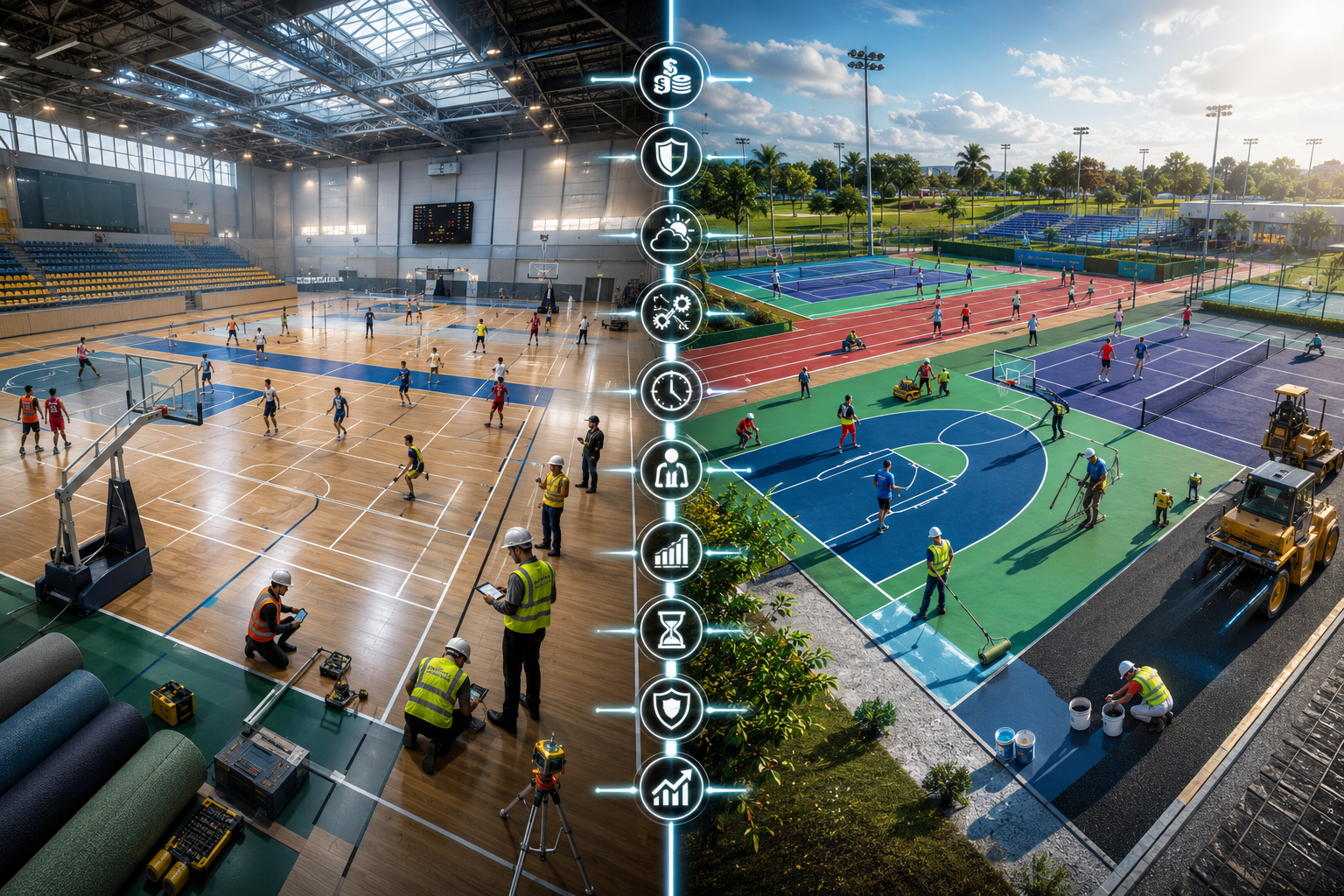
Both indoor and outdoor sports courts have unique advantages and limitations. Indoor courts provide a controlled environment for year-round play, while outdoor courts offer greater flexibility, lower construction costs, and easier accessibility for communities. The right choice depends on several factors, including budget, available space, climate, intended sports, expected usage, and maintenance capabilities.
In 2026, sports infrastructure has evolved significantly with advanced flooring systems, energy-efficient lighting, weather-resistant coatings, and sustainable construction techniques. Modern facilities are designed to deliver superior safety, durability, and athlete performance, regardless of whether they are indoors or outdoors.
This comprehensive guide explores every aspect of indoor and outdoor sports courts, helping you determine which option best suits your needs.https://www.sports-facility.in/sports.php
Understanding Indoor Sports Courts
Indoor sports courts are built inside enclosed structures such as sports halls, gymnasiums, multipurpose arenas, schools, universities, and recreational centers. These courts are protected from rain, wind, sunlight, and extreme temperatures, creating a consistent playing environment.
Indoor courts are commonly used for:
- Basketball
- Badminton
- Volleyball
- Table Tennis
- Futsal
- Squash
- Handball
- Pickleball
- Multi-purpose sports
Because environmental conditions remain stable, indoor courts are often preferred for professional training and competitive tournaments.
Understanding Outdoor Sports Courts
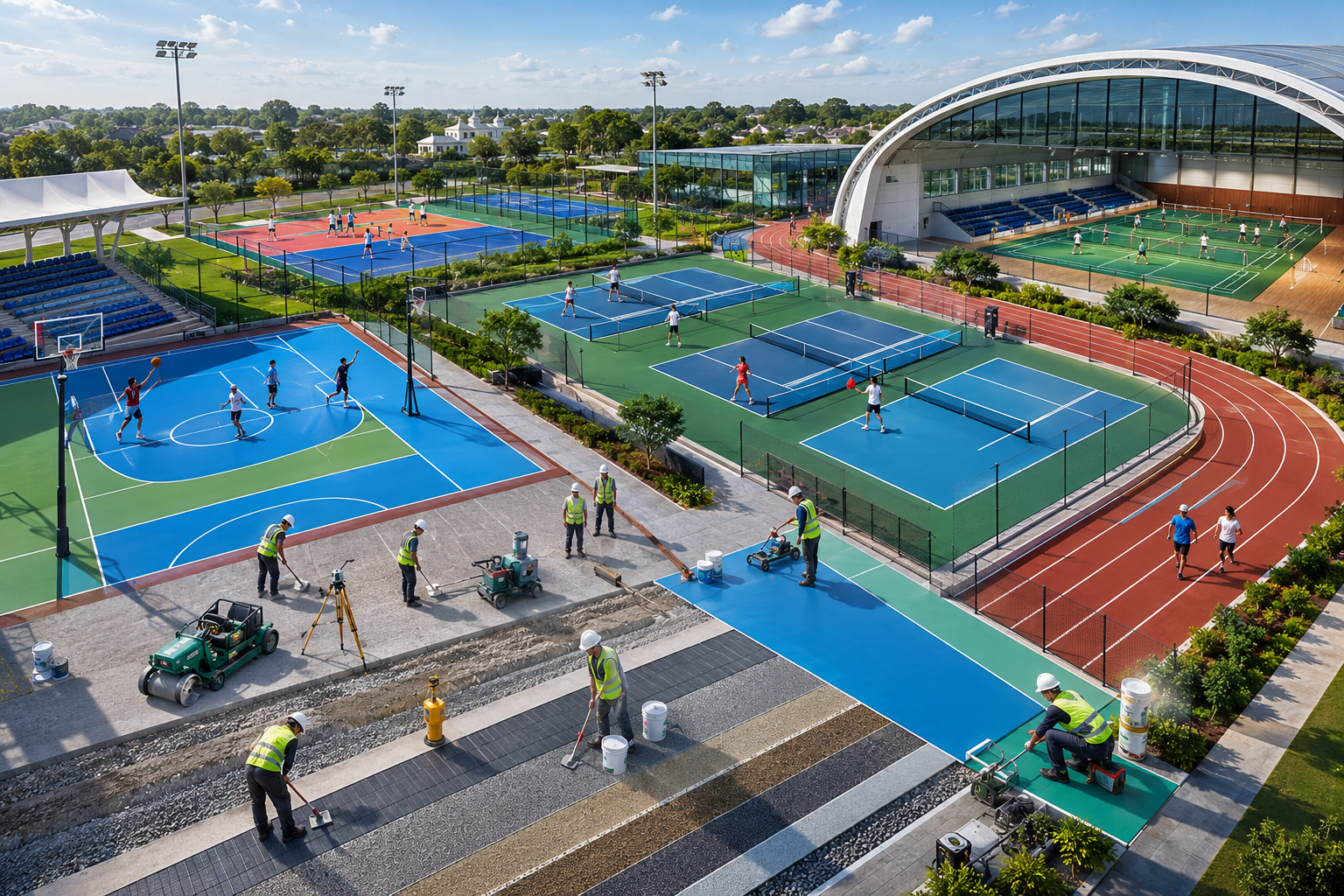
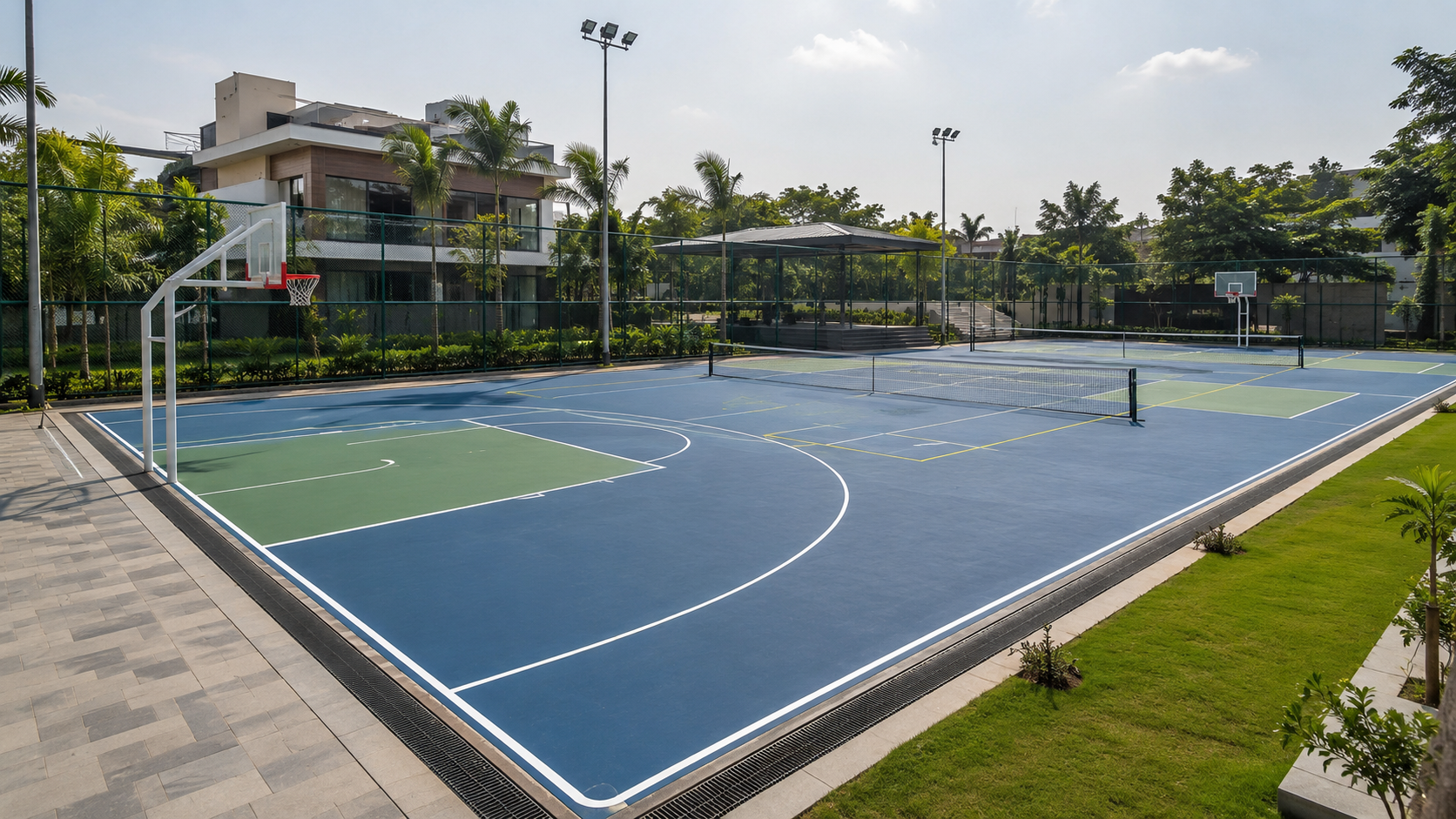
Outdoor sports courts are constructed in open spaces and are designed to withstand changing weather conditions. They are commonly installed in parks, schools, residential societies, sports clubs, public playgrounds, resorts, and community centers.
Outdoor courts are ideal for:
- Basketball
- Tennis
- Pickleball
- Volleyball
- Multi-purpose sports
- Recreational games
Modern outdoor courts use UV-resistant acrylic coatings, durable concrete or asphalt bases, and efficient drainage systems to maximize lifespan.
Key Differences Between Indoor and Outdoor
| Feature | Indoor Court | Outdoor Court |
|---|---|---|
| Weather Protection | Fully protected | Exposed to weather |
| Construction Cost | Higher | Lower |
| Maintenance | Moderate | Higher due to weather |
| Playing Conditions | Consistent | Weather-dependent |
| Flooring Options | PU, PVC, Hardwood | Acrylic, Concrete, Asphalt, Synthetic Turf |
| Lighting | Artificial LED | Natural daylight + LED |
| Lifespan | Longer with maintenance | Depends on climate and care |
| Player Comfort | Excellent | Good to excellent |
Indoor Sports Court Advantages
1. Year-Round Play
One of the biggest advantages of indoor courts is uninterrupted use. Rain, heat, snow, or wind do not affect gameplay.
This makes indoor facilities ideal for sports academies, schools, and professional training centers.
2. Better Player Performance
Indoor environments provide:
- Stable temperature
- Consistent lighting
- Uniform flooring
- No wind interference
Athletes can focus entirely on performance.
3. Longer Flooring Life
Indoor sports flooring experiences less exposure to:
- UV rays
- Rain
- Dust
- Moisture
- Temperature fluctuations
As a result, indoor surfaces generally last longer than outdoor courts.
4. Professional Tournament Standards
Most national and international competitions for badminton, volleyball, and indoor basketball take place on indoor courts because environmental conditions remain consistent.
5. Greater Safety
Indoor flooring systems often include advanced shock-absorbing layers that reduce stress on joints and lower the risk of sports injuries.
Outdoor Sports Court Advantages
1. Lower Construction Cost
Outdoor courts eliminate the need for constructing an enclosed building, significantly reducing project costs.
This makes them ideal for schools, parks, housing societies, and municipalities.
2. Easy Accessibility
courts are generally open to larger communities and encourage recreational , fitness, and social interaction.
3. Natural Ventilation
Fresh air and natural surroundings create an enjoyable playing experience while reducing the need for climate control systems.
4. Flexible Design
Outdoor facilities can easily accommodate multiple sports using different line markings on the same surface.
5. Lower Energy Consumption
Outdoor courts rely primarily on daylight, reducing electricity costs during daytime operations.
Indoor Sports Court Disadvantages
Although indoor courts provide premium playing conditions, they also have limitations.
These include:
- Higher initial construction costs
- Building permits and structural requirements
- Air-conditioning or ventilation expenses
- Higher insurance costs
- Greater investment in lighting systems
Outdoor Sports Court Disadvantages
Outdoor courts face environmental challenges such as:
- Rain interruptions
- Surface fading due to sunlight
- Dust accumulation
- Seasonal maintenance
- Water drainage issues
- Temperature-related expansion and contraction
Proper maintenance minimizes these challenges.
Best Flooring for Sports Courts
Polyurethane (PU) Flooring
PU flooring offers excellent comfort, durability, and seamless performance.
Suitable for:
- Basketball
- Volleyball
- Badminton
- Multipurpose halls
Benefits include:
- Shock absorption
- Anti-slip surface
- Easy cleaning
- Long service life
PVC Sports Flooring
PVC flooring is widely used because it is easy to install and provides consistent athletic performance.
Advantages include:
- Comfortable surface
- Fast installation
- Low maintenance
- Excellent grip
Hardwood Flooring
Hardwood remains the preferred choice for professional indoor basketball courts due to its premium appearance and excellent ball response.
Best Flooring for Sports Courts
Acrylic Sports Flooring
The most popular outdoor sports flooring system.
Benefits include:
- UV resistance
- Weather resistance
- Anti-slip texture
- Excellent ball bounce
- Vibrant colors
Suitable for:
- Basketball
- Tennis
- Pickleball
- Multi-purpose courts
Concrete Courts
Concrete provides a durable and economical base for recreational facilities but may require acrylic coatings to improve comfort and performance.
Asphalt Courts
Asphalt is commonly used for outdoor basketball and tennis courts because it offers flexibility and long-term durability.
Artificial Turf
Ideal for:
- Football
- Cricket
- Training facilities
Artificial turf offers a natural appearance with lower maintenance compared to natural grass.
Construction Process Comparison
Indoor Court Construction
- Site planning
- Building construction
- Foundation work
- Concrete slab installation
- Moisture protection
- Flooring installation
- Court markings
- Lighting installation
- Equipment installation
- Final inspection
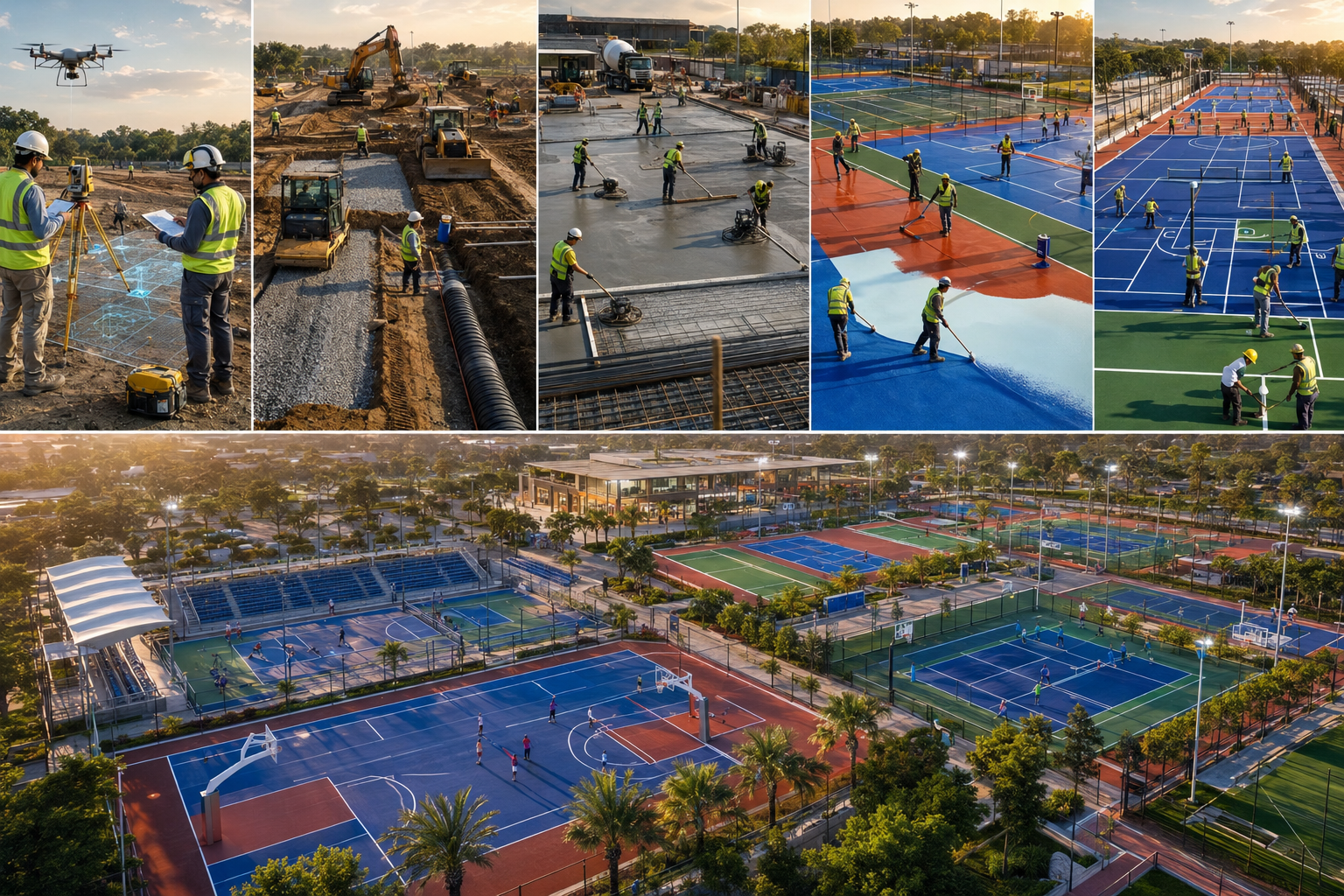
Outdoor Court Construction
- Land surveying
- Excavation
- Soil compaction
- Drainage construction
- Concrete or asphalt base
- Acrylic surface application
- Court markings
- Fencing
- LED lighting
- Final quality inspection
Cost Comparison
Construction costs vary depending on:
- Location
- Court size
- Flooring system
- Structural requirements
- Labor
- Lighting
- Fencing
- Sports equipment
Generally:
Indoor Courts
- Higher capital investment
- Lower weather-related maintenance
- Premium sports experience
Outdoor Courts
- Lower initial investment
- Lower building costs
- Higher weather-related maintenance
A lifecycle cost analysis can help determine the most economical option over time.
Maintenance Comparison
Indoor Courts
Routine maintenance includes:
- Dust removal
- Surface cleaning
- Equipment inspection
- Floor polishing (where applicable)
- Lighting maintenance
Outdoor Courts
Outdoor facilities require:
- Cleaning debris
- Pressure washing
- Crack repairs
- Drainage maintenance
- Repainting court markings
- Surface resurfacing over time
Climate Considerations
Climate plays a major role when selecting a sports court type.
Hot Regions
Outdoor courts should use UV-resistant acrylic coatings and heat-reflective colors.
Heavy Rainfall Areas
Proper drainage systems and water-resistant materials are essential for outdoor facilities.
Cold Regions
Indoor courts provide uninterrupted use regardless of seasonal weather conditions.
Sustainability Trends in 2026
Modern sports facilities increasingly adopt environmentally responsible solutions.
Examples include:
- Solar-powered LED lighting
- Recycled rubber flooring
- Rainwater harvesting
- Low-VOC coatings
- Sustainable construction materials
- Energy-efficient ventilation systems
These innovations reduce operating costs and environmental impact.
Which Sports Are Best Indoors?
Indoor facilities are particularly suitable for:
- Badminton
- Volleyball
- Basketball
- Table Tennis
- Squash
- Gymnastics
- Handball
These sports benefit from consistent lighting and climate control.
Which Sports Are Best Outdoors?
Outdoor facilities are ideal for:
- Tennis
- Basketball
- Pickleball
- Volleyball
- Multi-purpose recreation
- Community sports programs
Outdoor courts maximize space utilization and public accessibility.
How to Choose the Right Option
When deciding between indoor and outdoor sports courts, consider:
- Project budget
- Available land
- Climate conditions
- Intended users
- Frequency of use
- Maintenance resources
- Long-term operating costs
- Future expansion plans
If year-round training and professional competition are priorities, an indoor court is often the best choice. If affordability, community access, and recreational use are the main goals, an outdoor court may be the better investment.
Common Mistakes to Avoid
Avoid these common planning errors:
- Ignoring local climate
- Choosing the wrong flooring
- Poor drainage design
- Inadequate lighting
- Low-quality materials
- Incorrect court dimensions
- Skipping maintenance planning
Proper planning ensures better performance and longer service life.
Frequently Asked Questions
Which type of sports court lasts longer?
Indoor sports courts generally have a longer lifespan because they are protected from weather and UV exposure. However, well-maintained outdoor courts can also provide many years of reliable use.
Are outdoor courts less expensive?
Yes. Outdoor courts usually require a lower initial investment because they do not need an enclosed building, HVAC systems, or extensive structural work.
Which flooring is best for outdoor courts?
Acrylic sports flooring is one of the most popular choices due to its durability, weather resistance, slip resistance, and low maintenance.
Can one court support multiple sports?
Yes. Multi-purpose courts can be designed with different line markings and equipment to accommodate basketball, badminton, volleyball, pickleball, and other recreational activities.
Which option is better for schools?
The choice depends on budget and usage. Schools with year-round sports programs may benefit from indoor courts, while outdoor courts are a cost-effective solution for everyday physical education and community activities.
Conclusion
Both indoor and outdoor sports courts offer significant advantages, and the right choice depends on your specific goals, budget, location, and expected level of use. Indoor courts provide a controlled environment, premium playing conditions, and year-round usability, making them ideal for competitive sports and professional training. Outdoor courts, on the other hand, are more affordable to build, easier to access, and well-suited for schools, parks, residential communities, and recreational facilities.
By carefully evaluating factors such as climate, available space, maintenance requirements, and long-term operating costs, you can select the sports court that delivers the best value and performance. Whether you choose an indoor or outdoor facility, investing in quality construction, durable flooring, efficient drainage, and regular maintenance will ensure a safe, attractive, and high-performing sports environment for many years to come.