Introduction
A professionally designed sports facility requires more than just a playing surface. Proper site planning, civil construction, drainage, sports flooring, court dimensions, safety features, and finishing all play an important role in creating a reliable sports environment. This is where an experienced Sports Court Builder Company becomes essential.
Whether the project is for a school, college, sports academy, residential society, hotel, club, fitness centre, corporate campus, or commercial sports complex, professional sports court construction helps ensure better performance, safety, durability, and long-term usability.
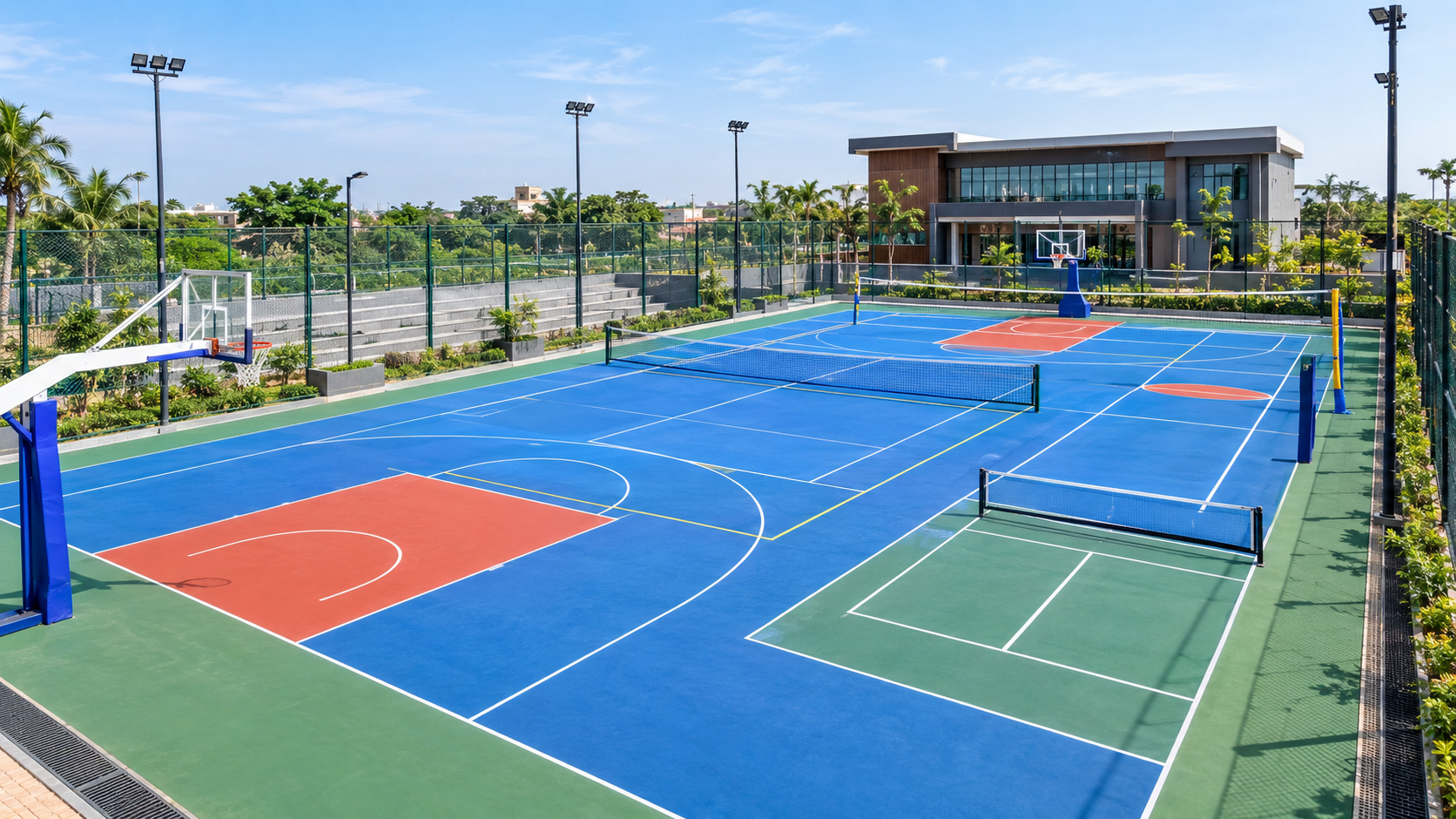
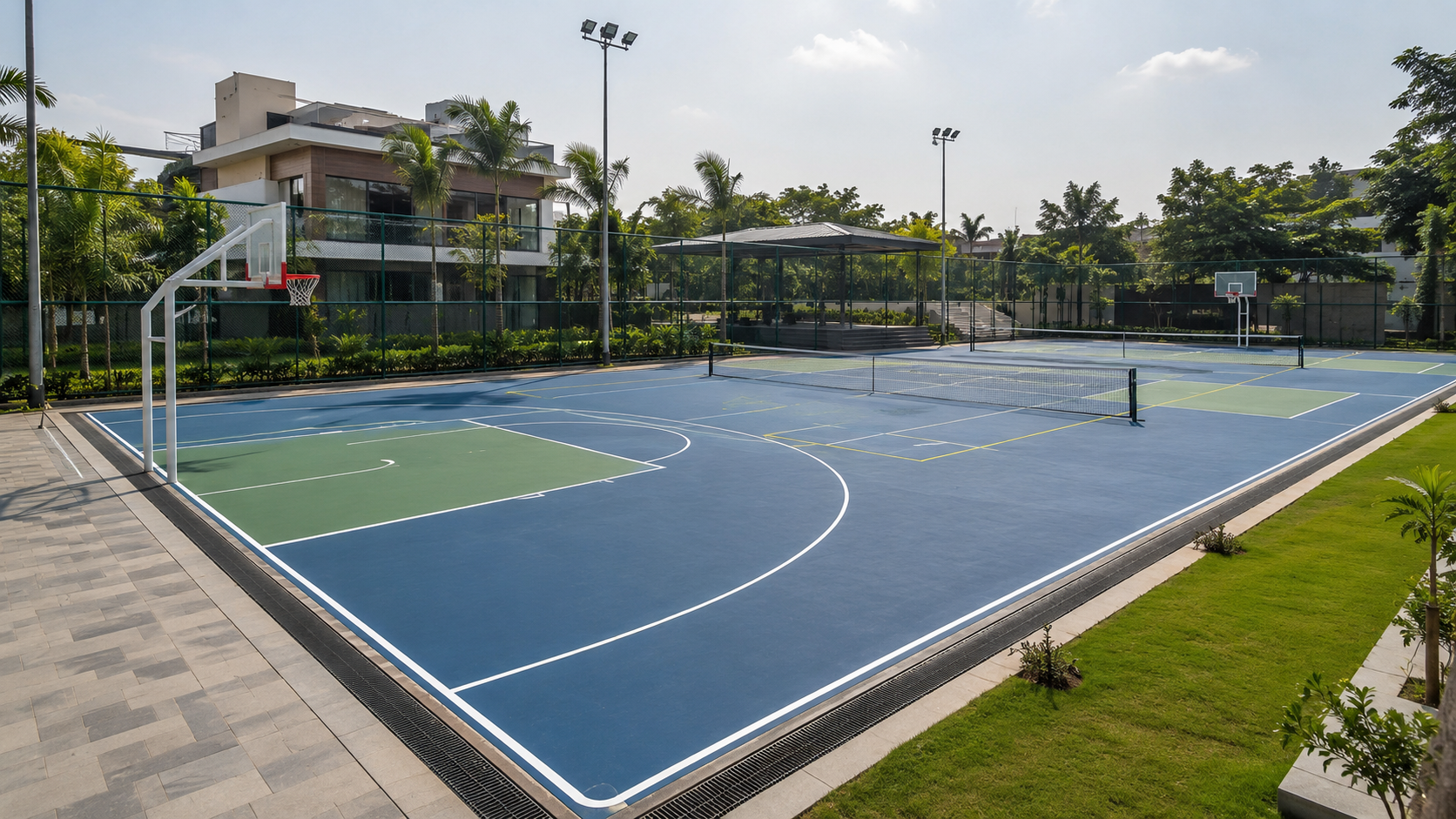
Modern sports facilities can be designed for badminton, basketball, tennis, volleyball, pickleball, skating, futsal, athletics, and other recreational activities. A specialized Sports Court Builder Company can manage the complete process from initial site assessment and design to flooring installation, line marking, equipment installation, and final finishing.
What Is a Sports Court Builder Company?
A Sports Court Builder Company is a professional organization specializing in the planning, construction, surfacing, and development of sports courts and recreational facilities.
Depending on the project requirements, a sports court builder may provide services such as:
- Site inspection and feasibility assessment
- Court layout and design
- Civil foundation work
- Ground preparation and leveling
- Drainage development
- Concrete or asphalt base construction
- Sports flooring installation
- Acrylic and synthetic surface application
- PU and EPDM flooring solutions
- Court line marking
- Sports equipment installation
- Lighting infrastructure
- Fencing and safety systems
- Maintenance and resurfacing
The objective is to create a playing surface that is safe, functional, visually appealing, and suitable for regular sporting activities.
Why Choose a Professional Sports Court Builder Company?
Building a sports court without proper technical planning can result in uneven surfaces, poor drainage, inadequate traction, premature flooring damage, and inconsistent playing conditions.
An experienced Sports Court Builder Company understands the technical requirements involved in sports infrastructure development. Professional construction helps address important factors such as surface performance, impact absorption, water drainage, court dimensions, material selection, and environmental conditions.
A professionally constructed court can provide:
- Better player safety
- Consistent playing performance
- Improved surface durability
- Proper ball response
- Better traction
- Effective water drainage
- Reduced maintenance requirements
- Professional appearance
- Longer service life
Types of Sports Courts Built by Professional Contractors
A reliable sports court construction company can develop different types of courts depending on the intended sport, location, budget, and usage requirements.
1. Badminton Courts
Badminton requires a carefully designed playing surface that provides suitable grip, cushioning, and consistent movement.
Sports court builders can install PVC, PU, synthetic, or other specialized badminton flooring systems depending on whether the facility is indoor or outdoor.
Proper court construction also includes accurate dimensions, line markings, net-post installation, lighting, and safety clearance.
2. Basketball Courts
Basketball courts require durable surfaces capable of handling frequent running, jumping, sudden stops, and directional changes.
Depending on the project, basketball courts may use acrylic, PU, synthetic, or other sports flooring systems. Professional builders also focus on proper sub-base preparation, surface leveling, drainage, court markings, hoops, fencing, and lighting.
3. Tennis Courts
Tennis court construction requires careful attention to surface consistency and drainage. Outdoor tennis courts must also withstand sunlight, rain, temperature variations, and regular player movement.
A Sports Court Builder Company can develop acrylic or synthetic tennis court surfaces with appropriate cushioning and traction characteristics.
4. Pickleball Courts
Pickleball has become increasingly popular in residential communities, clubs, schools, fitness facilities, and commercial sports venues.
Professional pickleball court construction typically involves:
- Proper site preparation
- Accurate court dimensions
- Level base construction
- Acrylic or synthetic sports flooring
- Precise line marking
- Professional net installation
- Adequate drainage
- Suitable lighting
The surface should support controlled movement and provide reliable traction during fast rallies.
5. Volleyball Courts
Volleyball courts can be developed for indoor or outdoor applications. Flooring selection is particularly important because players frequently jump, land, and move laterally.
Professional sports flooring can help create a more comfortable playing environment while supporting regular training and recreational use.
6. Futsal and Multi-Sport Courts
Multi-purpose sports areas are increasingly being developed in schools, residential communities, clubs, and commercial facilities.
A single facility can be planned for multiple activities such as:
- Futsal
- Football training
- Basketball
- Volleyball
- Tennis
- Badminton
- Pickleball
A professional builder can plan court markings and surface specifications so that the available space is utilized efficiently.
7. Skating Tracks
Skating tracks require smooth, durable, and carefully finished surfaces. Proper construction is important for maintaining controlled movement and minimizing surface irregularities.
Professional skating track construction may include specialized synthetic surfaces, accurate leveling, drainage planning, safety zones, and appropriate finishing.
Sports Court Construction Process
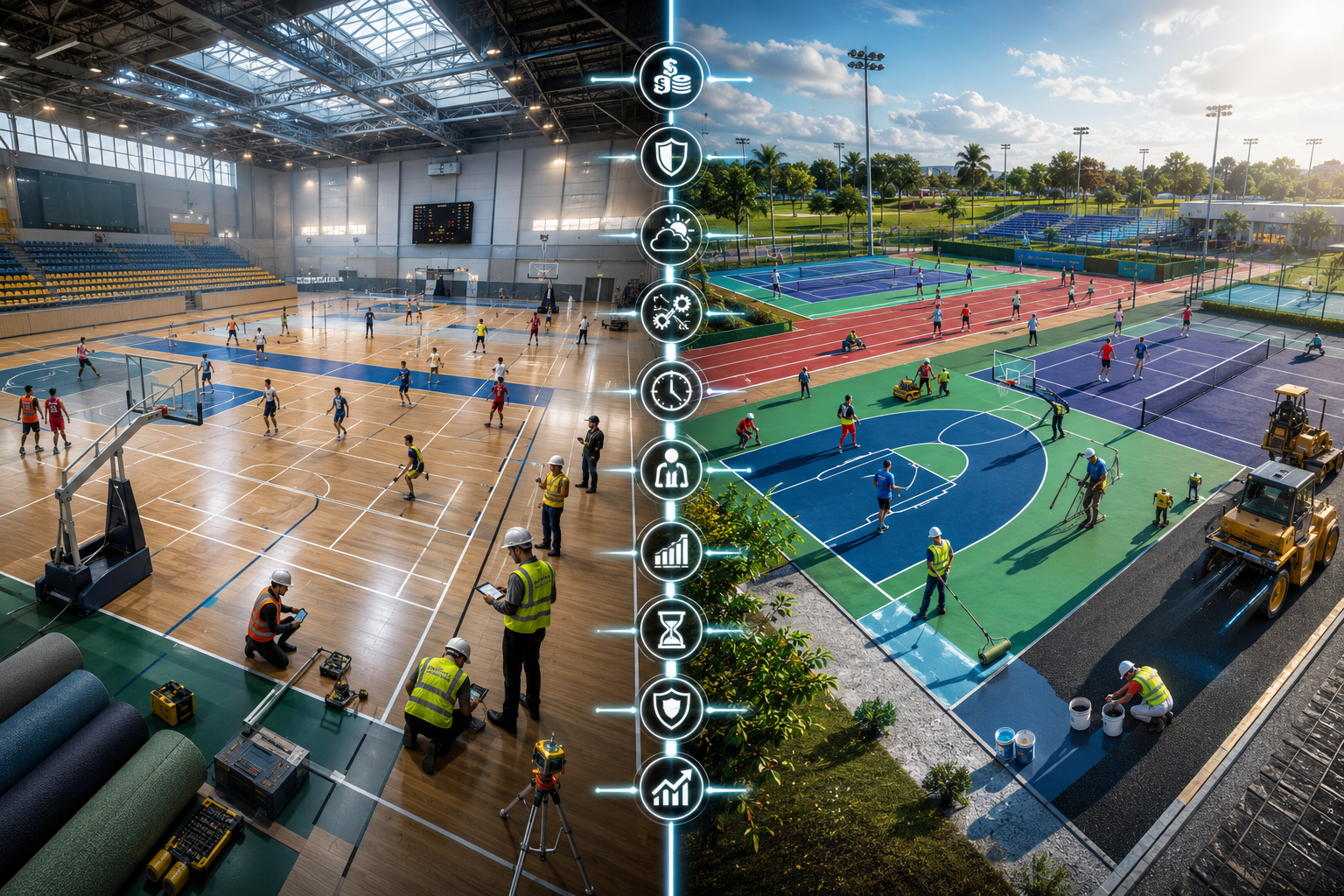
A professional Sports Court Builder Company generally follows a systematic construction process to achieve consistent results.
Site Inspection
The project begins with a detailed inspection of the proposed site.
The builder evaluates:
- Available space
- Existing ground conditions
- Soil characteristics
- Surface levels
- Drainage conditions
- Accessibility
- Surrounding structures
- Intended sport
- Expected usage
This information helps determine the appropriate construction approach.
Court Planning and Design
The next stage involves preparing the court layout according to the requirements of the selected sport.
The design considers:
- Playing area
- Safety zones
- Run-off areas
- Equipment placement
- Spectator areas
- Lighting
- Fencing
- Drainage
- Access pathways
Good planning helps avoid costly modifications during construction.
Ground Preparation
The existing surface is prepared before the main construction work begins.
Depending on the site, this may involve excavation, removal of unsuitable material, filling, compaction, and leveling.
Proper ground preparation is essential because the performance of the finished sports surface depends heavily on the stability of the underlying structure.
Base and Sub-Base Construction
A suitable sub-base is developed to provide structural stability.
Materials and construction methods vary according to the type of sports court, soil conditions, climate, and intended use.
The base must be properly compacted and leveled before the sports flooring system is installed.
Drainage Installation
Water management is particularly important for outdoor sports courts.
Poor drainage can lead to:
- Water accumulation
- Surface deterioration
- Cracking
- Slippery conditions
- Algae growth
- Reduced flooring life
A professional builder evaluates the site gradient and develops suitable drainage solutions to help move rainwater away from the playing surface.
Surface Leveling
The playing surface must be accurately leveled before sports flooring is applied.
Even minor surface irregularities can affect player movement and ball behavior. Professional leveling and surface preparation help create a smoother and more consistent playing environment.
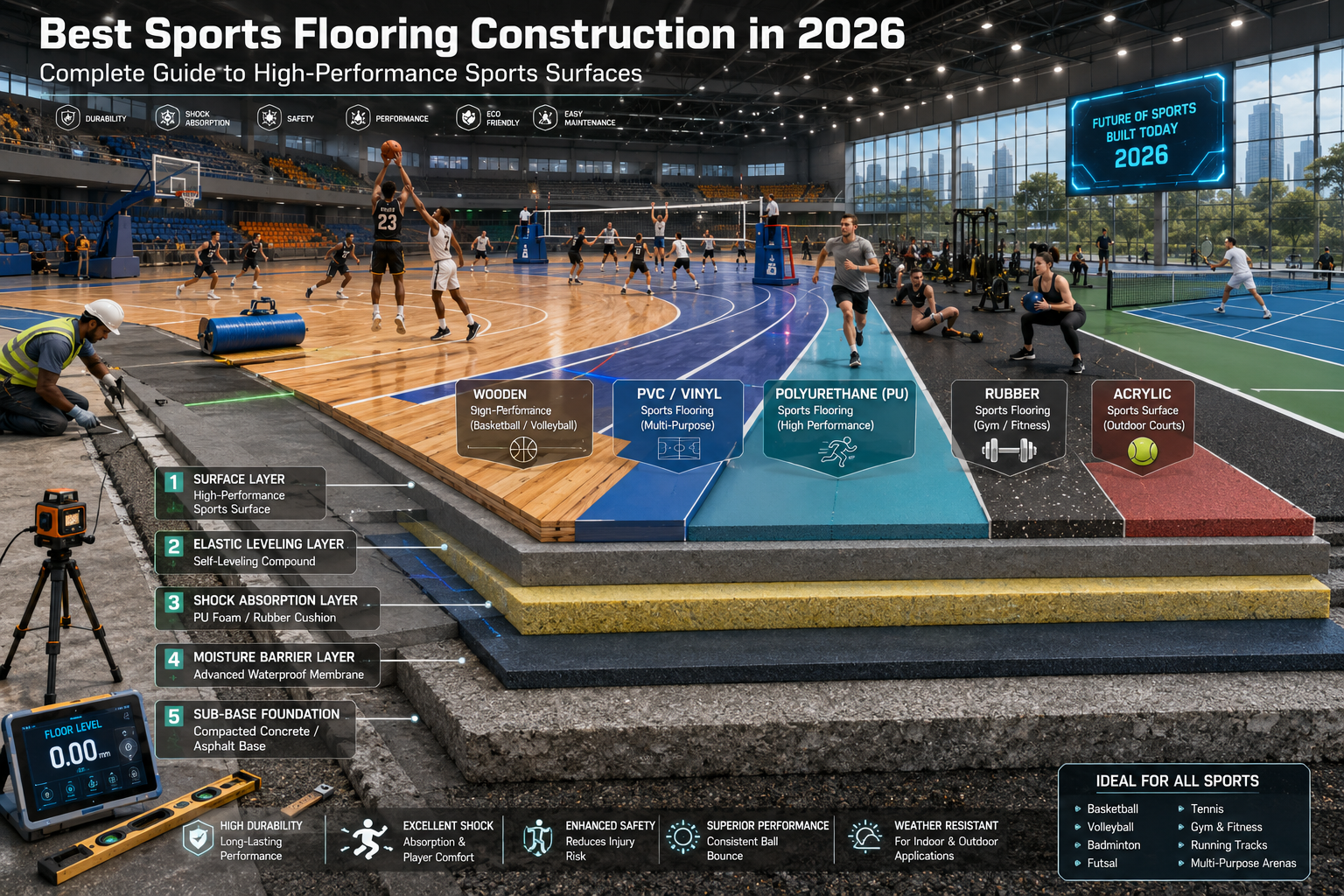
Sports Flooring Installation
The flooring system is selected according to the sport and location.
Common options include:
- Acrylic sports flooring
- PU sports flooring
- EPDM systems
- PVC sports flooring
- Synthetic rubber flooring
- Cushioned sports surfaces
Each system has different performance characteristics, making professional material selection important.
Court Line Marking
After the playing surface has been completed, precise court markings are applied.
Accurate line marking ensures that players can clearly identify:
- Boundaries
- Service areas
- Centre lines
- Goal areas
- Key zones
- Playing sections
The marking system depends on the specific sport.
Sports Equipment Installation
The final construction stage may include installation of:
- Nets
- Basketball hoops
- Goal posts
- Volleyball posts
- Tennis equipment
- Fencing
- Protective padding
- Benches
- Scoreboards
Equipment should be positioned accurately and securely.
How to Select the Right Sports Flooring?
Flooring is one of the most important components of any sports facility.
The right flooring should be selected according to:
Sport Requirements
Different sports involve different types of movement. A basketball court, badminton court, and tennis court do not necessarily require the same surface.
Indoor or Outdoor Location
Outdoor surfaces need to handle sunlight, rain, humidity, and temperature changes. Indoor courts may have different requirements related to cushioning, acoustics, and ventilation.
Player Safety
Sports flooring should provide appropriate traction and impact characteristics to support comfortable movement.
Durability
A high-quality surface should withstand regular foot traffic and repeated sporting activity without rapid deterioration.
Maintenance
The cleaning and maintenance requirements of the flooring should also be considered during project planning.
Importance of Proper Drainage in Outdoor Sports Courts
Drainage is sometimes overlooked during sports court construction, but it can significantly affect the life of an outdoor facility.
Rainwater that remains on the playing surface can damage flooring systems and create unsafe conditions.
An experienced Sports Court Builder Company considers:
- Site slope
- Surface gradients
- Drainage channels
- Perimeter drains
- Water outlets
- Rainwater flow
- Local weather conditions
Effective drainage helps keep the court usable after rainfall and protects the underlying construction.
Safety Features for Sports Court Construction
Safety should be incorporated into the design rather than treated as an afterthought.
Depending on the facility, safety features can include:
- Shock-absorbing flooring
- Anti-slip surfaces
- Adequate run-off areas
- Protective fencing
- Corner protection
- Padding around equipment
- Proper lighting
- Clearly visible markings
- Safe access pathways
- Effective drainage
These features can create a more comfortable and controlled environment for athletes and recreational users.
Sports Court Construction for Schools and Colleges
Educational institutions increasingly use sports infrastructure to support physical education, athletic training, competitions, and recreational activities.
A professional sports court builder can create facilities suitable for students of different age groups while making efficient use of available campus space.
Schools and colleges can consider:
- Basketball courts
- Badminton courts
- Tennis courts
- Volleyball courts
- Pickleball courts
- Futsal courts
- Multi-purpose courts
- Running tracks
- Skating facilities
The design should consider both daily student use and long-term institutional requirements.
Sports Courts for Residential Societies
Residential communities can benefit significantly from professionally constructed sports facilities.
Available spaces such as open grounds, terraces, podiums, and recreational areas can potentially be converted into useful sporting environments.
Common residential sports facilities include:
- Badminton courts
- Pickleball courts
- Basketball courts
- Tennis courts
- Skating areas
- Multi-purpose courts
A professional builder can customize the design according to available space and community requirements.
Commercial Sports Facilities
Commercial sports centres require surfaces that can handle frequent usage and high player turnover.
For these projects, durability, maintenance, appearance, and user experience are particularly important.
Professional construction can help create facilities suitable for:
- Sports academies
- Training centres
- Fitness clubs
- Sports complexes
- Hotels
- Resorts
- Corporate facilities
- Recreational centres
A well-designed sports facility can also improve the overall appearance and usability of a commercial property.
Factors Affecting Sports Court Construction Cost
The cost of constructing a sports court varies considerably depending on the project.
Important factors include:
- Court size
Larger courts require more construction materials and labor. - Site condition
Uneven or unsuitable ground may require additional civil work. - Flooring system
Acrylic, PU, PVC, EPDM, and other systems have different costs. - Indoor or outdoor construction
Indoor facilities may involve additional structural and building requirements. - Drainage requirements
Outdoor projects may require extensive water-management infrastructure. - Lighting
Professional sports lighting can add to the overall project cost. - Fencing and accessories
Perimeter fencing, nets, goals, hoops, and other equipment affect the final budget. - Customization
Branding, special colors, spectator seating, landscaping, and premium finishes can increase the investment.
For an accurate quotation, the site should be inspected and the project requirements evaluated by the sports court contractor.
Maintenance of Sports Courts
Even a professionally constructed sports court requires regular maintenance.
A suitable maintenance routine may include:
- Regular surface cleaning
- Removal of leaves and debris
- Inspection for cracks
- Checking drainage systems
- Cleaning drainage channels
- Inspecting court markings
- Checking sports equipment
- Repairing damaged areas
- Periodic resurfacing where required
The maintenance frequency depends on usage, environmental conditions, and flooring type.
Benefits of Working with an Experienced Sports Court Builder Company
Choosing an experienced contractor offers several advantages.
Professional Planning
Experienced builders can identify technical requirements before construction begins.
Better Material Selection
They can recommend flooring and construction materials according to the sport, site, climate, and expected usage.
Consistent Surface Quality
Professional preparation and installation help create a more uniform playing surface.
Improved Safety
Proper drainage, flooring, equipment installation, and court layout contribute to safer sporting conditions.
Long-Term Durability
Correct construction methods can reduce premature surface damage and unnecessary repair costs.
Customized Solutions
Sports courts can be designed according to the available space, sport, budget, and aesthetic requirements.
Why Quality Materials Matter
Sports courts experience repeated impact, friction, movement, and environmental exposure. Using unsuitable materials can result in early deterioration.
Quality construction materials can help improve:
- Surface durability
- Traction
- Weather resistance
- Appearance
- Player comfort
- Maintenance performance
The material selection should always be based on the technical requirements of the specific project rather than simply choosing the cheapest option.
How to Choose the Best Sports Court Builder Company?
Before selecting a contractor, consider the following factors:
Experience
Look for a company with experience in constructing the specific type of court required.
Portfolio
Review previous projects to understand the quality and range of work delivered.
Technical Expertise
The contractor should understand civil construction, drainage, sports flooring, court dimensions, and equipment installation.
Material Quality
Ask about the flooring systems, construction materials, and installation methods proposed for the project.
Project Scope
Clarify whether the company handles the complete project or only specific components such as flooring.
After-Sales Support
Maintenance, repair, resurfacing, and technical support can be valuable after project completion.
Frequently Asked Questions
What does a Sports Court Builder Company do?
A Sports Court Builder Company plans and constructs sports facilities, including civil work, surface preparation, sports flooring, court marking, equipment installation, drainage, fencing, and related infrastructure.
Which sports courts can a professional builder construct?
Depending on its expertise, a builder may construct badminton, basketball, tennis, pickleball, volleyball, futsal, skating, and multi-purpose sports courts.
Which flooring is best for a sports court?
There is no single flooring system suitable for every sport. Acrylic, PU, PVC, EPDM, and synthetic surfaces can be appropriate depending on the sport, location, usage, and performance requirements.
How long does sports court construction take?
The timeline depends on the court type, site condition, size, construction method, weather, flooring system, and additional infrastructure.
Can sports courts be constructed in residential societies?
Yes. Residential societies can develop badminton, pickleball, basketball, tennis, skating, and multi-purpose courts based on available space and local requirements.
Is drainage necessary for outdoor sports courts?
Yes. Proper drainage helps prevent water accumulation and protects the playing surface and underlying construction from moisture-related damage.
Can an existing sports court be renovated?
In many cases, existing courts can be repaired, resurfaced, or upgraded. The appropriate solution depends on the condition of the existing base and surface.
Conclusion
A professionally developed sports facility begins with proper planning and expert construction. Choosing an experienced Sports Court Builder Company can help ensure that every important component—from ground preparation and drainage to flooring, court marking, equipment, and finishing—is handled correctly.
Whether you are developing a sports facility for a school, college, residential society, sports academy, club, hotel, corporate campus, or commercial sports centre, professional construction can provide a safer, more durable, and better-performing environment.
The right combination of technical expertise, quality materials, accurate construction, and regular maintenance can transform an ordinary open space into a long-lasting sports facility designed for training, competition, fitness, and recreation.