Introduction
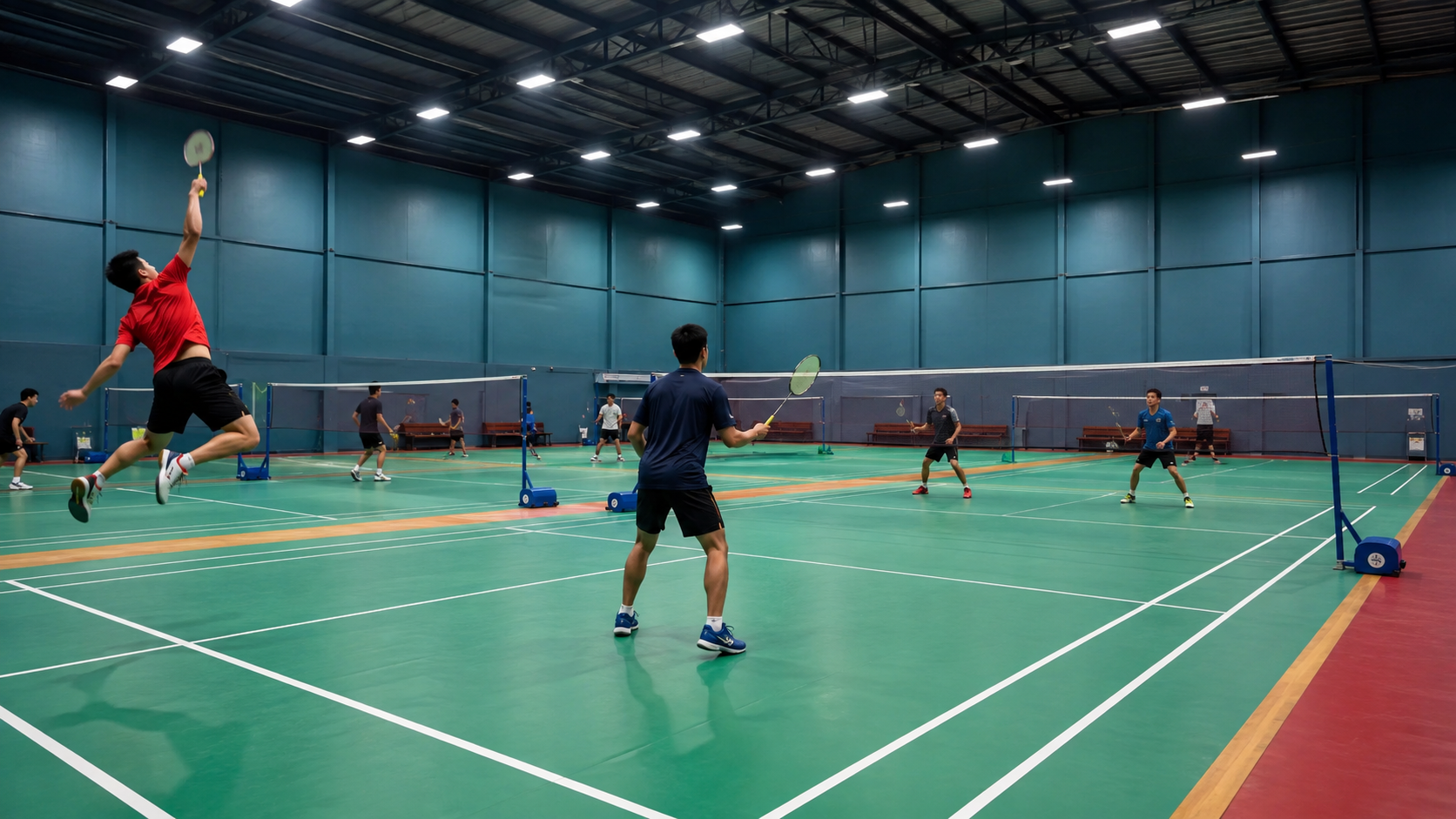
Badminton is a fast-paced indoor sport that demands excellent movement, balance, grip, and reaction speed. While the quality of rackets, shuttlecocks, lighting, and nets matters, the badminton court flooring is one of the most important factors affecting player safety and performance.
The right flooring provides controlled traction, shock absorption, consistent foot movement, and a comfortable playing surface. On the other hand, an unsuitable floor can increase the risk of slipping, fatigue, joint stress, and sports-related injuries.
For schools, sports academies, badminton clubs, residential communities, fitness centers, and professional indoor sports facilities, choosing the right flooring system requires more than selecting a visually attractive surface. Factors such as surface material, cushioning, grip, durability, maintenance, installation quality, and expected usage should all be considered.
This guide explains how to choose the best badminton court flooring for indoor sports facilities, the major flooring options available, their advantages, and the factors that should influence your final decision.
Why Badminton Court Flooring Is So Important
Badminton involves frequent jumping, sudden stops, rapid direction changes, lunges, and explosive movements. Players constantly transfer body weight between their feet while attempting to maintain balance and control.
A properly designed badminton flooring system helps create a safer and more predictable playing environment.
1. Player Safety
Safety should be the first priority when selecting sports flooring. The surface should provide adequate grip without being excessively abrasive.
A floor with poor traction can cause unwanted sliding, while an overly sticky surface can restrict natural foot movement. A professionally designed sports floor provides controlled slip resistance suitable for badminton.
2. Shock Absorption
Repeated jumping and landing place stress on the ankles, knees, hips, and other parts of the body.
A suitable cushioned flooring system can absorb a portion of impact energy and provide a more comfortable surface for regular training and competition.
3. Consistent Footwork
Badminton players rely heavily on precise footwork. The floor should provide predictable traction across the entire court.
Uneven grip, damaged areas, or inconsistent surface conditions can affect movement and confidence during play.
4. Better Playing Experience
A professional badminton court should feel comfortable underfoot. Proper flooring contributes to smoother movement, controlled acceleration, and better overall court performance.
5. Long-Term Durability
Indoor sports facilities can experience heavy daily traffic. A commercial badminton flooring system must withstand repeated use while maintaining its performance characteristics.
Popular Types of Badminton Court Flooring
There is no single flooring solution suitable for every facility. The ideal choice depends on the building, budget, expected usage, maintenance requirements, and performance objectives.
The most commonly considered options include PVC sports flooring, synthetic vinyl flooring, polyurethane systems, wooden sports flooring, and specialized badminton mat systems.
1. PVC Badminton Court Flooring
PVC sports flooring is one of the most popular choices for indoor badminton facilities.
These floors are manufactured in multiple layers and can incorporate cushioning systems designed specifically for sports applications. The surface layer provides traction and wear resistance, while the underlying layers contribute to comfort and impact management.
Advantages of PVC Sports Flooring
- Good shock absorption
- Controlled grip
- Comfortable underfoot
- Easy maintenance
- Available in different thicknesses
- Suitable for clubs and academies
- Professional appearance
- Designed for heavy indoor usage
PVC flooring is particularly suitable for facilities that require a practical balance between performance, durability, and maintenance.
2. Synthetic Vinyl Sports Flooring
Synthetic vinyl flooring is another common option for indoor badminton courts. Modern sports vinyl products can be engineered with multi-layer construction to provide cushioning, resilience, and surface protection.
The surface can also be designed to support consistent player movement.
For facilities where several indoor sports are played, synthetic vinyl flooring may provide flexibility because the same sports hall can accommodate badminton, table tennis, fitness activities, and other recreational uses.
3. Wooden Sports Flooring
Wooden sports floors have traditionally been associated with premium indoor sports facilities.
A professionally installed wooden sports floor can provide excellent playing characteristics, natural appearance, and effective impact management when constructed as a complete sports flooring system.
However, wood requires careful installation and ongoing maintenance. Moisture, temperature fluctuations, heavy equipment, and poor maintenance can affect its long-term performance.
Wood flooring is therefore more appropriate for facilities that have the budget and maintenance resources necessary to protect a premium sports surface.
4. PU Sports Flooring
Polyurethane, commonly known as PU, can be used in specialized indoor sports flooring systems.
PU flooring can provide a seamless playing surface, good resilience, and a professional finish. It is often considered for multipurpose indoor sports facilities where durability and performance are important.
The exact performance of a PU system depends heavily on its construction, substrate preparation, thickness, cushioning layer, and installation quality.
5. Badminton Court Mats
Portable or semi-permanent badminton mats are another practical solution, especially for multipurpose halls.
These systems can be installed over a suitable base floor and removed or repositioned when required.
They are particularly useful for facilities where the same indoor hall needs to accommodate different activities.
However, the underlying floor should be properly prepared and level. A sports mat cannot compensate for a seriously uneven or damaged substrate.
Key Factors to Consider Before Choosing Badminton Flooring
Selecting a floor based only on price can lead to performance and maintenance problems later. Consider the following factors before making a decision.
1. Shock Absorption
Shock absorption is one of the most important technical characteristics of indoor badminton flooring.
Look for a system that provides an appropriate level of cushioning without making the court feel unstable. Excessive softness can affect movement, while insufficient cushioning can make repetitive jumping and landing less comfortable.
The ideal balance depends on the type of flooring system and the requirements of the facility.
2. Slip Resistance and Grip
Badminton requires fast lateral movement and sudden changes in direction.
The floor should provide reliable traction while allowing players to move naturally. The surface should not become dangerously slippery because of dust, moisture, or poor cleaning.
At the same time, excessive grip can interfere with foot rotation.
A professional sports flooring installer should select a surface designed specifically for indoor sports rather than using ordinary commercial flooring.
3. Surface Uniformity
The playing surface should be smooth and consistent throughout the court.
Uneven areas, joints, bubbles, cracks, or installation defects can interfere with movement and create potential hazards.
Proper subfloor preparation is therefore just as important as the visible flooring material.
4. Durability
Consider how frequently the court will be used.
A residential community with occasional badminton sessions may have different requirements from a commercial badminton academy operating for many hours every day.
For high-traffic facilities, select a commercial-grade sports flooring system designed for repeated use.
5. Maintenance Requirements
Indoor badminton floors need regular cleaning to preserve grip and appearance.
Choose a system that can be maintained using appropriate cleaning procedures and does not require complicated daily treatment.
Dust should be removed regularly because accumulated dust can reduce traction and affect player safety.
6. Moisture Resistance
Indoor does not always mean moisture-free.
Sports halls may be exposed to humidity, cleaning water, condensation, or moisture from surrounding areas.
The flooring system and subfloor should be selected according to the environmental conditions of the building.
7. Court Marking Compatibility
Badminton court lines must be highly visible and accurately positioned.
The flooring system should allow professional court markings that remain clear with regular use.
If the hall is multipurpose, different court markings may need to coexist without creating visual confusion.
8. Installation Quality
Even premium flooring can perform poorly if installed incorrectly.
The base must be properly prepared, cleaned, levelled, and inspected before installation. Depending on the flooring system, moisture testing and surface preparation may also be necessary.
Professional installation helps reduce problems such as bubbles, loose sections, uneven joints, premature wear, and surface defects.
What Is the Best Flooring for a Badminton Court?
For many modern indoor badminton facilities, commercial-grade PVC or synthetic sports flooring with an appropriate cushioning system is a practical choice.
It offers a strong combination of player comfort, controlled traction, durability, maintenance convenience, and professional appearance.
However, the “best” floor depends on the facility.
For example:
- Badminton academies: durable cushioned PVC or specialized sports mat systems can be suitable.
- Premium sports centers: high-performance PVC, PU, or engineered wooden systems may be considered.
- Multipurpose halls: synthetic sports flooring or removable badminton mats can provide greater flexibility.
- Schools and colleges: durable, easy-to-maintain sports flooring can offer a practical solution.
- Residential sports facilities: low-maintenance synthetic flooring may be preferable.
The correct choice should be based on actual usage rather than simply selecting the most expensive material.
Importance of the Subfloor
One of the most overlooked aspects of badminton court construction is the base underneath the visible sports surface.
A high-quality flooring material cannot deliver its intended performance if the foundation is uneven or unstable.
Before installation, the contractor should inspect the existing floor for:
- Unevenness
- Cracks
- Moisture
- Weak areas
- Surface contamination
- Damaged concrete
- Incorrect slopes
- Structural movement
Necessary repairs and preparation should be completed before the sports flooring is installed.
A properly prepared substrate helps improve the appearance, stability, and lifespan of the final court.
Badminton Court Flooring Thickness
Flooring thickness should not be selected solely according to a generic number.
Different systems use different layer structures. A multi-layer PVC sports floor, for example, may have a different construction from a PU system or wooden sports floor.
The overall system may include:
- Base or subfloor
- Cushioning layer
- Stabilizing layer
- Surface layer
- Protective finish
The correct specification depends on the product, manufacturer requirements, facility usage, and performance expectations.
Instead of asking only, “How thick should badminton flooring be?”, facility owners should ask about the complete flooring system and its tested performance characteristics.
Indoor Badminton Court Flooring vs. Regular Flooring
Ordinary tiles, concrete, marble, or general-purpose commercial flooring are not designed specifically for badminton.
They may look attractive, but they usually lack the combination of cushioning, sports-specific traction, and impact management expected from a professional playing surface.
Sports flooring is engineered around player movement.
This distinction becomes especially important for facilities where players train frequently or participate in competitive badminton.
Flooring for Professional Badminton Academies
Badminton academies typically have high usage levels. Multiple training sessions may take place every day, meaning the flooring experiences constant foot traffic, rapid movements, and repeated impacts.
Academy owners should prioritize:
- Commercial-grade durability
- Consistent grip
- Adequate shock absorption
- Easy cleaning
- Strong wear resistance
- Professional court appearance
- Reliable installation
- Long-term maintenance support
Choosing a quality flooring system can help create a more professional training environment while reducing the likelihood of premature flooring replacement.
Flooring for Schools and Colleges
Educational institutions often need flooring that can withstand varied activities and frequent use.
If the hall is dedicated to badminton, a permanent sports flooring system can provide a high-quality playing environment.
For multipurpose school halls, a versatile sports flooring system may be more practical.
The selection should also consider cleaning schedules, student traffic, furniture movement, and the possibility of other indoor sports being played in the same space.
Flooring for Commercial Badminton Courts
Commercial badminton centers need to balance player experience with operating costs.
A good flooring system should be durable enough to withstand continuous bookings while remaining comfortable for players.
The floor should also maintain its appearance because the playing surface contributes to the overall impression of a commercial sports facility.
Poor-quality flooring can lead to frequent repairs and customer complaints, while a properly selected system can support long-term facility operation.
Common Mistakes to Avoid
Choosing Based Only on Price
The cheapest flooring option may not be the most economical over its lifetime.
Consider installation quality, maintenance, durability, replacement costs, and expected usage before comparing prices.
Ignoring the Subfloor
Installing sports flooring over an unsuitable base can result in long-term problems.
Always inspect and prepare the substrate before installation.
Using General-Purpose Flooring
Regular tiles or other conventional surfaces are not substitutes for sports flooring.
Badminton requires a specialized combination of grip, movement, and impact management.
Selecting Excessive Cushioning
More cushioning does not automatically mean better performance.
A floor that is too soft may feel unstable and affect movement.
Neglecting Maintenance
Even premium sports flooring requires proper cleaning and maintenance.
Dust, dirt, moisture, and inappropriate cleaning chemicals can affect surface performance.
Poor Court Marking
Incorrect or poorly applied lines can affect the professional appearance of the facility and interfere with court layout.
Court dimensions and markings should be measured accurately before final completion.
Badminton Court Flooring Maintenance Tips
Regular maintenance helps preserve the performance and appearance of the playing surface.
Daily Cleaning
Remove dust and loose dirt regularly using suitable cleaning equipment.
Avoid Excess Water
Do not flood the court during cleaning. Excess moisture can affect certain flooring systems and may create slippery conditions.
Use Suitable Cleaning Products
Use cleaning products recommended for the specific flooring material. Harsh chemicals may damage the protective surface.
Control Outdoor Dirt
Place appropriate entrance mats around the sports hall to reduce the amount of dust and dirt carried onto the court.
Inspect the Surface
Regularly check for:
- Damaged areas
- Loose sections
- Surface wear
- Cracks
- Bubbles
- Joint problems
- Faded markings
Early identification of problems can prevent more expensive repairs.
How to Compare Badminton Flooring Suppliers
Choosing the right contractor is just as important as choosing the flooring material.
Before finalizing a supplier, ask about:
- Previous indoor sports flooring projects
- Flooring system specifications
- Installation methodology
- Subfloor preparation
- Warranty terms
- Maintenance support
- Expected project duration
- Product manufacturer
- Safety and performance characteristics
- After-sales service
Ask for project references or examples of completed sports facilities where possible.
A reliable contractor should be able to explain why a particular flooring system is suitable for your building instead of simply recommending the highest-priced option.
Step-by-Step Process for Installing Badminton Court Flooring
A professional installation generally follows a structured process.
Site Inspection
The existing indoor facility is assessed for dimensions, substrate condition, moisture, access, and environmental conditions.
Floor Preparation
Cracks, uneven sections, damaged areas, and contaminants are repaired or removed.
Subfloor Levelling
The base is prepared to create a suitable surface for the selected sports flooring system.
Flooring Installation
The selected flooring layers are installed according to the manufacturer’s technical requirements.
Surface Finishing
Edges, joints, transitions, and other finishing details are completed carefully.
Court Marking
Badminton lines are measured and applied accurately.
Quality Inspection
The completed surface is inspected for appearance, consistency, installation defects, and overall readiness.
Handover
The facility owner receives maintenance and cleaning guidance to help preserve the floor.
Final Thoughts
Choosing the best badminton court flooring for an indoor sports facility requires careful consideration of player safety, shock absorption, traction, durability, maintenance, subfloor quality, and installation standards.
PVC and other specialized synthetic sports flooring systems are popular because they can provide a practical combination of performance, comfort, durability, and maintenance convenience. Premium facilities may also consider PU or engineered wooden sports flooring depending on their objectives and budget.
The most important point is to select a complete sports flooring system rather than judging a product only by its appearance or price. A properly prepared foundation, professional installation, accurate court markings, and regular maintenance are essential for long-term performance.
Whether you are developing a badminton academy, school sports hall, commercial badminton center, residential sports facility, or multipurpose indoor arena, investing in the right flooring can significantly improve the quality and usability of the facility.
A well-designed badminton court should provide players with confidence underfoot, reliable movement, comfortable landings, and a consistent playing environment. With the right material, technical specification, installation process, and maintenance plan, your indoor badminton facility can deliver excellent performance for years to come.
Frequently Asked Questions
Which flooring is best for an indoor badminton court?
Commercial-grade PVC or specialized synthetic sports flooring with appropriate cushioning is a popular choice for indoor badminton courts. The final selection depends on usage, budget, subfloor, and performance requirements.
Is wooden flooring suitable for badminton?
Yes. Professionally engineered wooden sports flooring can provide excellent performance and a premium appearance. It requires appropriate installation, environmental control, and regular maintenance.
Can PVC flooring be used for professional badminton?
Yes. High-quality sports-grade PVC flooring is widely used in indoor sports facilities and can be suitable for badminton when the system is properly specified and installed.
How often should badminton flooring be cleaned?
Regular dust and dirt removal is recommended, especially in heavily used facilities. Deeper cleaning should follow the flooring manufacturer’s maintenance recommendations.
Can one indoor floor be used for multiple sports?
Yes. Many indoor sports flooring systems are designed for multipurpose halls. However, the flooring should be selected according to the requirements of all intended activities.
How long does badminton court flooring last?
The service life depends on the flooring material, installation quality, traffic levels, cleaning practices, environmental conditions, and maintenance. Commercial-grade systems generally provide better durability for high-use facilities.
Why is professional installation important?
Professional installation ensures proper substrate preparation, correct flooring application, accurate court markings, and appropriate finishing. Poor installation can reduce the performance and lifespan of even high-quality flooring.