Introduction
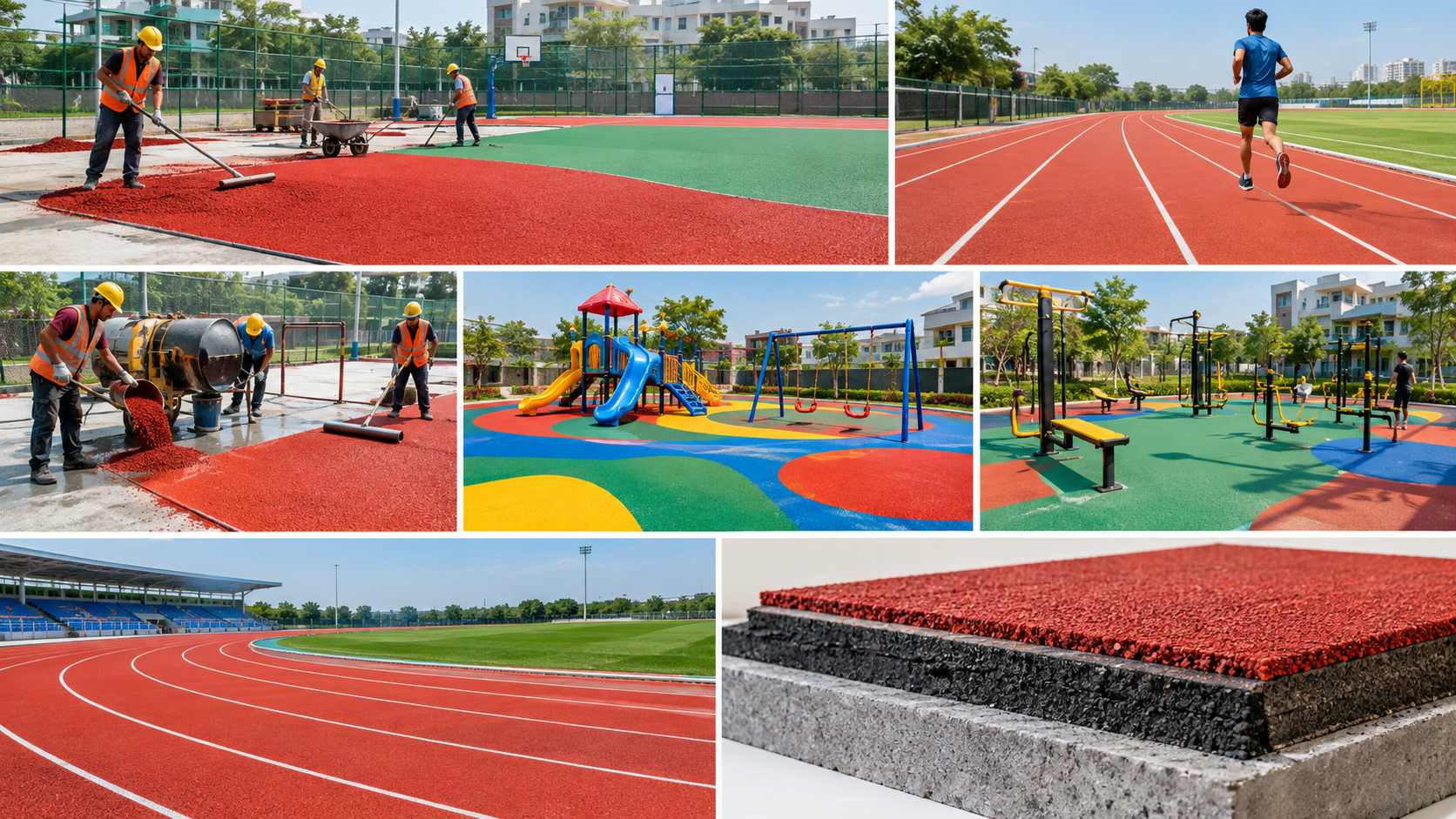
EPDM flooring has become a popular surfacing solution for modern sports facilities, children’s playgrounds, fitness zones, recreational areas, walking tracks, and outdoor activity spaces. Its combination of flexibility, impact resistance, weather performance, attractive appearance, and relatively simple maintenance makes it suitable for locations where safety and long-term surface performance are important.
A professionally installed EPDM floor is more than a colourful rubber surface. The performance of the finished flooring depends on several factors, including the quality of the rubber granules, base preparation, bonding system, thickness, drainage, installation technique, curing conditions, and regular maintenance.
For this reason, selecting an experienced EPDM flooring construction service can make a significant difference to the durability and usability of a project.
This guide explains EPDM flooring construction in detail, including its materials, applications, installation process, advantages, design possibilities, maintenance requirements, and important factors to consider before starting a project.
What Is EPDM Flooring?
EPDM stands for Ethylene Propylene Diene Monomer, a synthetic rubber material designed to provide flexibility and resistance to outdoor environmental conditions.
In flooring applications, EPDM is commonly supplied in coloured rubber granules. These granules are combined with a suitable polyurethane binder and installed over a prepared base. Depending on the project, EPDM can be used as a top wearing layer over a resilient rubber base or as part of a multi-layer safety flooring system.
The finished surface provides a resilient walking and activity area that can absorb a portion of impact while offering good traction.
EPDM flooring is available in a wide range of colours, allowing designers and facility owners to create functional zones, patterns, logos, play designs, running lanes, and visually distinctive recreational areas.
Why EPDM Flooring Is Used in Sports and Play Areas
Sports and play areas experience regular foot traffic, movement, jumping, running, and impact. Conventional hard surfaces can provide durability, but they may not offer the same degree of resilience required in areas where people frequently fall or exercise.
EPDM flooring provides a more flexible surface. When correctly designed and installed, it can help create a comfortable activity environment while maintaining adequate surface stability.
Some common reasons for selecting EPDM flooring include:
- Resilient rubber surface
- Good impact-absorption characteristics
- Slip-resistant surface texture
- Wide colour selection
- Suitable for indoor and outdoor applications
- Resistance to weather exposure
- Low routine maintenance requirements
- Custom patterns and designs
- Suitable for high-use recreational areas
- Attractive and professional appearance
The exact performance of an EPDM system depends on its formulation, thickness, substrate, installation method, and intended application.
EPDM Flooring Construction Service
An EPDM flooring construction service generally covers the complete process required to transform an existing or newly constructed base into a finished rubber safety surface.
A professional service may include:
- Site inspection
- Application planning
- Base assessment
- Surface preparation
- Drainage evaluation
- Rubber base installation
- EPDM top-layer installation
- Pattern and colour planning
- Edge finishing
- Quality inspection
- Surface cleaning
- Project handover
The scope can vary according to the project. A playground may require a thicker impact-absorbing system, while a decorative walkway may require a different construction specification.
Therefore, EPDM flooring should not be selected solely by colour or price. The flooring system needs to be matched with the location, expected usage, safety requirements, and existing base condition.
Where Can EPDM Flooring Be Installed?
EPDM rubber flooring is versatile and can be used across different types of sports and recreational environments.
1. Children’s Playgrounds
Playgrounds are among the most common applications for resilient rubber flooring. Children frequently run, jump, climb, and move around play equipment, making surface comfort and impact management important considerations.
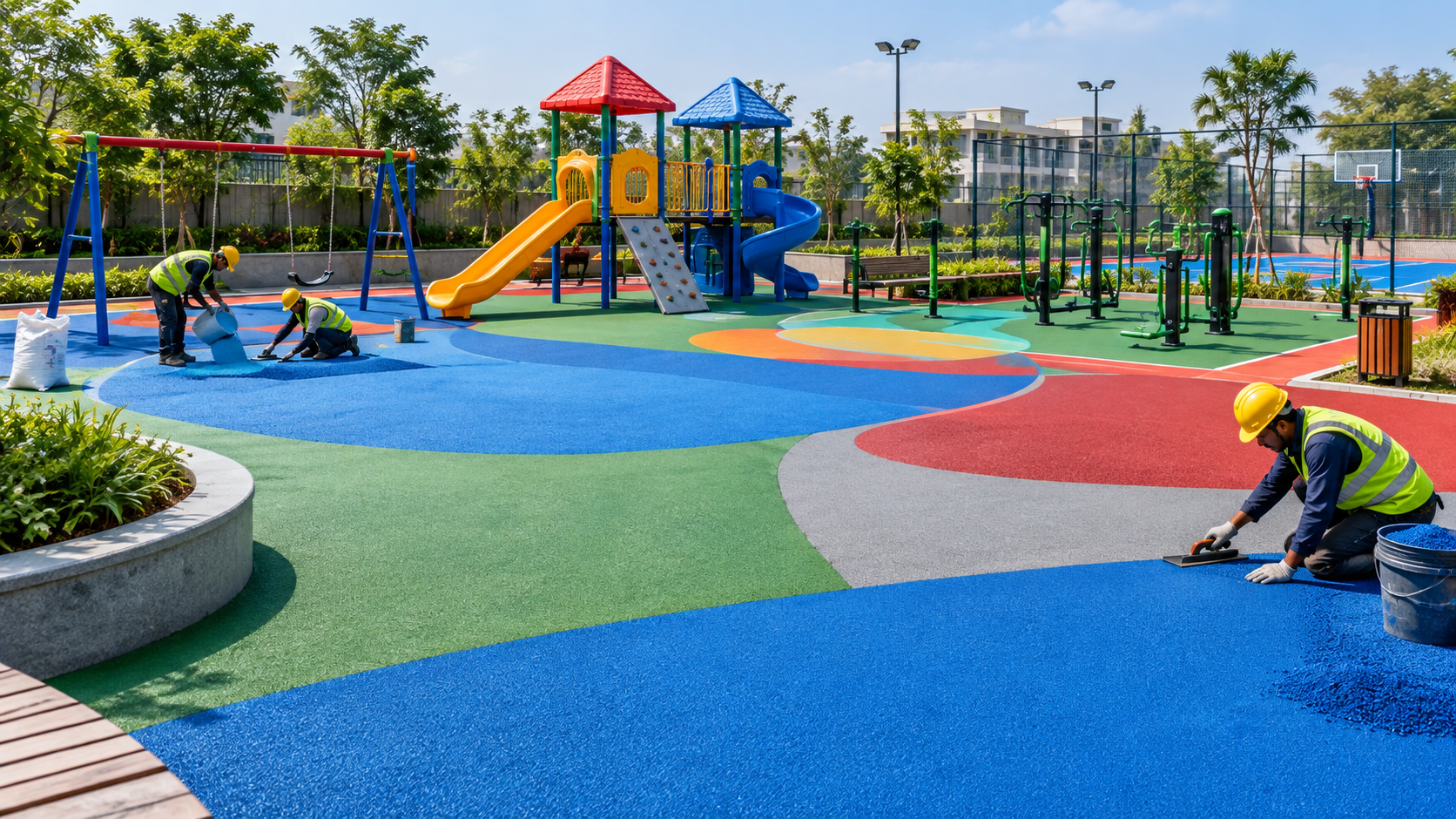
EPDM flooring can be installed around swings, slides, climbing equipment, play structures, and activity zones.
The thickness and construction of the system should be selected according to the equipment height and applicable project safety requirements.
2. Outdoor Sports Areas
EPDM surfaces can be used around selected outdoor sports and recreational facilities where a resilient rubber surface is appropriate.
It can be used for activity zones, warm-up areas, exercise spaces, and multipurpose recreational surfaces.
3. Running and Jogging Tracks
Rubber flooring systems can provide a more comfortable surface for walking, jogging, and running compared with many conventional hard surfaces.
EPDM is particularly useful for recreational running tracks, school activity areas, fitness zones, and community walking spaces.
4. School Play Areas
Schools require flooring that can withstand frequent daily use. EPDM can be used for play areas, activity zones, outdoor learning spaces, and recreational sections.
Colour combinations can also be used to divide the area into different activity zones.
5. Gym and Fitness Areas
EPDM rubber flooring is suitable for selected gym and fitness applications where resilience, traction, and durability are required.
It can be used in functional training zones, stretching areas, exercise spaces, and other sections where rubber flooring is appropriate.
6. Community and Recreational Spaces
Residential communities, parks, resorts, clubs, and recreational centres can use EPDM flooring to develop visually attractive and functional activity areas.
EPDM Flooring Construction Process
The installation process plays a major role in the final performance of the floor. A good-quality rubber material cannot compensate for poor substrate preparation or incorrect installation.
Step 1: Site Inspection
The first stage is a detailed inspection of the proposed installation area.
The contractor evaluates:
- Existing surface condition
- Concrete or asphalt quality
- Surface levels
- Cracks and damaged sections
- Drainage
- Moisture conditions
- Available installation area
- Expected traffic
- Intended use
Measurements are also taken to calculate the required material quantities.
Step 2: Base Preparation
The base must be properly prepared before rubber installation begins.
Loose material, dust, dirt, oil, and other contaminants are removed. Uneven sections may need grinding, repair, levelling, or other corrective work.
A stable and properly prepared substrate helps improve adhesion and reduces the possibility of premature surface problems.
Step 3: Drainage Planning
For outdoor EPDM flooring, water management is especially important.
Standing water can negatively affect the installation environment and may create problems if the underlying structure does not drain correctly.
The contractor should therefore evaluate slopes, drainage channels, surrounding levels, and water flow before installation.
Step 4: Rubber Base Layer
Depending on the flooring design, a resilient rubber base layer may be installed beneath the EPDM wearing surface.
This layer can be constructed using suitable rubber granules bonded with polyurethane adhesive.
The thickness is selected according to the intended application and required performance.
Step 5: EPDM Top Layer
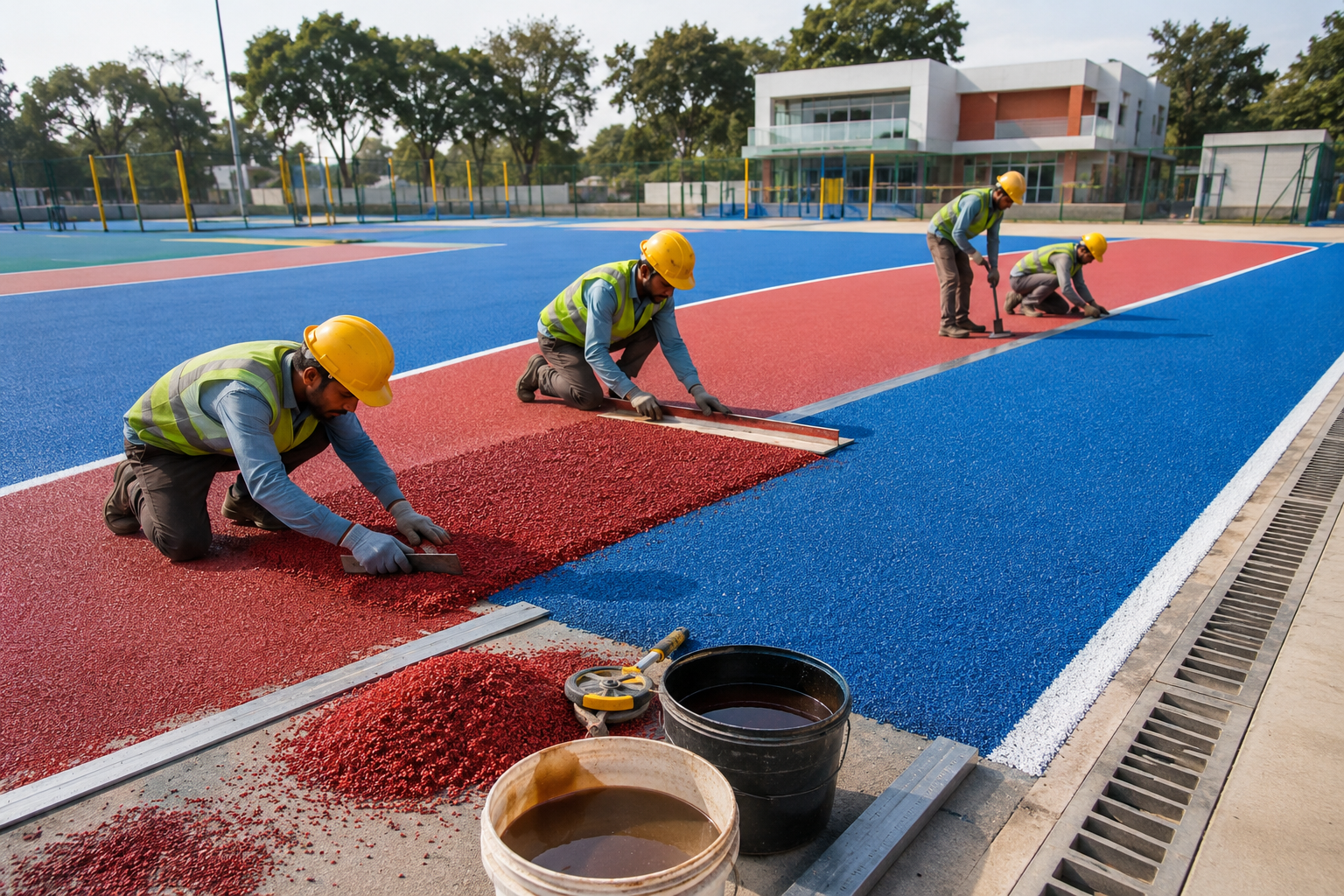
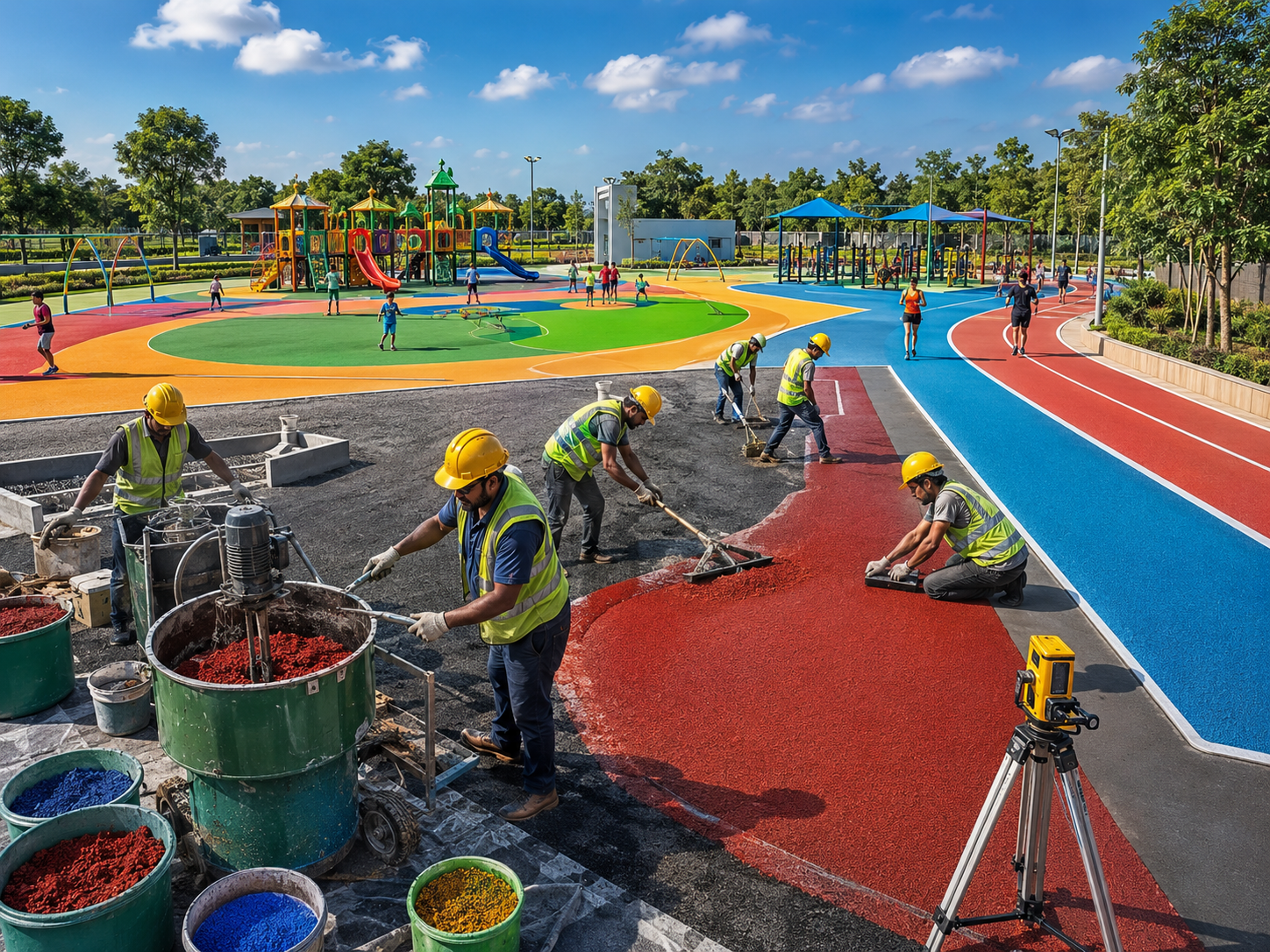
After the base layer has been prepared, coloured EPDM granules are mixed with an appropriate binder.
The mixture is then evenly spread over the designated area and carefully compacted or trowelled to create a uniform surface.
This stage requires skilled workmanship because inconsistent material distribution can result in uneven texture and appearance.
Step 6: Colour and Pattern Installation
EPDM flooring allows considerable design flexibility.
Different colours can be combined to create:
- Activity zones
- Geometric patterns
- Play graphics
- Number markings
- Directional paths
- School branding
- Decorative borders
- Sports-related designs
Complex patterns require accurate planning and careful installation.
Step 7: Edge Finishing
Edges and transitions need to be finished properly to create a neat connection between the EPDM surface and surrounding areas.
The contractor may install appropriate edging or transition details depending on the project.
Step 8: Curing
The installed binder requires sufficient curing time before the surface is subjected to regular traffic.
The curing period can vary according to the binder, temperature, humidity, ventilation, and installation conditions.
The surface should be protected from unnecessary traffic during this period.
Step 9: Final Inspection
The completed surface should be checked for:
- Uniformity
- Surface bonding
- Colour consistency
- Edges
- Drainage
- Visible defects
- Texture
- Finish quality
Once the inspection is completed, the area can be handed over for use.
Major Benefits of EPDM Flooring
Impact Absorption
One of the key reasons EPDM systems are selected for play and activity areas is their resilient construction.
When designed with an appropriate shock-absorbing base, rubber flooring can help reduce the severity of impacts associated with ordinary slips and falls.
However, the protective performance depends heavily on the complete flooring system rather than the EPDM top layer alone.
Weather Resistance
EPDM rubber is designed for outdoor environments and can withstand exposure to sunlight, rain, and changing weather conditions better than many conventional materials.
The quality of the raw material and installation system still matters when evaluating long-term outdoor performance.
Slip Resistance
The textured nature of rubber granules can provide useful traction for walking and recreational activities.
Surface performance can vary depending on the granule structure, binder system, contamination, moisture, and maintenance.
Colour Variety
One of the strongest design advantages of EPDM flooring is its wide selection of colours.
Designers can use multiple colours to make a playground more engaging or divide a large recreational area into separate functional zones.
Low Routine Maintenance
EPDM flooring does not normally require complex daily maintenance.
Routine cleaning, removal of leaves and debris, inspection of damaged areas, and appropriate washing can help maintain its appearance and usability.
Comfortable Walking Surface
Compared with many rigid surfaces, rubber flooring provides a softer and more resilient walking experience.
This can make it useful in walking tracks, recreational spaces, fitness areas, and play environments.
EPDM Flooring Thickness
There is no single thickness suitable for every project.
The required thickness depends on the intended application, base construction, expected impact, and applicable safety requirements.
For example, a decorative walkway may have different requirements from a playground located below climbing equipment.
A professional contractor should therefore determine the appropriate thickness based on the actual application instead of using the same specification for every project.
EPDM Flooring for Playgrounds
Playground flooring requires particular attention because children may fall from play equipment.
A proper playground surface may consist of multiple layers, such as:
- Prepared concrete or asphalt base
- Resilient rubber shock pad or rubber base
- EPDM coloured wearing layer
The system thickness should be determined according to the fall height and relevant project requirements.
Simply installing a thin coloured rubber layer does not automatically make an area a certified safety surface.
For playground projects, owners should ask the flooring contractor about the complete system specification and relevant test documentation.
EPDM Flooring for Sports Facilities
Sports facilities often require flooring that can tolerate repetitive movement and regular foot traffic.
EPDM can be used in appropriate sports-related areas such as:
- Warm-up zones
- Outdoor fitness spaces
- Running areas
- Recreational courtside sections
- Training areas
- Multi-purpose activity spaces
The flooring specification should be based on the sport, movement pattern, footwear, expected traffic, and environmental conditions.
EPDM should not automatically be considered a replacement for every specialist sports flooring system. Sports such as badminton, basketball, tennis, and athletics may require different surface technologies depending on performance objectives.
EPDM Flooring Colours and Design Options
EPDM flooring can be customized visually to suit the identity of a facility.
Popular colours include:
- Green
- Red
- Blue
- Grey
- Black
- Orange
- Yellow
- Purple
- Beige
- Brown
Two or more colours can be combined to create attractive patterns.
For schools and playgrounds, designers may use bright colours and educational graphics. Fitness facilities may prefer modern neutral combinations, while public parks can use colours that complement the surrounding landscape.
Factors Affecting EPDM Flooring Cost
The price of an EPDM flooring project varies considerably from one site to another.
Important cost factors include:
Area Size
Large projects generally require more material and labour, although the per-square-metre installation cost can vary depending on project scale.
Flooring Thickness
A thicker resilient system requires more material and may involve additional preparation.
Base Condition
If the existing concrete or asphalt base requires extensive repairs, grinding, levelling, or waterproofing, the total project cost can increase.
EPDM Granule Quality
Different rubber formulations, colours, granule sizes, and product grades can have different prices.
Design Complexity
A single-colour installation is generally simpler than a project involving detailed patterns, logos, graphics, or multiple colour zones.
Site Location
Transportation, labour availability, accessibility, and logistics can affect project pricing, particularly for sites located far from major service centres.
Drainage and Civil Work
Some outdoor projects require additional drainage or civil construction before flooring installation.
For an accurate quotation, the contractor should inspect the site and understand the complete project requirements rather than providing a generic rate without considering the site conditions.
How to Maintain EPDM Flooring
Proper maintenance can help preserve both the appearance and functional condition of an EPDM surface.
A basic maintenance routine includes:
- Remove leaves, dirt, and loose debris regularly.
- Use suitable cleaning equipment.
- Wash the surface when necessary.
- Avoid aggressive chemicals unless approved for the flooring system.
- Prevent oil, solvents, and other damaging substances from remaining on the surface.
- Inspect high-traffic areas periodically.
- Repair damaged sections at an early stage.
- Keep drainage channels free from debris.
- Avoid unnecessary cutting or dragging of heavy objects across the surface.
Outdoor surfaces should also be checked after extreme weather events.
Common EPDM Flooring Installation Mistakes
Choosing the correct material is only part of a successful project. Several installation mistakes can reduce the life of rubber flooring.
Poor Base Preparation
Installing EPDM over an unstable or contaminated base can lead to bonding problems and uneven areas.
Incorrect Binder Ratio
The binder must be mixed according to the manufacturer’s requirements. Incorrect proportions can affect strength and surface performance.
Inconsistent Thickness
Uneven application may create visible variations and inconsistent performance.
Ignoring Drainage
Outdoor flooring requires proper water management. Drainage problems can create long-term surface and substrate issues.
Rushing the Curing Process
Allowing sufficient curing time is important before opening the facility for regular use.
Choosing Flooring Based Only on Price
A low initial price does not necessarily represent lower overall project cost. Material quality, substrate preparation, installation workmanship, and expected service life all influence value.
How to Select an EPDM Flooring Construction Company
Before appointing an EPDM flooring contractor, consider several factors.
Experience
Ask about previous projects involving playgrounds, sports facilities, schools, parks, gyms, or recreational spaces.
Material Specification
Confirm the type and grade of EPDM granules, binder system, thickness, and construction layers proposed for the project.
Installation Method
The contractor should be able to explain the complete installation process clearly, from substrate preparation to final finishing.
Project Portfolio
Previous installations can help you evaluate workmanship, colour consistency, detailing, and overall finish.
Quality Documentation
For projects involving safety-critical playground surfaces, request relevant test reports and product documentation where applicable.
Warranty and After-Sales Support
Understand what is covered under the warranty, including workmanship and material-related issues.
Site Inspection
A professional contractor should preferably evaluate the actual site before finalizing the technical specification and quotation.
EPDM Flooring vs Conventional Hard Surfaces
Traditional concrete and similar rigid surfaces can be durable and economical, but they provide a substantially harder walking and impact environment.
EPDM rubber flooring offers a resilient alternative for applications where comfort, traction, visual design, and impact management are important.
The right choice depends on the purpose of the facility.
A vehicle-access area, heavy industrial zone, children’s playground, jogging track, and professional sports court all have different requirements. Flooring should therefore be selected based on application rather than assuming one material is suitable for every environment.
Why Professional Installation Matters
EPDM flooring may appear straightforward, but achieving a durable and visually consistent result requires proper installation.
Professional installation helps ensure:
- Correct substrate preparation
- Consistent material mixing
- Appropriate binder application
- Uniform surface thickness
- Proper compaction
- Clean edges
- Accurate patterns
- Effective drainage planning
- Controlled curing
- Final quality inspection
Poor installation can result in loose granules, uneven surfaces, weak bonding, cracks, colour inconsistencies, and premature deterioration.
EPDM Flooring for Modern Outdoor Spaces
Modern schools, residential communities, sports clubs, parks, fitness centres, and recreational facilities increasingly require surfaces that combine practical performance with attractive design.
EPDM flooring can support this requirement by providing a colourful and resilient surface that can be adapted to different layouts.
For example, a community park could combine walking paths, children’s play zones, exercise stations, and seating areas using different surface colours. A school could create separate zones for games, physical education, and informal activities.
The design possibilities make EPDM more than simply a functional flooring material. It can become an important part of the overall visual identity of a recreational facility.
Frequently Asked Questions About EPDM Flooring
Is EPDM flooring suitable for outdoor playgrounds?
Yes. EPDM rubber flooring is widely used for outdoor recreational and playground applications. However, the complete flooring system should be designed according to the playground equipment, fall height, drainage requirements, and applicable safety standards.
How long does EPDM flooring last?
The service life varies depending on material quality, installation workmanship, traffic, weather exposure, maintenance, and usage intensity. A properly designed and maintained system can provide long-term service.
Can EPDM flooring be customized?
Yes. EPDM is available in multiple colours and can be installed in patterns, borders, graphics, logos, and activity zones.
Is EPDM flooring waterproof?
EPDM rubber itself has strong resistance to moisture, but the overall flooring system and underlying substrate still require proper drainage and installation. Outdoor areas should be designed so that water does not remain trapped beneath the surface.
Is EPDM flooring suitable for schools?
Yes. EPDM can be used for school playgrounds, outdoor activity zones, walking areas, and selected sports and fitness applications.
How is EPDM flooring cleaned?
Routine cleaning generally involves removing loose debris followed by suitable wet cleaning when required. The cleaning method should be compatible with the specific flooring system.
Can EPDM flooring be installed over concrete?
Yes, provided the concrete base is structurally sound, adequately prepared, clean, and suitable for the selected installation system.
What is the cost of EPDM flooring?
There is no universal rate because project cost depends on thickness, area, material grade, base condition, design, labour, transportation, drainage, and installation requirements. A site inspection is recommended for an accurate quotation.
Final Thoughts
EPDM flooring is a versatile surfacing option for playgrounds, schools, sports facilities, fitness zones, walking tracks, parks, and other recreational environments. Its combination of resilient performance, colour flexibility, weather resistance, and relatively simple maintenance makes it suitable for a wide range of applications.
However, the quality of an EPDM floor depends on more than the rubber granules used on the surface. Proper base preparation, drainage, system thickness, binder selection, installation technique, curing, and maintenance all contribute to the finished result.
If you are planning an EPDM flooring project, begin with a detailed assessment of the site and identify the exact purpose of the surface. Discuss the expected traffic, safety requirements, design preferences, drainage conditions, and maintenance needs with an experienced flooring contractor.
A properly planned and professionally constructed EPDM flooring system can provide a durable, attractive, and comfortable surface for sports and play environments while helping facilities create safer and more visually engaging recreational spaces.