Introduction
Cricket has always been one of the most loved sports in India, but the way people play the game is changing. Busy lifestyles, limited open spaces, rising property costs, and increasing demand for recreational activities have created a new opportunity for compact sports facilities. One format that has gained significant attention is box cricket.
Box cricket facilities provide a controlled and compact environment where players can enjoy cricket without needing a large traditional cricket ground. These facilities are becoming popular among sports enthusiasts, schools, clubs, fitness centres, residential communities, corporate groups, and commercial sports facility owners.
The growing demand for box cricket construction services also reflects this change. A properly planned box cricket facility can make better use of available space while offering an engaging sporting experience.
But what exactly is driving the popularity of box cricket facilities? Let us explore the major reasons.
What Is Box Cricket?
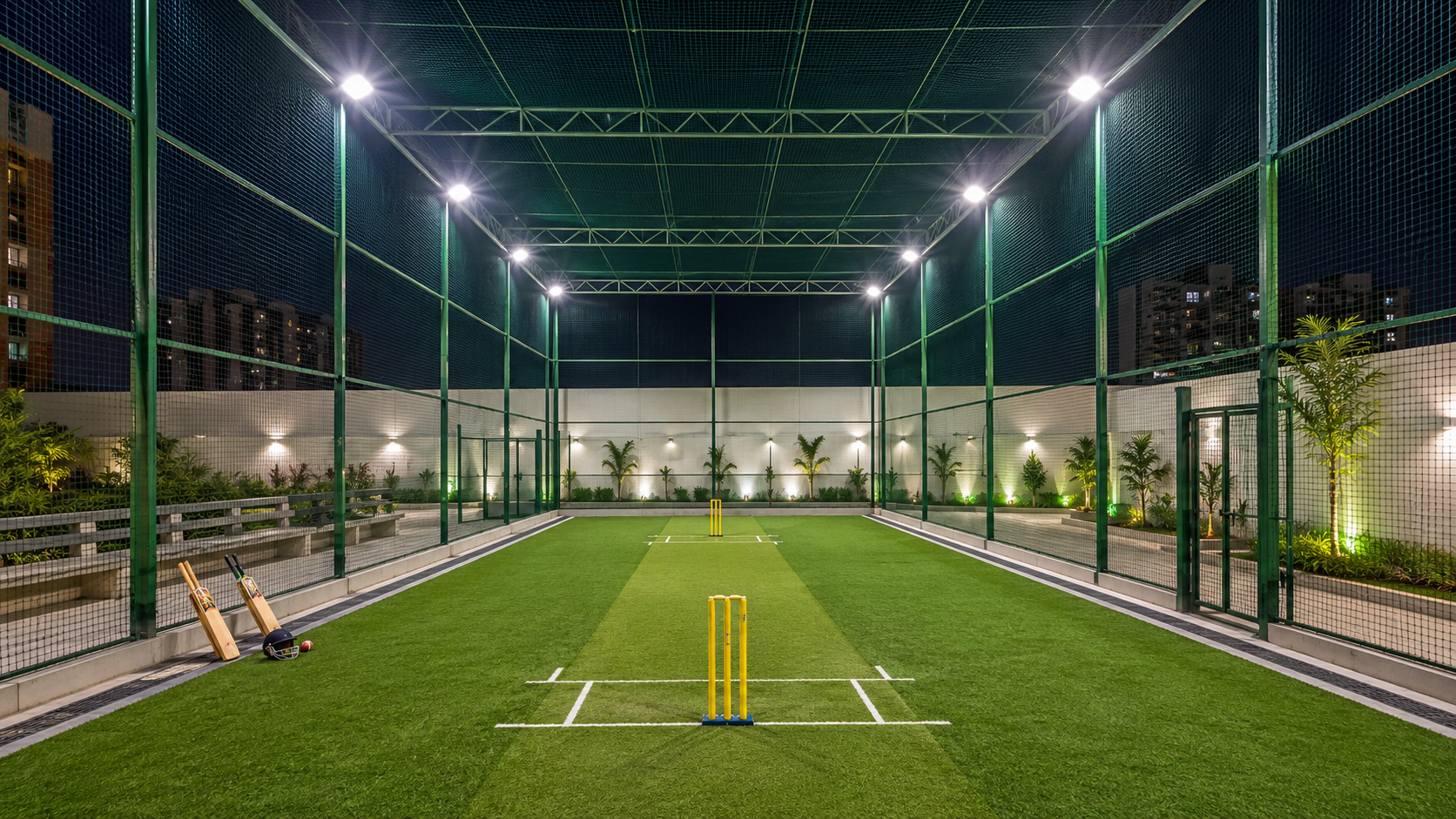
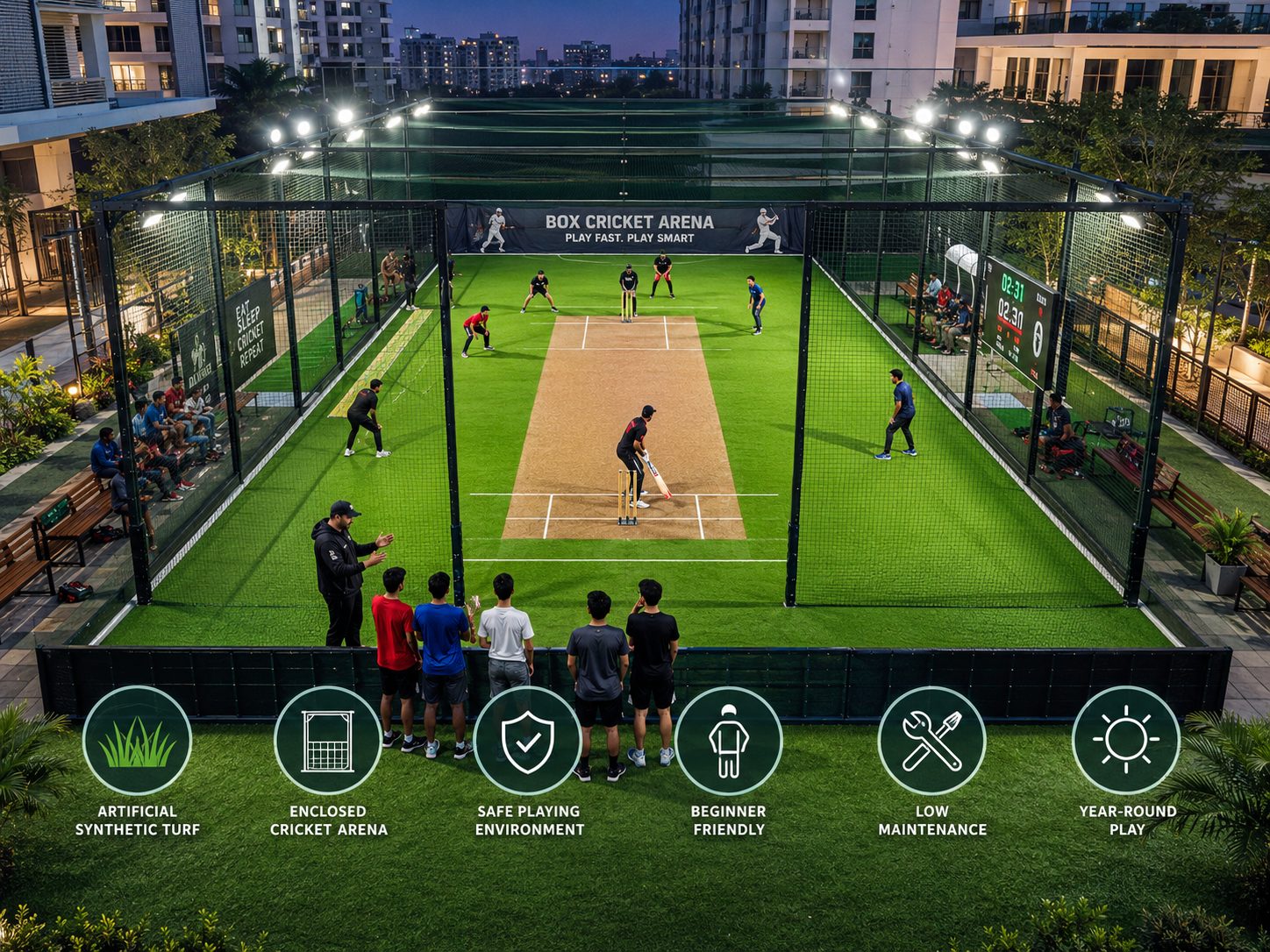
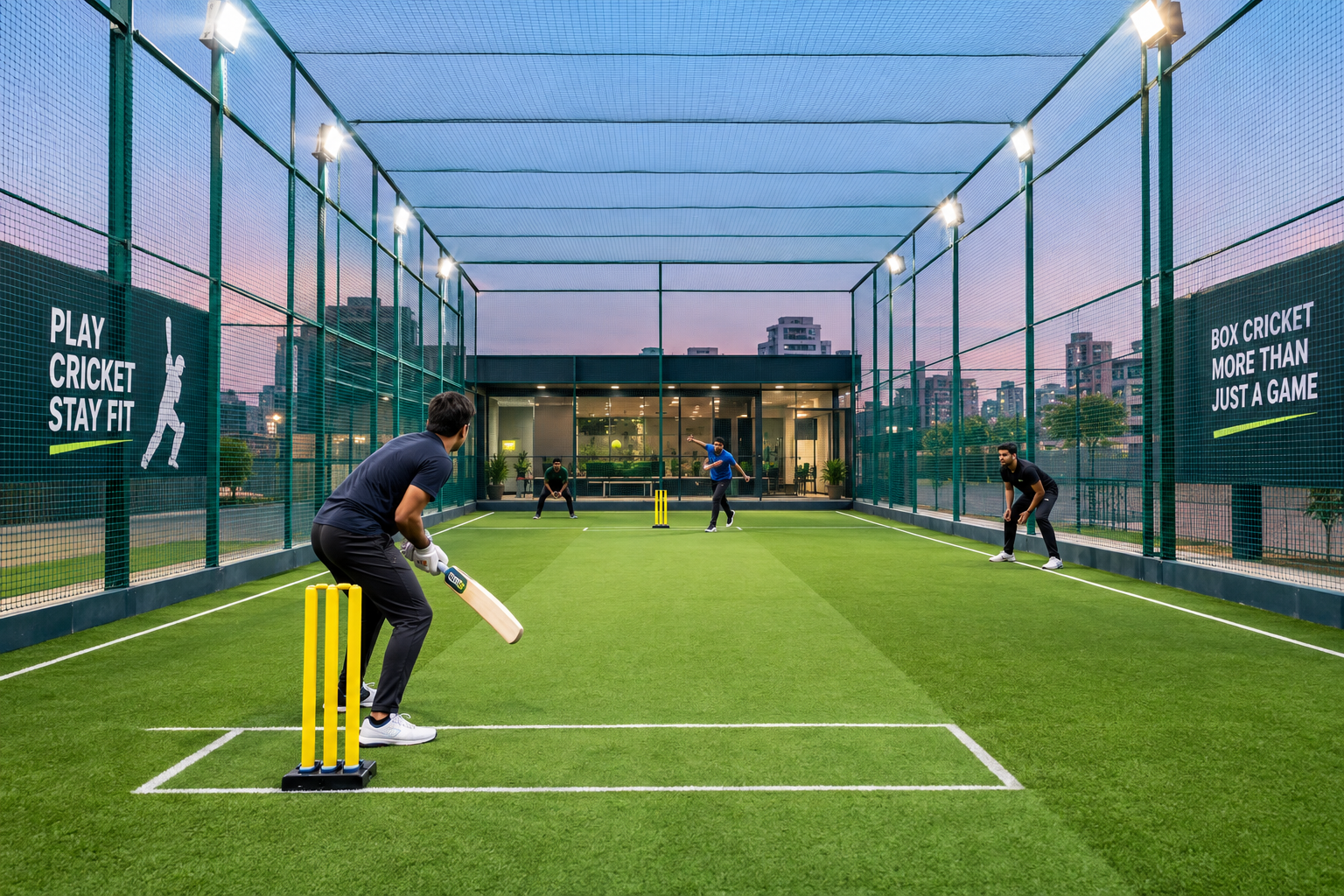
Box cricket is a modified form of cricket generally played within an enclosed or semi-enclosed playing area. Instead of a large conventional cricket ground, the game is played on a compact court surrounded by safety netting, fencing, or other suitable enclosure systems.
The smaller playing area allows matches to be completed in less time, making box cricket particularly attractive to people who want to play cricket around work, education, or other daily responsibilities.
Depending on the project requirements, a box cricket facility may include:
- Artificial turf or specialized sports flooring
- Protective cricket netting
- Structural poles and support systems
- LED sports lighting
- Boundary fencing
- Player seating areas
- Changing rooms
- Washroom facilities
- Reception or booking area
- Storage space
- Spectator areas
- Branding and signage
The exact design depends on the available land, expected usage, budget, location, and type of players using the facility.
Why Are Box Cricket Facilities Becoming Popular?
1. Limited Space Is No Longer a Major Barrier
Finding a large open plot for a traditional cricket ground can be difficult, particularly in cities. Land prices and urban development have made large recreational spaces increasingly challenging to develop.
Box cricket provides an alternative by allowing cricket activities to be organized within a much smaller area.
This makes the concept suitable for urban locations where every square metre needs to be used efficiently. An unused plot, commercial property, rooftop-compatible structure where permitted, or other suitable space can potentially be converted into a compact sports destination after proper technical evaluation.
2. Cricket Can Be Played in a Shorter Time
A traditional cricket match can take several hours or even an entire day. Many modern players simply do not have that much free time.
Box cricket is designed around shorter and more energetic matches. Teams can organize quick games after work, during weekends, or as part of social gatherings.
This convenience has helped box cricket attract:
- Working professionals
- College students
- School groups
- Amateur cricket teams
- Fitness enthusiasts
- Corporate teams
- Local sports communities
The ability to enjoy competitive cricket without committing an entire day makes the format especially appealing.
3. Growing Demand for Recreational Sports
People are becoming increasingly interested in activities that combine fitness, entertainment, and social interaction.
Cricket naturally fits into this category. Players get physical activity while also spending time with friends, colleagues, classmates, or family members.
A well-designed box cricket facility can therefore function as more than just a cricket court. It can become a local recreational destination where people regularly meet, play, and participate in organized events.
4. Suitable for Urban Sports Businesses
Box cricket has also attracted attention from entrepreneurs and sports facility operators.
A commercial facility can offer scheduled bookings for individuals, teams, schools, academies, and organizations. Depending on the local market and business model, operators may also introduce tournaments, memberships, coaching sessions, corporate events, or sports packages.
This has increased interest in professional box cricket facility construction.
Before starting such a project, however, the owner should carefully evaluate the location, available area, construction requirements, drainage, lighting, accessibility, operating costs, and local demand.
5. Evening and Night Matches Increase Usage
One of the major attractions of modern box cricket facilities is the possibility of playing beyond normal daylight hours when suitable sports lighting is installed.
LED floodlights can provide controlled illumination for evening matches, subject to appropriate design and electrical planning.
This is particularly useful in cities where many potential customers are available after working hours.
Instead of limiting facility usage to daytime, an appropriately designed facility can accommodate bookings throughout the evening, helping operators make better use of their sports infrastructure.
6. Artificial Turf Provides a Consistent Playing Surface
Many box cricket facilities use artificial turf because it can provide a consistent surface when properly installed and maintained.
Compared with an ordinary open ground, a professionally prepared sports surface can offer a more controlled playing environment.
The selection of turf should consider factors such as:
- Pile height
- Turf density
- Backing quality
- Shock absorption
- Ball response
- Drainage requirements
- Expected playing intensity
- Maintenance requirements
The base preparation is equally important. Even high-quality turf cannot perform properly if it is installed over an unsuitable or poorly prepared foundation.
7. Protective Netting Improves the Playing Environment
Box cricket facilities typically use surrounding netting to keep the ball within the playing area.
This has several practical benefits. Players spend less time collecting balls, matches can continue more smoothly, and the surrounding property can receive additional protection from stray cricket balls.
The height, mesh type, support structure, and installation method should be selected according to the facility design and expected usage.
Professional planning is particularly important when the facility is located near roads, buildings, parking areas, or other public spaces.
8. Box Cricket Works Well for Corporate Activities
Companies are increasingly looking for ways to encourage employee engagement and organize informal team activities.
Box cricket can be a convenient option for corporate sports events because it requires relatively little space and can accommodate short-format matches.
Organizations can use facilities for:
- Corporate cricket tournaments
- Employee engagement activities
- Team-building events
- Inter-department competitions
- Fitness initiatives
- Weekend sporting events
The compact format also makes it easier to organize multiple matches during a single event.
9. Schools and Colleges Can Use Compact Cricket Facilities
Educational institutions may not always have enough land for a full-sized cricket ground.
A box cricket facility can provide students with an additional opportunity to participate in cricket and recreational activities within a controlled space.
Schools and colleges can use these facilities for:
- Practice sessions
- Physical education activities
- Friendly matches
- Inter-house competitions
- Sports clubs
- Cricket training
When designing a facility for students, safety, supervision, surface quality, lighting, and accessibility should receive particular attention.
10. Suitable for Cricket Academies and Training
Box cricket courts can also support cricket training programs.
Coaches can use compact facilities for batting practice, bowling drills, fielding exercises, and short-format match simulations.
A dedicated training environment can be especially useful when the academy operates in an urban area with limited access to large grounds.
The facility can be designed around the training requirements rather than simply focusing on recreational play.
11. Better Use of Underutilized Property
One of the strongest reasons behind the growing interest in box cricket is the possibility of converting suitable underused land into an active sports facility.
Property that previously had limited recreational use may be considered for sports development after checking structural, zoning, safety, access, and other applicable requirements.
For commercial property owners, this can create an opportunity to develop a purpose-built recreational destination rather than leaving usable space idle.
12. Social and Community Benefits
Box cricket naturally encourages group participation.
Friends can form teams, residential communities can organize tournaments, and local players can create regular leagues. This social aspect is an important part of the experience.
Unlike exercising alone, team sports encourage communication, coordination, competition, and interaction.
As more people look for recreational activities close to where they live or work, compact sports facilities can become valuable community spaces.
What Does a Box Cricket Facility Include?
A professional box cricket project usually involves much more than installing turf and putting up nets.
A complete facility may involve several construction and infrastructure components.
Site Planning
The first step is understanding the available space and determining how the playing area, access points, lighting, seating, drainage, and supporting facilities can fit within the site.
Civil and Base Preparation
A stable and properly prepared base is essential for the long-term performance of the playing surface.
Depending on the site, the work may include:
- Earthwork
- Levelling
- Compaction
- Concrete or other suitable base construction
- Drainage planning
- Surface preparation
Structural Framework
The enclosure requires a suitable structural support system. The design should account for the dimensions of the facility, netting loads, lighting fixtures, environmental conditions, and expected usage.
Cricket Turf Installation
The appropriate artificial turf system can then be installed over the prepared base according to the selected product and project specifications.
Netting Installation
Protective netting is installed around the playing area to create the enclosed environment associated with box cricket.
Sports Lighting
Lighting is an important part of a commercial facility, especially when evening bookings are expected.
The lighting layout should aim for suitable illumination across the playing area while minimizing excessive glare.
Accessories and Finishing
Depending on the facility, finishing work may include cricket equipment, benches, signage, branding, player areas, storage, and other amenities.
Important Factors to Consider Before Box Cricket Construction
Building a box cricket facility requires proper planning. Rushing directly into construction can lead to unnecessary costs or operational problems.
Available Space
The dimensions of the site should be measured accurately before finalizing the layout.
The available space should account for more than the playing area. Access, safety clearance, structural supports, lighting, parking, and other facilities may also require space.
Surface and Drainage
Water accumulation can damage sports infrastructure and affect playing conditions.
A proper drainage strategy is therefore particularly important for outdoor or partially exposed facilities.
Turf Selection
Not every artificial turf product is suitable for cricket. Product selection should be based on expected usage, playing characteristics, durability, maintenance, and installation requirements.
Netting and Safety
The enclosure should be planned to provide a safe playing environment and reduce the possibility of balls leaving the court.
Lighting Design
Lighting should be considered during the planning stage rather than added as an afterthought.
The position and specification of lights can influence player visibility, shadows, glare, and overall playing comfort.
Maintenance
Even a professionally constructed facility requires routine maintenance.
Regular activities may include:
- Turf cleaning
- Debris removal
- Net inspection
- Structural inspection
- Lighting checks
- Surface maintenance
- Drainage cleaning
- Replacement of damaged components
A preventive maintenance schedule can help identify minor problems before they become expensive repairs.
How Much Does Box Cricket Construction Cost?
The cost of constructing a box cricket facility varies considerably from one project to another. There is no single price applicable to every site.
Major cost factors can include:
- Total facility size
- Location
- Civil work
- Base preparation
- Artificial turf quality
- Structural framework
- Netting specification
- Lighting system
- Drainage
- Electrical work
- Amenities
- Number of courts
- Site accessibility
- Labour and transportation
- Custom branding and finishing
For this reason, a proper site assessment and project-specific quotation are more useful than relying on a generic online price.
Why Professional Box Cricket Construction Matters
The quality of a box cricket facility depends on more than the visible finishing.
A professional construction approach considers the complete system, including the base, drainage, structural framework, turf, netting, lighting, safety, and finishing.
Proper planning can help create a facility that is comfortable for players, practical for operators, and easier to maintain over time.
An experienced box cricket construction company can also help coordinate multiple stages of the project rather than requiring the owner to manage each contractor separately.
Future Scope of Box Cricket Facilities
The popularity of compact sports facilities is connected to broader changes in how people use recreational spaces.
Urban residents often want convenient sporting options that are close to home or work. Commercial operators are also exploring sports-based entertainment concepts that can generate repeat visits.
Box cricket fits naturally into this environment because it combines:
- Cricket
- Fitness
- Social interaction
- Short-format entertainment
- Compact infrastructure
- Flexible scheduling
Future facilities may increasingly combine box cricket with other recreational activities, cafés, fitness areas, spectator spaces, training zones, and multi-sport infrastructure.
Conclusion
Box cricket facilities are becoming popular because they offer a practical way to enjoy cricket in environments where traditional large grounds may not be feasible.
Their compact format, shorter match duration, evening playing possibilities, social appeal, and suitability for commercial and institutional use make them an attractive sports infrastructure option.
However, a successful facility depends on careful planning and quality construction. Site conditions, turf selection, drainage, netting, lighting, structural safety, and maintenance should all be considered before construction begins.
Whether the goal is to develop a commercial sports facility, a school sports area, a cricket academy, or a community recreation centre, professional box cricket construction can help turn available space into a functional and engaging sporting environment.
With thoughtful design and proper execution, a box cricket facility can become more than a place to play cricket—it can become a destination where people meet, compete, exercise, and enjoy the sport they love.