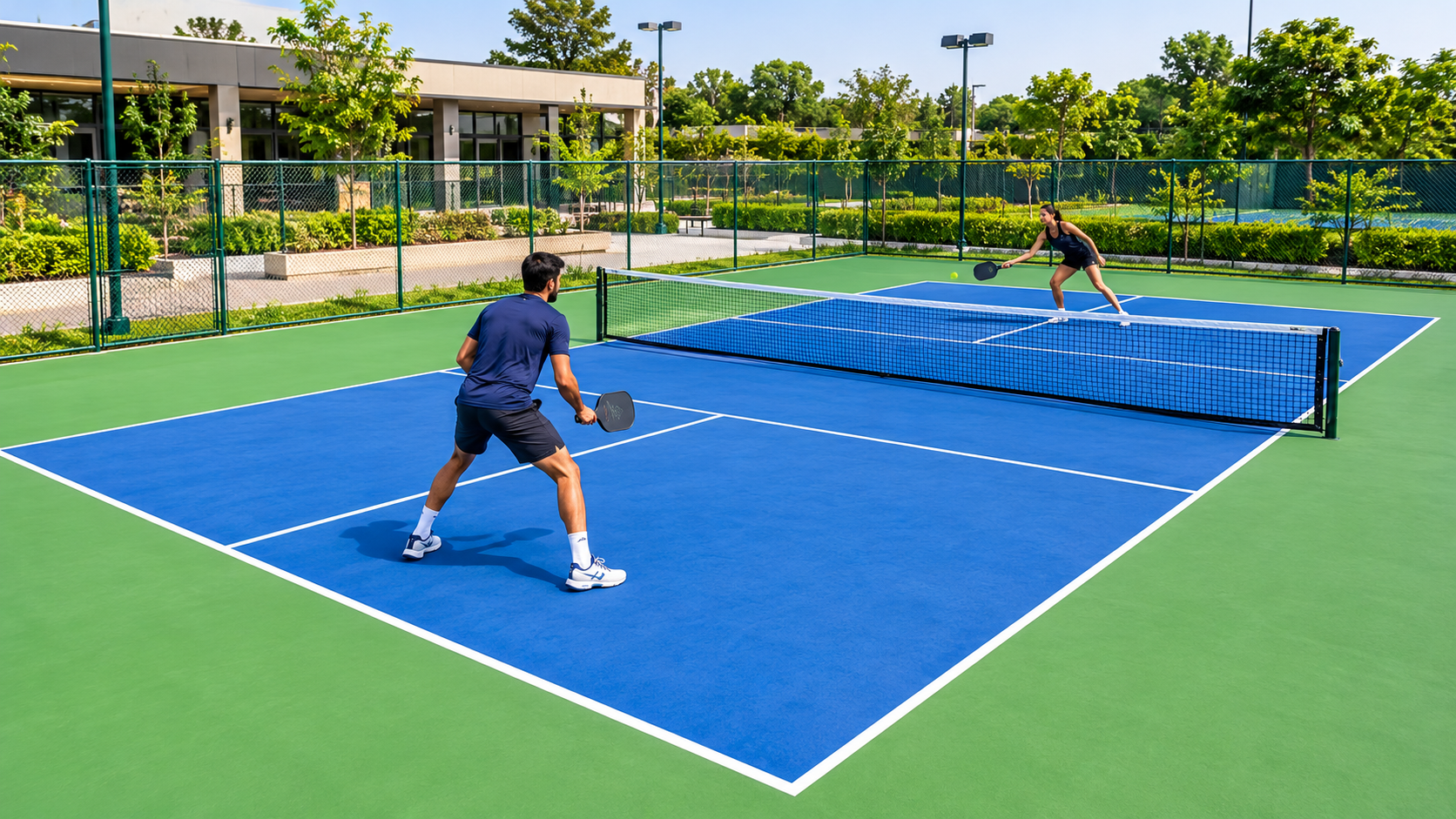
Pickleball has become one of the fastest-growing sports in India and around the world. As more schools, sports academies, clubs, residential communities, hotels, resorts, and commercial sports facilities add pickleball courts, the quality of the playing surface has become increasingly important.
A well-designed pickleball court flooring system does more than improve the appearance of a court. It provides the grip, ball response, player comfort, durability, and weather resistance required for regular play. The right flooring can also reduce maintenance requirements and help protect the underlying concrete or asphalt surface from premature deterioration.
However, installing a pickleball court is not simply a matter of applying paint over a flat surface. Proper pickleball court flooring installation involves site inspection, surface preparation, material selection, leveling, coating application, line marking, curing, and quality inspection.
This guide explains the complete installation process, commonly used flooring materials, major benefits, maintenance requirements, and the factors that influence the final cost of a pickleball court flooring project.
What Is Pickleball Court Flooring?
Pickleball court flooring refers to the specialized surface system installed over a prepared concrete or asphalt base to create a safe and playable court.
Unlike ordinary outdoor flooring, a sports court surface must provide a controlled combination of:
- Surface traction
- Consistent ball bounce
- Player comfort
- Impact management
- Weather resistance
- UV resistance
- Crack resistance
- Durability
- Easy maintenance
A professional court normally consists of several layers rather than one single coating. Depending on the project, these layers can include a primer, resurfacer, acrylic coating, texture coat, color coat, and line-marking system.
The final surface should be smooth and uniform while still providing sufficient texture for players to move, stop, and change direction safely.
Why Is Proper Pickleball Court Flooring Important?
Pickleball involves frequent lateral movement, quick reactions, short sprints, sudden stops, and changes in direction. An unsuitable surface can affect player confidence and may increase the possibility of slips or excessive impact on the feet and joints.
A properly installed flooring system provides predictable traction and a consistent playing environment.
The surface also affects how the pickleball behaves after contacting the court. Excessively rough or uneven flooring can produce inconsistent ball movement, while a properly finished surface supports more predictable play.
For facilities that expect high daily usage, flooring quality becomes even more important because repeated foot traffic, outdoor exposure, and cleaning can gradually affect the surface.
Common Materials Used for Pickleball Court Flooring
Different flooring materials can be used depending on whether the court is indoors or outdoors, the existing base, expected usage, climate, and project budget.
1. Acrylic Court Flooring
Acrylic sports flooring is one of the most widely used options for pickleball courts.
It is typically installed over a concrete or asphalt base using multiple coating layers. Acrylic systems can be customized with different colors and textures and are suitable for outdoor courts because they can withstand sunlight and changing weather conditions when properly specified.
Key advantages include:
- Good durability
- Excellent color options
- Weather resistance
- UV resistance
- Consistent playing characteristics
- Easy cleaning
- Relatively straightforward maintenance
Acrylic surfaces are commonly selected for residential communities, clubs, schools, academies, public sports facilities, and commercial pickleball venues.
2. Cushioned Acrylic Flooring
For facilities where player comfort is a major consideration, a cushioned acrylic system can be installed.
This system incorporates resilient layers beneath the playing surface. The additional cushioning can help reduce the impact transmitted through the player’s feet and legs during regular movement.
Cushioned systems may be particularly useful for high-use facilities where players spend extended periods on the court.
3. Concrete-Based Court Systems
Concrete provides a strong and stable foundation for a pickleball court. However, untreated concrete is not normally considered a finished sports playing surface.
A concrete base may require grinding, leveling, crack repair, priming, and application of an appropriate sports coating system before it is ready for regular pickleball play.
The advantage of concrete is its structural strength and long service potential when properly constructed.
4. Asphalt-Based Court Systems
Asphalt is another commonly used base for outdoor sports courts.
It can provide a suitable foundation when correctly designed, compacted, graded, and cured. The asphalt surface is then prepared and finished with a sports coating system.
Because outdoor asphalt can experience movement and temperature-related changes, proper surface preparation and crack-management procedures are important.
5. Modular or Interlocking Sports Tiles
Modular sports tiles are another option, particularly for facilities requiring relatively quick installation or surfaces that can be assembled over suitable existing bases.
These tiles are available in different designs and performance characteristics. Their suitability depends on the intended application, subfloor condition, drainage requirements, and expected usage.
Pickleball Court Flooring Installation Process
A professional installation process normally begins well before the first coating is applied. The condition of the foundation has a direct effect on the performance and life of the finished flooring system.
Site Inspection
The first stage is a detailed inspection of the proposed court area.
The installation team evaluates:
- Available space
- Existing concrete or asphalt
- Surface flatness
- Cracks and joints
- Drainage
- Moisture conditions
- Surface contamination
- Slope
- Accessibility
- Surrounding structures
For a new court, the site may also need excavation, sub-base preparation, drainage work, and construction of a new concrete or asphalt foundation.
For an existing court, the inspection determines whether the surface can be resurfaced or requires extensive repair.
Court Layout and Dimensions
The court layout should be established before flooring work begins.
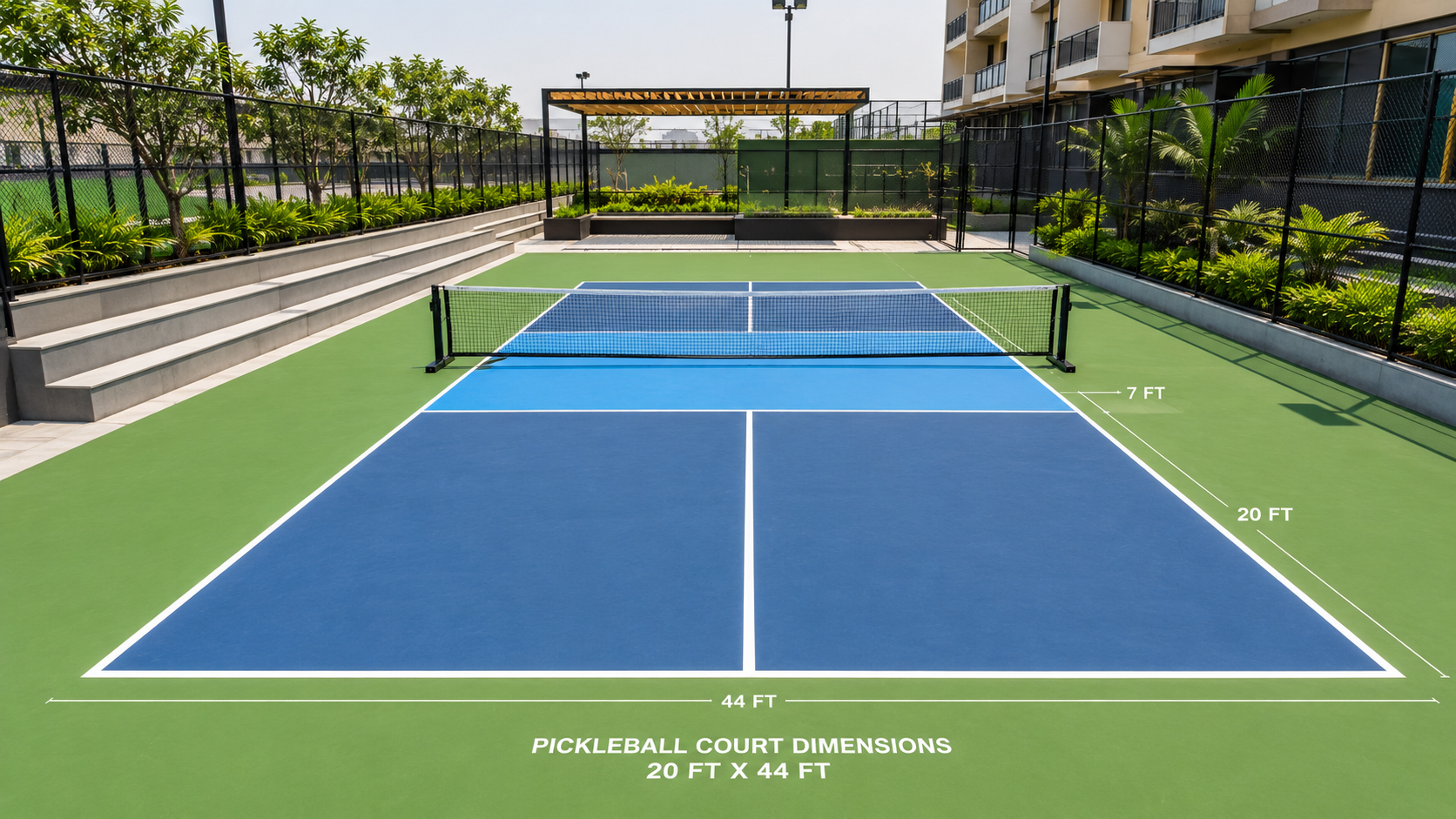
A standard pickleball court playing area is 20 feet wide and 44 feet long for both singles and doubles play.
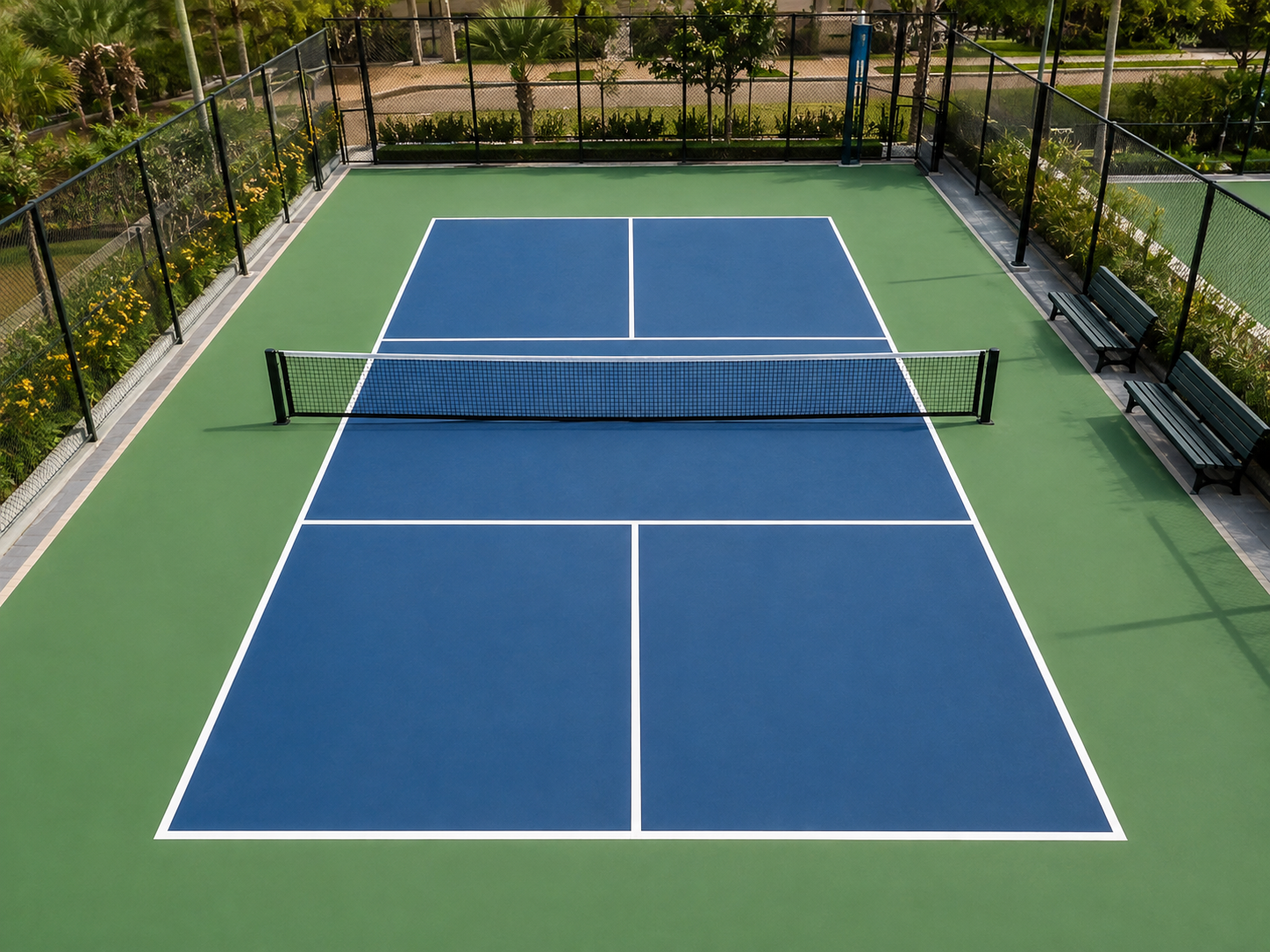
The layout includes the:
- Baseline
- Sidelines
- Non-volley zone
- Service areas
- Centerline
- Net position
Additional clearance around the playing area should also be considered when designing a new facility. Adequate space allows players to move safely beyond the court boundaries.
Base Surface Preparation
Surface preparation is one of the most important parts of the installation.
The existing surface must be clean, stable, dry, and properly profiled before coatings are applied.
Typical preparation can include:
- Pressure washing
- Mechanical grinding
- Removal of loose material
- Dust removal
- Surface cleaning
- Crack repair
- Joint treatment
- Leveling
- Primer application where required
Oil, grease, dirt, paint residue, algae, and other contaminants can interfere with adhesion. These materials should be removed before proceeding.
Crack and Surface Repairs
Small cracks, surface imperfections, low areas, and damaged sections should be repaired before applying the sports flooring layers.
The appropriate repair material depends on the type and severity of the defect.
It is important not to simply cover significant structural cracks with surface coating. If movement underneath continues, the crack may eventually reappear through the finished system.
Resurfacing and Leveling
Once repairs are completed, a suitable resurfacing or leveling layer can be applied.
This stage helps create a consistent base for the final sports coating. The objective is to eliminate minor irregularities and provide a smooth, uniform surface.
The surface should be allowed to cure according to the material manufacturer’s requirements before subsequent layers are installed.
Primer Application
Depending on the flooring system and substrate, a primer may be applied.
The primer improves bonding between the prepared base and subsequent coating layers. It also helps create a more consistent foundation for the sports surface.
Not every flooring system requires the same primer, so the product specification should be followed carefully.
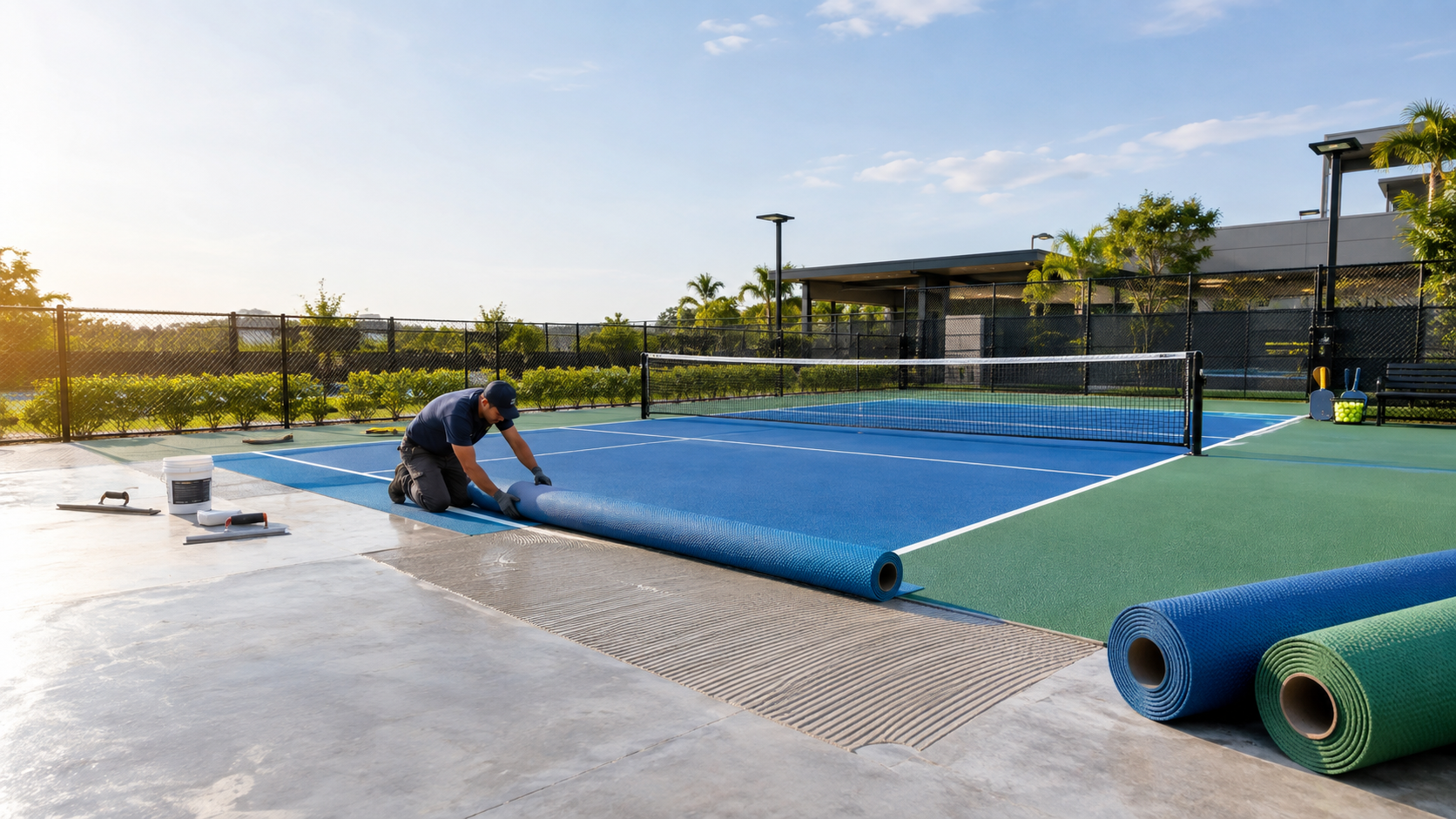
Application of Sports Surface Layers
The selected acrylic or sports flooring material is then applied in multiple layers.
A typical system may include:
- Resurfacer
- Cushion layer, where specified
- Texture coat
- Color coat
- Protective finish
The number and composition of layers vary according to the flooring system.
Application must be controlled carefully to maintain consistent thickness and texture throughout the court.
Court Color Application
The playing surface can be finished using one or multiple colors.
Color selection is often based on visibility, facility branding, environmental conditions, and aesthetic preferences.
Common combinations include contrasting colors between the playing area and surrounding zones. High-contrast surfaces can make court boundaries easier for players to identify.
Pickleball Court Line Marking
Once the surface coating has cured sufficiently, the court lines are measured and marked.
Accurate line marking is essential because even small layout errors can affect the usability of the court.
The markings should be:
- Straight
- Consistent
- Clearly visible
- Correctly positioned
- Properly bonded to the underlying surface
The line width and layout should follow the applicable pickleball court specifications being used for the facility.
Step 10: Net and Equipment Installation
After flooring and line marking are completed, the net system and other court accessories can be installed.
The net should be correctly positioned and adjusted to the required playing height.
Depending on the facility, additional equipment may include:
- Net posts
- Fencing
- Windscreens
- Lighting
- Player seating
- Shade structures
- Scoreboards
- Ball-control barriers
Step 11: Quality Inspection
The final stage involves inspecting the completed court.
The installation team should check:
- Surface uniformity
- Coating adhesion
- Color consistency
- Court dimensions
- Line accuracy
- Surface texture
- Drainage
- Visible defects
- Net positioning
- Overall finish
The court should not be opened for regular play until the flooring has adequately cured.
Benefits of Professional Pickleball Court Flooring
Better Player Safety
Proper sports flooring provides controlled traction and reduces the risk associated with excessively slippery or unpredictable surfaces.
Consistent Ball Response
A smooth, uniform court helps provide predictable ball bounce and movement, which is essential for recreational and competitive play.
Improved Player Comfort
Cushioned flooring systems can provide additional impact management compared with hard untreated surfaces.
Long-Term Durability
A professionally installed sports coating system can withstand repeated foot traffic, sports equipment, cleaning, and outdoor exposure when correctly maintained.
UV and Weather Resistance
Outdoor courts are exposed to sunlight, rain, humidity, and temperature fluctuations. A suitable exterior sports coating can provide greater resistance to these conditions.
Attractive Appearance
Modern sports flooring is available in a wide range of colors and finishes, allowing facilities to create a professional and visually appealing environment.
Easier Maintenance
Most properly finished sports surfaces can be maintained using routine sweeping, washing, and periodic inspections.
Reduced Long-Term Repair Requirements
Good surface preparation and correct installation can reduce premature coating failure, peeling, and other avoidable problems.
Indoor vs Outdoor Pickleball Court Flooring
The choice of flooring should take the playing environment into account.
Outdoor Pickleball Courts
Outdoor courts require materials that can handle:
- Direct sunlight
- Rain
- Humidity
- Temperature changes
- Dust
- Outdoor debris
Drainage is particularly important because standing water can accelerate surface deterioration.
Acrylic sports flooring is commonly considered for outdoor pickleball facilities because of its weather-resistant characteristics.
Indoor Pickleball Courts
Indoor facilities have different requirements.
The flooring does not need to withstand direct rainfall, but factors such as indoor moisture, subfloor condition, lighting, acoustics, and player comfort become more important.
Indoor courts may use acrylic systems, cushioned sports surfaces, modular flooring, or other specialized sports flooring solutions depending on the facility.
Factors That Affect Pickleball Court Flooring Cost
The final cost of a pickleball court flooring project depends on several variables.
Existing Surface Condition
A new, properly constructed base generally requires less corrective work than an old or damaged surface.
Flooring Material
Basic acrylic systems, cushioned systems, modular tiles, and specialized sports surfaces have different material and installation costs.
Surface Preparation
Grinding, crack repair, leveling, resurfacing, and moisture treatment can significantly affect the project budget.
Court Quantity
Installing multiple courts at one facility may affect material usage, labor planning, transportation, and project efficiency.
Indoor or Outdoor Location
Outdoor projects may require additional drainage, weather-resistant systems, fencing, and other infrastructure.
Customization
Multiple colors, logos, specialized markings, and facility branding can add to the overall project requirements.
Site Location
Transportation, labor availability, accessibility, and local project conditions can influence the final installation cost.
For an accurate estimate, the court area and existing surface should be assessed before selecting a flooring system.
How to Maintain Pickleball Court Flooring
Regular maintenance can extend the usable life and appearance of the court.
A basic maintenance routine includes:
- Remove leaves, dust, and debris regularly.
- Sweep the surface using suitable equipment.
- Clean spills promptly.
- Use manufacturer-approved cleaning products.
- Avoid harsh chemicals and abrasive tools.
- Keep drainage channels clear.
- Inspect cracks and damaged areas.
- Prevent standing water from remaining on the court.
- Avoid dragging heavy equipment across the surface.
- Check court lines periodically.
For outdoor courts, drainage and cleanliness are particularly important because accumulated water, dirt, and organic debris can affect surface performance.
Common Pickleball Court Flooring Installation Mistakes
Several installation mistakes can reduce the performance and service life of a court.
Applying Coatings Over a Dirty Surface
Dust, oil, and contaminants can prevent proper adhesion.
Ignoring Moisture
Excess moisture beneath a coating system can cause blistering, peeling, or other failures.
Skipping Crack Repairs
Unrepaired cracks can reappear through the finished surface.
Incorrect Court Measurements
Poor measurements can result in incorrectly positioned playing lines.
Applying Coatings in Unsuitable Weather
Temperature, humidity, rain, and surface moisture can influence curing and adhesion, particularly for outdoor installations.
Using Ordinary Paint
Standard building paint is not designed to provide the traction, durability, and performance required for a sports court.
Opening the Court Too Early
The flooring system needs sufficient curing time before players begin regular use.
How to Choose the Right Pickleball Court Flooring
There is no single flooring solution suitable for every pickleball facility.
Consider the following before selecting a system:
- Location: indoor or outdoor
- Base: concrete or asphalt
- Expected usage: recreational, training, or competitive
- Climate: sunlight, rainfall, humidity, and temperature
- Player comfort: standard or cushioned system
- Maintenance: available cleaning and repair resources
- Budget: initial installation and long-term maintenance
- Aesthetics: colors, markings, and branding
- Drainage: especially important for outdoor courts
- Expected service life: based on material quality and usage
A professional assessment of the site can help determine which flooring system is appropriate.
Conclusion
A quality pickleball court starts with a properly prepared foundation and a flooring system designed specifically for sports use. From acrylic and cushioned surfaces to modular flooring solutions, the right material depends on the court’s location, usage, climate, base condition, and performance requirements.
The pickleball court flooring installation process should include site inspection, surface preparation, crack repair, leveling, primer application where necessary, sports coating installation, color finishing, accurate line marking, equipment installation, and final quality inspection.
Choosing suitable materials and following the correct installation procedure can provide better traction, consistent ball response, improved player comfort, weather resistance, attractive appearance, and easier maintenance.
Whether the project is a single residential-community court, a school facility, a sports academy, or a multi-court commercial venue, investing in a properly designed flooring system can make a significant difference in the court’s performance and long-term usability.
Before beginning construction or resurfacing, evaluate the existing base, determine the expected level of play, understand local environmental conditions, and select a flooring system designed for pickleball applications. Proper planning at the beginning can help prevent expensive repairs later and create a safer, more reliable playing environment for years to come.