Installing a basketball court is an excellent investment for schools, sports academies, residential communities, fitness centers, clubs, and commercial sports facilities. A well-designed court creates a dedicated space for training, recreation, and competitive games. However, before installing basketball hoops, applying court surfacing, or marking playing lines, it is essential to prepare the site properly.
Site preparation is one of the most important stages of basketball court construction. The quality of the ground, drainage system, foundation, and surrounding area directly affects the court’s durability, safety, and long-term maintenance requirements. Even high-quality sports flooring can develop cracks, uneven surfaces, or drainage problems when installed over an improperly prepared base.
Whether you are planning an outdoor basketball court for a school or a professional sports facility for an academy, understanding the preparation process can help you avoid unnecessary expenses and construction delays.
In this guide, we explain how to prepare your site before basketball court installation, from evaluating the land and clearing vegetation to grading, drainage, foundation preparation, and final inspection.
1. Evaluate the Site and Available Space
The first step in preparing a site for basketball court construction is to evaluate the available area. Before starting excavation or purchasing materials, determine whether the proposed location can accommodate the playing surface, safety clearances, basketball equipment, and supporting facilities.
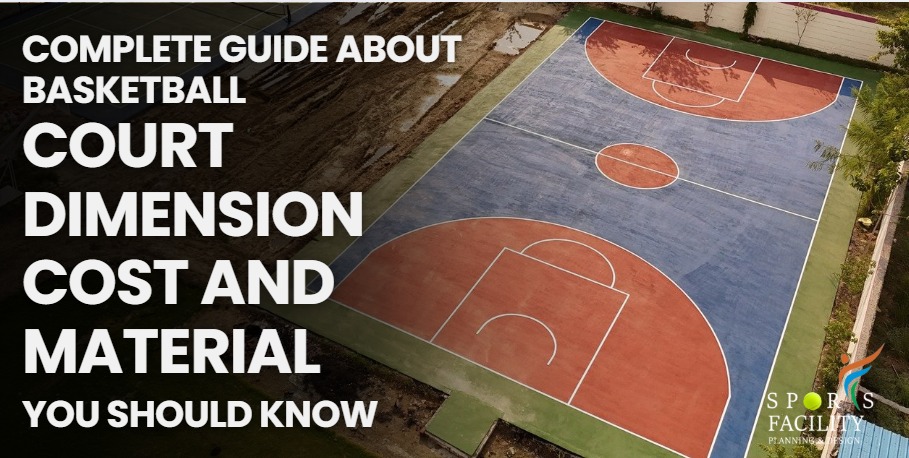
Begin by measuring the length and width of the proposed court. A full-size basketball court commonly measures approximately 28 metres by 15 metres under international FIBA specifications. However, court dimensions vary according to the intended level of play, available space, and governing organization.
For residential properties, schools, recreational areas, and training facilities, a half-court or custom-sized court may be more practical.
During the site assessment, consider the following factors:
- Available land: Confirm that the site can accommodate the planned court dimensions and surrounding safety areas.
- Ground condition: Identify soft soil, uneven terrain, exposed rocks, and other surface irregularities.
- Accessibility: Ensure that construction machinery, concrete trucks, and material delivery vehicles can reach the site.
- Nearby structures: Check the location of buildings, boundary walls, trees, utility poles, and other potential obstructions.
- Future expansion: Consider whether the facility may eventually require additional courts, seating, lighting, or spectator areas.
A professional site inspection can help identify potential problems before construction begins. It also allows the basketball court contractor to recommend an appropriate foundation system and surface material.
2. Choose the Right Location for Your Basketball Court
Selecting a suitable location is essential for creating a comfortable and functional basketball playing area. The best site should offer sufficient space, stable ground, effective drainage, and convenient access.
For an outdoor basketball court, sunlight and wind exposure should also be considered. Excessive glare can affect visibility during daytime games, while strong winds may interfere with shooting practice and ball movement.
If the court will be installed near residential buildings, schools, or public spaces, consider noise levels and the movement of players and spectators. Appropriate fencing and boundary planning can help improve safety and manage the surrounding area.
For indoor basketball court installation, the site assessment should include ceiling height, ventilation, lighting, access points, and the condition of the existing floor or structural slab.
It is also important to check local building requirements, property restrictions, and permissions before beginning construction.
Choosing the right location at the beginning helps reduce future modifications and ensures that the finished court serves its intended purpose.
3. Clear Vegetation, Debris, and Existing Obstacles
Once the location has been finalized, the next step is to clear the site. Grass, weeds, shrubs, tree roots, construction waste, loose stones, and other unwanted materials must be removed from the planned construction area.
Vegetation should not simply be cut down and left beneath the proposed basketball court. Organic material can decompose over time, leaving voids that contribute to settlement and unevenness.
Tree roots may also create problems if they extend beneath the future playing surface. Depending on the location, root removal or an appropriate root-management solution may be necessary.
Site clearing typically involves:
- Removing grass, weeds, and unwanted vegetation.
- Collecting loose stones, rubbish, and construction debris.
- Removing unsuitable topsoil and organic material.
- Identifying buried obstacles and abandoned foundations.
- Disposing of waste according to applicable local requirements.
During this stage, protect existing utilities, nearby structures, and trees that are intended to remain.
Before excavation, locate underground electrical cables, water pipes, drainage lines, and communication services. Unplanned damage to these utilities can create safety hazards and increase construction costs.
A clean, unobstructed site provides a suitable starting point for excavation and foundation preparation.
4. Conduct a Soil and Ground Stability Assessment
One of the most important requirements for a durable basketball court is a stable supporting ground. The soil beneath the playing surface must be capable of supporting the proposed construction without excessive settlement or movement.
Different soil types behave differently under moisture and loading conditions. Sandy soils, clay-rich soils, filled land, and natural rocky ground may each require different preparation methods.
Clay-heavy soil, for example, can expand and shrink as its moisture content changes. Poorly compacted fill may settle over time, while loose or saturated ground can reduce foundation stability.
A soil assessment helps determine whether the existing ground is suitable for the proposed basketball court foundation.
Depending on the project, the assessment may include:
- Evaluating soil type and bearing conditions.
- Checking for soft spots and areas of excessive moisture.
- Investigating the depth and condition of existing fill.
- Identifying potential settlement risks.
- Determining whether additional excavation or ground improvement is required.
For larger courts, institutional projects, or sites with questionable ground conditions, a qualified geotechnical professional may recommend soil testing.
If weak soil is discovered, the contractor may need to remove unsuitable material, introduce engineered fill, improve the subgrade, or adopt another site-specific solution.
Skipping this stage can lead to problems that are difficult and expensive to repair after the sports surface has been installed.
5. Excavate the Site to the Required Depth
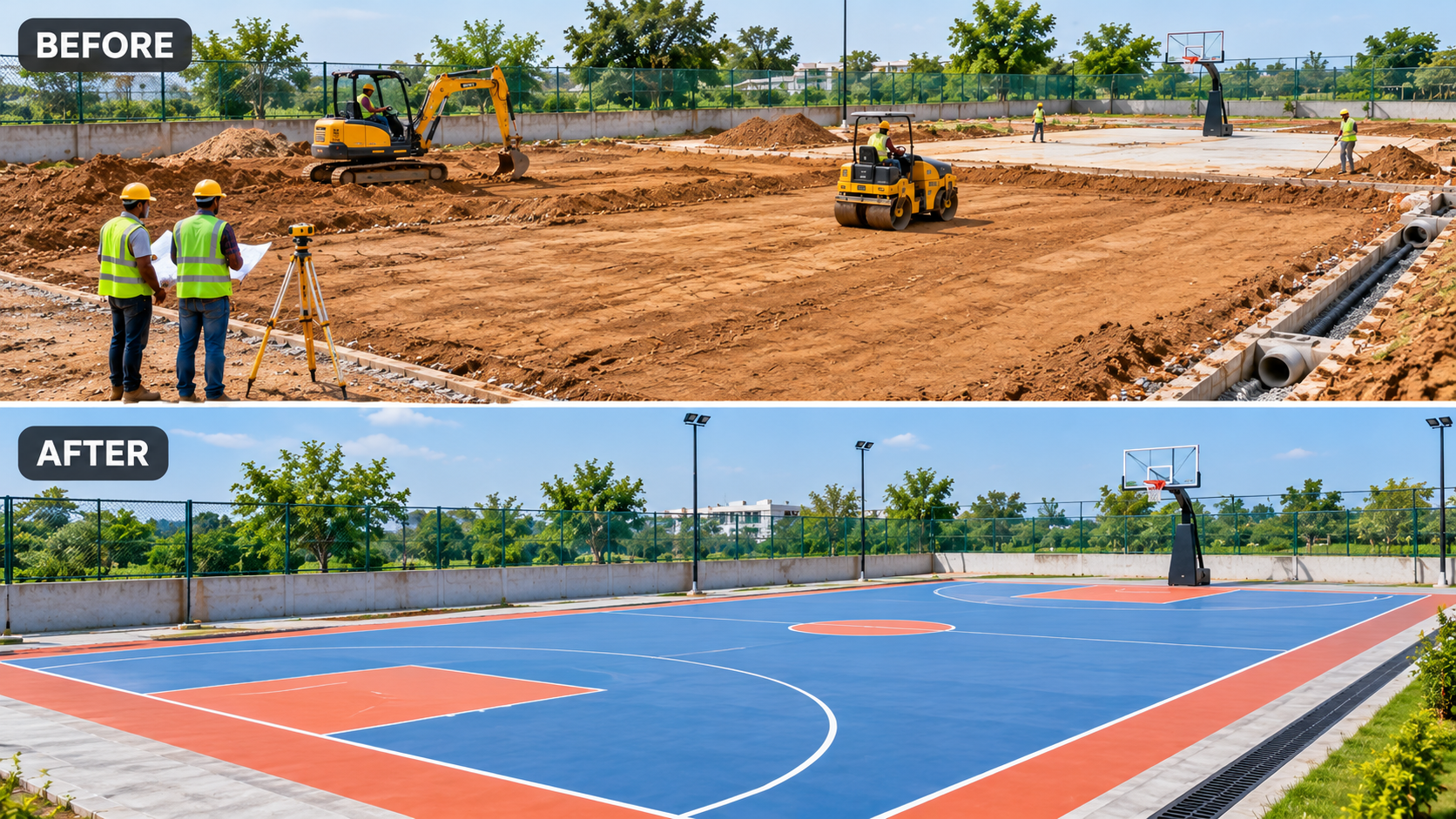
After assessing the ground, excavation can begin. The objective is to remove unsuitable soil and create the space required for the planned court foundation.
The required excavation depth depends on soil conditions, the intended surface system, anticipated loading, local climate, and engineering specifications. There is no single excavation depth that is appropriate for every basketball court.
An outdoor acrylic basketball court, for example, may use a compacted aggregate base and an asphalt or concrete foundation. Other systems may require different layers or construction details.
During excavation, the contractor should:
- Follow the approved site layout and finished-level measurements.
- Remove unsuitable soil and loose material.
- Maintain the planned court dimensions.
- Avoid disturbing stable ground unnecessarily.
- Check excavation levels at multiple locations.
- Arrange proper disposal of excavated material.
Excavation should also account for drainage infrastructure, edge restraints, utility connections, and basketball goal foundations where required.
Careful excavation establishes the correct formation level and helps ensure that subsequent construction layers can be installed consistently.
6. Grade and Level the Ground Correctly
Ground grading is a critical step in preparing a site for outdoor basketball court installation. The objective is to create a stable, accurately shaped base that supports the intended playing surface and allows water to drain effectively.
An improperly graded court may develop puddles, slippery areas, premature surface deterioration, and uneven playing conditions.
However, a basketball court should not necessarily be perfectly flat in every direction. Outdoor courts often require a carefully designed slope to direct rainwater toward suitable drainage points.
The slope must be consistent with the selected surface system and the project’s engineering specifications. Excessive slopes can affect ball movement and player footing, while insufficient slopes may allow water to collect on the surface.
A professional contractor uses surveying equipment, levels, or laser-guided tools to check elevations and establish the required profile.
During grading, particular attention should be given to:
- Consistent playing-surface elevations.
- The direction and amount of drainage slope.
- Smooth transitions around the court perimeter.
- Accurate levels near basketball goal locations.
- Finished heights at adjoining paths and access areas.
Grading should be completed before the base material is installed. Any significant unevenness left at this stage can affect every layer above it.
7. Install an Effective Drainage System
Water management is essential for outdoor basketball courts. Rainwater that remains on the surface or enters the foundation can reduce usability, contribute to deterioration, and create slippery playing conditions.
A suitable basketball court drainage system should manage both surface runoff and, where necessary, water within the underlying ground.
The appropriate design depends on rainfall intensity, soil permeability, surrounding land levels, the court’s surface material, and local drainage regulations.
Common drainage solutions include:
Surface grading: A properly designed slope directs rainwater away from the main playing area.
Perimeter drains: Drainage channels or suitable collection systems can capture runoff around the court.
Subsurface drainage: Perforated pipes and drainage aggregate may be necessary where groundwater or soil conditions require them.
Stormwater connections: Collected water may need to be directed toward an approved discharge point or stormwater management system.
Drainage planning should happen before final grading and base construction, rather than after the court has been completed.
The drainage system must also avoid directing water toward neighbouring properties, buildings, or pedestrian routes.
In regions that experience heavy monsoon rainfall, careful drainage planning is especially important. Contractors should consider intense rainfall events and ensure that water has a reliable path away from the playing surface.
8. Prepare and Compact the Subgrade
The subgrade is the prepared ground that supports the basketball court’s foundation layers. Its condition directly influences how well the finished surface performs over time.
After excavation and grading, the subgrade should be inspected for soft areas, loose soil, standing water, and inconsistent compaction.
Suitable compaction equipment is then used to achieve the density required by the project specifications. The correct equipment and method depend on the soil type, moisture content, and construction design.
Compaction helps reduce settlement and creates a more uniform foundation. However, excessive moisture or unsuitable soil conditions can prevent proper compaction.
For this reason, the contractor should ensure that the soil moisture is appropriate before proceeding.
A typical subgrade preparation process includes:
- Removing loose and unsuitable material.
- Adjusting moisture conditions where necessary.
- Compacting the ground in accordance with the specifications.
- Checking levels and identifying weak areas.
- Correcting defects before installing the next layer.
Field density testing or other quality-control checks may be appropriate for larger or higher-performance projects.
The subgrade should not be covered until the responsible contractor or engineer is satisfied that it meets the required standards.
9. Install the Correct Base Foundation
Once the subgrade is approved, the next step is to construct the foundation for the selected basketball court surface.
The foundation provides structural support, helps distribute loads, and creates a suitable platform for the final sports flooring.
The exact construction method depends on the project design.
For many outdoor acrylic basketball courts, a compacted granular aggregate base may support an asphalt or concrete playing surface. In other installations, a reinforced concrete slab or another engineered system may be specified.
Each option has different requirements for thickness, reinforcement, joints, curing, and surface tolerances.
A typical foundation preparation process may involve:
- Installing suitable separation or geotextile material where specified.
- Placing approved granular base material in controlled layers.
- Compacting each layer to the required standard.
- Checking thickness and finished elevations.
- Constructing the specified asphalt or concrete surface.
- Allowing the foundation to cure or stabilize as required.
A concrete slab should be designed for the site conditions and intended use. Reinforcement, control joints, isolation joints, and other details must follow the approved construction design.
For acrylic surfacing, the underlying asphalt or concrete must also satisfy the surface manufacturer’s requirements for smoothness, moisture, and curing.
A high-quality foundation can reduce the likelihood of premature cracking, unevenness, and costly resurfacing.
10. Plan Basketball Hoop Foundations and Sports Equipment
Basketball hoop installation should be planned before the foundation and playing surface are finalized.
In-ground basketball goals often require dedicated concrete footings or engineered anchor systems. Their dimensions and reinforcement depend on the goal manufacturer’s instructions, the equipment design, wind exposure where applicable, and the relevant structural requirements.
The location of each hoop must align accurately with the court layout. Incorrect positioning can affect the playing area, boundary clearances, and overall appearance.
Before installation, confirm:
- The approved location of each basketball goal.
- The required footing dimensions and depth.
- The anchor-bolt layout, if applicable.
- The necessary concrete strength and curing period.
- The relationship between the goal structure and the finished court level.
- The safety clearance around supporting structures.
Portable basketball systems may require a different installation approach, but they still need a stable, level, and suitable supporting surface.
For professional and institutional projects, the goal system should be selected and installed by qualified personnel in accordance with the manufacturer’s specifications.
Planning equipment foundations early helps prevent unnecessary cutting, drilling, or damage to the finished basketball court.
11. Arrange Lighting, Fencing, and Utility Requirements
A basketball court may require more than a playing surface and hoops. Lighting, perimeter fencing, access gates, seating, electrical connections, and other supporting features should be considered before construction is completed.
For outdoor basketball facilities, lighting can extend playing hours and improve visibility after sunset. Lighting positions should provide appropriate coverage while limiting glare and avoiding unnecessary light spill into nearby properties.
Electrical work should be carried out by qualified professionals, with equipment and protection suitable for the installation environment.
Fencing can help keep basketballs within the designated area and establish a clear boundary between players and nearby spaces. Its height, location, and supporting posts should be selected according to the project requirements.
Other features to plan include:
- Player and spectator access routes.
- Accessible entrances where required.
- Seating and waiting areas.
- Equipment storage.
- Water access and nearby amenities.
- Emergency access and maintenance routes.
Any underground cabling, drainage connections, or foundation work should be coordinated before the final playing surface is installed.
Completing this planning in advance reduces the need for disruptive modifications later.
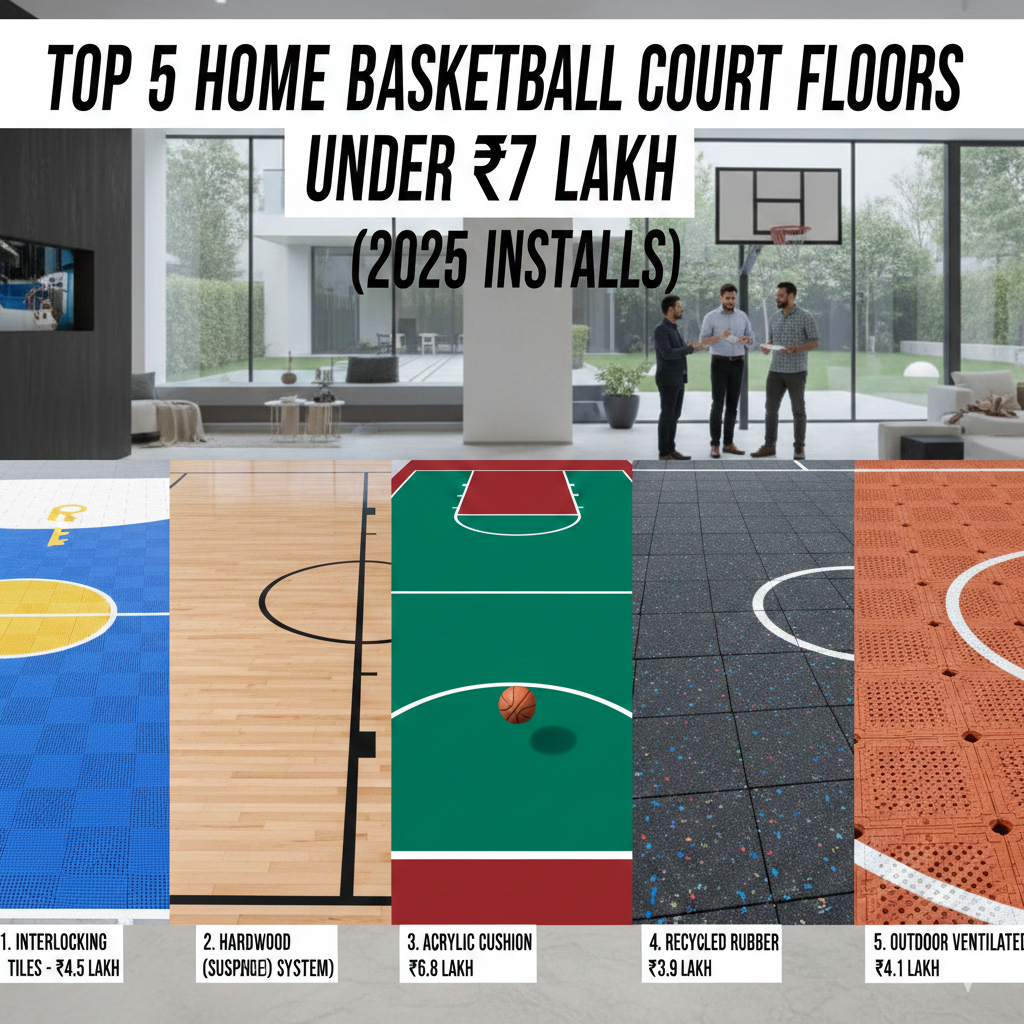
12. Select the Right Basketball Court Surfacing Material
Choosing the right basketball court flooring is another important part of site preparation because different materials require different foundation conditions.
The best surface depends on the court’s location, expected usage, budget, maintenance requirements, and performance objectives.
Acrylic Basketball Court Flooring
Acrylic sports surfacing is commonly used for outdoor basketball courts over suitable asphalt or concrete foundations. It provides a textured playing surface, supports line marking, and is available in a variety of colours.
The foundation must be smooth, stable, adequately cured, and prepared according to the surfacing manufacturer’s requirements.
Concrete Basketball Courts
Concrete can serve as a structural playing surface or as the foundation for a compatible sports coating. Proper mix design, finishing, joint planning, curing, and moisture management are essential.
Asphalt Basketball Courts
Asphalt is another common option for outdoor basketball courts. It requires a suitable base, proper compaction, appropriate paving conditions, and adequate time for stabilization before the selected surfacing system is applied.
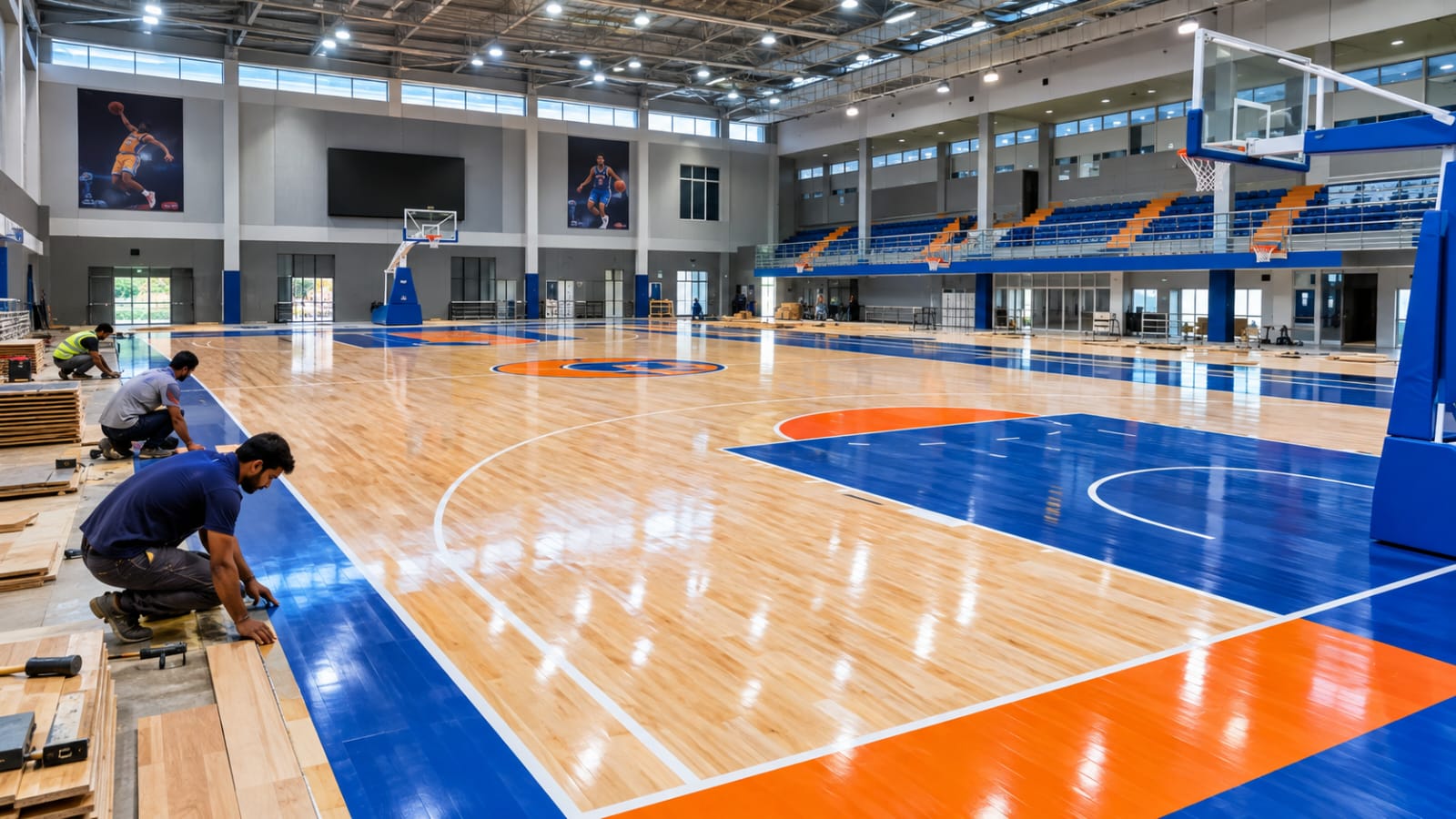
Indoor Sports Flooring
Indoor basketball facilities may use specialized wood flooring, synthetic sports flooring, or other purpose-designed systems. These installations require careful evaluation of the existing slab, moisture conditions, flatness, and compatibility with the selected floor system.
The key principle is to select the foundation and playing surface as a coordinated system rather than treating them as unrelated construction elements.
13. Inspect the Site Before Applying the Final Surface
Before the final basketball court surfacing begins, conduct a detailed inspection of the prepared foundation.
This stage helps identify construction defects before they become hidden beneath acrylic coatings, synthetic flooring, or other surface materials.
The inspection should confirm that the foundation meets the project specifications and the surfacing manufacturer’s requirements.
Important checks include:
- Correct court dimensions and layout.
- Appropriate foundation thickness.
- Consistent levels and surface tolerances.
- Adequate compaction where applicable.
- No loose aggregate, debris, or unstable areas.
- No standing water or unresolved drainage issues.
- Properly treated joints and visible defects.
- Satisfactory concrete curing or asphalt readiness.
- Completion of required utility and equipment installations.
For concrete and other moisture-sensitive systems, the contractor may need to verify moisture conditions before applying the coating.
Any cracks, depressions, or surface irregularities should be assessed and corrected using an appropriate repair method.
A final review should also confirm that the site is clean and that weather conditions are suitable for the planned installation.
Only proceed when the foundation is ready for the selected basketball court surface.
14. Consider Weather Conditions and Installation Timing
Weather can influence several stages of basketball court construction, especially excavation, grading, concrete work, asphalt paving, and acrylic surfacing.
Heavy rainfall may saturate the soil, delay compaction, or interfere with drainage construction. Very hot conditions can affect working times for some materials, while low temperatures or excessive humidity may influence curing and coating performance.
Before scheduling installation, consider the local weather forecast and the requirements of the selected construction system.
For outdoor basketball courts, it is particularly important to protect prepared ground from heavy rain before the foundation is completed. If the subgrade becomes saturated or disturbed, additional preparation may be required before work continues.
Concrete must be allowed to cure for the period specified by the design and surfacing manufacturer. Acrylic coatings and other finishes also require suitable application and drying conditions.
There is no single waiting period that applies to every court. The correct schedule depends on the materials used, environmental conditions, and project specifications.
Working with an experienced basketball court installation contractor helps coordinate the construction schedule and reduces avoidable delays.
15. Avoid Common Basketball Court Site Preparation Mistakes
Even a well-planned sports facility can experience problems when essential preparation steps are overlooked.
Some of the most common mistakes include:
Ignoring soil conditions: Building on weak or unsuitable ground can lead to settlement and cracking.
Poor drainage planning: Inadequate water management may cause puddles, surface damage, and reduced playing time.
Insufficient compaction: Loose or inconsistently compacted layers can move under the finished court.
Incorrect grading: Uneven slopes can affect ball movement and create water collection points.
Choosing materials too late: Selecting the surfacing system after the foundation has been built can result in compatibility problems.
Forgetting equipment foundations: Installing hoop footings after completing the playing surface can increase cost and cause unnecessary damage.
Rushing curing and drying: Applying coatings or opening the court too early can compromise the finished system.
Skipping final inspections: Unresolved defects may become harder to identify and repair once the surface is installed.
Avoiding these mistakes requires coordination between the property owner, civil contractor, basketball court installer, and relevant technical professionals.
16. Create a Basketball Court Site Preparation Checklist
Before scheduling the final installation, use this checklist to confirm that the site is ready.
-
Court dimensions and safety clearances have been approved.
-
Site access and construction logistics have been arranged.
-
Vegetation, debris, and unsuitable soil have been removed.
-
Underground utilities have been identified.
-
Soil conditions and ground stability have been assessed.
-
Excavation and grading meet the approved levels.
-
Surface and subsurface drainage requirements have been addressed.
-
The subgrade has been prepared and compacted as specified.
-
The foundation layers have been installed and inspected.
-
Basketball goal footings and equipment provisions are complete.
-
Lighting, fencing, and utility work has been coordinated.
-
The foundation meets the selected surfacing system’s requirements.
-
Required curing, moisture checks, and quality inspections are complete.
-
The installation area is clean and ready for the next construction stage.
This checklist provides a practical starting point, but larger projects may require additional engineering inspections, testing, approvals, and documentation.
Frequently Asked Questions About Basketball Court Site Preparation
1. How do I prepare the ground for basketball court installation?
Start by evaluating the site, measuring the available area, removing vegetation and unsuitable soil, and checking ground stability. The next steps generally involve excavation, grading, drainage planning, subgrade compaction, and installation of the specified foundation.
2. What is the best base for an outdoor basketball court?
The best base depends on the soil conditions, intended use, climate, and selected playing surface. Common options include engineered aggregate bases supporting asphalt or concrete, as well as purpose-designed concrete slabs. A qualified contractor should recommend the appropriate system for the site.
3. Why is drainage important for basketball court construction?
Proper drainage helps prevent standing water, protects the foundation, reduces slip hazards, and supports the long-term performance of the playing surface. Drainage design should be completed before the foundation and final surfacing are installed.
4. How much space is needed for a basketball court?
A full-size court commonly measures approximately 28 m × 15 m under FIBA specifications. However, additional space is needed around the playing area for safe movement, fencing, access, and equipment. Half-courts and recreational courts can be designed for smaller properties.
5. Can a basketball court be installed on uneven ground?
Yes, in many cases, but the site generally needs excavation, grading, or other ground preparation before installation. The appropriate solution depends on the extent of the unevenness, soil conditions, drainage requirements, and foundation design.
6. How long does basketball court site preparation take?
The schedule varies with site size, soil conditions, excavation requirements, weather, drainage work, and foundation type. A straightforward project may require less preparation than a large facility with extensive earthworks or ground improvement. Your contractor should provide a project-specific schedule.
7. Can I install an acrylic basketball court directly on soil?
Acrylic sports coatings generally require a suitable, stable foundation such as an approved asphalt or concrete surface. They should not be applied directly to ordinary soil. Always follow the selected surfacing manufacturer’s installation requirements.
8. When should basketball hoops be installed?
Hoop locations and footing requirements should be planned early. Permanent goal foundations are typically constructed before the final playing surface is applied, while the goal structures themselves may be installed at the stage specified by the contractor and manufacturer.
9. Does indoor basketball court installation require site preparation?
Yes. Indoor projects may require inspection of the existing slab, moisture testing, surface leveling, crack repairs, and verification of the flooring system’s requirements. Lighting, ventilation, ceiling clearance, and access should also be reviewed.
10. Should I hire a professional basketball court construction company?
Professional assistance is valuable when a project requires grading, drainage design, soil assessment, concrete or asphalt work, sports surfacing, and basketball goal installation. An experienced contractor can coordinate these stages and help reduce construction errors and long-term maintenance costs.
Conclusion: Prepare Your Site for a Long-Lasting Basketball Court
Successful basketball court installation begins long before the first layer of sports flooring is applied. Proper site assessment, clearing, soil evaluation, excavation, grading, drainage, compaction, and foundation construction all contribute to a safer and more durable playing surface.
By addressing these requirements early, property owners can reduce the risk of avoidable repairs, construction delays, and premature surface deterioration. A well-prepared foundation also gives the selected basketball court surfacing system the conditions it needs to perform as intended.
Whether you are planning a residential half-court, a school basketball facility, a sports academy, or a commercial outdoor court, professional planning can make a meaningful difference to the final result.
Planning a new basketball court? Contact a professional basketball court construction and installation service to discuss your site conditions, foundation requirements, drainage needs, and surfacing options. A site-specific assessment can help you develop a practical construction plan and move toward a court that is ready for years of basketball practice and recreation.