Introduction
Box cricket has become a popular sporting activity for friends, families, corporate teams, sports enthusiasts, and professional training groups. With the growing demand for convenient and accessible cricket facilities, box cricket grounds have emerged as a practical business opportunity for sports facility owners. However, building a high-quality cricket turf is only the first step toward creating a successful facility. Proper maintenance is equally important for keeping the playing surface safe, clean, durable, and enjoyable.
Box cricket turf maintenance involves much more than removing dust and rubbish from the playing area. It includes regular brushing, surface inspections, drainage management, seam checking, net inspection, and the correct care of artificial grass and infill materials. When these tasks are performed consistently, they help preserve the playing characteristics of the turf and reduce the likelihood of expensive repairs.
Neglecting maintenance can lead to flattened turf fibres, uneven surfaces, loose joints, blocked drainage channels, damaged nets, and uncomfortable playing conditions. These problems may affect the quality of the game and create unnecessary operational expenses for facility owners.
Whether you operate a commercial box cricket arena, manage a sports academy, or own a private cricket practice facility, understanding the correct maintenance procedures can help you protect your investment.
In this guide, we explain how to maintain your box cricket turf for long-term performance, including daily cleaning routines, weekly inspections, seasonal maintenance, and professional servicing recommendations.
1. Understand Your Box Cricket Turf Material
Before starting a maintenance routine, it is important to understand the type of playing surface installed at your facility. Different turf materials have different cleaning requirements, durability characteristics, and maintenance needs.
Most artificial box cricket surfaces use synthetic grass designed to withstand repeated foot traffic, running, turning, and cricket ball impact. Depending on the system, the installation may include a prepared base, shock-absorbing layers, artificial grass fibres, infill materials, and specialised adhesives or joining tapes.
Some cricket facilities also use specialised synthetic sports surfaces with different construction methods.
Understanding these components helps you select appropriate cleaning equipment and avoid maintenance practices that could damage the installation.
For example, aggressive brushing may damage delicate turf fibres, while unsuitable chemicals can affect the backing material or adhesive joints. Using excessive water without considering the drainage system can also create unnecessary problems.
Always follow the maintenance instructions provided by your turf manufacturer or installation contractor. If you are unsure about the surface specification, consult the company responsible for your box cricket turf construction before using unfamiliar cleaning products or equipment.
2. Clean the Turf Regularly to Remove Dust and Debris
Regular cleaning is one of the simplest and most effective ways to maintain artificial cricket turf. Outdoor box cricket grounds are exposed to dust, dry leaves, paper, food wrappers, and other debris. Indoor facilities can also accumulate dust, rubber particles, and dirt carried in by players.
If debris is left on the surface for extended periods, it can collect around turf fibres, affect the appearance of the ground, and interfere with routine inspections.
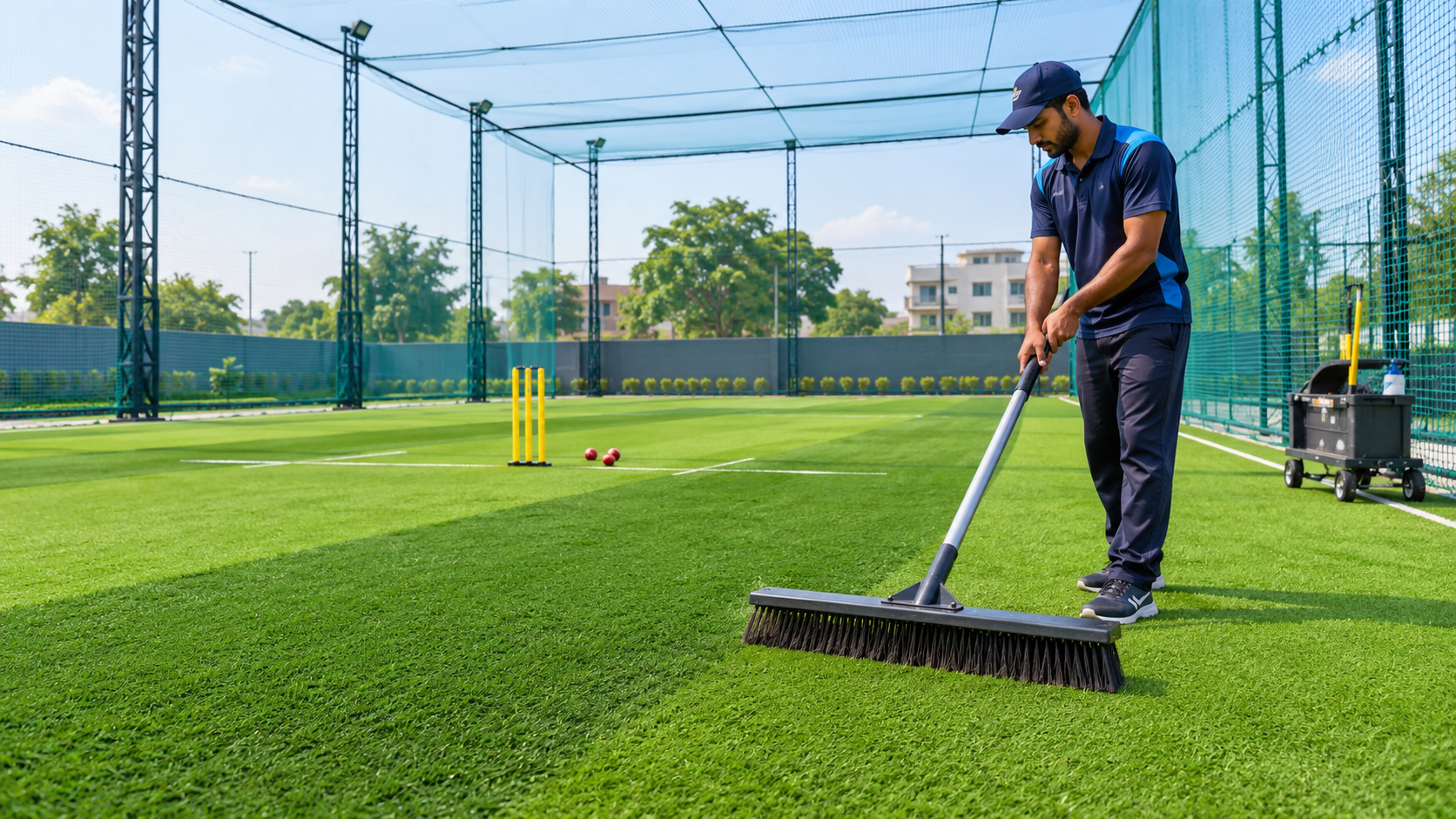
Use a soft-bristled brush, suitable turf rake, or a manufacturer-approved cleaning tool to remove loose dirt and rubbish. A leaf blower may also be suitable for removing lightweight debris when used according to the turf manufacturer’s recommendations.
Pay special attention to the corners, boundary areas, spaces near the nets, and sections around the entry and exit points. These areas often collect more dirt because of limited airflow or repeated movement.
Avoid sharp metal tools, abrasive brushes, and equipment that could cut or pull the turf fibres.
For commercial facilities, cleaning should be included in the closing routine after busy playing sessions. Removing rubbish and inspecting the surface at the end of each day helps prevent small maintenance issues from becoming larger problems.
Maintenance tip: Keep a dedicated cleaning kit at your facility so staff members can complete routine cleaning without searching for equipment.
3. Brush the Artificial Grass to Maintain Fibre Structure
Brushing is an important part of artificial cricket turf maintenance because repeated foot traffic can gradually push grass fibres in the same direction. This is especially common in high-use areas such as the batting crease, bowling run-up, wicket zone, and entry pathways.
When fibres remain flattened, the surface may develop an uneven appearance and its playing characteristics can change.
Use a soft or medium-bristled brush specifically recommended for your turf system. Brush gently against the direction in which the fibres have become flattened, following the manufacturer’s instructions.
Avoid applying excessive pressure or using aggressive brushing methods. The aim is to lift the fibres and redistribute suitable infill where applicable, not to pull the grass away from its backing.
Pay particular attention to frequently used sections, but do not neglect the rest of the ground. Consistent maintenance across the playing area helps reduce differences in surface condition.
The ideal brushing frequency depends on the type of turf, the amount of foot traffic, and the manufacturer’s guidance. A busy commercial box cricket arena may require more frequent brushing than a private facility used occasionally.
If the turf fibres remain flattened despite careful brushing, inspect the area for worn fibres, inadequate infill, or underlying surface problems. Persistent flattening may require professional assessment rather than repeated brushing.
4. Keep the Drainage System Clear
Water management is essential for maintaining an outdoor box cricket facility, particularly in regions that experience heavy monsoon rainfall. Poor drainage can lead to standing water, prolonged drying times, unpleasant playing conditions, and potential damage to the underlying installation.
Even a well-installed synthetic turf system needs regular drainage inspections. Leaves, dust, soil, and rubbish can block drainage channels or outlets over time.
Start by checking visible drainage points and removing any loose debris that obstructs water flow. Inspect the edges of the playing area and the surrounding ground to identify places where rainwater collects.
After heavy rainfall, observe how quickly water drains from the surface. Persistent puddles may indicate blocked drainage, local depressions, a damaged base, or another installation-related problem.
Do not attempt to solve serious drainage issues simply by adding more infill or cutting into the turf. These actions may conceal the problem without correcting its cause.
For facilities located in areas with seasonal heavy rain, arrange drainage inspections before the monsoon begins. Confirm that the drainage outlets are accessible and that surrounding surfaces direct water away from the playing area.
Why it matters: Effective drainage helps preserve the usability of the ground, reduces interruptions after rainfall, and protects the components beneath the artificial grass.
5. Inspect Turf Seams, Joints, and Edges
Artificial turf installations typically include joints where separate sections of grass are connected. Depending on the system, these joints may use specialised joining tape, adhesive, or another approved installation method.
Repeated movement, environmental exposure, water infiltration, and installation-related issues can cause seams or edges to loosen.
Inspect the joints regularly, especially in high-traffic sections and around the batting area. Look for visible gaps, lifting edges, wrinkles, exposed backing, or changes in surface level.
The boundary edges should also be checked for movement or separation from the surrounding structure.
Small defects should be assessed promptly. A loose edge may become more pronounced when players run over it, while an open seam can create a tripping hazard and allow dirt or water to enter beneath the turf.
Avoid using ordinary household glue or improvised fastening methods. Turf adhesives and joining materials must be compatible with the installed system and its environmental conditions.
If a joint has separated or the turf has developed a raised section, restrict access to the affected area until it has been assessed and repaired appropriately.
A professional box cricket turf construction company can determine whether the problem requires local seam repair, edge reattachment, or a more extensive inspection of the underlying base.
6. Maintain the Correct Infill Level
Some artificial sports turf systems use infill materials to support the fibres, improve surface stability, and influence the playing characteristics of the ground. However, not every synthetic cricket surface uses the same infill system.
If your installation includes sand, rubber, or another specified infill, maintaining the correct distribution is important.
Repeated running, sliding, brushing, and ball impact can cause infill to shift from one section to another. As a result, some areas may have insufficient material while others develop excessive accumulation.
Inspect the surface for visible variations, exposed backing, unusually flattened fibres, or areas where infill has collected unevenly.
Use only the infill material recommended for your particular turf system. Introducing a different material without professional advice can affect drainage, surface stability, and playing characteristics.
Where permitted, redistribute the existing material using approved maintenance equipment. If material has been lost or the surface requires additional infill, follow the manufacturer’s specified depth and application procedure.
Do not add infill simply because the grass looks flat. The cause could be fibre wear, a damaged backing, or a problem with the base.
A professional assessment is recommended if unevenness persists or the original infill specifications are unknown.
7. Clean Spills and Remove Stains Carefully
Food, beverages, mud, sweat, and other substances can leave marks on artificial cricket turf. In commercial facilities, these problems are particularly common around seating areas, entrances, and player waiting zones.
The safest approach is to address spills as soon as possible.
First, remove any solid material without rubbing it deeper into the fibres. Blot liquid spills with an absorbent cloth or suitable cleaning material. If the turf manufacturer’s instructions permit it, use a small amount of water and a mild, compatible cleaning solution.
Rinse or remove cleaning residue according to the product instructions, ensuring that the cleaning process does not interfere with the turf backing or drainage system.
Avoid strong acids, bleach, petroleum-based solvents, and other aggressive chemicals unless the manufacturer specifically approves their use. These substances may discolour the fibres or damage the backing and adhesive components.
For persistent stains, identify the source before selecting a cleaning product. Different substances require different treatments, and an unsuitable cleaner may make the problem worse.
If the facility experiences frequent food or beverage spills, establish designated eating areas away from the playing surface. This simple operational measure can reduce cleaning requirements and help maintain a professional appearance.
8. Protect the Turf from Excessive Heat and Fire Hazards
Artificial grass is manufactured from synthetic materials, and its performance can be affected by excessive heat or direct exposure to flames.
Avoid placing hot equipment, burning materials, or open flames directly on or near the turf. Cigarettes, fireworks, hot charcoal, and discarded smoking materials can damage synthetic fibres and may create a fire hazard.
Where possible, keep barbecues, generators, welding work, and other heat-producing activities away from the playing area. Maintenance work involving sparks should be planned with suitable protection and safety precautions.
During hot weather, monitor the surface condition and follow the manufacturer’s recommendations for temperature-related care. Some synthetic surfaces can become significantly hotter than surrounding air, particularly when exposed to direct sunlight.
If the turf becomes uncomfortably hot, consider adjusting playing schedules to cooler periods and allowing the surface to cool before use.
Never assume that pouring water over hot turf is always appropriate. Follow the product-specific instructions, particularly if the surface includes specialised infill, adhesives, or electrical equipment nearby.
9. Inspect the Nets, Fencing, and Supporting Structure
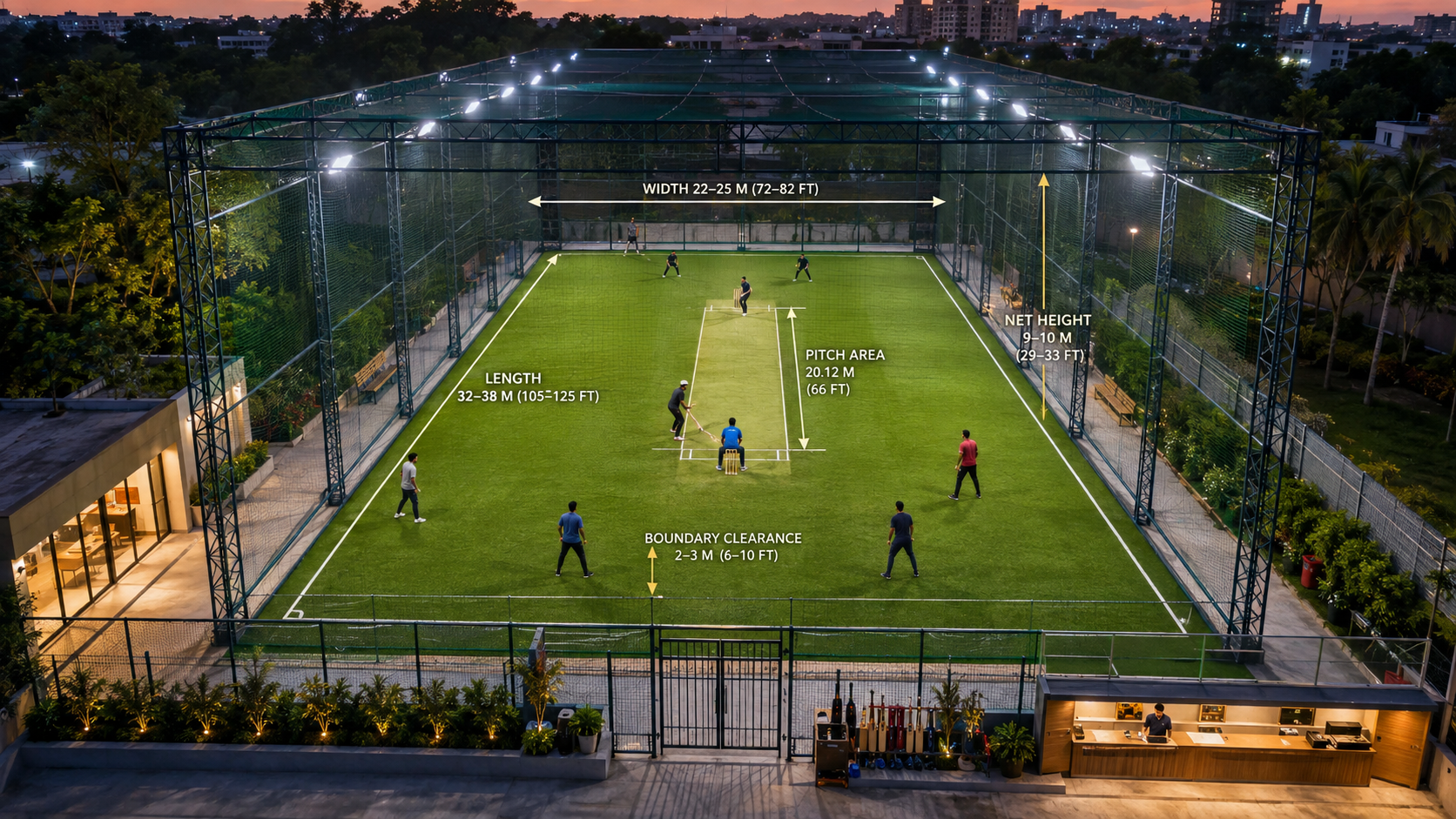
Box cricket safety depends on more than the playing surface. Nets, boundary fencing, support poles, lighting fixtures, and access gates also require regular maintenance.
Inspect the perimeter nets for tears, loose stitching, sagging sections, and damaged attachment points. A damaged net may allow the cricket ball to escape the playing area or expose nearby people and property to impact.
Check that poles and structural supports remain secure. Look for corrosion, loose fasteners, visible bending, or movement around the foundations.
Fencing and gates should be inspected for sharp edges, broken components, and faulty locking arrangements. Any exposed metal or damaged connection should be addressed before it becomes a hazard.
Lighting also deserves attention, especially at facilities operating during evening hours. Check for flickering fixtures, damaged cables, insecure fittings, and poorly illuminated areas.
Electrical work should be carried out by qualified professionals. Do not allow untrained staff to handle exposed wiring or attempt repairs to electrical equipment.
A scheduled inspection of the entire box cricket facility helps identify risks that may not be visible during routine turf cleaning.
10. Use Appropriate Footwear and Establish Playing Rules
The behaviour of players has a direct impact on turf condition. Incorrect footwear, dragging heavy objects, and unnecessary surface abuse can accelerate wear even when the installation is of good quality.
Establish clear rules for everyone using the facility.
Players should wear footwear suitable for the installed surface. Avoid footwear with sharp metal studs or other features that the turf manufacturer does not permit.
Prohibit activities that can cut, puncture, or excessively abrade the surface. Heavy equipment, furniture, and storage items should not be dragged across the turf.
Where practical, provide separate footwear or cleaning mats at the entrance to reduce the amount of outside dirt carried onto the playing area.
Staff members should also avoid parking maintenance vehicles or placing heavy machinery on the synthetic grass unless the surface has been specifically designed to support such loads.
These simple preventive measures can reduce unnecessary wear and help preserve the appearance and usability of the ground.
11. Follow a Daily, Weekly, and Monthly Maintenance Schedule
A consistent maintenance plan is more effective than waiting until the turf appears damaged. Dividing tasks into daily, weekly, and monthly activities makes it easier to maintain a commercial box cricket ground.
Daily Maintenance
Daily maintenance should focus on cleanliness and immediate safety concerns.
- Remove rubbish, leaves, and loose debris.
- Check for visible damage, raised edges, and open seams.
- Inspect the playing area for spills and foreign objects.
- Check nets and access points for obvious defects.
- Remove standing water where appropriate and investigate drainage problems.
- Record any issues that require repair or further inspection.
Weekly Maintenance
Weekly maintenance should address developing wear and surface condition.
- Brush the turf where needed using approved equipment.
- Inspect high-traffic areas for flattened fibres and uneven infill.
- Check seams, perimeter edges, and net attachments.
- Clean accessible drainage grates and outlets.
- Review the condition of lighting and supporting structures.
- Confirm that cleaning supplies and safety equipment are available.
Monthly Maintenance
Monthly maintenance should involve a more detailed inspection of the facility.
- Assess overall turf condition and visible fibre wear.
- Review drainage performance and recurring water accumulation.
- Inspect fencing, support poles, and structural connections.
- Check whether repairs identified during daily inspections have been completed.
- Review maintenance records and recurring problem areas.
- Arrange professional servicing where necessary.
These intervals are general recommendations rather than universal requirements. A heavily used commercial venue may need more frequent checks, while the turf manufacturer may prescribe a different schedule.
12. Prepare Your Box Cricket Turf for the Monsoon Season
Seasonal maintenance is especially important for outdoor box cricket facilities in India, where heavy rainfall, humidity, and changing temperatures can affect ground conditions.
Before the monsoon, clean drainage channels, remove accumulated debris, inspect the edges, and verify that rainwater can flow away from the playing area.
Examine the turf joints for openings that may allow water to enter beneath the surface. Check surrounding soil and paved areas for erosion or water accumulation near the base.
After periods of heavy rain, inspect the facility before allowing players to return. Look for standing water, loose sections, displaced infill, and signs of movement in the surrounding structure.
Do not assume that a surface is ready for play merely because the top appears dry. Persistent dampness or underlying drainage issues may still affect its condition.
If water repeatedly collects in the same location, arrange a professional drainage assessment rather than relying on temporary fixes.
A planned pre-monsoon inspection can help reduce unexpected closures, improve maintenance planning, and protect the long-term condition of the installation.
13. Know When to Hire a Professional Turf Maintenance Company
Routine cleaning and basic inspections can be handled by trained facility staff. However, certain problems require specialist equipment, technical knowledge, or professional repair methods.
Consider professional assistance if you notice:
- Repeated pooling of water or slow drainage.
- Seams that continue to separate after repair.
- Significant flattening or visible fibre deterioration.
- Uneven playing areas or movement beneath the turf.
- Widespread infill displacement.
- Damaged structural supports or fencing.
- Persistent odours, contamination, or stains that cannot be removed safely.
A qualified turf maintenance provider can assess the condition of the surface, identify the likely cause of deterioration, and recommend appropriate corrective work.
For newly constructed facilities, ask the installation company about maintenance training, recommended cleaning products, warranty conditions, and scheduled inspections.
Professional maintenance should complement routine cleaning, not replace it. Combining daily care with periodic specialist servicing generally provides a more practical approach to protecting a box cricket investment.
14. Common Box Cricket Turf Maintenance Mistakes to Avoid
Even well-maintained facilities can experience unnecessary damage when unsuitable cleaning methods are used.
Using harsh chemicals: Strong cleaning products may damage synthetic fibres, backing materials, or adhesives. Select products compatible with the installed system.
Ignoring small defects: Minor seam separation, loose edges, or damaged netting can become more serious if left unattended.
Using unsuitable brushes: Sharp or overly aggressive tools can pull fibres and damage the surface.
Neglecting drainage: Blocked outlets and repeated water accumulation can affect the playing area and underlying construction.
Adding unapproved infill: Incorrect material or excessive quantities may alter the surface characteristics and create uneven areas.
Skipping inspections during low-use periods: Reduced activity does not eliminate exposure to dust, weather, moisture, or material ageing.
Allowing unrestricted access: Vehicles, heavy equipment, inappropriate footwear, and unrelated activities can cause avoidable damage.
Avoiding these mistakes helps establish a more reliable maintenance routine and reduces the risk of preventable repairs.
15. How Proper Maintenance Supports Long-Term Business Performance
For commercial box cricket facility owners, turf maintenance is not just a cleaning expense. It is an important part of facility management and customer experience.
A clean, well-maintained ground creates a more professional impression and helps players enjoy their time at the venue. Clear safety procedures, intact nets, and a consistent playing surface also support a more dependable booking experience.
Regular inspections can help identify repair requirements early, allowing owners to plan maintenance instead of reacting to unexpected failures.
Maintenance records are particularly useful for facilities with multiple employees or high booking volumes. Recording cleaning activities, observed defects, repairs, and service dates helps establish accountability and identify recurring issues.
A maintenance budget should account for routine cleaning supplies, staff time, periodic inspections, minor repairs, and professional servicing when required.
There is no single maintenance cost or lifespan that applies to every box cricket turf. Actual requirements depend on turf quality, installation standards, usage levels, weather exposure, drainage design, and the manufacturer’s specifications.
By incorporating maintenance into the operating plan from the beginning, facility owners can make more informed decisions about repairs, upgrades, and long-term asset management.
Conclusion
Maintaining your box cricket turf for long-term performance requires a combination of regular cleaning, careful brushing, effective drainage management, timely repairs, and consistent safety inspections. Each task contributes to preserving the playing surface and supporting a better experience for players.
The most effective approach is to follow a structured maintenance schedule, use products approved for your turf system, and address minor defects before they become major problems. Seasonal inspections are equally important for outdoor facilities exposed to heavy rainfall, heat, dust, and changing weather conditions.
Whether you manage a commercial sports arena or a private cricket practice ground, proper maintenance helps protect the value of your installation and supports reliable day-to-day operations.
If you are planning a new facility or need assistance with an existing playing surface, working with an experienced box cricket turf construction company can help you understand the right installation, cleaning, drainage, and maintenance requirements for your project.
A well-constructed supported by a practical plan is a stronger foundation for a safe, enjoyable, and sustainable box cricket facility.
Frequently Asked Questions (FAQs)
1. How often should box cricket turf be cleaned?
Box cricket turf should generally be cleared of rubbish and loose debris daily, particularly at busy commercial facilities. Brushing, drainage checks, and detailed inspections should follow a schedule based on usage and the manufacturer’s recommendations.
2. Can artificial cricket turf be washed with water?
Some artificial turf systems can be rinsed with water, but the appropriate method depends on the materials, backing, infill, and drainage design. Follow the manufacturer’s cleaning instructions and avoid excessive water where drainage is inadequate.
3. What causes artificial cricket turf to wear out?
Common contributing factors include heavy foot traffic, unsuitable footwear, inadequate maintenance, excessive heat, poor drainage, unsuitable cleaning products, and deterioration of the turf fibres or backing.
4. How can I prevent waterlogging in a box cricket ground?
Keep drainage outlets clear, remove debris, inspect the surrounding ground, and address recurring puddles promptly. Persistent waterlogging may require professional assessment of the drainage system and underlying base.
5. Is professional box cricket turf maintenance necessary?
Professional maintenance is useful for identifying underlying surface problems, repairing separated seams, assessing drainage, and correcting significant infill or structural issues. Routine cleaning and basic inspections can usually be handled by trained facility staff.
6. How can I increase the lifespan of my box cricket turf?
Follow a consistent cleaning schedule, brush fibres as recommended, maintain the specified infill where applicable, protect the surface from excessive heat, inspect joints regularly, and arrange repairs when necessary. Correct installation and appropriate usage also influence long-term performance.
7. What should I check before opening my box cricket ground each day?
Inspect the playing surface for debris, raised edges, loose seams, spills, and standing water. Check the nets and access areas for visible damage, and resolve any safety concerns before allowing players to enter.
8. Does require special during the monsoon?
Yes. Outdoor facilities should receive pre-monsoon drainage checks and inspections after heavy rainfall. Remove debris from drainage outlets and investigate repeated water accumulation, loose edges, or surface irregularities before resuming play.