Introduction
Badminton is one of the fastest-growing indoor sports, attracting players of all ages and skill levels. From professional training academies and sports clubs to schools, colleges, fitness centres and residential sports facilities, the demand for well-designed badminton courts is increasing every year. However, creating a high-quality badminton court involves much more than installing a net, marking the playing lines and providing sufficient lighting. One of the most important decisions is selecting the right flooring.
The playing surface has a direct impact on a player’s movement, balance, comfort, speed and overall performance. A poor-quality floor can make movement uncomfortable, increase the risk of slipping and place unnecessary pressure on the knees, ankles and other joints. On the other hand, a properly designed sports flooring system can provide a safer, more comfortable and consistent playing experience.
This is where synthetic badminton court flooring has become a preferred choice for modern indoor sports facilities.
Synthetic flooring is specially developed to meet the demands of active sports. It offers a combination of durability, flexibility, surface grip, shock absorption and ease of maintenance. Whether you are planning a new badminton court or upgrading an existing sports facility, synthetic flooring can be a practical long-term investment.
In this article, we will explore why synthetic flooring is an excellent choice for modern badminton courts, its major benefits, installation considerations, maintenance requirements and the factors to consider before selecting the right flooring system.
1. What Is Synthetic Badminton Court Flooring?
Synthetic badminton court flooring refers to a specially manufactured sports surface designed to support athletic movements and indoor sports activities. Unlike ordinary tiles, concrete or basic cement flooring, synthetic sports flooring is developed with specific performance characteristics that help players move comfortably and maintain better control during games.
Depending on the system, synthetic flooring may consist of multiple layers, including a prepared base, cushioning or elastic layers, a synthetic surface coating and a protective finish.
Common synthetic sports flooring options include:
- PVC sports flooring: A flexible sheet-based flooring system widely used for indoor badminton courts. It can offer a cushioned playing surface and consistent ball response when properly specified.
- PU sports flooring: Polyurethane-based flooring that can provide a seamless, durable and comfortable sports surface.
- Acrylic sports flooring: A coating system commonly used on suitable sports bases, particularly for outdoor applications. Its suitability for badminton depends on the product specification and intended playing environment.
- Synthetic multi-layer flooring: Specially designed systems that combine multiple layers to provide improved surface performance, cushioning and durability.
The ideal flooring option depends on the court location, expected playing intensity, available budget, base condition and performance requirements.
2. Excellent Shock Absorption for Better Player Comfort
One of the biggest advantages of synthetic badminton court flooring is its ability to provide controlled shock absorption.
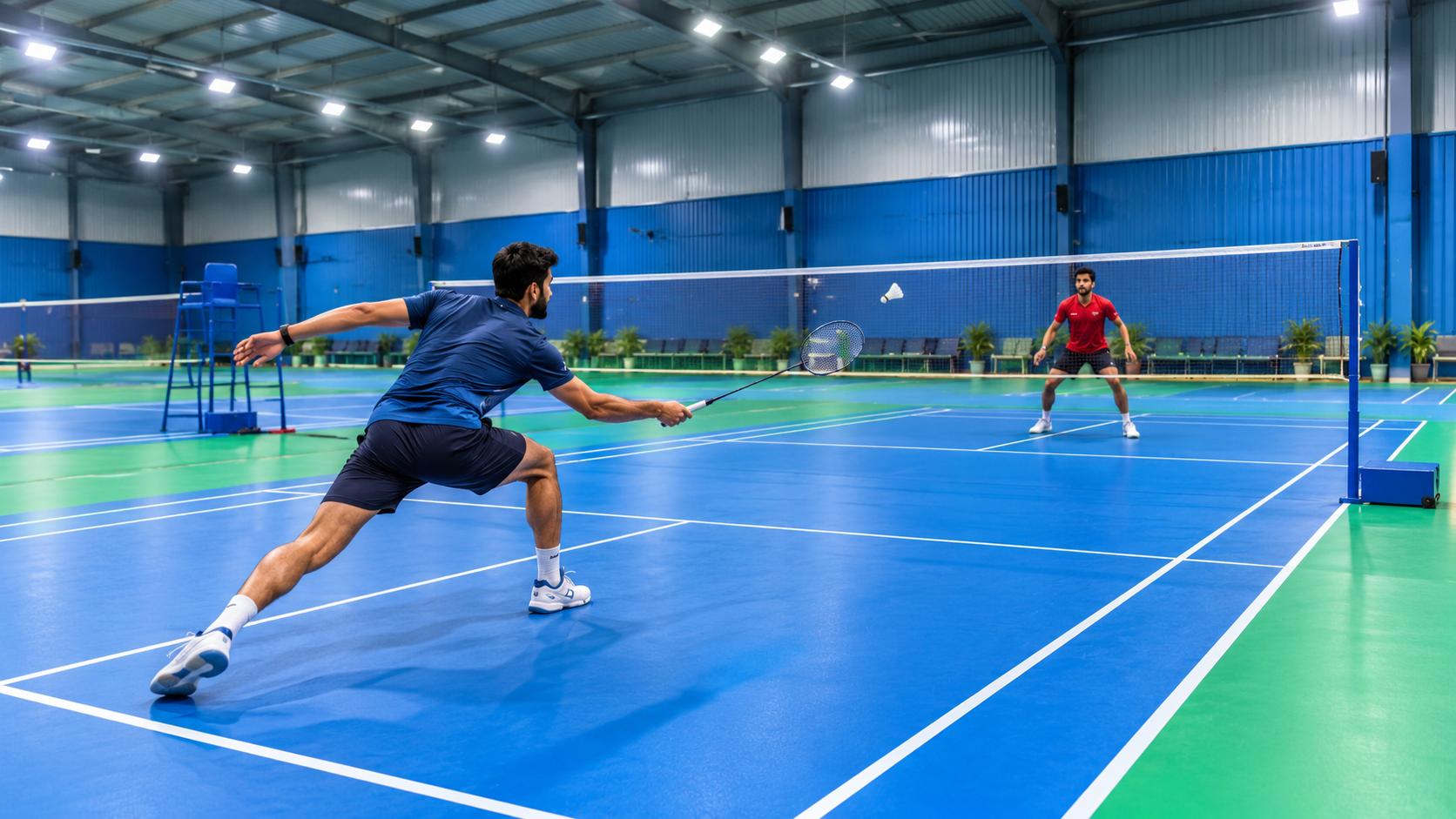
Badminton involves continuous jumping, sudden stopping, quick lunges and rapid directional changes. During these movements, the player’s feet and lower body experience repeated impact forces. A hard concrete or ordinary tiled surface offers very little cushioning, which can make extended playing sessions uncomfortable.
Quality synthetic sports flooring can help reduce the impact experienced during regular movement by providing an appropriate level of surface elasticity and cushioning.
This is particularly beneficial for:
- Players who practise for several hours every day.
- Professional and competitive badminton players.
- Beginners learning proper footwork.
- School and college sports facilities.
- Sports academies conducting regular training sessions.
A suitable shock-absorbing floor can contribute to a more comfortable playing environment. However, the actual level of cushioning depends on the complete flooring system, its thickness, construction and installation quality.
3. Better Grip and Controlled Player Movement
Badminton requires fast footwork, quick reactions and precise movement. Players frequently move forward, backward and sideways while maintaining their balance and preparing for the next shot.
For this reason, floor grip is an essential consideration when selecting badminton court flooring.
Synthetic sports flooring is available with specially developed surface textures and finishes that help provide controlled traction. A properly selected surface can offer sufficient grip without making foot movement unnecessarily difficult.
The right balance between grip and controlled sliding is important because:
- Excessive slipperiness can increase the possibility of falls.
- An overly sticky surface can restrict natural foot movement.
- Consistent traction helps players change direction with greater confidence.
- A suitable surface finish supports comfortable movement during extended matches.
For modern badminton courts, flooring should always be selected according to the manufacturer’s sports performance specifications rather than appearance alone.
4. Supports Faster Footwork and Better Playing Performance
Speed and agility are essential elements of badminton. Players must react quickly to smashes, drops, clears and net shots while constantly adjusting their body position.
The quality of the playing surface can influence how comfortably and confidently players perform these movements.
A professionally installed synthetic badminton court provides a consistent surface across the playing area. This helps players become familiar with the floor’s grip, cushioning and movement characteristics.
A uniform playing surface is especially important for competitive training because players need predictable conditions during practice and matches.
When the flooring is properly selected and maintained, it can support:
- Quick lateral movements.
- Comfortable forward and backward footwork.
- Better balance during lunges.
- More controlled stopping and starting.
- Consistent movement across the court.
Although flooring alone cannot improve a player’s technique, the right surface can create better conditions for developing badminton skills.
5. Long-Lasting Durability for Regular Sports Activities
Durability is another major reason why synthetic flooring is becoming popular in modern badminton facilities.
Sports academies, schools, clubs and commercial indoor sports centres often experience heavy daily usage. Their floors must withstand repeated movement, footwear friction, regular cleaning and continuous training activities.
High-quality synthetic sports flooring is manufactured to handle these demands when installed and maintained according to the manufacturer’s recommendations.
Its durability makes it suitable for:
- Indoor badminton academies.
- Sports clubs and recreational centres.
- School and university gymnasiums.
- Multi-purpose indoor sports halls.
- Commercial badminton facilities.
The lifespan of a synthetic badminton court depends on the material quality, installation method, maintenance schedule, player traffic and environmental conditions.
Choosing a reliable flooring system and professional installation service can help reduce premature wear and unnecessary repair costs.
6. Low Maintenance and Easy Cleaning
Maintaining a clean badminton court is important for player safety, hygiene and the overall appearance of a sports facility.
Compared with many conventional flooring surfaces, quality synthetic flooring can be relatively easy to maintain.
Routine cleaning generally involves removing dust and loose dirt, followed by mopping with a suitable cleaning solution recommended by the flooring manufacturer.
Some important maintenance practices include:
- Sweep or dust-mop the surface regularly.
- Use appropriate cleaning products.
- Avoid harsh chemicals that may damage the surface finish.
- Clean spills immediately.
- Keep the playing area free from dust, moisture and unnecessary objects.
- Inspect the flooring periodically for damage, lifting or worn areas.
- Use suitable footwear to reduce unnecessary surface wear.
Proper maintenance helps preserve the flooring’s appearance, traction and performance over time.
For sports facilities with regular daily usage, a simple cleaning routine can make a significant difference.
7. Professional Appearance and Modern Court Design
A badminton court should not only perform well but also create a professional sporting environment.
Synthetic flooring is available in different colours, finishes and court-design combinations. Popular colour combinations include blue, green, red and contrasting shades for court boundaries.
These design options allow sports facility owners to create an attractive and organised playing area.
A professionally designed synthetic badminton court can offer:
- Clear and visible playing lines.
- Attractive colour combinations.
- A clean and uniform appearance.
- Better visual organisation of the sports facility.
- A professional environment for training and competitions.
The appearance of a badminton court can also influence how visitors, parents, players and sports organisations perceive the overall quality of a facility.
8. Suitable for Schools, Colleges, Academies and Sports Clubs
One of the most valuable features of synthetic badminton flooring is its versatility.
Different sports facilities have different requirements. A school may need a durable and comfortable surface for students, while a professional academy may prioritise consistent playing characteristics for intensive training.
Synthetic flooring offers different product options to accommodate these requirements.
For Schools and Colleges
Schools and colleges require sports surfaces that can support regular student activities while remaining easy to maintain. Suitable synthetic flooring can help create a comfortable and organised badminton training environment.
For Professional Badminton Academies
Badminton academies need flooring that supports regular practice, repeated footwork drills and competitive preparation. Product specifications should be carefully evaluated to ensure the required playing characteristics.
For Indoor Sports Clubs
Sports clubs often accommodate players with different skill levels. A consistent synthetic surface can help provide a more enjoyable experience for recreational and competitive players.
For Commercial Sports Facilities
Commercial badminton centres require flooring that can handle regular bookings and frequent use. Durability, maintenance and long-term operating costs are important considerations when choosing a flooring system.
9. Better Long-Term Value Compared with Conventional Flooring
When planning a badminton court, many facility owners initially focus on the installation price. However, the total cost of flooring should be evaluated over its entire service life.
Concrete and ordinary tiles may appear economical during initial construction, but they are not necessarily designed to provide the playing characteristics required for badminton.
A specialised synthetic flooring system may involve a higher initial investment, depending on the material and construction. However, its sports-specific performance, maintenance requirements and potential service life can make it a worthwhile long-term choice.
Consider the following factors when comparing flooring options:
- Initial material and installation cost.
- Surface durability.
- Player comfort.
- Maintenance expenses.
- Repair requirements.
- Expected usage intensity.
- Product warranty and manufacturer support.
The best flooring solution is not always the cheapest option. It is the one that provides the right combination of performance, durability, safety considerations and overall value.
10. Why Professional Synthetic Badminton Court Flooring Installation Matters
Even the best flooring material may fail to deliver the expected results if it is installed incorrectly.
Professional installation plays a major role in the performance, appearance and lifespan of a badminton court.
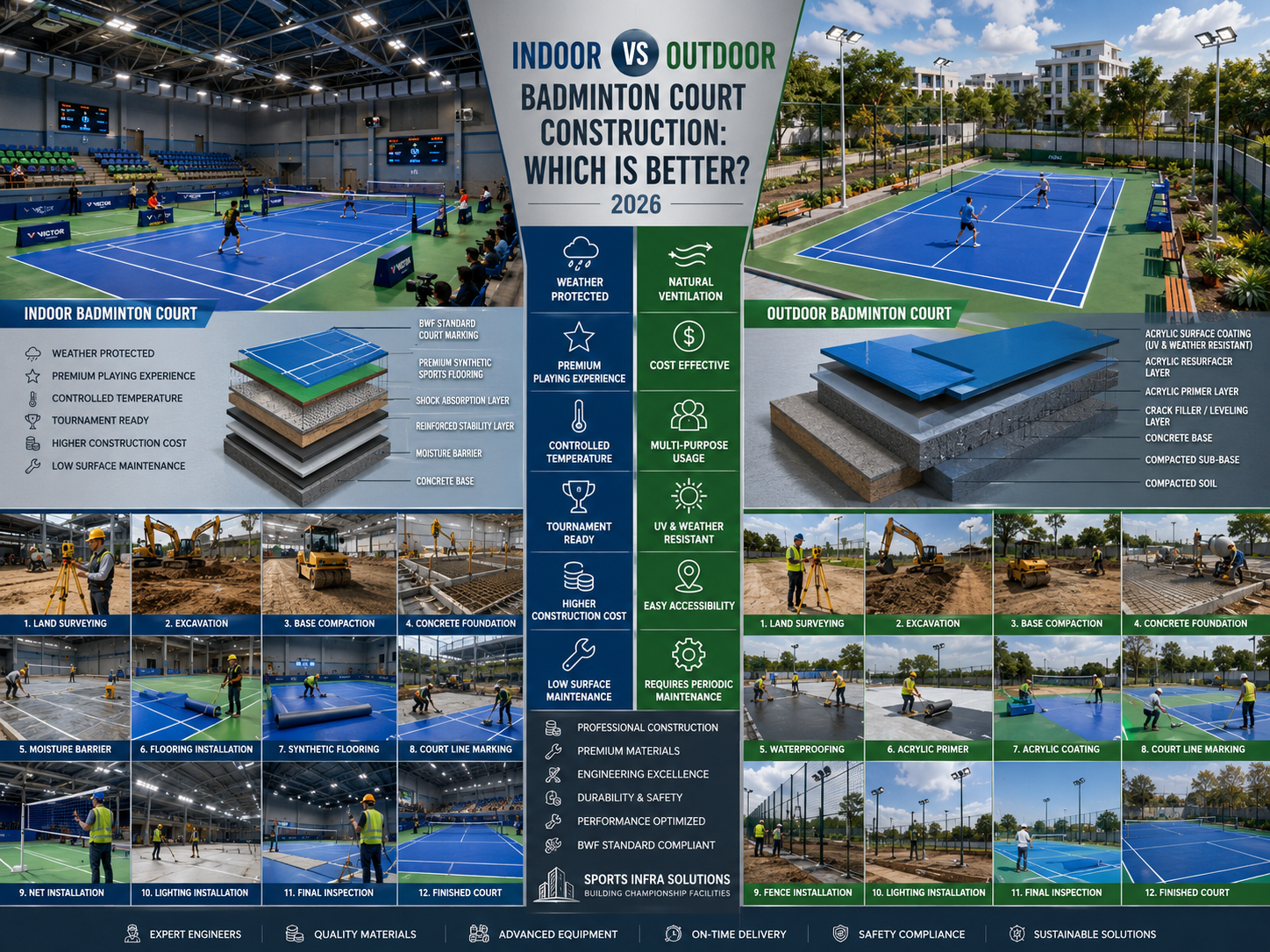
A reliable installation process generally includes the following stages.
Step 1: Site Inspection
The installation team examines the existing surface, available space, moisture conditions and overall site requirements.
Step 2: Base Surface Preparation
The concrete or other approved base must be properly prepared. It should meet the flooring manufacturer’s requirements for smoothness, strength, dryness and levelness.
Step 3: Flooring Material Selection
The appropriate synthetic flooring system is selected according to the court’s intended use, playing requirements and available budget.
Step 4: Installation of Flooring
The selected material is installed using the recommended adhesives, techniques and application procedures. Special attention is given to joints, edges and surface uniformity.
Step 5: Court Marking
Badminton court lines are marked according to the applicable dimensions and specifications. Accurate measurements are essential for proper gameplay.
Step 6: Final Inspection
The completed surface is inspected for installation quality, uniformity, finishing and any visible defects before the court is handed over.
Working with an experienced synthetic sports flooring contractor can help ensure that each stage is completed correctly.
11. How to Choose the Best Synthetic Flooring for a Badminton Court
Before finalising your badminton court flooring, it is important to evaluate the actual requirements of your facility.
Here are some essential points to consider:
1. Understand Your Usage Requirements
Determine whether the court will be used for recreational games, school activities, regular academy training or competitive badminton.
2. Check the Flooring Specifications
Ask for product information covering thickness, surface characteristics, cushioning, wear resistance and suitability for badminton.
3. Evaluate the Base Condition
The existing concrete or subfloor must be suitable for the proposed flooring system. Uneven or damp bases can create problems after installation.
4. Ask About Sports Performance
Do not select flooring based only on colour or thickness. Ask about relevant test results and performance specifications for grip, shock absorption and surface behaviour.
5. Consider Maintenance Requirements
Choose a flooring system that can be maintained using practical cleaning methods and readily available products.
6. Check the Contractor’s Experience
Look for a contractor with experience in sports flooring projects, proper installation procedures and the ability to provide technical guidance.
7. Compare Overall Value
Evaluate the complete project cost, including material, preparation, installation, court marking, maintenance and warranty.
Taking time to evaluate these factors can help you avoid unnecessary expenses and select a suitable flooring solution.
12. Synthetic Badminton Flooring: Indoor and Outdoor Considerations
Not every synthetic flooring system is suitable for every environment.
Indoor badminton courts generally benefit from flooring systems specifically developed for indoor sports. These systems can provide controlled grip, consistent surface characteristics and appropriate cushioning.
Outdoor badminton courts, on the other hand, require materials designed to withstand weather exposure, sunlight, temperature changes and moisture.
Before selecting an outdoor surface, consider:
- Resistance to UV exposure.
- Water drainage and surface condition.
- Weather-related expansion and contraction.
- Slip resistance in the intended environment.
- Suitability for the expected playing conditions.
For indoor professional badminton facilities, specialised PVC or other approved indoor sports flooring systems are often considered. Outdoor installations may require a different surface specification.
Selecting the right system for the intended environment is essential for long-term performance.
13. Common Mistakes to Avoid When Installing Badminton Court Flooring
A badminton court is a long-term sports facility investment, so it is important to avoid common installation and selection mistakes.
Some frequent mistakes include:
- Selecting ordinary flooring instead of sports-specific flooring.
- Choosing a product based only on its lowest price.
- Ignoring the condition of the existing base.
- Installing flooring without checking moisture levels.
- Using an unsuitable surface finish.
- Neglecting proper court measurements and line marking.
- Hiring installers without relevant sports flooring experience.
- Ignoring the manufacturer’s maintenance instructions.
These mistakes can affect the playing experience and may lead to additional repair or replacement expenses.
Proper planning, quality materials and professional installation are the foundation of a successful badminton court project.
Conclusion: Make the Right Investment with Synthetic Badminton Court Flooring
A modern badminton court requires a playing surface that combines comfort, durability, controlled grip, consistent performance and attractive design. Synthetic flooring offers a practical solution for meeting these requirements in schools, colleges, professional academies, sports clubs and commercial indoor sports facilities.
Its ability to provide a sports-specific surface, support regular player movement, simplify routine maintenance and enhance the appearance of the facility makes it an excellent choice for many modern badminton court projects.
However, choosing the right product is only one part of the process. The flooring system must also be suitable for the intended environment, supported by proper base preparation and installed by experienced professionals.
If you are planning to construct a new badminton court or upgrade an existing one, investing in quality synthetic sports flooring can help create a more comfortable, attractive and functional sporting environment.
Choose the right synthetic badminton court flooring today and build a playing space that supports better training, enjoyable games and long-term performance.
Frequently Asked Questions (FAQs)
1. Which flooring is best for a modern badminton court?
Specialised indoor sports flooring, such as quality PVC or other approved synthetic sports flooring systems, is a popular choice for modern badminton courts. The ideal option depends on the intended playing level, surface requirements and budget.
2. Is synthetic flooring suitable for professional badminton courts?
Yes. Certain synthetic flooring systems are designed for competitive and professional indoor badminton facilities. The selected product should meet the relevant sports performance and competition requirements.
3. Does synthetic badminton flooring provide shock absorption?
Many synthetic sports flooring systems are designed to provide controlled shock absorption. The actual performance depends on the flooring construction, cushioning layers and product specifications.
4. How long does synthetic badminton court flooring last?
Its lifespan depends on material quality, installation, maintenance, environmental conditions and usage intensity. Regular inspection and appropriate cleaning can help maintain its condition.
5. Is synthetic badminton flooring easy to clean?
Yes. Most quality synthetic sports flooring systems can be maintained through regular dust removal and damp mopping with manufacturer-approved cleaning products.
6. Can synthetic flooring be installed over an existing concrete floor?
Yes, provided the existing concrete base meets the flooring manufacturer’s requirements. It generally needs to be strong, level, sufficiently smooth and free from unacceptable moisture.
7. What is the difference between PVC and PU sports flooring?
PVC flooring is generally supplied in sheet or roll form, while PU flooring is typically installed as a liquid-applied polyurethane system. Both can be used in sports flooring applications, but their performance, construction and maintenance requirements vary by product.
8. Is synthetic flooring suitable for outdoor badminton courts?
Some synthetic systems are suitable for outdoor applications, but indoor PVC and other indoor-specific systems should not automatically be used outdoors. Weather resistance, drainage and UV stability must be considered.
9. What factors affect badminton court flooring costs?
The total cost depends on the selected material, flooring thickness, base preparation, installation complexity, court dimensions, line marking and project location.
10. Why should I hire a professional badminton court flooring contractor?
Professional contractors can assess the site, recommend suitable materials, prepare the base, install the flooring correctly and complete accurate court markings. This helps improve installation quality and long-term reliability.
.