Sports facilities today are designed with more than just playing space in mind. Whether it is a professional tennis academy, a school sports ground, a private club, or a community sports complex, the quality of the playing surface plays an important role in the overall experience. Players need a court that offers consistent ball bounce, comfortable movement, good traction, and long-term durability.
Among the different tennis court surfacing options available, acrylic tennis court flooring has become a preferred choice for many modern sports facilities. Its combination of performance, weather resistance, attractive appearance, and manageable maintenance makes it suitable for a wide range of tennis court projects.
But what makes acrylic flooring such a popular option? Let’s explore its key advantages and understand why facility owners, sports academies, and developers continue to choose this surface.
1. Consistent Playing Performance
One of the biggest reasons behind the popularity of acrylic tennis court flooring is its ability to provide a consistent playing surface.
Tennis requires quick movements, controlled footwork, and accurate ball response. An uneven or poorly finished court can affect the way the ball bounces and make it difficult for players to maintain their rhythm during a match.
A professionally installed acrylic surface creates a smooth and uniform playing area that supports predictable ball bounce. This helps players focus on their game rather than adjusting to irregularities in the court.
The playing characteristics can also be adjusted through suitable acrylic coating systems and textured finishes, depending on the facility’s requirements.
2. Excellent Weather Resistance
Outdoor tennis courts are continuously exposed to changing environmental conditions. Strong sunlight, rainfall, temperature variations, and humidity can gradually affect the condition of an ordinary playing surface.
Acrylic tennis court coatings are designed for outdoor sports applications and offer good resistance to weather exposure when correctly specified and installed.
Their surface properties help maintain the appearance and playing quality of the court under normal outdoor conditions. However, proper drainage, suitable base construction, and correct application are equally important for long-term performance.
For facilities located in regions with hot summers and seasonal rainfall, selecting a suitable acrylic flooring system can be a practical investment.
3. Customisable Colours and Professional Appearance
The appearance of a tennis court contributes significantly to the overall impression of a sports facility.
Acrylic tennis court flooring offers flexibility in colour selection, allowing facility owners to create visually appealing playing areas that match their branding or design preferences.
Popular colour combinations include:
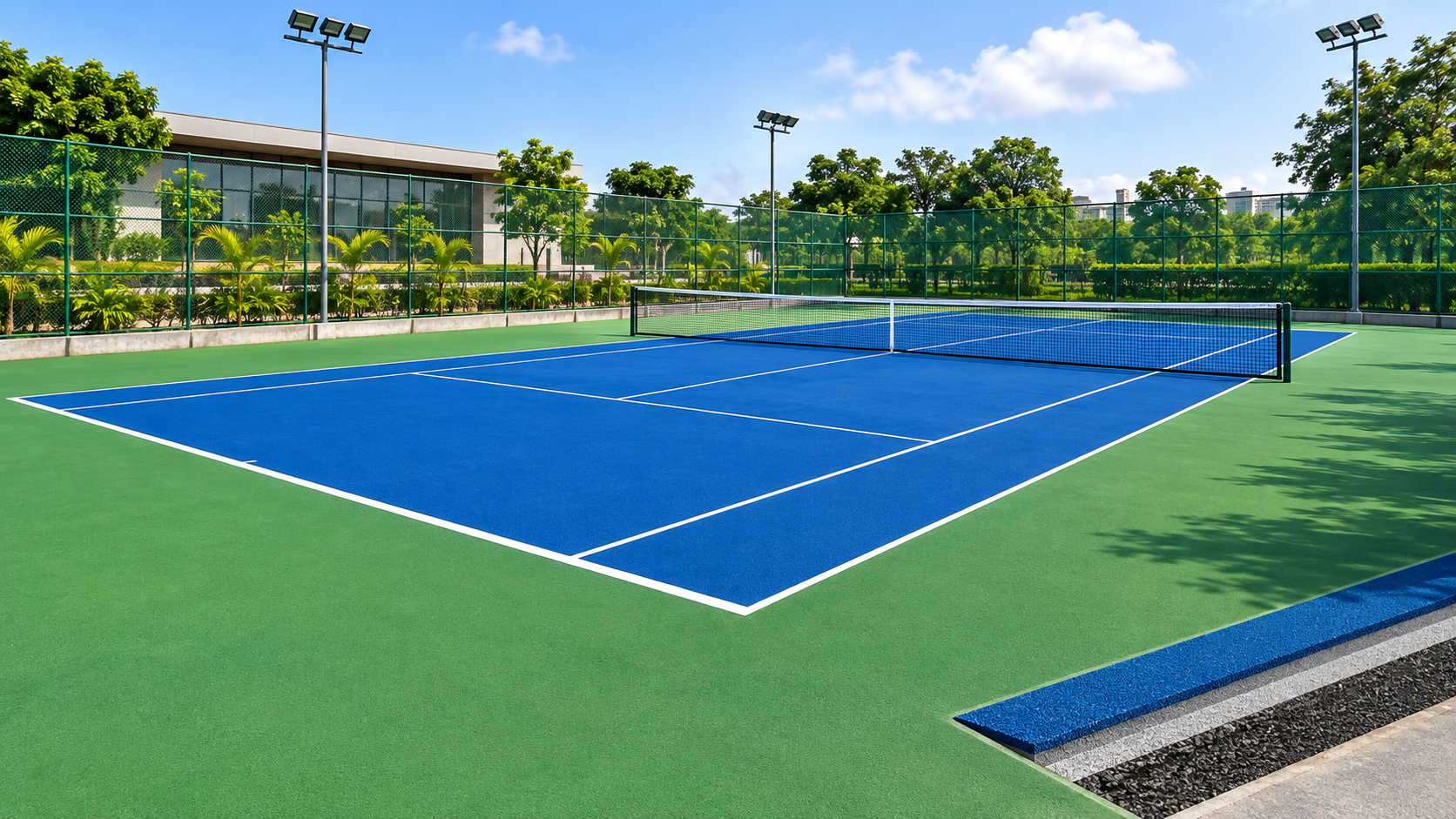
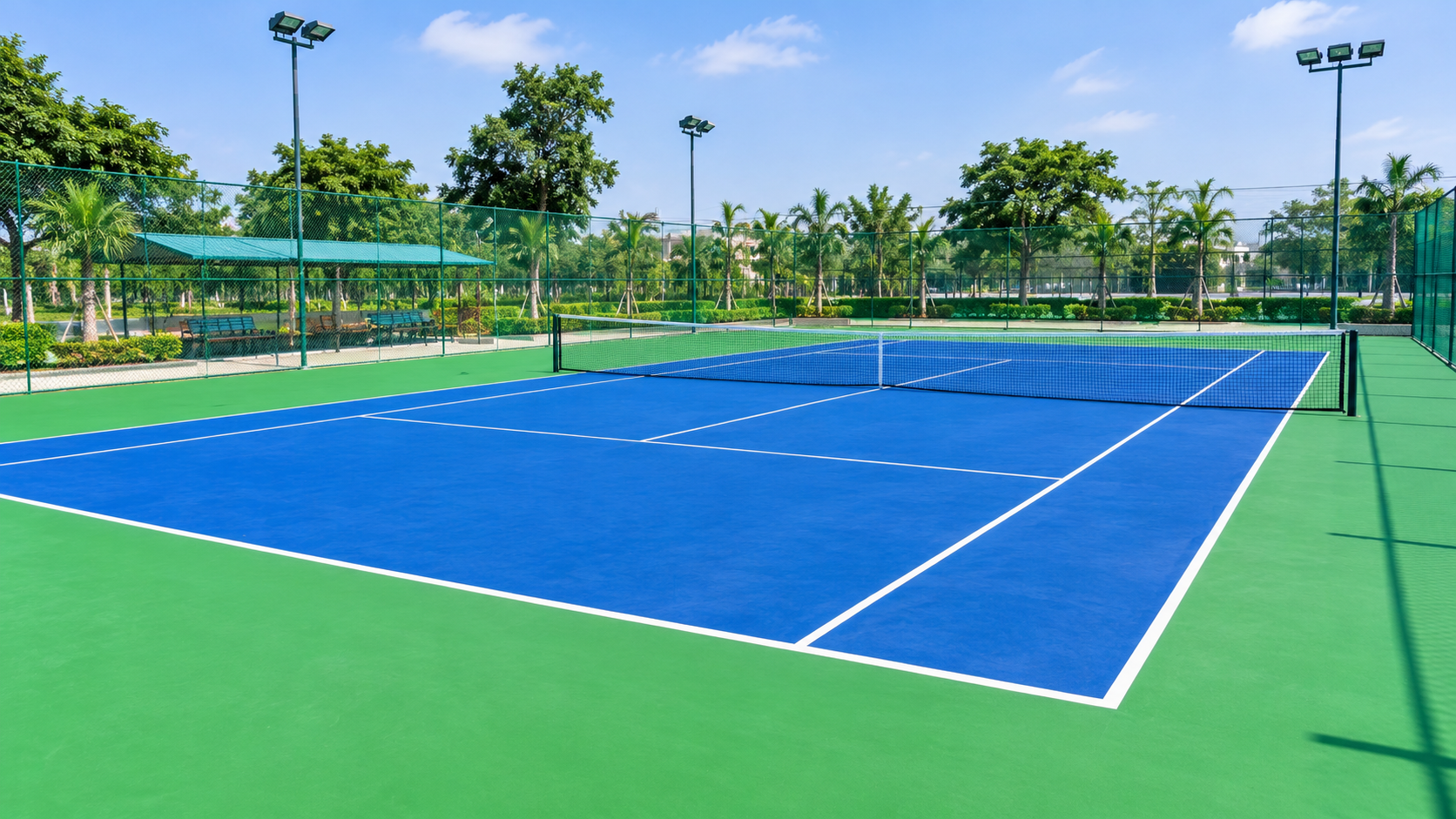
- Blue playing areas with green outer zones.
- Green playing areas with contrasting blue surroundings.
- Red and green combinations for distinctive court designs.
- Custom colour combinations for sports academies and private facilities.
Apart from enhancing visual appeal, contrasting colours help players identify court boundaries and playing zones more easily.
A professionally finished acrylic tennis court gives a clean, organised, and modern appearance that can improve the overall presentation of a sports complex.
4. Good Grip and Player Movement
Foot movement is an essential part of tennis. Players frequently accelerate, stop, change direction, and move sideways to reach the ball.
For this reason, the playing surface must provide a suitable level of traction without feeling excessively rough.
Acrylic tennis court flooring systems generally include textured coatings that help provide grip during movement. The texture can be adjusted according to the selected system and desired playing characteristics.
A properly designed surface supports controlled movement and helps players maintain stability during different types of shots.
It is important to remember that grip performance depends on the coating specification, application quality, surface condition, and maintenance practices.
5. Low and Manageable Maintenance Requirements
Maintenance is another important consideration when choosing flooring for a sports facility.
Sports clubs, educational institutions, and tennis academies often need surfaces that can remain presentable without requiring complicated maintenance procedures.
Acrylic tennis court flooring is relatively easy to maintain compared with several traditional sports surfacing options.
Routine maintenance generally includes:
- Removing dust, leaves, and loose debris.
- Washing the court periodically with suitable cleaning methods.
- Keeping drainage outlets clear.
- Checking for cracks, peeling, or surface damage.
- Recoating worn areas when necessary.
Regular inspection and timely maintenance help preserve the appearance and playing characteristics of the court.
Although acrylic flooring does not eliminate maintenance costs, its straightforward maintenance requirements make it an attractive option for many facility operators.
6. Suitable for Different Types of Sports Facilities
Another reason acrylic tennis court flooring is widely used is its versatility.
It can be considered for various types of tennis facilities, including:
Tennis Academies: Training centres need reliable playing surfaces that can handle regular practice sessions and frequent player movement.
Schools and Colleges: Educational institutions can use acrylic court systems to develop dedicated tennis facilities for students and sports programmes.
Sports Clubs: Private clubs and recreational centres benefit from attractive, professional-looking tennis courts that support regular use.
Residential Communities: Housing societies and residential developments can install acrylic tennis courts to provide recreational opportunities for residents.
Professional and Competitive Facilities: With an appropriately specified system and properly constructed base, acrylic surfaces can also be used for competitive tennis environments.
The exact flooring specification should always be selected according to the intended level of play, usage frequency, and applicable sports requirements.
7. Cost-Effective Flooring Solution Over Time
Building a tennis court involves several expenses, including site preparation, base construction, drainage, surfacing, line marking, and ongoing maintenance.
While the initial installation cost is important, facility owners should also consider the overall cost of maintaining the court throughout its service life.
Acrylic tennis court flooring offers a practical balance between surface performance, appearance, and maintenance requirements.
Its suitability for different project sizes also makes it an option worth considering for both small private courts and larger sports developments.
The final project cost depends on several factors, such as:
- Total court area.
- Existing surface and base condition.
- Type and number of acrylic coating layers.
- Surface preparation requirements.
- Crack repair and levelling work.
- Colour selection and finishing.
- Site accessibility and installation conditions.
Choosing a flooring system based only on the lowest quotation may lead to problems later. It is better to evaluate material quality, installation standards, and the contractor’s experience before making a decision.
8. Multiple Acrylic Flooring System Options
Not every tennis court has the same requirements. A recreational court may have different performance expectations from a training academy or a competitive sports facility.
Acrylic tennis court flooring is available in different system configurations to meet these varying needs.
Depending on the project, the system may include:
- Acrylic resurfacer for preparing the surface.
- Cushion layers for additional playing comfort, where specified.
- Acrylic colour coating for the playing area.
- Textured finishing coats for suitable traction.
- Professional line marking for accurate court dimensions.
Some facilities prefer standard acrylic systems, while others may select cushioned acrylic systems to provide additional impact absorption and a different playing feel.
The right choice depends on the project budget, intended usage, player requirements, and condition of the underlying base.
9. Importance of Professional Installation
Even high-quality acrylic materials cannot deliver their intended performance if the installation process is not carried out correctly.
A tennis court requires careful preparation and attention to detail at every stage.
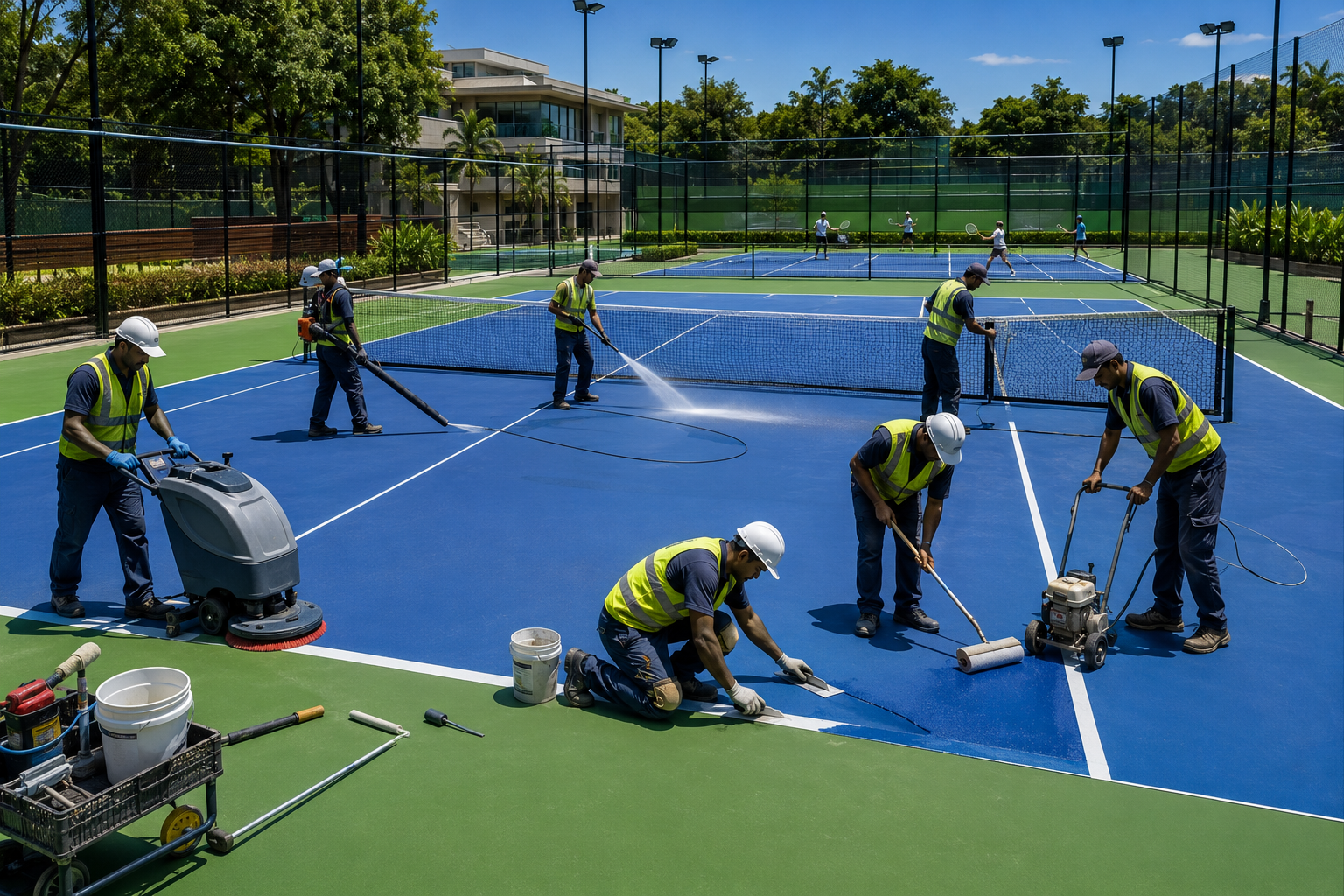
A professional installation process generally involves the following steps:
Step 1: Site Inspection
The existing ground or base is inspected to identify cracks, uneven areas, drainage issues, and other surface-related concerns.
Step 2: Surface Preparation
The surface is cleaned and prepared to ensure proper bonding between the existing base and the acrylic coating system.
Step 3: Crack Repair and Levelling
Visible cracks, damaged areas, and surface irregularities are addressed using suitable repair materials and methods.
Step 4: Acrylic Coating Application
The specified acrylic coating layers are applied according to the manufacturer’s recommendations and site conditions.
Step 5: Colour Finishing
The selected colours are applied to create a uniform and visually appealing playing surface.
Step 6: Line Marking
Accurate tennis court lines are marked according to the required court dimensions.
Step 7: Final Inspection
The completed court is inspected for finishing quality, surface consistency, line accuracy, and readiness for use.
Following a systematic installation process helps improve the durability, appearance, and overall performance of the finished court.
10. A Practical Choice for Long-Term Sports Infrastructure
Sports infrastructure is a long-term investment. Facility owners want playing surfaces that can support regular activity while maintaining their functionality and appearance.
Acrylic tennis court flooring addresses several of these requirements through its combination of customisable finishes, consistent playing characteristics, outdoor suitability, and manageable maintenance.
When installed over a properly designed base using quality materials, an acrylic tennis court can provide dependable service for many years. Its actual lifespan depends on usage, climate, installation quality, maintenance, and the selected coating system.
This makes acrylic surfacing a strong option for developers and organisations looking to create modern tennis facilities.
How to Choose the Right Acrylic Tennis Court Flooring Contractor?
Selecting the right flooring contractor is just as important as selecting the right materials.
Before finalising a service provider, consider the following points:
- Industry Experience: Look for a contractor with experience in tennis court construction and acrylic sports surfacing.
- Material Quality: Check the specifications and suitability of the proposed acrylic coating system.
- Previous Projects: Review completed tennis court installations to understand the contractor’s workmanship.
- Installation Process: Ask about surface preparation, crack repair, coating layers, and finishing procedures.
- Project Transparency: Request a detailed quotation explaining the materials, work stages, and scope of installation.
- After-Installation Support: Discuss maintenance recommendations and support after project completion.
A knowledgeable contractor can assess your site requirements and recommend a flooring solution that matches your expectations and budget.
Conclusion
Acrylic tennis court flooring has become a popular choice for modern sports facilities because it offers a practical combination of playing performance, attractive finishes, weather suitability, and manageable maintenance.
From educational institutions and residential communities to professional tennis academies and sports clubs, this flooring option can meet the needs of many different types of facilities.
However, the quality of the final result depends on more than just the coating material. Proper base construction, effective drainage, correct surface preparation, quality products, and skilled installation all contribute to a successful tennis court project.
If you are planning to develop a new tennis court or upgrade an existing one, investing in a professionally designed acrylic flooring system can be a valuable step towards creating a durable and player-friendly sports facility.
Looking for professional acrylic tennis court flooring services? Connect with an experienced sports flooring contractor to discuss your project requirements and find the right surface solution for your facility.