Introduction
Pickleball has become one of the fastest-growing sports worldwide, attracting players of all ages due to its simple rules, social nature, and exciting gameplay. As demand continues to increase, schools, sports academies, clubs, residential communities, hotels, resorts, commercial sports complexes, and government organizations are investing in high-quality pickleball courts.
However, constructing a professional pickleball court requires much more than simply painting lines on concrete. A durable and high-performance court depends on proper planning, engineering, drainage design, surface preparation, premium sports flooring materials, and expert installation.
Choosing the best pickleball court construction service ensures your investment delivers outstanding performance, player safety, minimal maintenance, and long-term durability. Whether you’re building an indoor or outdoor pickleball court, working with experienced court builders guarantees international-quality results.
This comprehensive guide explains everything you need to know about professional pickleball court construction, including planning, materials, construction process, benefits, maintenance, and how to choose the right contractor.
Why Professional Pickleball Court Construction Matters
A professionally constructed pickleball court offers much more than an attractive appearance. Every layer beneath the playing surface contributes to the court’s strength, safety, and performance.
Professional construction provides:
- Accurate court dimensions
- Proper slope for drainage
- Excellent ball bounce
- Anti-slip playing surface
- UV-resistant coatings
- Weather-resistant construction
- Long service life
- Lower maintenance costs
- Improved player comfort
- Enhanced safety
Poor construction often leads to cracks, water accumulation, uneven bounce, faded court markings, and expensive repairs within a few years.
Standard Pickleball Court Dimensions
A professional pickleball court follows standard dimensions suitable for recreational and tournament play.
Playing Area
- Court Length: 44 feet
- Court Width: 20 feet
Recommended Total Playing Space
- 60 feet × 30 feet
For professional tournaments, additional clearance around the court improves player movement and safety.
Types of Pickleball Courts
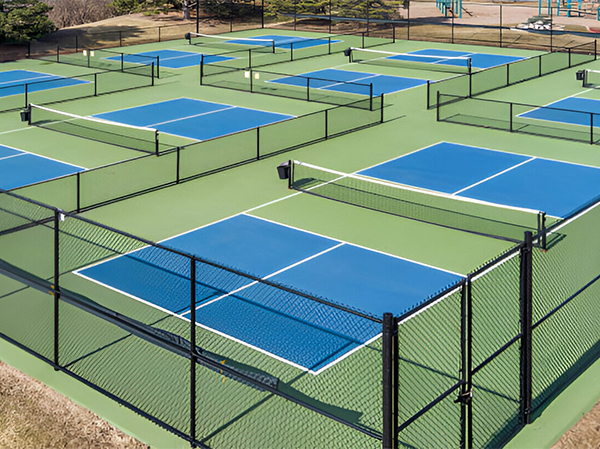
Outdoor Pickleball Courts
Outdoor courts are the most popular option due to their affordability and versatility.
Common locations include:
- Residential communities
- Schools
- Parks
- Sports clubs
- Hotels
- Resorts
- Universities
- Public sports facilities
Outdoor courts require UV-resistant acrylic coatings and efficient drainage systems.
Indoor Pickleball Courts
Indoor courts offer year-round playing conditions without weather interruptions.
These courts are commonly installed in:
- Indoor sports complexes
- Gymnasiums
- Sports academies
- Community centers
- Multi-sports arenas
Indoor courts provide consistent playing conditions and reduced maintenance.
Pickleball Court Flooring Options
Selecting the right flooring significantly affects gameplay and durability.
Acrylic Sports Flooring
Acrylic flooring remains the preferred choice for outdoor pickleball courts.
Advantages include:
- Excellent grip
- Weather resistance
- UV protection
- Attractive appearance
- Low maintenance
- Long lifespan
- Professional finish
Polyurethane Sports Flooring
Polyurethane flooring provides superior cushioning and impact absorption.
Benefits include:
- Comfortable playing experience
- Reduced joint stress
- Excellent durability
- Smooth finish
- Slip resistance
Cushioned Acrylic Flooring
This premium option combines acrylic performance with shock-absorbing layers.
Ideal for:
- Sports academies
- Tournament venues
- Professional training centers
Benefits include:
- Better comfort
- Reduced fatigue
- Enhanced player safety
- Superior playing experience
Step-by-Step Pickleball Court Construction Process
1. Site Inspection
Professional contractors begin by evaluating:
- Soil conditions
- Ground stability
- Drainage
- Existing surface
- Accessibility
- Space availability
A detailed site survey prevents future construction issues.
2. Planning and Design
Engineers prepare:
- Court layout
- Drainage plan
- Surface levels
- Material specifications
- Lighting design
- Fencing layout
Proper planning improves construction efficiency.
3. Ground Preparation
The construction site is cleared and leveled before excavation begins.
This stage includes:
- Vegetation removal
- Earthwork
- Compaction
- Grading
- Soil stabilization
A stable foundation increases court durability.
4. Base Construction
The base is constructed using compacted aggregates followed by reinforced concrete or asphalt.
A strong base ensures:
- Uniform playing surface
- Crack resistance
- Long-term structural stability
5. Drainage Installation
Proper drainage prevents:
- Water pooling
- Surface damage
- Cracks
- Premature flooring failure
Professional drainage systems significantly extend court life.
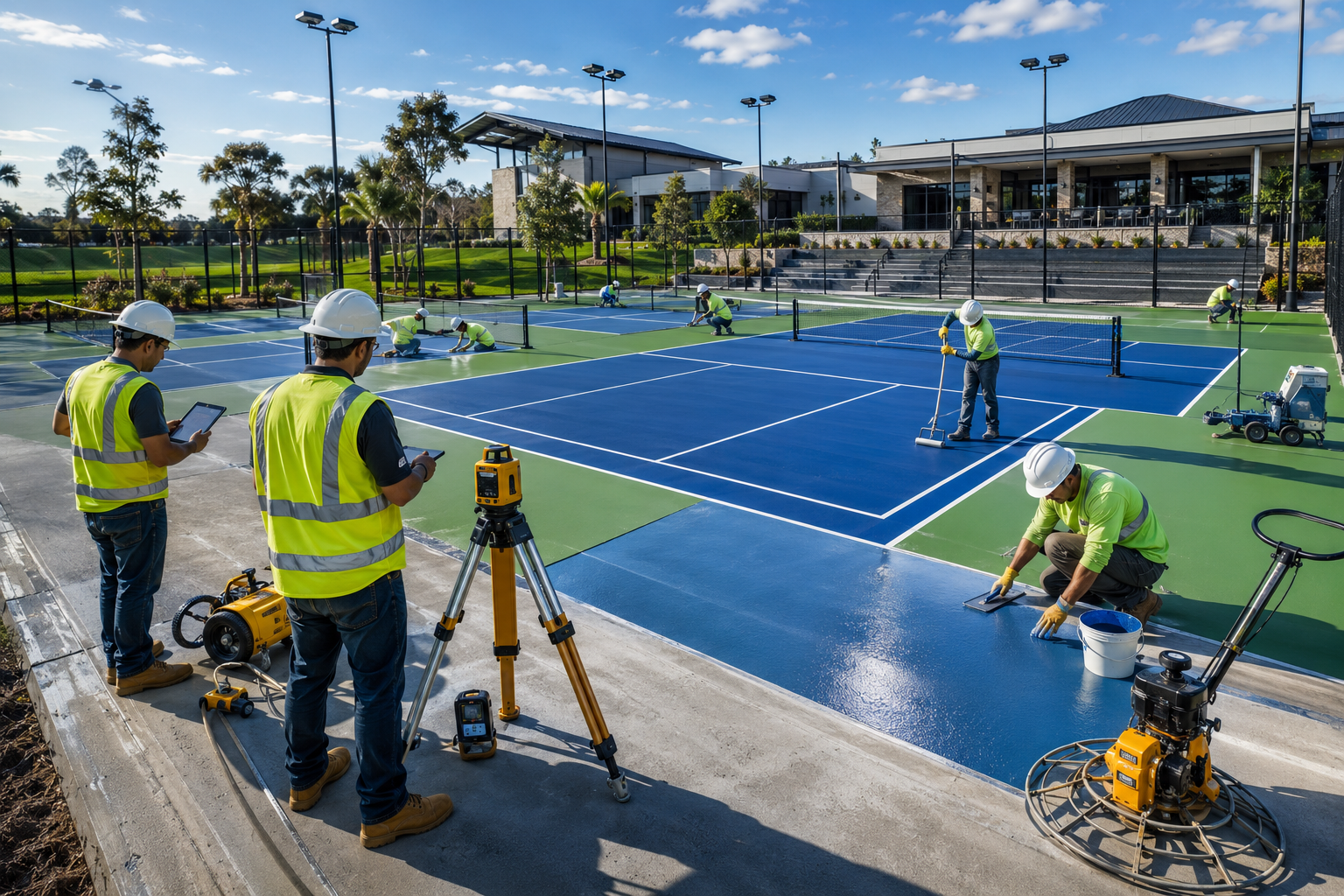
6. Surface Preparation
Before applying sports coatings, contractors perform:
- Grinding
- Surface cleaning
- Crack filling
- Moisture testing
- Level correction
This ensures perfect adhesion of sports flooring materials.
7. Acrylic Sports Coating
Multiple layers of premium acrylic coating are applied.
These layers include:
- Primer
- Cushion coats (optional)
- Color coats
- Texture finish
- Court marking paint
Each layer is carefully cured before applying the next.
8. Court Marking
Professional court markings use high-quality sports paints that resist fading and wear.
Accurate markings ensure compliance with official standards.
9. Installation of Accessories
The final stage includes:
- Pickleball net system
- Net posts
- Fencing
- Lighting
- Benches
- Scoreboards
- Protective padding
The court is then inspected before handover.
Features of the Best Pickleball Court Construction Service
Leading contractors provide comprehensive services including:
- Complete project management
- Professional engineering
- High-quality materials
- Certified installation teams
- International construction standards
- Premium sports flooring
- Fast project completion
- Quality assurance
- Maintenance support
- Custom court designs
Benefits of Professional Pickleball Court Construction
Superior Playing Performance
Professional courts provide consistent ball bounce, better traction, and smooth movement.
Enhanced Player Safety
Anti-slip coatings and cushioned surfaces reduce injuries and improve confidence during play.
Long-Term Durability
Premium construction materials withstand years of heavy use and varying weather conditions.
Low Maintenance
Professionally installed courts require minimal repairs and are easy to clean.
Improved Appearance
High-quality finishes create an attractive sports facility that enhances property value.
Better Return on Investment
Although professional construction may require a higher initial investment, lower maintenance costs and longer lifespan provide greater long-term value.
Who Needs Professional Pickleball Court Construction?
Professional services are ideal for:
- Schools
- Colleges
- Universities
- Sports academies
- Residential townships
- Clubhouses
- Hotels
- Resorts
- Government sports departments
- Commercial sports complexes
- Fitness centers
- Corporate campuses
Essential Accessories for a Pickleball Court
A complete pickleball facility should include:
- Professional net system
- LED sports lighting
- Safety fencing
- Wind screens
- Seating arrangements
- Player shelters
- Equipment storage
- Scoreboards
- Drinking water facilities
These additions improve both functionality and user experience.
Pickleball Court Maintenance Tips
Proper maintenance helps preserve court quality for many years.
Recommended practices include:
- Sweep debris regularly
- Wash the surface periodically
- Remove standing water promptly
- Inspect for cracks
- Repaint markings when needed
- Avoid dragging heavy equipment
- Schedule annual inspections
Routine maintenance significantly extends the life of the court.
Common Mistakes to Avoid During Construction
Many projects fail because of avoidable errors, including:
- Poor site preparation
- Weak foundation
- Inadequate drainage
- Low-quality materials
- Incorrect court dimensions
- Improper surface leveling
- Cheap acrylic coatings
- Untrained installation teams
Hiring experienced professionals minimizes these risks.
How to Choose the Best Pickleball Court Construction Company
Before selecting a contractor, consider the following factors:
Experience
Choose a company with a proven history of sports court construction.
Material Quality
Ensure they use premium acrylic systems, durable base materials, and high-performance coatings.
Skilled Workforce
Experienced engineers and trained installers deliver better results.
Custom Solutions
Every project is unique. A reliable contractor should offer customized designs based on your location, budget, and intended use.
Warranty
A professional company should provide workmanship and material warranties for peace of mind.
Customer Support
Ongoing maintenance guidance and responsive after-sales service are valuable for long-term satisfaction.
Why Quality Construction Is Worth the Investment
A professionally built pickleball court is more than a sports facility—it is a long-term asset. High-quality construction reduces repair costs, enhances player satisfaction, attracts more users, and increases the overall value of your property. Whether you are building a single recreational court or a multi-court sports complex, investing in experienced professionals ensures reliable performance for years to come.
Frequently Asked Questions (FAQs)
How long does it take to construct a pickleball court?
Most professional pickleball courts can be completed within 2 to 6 weeks, depending on site conditions, weather, and project scope.
Which surface is best for outdoor pickleball courts?
Acrylic sports flooring is widely preferred because it offers excellent durability, UV resistance, slip resistance, and consistent ball bounce.
Can an existing tennis court be converted into a pickleball court?
Yes. Many tennis courts can be resurfaced and marked for pickleball, provided the base is in good condition.
How often should a pickleball court be resurfaced?
With proper maintenance, acrylic courts typically require resurfacing every 5 to 8 years, depending on usage and climate.
Is drainage important for outdoor courts?
Absolutely. A properly designed drainage system prevents water accumulation, protects the playing surface, and extends the court’s lifespan.
Conclusion
The growing popularity of pickleball has created a strong demand for safe, durable, and professionally designed courts. Choosing the best pickleball court construction service ensures that every aspect of the project—from site preparation and base construction to acrylic surfacing and final court markings—is completed to the highest standards.
A professionally constructed pickleball court delivers excellent playing performance, enhanced safety, reduced maintenance, and long-term durability. Whether you are planning a court for a school, sports academy, residential community, commercial sports complex, or government facility, partnering with experienced construction professionals is the key to creating a world-class playing environment that will serve players for many years.