Box cricket has become one of the fastest-growing recreational sports businesses in India. From metropolitan cities to Tier-2 and Tier-3 locations, entrepreneurs, schools, sports academies, clubs, residential societies, and commercial developers are investing in professionally designed box cricket arenas to generate consistent revenue while promoting sports and fitness.
A professionally constructed box cricket facility offers a safe playing environment, low maintenance requirements, long service life, and an outstanding player experience. Whether you’re planning an indoor or outdoor cricket arena, selecting the right Box Cricket Construction Service is the key to building a profitable and durable sports facility.
This comprehensive guide explains everything you need to know about box cricket construction, including planning, dimensions, flooring options, construction process, materials, costs, maintenance, benefits, and how to choose the right construction company.
Table of Contents
- What is Box Cricket?
- Why Invest in Box Cricket?
- Who Needs
- Planning Before Construction
- Standard Box Cricket Dimensions
- Indoor vs Outdoor Box Cricket
- Types of Box Cricket Flooring
- Complete Construction Process
- Base Preparation
- Turf Installation
- Side Netting & Safety Systems
- Lighting Installation
- Drainage System
- Accessories Required
- Construction Cost
- Maintenance Guide
- Benefits of Professional Construction
- Common Mistakes to Avoid
- How to Choose the Best Box Cricket Construction Company
- FAQs
- Conclusion
What is Box Cricket?
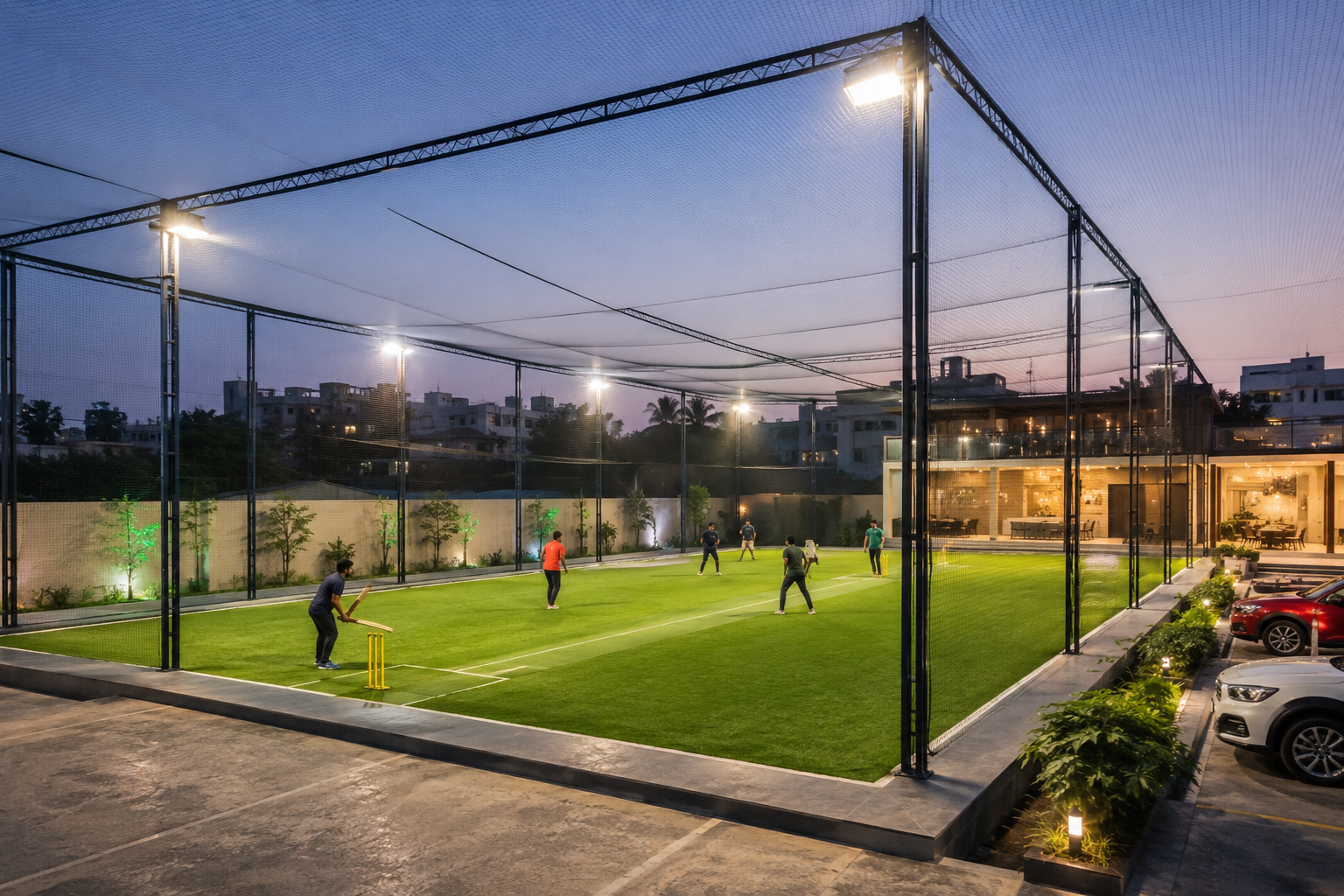
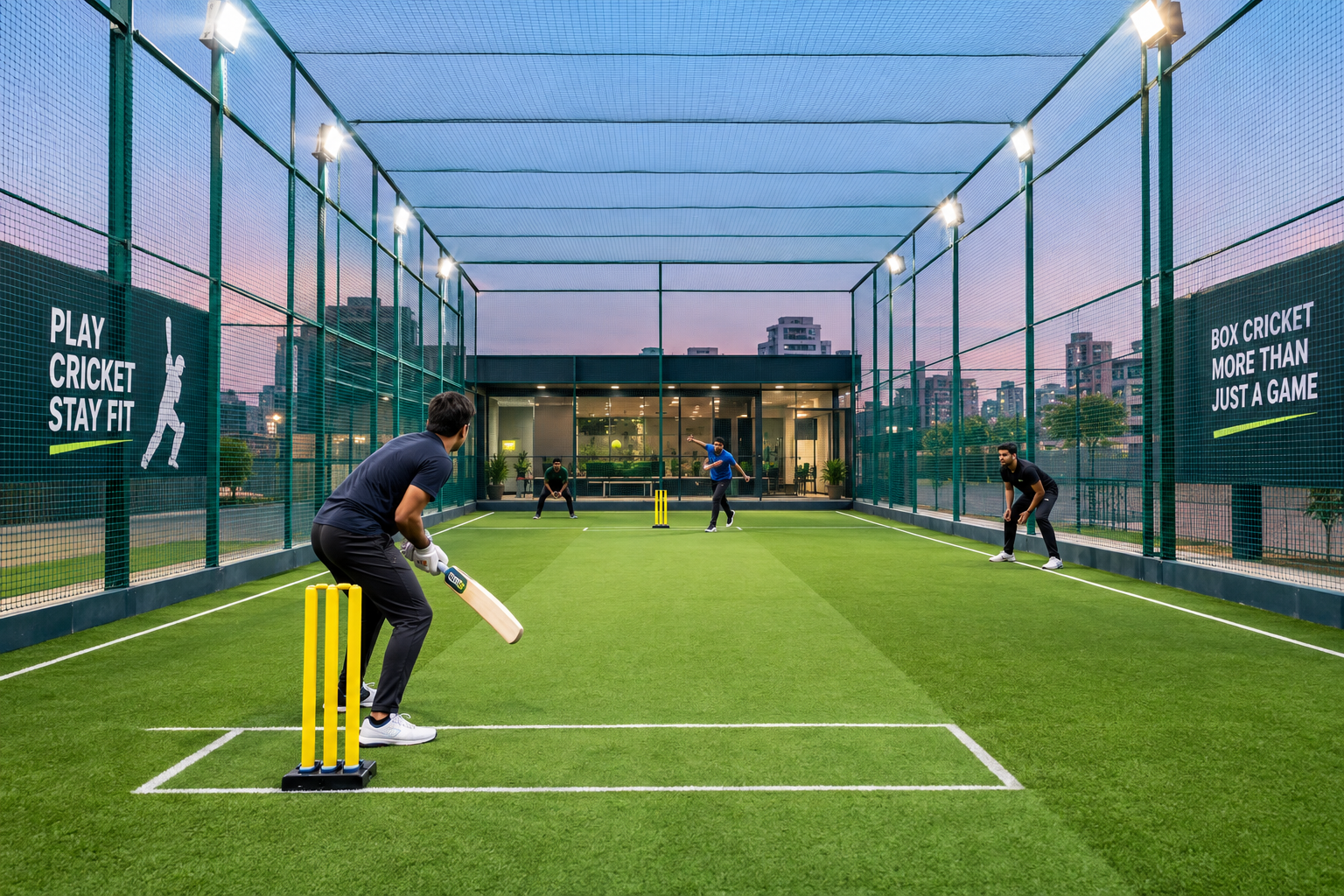
Box Cricket is a compact version of traditional cricket played inside a fully enclosed arena surrounded by safety nets. The enclosed playing area prevents balls from going outside the field, making the game faster, safer, and more exciting.
Modern box cricket facilities are commonly installed in:
- Sports complexes
- Schools
- Universities
- Corporate campuses
- Residential societies
- Rooftop sports facilities
- Commercial sports clubs
- Indoor gaming arenas
- Recreation centers
- Fitness clubs
Why Box Cricket is Growing Rapidly in India
Several factors have contributed to the popularity of box cricket.
High Revenue Potential
One court can operate throughout the day and generate income through hourly bookings.
Low Maintenance
Synthetic turf requires significantly less maintenance compared to natural grass.
Small Land Requirement
Unlike traditional cricket grounds, box cricket facilities can be built on relatively smaller plots.
Year-Round Usage
Indoor facilities remain operational regardless of weather conditions.
Corporate Demand
Companies regularly organize tournaments and employee engagement activities.
Youth Popularity
The shorter format attracts young players looking for quick and enjoyable matches.
Who Needs Professional Construction Services?
Professional construction services are suitable for:
- Schools
- Colleges
- Universities
- Sports academies
- Private investors
- Builders
- Residential townships
- Hotels
- Resorts
- Commercial sports centers
- Government sports departments
- Municipal corporations
- Cricket coaching academies
Planning Before Construction
Every successful project begins with proper planning.
Important considerations include:
Land Size
Available land determines the dimensions of the arena.
Indoor or Outdoor
Decide whether the facility will be enclosed within a building or exposed to outdoor conditions.
Budget
The flooring system, lighting, fencing, and structural components should align with your investment plan.
Drainage
Outdoor facilities require an efficient drainage system to avoid water accumulation.
Player Capacity
Estimate the expected number of users to determine the appropriate infrastructure.
Standard Box Cricket Dimensions
While dimensions vary depending on available space, common sizes include:
| Court Type | Approximate Size |
|---|---|
| Small | 70 × 35 ft |
| Standard | 90 × 45 ft |
| Premium | 100 × 50 ft |
| Tournament Style | Custom Design |
Professional builders can customize dimensions according to site conditions and client requirements.
Indoor vs Outdoor Construction
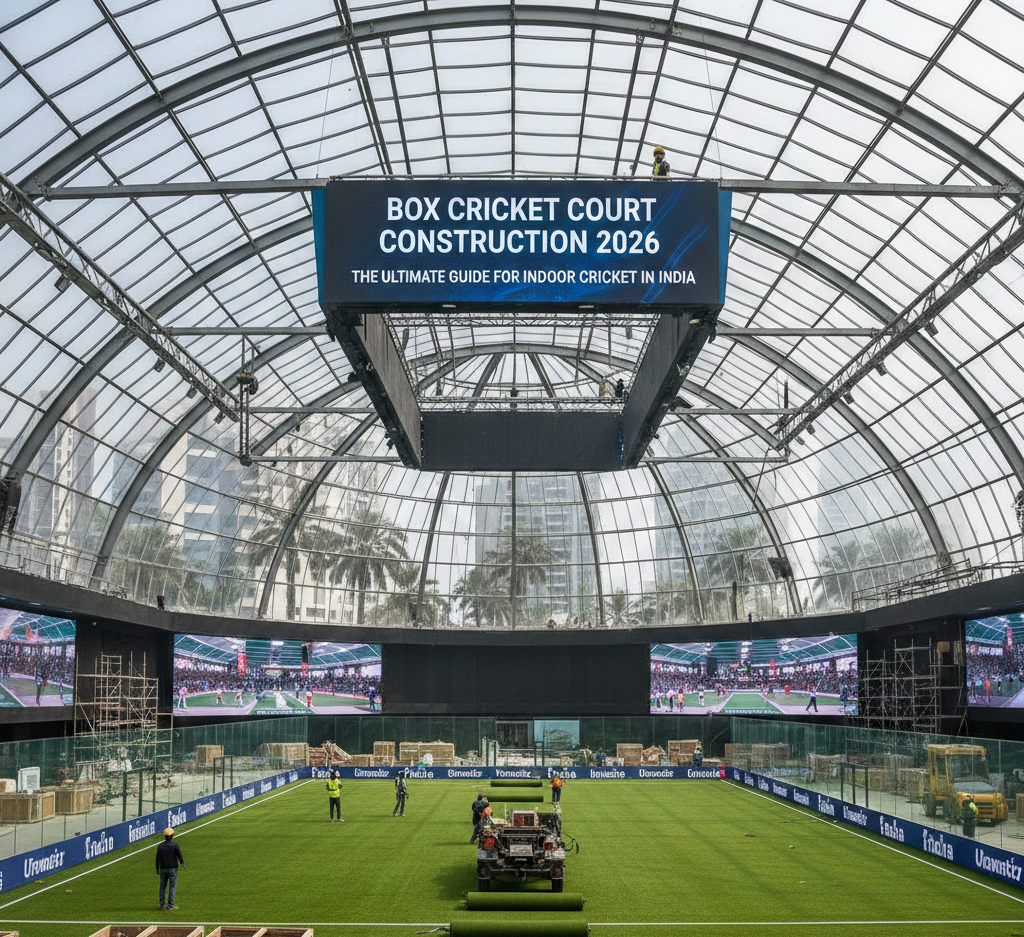
Indoor Box Cricket
Advantages:
- Weather-independent operation
- Premium player experience
- Better lighting control
- Longer turf life
- Ideal for commercial centers
Suitable flooring:
- Premium artificial cricket turf
- Shock-absorbing underlay
- Cushion system
Outdoor Box Cricket
Advantages:
- Lower construction cost
- Larger playing area
- Natural ventilation
- Easier future expansion
Requires:
- UV-resistant turf
- Efficient drainage
- Weatherproof fencing
- Rust-resistant steel structures
Types of Box Cricket Flooring
Choosing the correct flooring system directly impacts player safety and performance.
Artificial Cricket Turf
The most widely used solution.
Features:
- Excellent ball bounce
- High durability
- UV resistance
- Low maintenance
- Professional appearance
Cushion Turf System
Ideal for commercial facilities.
Benefits:
- Improved comfort
- Reduced joint stress
- Better shock absorption
- Enhanced player safety
Premium FIFA-Grade Synthetic Turf
High-end facilities often opt for premium synthetic sports turf that delivers superior durability and aesthetics.
Complete Construction Process
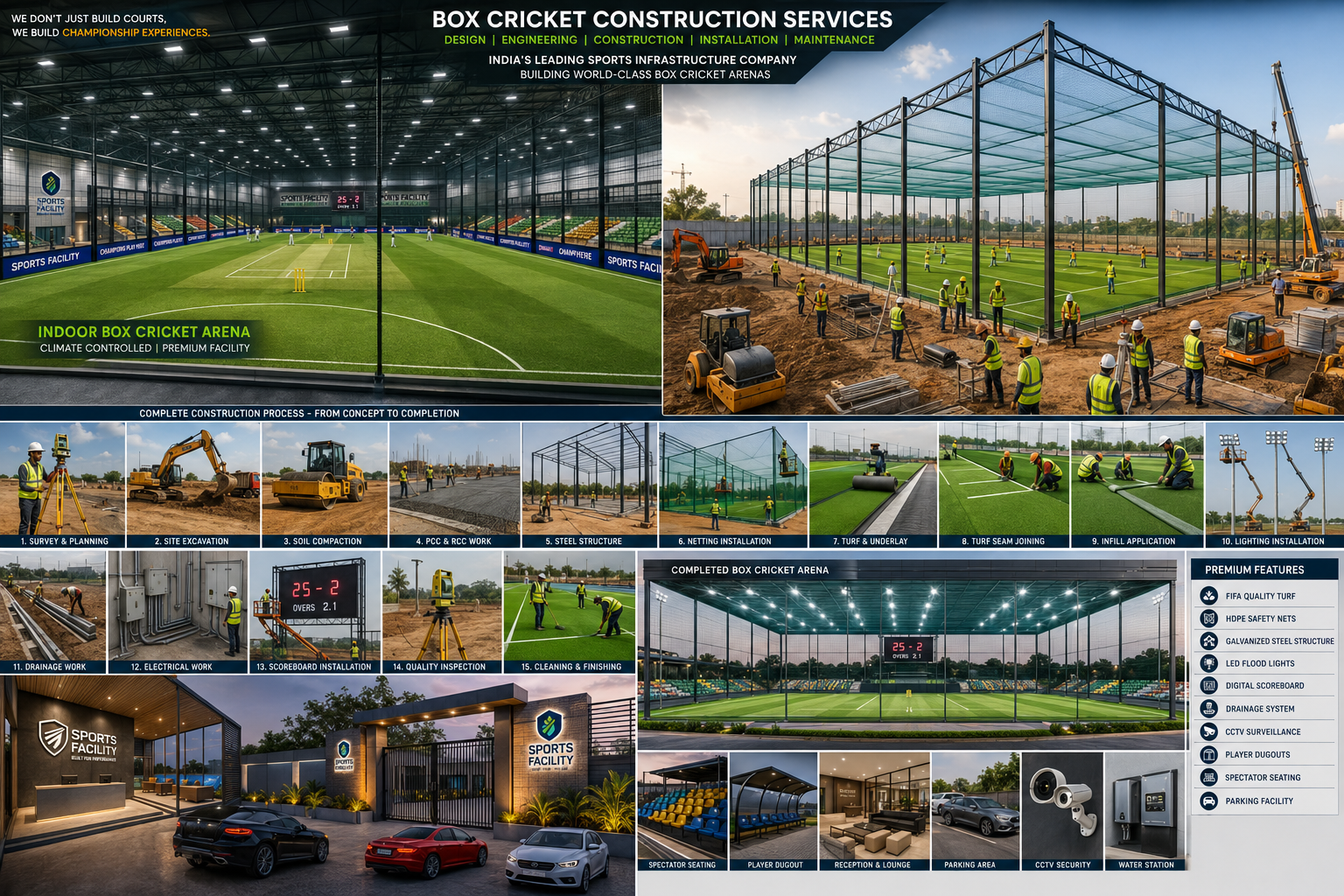
Professional construction typically follows these stages:
1. Site Inspection
Engineers evaluate:
- Soil condition
- Existing surface
- Water flow
- Site levels
- Accessibility
2. Ground Preparation
Activities include:
- Excavation
- Debris removal
- Soil compaction
- Surface leveling
- Base stabilization
3. Base Construction
Depending on the project, the base may consist of:
- WMM layers
- PCC
- RCC slab
- Asphalt base
- Compacted aggregate
A stable base ensures consistent turf performance and longevity.
4. Drainage Installation
Professional drainage systems prevent:
- Waterlogging
- Turf damage
- Base settlement
- Surface deterioration
5. Artificial Turf Installation
Installation involves:
- Surface cleaning
- Turf layout
- Seam joining
- Adhesive application
- Sand infill (if required)
- Final brushing
- Quality inspection
6. Boundary Net Installation
Heavy-duty HDPE nets surround the playing area.
Benefits:
- Prevent ball escape
- Improve safety
- Enhance gameplay
- Reduce maintenance
7. Steel Structure Installation
Galvanized steel frames provide structural support for:
- Roof netting
- Side netting
- Lighting
- Branding panels
8. LED Flood Lighting
Professional lighting enables night matches.
Advantages include:
- Uniform illumination
- Energy efficiency
- Long lifespan
- Reduced operating costs
9. Final Marking
The playing surface is finished with:
- Crease markings
- Batting area
- Practice zones
- Safety clearances
Materials Used in Construction
Professional projects typically use:
- Artificial cricket turf
- Galvanized steel
- HDPE safety nets
- Polyurethane adhesives
- Rubber shock pads
- LED floodlights
- Stainless steel fasteners
- Concrete foundations
- Drainage pipes
- Protective coatings
Safety Features
A professionally constructed arena incorporates:
- Anti-slip turf
- Shock-absorbing layers
- Rounded corners
- Heavy-duty safety netting
- Proper lighting
- Fire-resistant electrical systems
- Stable steel structures
- Secure player entry and exit
Accessories for a Professional Box Cricket Arena
Additional features may include:
- Practice nets
- Scoreboards
- Digital booking systems
- CCTV cameras
- Seating arrangements
- Dugouts
- Drinking water stations
- Washrooms
- Parking areas
- Branding walls
Construction Cost
Construction costs vary based on several factors:
- Court dimensions
- Indoor or outdoor setup
- Turf quality
- Steel structure
- Roofing
- Lighting system
- Drainage
- Seating
- Custom branding
- Location
- Site conditions
Larger, premium indoor facilities with advanced lighting and spectator amenities generally require a higher investment than standard outdoor installations.
Maintenance Tips
Routine maintenance helps maximize the life of your facility.
Recommended practices:
- Brush the turf regularly
- Remove dust and debris
- Inspect seams periodically
- Check net tension
- Clean drainage channels
- Inspect lighting fixtures
- Tighten structural fasteners
- Schedule annual professional inspections
Benefits of Hiring Professional
Working with experienced specialists ensures:
- Accurate site planning
- High-quality materials
- Professional installation
- Compliance with safety standards
- Long-lasting durability
- Better drainage performance
- Reliable after-sales support
- Reduced maintenance costs
- Faster project completion
- Higher return on investment
Common Mistakes to Avoid
Avoid these issues during construction:
- Poor ground preparation
- Low-quality artificial turf
- Inadequate drainage
- Weak steel structures
- Incorrect lighting placement
- Inferior safety netting
- Improper turf joining
- Ignoring maintenance requirements
- Hiring inexperienced contractors
How to Choose the Best Company
Before selecting a contractor, evaluate:
- Industry experience
- Completed projects
- Client testimonials
- Material quality
- Construction methodology
- Engineering expertise
- Warranty coverage
- Maintenance support
- Safety compliance
- Transparent pricing
A reputable company should provide end-to-end services, including site assessment, design, civil work, steel fabrication, turf installation, lighting, netting, testing, and post-installation support.
Frequently Asked Questions
How long does it take to build a box cricket arena?
Most projects are completed within 3–8 weeks, depending on the size, site conditions, and project scope.
Which flooring is best for box cricket?
High-quality artificial cricket turf with a shock-absorbing underlay offers the best balance of performance, durability, and player safety.
Can box cricket courts be built on rooftops?
Yes. Rooftop installations are possible after a structural assessment confirms the building can safely support the proposed loads.
Is artificial turf waterproof?
Yes. Professional sports turf systems are designed with drainage features that allow water to pass through efficiently when installed over a properly prepared base.
How long does synthetic cricket turf last?
With proper installation and regular maintenance, premium-quality artificial turf can typically last 8–12 years, depending on usage intensity and environmental conditions.
Conclusion
Investing in a professionally designed Box Cricket Construction Service is a smart decision for entrepreneurs, educational institutions, sports academies, clubs, and commercial developers looking to create a modern, safe, and profitable sports facility. From site planning and engineered base preparation to premium artificial turf, safety netting, lighting, and ongoing maintenance, every stage of construction plays a vital role in ensuring long-term performance and customer satisfaction.
By partnering with an experienced box cricket construction company that uses high-quality materials and follows industry best practices, you can develop a durable, visually appealing, and revenue-generating cricket arena that delivers an excellent playing experience for years to come while maximizing your return on investment and supporting the growing demand for recreational sports in India.