Introduction
The choice of sports flooring plays a vital role in determining the performance, safety, durability, and overall experience of athletes. Whether it’s a school playground, community sports complex, professional stadium, residential court, or commercial sports academy, selecting the right sports surface directly impacts player comfort, maintenance costs, and long-term investment value.
For decades, traditional concrete courts have been the preferred option due to their affordability and structural strength. They have been widely used for basketball courts, tennis courts, badminton courts, volleyball courts, futsal courts, and multi-purpose sports facilities. However, as sports technology has evolved, synthetic sports flooring has become the modern standard for both indoor and outdoor sports infrastructure.
Synthetic sports flooring offers superior shock absorption, excellent ball bounce, enhanced traction, weather resistance, reduced maintenance, and significantly improved athlete safety compared to conventional concrete surfaces. These advantages have made synthetic flooring the preferred choice for schools, colleges, sports clubs, residential societies, government projects, commercial sports centers, and international sports stadiums.
Today, sports facility owners are increasingly investing in premium acrylic sports flooring, PU sports flooring, EPDM rubber flooring, modular sports tiles, artificial turf systems, and cushioned sports surfaces to meet international standards while providing athletes with a safer and more enjoyable playing environment.
This comprehensive guide explores the differences between Synthetic Sports Flooring and Traditional Concrete Courts, comparing their performance, durability, installation, maintenance, safety, cost-effectiveness, environmental impact, and long-term value. Whether you are planning a new sports court or upgrading an existing facility, this guide will help you make an informed decision.
Understanding Traditional Concrete Courts
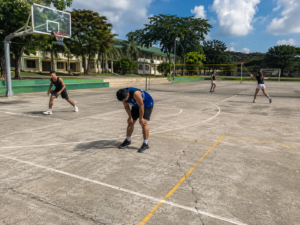
Traditional concrete courts have been the backbone of outdoor sports facilities for many decades. Constructed using reinforced cement concrete, these courts provide a rigid and durable base capable of supporting heavy loads and frequent usage.
Concrete courts are commonly found in:
- Basketball Courts
- Tennis Courts
- Volleyball Courts
- School Playgrounds
- Community Sports Parks
- Residential Sports Facilities
- Government Sports Complexes
Concrete is appreciated for its strength, longevity, and relatively low initial construction cost. However, while structurally durable, concrete surfaces offer little comfort or protection for athletes.
Characteristics of Concrete Courts
- Hard playing surface
- Minimal shock absorption
- High surface rigidity
- Weather-sensitive cracking
- Rough texture over time
- High impact on joints and muscles
- Limited aesthetic appeal
- Requires periodic repairs
Although concrete remains structurally reliable, modern sports performance standards increasingly demand surfaces that improve player safety and comfort.
What is Synthetic Sports Flooring?
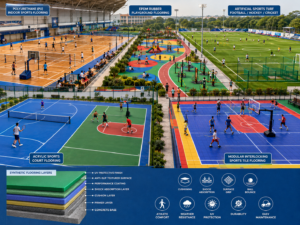
Synthetic sports flooring refers to specially engineered sports surfaces designed to provide optimal playing conditions while minimizing injuries and maintenance requirements.
Unlike plain concrete, synthetic flooring systems incorporate multiple performance layers that improve:
- Cushioning
- Shock absorption
- Surface grip
- Ball response
- Player comfort
- Weather resistance
- Durability
Synthetic flooring systems are manufactured using advanced polymers, acrylic coatings, polyurethane materials, EPDM rubber, PVC, polypropylene tiles, and artificial grass technologies.
These surfaces are designed according to international sports specifications and are widely used in professional tournaments and training facilities.
Types of Synthetic Sports Flooring
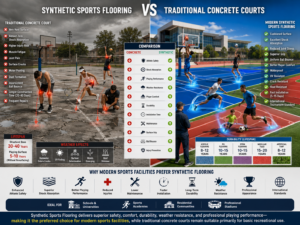
Modern sports infrastructure includes several categories of synthetic flooring, each designed for specific sports and playing conditions.
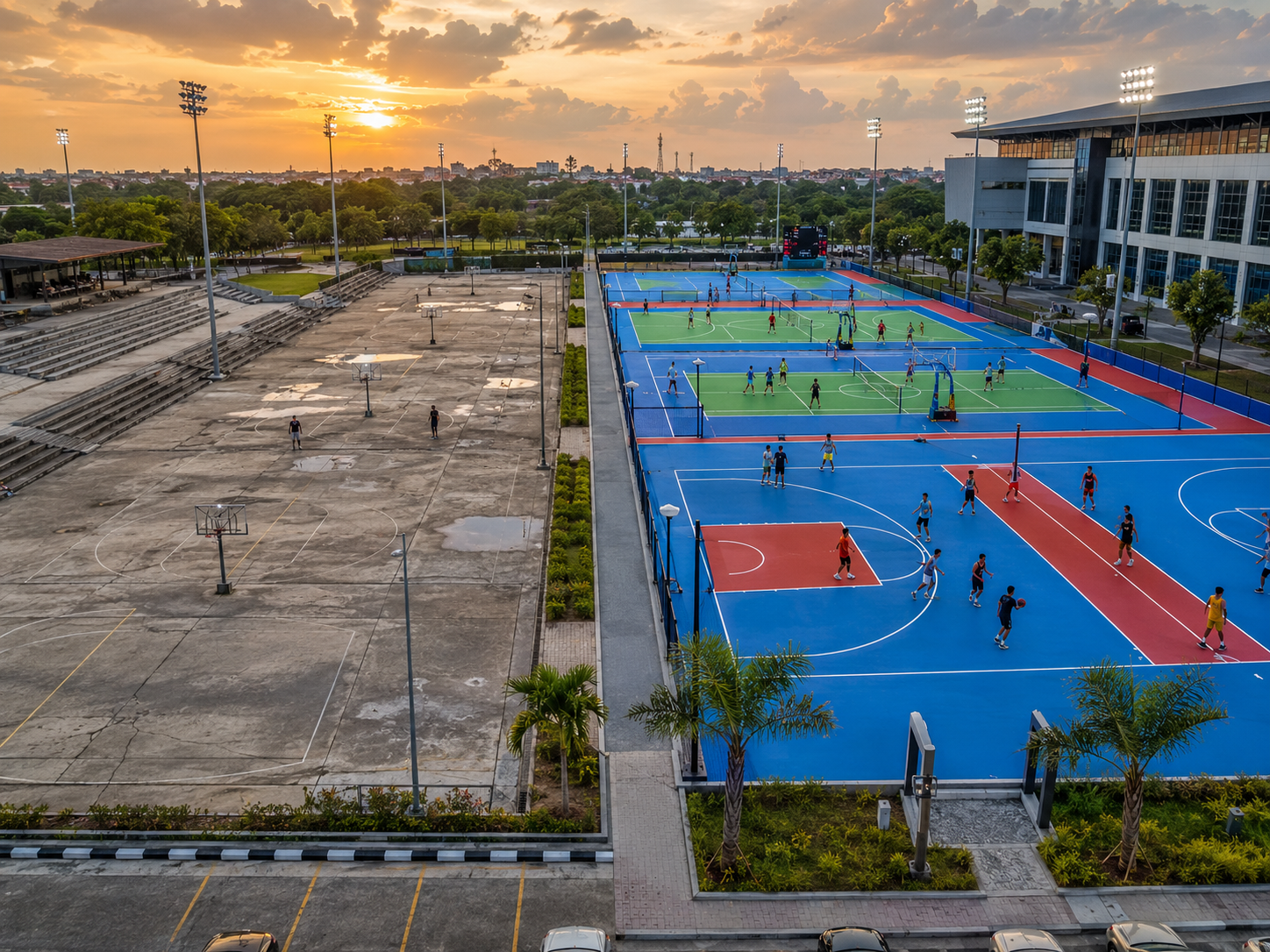
Acrylic Sports Flooring
Acrylic sports flooring is among the most popular outdoor sports surfaces due to its excellent durability and UV resistance.
Common applications include:
- Tennis Courts
- Basketball Courts
- Pickleball Courts
- Multi-purpose Sports Courts
Benefits include:
- Anti-slip texture
- Weather resistance
- UV stability
- Bright color options
- Easy maintenance
- Professional appearance
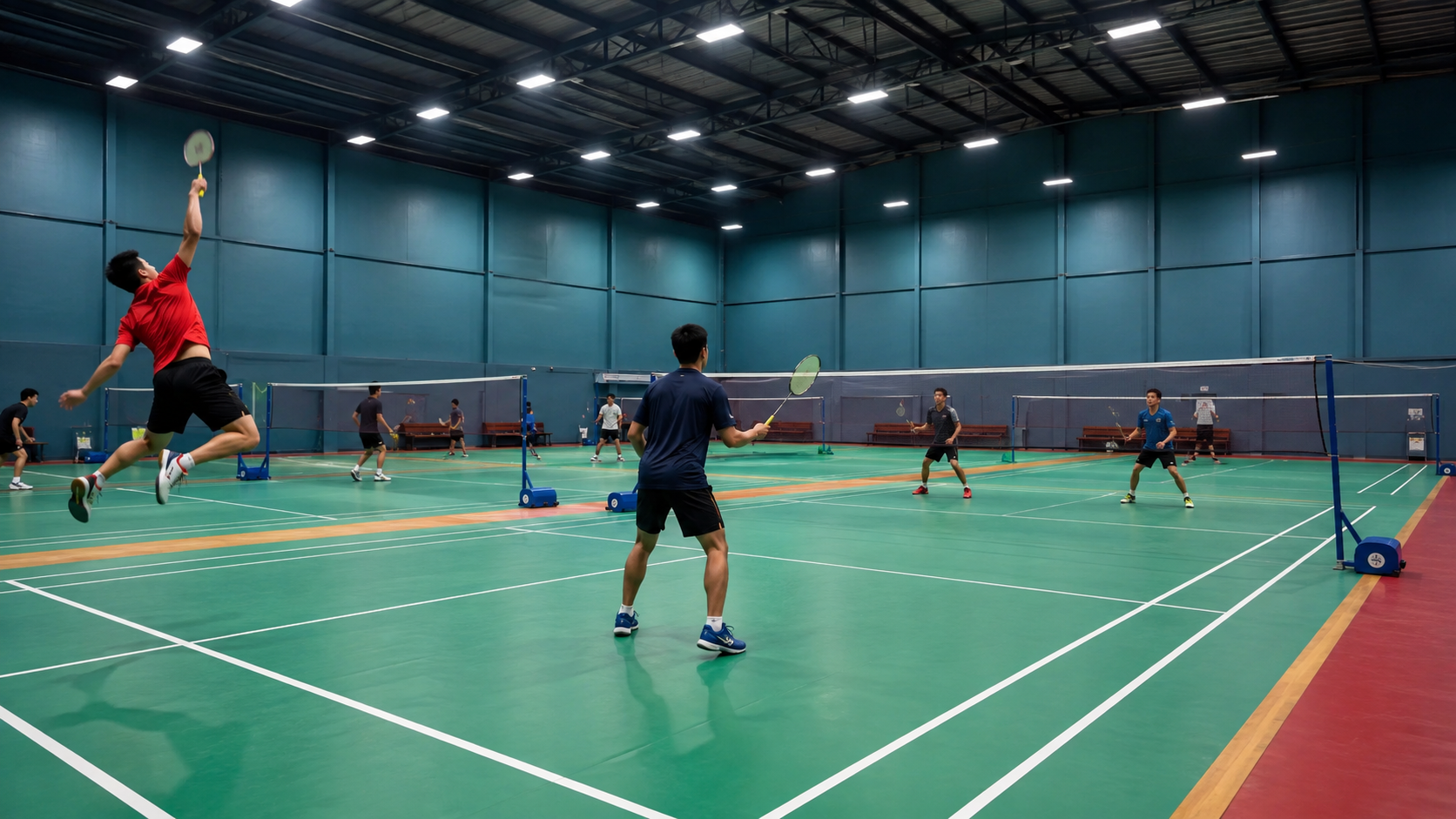
Polyurethane (PU) Sports Flooring
PU flooring is widely used in indoor sports complexes due to its superior flexibility and shock absorption.
Suitable for:
- Indoor Basketball
- Volleyball
- Badminton
- Gymnasiums
- Multipurpose Indoor Halls
Advantages include:
- Seamless finish
- High elasticity
- Comfortable playing surface
- Excellent athlete protection
- Long service life
EPDM Rubber Flooring
EPDM flooring is specially designed for recreational and safety-focused sports environments.
Ideal for:
- Children’s Playgrounds
- Jogging Tracks
- Walking Tracks
- Fitness Areas
- Outdoor Gyms
Major benefits:
- Slip resistance
- Excellent cushioning
- Water permeability
- UV resistance
- Attractive color combinations
Modular Sports Tiles
Interlocking modular sports tiles have become increasingly popular because of their quick installation and low maintenance.
Applications:
- Basketball
- Futsal
- Tennis
- Volleyball
- Multi-sport Courts
Benefits include:
- Portable installation
- Easy replacement
- Excellent drainage
- Long durability
- Consistent traction
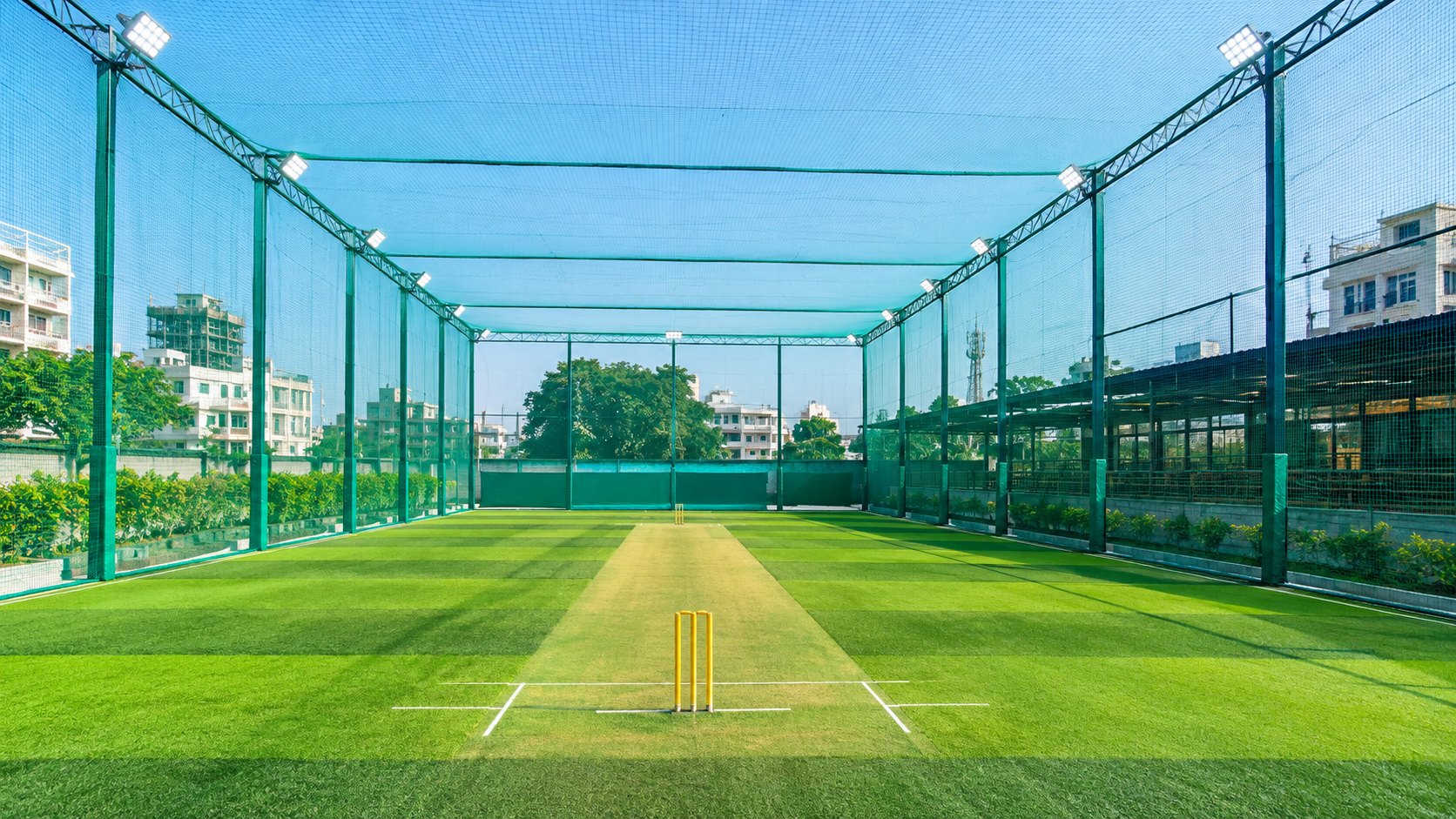
Artificial Sports Turf
Synthetic grass systems are extensively used in outdoor sports facilities.
Popular for:
- Football
- Hockey
- Cricket Practice
- Multi-sport Grounds
Advantages include:
- Natural grass appearance
- Low maintenance
- Year-round usability
- Weather resistance
- Consistent playing quality
Synthetic Sports Flooring vs Traditional Concrete Courts
Both options have distinct advantages depending on the intended use. However, modern sports engineering strongly favors synthetic flooring for competitive and recreational sports.
1. Athlete Safety
Safety is the most significant factor when selecting sports flooring.
Traditional Concrete Courts
Concrete is an extremely hard surface.
When athletes jump, sprint, or suddenly stop, the impact force transfers directly into:
- Knees
- Ankles
- Hips
- Lower back
- Spine
This increases the likelihood of:
- Stress fractures
- Knee injuries
- Shin splints
- Muscle fatigue
- Joint pain
- Ligament damage
Falls on concrete often result in:
- Skin abrasions
- Bruises
- Shoulder injuries
- Wrist fractures
Synthetic Sports Flooring
Synthetic flooring is engineered specifically to absorb impact energy.
Benefits include:
- Reduced joint stress
- Lower muscle fatigue
- Better landing support
- Improved balance
- Enhanced grip
- Reduced slipping
Professional athletes can play longer with reduced physical strain.
2. Shock Absorption
Shock absorption determines how much force the playing surface returns to the athlete.
Concrete Surface
Shock absorption:
Almost zero.
Every landing places maximum stress on the body.
Long-term effects include:
- Chronic knee pain
- Lower back problems
- Foot injuries
- Reduced player endurance
Synthetic Flooring
Synthetic flooring incorporates:
- Cushion layers
- Elastic coatings
- Rubber underlayers
- Polyurethane systems
These materials absorb significant impact, reducing injury risks while improving player comfort.
3. Playing Performance
Performance depends heavily on flooring quality.
Concrete Courts
Players often experience:
- Inconsistent ball bounce
- Reduced traction
- Surface dust
- Uneven wear
- Faster fatigue
Older concrete surfaces may develop:
- Cracks
- Surface erosion
- Rough patches
These affect game quality.
Synthetic Sports Flooring
Synthetic surfaces provide:
- Uniform ball bounce
- Consistent speed
- Better player movement
- Superior grip
- Faster direction changes
- Enhanced agility
Professional tournaments almost exclusively utilize synthetic sports flooring because it ensures predictable and reliable performance.
4. Weather Resistance
Outdoor courts must withstand harsh environmental conditions.
Concrete Courts
Concrete is vulnerable to:
- Rainwater penetration
- Freeze-thaw damage (in colder climates)
- Surface cracking
- UV deterioration
- Dust formation
- Water pooling
Over time, weather exposure weakens the surface and increases maintenance requirements.
Synthetic Flooring
Modern synthetic flooring systems are specifically designed to resist environmental damage.
Key weather-resistant features include:
- UV-resistant coatings
- Waterproof surface layers
- Fast-draining systems
- Heat resistance
- Color stability
- Crack resistance
These characteristics help maintain playing quality throughout the year, even in regions with extreme weather conditions.
5. Player Comfort
Comfort directly influences player endurance and overall game quality.
Concrete Courts
Players often experience:
- Increased fatigue
- Sore muscles
- Joint stiffness
- Foot discomfort
- Reduced playing time
The rigid nature of concrete places continuous stress on the body, making extended play sessions physically demanding.
Synthetic Sports Flooring
Synthetic flooring offers a much more comfortable playing experience through:
- Cushioned support
- Reduced impact on joints
- Better energy return
- Improved foot stability
- Enhanced movement efficiency
As a result, athletes can train longer, recover faster, and perform at a higher level with less physical strain.
Why Modern Sports Facilities Prefer Synthetic Flooring
Across schools, universities, sports academies, residential communities, and professional stadiums, synthetic sports flooring has become the preferred choice because it delivers a combination of safety, durability, aesthetics, and performance. While traditional concrete courts remain a practical option for basic recreational use, synthetic surfaces provide a premium sporting experience that aligns with international standards and the expectations of today’s athletes.
6. Durability and Lifespan
One of the most important factors when selecting a sports surface is its ability to withstand years of intensive use while maintaining consistent performance.
Traditional Concrete Courts
Concrete is known for its structural strength and can last for several decades if the foundation is properly constructed. However, the playing surface gradually deteriorates due to constant exposure to weather and heavy foot traffic.
Common durability issues include:
- Surface cracks
- Expansion and contraction damage
- Uneven patches
- Edge chipping
- Water seepage
- Surface erosion
- Dust formation
Frequent repairs become necessary, especially in regions with heavy rainfall or extreme temperatures.
Average Lifespan
- Structural base: 30–40 years
- Playing surface without resurfacing: 5–10 years
Synthetic Sports Flooring
Modern synthetic flooring systems are engineered to deliver exceptional durability while maintaining high playing performance.
Premium systems include:
- UV-resistant coatings
- Elastic cushioning layers
- Waterproof membranes
- Wear-resistant surface finishes
- Crack-resistant technology
With proper maintenance, synthetic sports flooring maintains its appearance and performance for many years.
Average Lifespan
- Acrylic Sports Flooring: 8–12 years
- PU Sports Flooring: 10–15 years
- EPDM Flooring: 10–15 years
- Modular Sports Tiles: 15–20 years
- Artificial Sports Turf: 8–12 years
7. Installation Process
The installation process affects project timelines, labor costs, and long-term surface quality.
Concrete Court Construction
Concrete court installation involves:
- Site excavation
- Soil compaction
- Sub-base preparation
- PCC layer
- Reinforced concrete slab
- Curing
- Surface finishing
- Court markings
Installation Time
Typically 20–40 days, depending on weather conditions.
Concrete requires curing before it can be used, which extends the project schedule.
Synthetic Sports Flooring Installation
Synthetic flooring is installed over a properly prepared concrete or asphalt base.
The process includes:
- Surface inspection
- Grinding and cleaning
- Crack repair
- Primer application
- Cushion layer installation (if applicable)
- Acrylic or PU coating
- Line marking
- Final quality inspection
Installation Time
Generally 5–15 days, depending on the flooring system and project size.
This shorter installation period allows sports facilities to become operational much faster.
8. Maintenance Requirements
Maintenance costs have a significant impact on the total ownership cost of any sports facility.
Concrete Courts
Concrete courts require ongoing maintenance to preserve usability.
Typical maintenance includes:
- Crack filling
- Surface repairs
- Pressure washing
- Weed removal
- Repainting court lines
- Water drainage repairs
Without regular upkeep, concrete surfaces become rough, uneven, and unsafe.
Synthetic Sports Flooring
Synthetic flooring requires considerably less maintenance.
Routine care involves:
- Sweeping debris
- Washing the surface
- Removing leaves and dirt
- Inspecting joints and coatings
- Repainting lines when necessary
There is no need for frequent structural repairs, making maintenance simpler and more cost-effective over time.
9. Cost Comparison
Budget is often a deciding factor when choosing between synthetic flooring and concrete courts.
Initial Investment
Concrete Courts
Concrete courts generally have a lower upfront construction cost, making them suitable for projects with limited budgets.
However, lower initial costs may lead to higher maintenance expenses in the future.
Synthetic Sports Flooring
Synthetic flooring requires a higher initial investment due to advanced materials and specialized installation.
The additional cost provides:
- Improved safety
- Better aesthetics
- Higher playing performance
- Longer-lasting surface quality
- Reduced maintenance
Long-Term Return on Investment (ROI)
Although synthetic sports flooring costs more initially, it often delivers greater long-term value through:
- Lower repair costs
- Reduced downtime
- Enhanced player satisfaction
- Increased facility usage
- Better durability
- Higher property value
For schools, sports academies, clubs, and commercial facilities, synthetic flooring can be a more economical choice over the lifespan of the court.
10. Aesthetic Appeal
Modern sports facilities are expected to be both functional and visually appealing.
Concrete Courts
Concrete courts generally have a plain, industrial appearance.
Over time, they may develop:
- Fading
- Stains
- Cracks
- Surface discoloration
These issues can reduce the professional look of the facility.
Synthetic Sports Flooring
Synthetic flooring is available in a wide range of vibrant colors and customizable designs.
Popular color combinations include:
- Blue and green
- Red and green
- Grey and blue
- Orange and blue
- Green and red
Additional customization options include:
- Club logos
- School branding
- Sponsor graphics
- Multi-sport markings
- Decorative borders
A well-designed synthetic court enhances the overall appearance of the sports facility and creates a more engaging environment for players and spectators.
11. Environmental Sustainability
Sustainability is becoming an increasingly important consideration in sports infrastructure.
Concrete Courts
Concrete production has a relatively high environmental impact due to:
- Cement manufacturing emissions
- Heavy material consumption
- Limited recyclability
Synthetic Sports Flooring
Many modern synthetic flooring systems are designed with sustainability in mind.
Eco-friendly features include:
- Low-VOC materials
- Recyclable components
- Water-based coatings
- Reduced maintenance chemicals
- Long service life
- Efficient drainage systems
These features help reduce the overall environmental footprint of sports facilities.
Best Applications
Traditional Concrete Courts Are Suitable For:
- Budget-conscious projects
- Temporary sports facilities
- Basic recreational courts
- Public parks
- Low-traffic community spaces
Synthetic Sports Flooring Is Ideal For:
- Schools and colleges
- Universities
- Sports academies
- Professional stadiums
- Residential communities
- Commercial sports clubs
- Indoor sports halls
- Outdoor multi-sport courts
- Government sports complexes
- International-standard facilities
Comparison Table
| Feature | Synthetic Sports Flooring | Traditional Concrete Courts |
|---|---|---|
| Player Safety | Excellent | Low |
| Shock Absorption | Excellent | Very Low |
| Comfort | High | Low |
| Ball Bounce | Consistent | Moderate |
| Slip Resistance | Excellent | Moderate |
| Injury Risk | Low | High |
| Weather Resistance | Excellent | Moderate |
| Maintenance | Low | High |
| Installation Time | Fast | Longer |
| Appearance | Premium | Basic |
| Durability | Excellent | Good |
| Long-Term Value | High | Moderate |
Which One Should You Choose?
The right choice depends on your project goals, budget, and expected level of use.
Choose Traditional Concrete Courts if:
- You have a limited budget.
- The court is intended for light recreational use.
- Performance and aesthetics are not top priorities.
Choose Synthetic Sports Flooring if:
- Athlete safety is important.
- You want a professional-quality playing experience.
- The facility will be used frequently.
- You aim to reduce long-term maintenance costs.
- You want an attractive, modern sports environment.
For schools, sports clubs, residential communities, and professional sports facilities, synthetic sports flooring is widely regarded as the better long-term investment due to its superior performance, safety, and durability.
Frequently Asked Questions (FAQs)
1. Is synthetic sports flooring better than concrete?
Yes. Synthetic sports flooring offers superior shock absorption, player comfort, traction, and safety, making it the preferred choice for modern sports facilities.
2. How long does synthetic sports flooring last?
Depending on the material and maintenance, synthetic sports flooring can last between 8 and 20 years.
3. Is synthetic sports flooring suitable for outdoor use?
Yes. Acrylic flooring, modular sports tiles, EPDM rubber, and artificial turf are specifically designed for outdoor conditions and offer excellent resistance to UV rays, rain, and temperature fluctuations.
4. Does synthetic flooring reduce sports injuries?
Yes. Cushioned synthetic surfaces absorb impact and reduce stress on joints, muscles, and ligaments, helping to lower the risk of common sports injuries.
5. Is synthetic flooring expensive?
While the initial installation cost is higher than a traditional concrete court, the reduced maintenance and longer service life often make it more cost-effective over the long term.
Conclusion
The choice between Synthetic Sports Flooring and Traditional Concrete Courts is about more than just the initial construction cost. It is an investment in player safety, athletic performance, facility longevity, and overall user satisfaction.
Traditional concrete courts remain a practical option for basic recreational use due to their strength and lower upfront cost. However, they fall short in areas such as shock absorption, comfort, injury prevention, and long-term maintenance.
Synthetic sports flooring, on the other hand, represents the future of sports infrastructure. With its advanced engineering, superior durability, enhanced safety features, weather resistance, and professional appearance, it delivers an outstanding playing experience for athletes of all ages and skill levels.
Whether you are developing a new school sports complex, upgrading a community court, or constructing an international-standard sports facility, investing in high-quality synthetic sports flooring ensures lasting value, improved performance, and a safer environment for everyone.
Final Thoughts
As the demand for modern, sustainable, and high-performance sports facilities continues to grow, synthetic sports flooring has become the preferred solution for architects, sports consultants, educational institutions, government agencies, and private developers. Choosing the right flooring today will help create a durable, visually appealing, and athlete-friendly facility that supports years of successful sporting activities.