Introduction
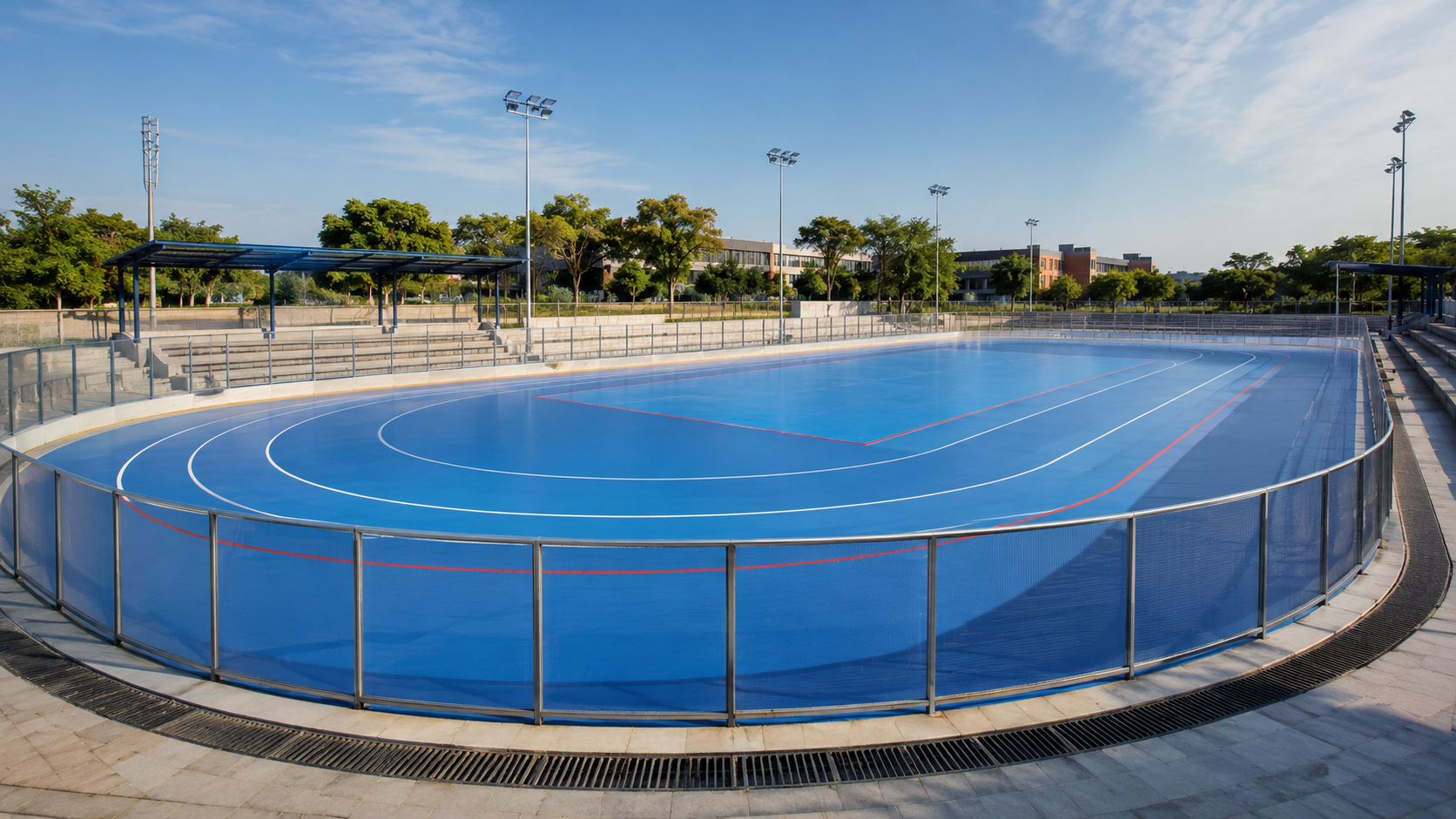
The demand for professional skating tracks has increased significantly in recent years as governments, schools, sports academies, residential communities, recreational parks, and private sports facilities continue investing in modern sports infrastructure. Roller skating has become one of the fastest-growing sports worldwide due to its accessibility, health benefits, and inclusion in competitive events. A professionally designed skating track not only enhances athlete performance but also ensures maximum safety, durability, and long-term value.
Constructing a professional skating track requires more than simply laying a smooth surface. It involves careful planning, engineering, drainage design, base preparation, precision leveling, high-quality surfacing materials, and strict adherence to international sports standards. Every construction stage contributes to creating a skating facility capable of withstanding heavy usage, changing weather conditions, and years of continuous performance.
Whether you are planning a skating rink for a school, sports academy, municipal park, stadium, residential township, or commercial sports complex, understanding the complete construction process will help you make informed decisions and achieve excellent results.
This comprehensive 2026 guide explains every stage involved in building a professional skating track, from site selection to finishing, maintenance, and estimated costs.
Why Invest in a Professional Skating Track?
A professionally constructed skating track offers several long-term advantages beyond providing a space for recreation.
Some major benefits include:
- Safe skating environment
- Smooth and seamless riding experience
- Reduced injury risk
- Excellent drainage performance
- Long operational lifespan
- Low maintenance costs
- Attractive appearance
- International competition readiness
- Increased property value
- Suitable for training and tournaments
Professional skating tracks are commonly installed at:
- Sports academies
- International schools
- Universities
- Public parks
- Municipal recreation centers
- Residential townships
- Indoor sports complexes
- Outdoor stadiums
- Roller skating clubs
- Community sports facilities
Types of Professional Skating Tracks
Choosing the correct skating track depends on the intended usage, budget, and local climate.
1. Acrylic Skating Track
Acrylic systems are among the most popular choices because they provide:
- Excellent grip
- UV resistance
- Weather protection
- Bright color options
- Easy maintenance
- Long service life
Ideal for:
- Outdoor skating
- Schools
- Sports clubs
- Parks
2. Polyurethane (PU) Skating Track
PU flooring provides outstanding comfort and durability.
Advantages include:
- Shock absorption
- Flexible surface
- Superior skating performance
- High wear resistance
- Comfortable riding
Suitable for:
- Professional academies
- Indoor facilities
- Competition venues
3. Concrete Skating Track
Concrete serves as a durable structural base and can also be finished for basic recreational skating. It is cost-effective but generally requires an acrylic or PU coating for optimal performance.
4. Indoor Wooden Skating Floor
Premium hardwood skating floors are commonly used for artistic skating and indoor roller sports. They provide a smooth, controlled surface but require climate-controlled environments.
Planning Before Construction
Every successful skating track begins with careful planning.
Important planning factors include:
- Available land area
- Soil condition
- Groundwater level
- Drainage system
- Expected daily users
- Competition requirements
- Future expansion
- Budget planning
- Accessibility
- Lighting system
- Parking facilities
Professional site surveys help identify potential construction challenges before work begins.
Standard Skating Track Dimensions
The dimensions vary depending on the intended purpose.
Common facility sizes include:
Recreational Track
- Width: 4–6 meters
- Length: As per available space
Training Track
- Oval or circular layout
- Smooth turning radius
- Safety zones around the perimeter
Competition Track
Designed according to recognized roller sports standards, with carefully engineered curves, consistent surface quality, and adequate run-off space for athlete safety.
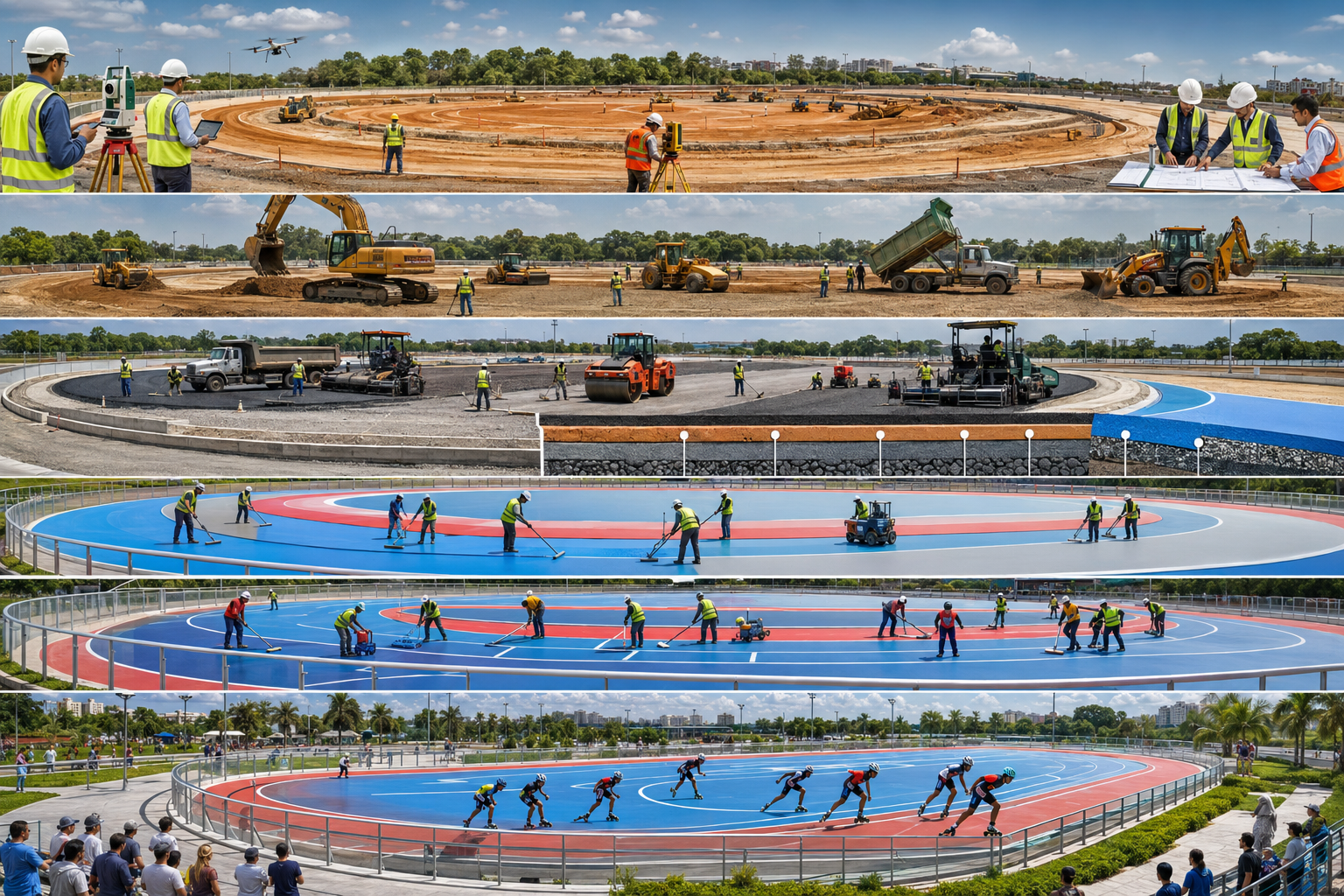
Step 1: Site Survey and Soil Investigation
The first construction stage is evaluating the project site.
Professional engineers perform:
- Topographic survey
- Soil testing
- Bearing capacity analysis
- Water drainage inspection
- Level measurement
- Existing utility checks
This information determines the required excavation depth and base design.
Layout Marking
Once the design is finalized, engineers mark the complete skating track using:
- Total station equipment
- Laser leveling instruments
- Survey markers
- Chalk lines
- String lines
Accurate layout prevents alignment issues later in construction.
Ground Excavation
Excavation removes unsuitable soil and prepares the foundation.
Typical work includes:
- Clearing vegetation
- Removing debris
- Excavating weak soil
- Earth cutting
- Level correction
- Compaction preparation
Heavy equipment used includes:
- Excavators
- Bulldozers
- Loaders
- Dump trucks
Soil Compaction
Compaction strengthens the foundation.
Machines used include:
- Vibratory rollers
- Plate compactors
- Soil compactors
- Water tankers
Proper compaction minimizes settlement and prevents future surface cracking.
Drainage Installation
Water is one of the biggest threats to skating surfaces.
A proper drainage system includes:
- Surface slope
- Underground drainage pipes
- Side drains
- Catch pits
- Rainwater outlets
Recommended surface slope ranges from 0.8% to 1% to ensure effective water runoff without affecting skating performance.
Step 6: Granular Sub-Base Construction
The sub-base distributes loads evenly and supports the finished skating surface.
Typical materials include:
- Crushed stone
- WMM (Wet Mix Macadam)
- Granular aggregates
- Compacted gravel
Each layer is compacted separately to achieve maximum stability.
Concrete or Asphalt Base Construction
After preparing the sub-base, the structural base is constructed.
Concrete Base
Advantages:
- High strength
- Long life
- Excellent stability
- Crack resistance with proper joints
Asphalt Base
Advantages:
- Smooth finish
- Flexible structure
- Faster construction
- Better vibration absorption
The choice depends on project specifications and local conditions.
Precision Surface Leveling
Laser-guided equipment ensures:
- Perfect flatness
- Smooth skating movement
- Consistent slopes
- Uniform thickness
Even minor surface irregularities can impact skating speed and safety, making this stage essential.
Surface Preparation
Before applying the skating surface:
- Dust is removed.
- Moisture levels are checked.
- Surface defects are repaired.
- Expansion joints are sealed.
- Primer is applied.
This preparation ensures proper adhesion of the final coating.
Acrylic or PU Surface Installation
This is the most critical stage of the project.
Acrylic Flooring Installation
Construction sequence:
- Primer application
- Acrylic resurfacer
- Cushion layers (if required)
- Color coating
- Anti-slip finish
- Line marking
- Final curing
Advantages:
- Bright appearance
- UV stability
- Excellent grip
- Easy maintenance
PU Flooring Installation
Installation process:
- Primer
- Elastic cushion layer
- PU base coat
- Intermediate coating
- Wear-resistant top coat
- UV-resistant finish
PU provides a premium skating experience for professional athletes.
Step 11: Track Coloring
Modern skating tracks use vibrant sports-grade coatings.
Popular colors include:
- Blue
- Red
- Green
- Grey
- Orange
- Purple
These coatings provide:
- UV resistance
- Color stability
- Anti-slip texture
- Weather durability
Step 12: Line Marking
Professional line marking ensures accurate training and competition.
High-performance sports paints are used to create:
- Boundary lines
- Start lines
- Finish lines
- Direction arrows
- Safety markings
- Event-specific layouts
Laser-guided marking machines improve precision.
Step 13: Safety Features
Safety is a top priority in every skating facility.
Essential features include:
- Safety barriers
- Protective fencing
- Guard rails
- Soft edge protection
- Emergency exits
- First-aid stations
- Spectator separation
- Non-slip walkways
For competitive facilities, additional safety padding may be installed around curves and high-speed sections.
Step 14: Lighting Installation
Proper illumination enables safe evening use.
LED sports lighting should provide:
- Uniform brightness
- Minimal glare
- Energy efficiency
- Weather resistance
- Low maintenance
Modern systems also support televised events and professional competitions.
Step 15: Final Inspection and Quality Testing
Before opening the facility, conduct a comprehensive quality inspection.
Testing includes:
- Surface smoothness
- Flatness tolerance
- Drainage efficiency
- Slip resistance
- Coating adhesion
- Surface hardness
- Thickness verification
- Crack inspection
- Color consistency
- Dimensional accuracy
Any defects should be corrected before handover.
Equipment Used During Construction
Professional skating track construction typically involves:
- Excavators
- Bulldozers
- Motor graders
- Laser level systems
- Soil compactors
- Vibratory rollers
- Plate compactors
- Concrete mixers
- Asphalt pavers
- Power trowels
- Air compressors
- Surface grinders
- Industrial vacuum cleaners
- Line marking machines
- Moisture meters
- Survey equipment
Using modern machinery improves accuracy, productivity, and construction quality.
Common Mistakes to Avoid
Many skating tracks experience premature failure due to avoidable construction errors.
Common mistakes include:
- Poor site drainage
- Weak soil preparation
- Inadequate compaction
- Uneven base levels
- Low-quality materials
- Incorrect coating thickness
- Ignoring expansion joints
- Rushing curing times
- Poor line marking
- Lack of routine maintenance
Avoiding these issues significantly extends the life of the skating track.
Maintenance Tips
Routine maintenance preserves performance and appearance.
Recommended practices:
- Sweep debris regularly.
- Wash the surface with clean water and mild detergent.
- Remove leaves and dirt from drainage channels.
- Inspect joints for damage.
- Repair cracks immediately.
- Repaint markings when faded.
- Avoid dragging heavy equipment across the surface.
- Schedule annual professional inspections.
With proper care, a professional skating track can provide excellent service for many years.
Estimated Construction Timeline
Construction duration depends on project size, weather, and site conditions.
Typical schedule:
| Construction Stage | Estimated Time |
|---|---|
| Site Survey | 2–5 Days |
| Excavation | 4–7 Days |
| Sub-base Construction | 5–8 Days |
| Concrete/Asphalt Base | 7–10 Days |
| Surface Preparation | 2–3 Days |
| Acrylic or PU Installation | 5–7 Days |
| Line Marking | 1–2 Days |
| Final Inspection | 1–2 Days |
Overall project completion generally ranges from 4 to 8 weeks.
Factors Affecting Construction Cost
Several variables influence the total investment required for a professional skating track.
These include:
- Track size
- Ground conditions
- Soil improvement requirements
- Base construction material
- Acrylic or PU surface selection
- Drainage complexity
- Lighting system
- Safety barriers
- Site accessibility
- Labor costs
- Equipment rental
- Local material availability
Obtaining a detailed project estimate from an experienced contractor helps ensure accurate budgeting.
Why Choose Professional Construction?
Professional contractors offer:
- Engineered designs
- Quality workmanship
- Certified materials
- Modern equipment
- Compliance with sports standards
- Reliable project management
- Warranty support
- Long-lasting performance
A professionally built skating track minimizes maintenance costs and delivers a safer, smoother experience for skaters of all skill levels.
Frequently Asked Questions (FAQs)
What is the best surface for a skating track?
Acrylic and polyurethane surfaces are the most popular choices due to their durability, smooth finish, weather resistance, and excellent skating performance.
How long does a skating track last?
With quality materials and regular maintenance, a professional skating track can remain in excellent condition for 10–20 years or more, depending on usage and environmental conditions.
Is drainage important for outdoor skating tracks?
Yes. Efficient drainage prevents water accumulation, reduces surface damage, and extends the lifespan of the track.
Can skating tracks be built indoors?
Absolutely. Indoor skating facilities often use PU or premium wooden flooring to provide a controlled environment for training and competitions.
How often should the surface be inspected?
Routine inspections every few months, along with an annual professional assessment, help identify wear and maintain optimal performance.
Conclusion
Building a professional skating track is a long-term investment that combines thoughtful planning, sound engineering, and high-quality construction practices. From conducting a detailed site survey and preparing a stable foundation to installing premium acrylic or polyurethane surfaces, every stage plays a crucial role in delivering a safe, durable, and high-performance facility.
Whether the project serves a school, sports academy, municipal park, residential community, or professional training center, prioritizing quality materials, proper drainage, precise leveling, and regular maintenance will ensure years of reliable use. By following the step-by-step process outlined in this guide, you can create a skating track that meets modern standards, supports athlete development, and provides an enjoyable experience for recreational and competitive skaters al