Introduction: Why Sports Flooring Construction Matters in 2026
Sports flooring construction has become one of the most critical components of modern sports infrastructure in 2026. Whether it is a professional stadium, school playground, indoor badminton court, gym, or multi-purpose sports facility, the quality of the flooring directly impacts athlete performance, safety, durability, and long-term maintenance costs.
With the rapid growth of sports infrastructure across India and globally, driven by initiatives, private investments, and increasing health awareness, the demand for high-performance sports flooring systems has significantly increased. Modern sports flooring is no longer just a surface—it is a scientifically engineered system designed to optimize athletic movement, absorb impact, and provide long-term resilience.
In 2026, sports flooring construction integrates advanced materials, sustainable technologies, and precision engineering to deliver surfaces that meet international standards such as BWF, ITF, FIBA, and FIFA requirements.
What is Sports Flooring Construction?
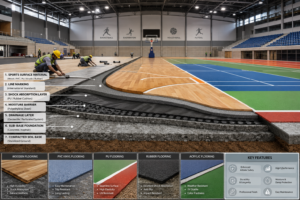
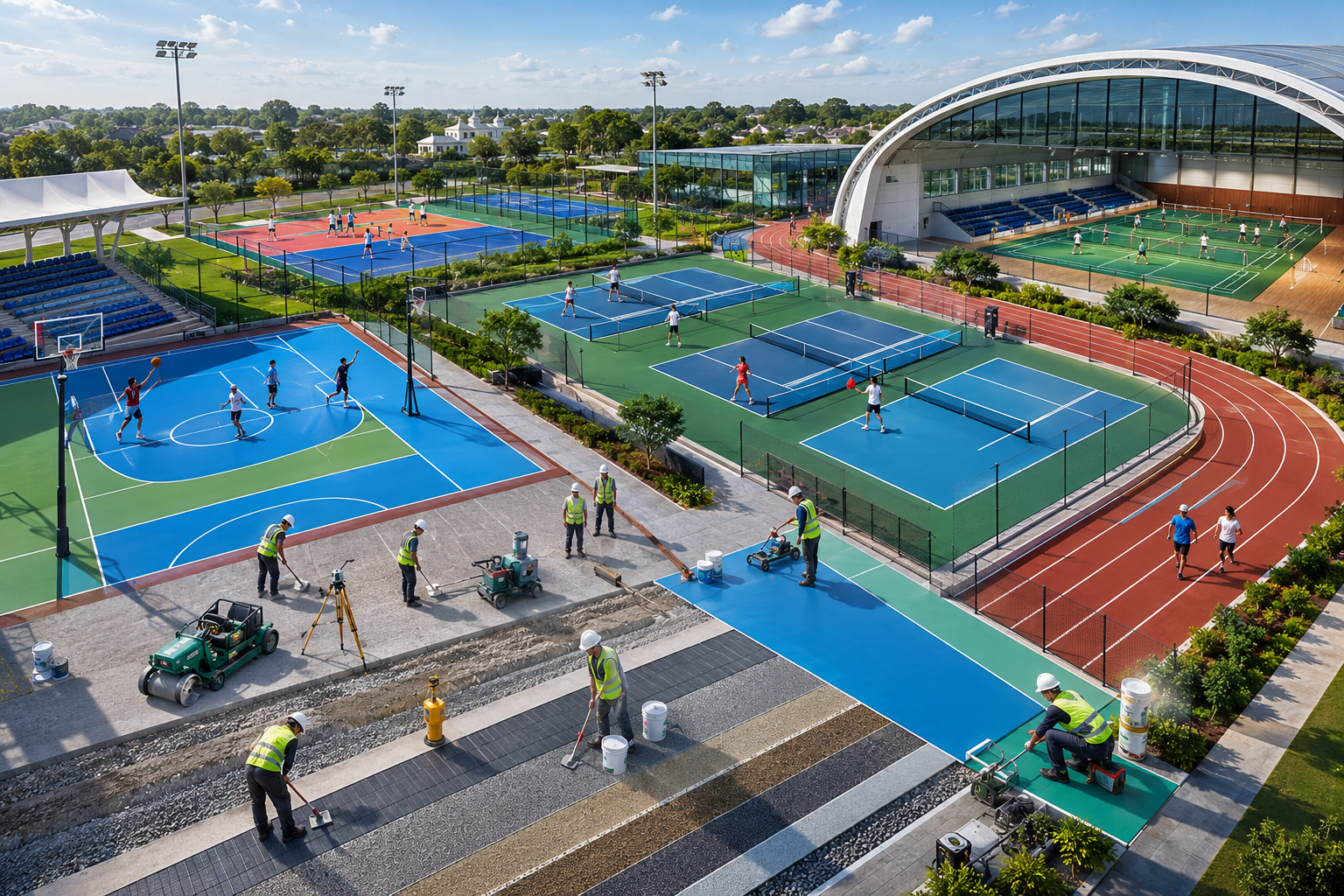
Sports flooring construction refers to the complete process of designing, preparing, installing, and finishing specialized sports surfaces tailored for specific athletic activities. It involves multiple layers and technical components, not just the visible top layer.
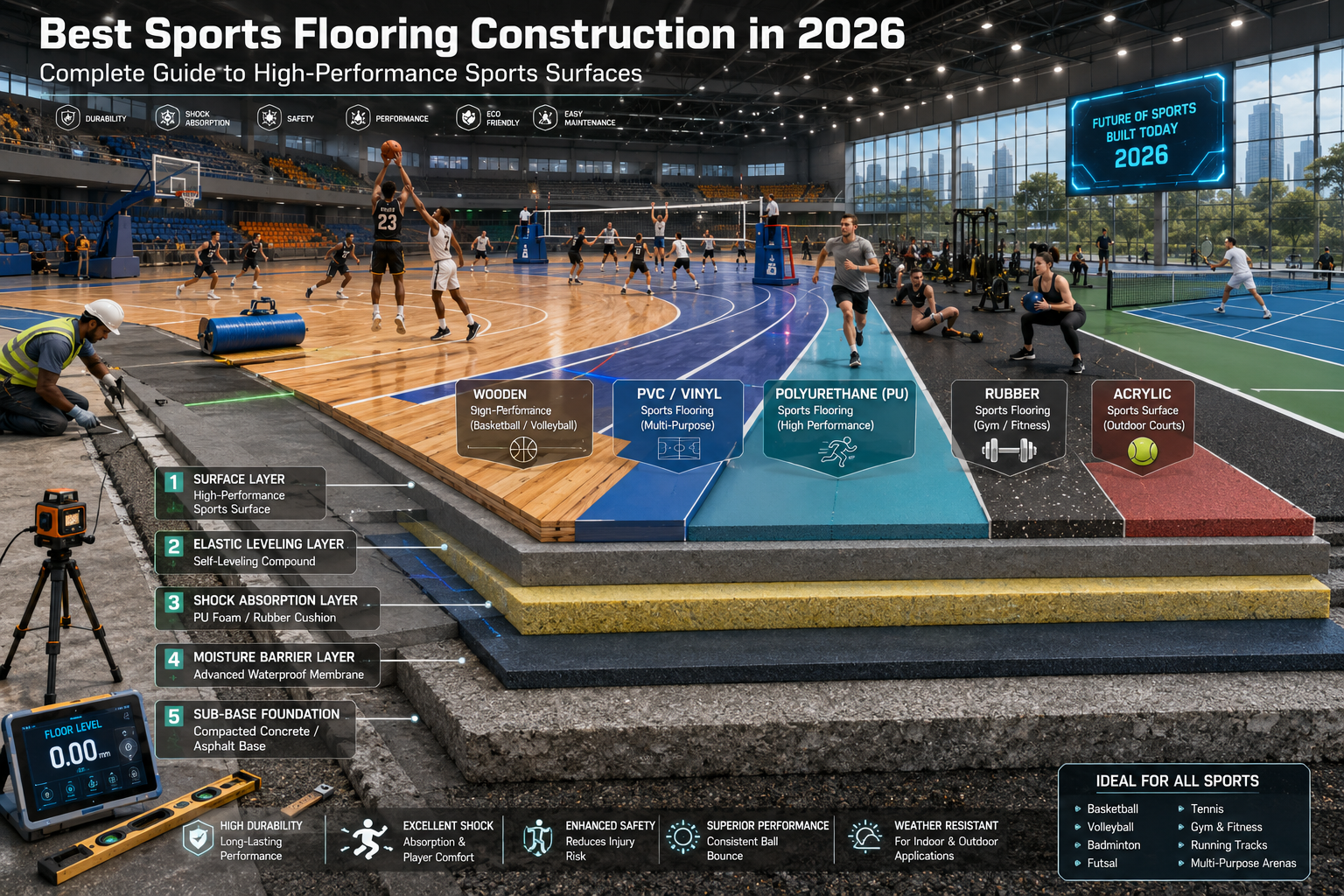
A professional sports flooring system typically includes:
- Sub-base preparation for structural stability
- Moisture and drainage systems
- Shock-absorbing layers
- Surface coating or flooring material
- Line marking and finishing
This multi-layer construction ensures durability, safety, and performance, making it far superior to traditional flooring like concrete or tiles.
Key Benefits of Professional Sports Flooring Construction
1. Injury Prevention and Athlete Safety
Modern sports flooring systems are engineered with shock absorption properties that reduce stress on joints, minimizing injuries like ankle sprains, knee damage, and muscle fatigue.
2. Enhanced Performance
Proper flooring improves grip, ball bounce, and player movement, directly enhancing sports performance.
3. Durability and Longevity
High-quality sports flooring can last 8–15 years depending on material and maintenance.
4. Low Maintenance
Advanced materials like synthetic acrylic and vinyl require minimal maintenance compared to traditional surfaces.
5. Compliance with International Standards
Professional courts require certified flooring systems to host tournaments and competitions.
Types of Sports Flooring Used in 2026
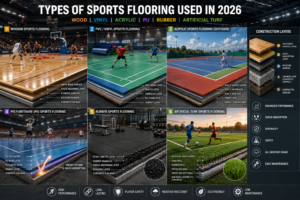
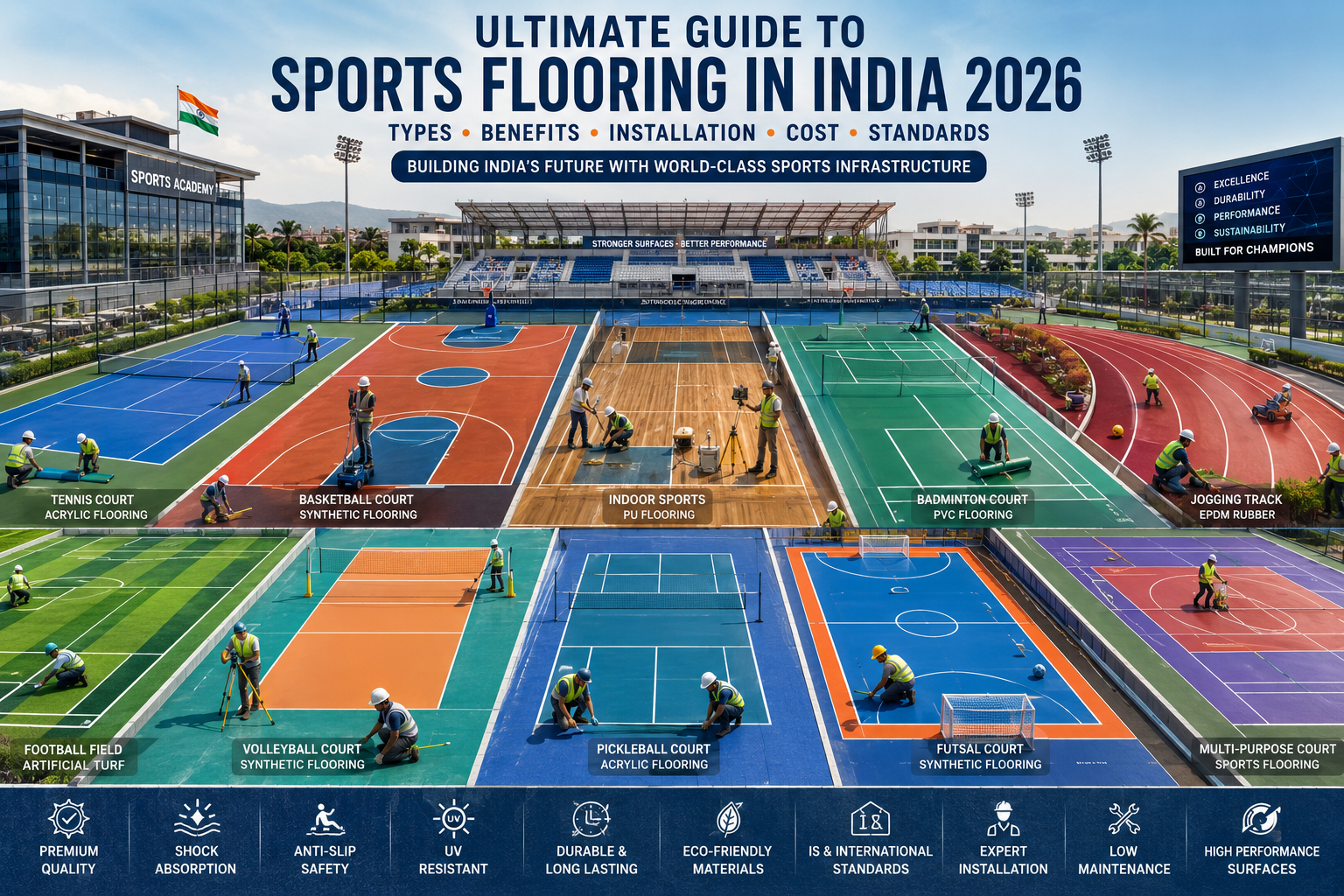
1. Wooden Sports Flooring
Wooden flooring is widely used for indoor courts such as basketball and volleyball.
Features:
- Excellent shock absorption
- Superior ball bounce
- Premium aesthetic appeal
Best for: Indoor stadiums, schools, professional arenas
Wood flooring offers high elasticity and performance, making it ideal for competitive sports environments.
2. PVC / Vinyl Sports Flooring
PVC vinyl flooring is one of the most popular choices for badminton and multi-purpose courts.
Advantages:
- Anti-slip surface
- Comfortable for players
- Affordable and easy to install
- Low maintenance
Best for: Badminton courts, indoor sports halls
3. Acrylic Sports Flooring (Outdoor)
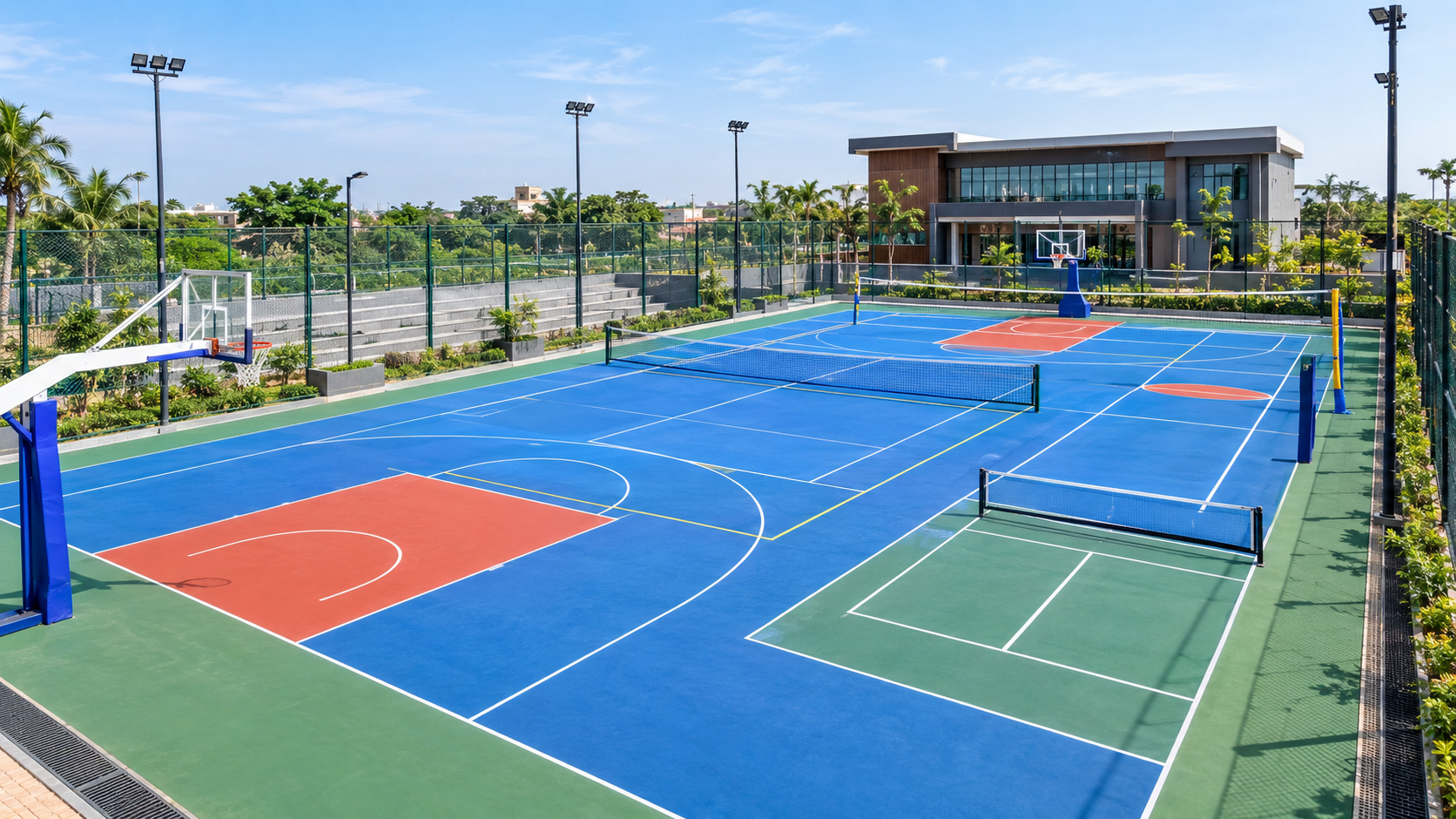
Acrylic flooring is widely used in outdoor courts due to its durability and weather resistance.
Benefits:
- UV resistant
- Cost-effective
- Slip-resistant
- Long-lasting
Synthetic acrylic systems are among the most demanded solutions in 2026 due to their versatility and performance.
4. Polyurethane (PU) Sports Flooring
PU flooring is a seamless and cushioned flooring system used for multi-purpose sports facilities.
Key Features:
- High shock absorption
- Seamless surface
- Suitable for indoor and outdoor
5. Rubber Sports Flooring
Rubber flooring is ideal for gyms and fitness centers.
Advantages:
- Maximum shock absorption
- Noise reduction
- High durability
Rubber granules like SBR and EPDM are widely used to create cushioned sports surfaces with excellent resilience and safety.
6. Artificial Turf Sports Flooring
Artificial turf is commonly used for football, cricket, and multipurpose outdoor grounds.
Benefits:
- All-weather usability
- Low maintenance
- Real grass-like feel
Sports Flooring Construction Process (Step-by-Step)
Step 1: Site Inspection & Planning
- Soil testing
- Area measurement
- Usage analysis (indoor/outdoor, sport type)
Base Preparation
- Concrete or asphalt base creation
- Surface leveling
- Crack filling
Shock Absorption Layer
- Rubber granules or cushion layers
- PU binder application
Surface Installation
- Acrylic / vinyl / wood / PU / turf application
Line Marking & Finishing
- Accurate sports markings
- Anti-slip coatings
- Final inspection
Cost of Sports Flooring Construction in 2026
The cost of sports flooring varies depending on material, thickness, and project scale.
Average Price Range in India:
| Flooring Type | Cost (₹ per sq. ft.) |
|---|---|
| Vinyl Flooring | ₹80 – ₹250 |
| Rubber Flooring | ₹100 – ₹300 |
| Wooden Flooring | ₹200 – ₹500 |
| Acrylic Flooring | ₹120 – ₹300 |
Costs also vary based on thickness and durability levels, with high-performance systems costing more but lasting longer.
Factors to Consider Before Choosing Sports Flooring
1. Type of Sport
Different sports require different surfaces (e.g., badminton vs basketball).
2. Indoor vs Outdoor
Outdoor flooring must withstand UV rays, rain, and heat.
3. Budget
Balance between initial investment and long-term maintenance.
4. Usage Frequency
High-traffic areas require durable flooring.
5. Maintenance Requirements
Choose low-maintenance options for cost efficiency.
Latest Trends in Sports Flooring Construction 2026
1. Eco-Friendly Flooring Solutions
Sustainable materials like recycled rubber, bamboo, and eco-friendly PVC are gaining popularity.
2. Multi-Sport Flooring Systems
Facilities now prefer versatile flooring that supports multiple sports.
3. Smart Sports Surfaces
Integration of sensors and performance tracking systems.
4. Modular Flooring Systems
Easy-to-install and replaceable flooring tiles.
5. Advanced Shock Absorption Technology
Improved athlete comfort and injury prevention.
Sustainable flooring is becoming a key trend due to long-term cost savings and environmental benefits.
Why Choose Professional Sports Flooring Contractors?
Hiring experienced sports flooring contractors ensures:
- Proper installation techniques
- Use of certified materials
- Long-lasting performance
- Compliance with international standards
A professional contractor delivers a complete flooring system—not just a surface.
Applications of Sports Flooring
Sports flooring is widely used in:
- Schools and colleges
- Indoor stadiums
- Sports academies
- Residential complexes
- Fitness centers and gyms
- Commercial sports facilities
Maintenance Tips for Long-Lasting Sports Flooring
- Regular cleaning and dust removal
- Periodic inspection for damage
- Avoid heavy equipment on sports surfaces
- Re-coating or polishing when required
- Proper drainage for outdoor courts
Future of Sports Flooring Construction
The future of sports flooring lies in:
- Smart AI-integrated surfaces
- Sustainable and recyclable materials
- High-performance hybrid flooring systems
- Increased customization
The global sports flooring market is expected to grow significantly due to rising demand for high-quality sports infrastructure.
Conclusion: Invest in the Best Sports Flooring Construction
Sports flooring construction in 2026 is a blend of technology, engineering, and performance-driven design. Choosing the right flooring system is essential for creating safe, durable, and high-performance sports environments.
Whether you are planning a badminton court, basketball arena, gym flooring, or multi-sports complex, investing in professional sports flooring construction ensures long-term benefits, enhanced athlete performance, and reduced maintenance costs.
If you want to build a world-class sports facility, start with the right foundation—because great performance begins from the ground up.
FAQ – Sports Flooring Construction 2026
Q1. What is sports flooring construction?
Sports flooring construction is the installation of specialized flooring systems designed for sports activities like badminton, basketball, gym, and multi-sport courts with shock absorption and durability.
Q2. Which is the best sports flooring material?
The best material depends on usage. PVC vinyl is ideal for indoor courts, acrylic for outdoor courts, wooden flooring for basketball, and rubber flooring for gyms.
Q3. How long does sports flooring last?
High-quality sports flooring can last between 8 to 15 years depending on material type, installation quality, and maintenance.
Q4. What is the cost of sports flooring in India?
The average cost ranges from ₹80 to ₹500 per sq. ft. based on material like vinyl, acrylic, rubber, or wood.
Q5. Is sports flooring waterproof?
Yes, most modern sports flooring like acrylic, PU, and vinyl systems are water-resistant and suitable for indoor and outdoor use.
Q6. Which flooring is best for badminton courts?
PVC vinyl and PU flooring are the most preferred options for badminton courts due to their grip, shock absorption, and performance standards.
Q7. Can sports flooring be installed outdoors?
Yes, materials like acrylic and artificial turf are specially designed for outdoor sports flooring installations.