Introduction
Badminton has become one of the fastest-growing sports across the world, attracting players of all age groups and skill levels. From schools and universities to sports academies, fitness clubs, residential societies, community parks, and professional sports complexes, the demand for well-designed badminton courts has increased significantly over the past few years. As sports infrastructure continues to improve, organizations and investors are looking for high-quality badminton court construction solutions that deliver exceptional playing performance, durability, and long-term value.
One of the most common questions during the planning stage is whether to build an indoor badminton court or an outdoor badminton court. Both options have unique advantages, construction requirements, maintenance needs, and budget considerations. Selecting the right type of badminton court depends on several factors, including available space, climate conditions, expected usage, project budget, maintenance capabilities, and the level of competition the facility intends to support.
Indoor badminton courts are widely preferred for professional tournaments, training centers, and competitive sports because they provide controlled playing conditions throughout the year. Outdoor badminton courts, on the other hand, offer a cost-effective solution for recreational play in schools, parks, resorts, residential communities, and public sports facilities where accessibility and affordability are key priorities.
Understanding the differences between indoor and outdoor badminton court construction helps project owners make informed decisions that maximize investment returns while providing athletes with a safe and enjoyable playing environment.
This comprehensive guide explores every aspect of indoor and outdoor badminton court construction, including design considerations, flooring systems, structural requirements, installation methods, maintenance practices, cost factors, and long-term benefits. Whether you are planning a new sports complex or upgrading an existing facility, this guide will help you determine which type of badminton court best suits your requirements.
Why Professional Badminton Court Construction Matters
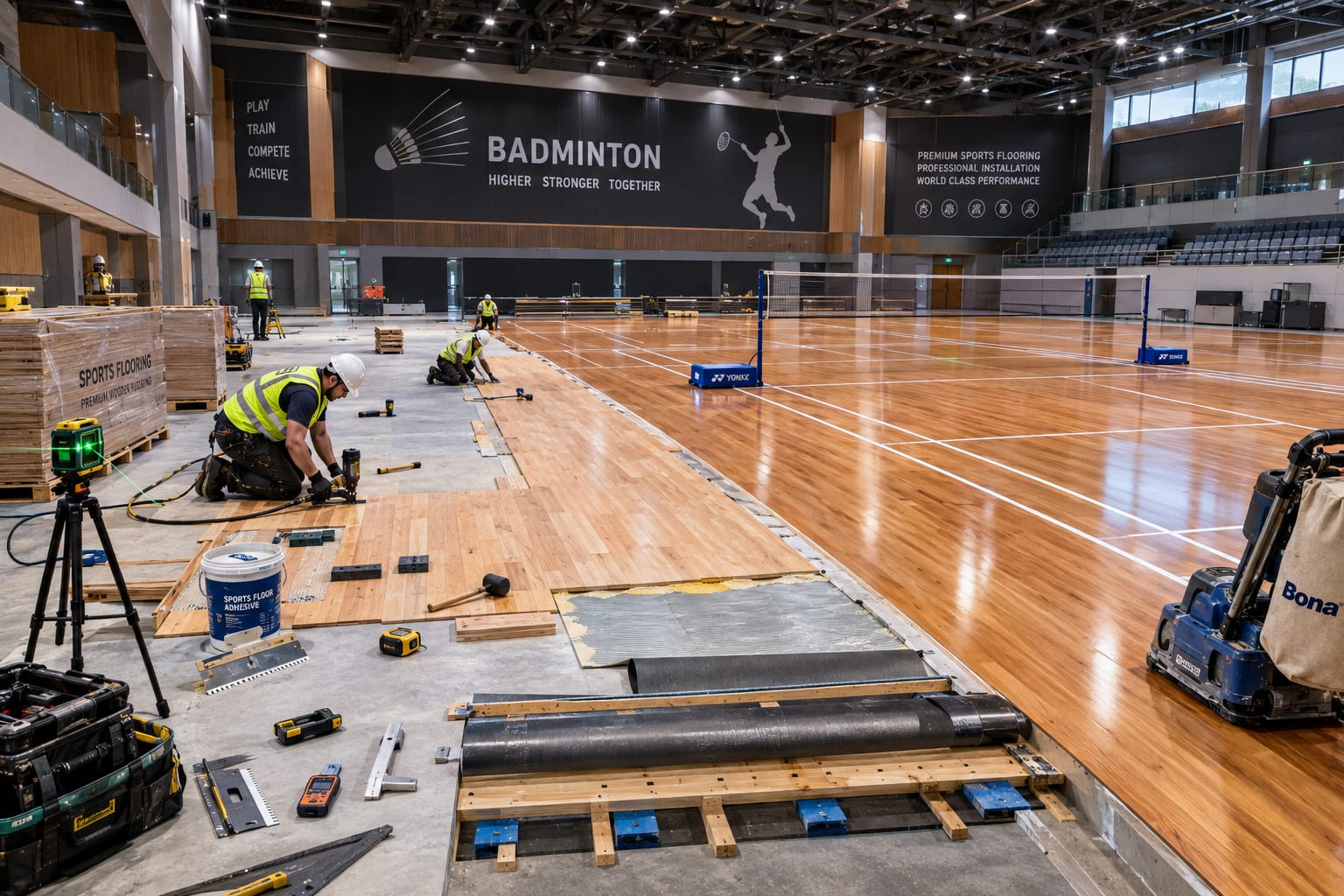
Constructing a badminton court involves much more than installing a playing surface. A professionally built court combines engineering precision, premium materials, accurate dimensions, and advanced flooring technology to create a facility that enhances player performance while minimizing the risk of injuries.
A professionally designed badminton court offers several important advantages:
- Excellent shock absorption that reduces stress on players’ knees and ankles.
- Consistent ball and shuttlecock performance for competitive gameplay.
- Slip-resistant flooring that improves player safety.
- Superior durability capable of withstanding intensive daily use.
- Reduced maintenance costs through high-quality construction materials.
- Compliance with international badminton standards.
- Enhanced visual appeal for schools, sports clubs, and commercial facilities.
- Long-term return on investment through extended service life.
Whether the court is built indoors or outdoors, professional planning and execution ensure that the playing surface performs reliably under varying conditions while maintaining its appearance and functionality for many years.
Understanding Indoor Badminton Court Construction
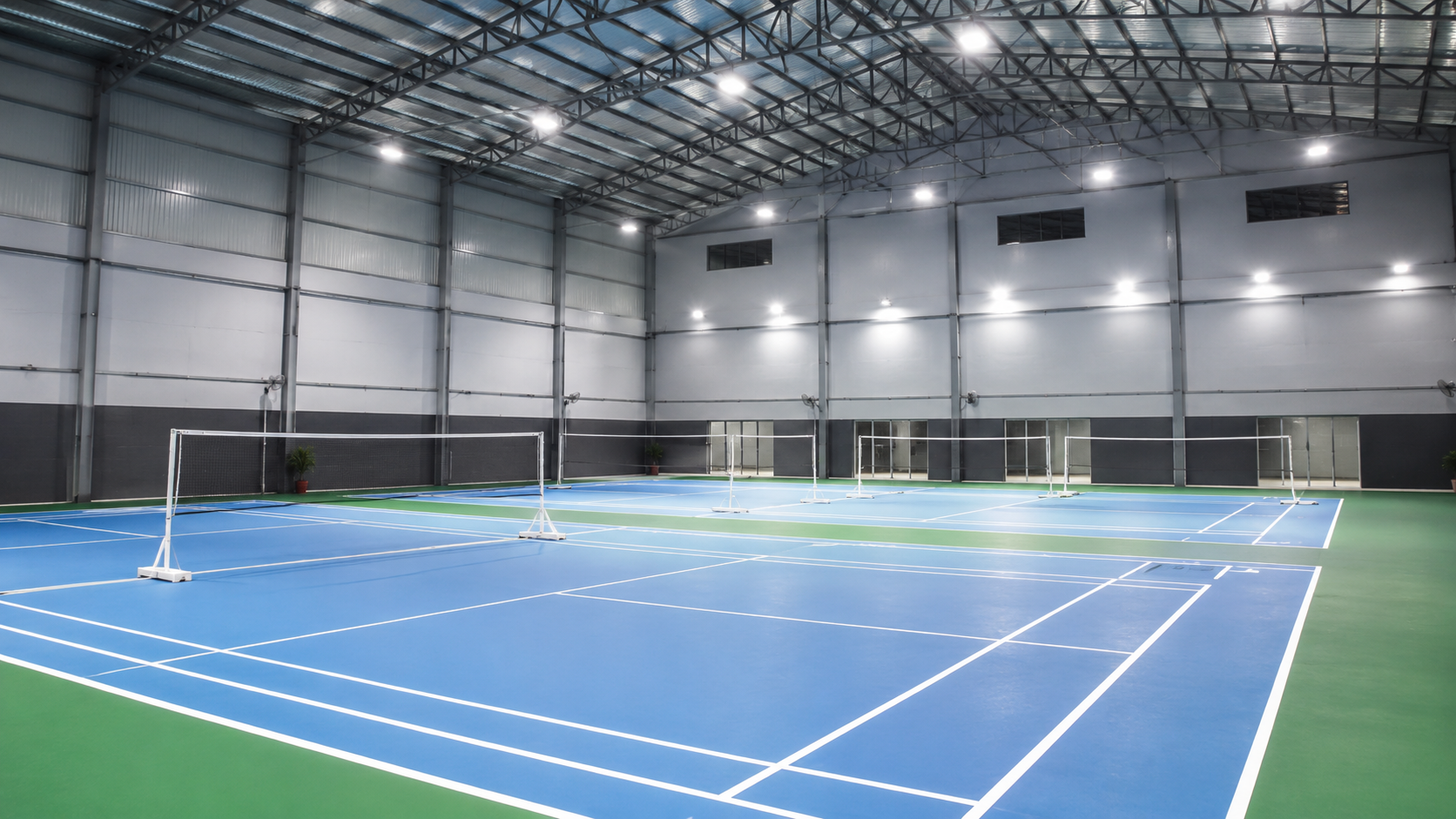
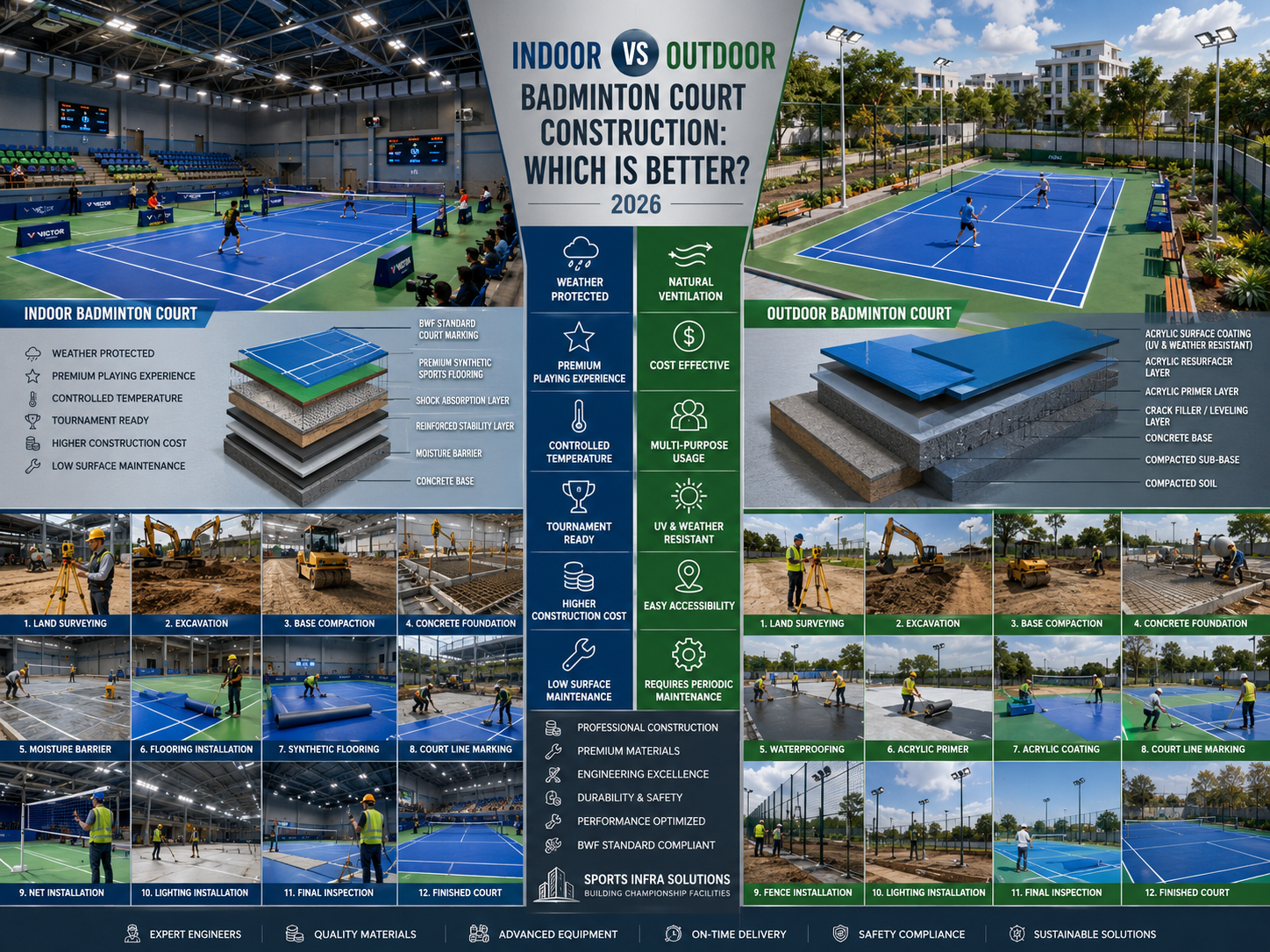
Indoor badminton courts are specially designed sports facilities enclosed within a building or dedicated sports hall. They are considered the preferred choice for professional competitions, sports academies, training centers, and multi-purpose indoor arenas because they provide a controlled environment that minimizes external disturbances.
Unlike outdoor courts, indoor facilities eliminate challenges such as wind, rain, direct sunlight, dust, and temperature fluctuations. This controlled atmosphere allows players to focus entirely on their game, making indoor courts ideal for high-level practice sessions and official tournaments.
Professional indoor badminton courts typically feature advanced sports flooring systems such as PVC vinyl, polyurethane (PU), or engineered wooden flooring installed over shock-absorbing substructures. These surfaces are specifically designed to provide optimal grip, cushioning, and energy return, helping players perform at their best while reducing fatigue and the risk of injury.
In addition to the playing surface, indoor badminton court construction includes carefully planned lighting systems, ceiling heights, ventilation, acoustic treatment, and structural engineering to create a world-class sporting environment.
Key Features of Indoor Badminton Courts
Indoor badminton courts are engineered with several specialized features that enhance performance and player comfort.
Controlled Playing Environment
The enclosed structure protects players from unpredictable weather conditions, allowing games and training sessions to continue throughout the year without interruption.
Professional Sports Flooring
Indoor courts commonly use premium flooring systems that provide:
- High shock absorption
- Excellent slip resistance
- Comfortable foot movement
- Consistent shuttle response
- Reduced player fatigue
Advanced Lighting Systems
Proper LED sports lighting eliminates shadows and glare while providing uniform illumination across the entire playing area, ensuring excellent visibility during practice and competitions.
Temperature and Ventilation Control
Modern indoor sports halls incorporate ventilation and climate control systems that maintain comfortable playing conditions regardless of external weather.
Longer Playing Hours
Because lighting and environmental conditions are controlled, indoor courts can be used from early morning until late at night, maximizing facility utilization.
Professional Tournament Standards
Indoor badminton courts can be designed to meet national and international standards, making them suitable for competitive events and official championships.
Understanding Badminton Court Construction
Outdoor badminton courts are constructed in open spaces where natural surroundings become part of the playing experience. These courts are commonly found in schools, colleges, public parks, residential societies, recreational clubs, hotels, resorts, community centers, and fitness parks.
Outdoor badminton courts are significantly more economical than indoor facilities because they do not require enclosed buildings, roofing systems, or extensive climate-control infrastructure. As a result, they are an attractive option for organizations seeking affordable sports facilities that encourage community participation and recreational activities.
To withstand exposure to sunlight, rainfall, temperature changes, and continuous use, outdoor courts are typically built using weather-resistant acrylic sports flooring applied over reinforced concrete or asphalt bases. These surfaces provide excellent durability, anti-slip performance, UV resistance, and vibrant color retention while requiring relatively low maintenance.
Proper site preparation, drainage planning, and base construction are essential components of outdoor badminton court construction. Effective water management helps prevent surface damage and extends the lifespan of the playing area.
Key Features of Outdoor Badminton Courts
Outdoor badminton courts offer several practical advantages for recreational and community sports development.
Cost-Effective Construction
Outdoor courts require fewer structural components, making them significantly less expensive to construct compared to indoor facilities.
Weather-Resistant Flooring
High-quality acrylic sports flooring systems are designed to resist:
- UV radiation
- Rainfall
- Moisture
- Temperature fluctuations
- Surface abrasion
Multi-Purpose Usage
Outdoor badminton courts can often accommodate additional recreational activities, making them suitable for schools, community centers, and residential developments.
Faster Construction Time
Without the need for building construction, roofing, or HVAC systems, outdoor badminton courts can usually be completed in a much shorter timeframe.
Low Maintenance Requirements
Routine cleaning, occasional repainting, and periodic inspections are generally sufficient to maintain outdoor acrylic courts in excellent condition.
Greater Accessibility
Outdoor courts encourage public participation by providing open, accessible spaces for sports, fitness, and recreational activities.
Indoor or Outdoor: Which One Is Right for You?
Choosing between an indoor and outdoor badminton court depends on your project’s goals, budget, available land, expected player volume, and long-term maintenance capabilities.
If your objective is to create a professional training facility or host competitive tournaments, an indoor badminton court provides unmatched playing conditions and year-round usability. Conversely, if your focus is on community recreation, school sports, or budget-friendly infrastructure, an outdoor badminton court offers an excellent balance of affordability, durability, and accessibility.
In the next part of this guide, we will explore the complete construction process for both indoor and outdoor badminton courts, including site preparation, flooring materials, sub-base construction, lighting systems, drainage, equipment installation, and essential design considerations.