Introduction
A professionally constructed tennis court is a significant investment that enhances sports performance, player safety, and the overall appearance of schools, sports clubs, academies, residential communities, hotels, and recreational facilities. Whether the surface is acrylic, synthetic, clay, grass, or cushioned, every tennis court requires regular maintenance to preserve its quality and maximize its lifespan.
Many facility owners focus on building a high-quality tennis court but overlook the importance of routine maintenance. Without proper care, even the best sports flooring systems gradually develop cracks, faded markings, drainage issues, slippery surfaces, algae growth, and uneven playing conditions. These problems not only reduce the visual appeal of the court but also increase maintenance costs and create safety risks for players.
A well-maintained tennis court delivers consistent ball bounce, excellent traction, improved player comfort, and enhanced durability throughout the year. Regular maintenance also protects the investment by reducing the need for expensive resurfacing or complete reconstruction.
Weather conditions such as heavy rainfall, intense sunlight, dust accumulation, temperature fluctuations, and continuous foot traffic all contribute to surface wear. Outdoor courts are particularly vulnerable to UV exposure, moisture damage, and dirt accumulation, making scheduled maintenance essential.
This comprehensive guide explains the best tennis court maintenance practices for different surface types, helping facility owners, sports clubs, schools, universities, municipalities, and residential societies keep their courts in excellent condition for years.
Why Tennis Court Maintenance is Important
A tennis court is exposed to continuous physical stress and changing environmental conditions. Every match, practice session, and weather event contributes to gradual surface deterioration. Proper maintenance slows this natural wear and helps maintain professional playing standards.
Regular maintenance provides several important benefits:
1. Extends Court Lifespan
Professional tennis court surfaces are designed for long-term use, but their durability depends heavily on maintenance. Dirt, standing water, UV radiation, and debris accelerate deterioration if left untreated.
Routine inspections and preventive care can significantly extend the service life of the court while delaying costly resurfacing projects.
2. Improves Player Safety
Safety should always be the highest priority.
Poorly maintained courts often develop:
- Surface cracks
- Loose coatings
- Slippery algae
- Moss growth
- Uneven patches
- Water puddles
These issues increase the likelihood of slips, falls, ankle injuries, and inconsistent footing.
Proper maintenance ensures the playing surface remains safe throughout the year.
3. Maintains Consistent Ball Bounce
Professional tennis depends on predictable ball movement.
Dust accumulation, uneven surfaces, worn coatings, and damaged line markings can alter ball speed and bounce consistency.
Routine cleaning and resurfacing preserve the original playing characteristics of the court.
4. Protects Your Investment
Constructing a professional tennis court requires substantial investment in:
- Civil construction
- Drainage systems
- Sports flooring
- Acrylic coatings
- Lighting
- Fencing
- Accessories
Regular maintenance helps protect this investment and minimizes future repair expenses.
5. Enhances Visual Appeal
A clean, brightly colored tennis court creates a positive first impression for players and visitors.
Regular maintenance preserves:
- Vibrant surface colors
- Clear court markings
- Smooth finishes
- Professional appearance
This is particularly important for sports academies, schools, clubs, hotels, and commercial sports facilities.
Common Causes of Tennis Court Damage
Understanding the causes of deterioration allows facility managers to implement effective preventive maintenance strategies.
UV Radiation
Continuous exposure to sunlight gradually breaks down acrylic coatings.
Effects include:
- Color fading
- Surface drying
- Reduced flexibility
- Minor cracking
UV-resistant sports coatings help minimize this damage but still require regular inspection.
Water Accumulation
Standing water is one of the most destructive elements for outdoor tennis courts.
It can cause:
- Surface erosion
- Coating separation
- Mold growth
- Algae formation
- Base weakening
- Drainage failure
Proper drainage maintenance is essential.
Heavy Foot Traffic
Schools, academies, and sports clubs often experience high daily usage.
Over time, this leads to:
- Surface wear
- Texture loss
- Faded playing lines
- Minor abrasions
Routine cleaning and periodic recoating help restore performance.
Dirt and Dust
Dust acts like fine abrasive material.
When players run across dusty courts, tiny particles gradually wear away protective coatings.
Regular sweeping prevents unnecessary surface abrasion.
Tree Leaves and Organic Debris
Leaves trap moisture against the court surface.
Over time, this encourages:
- Moss
- Algae
- Mold
- Surface staining
Routine debris removal significantly reduces these risks.
Poor Drainage
Inadequate drainage often causes recurring maintenance problems.
Common symptoms include:
- Water puddles
- Surface softening
- Foundation instability
- Cracking
- Coating damage
Proper grading and drainage systems are essential during construction and must be inspected regularly.
Types of Tennis Courts and Their Maintenance Requirements
Every tennis court surface has unique maintenance needs. Understanding these differences helps ensure appropriate care and long-term performance.
Acrylic Tennis Courts
Acrylic courts are among the most popular choices because of their durability, vibrant appearance, and relatively low maintenance.
Maintenance includes:
- Weekly sweeping
- Pressure washing when required
- Drainage inspections
- Crack repairs
- Surface cleaning
- Repainting faded line markings
- Periodic resurfacing
With proper care, acrylic courts maintain consistent playability and attractive appearance for many years.
Synthetic Tennis Courts
Synthetic surfaces are designed for excellent shock absorption, player comfort, and long-lasting performance.
Recommended maintenance includes:
- Removing dust and debris
- Cleaning stains promptly
- Inspecting seams and edges
- Checking for wear in high-traffic zones
- Monitoring drainage around the court perimeter
Routine inspections help identify small issues before they become costly repairs.
Clay Tennis Courts
Clay courts require more frequent maintenance than hard courts because the loose surface shifts during play.
Essential maintenance tasks include:
- Daily brushing
- Regular rolling
- Watering to maintain moisture balance
- Redistributing clay evenly
- Refilling worn baseline areas
- Cleaning lines after matches
Consistent upkeep preserves proper ball bounce and playing speed.
Grass Tennis Courts
Grass courts demand the highest level of maintenance due to the living surface.
Regular care includes:
- Frequent mowing
- Irrigation management
- Fertilization
- Weed control
- Soil aeration
- Surface leveling
- Disease monitoring
Professional turf management is often required to maintain tournament-quality conditions.
Daily Tennis Court Maintenance Tips
Daily maintenance requires minimal effort but delivers significant long-term benefits.
Sweep the Court Surface
Use a soft-bristle broom or blower to remove:
- Dust
- Leaves
- Sand
- Small stones
- Branches
- Paper waste
Keeping the surface free of debris prevents abrasion and reduces moisture retention.
Remove Standing Water Immediately
After rainfall or court washing:
- Use a rubber squeegee.
- Direct water toward drainage outlets.
- Avoid allowing puddles to remain for extended periods.
Prompt water removal helps prevent algae growth and surface damage.
Inspect the Court Before Play
A quick visual inspection can identify:
- Surface cracks
- Loose coatings
- Damaged nets
- Torn fencing
- Sharp objects
- Standing water
Addressing these issues before play improves safety and reduces the risk of more extensive damage.
Clean Spills Promptly
Food, sports drinks, oils, and other contaminants should be removed as soon as possible using a mild, non-abrasive cleaner. Prompt cleaning prevents staining and helps preserve the surface texture and appearance.
Weekly Tennis Court Maintenance
In addition to daily care, schedule a more detailed inspection once a week to maintain professional playing conditions.
Wash the Surface
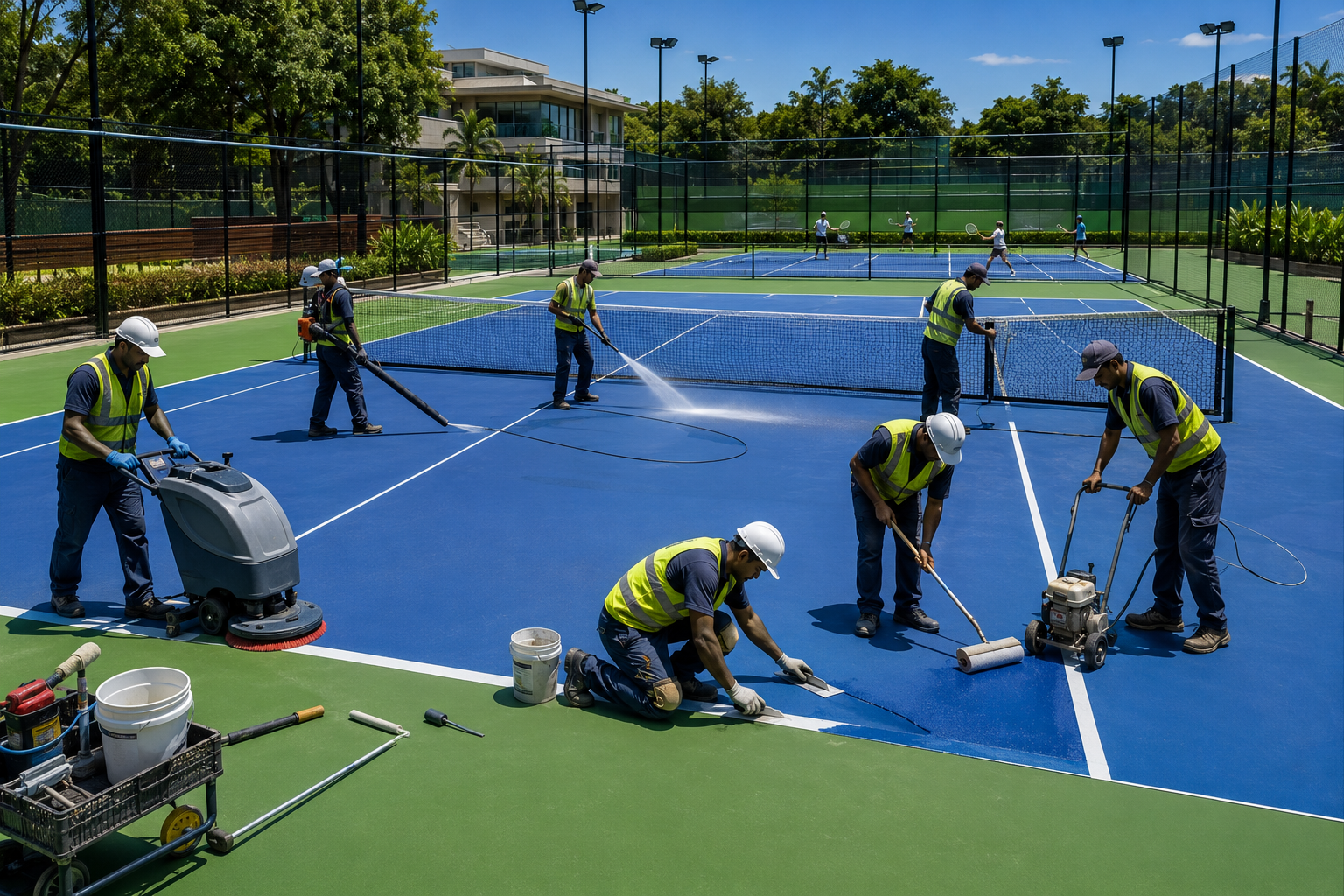
Use clean water and a soft brush or low-pressure washer to remove embedded dirt, pollen, and grime. Avoid high-pressure washing that could damage acrylic coatings or force water into existing cracks.
Check Court Accessories
Inspect all equipment, including:
- Tennis net tension and height
- Net posts and anchors
- Fencing and gates
- Windscreens
- Benches and seating
- Lighting fixtures (for illuminated courts)
Repair or replace damaged components promptly to maintain a safe and professional facility.
Inspect Line Markings
Examine all playing lines for fading, peeling, or wear. Clear, accurate markings are essential for fair play and should be refreshed when necessary.
Monthly Tennis Court Maintenance Checklist
While daily and weekly maintenance focuses on cleaning and inspections, monthly maintenance involves a more detailed evaluation of the court’s structural condition and performance. Scheduling a thorough inspection every month helps identify early signs of wear before they develop into costly repairs.
1. Inspect the Entire Playing Surface
Walk across the court and inspect every section carefully.
Look for:
- Hairline cracks
- Surface depressions
- Peeling acrylic coatings
- Color fading
- Low spots collecting water
- Surface roughness
- Worn playing zones
- Expansion joint damage
Photograph any developing issues to compare changes over time and maintain a maintenance record.
2. Deep Clean the Court Surface
Dust, pollen, bird droppings, algae, and airborne pollutants gradually bond with the surface.
Perform a complete deep cleaning using:
- Mild sports flooring cleaner
- Soft rotary scrubber
- Soft nylon brushes
- Low-pressure water washing
Avoid acidic chemicals or harsh detergents that may damage the acrylic coating.
A clean surface maintains proper traction and preserves the vibrant appearance of the court.
3. Check Drainage Performance
Proper drainage is essential for outdoor tennis courts.
Inspect:
- Drainage channels
- Surface slopes
- Perimeter drains
- Water outlets
- Catch basins
- Underground drainage pipes
Remove leaves, mud, and debris blocking water flow.
Efficient drainage minimizes standing water and protects the court foundation.
4. Evaluate Court Accessories
Monthly inspections should include all surrounding infrastructure.
Check:
- Net posts
- Net cable
- Center strap
- Windscreens
- Fence connections
- Entrance gates
- Umpire chairs
- Spectator seating
- Scoreboards
- Lighting poles
Replacing worn accessories improves both safety and appearance.
5. Inspect Court Perimeter
Vegetation growing around the court often causes maintenance problems.
Trim:
- Tree branches
- Bushes
- Grass edges
- Overhanging plants
Reducing surrounding vegetation minimizes leaf accumulation and improves airflow, helping the surface dry more quickly after rainfall.
Seasonal Tennis Court Maintenance
Different seasons expose the court to unique environmental challenges. A seasonal maintenance plan keeps the playing surface in top condition throughout the year.
Summer Maintenance
High temperatures and strong UV exposure can gradually weaken surface coatings.
Recommended tasks include:
- Washing away dust frequently
- Inspecting faded colors
- Monitoring surface expansion
- Cleaning sweat and sunscreen stains
- Checking for heat-related cracking
- Inspecting shaded areas for algae
Using UV-resistant acrylic resurfacing products helps extend surface life.
Monsoon Maintenance
Rainfall creates the highest maintenance demand for outdoor tennis courts.
Essential practices include:
- Remove standing water immediately
- Clear drainage outlets after every storm
- Clean mud deposits
- Inspect court edges
- Check for foundation movement
- Watch for moss growth
- Remove algae promptly
Never allow water to remain on the court for long periods, as prolonged moisture can damage both the surface coating and the underlying base.
Winter Maintenance
Cold weather may lead to contraction of construction materials and increased stress on existing cracks.
Winter maintenance includes:
- Removing leaves regularly
- Monitoring expansion joints
- Repairing small cracks early
- Avoiding excessive pressure washing
- Inspecting drainage systems before spring
Preventive repairs during winter reduce the likelihood of more extensive damage later.
Surface-Specific Maintenance Tips
Each tennis court surface requires a customized maintenance program to maintain its playing characteristics and structural integrity.
Acrylic Tennis Court Maintenance
Acrylic tennis courts are popular because they provide consistent ball bounce, attractive colors, and relatively low maintenance.
Routine care includes:
Weekly Cleaning
Remove:
- Dust
- Leaves
- Sand
- Bird droppings
- Organic debris
A leaf blower or soft broom works well for regular cleaning.
Monthly Washing
Wash using:
- Clean water
- Mild detergent
- Soft-bristle brush
Avoid steel brushes or abrasive scrubbing pads.
Crack Repair
Repair small cracks immediately before moisture penetrates the foundation.
Professional acrylic crack repair systems prevent further expansion and help maintain a smooth playing surface.
Surface Resurfacing
Most acrylic courts require resurfacing every 4–8 years, depending on usage, climate, and maintenance quality.
Resurfacing typically includes:
- Surface preparation
- Crack treatment
- Acrylic resurfacer
- Color coating
- New line markings
Timely resurfacing restores appearance and playability.
Synthetic Tennis Court Maintenance
Synthetic sports flooring provides excellent shock absorption and comfort but still requires routine care.
Maintenance includes:
- Vacuuming loose particles
- Sweeping debris
- Cleaning spills immediately
- Inspecting seams
- Repairing loose edges
- Removing weeds around borders
Avoid dragging heavy equipment across the surface to prevent tears or abrasions.
Clay Tennis Court Maintenance
Clay courts require daily attention to preserve consistent playing conditions.
Maintenance tasks include:
- Daily brushing
- Watering
- Rolling
- Filling worn areas
- Redistributing loose clay
- Cleaning court lines
- Leveling baseline zones
Proper moisture balance is critical. A surface that is too dry becomes dusty, while excessive water makes it soft and unstable.
Grass Tennis Court Maintenance
Grass courts require specialized horticultural care.
Maintenance typically involves:
- Mowing at recommended heights
- Irrigation scheduling
- Fertilization
- Weed control
- Pest management
- Aeration
- Reseeding worn areas
- Soil nutrient testing
Professional turf management helps maintain healthy grass and consistent playing conditions.
Drainage Management for Outdoor Tennis Courts
Poor drainage is one of the leading causes of premature tennis court deterioration.
A well-designed drainage system protects:
- Court foundation
- Surface coatings
- Acrylic layers
- Base materials
- Structural stability
Signs of Poor Drainage
Watch for:
- Persistent puddles
- Green algae
- Soft spots
- Water stains
- Surface discoloration
- Cracks developing near low areas
Ignoring these warning signs can lead to expensive structural repairs.
Drainage Maintenance Tips
Maintain proper drainage by:
- Cleaning channels monthly
- Removing leaves after storms
- Inspecting outlet pipes
- Repairing damaged drains
- Ensuring proper court slope
- Preventing soil erosion around the court
A properly functioning drainage system significantly extends court lifespan.
Preventing Cracks Before They Become Major Repairs
Most major tennis court repairs begin as small hairline cracks.
Early intervention saves substantial repair costs.
Common causes include:
- Ground settlement
- Temperature changes
- Water infiltration
- Tree root movement
- Heavy equipment
- Aging surfaces
Preventive Measures
Reduce cracking by:
- Inspecting monthly
- Repairing hairline cracks promptly
- Preventing standing water
- Controlling nearby tree roots
- Avoiding heavy vehicle traffic on the court
- Scheduling periodic professional inspections
Preventive maintenance is always more economical than large-scale reconstruction.
Preventing Algae, Moss, and Mold Growth
Moist environments encourage biological growth that affects both appearance and safety.
Areas at higher risk include:
- Shaded corners
- Court edges
- Fence lines
- Drainage outlets
Prevent growth by:
- Improving sunlight exposure where possible
- Keeping the surface dry
- Removing leaves regularly
- Cleaning with approved sports-surface cleaners
- Maintaining good airflow around the facility
Regular cleaning reduces the risk of slippery conditions and surface staining.
Tennis Court Equipment Maintenance
The court surface is only one part of a high-quality tennis facility. Accessories should also be inspected and maintained on a regular schedule.
Tennis Net
Check for:
- Proper tension
- Frayed mesh
- Rusted cables
- Damaged center strap
- Loose attachments
Replace worn nets to maintain regulation playing conditions.
Net Posts
Inspect:
- Alignment
- Rust
- Foundation stability
- Protective coatings
- Anchor bolts
Loose or damaged posts should be repaired immediately to prevent accidents.
Court Fencing
Examine fencing for:
- Broken mesh
- Corrosion
- Loose fasteners
- Bent sections
- Damaged gates
Well-maintained fencing improves safety and keeps balls within the playing area.
Sports Lighting
For facilities with evening play, inspect lighting systems regularly.
Check:
- LED fixtures
- Pole stability
- Electrical wiring
- Light alignment
- Control panels
- Protective covers
Proper lighting ensures visibility and enhances the playing experience while reducing energy consumption when using modern LED systems.
Annual Tennis Court Maintenance Plan
A structured annual maintenance schedule helps facility owners keep tennis courts in excellent condition while minimizing unexpected repair costs. Preventive maintenance also extends the life of the court and ensures consistent playing performance.
Annual Inspection Checklist
At least once a year, conduct a comprehensive inspection covering:
- Entire court surface
- Acrylic coating condition
- Base stability
- Court slope and drainage
- Expansion joints
- Line markings
- Net posts
- Tennis net
- Fencing
- Lighting systems
- Windscreens
- Surrounding landscape
- Water drainage outlets
- Court accessories
Document all findings and compare them with previous inspection records. Keeping a maintenance log makes it easier to identify recurring issues and plan future repairs.
When Does a Tennis Court Need Resurfacing?
Even with excellent maintenance, every tennis court eventually requires resurfacing. Over time, repeated play, UV exposure, rainfall, and temperature changes gradually wear down the surface coating.
Common Signs That Resurfacing Is Required
Watch for the following warning signs:
- Faded court colors
- Peeling acrylic coating
- Multiple surface cracks
- Uneven ball bounce
- Surface roughness
- Worn high-traffic areas
- Poor water drainage
- Faded line markings
- Increased slipperiness
- Surface becoming difficult to clean
Ignoring these issues can lead to more extensive structural damage and significantly higher repair costs.
Recommended Resurfacing Schedule
Although the exact timeline depends on climate, court usage, and maintenance quality, the following general guidelines apply:
| Court Surface | Typical Resurfacing Interval |
|---|---|
| Acrylic Tennis Court | Every 4–8 years |
| Synthetic Tennis Court | Every 6–10 years (or as recommended by the manufacturer) |
| Clay Tennis Court | Continuous seasonal replenishment with periodic major renovation |
| Grass Tennis Court | Ongoing turf renovation based on wear and seasonal conditions |
Routine inspections should determine the ideal timing rather than relying solely on age.
Professional Tennis Court Maintenance vs. DIY Maintenance
Many day-to-day maintenance tasks can be handled by facility staff. However, specialized repairs should be performed by experienced sports flooring professionals.
Tasks Suitable for DIY Maintenance
Facility managers can safely perform:
- Sweeping
- Leaf removal
- Surface washing
- Net inspection
- Fence cleaning
- Drain cleaning
- Removing standing water
- Visual crack inspections
- Basic equipment checks
These routine tasks reduce dirt accumulation and help identify problems early.
Tasks Best Left to Professionals
Professional contractors should handle:
- Acrylic resurfacing
- Structural crack repairs
- Base reconstruction
- Surface leveling
- Drainage correction
- Line repainting
- Expansion joint repair
- Surface recoating
- Cushion layer restoration
- Moisture-related repairs
Specialized equipment and technical expertise are essential to ensure long-lasting, high-quality results.
Common Tennis Court Maintenance Mistakes to Avoid
Many tennis courts deteriorate prematurely due to preventable maintenance errors.
1. Ignoring Small Cracks
Tiny cracks may seem harmless but often allow water to penetrate the base, leading to larger structural problems over time.
Repair minor cracks promptly before they expand.
2. Allowing Standing Water
Standing water weakens the surface, encourages algae growth, and increases the risk of coating failure.
Always remove puddles immediately after rainfall.
3. Using Harsh Cleaning Chemicals
Strong acids, bleach, and abrasive cleaners can damage sports flooring coatings.
Always use cleaners recommended for sports surfaces.
4. Delaying Regular Cleaning
Dust, leaves, and debris trap moisture and accelerate surface wear.
Routine cleaning is far less expensive than major repairs.
5. Pressure Washing Incorrectly
Excessive water pressure can strip acrylic coatings or force water into existing cracks.
Use low-pressure washing techniques appropriate for sports flooring.
6. Neglecting Drainage Systems
Blocked drains often lead to repeated water accumulation and long-term damage.
Inspect drainage systems throughout the year, especially before and during the rainy season.
7. Allowing Vegetation to Grow Near the Court
Tree roots can disturb the court foundation, while overhanging branches drop leaves and retain moisture.
Trim surrounding vegetation regularly.
8. Skipping Annual Professional Inspections
A professional inspection can identify issues that are not visible during routine cleaning.
Preventive evaluations often save thousands in future repair costs.
Expert Tips for Maximizing Tennis Court Lifespan
Professional sports flooring specialists recommend the following best practices:
- Sweep the court after heavy use.
- Remove leaves and debris promptly.
- Clean spills immediately.
- Inspect the surface every month.
- Keep drainage systems clear.
- Repair hairline cracks early.
- Repaint faded lines when necessary.
- Schedule resurfacing before severe wear develops.
- Use only approved sports flooring products.
- Keep maintenance records and inspection reports.
- Restrict heavy vehicles from entering the court.
- Encourage players to wear appropriate non-marking tennis shoes.
- Protect the court from unnecessary equipment storage or construction activity.
Consistent preventive maintenance is the key to preserving both performance and appearance.
Benefits of Regular Tennis Court Maintenance
A proactive maintenance program offers numerous long-term advantages.
Improved Player Safety
Clean, even surfaces reduce the risk of slips, trips, and injuries.
Better Playing Performance
Consistent surface texture ensures predictable ball bounce and reliable footing.
Lower Repair Costs
Addressing small issues early helps prevent expensive structural repairs.
Longer Surface Life
Routine maintenance extends the lifespan of coatings, base layers, and accessories.
Enhanced Facility Appearance
Bright colors, crisp line markings, and clean surroundings create a professional environment for players and visitors.
Higher Property Value
Well-maintained sports facilities add value to schools, clubs, residential communities, hotels, and commercial sports complexes.
Greater User Satisfaction
Players are more likely to return to a facility that offers safe, clean, and high-quality playing conditions.
Frequently Asked Questions (FAQs)
1. How often should a tennis court be cleaned?
Outdoor tennis courts should be swept several times each week, with a more thorough wash performed monthly or as needed based on weather conditions and usage.
2. How long does an acrylic tennis court last?
With proper installation and routine maintenance, an acrylic tennis court can provide excellent performance for many years before resurfacing becomes necessary.
3. Can small cracks be repaired?
Yes. Hairline cracks should be repaired as soon as they are detected to prevent water infiltration and further structural damage.
4. What is the best way to remove algae from a tennis court?
Use a cleaner specifically designed for sports surfaces, along with a soft-bristle brush. Avoid harsh chemicals that may damage the court coating.
5. Why is drainage important for tennis courts?
Efficient drainage prevents standing water, protects the court foundation, reduces algae growth, and extends the lifespan of the playing surface.
6. When should a tennis court be resurfaced?
Resurfacing is recommended when the surface shows widespread fading, peeling, cracking, inconsistent playability, or significant wear that cannot be addressed through routine maintenance.
7. Is professional maintenance necessary?
Routine cleaning can be performed by facility staff, but resurfacing, structural repairs, and major drainage corrections should be completed by qualified sports flooring professionals.
8. Does regular maintenance reduce long-term costs?
Yes. Preventive maintenance minimizes unexpected repairs, extends the life of the court, and helps maintain consistent performance, making it one of the most cost-effective investments for any sports facility.
Conclusion
A tennis court is much more than a playing surface—it is a long-term investment in athletic performance, safety, and community engagement. Whether installed at a school, sports academy, club, residential society, university, hotel, or public recreation center, consistent maintenance is essential to protect that investment.
Simple practices such as regular sweeping, debris removal, prompt crack repair, proper drainage management, and scheduled inspections can significantly extend the lifespan of acrylic, synthetic, clay, and grass courts. Combining routine maintenance with periodic professional inspections ensures the court continues to deliver reliable performance, excellent traction, and a professional appearance year after year.
Instead of waiting for major problems to develop, adopting a preventive maintenance strategy saves money, reduces downtime, and keeps the facility ready for training, recreational play, and competitive matches. By following the maintenance practices outlined in this guide, facility owners and managers can ensure their tennis courts remain safe, attractive, and high-performing for many years to come.
Final Call-to-Action
Looking to keep your tennis court in peak condition or planning a new tennis court construction project? Partner with experienced sports flooring professionals who specialize in inspection, maintenance, resurfacing, acrylic coating systems, crack repairs, line marking, drainage improvement, and complete tennis court renovation. Regular expert maintenance not only enhances playability but also protects your investment and ensures long-term performance for athletes of every skill level.