Introduction
The demand for high-quality sports infrastructure has grown rapidly across India in recent years. Schools, universities, sports academies, residential townships, municipal parks, fitness centers, and commercial sports facilities are investing in durable and athlete-friendly flooring systems that can withstand heavy usage while ensuring safety and performance.
Among the various sports flooring materials available today, EPDM Rubber Flooring has become one of the most preferred solutions for outdoor sports courts, jogging tracks, children’s play areas, fitness zones, and recreational spaces. Known for its excellent shock absorption, slip resistance, weather durability, and long service life, EPDM flooring provides a safe playing environment for athletes of all ages.
Whether you are planning to build a basketball court, volleyball court, badminton practice area, walking track, children’s playground, or a multi-purpose sports facility, understanding EPDM flooring is essential before making an investment.
This comprehensive guide explains everything you need to know about EPDM rubber flooring, including its advantages, installation process, applications, maintenance requirements, lifespan, and the factors affecting its cost.
What is EPDM Rubber Flooring?
EPDM stands for Ethylene Propylene Diene Monomer, a premium synthetic rubber specially engineered to withstand harsh outdoor conditions.
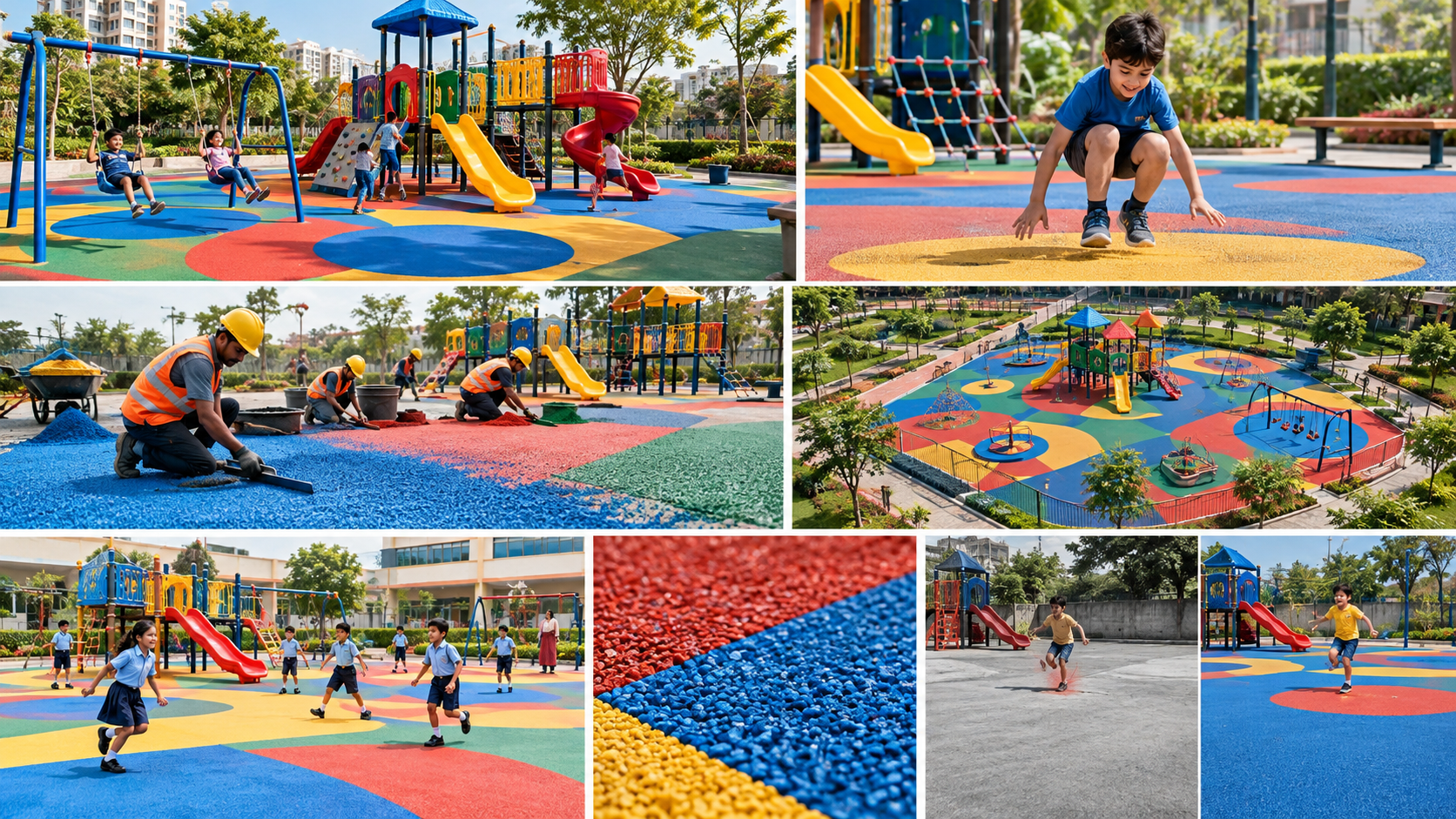
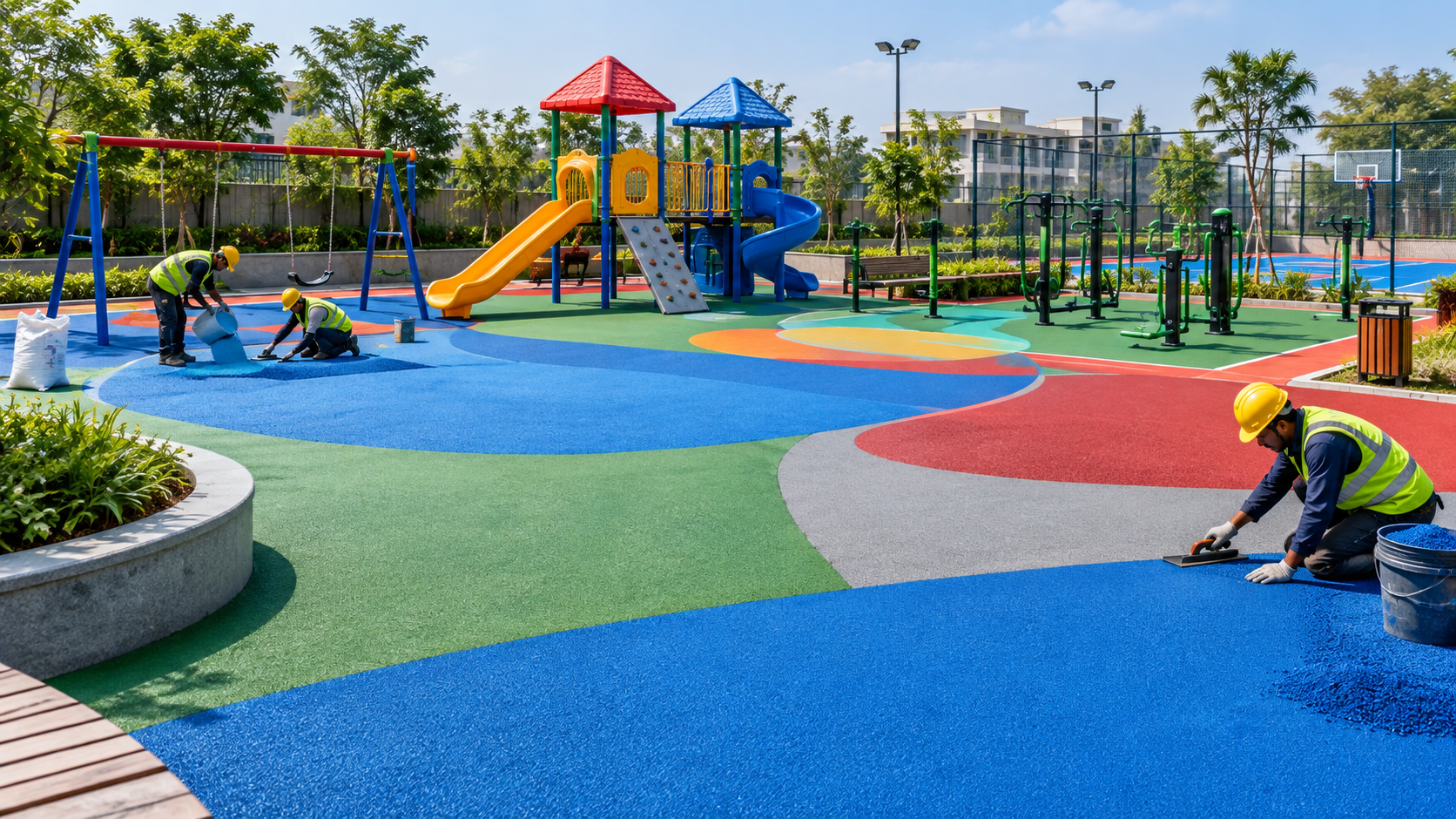
Unlike ordinary rubber flooring, EPDM granules are UV-resistant, waterproof, chemically stable, flexible, and highly durable. During installation, colorful EPDM granules are mixed with a polyurethane binder and laid over a prepared base to create a seamless, cushioned, and attractive surface.
The finished flooring offers:
- Superior cushioning
- Anti-slip texture
- UV resistance
- Weather protection
- Excellent drainage
- Long-lasting color stability
- Comfortable walking and running experience
This makes EPDM flooring suitable for both recreational and professional sports facilities.
Why EPDM Flooring is Becoming Popular in India
India experiences diverse climatic conditions ranging from intense summer heat to heavy monsoon rainfall. Traditional concrete surfaces often become slippery, cracked, or uncomfortable under these conditions.
EPDM rubber flooring effectively addresses these challenges by offering:
- Heat-resistant surfaces
- Rainwater drainage
- Reduced injury risk
- Comfortable running experience
- Long-term durability
- Minimal maintenance
As a result, architects, sports consultants, schools, and government agencies increasingly choose EPDM flooring for public sports infrastructure projects.
Major Benefits of EPDM Rubber Flooring
1. Excellent Shock Absorption
One of the biggest advantages of EPDM flooring is its ability to absorb impact.
The cushioned surface minimizes stress on:
- Knees
- Ankles
- Hips
- Lower back
Athletes experience reduced fatigue even after extended periods of physical activity.
This feature also decreases the chances of serious injuries resulting from accidental falls.
2. Superior Slip Resistance
Safety is one of the primary concerns in any sports facility.
EPDM flooring provides:
- High grip
- Anti-slip texture
- Better traction
- Stable footing
Even after rain, the textured surface offers improved grip compared to concrete or tile flooring.
3. UV Resistant Surface
Ordinary rubber often fades under sunlight.
Premium EPDM granules contain UV stabilizers that help maintain vibrant colors for years without significant fading.
This makes EPDM ideal for outdoor installations.
4. Weather Resistant
EPDM flooring performs efficiently under:
- High temperatures
- Heavy rainfall
- Cold weather
- Humidity
- Dust
Unlike many flooring systems, it does not become brittle or excessively soft due to changing temperatures.
5. Comfortable Running Surface
The resilient rubber surface reduces impact while providing enough firmness for excellent athletic performance.
Joggers and athletes experience:
- Better energy return
- Less fatigue
- Improved comfort
- Reduced muscle stress
6. Long Service Life
Professionally installed EPDM flooring can last:
8–15 years or more
depending on:
- Material quality
- Usage intensity
- Maintenance
- Installation standards
7. Attractive Appearance
EPDM flooring is available in numerous colors, including:
- Red
- Blue
- Green
- Yellow
- Orange
- Grey
- Black
Different colors can be combined to create attractive:
- Sports courts
- School logos
- Running tracks
- Children’s play areas
- Decorative patterns
8. Eco-Friendly Material
Modern EPDM flooring systems are designed with environmental sustainability in mind.
Benefits include:
- Low emissions
- Recyclable materials
- Long lifecycle
- Reduced replacement frequency
Applications of EPDM Rubber Flooring
EPDM flooring is widely used in:
Sports Courts
- Basketball courts
- Volleyball courts
- Tennis practice courts
- Badminton practice areas
- Multi-purpose courts
Educational Institutions
- Schools
- Colleges
- Universities
- Sports academies
Public Infrastructure
- Public parks
- Municipal playgrounds
- Government sports complexes
Residential Projects
- Clubhouses
- Walking tracks
- Children’s parks
- Community fitness areas
Commercial Spaces
- Fitness centers
- Outdoor gyms
- Recreational parks
- Theme parks
Structure of EPDM Rubber Flooring
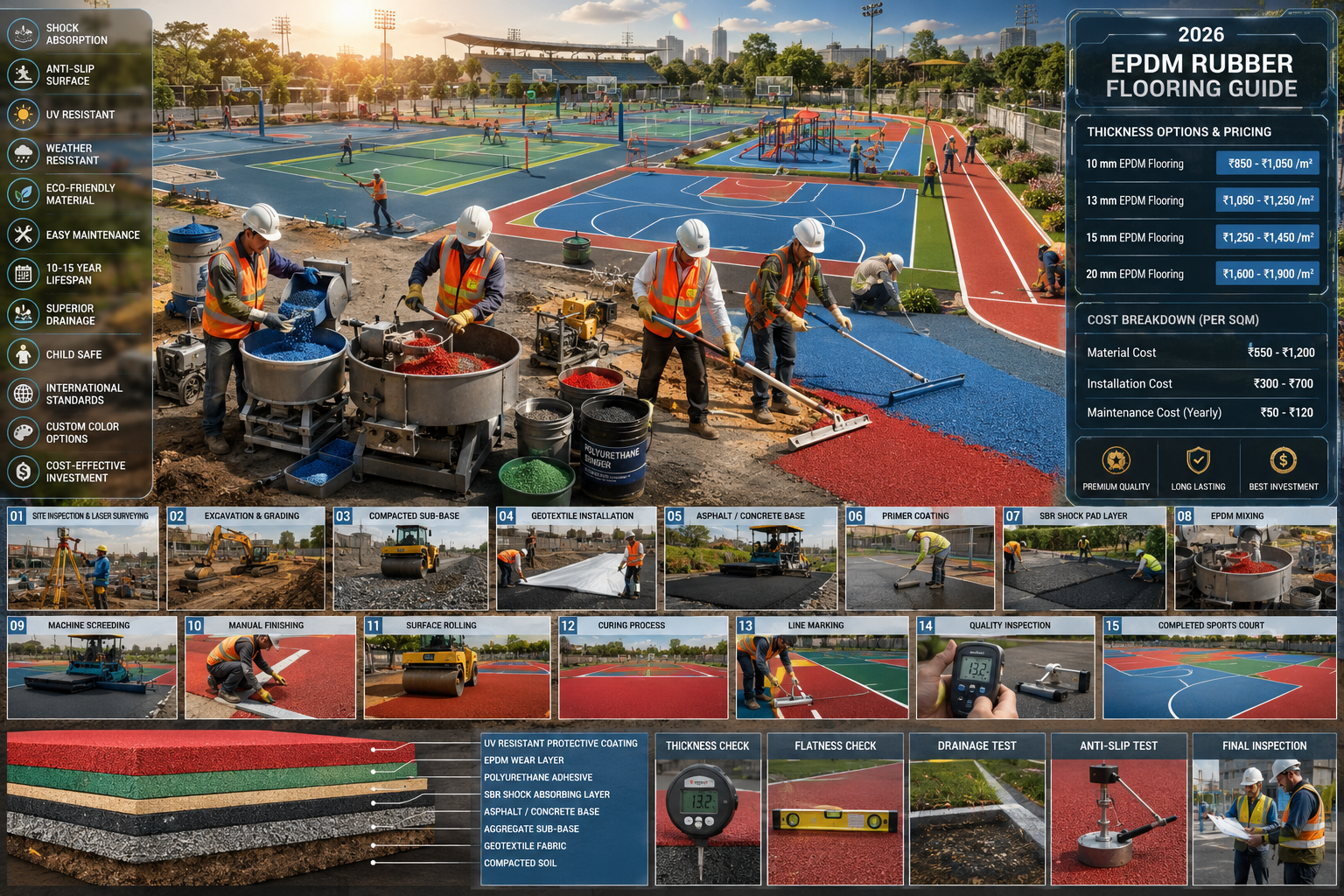
A professional EPDM flooring system consists of multiple layers.
Subgrade
The natural soil is compacted properly.
Granular Base
A crushed stone layer improves load distribution.
Concrete or Asphalt Base
Provides a stable and durable foundation.
Primer Layer
Enhances bonding between the base and rubber surface.
SBR Cushion Layer
The bottom cushion layer usually contains recycled SBR rubber granules.
Benefits include:
- Shock absorption
- Flexibility
- Reduced installation cost
EPDM Wear Layer
The top layer consists of premium colored EPDM granules mixed with polyurethane binder.
This is the visible playing surface.
EPDM Installation Process
Professional installation involves several stages.
Step 1: Site Inspection
Engineers inspect:
- Soil condition
- Drainage
- Surface level
- Existing base
Step 2: Ground Preparation
The area is excavated and compacted using heavy equipment.
Step 3: Base Construction
A concrete or asphalt base is constructed according to project requirements.
Step 4: Surface Cleaning
Dust and loose particles are removed before primer application.
Step 5: Primer Application
A polyurethane primer improves adhesion.
Step 6: SBR Layer Installation
Recycled rubber granules are spread evenly.
The layer is compacted carefully.
Step 7: EPDM Mixing
Colored EPDM granules are mixed with polyurethane binder using specialized mixers.
Step 8: Surface Installation
The rubber mixture is laid manually or mechanically.
Experienced installers ensure uniform thickness.
Step 9: Trowel Finishing
Steel trowels create a smooth seamless finish.
Step 10: Curing
The flooring is allowed to cure for approximately 24–48 hours depending on weather conditions.
Thickness Options
Different applications require different thicknesses.
| Application | Recommended Thickness |
|---|---|
| Walking Track | 8–10 mm |
| Jogging Track | 10–13 mm |
| Children’s Playground | 15–25 mm |
| Outdoor Gym | 15 mm |
| Sports Court | 10–15 mm |
EPDM Rubber Flooring Colors
Popular color choices include:
- Brick Red
- Forest Green
- Ocean Blue
- Grey
- Black
- Yellow
- Orange
- White line markings
Color combinations improve aesthetics while clearly defining playing areas.
Maintenance Requirements
EPDM flooring requires minimal maintenance.
Recommended practices include:
- Regular sweeping
- Occasional pressure washing
- Immediate removal of oil spills
- Periodic inspection for damage
- Avoid dragging heavy equipment
- Prompt repair of localized wear
Routine maintenance extends the flooring’s lifespan and keeps it looking new.
EPDM Flooring vs Concrete Flooring
| Feature | EPDM Rubber | Concrete |
| Shock Absorption | Excellent | Poor |
| Athlete Comfort | High | Low |
| Slip Resistance | Excellent | Moderate |
| Weather Resistance | Excellent | Moderate |
| Maintenance | Low | Medium |
| Injury Risk | Low | High |
| Appearance | Premium | Basic |
EPDM Flooring vs Acrylic Sports Flooring
| Feature | EPDM | Acrylic |
| Cushioning | Excellent | Moderate |
| Surface Comfort | High | Medium |
| Slip Resistance | High | High |
| UV Resistance | Excellent | Excellent |
| Best For | Parks, tracks, playgrounds | Basketball, tennis, multi-sport courts |
Factors Affecting EPDM Flooring Cost
The overall project cost depends on several variables:
- Total project area
- Flooring thickness
- Base preparation
- EPDM granule quality
- Polyurethane binder quality
- Color selection
- Site accessibility
- Drainage requirements
- Labor charges
- Transportation
- Line markings
- Edge finishing
Larger projects generally reduce the per-square-meter installation cost due to economies of scale.
Common Mistakes to Avoid
Avoid these mistakes during installation:
- Poor base preparation
- Incorrect slope for drainage
- Low-quality binder
- Uneven thickness
- Insufficient curing time
- Inexperienced installation team
- Inadequate expansion planning
Professional execution ensures long-term performance and safety.
Choosing the Right EPDM Flooring Contractor
Before selecting a contractor, evaluate:
- Industry experience
- Completed sports projects
- Material certifications
- Skilled installation team
- Equipment availability
- Warranty support
- Maintenance services
- Client testimonials
- Quality control procedures
A reputable contractor will provide a detailed project proposal, transparent pricing, and post-installation support.
Future Trends in EPDM Sports Flooring
The sports infrastructure industry continues to evolve with advancements such as:
- Recycled and eco-friendly EPDM materials
- Smart drainage systems
- Enhanced UV-resistant coatings
- Custom color designs and branding
- Improved polyurethane binders
- Sustainable installation practices
These innovations are making EPDM flooring even more durable, visually appealing, and environmentally responsible.
Frequently Asked Questions (FAQs)
Is EPDM rubber flooring suitable for outdoor sports courts?
Yes. EPDM flooring is specifically designed to withstand sunlight, rain, temperature fluctuations, and heavy outdoor use.
How long does EPDM flooring last?
With proper installation and routine maintenance, EPDM flooring typically lasts between 8 and 15 years, depending on usage and environmental conditions.
Is EPDM flooring waterproof?
EPDM itself is water-resistant, and professionally installed systems are designed to allow efficient surface drainage, preventing water accumulation.
Can EPDM flooring be repaired?
Yes. Localized damaged areas can often be repaired without replacing the entire floor, making maintenance more cost-effective.
What colors are available?
EPDM flooring is available in a wide range of colors, including red, blue, green, yellow, orange, grey, and black. Custom combinations and graphics are also possible.
Is EPDM flooring safe for children?
Absolutely. Its cushioned, slip-resistant surface helps reduce the risk of injuries, making it ideal for playgrounds, schools, and recreational areas.
Which sports can be played on EPDM flooring?
EPDM flooring is suitable for basketball practice courts, volleyball courts, jogging tracks, fitness zones, children’s play areas, outdoor gyms, and multi-purpose recreational spaces.
Conclusion
EPDM rubber flooring has established itself as one of the most reliable, durable, and athlete-friendly surface solutions for modern sports infrastructure. Its exceptional shock absorption, slip resistance, weather durability, vibrant appearance, and low maintenance requirements make it a smart long-term investment for schools, sports academies, residential communities, municipal parks, and commercial sports facilities.
Although the initial installation cost may be higher than conventional concrete surfaces, the extended lifespan, enhanced safety, and reduced maintenance expenses provide excellent value over time. By choosing premium materials and working with an experienced sports flooring contractor, facility owners can create high-performance that meet international quality standards while delivering comfort and safety for athletes of all ages.
Whether you are developing a new sports complex or upgrading an existing facility, EPDM rubber flooring offers a future-ready solution that combines performance, aesthetics, and durability—making it one of the best choices for sports courts and recreational spaces in 2026 and beyond.