Introduction
A basketball court is only as good as the surface beneath it. Whether you’re constructing a professional arena, a school sports facility, a residential court, a community playground, or a multi-purpose sports complex, selecting the right basketball court flooring is one of the most important decisions you’ll make. The quality of the playing surface directly affects player safety, game performance, ball response, maintenance costs, and the long-term value of your investment.
In 2026, advancements in sports flooring technology have transformed basketball courts into high-performance playing environments. Modern flooring systems are engineered to provide excellent shock absorption, consistent ball bounce, superior traction, and enhanced durability while minimizing the risk of injuries. Innovative materials, eco-friendly manufacturing processes, UV-resistant coatings, and precision installation techniques have made today’s basketball court surfaces stronger, safer, and more reliable than ever before.
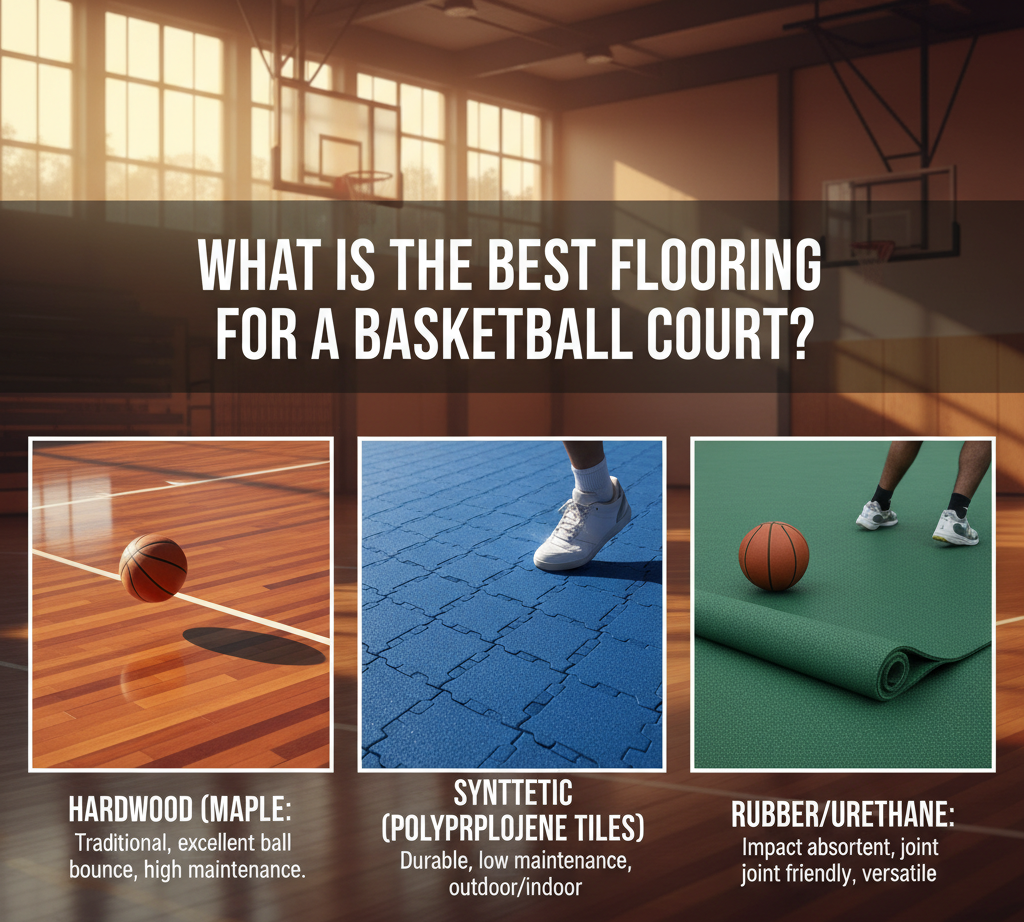
The ideal flooring solution depends on several factors, including whether the court is designed for indoor or outdoor use, the expected level of play, local climate conditions, maintenance requirements, and available budget. Hardwood maple flooring remains the preferred choice for professional indoor basketball courts because of its exceptional playing characteristics and premium appearance. Meanwhile, acrylic sports flooring, polyurethane (PU) systems, modular polypropylene (PP) tiles, PVC vinyl sports flooring, and advanced synthetic surfaces have become popular alternatives for schools, colleges, sports academies, commercial facilities, residential communities, and public recreation areas.
Choosing the right flooring involves more than simply comparing materials. A high-quality basketball court requires proper site preparation, a stable foundation, effective drainage (for outdoor courts), precision installation, and compliance with international sports standards. Every layer—from the sub-base to the final surface coating—plays a critical role in ensuring consistent performance and extending the lifespan of the court.
This comprehensive 2026 guide explores the latest basketball court flooring options, compares their features, advantages, costs, durability, and maintenance requirements, and explains how to select the best solution for your specific project. Whether you are a sports facility developer, architect, contractor, educational institution, club owner, or homeowner planning a premium basketball court, this guide will help you make an informed decision and build a world-class playing surface that delivers outstanding performance for years to come.
Why Basketball Court Flooring Matters:
Basketball is a fast-paced sport that involves constant running, sprinting, jumping, pivoting, and sudden changes in direction. These high-impact movements place significant stress on players’ joints, muscles, and ligaments. While skill and training are essential, the quality of the basketball court flooring plays an equally important role in ensuring a safe, comfortable, and high-performing playing experience. A professionally engineered sports floor not only enhances game performance but also minimizes injury risks and reduces long-term maintenance costs.
1. Enhances Player Safety
Player safety is the primary reason for investing in high-quality basketball court flooring. Every jump, landing, and quick directional change generates substantial impact forces. A premium sports flooring system is designed with shock-absorbing layers that reduce stress on the knees, ankles, hips, and lower back. This cushioning helps lower the risk of common sports injuries such as ligament strains, stress fractures, ankle sprains, and joint fatigue.
Modern basketball flooring systems in 2026 incorporate advanced resilient subfloor technologies and elastic surface layers that absorb impact efficiently while maintaining surface stability. This balance allows athletes to perform confidently without compromising their safety.
2. Provides Consistent Ball Bounce
A basketball court should deliver predictable and uniform ball rebound across the entire playing surface. Uneven flooring, poor construction, or inferior materials can create inconsistent bounce, affecting passing accuracy, dribbling control, and shooting performance.
Professional-grade basketball flooring is manufactured and installed with precision to provide consistent ball response that meets international sports standards. Whether in training sessions or competitive matches, players benefit from reliable ball behavior that supports better gameplay and skill development.
3. Improves Player Performance
The playing surface directly influences an athlete’s speed, agility, and overall performance. A properly designed basketball floor offers excellent traction, allowing players to accelerate, stop, pivot, and change direction with confidence. High-performance surfaces reduce unnecessary energy loss while maintaining optimal grip, enabling athletes to perform at their highest level.
Modern flooring technologies also help reduce fatigue during extended training sessions by minimizing impact on muscles and joints, allowing players to maintain performance throughout the game.
4. Superior Slip Resistance
Surface traction is critical in basketball. Floors that are too slippery increase the likelihood of falls, while surfaces with excessive grip can place additional strain on knees and ankles during quick movements.
Today’s basketball court flooring systems feature advanced anti-slip finishes that provide the ideal balance between grip and controlled movement. These finishes maintain reliable traction under various playing conditions while remaining comfortable for players of all skill levels.
5. Long-Term Durability
A basketball court represents a significant investment, making durability a key consideration. High-quality sports flooring is engineered to withstand heavy foot traffic, repeated impacts, equipment movement, and environmental exposure without losing its performance characteristics.
Modern materials such as acrylic coatings, polyurethane systems, premium hardwood maple, modular polypropylene tiles, and synthetic sports surfaces are designed to resist abrasion, cracking, fading, moisture, and UV damage. With proper installation and routine maintenance, these flooring systems can provide reliable performance for many years.
6. Reduces Maintenance Costs
Choosing premium basketball court flooring lowers maintenance requirements over its lifespan. High-performance surfaces are easier to clean, resist stains, maintain their appearance, and require fewer repairs compared to low-quality alternatives.
Many modern flooring systems include protective wear layers that simplify routine maintenance while preserving court markings, surface texture, and color vibrancy. This reduces operational costs for schools, sports academies, clubs, and commercial facilities.
7. Supports Multi-Purpose Sports Facilities
Many educational institutions and community sports centers require courts that accommodate multiple sports, including volleyball, badminton, futsal, and recreational activities. Modern basketball flooring systems can be customized with multi-sport line markings while maintaining excellent performance for basketball.
This versatility maximizes facility utilization and improves the return on investment by allowing a single court to support multiple sporting events and training programs.
8. Increases Property and Facility Value
A professionally constructed basketball court enhances the value and appeal of any sports facility. Premium flooring improves aesthetics, reflects quality construction, and attracts athletes, schools, clubs, residential communities, and commercial organizations seeking reliable sports infrastructure.
For sports academies and recreational complexes, investing in certified basketball flooring also strengthens brand reputation and creates opportunities to host tournaments, training camps, and professional competitions.
- Best Basketball Court Flooring 2026
- Basketball Court Flooring
- Basketball Court Construction
- Basketball Court Installation
- Sports Flooring
- Basketball Court Surface
- Basketball Flooring Materials
- Indoor Basketball Court Flooring
- Outdoor Basketball Court Flooring
- Professional Basketball Court Flooring
Complete Comparison Guide
Selecting the right basketball court flooring is one of the most important decisions in any sports facility project. In 2026, manufacturers offer a wide range of sports flooring systems designed to meet different budgets, playing environments, and performance requirements. Each flooring type has unique characteristics, advantages, and ideal applications.
Whether you are building an indoor professional arena, an outdoor community court, a school gymnasium, or a residential basketball court, understanding the strengths and limitations of each flooring system will help you make the best investment.
1. Acrylic Basketball Court Flooring
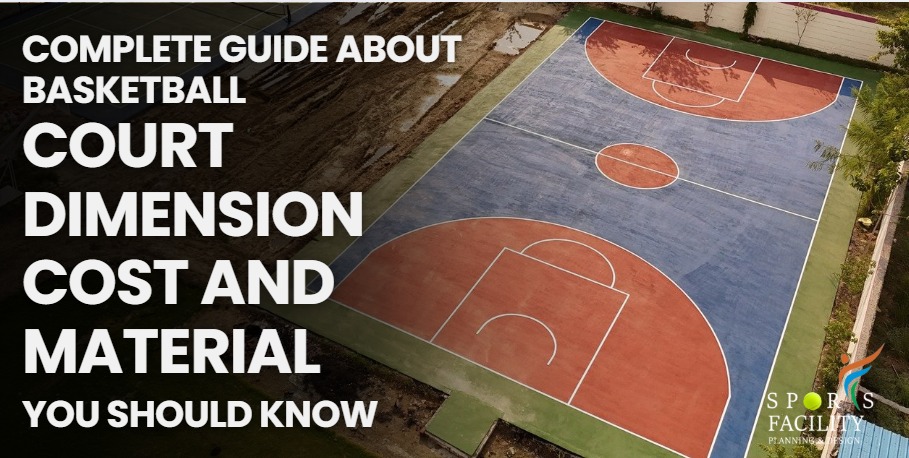
Acrylic sports flooring remains the most popular choice for outdoor basketball courts due to its durability, affordability, and low maintenance requirements. It consists of multiple layers of acrylic coatings applied over a properly prepared asphalt or concrete base.
Key Features
- UV-resistant color coatings
- Excellent weather resistance
- Anti-slip textured finish
- Uniform ball bounce
- Wide range of vibrant color options
- Long-lasting surface performance
Advantages
- Cost-effective installation
- Minimal maintenance requirements
- Excellent resistance to rain, sunlight, and temperature variations
- Suitable for schools, colleges, parks, sports academies, and residential communities
- Easy resurfacing after years of use
Best Applications
- Outdoor basketball courts
- Public sports facilities
- Educational institutions
- Community playgrounds
- Multi-purpose sports courts
Average Lifespan
8–12 years with periodic resurfacing and proper maintenance.
2. Polyurethane (PU) Basketball Flooring
Polyurethane flooring is a seamless, high-performance sports surface commonly used in premium indoor sports facilities. It offers superior elasticity, excellent player comfort, and exceptional durability.
Key Features
- Seamless construction
- High shock absorption
- Comfortable playing experience
- Slip-resistant finish
- Excellent impact resistance
- Easy cleaning and maintenance
Advantages
- Reduces stress on joints
- Ideal for intensive training
- Durable under heavy use
- Attractive modern appearance
- Suitable for multiple indoor sports
Best Applications
- Indoor basketball courts
- Universities
- Sports academies
- Indoor arenas
- Commercial sports complexes
Average Lifespan
10–15 years with proper maintenance.
3. Hardwood Maple Basketball Flooring
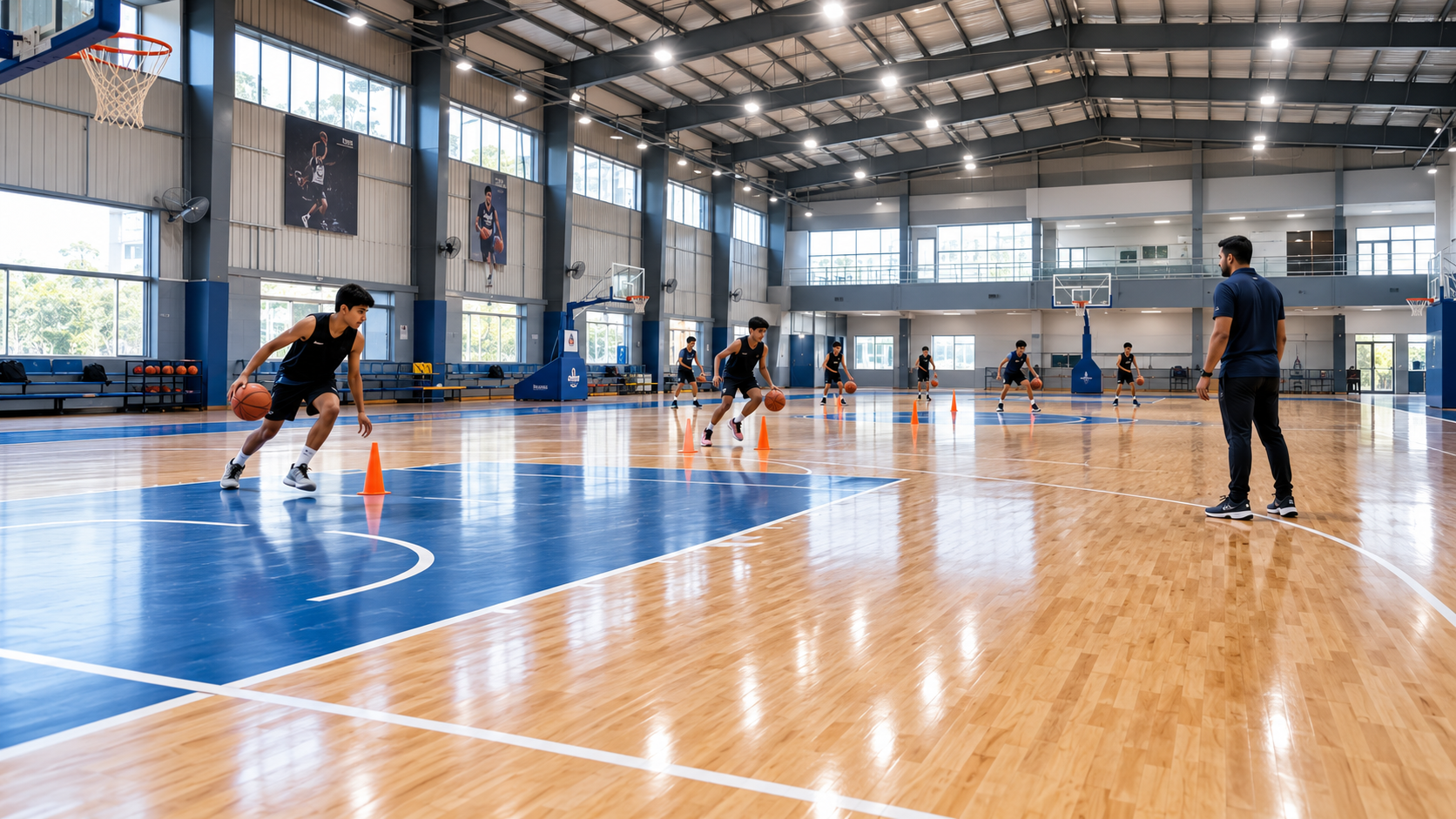
Hardwood maple flooring remains the international benchmark for professional indoor basketball courts. It is widely used in elite sports venues because of its consistent ball bounce, natural appearance, and excellent playing characteristics.
Premium maple sports floors are installed over engineered resilient subfloor systems that provide shock absorption while maintaining structural stability.
Key Features
- Premium hardwood finish
- Excellent ball response
- Superior durability
- Natural aesthetics
- Precision-engineered installation
- International competition standard
Advantages
- Outstanding playing performance
- Excellent energy return
- High-end appearance
- Long service life
- Suitable for professional tournaments
Best Applications
- Professional arenas
- International sports complexes
- Basketball academies
- Indoor stadiums
- Championship venues
Average Lifespan
30–50 years with regular sanding, refinishing, and maintenance.
4. PVC Vinyl Sports Flooring
PVC vinyl sports flooring has become increasingly popular for indoor basketball courts because it combines comfort, durability, and easy installation. It is available in rolls or tiles and includes cushioned backing for enhanced player comfort.
Key Features
- Cushioned surface
- Slip-resistant coating
- Waterproof construction
- Excellent sound absorption
- Comfortable underfoot
- Easy maintenance
Advantages
- Quick installation
- Affordable indoor solution
- Suitable for multi-purpose halls
- Comfortable playing surface
- Low maintenance costs
Best Applications
- School gymnasiums
- Indoor recreation centers
- Community halls
- Training facilities
- Multi-purpose sports complexes
Average Lifespan
10–15 years
5. Modular Polypropylene (PP) Interlocking Tiles
Modular PP tiles have become one of the fastest-growing basketball flooring solutions in 2026. These interlocking tiles are designed for rapid installation and can be assembled without permanent adhesives.
Key Features
- Interlocking design
- Excellent drainage
- UV-resistant material
- Portable installation
- Easy replacement of damaged tiles
- Low maintenance
Advantages
- Fast installation
- Ideal for outdoor courts
- Excellent drainage during rainfall
- Highly durable
- Portable and reusable
- Available in multiple colors
Best Applications
- Residential basketball courts
- Schools
- Rooftop courts
- Temporary event courts
- Community playgrounds
Average Lifespan
10–15 years
6. Synthetic Sports Flooring
Synthetic basketball flooring combines advanced polymers, rubber layers, and specialized wear coatings to create a versatile and durable playing surface suitable for both indoor and covered facilities.
Key Features
- High resilience
- Excellent traction
- Impact resistance
- Comfortable surface
- Easy maintenance
- Long-lasting performance
Advantages
- Suitable for heavy usage
- Good player comfort
- Attractive finish
- Resistant to wear and abrasion
- Supports multiple sports
Best Applications
- Indoor sports centers
- Training facilities
- Educational institutions
- Multi-purpose sports complexes
Average Lifespan
12–18 years
7. Hybrid Basketball Flooring Systems
Hybrid flooring systems combine the strengths of multiple materials to deliver superior performance. These systems may include engineered wood over resilient subfloors, cushioned synthetic layers beneath hardwood, or advanced composite sports flooring technologies.
Key Features
- Enhanced shock absorption
- Premium ball bounce
- Improved durability
- Optimized athlete comfort
- Reduced maintenance
- Excellent structural stability
Advantages
- Professional performance
- Long service life
- Superior player safety
- Customizable system design
- Suitable for elite sports facilities
Best Applications
- International stadiums
- Professional basketball arenas
- Olympic training centers
- High-performance sports academies
Average Lifespan
20–40 years, depending on the system configuration.
Choosing the Right Basketball Flooring
The ideal basketball court flooring depends on several key factors:
- Indoor vs. Outdoor: Hardwood maple, PU, and PVC vinyl are ideal for indoor courts, while acrylic and modular PP tiles excel outdoors.
- Budget: Acrylic and modular tiles are economical, whereas hardwood maple and hybrid systems require a higher initial investment.
- Level of Play: Professional venues benefit from hardwood or hybrid systems, while schools and community courts often prefer acrylic, PU, or PVC flooring.
- Maintenance: Acrylic, modular tiles, and PVC flooring require relatively low maintenance, while hardwood needs regular refinishing.
- Climate: Outdoor courts should use UV-resistant, weatherproof materials such as acrylic coatings or modular PP tiles to withstand changing weather conditions.
-
Cost, Performance, Durability & Best Applications
With numerous basketball court flooring options available in 2026, selecting the right surface requires evaluating several important factors beyond just price. The ideal flooring should provide excellent player safety, consistent ball bounce, long-term durability, easy maintenance, and value for money. Whether you are building a professional indoor arena, a school gymnasium, a residential basketball court, or an outdoor sports facility, comparing each flooring system side by side makes the decision much easier.
The following comparison highlights the most widely used basketball court flooring systems and their key performance characteristics.
Flooring Type Indoor / Outdoor Shock Absorption Ball Bounce Slip Resistance Durability Maintenance Typical Lifespan Approximate Cost* Best For Hardwood Maple Flooring Indoor ★★★★★ ★★★★★ ★★★★★ ★★★★★ High 30–50 Years Premium Professional arenas, international stadiums, elite sports academies Polyurethane (PU) Sports Flooring Indoor ★★★★★ ★★★★☆ ★★★★★ ★★★★☆ Low 10–15 Years High Indoor sports halls, universities, training centers PVC Vinyl Sports Flooring Indoor ★★★★☆ ★★★★☆ ★★★★☆ ★★★★☆ Very Low 10–15 Years Medium Schools, colleges, community sports halls Acrylic Sports Flooring Outdoor ★★★☆☆ ★★★★☆ ★★★★☆ ★★★★★ Very Low 8–12 Years Affordable Outdoor basketball courts, parks, schools Modular PP Interlocking Tiles Outdoor ★★★★☆ ★★★★☆ ★★★★☆ ★★★★★ Very Low 10–15 Years Medium Rooftop courts, residential projects, recreation areas Synthetic Sports Flooring Indoor / Covered ★★★★☆ ★★★★☆ ★★★★☆ ★★★★☆ Low 12–18 Years Medium–High Multi-purpose sports complexes and training facilities Hybrid Sports Flooring Systems Indoor ★★★★★ ★★★★★ ★★★★★ ★★★★★ Medium 20–40 Years Premium International competition venues and high-performance sports centers *Approximate cost varies depending on project size, site conditions, sub-base preparation, material quality, and installation requirements.
Performance Comparison
1. Shock Absorption
Shock absorption determines how effectively a floor reduces impact forces during running, jumping, and landing. Better shock absorption helps reduce fatigue and lowers the risk of injuries.
Top Performers
- Hardwood Maple Flooring
- Hybrid Sports Flooring
- Polyurethane (PU) Flooring
These systems provide superior cushioning and are recommended for competitive basketball and intensive training environments.
2. Ball Bounce Performance
Consistent ball rebound is essential for dribbling, passing, and shooting accuracy.
Best Ball Response
- Hardwood Maple Flooring
- Hybrid Sports Flooring
- Polyurethane Flooring
- PVC Vinyl Flooring
- Acrylic Flooring
Professional competitions typically require flooring that delivers predictable and uniform ball bounce across the entire playing surface.
3. Player Comfort
Comfort depends on cushioning, resilience, and the floor’s ability to reduce physical stress during long training sessions.
Highest Comfort Rating
- Hardwood Maple
- PU Sports Flooring
- Hybrid Flooring Systems
These surfaces help minimize stress on knees, ankles, and the lower back.
4. Weather Resistance
Outdoor basketball courts require flooring that can withstand sunlight, rain, temperature changes, and moisture.
Best Outdoor Flooring
- Acrylic Sports Flooring
- Modular PP Interlocking Tiles
Both systems are UV-resistant, weather-resistant, and designed for year-round outdoor use.
5. Maintenance Requirements
Maintenance costs have a significant impact on the total cost of ownership.
Lowest Maintenance Flooring
- Acrylic Flooring
- Modular PP Tiles
- PVC Vinyl Flooring
These surfaces require only routine cleaning and periodic inspections, making them ideal for schools, parks, and public sports facilities.
6. Durability
Durability determines how well the flooring performs under heavy foot traffic and continuous sports activity.
Most Durable Flooring Systems
- Hardwood Maple (with proper refinishing)
- Hybrid Sports Flooring
- Acrylic Sports Flooring
- Modular PP Tiles
A professionally installed court can deliver decades of reliable performance when maintained correctly.
Which Basketball Flooring Is Right for Your Project?
Professional Indoor Basketball Arena
Recommended Flooring
- Hardwood Maple Flooring
- Hybrid Sports Flooring
These systems deliver international-standard performance, superior ball bounce, and exceptional player comfort.
School or College Basketball Court
Recommended Flooring
- PVC Vinyl Sports Flooring
- Polyurethane Flooring
- Acrylic Flooring (for outdoor courts)
These options offer an excellent balance of performance, durability, and affordability.
Residential Basketball Court
Homeowners typically prioritize low maintenance, durability, and visual appeal.
Recommended Flooring
- Modular PP Interlocking Tiles
- Acrylic Sports Flooring
These systems are easy to install, weather-resistant, and available in a wide range of colors.
Community & Public Sports Facilities
Facilities with heavy daily use require robust surfaces that are economical to maintain.
Recommended Flooring
- Acrylic Sports Flooring
- Modular PP Tiles
- Synthetic Sports Flooring
These options provide long service life with minimal maintenance.
Multi-Purpose Sports Complex
When the court will be used for basketball, volleyball, badminton, futsal, and recreational activities, versatility is essential.
Recommended Flooring
- PU Sports Flooring
- PVC Vinyl Sports Flooring
- Synthetic Sports Flooring
These surfaces support multiple sports while maintaining excellent safety and performance.
Key Factors to Consider Before Choosing Basketball Court Flooring
Before selecting a flooring system, evaluate the following:
- Indoor or outdoor installation environment
- Budget and lifecycle costs
- Frequency of court usage
- Level of competition (recreational, training, or professional)
- Climate and weather exposure
- Maintenance capabilities
- Compliance with international basketball standards
- Expected lifespan and warranty
- Future resurfacing or replacement requirements
- Availability of experienced installation professionals
Materials, Features, Installation & Buying Guide
Outdoor basketball courts are exposed to harsh environmental conditions, including intense sunlight, heavy rainfall, dust, humidity, and fluctuating temperatures. Unlike indoor courts, outdoor playing surfaces must deliver excellent performance while withstanding continuous weather exposure and heavy foot traffic. Choosing the right outdoor basketball court flooring in 2026 is essential for ensuring player safety, consistent ball bounce, long-term durability, and low maintenance costs.
Modern outdoor sports flooring systems are engineered with advanced materials, UV-resistant coatings, and anti-slip finishes to provide professional-level performance in schools, colleges, sports academies, residential communities, public parks, and commercial sports facilities.
What Makes a Great Outdoor Basketball Court Floor?
A high-quality outdoor basketball court should provide:
- Excellent weather resistance
- UV-stable color coatings
- Consistent ball bounce
- Superior slip resistance
- Fast surface drainage
- High abrasion resistance
- Low maintenance requirements
- Long service life
- Attractive appearance
- Safe playing conditions throughout the year
The right flooring system should continue to perform reliably despite prolonged exposure to sunlight, rain, and changing climatic conditions.
Best Outdoor Basketball Court Flooring Options in 2026
1. Acrylic Sports Flooring – The Industry Standard
Acrylic sports flooring remains the most widely used surface for outdoor basketball courts around the world. It consists of multiple layers of acrylic coatings applied over a properly prepared asphalt or concrete base.
Key Features
- UV-resistant pigments
- Anti-slip textured finish
- Multiple color options
- Excellent weather resistance
- Professional court markings
- Uniform playing surface
Advantages
- Affordable installation
- Excellent durability
- Easy maintenance
- Fade-resistant colors
- Suitable for all climate conditions
- Ideal for continuous outdoor use
Best Applications
- Schools
- Colleges
- Sports academies
- Public parks
- Residential communities
- Government sports facilities
Typical Lifespan
8–12 years with periodic resurfacing.
2. Modular PP Interlocking Sports Tiles
Modular polypropylene (PP) interlocking tiles have become increasingly popular because they combine durability, portability, and efficient drainage. These tiles lock together without adhesives and can often be installed quickly.
Key Features
- Interlocking installation
- UV-stabilized material
- Excellent drainage
- Portable system
- Slip-resistant texture
- Easy replacement of damaged tiles
Advantages
- Fast installation
- Minimal maintenance
- Comfortable underfoot
- Excellent weather performance
- Reduced downtime for repairs
- Wide range of colors and designs
Best Applications
- Rooftop basketball courts
- Residential villas
- Apartment complexes
- Community sports facilities
- Temporary event courts
Typical Lifespan
10–15 years
3. Cushioned Acrylic Sports Flooring
Cushioned acrylic systems build on traditional acrylic flooring by adding resilient cushioning layers beneath the surface coating. These systems improve player comfort while maintaining excellent outdoor durability.
Benefits
- Enhanced shock absorption
- Reduced stress on joints
- Improved player comfort
- Better long-term performance
- Professional playing characteristics
This option is ideal for training academies, schools, and facilities where players spend extended periods practicing.
Outdoor Basketball Court Construction Process
A durable outdoor basketball court depends on proper construction as much as the flooring material itself.
Site Survey and Planning
Professional engineers assess:
- Soil conditions
- Drainage patterns
- Surface slope
- Ground stability
- Court orientation
- Available space
Proper planning minimizes future structural issues.
Ground Preparation
Ground preparation includes:
- Excavation
- Soil compaction
- Base grading
- Drainage installation
- Edge restraints
A stable foundation ensures the longevity of the sports surface.
Base Construction
The flooring system is typically installed over:
- Reinforced concrete base, or
- Asphalt pavement
The base must be level, crack-free, and properly cured before the sports surface is applied.
Surface Installation
Depending on the selected flooring system:
Acrylic Flooring
- Surface cleaning
- Primer application
- Cushion layers (if required)
- Acrylic resurfacer
- Color coatings
- Textured finish
- Court line markings
Modular Tiles
- Layout planning
- Tile interlocking
- Edge finishing
- Expansion gap verification
- Court markings (where applicable)
Quality Inspection
Before handover, professionals verify:
- Surface levelness
- Ball bounce consistency
- Slip resistance
- Court dimensions
- Line marking accuracy
- Surface finish quality
- Drainage performance
Key Features of Modern Outdoor Basketball Flooring
The latest outdoor basketball flooring systems offer advanced performance characteristics, including:
- UV-resistant coatings that reduce color fading
- Anti-slip textured finishes for enhanced grip
- Abrasion-resistant wear layers
- Water-resistant surfaces
- Excellent drainage capabilities
- Heat-resistant materials for hot climates
- Eco-friendly manufacturing processes
- Long-lasting color stability
- Reduced maintenance requirements
- Improved player comfort
These innovations help maintain consistent performance throughout the flooring’s service life.
Maintenance Tips
Routine maintenance helps maximize the lifespan of outdoor basketball flooring.
Recommended Practices
- Sweep debris regularly.
- Wash the surface with clean water and mild detergent when necessary.
- Remove leaves and standing water promptly.
- Inspect for cracks or surface damage periodically.
- Repaint court markings when they begin to fade.
- Repair minor damage before it expands.
- Keep drainage systems clear to prevent water accumulation.
- Avoid dragging heavy equipment across the playing surface.
Preventive maintenance reduces repair costs and preserves court performance.
Choosing the Right Outdoor Basketball Flooring
Before making a final decision, consider:
- Local climate and weather conditions
- Expected daily usage
- Budget and long-term maintenance costs
- Player age group and skill level
- Available installation space
- Future expansion plans
- Multi-sport usage requirements
- Warranty coverage
- Availability of professional installation services
Selecting the right flooring system based on these factors ensures a safe, durable, and high-performing court.
Step-by-Step Flooring Installation Guide
Building a professional basketball court requires far more than installing a playing surface. Every stage—from site evaluation to the final line markings—must be executed with precision to ensure player safety, consistent ball performance, structural durability, and compliance with international sports standards. A properly constructed basketball court can provide decades of reliable service with minimal maintenance, making it a valuable investment for schools, sports academies, residential communities, clubs, universities, and commercial sports facilities.
This step-by-step guide explains the complete basketball court construction process in 2026.
Site Assessment and Planning
Every successful basketball court project begins with a detailed site survey. Engineers and sports infrastructure specialists evaluate the location to determine whether it meets the technical requirements for construction.
Site Assessment Includes
- Land measurements and boundary verification
- Soil bearing capacity analysis
- Ground level and slope assessment
- Drainage evaluation
- Sunlight and wind direction analysis
- Existing utility inspection
- Accessibility for construction equipment
- Space for spectator seating and surrounding infrastructure
Proper planning helps eliminate future structural issues and ensures efficient project execution.
Court Design and Layout
After the site survey, engineers prepare detailed construction drawings based on the intended use of the court.
The design phase includes:
- Court dimensions
- Playing area layout
- Safety clearance zones
- Basketball pole locations
- Drainage layout
- Lighting arrangement
- Fencing design
- Seating areas
- Walkways
- Equipment storage
Modern projects often use 3D modeling and digital layout software to improve construction accuracy and reduce installation errors.
Excavation and Ground Preparation
Ground preparation forms the structural foundation of the basketball court.
Construction activities include:
- Excavating unsuitable soil
- Removing vegetation and debris
- Compacting the subgrade
- Filling low areas
- Establishing proper surface levels
- Creating a slight slope for water drainage (typically 1–1.5% for outdoor courts)
Proper compaction prevents future settlement and surface cracking.
Sub-Base Construction
The sub-base distributes structural loads evenly and supports the finished playing surface.
A typical sub-base consists of:
- Compacted granular aggregate
- Crushed stone layers
- Mechanical compaction
- Moisture control measures
Each layer is compacted separately to achieve maximum density and long-term stability.
Concrete or Asphalt Base Installation
The playing surface is installed on either a reinforced concrete slab or an asphalt base.
Reinforced Concrete Base
Advantages:
- High structural strength
- Excellent dimensional stability
- Long service life
- Preferred for premium sports facilities
Asphalt Base
Advantages:
- Faster construction
- Lower initial cost
- Smooth playing surface
- Suitable for acrylic outdoor courts
The finished base must be level, crack-free, fully cured, and compliant with project specifications before flooring installation begins.
Surface Preparation
Before applying the sports flooring system, the base undergoes careful preparation.
This stage includes:
- Cleaning dust and debris
- Surface grinding (if required)
- Crack repair
- Moisture testing
- Primer application
- Surface leveling
Proper preparation improves bonding strength and extends the lifespan of the flooring system.
Basketball Court Flooring Installation
The installation process varies depending on the selected flooring material.
Acrylic Sports Flooring
Installation sequence:
- Acrylic primer
- Surface resurfacer
- Cushion layers (optional)
- Colored acrylic coatings
- Textured anti-slip finish
- Professional court line markings
Polyurethane (PU) Flooring
Installation sequence:
- Moisture barrier
- Primer
- Elastic base layer
- Polyurethane surface layer
- Protective wear coating
- Game line markings
Hardwood Maple Flooring
Installation sequence:
- Moisture barrier
- Resilient subfloor system
- Sleepers and support structure
- Maple hardwood boards
- Sanding and leveling
- Sports-grade finishing
- Court painting and sealing
PVC Vinyl Flooring
Installation sequence:
- Surface preparation
- Adhesive application
- Vinyl sheet installation
- Joint welding
- Protective coating
- Line markings
Modular PP Interlocking Tiles
Installation sequence:
- Base inspection
- Tile layout planning
- Interlocking installation
- Edge finishing
- Expansion gap verification
- Court markings where applicable
Basketball Equipment Installation
After the flooring is complete, professional sports equipment is installed.
This includes:
- Basketball poles
- Tempered glass or acrylic backboards
- Breakaway rims
- Nets
- Pole padding
- Protective wall padding (indoor courts)
- Court accessories
All equipment must be securely anchored and aligned to ensure safe gameplay.
Court Line Marking
Accurate court markings are essential for fair play and compliance with international standards.
Professional contractors use precision measuring equipment and specialized sports paints to apply:
- Boundary lines
- Center circle
- Free-throw lanes
- Three-point arc
- Restricted area
- Key markings
- Team bench areas (where applicable)
Laser-guided marking systems are increasingly used in 2026 to ensure exceptional accuracy.
Quality Testing and Inspection
Before the court is handed over, comprehensive quality checks are performed.
Testing includes:
- Surface levelness
- Ball bounce consistency
- Slip resistance
- Shock absorption
- Surface hardness
- Court dimensions
- Line marking accuracy
- Drainage performance (outdoor courts)
- Lighting levels
- Equipment stability
Any deficiencies are corrected before final approval.
Cleaning and Final Finishing
The court is thoroughly cleaned and prepared for use.
Final activities include:
- Surface washing
- Removal of construction residue
- Final polishing (where applicable)
- Protective inspection
- Client walkthrough
- Maintenance guidance
The finished court is then ready for training sessions, recreational use, or professional competitions.
Common Construction Mistakes to Avoid
Avoiding these errors helps maximize court performance and lifespan:
- Inadequate ground compaction
- Poor drainage planning
- Uneven base construction
- Using low-quality materials
- Incorrect flooring installation techniques
- Improper curing time
- Inaccurate line markings
- Skipping moisture testing
- Hiring inexperienced installers
- Neglecting routine maintenance after completion
Professional planning and certified installation teams significantly reduce these risks.
Estimated Construction Timeline
The construction duration depends on court size, flooring type, weather conditions, and project complexity.
| Construction Stage | Typical Duration |
|---|---|
| Site Survey & Design | 2–5 Days |
| Excavation & Ground Preparation | 3–7 Days |
| Sub-Base Construction | 4–7 Days |
| Concrete/Asphalt Base | 7–14 Days |
| Surface Preparation | 2–3 Days |
| Flooring Installation | 5–10 Days |
| Equipment Installation | 2–4 Days |
| Line Marking & Finishing | 1–2 Days |
| Final Inspection & Handover | 1 Day |
A standard basketball court project typically requires 3–6 weeks, depending on site conditions and the selected flooring system.
Innovations, Smart Materials & Future Trends
The sports flooring industry has undergone remarkable advancements in recent years, with 2026 introducing a new generation of basketball court flooring systems that prioritize player safety, sustainability, performance, and long-term durability. Modern courts are no longer just flat playing surfaces—they are engineered systems designed to optimize athletic performance, reduce injury risks, simplify maintenance, and withstand years of intensive use.
From advanced cushioning technologies and eco-friendly materials to AI-assisted facility management and precision installation methods, the latest innovations are transforming how basketball courts are designed and maintained. Whether you are planning a professional indoor arena, a school gymnasium, or an outdoor community court, understanding these technologies can help you make a future-ready investment.
1. Advanced Multi-Layer Cushion Systems
One of the biggest developments in basketball court flooring is the use of engineered multi-layer cushioning systems. These systems combine resilient underlays, elastic intermediate layers, and durable wear surfaces to improve player comfort and reduce impact forces.
Key Benefits
- Superior shock absorption
- Reduced joint and muscle stress
- Enhanced player comfort
- Lower fatigue during extended games
- Improved energy return for faster movement
These systems are particularly valuable for sports academies, universities, and professional training centers where athletes spend many hours practicing.
2. Eco-Friendly and Sustainable Sports Flooring
Sustainability has become a major focus in sports infrastructure. Many manufacturers now produce flooring systems using environmentally responsible materials and manufacturing processes.
Sustainable Features
- Low-VOC coatings for improved indoor air quality
- Recycled rubber cushion layers
- Responsibly sourced hardwood
- Water-based acrylic coating systems
- Recyclable modular flooring components
- Reduced manufacturing emissions
Choosing sustainable flooring supports green building initiatives while maintaining excellent sports performance.
3. UV-Resistant Surface Technologies
Outdoor basketball courts are continuously exposed to sunlight, which can cause fading, cracking, and surface deterioration over time.
Modern UV-resistant coatings provide:
- Long-lasting color retention
- Improved resistance to weathering
- Protection against surface degradation
- Reduced maintenance requirements
- Extended service life
These coatings help preserve the appearance and performance of outdoor courts in diverse climates.
4. High-Performance Anti-Slip Finishes
Player safety depends heavily on surface traction. In 2026, manufacturers have refined anti-slip technologies to deliver the ideal balance between grip and controlled movement.
Modern textured finishes offer:
- Reliable traction during rapid movements
- Consistent performance in varying conditions
- Reduced risk of slips and falls
- Comfortable foot movement without excessive friction
These coatings are engineered to maintain performance while resisting wear from repeated use.
5. Enhanced Moisture Protection Systems
Moisture is one of the leading causes of sports flooring damage, particularly for indoor hardwood courts. Advanced moisture management systems help protect flooring from water vapor and humidity.
Modern solutions include:
- High-performance moisture barriers
- Vapor-resistant membranes
- Waterproof adhesives
- Improved drainage systems for outdoor courts
- Moisture-resistant subfloor technologies
These innovations extend flooring lifespan and reduce maintenance costs.
6. Precision Laser Installation Technology
Accurate installation is essential for delivering consistent playing performance. Laser-guided surveying and digital leveling systems are increasingly used to improve construction quality.
Benefits include:
- Precise court dimensions
- Accurate surface leveling
- Improved line marking accuracy
- Faster installation
- Reduced material waste
- Better compliance with international standards
Precision installation contributes to uniform ball bounce and enhanced player safety.
7. Smart Maintenance and Facility Management
Digital technology is changing how sports facilities manage basketball courts. Many facility operators now use smart maintenance systems to monitor court conditions and schedule preventive maintenance.
Common applications include:
- Digital maintenance records
- Inspection scheduling
- Wear tracking
- Repair planning
- Surface performance monitoring
- Asset management
These tools help reduce downtime and extend the life of sports flooring.
8. Advanced Surface Coatings
Modern protective coatings improve both appearance and durability.
Current technologies provide:
- Increased abrasion resistance
- Better stain resistance
- Easier cleaning
- Enhanced color stability
- Reduced surface wear
- Longer maintenance intervals
These coatings help preserve court performance even in high-traffic environments.
9. Modular Flooring Innovations
Modular polypropylene flooring systems continue to evolve with stronger materials and improved engineering.
Latest developments include:
- Stronger interlocking mechanisms
- Enhanced drainage channels
- Improved UV resistance
- Better impact absorption
- Easier replacement of damaged sections
- Faster installation methods
These advancements make modular flooring an attractive solution for outdoor courts, schools, and recreational facilities.
10. Multi-Sport Flooring Systems
Many facilities require courts that accommodate multiple sports while maintaining excellent basketball performance.
Modern multi-purpose flooring supports:
- Basketball
- Volleyball
- Badminton
- Futsal
- Pickleball
- Recreational fitness activities
Custom line markings and durable wear layers allow a single surface to serve multiple users without compromising safety or performance.
11. Low-Maintenance Flooring Technologies
Reducing maintenance costs has become a priority for schools, clubs, and public sports facilities.
New flooring systems feature:
- Dirt-resistant finishes
- Easy-to-clean surfaces
- Improved scratch resistance
- Long-lasting protective coatings
- Reduced need for frequent refinishing
These innovations help facility managers lower operating expenses over the life of the court.
12. Future Trends in Basketball Court Flooring
The future of basketball flooring is expected to focus on:
- More sustainable construction materials
- Improved player safety technologies
- Greater use of recycled and renewable resources
- Enhanced durability with lower maintenance requirements
- Precision digital design and installation
- Advanced resilient flooring systems for elite sports facilities
As research and development continue, basketball courts will become even more efficient, environmentally responsible, and performance-oriented.
Benefits of Investing in Modern Basketball Court Flooring
Upgrading to the latest flooring technology provides several long-term advantages:
- Improved player safety
- Better athletic performance
- Reduced injury risks
- Lower maintenance costs
- Extended flooring lifespan
- Enhanced visual appeal
- Greater resistance to weather and wear
- Higher return on investment
- Compliance with modern sports facility standards
These benefits make advanced flooring systems a smart investment for educational institutions, sports academies, clubs, municipalities, and commercial sports facilities.
Conclusion
Basketball court flooring technology in 2026 combines engineering excellence, innovative materials, and sustainable design to deliver safer, stronger, and longer-lasting playing surfaces. Advanced cushioning systems, UV-resistant coatings, eco-friendly materials, precision installation methods, moisture protection technologies, and modern maintenance practices have significantly improved the quality and durability of sports floors.
Whether you are constructing a new basketball court or renovating an existing facility, selecting a modern flooring system ensures consistent ball bounce, superior traction, exceptional player comfort, and long-term value. By investing in the latest sports flooring technologies, you create a professional-quality court that meets today’s performance expectations while remaining ready for the future of basketball.
Frequently Asked Questions
1. Which is the best flooring for a basketball court in 2026?
The best basketball court flooring depends on the intended use of the facility. Hardwood maple flooring remains the preferred choice for professional indoor basketball courts because of its excellent ball bounce, shock absorption, and premium appearance. For outdoor courts, acrylic sports flooring is the most popular option due to its weather resistance, durability, and cost-effectiveness. Schools, sports academies, and multi-purpose facilities often choose PU sports flooring, PVC vinyl flooring, or modular PP interlocking tiles for their balance of performance and maintenance.
2. What is the most durable basketball court flooring?
Hardwood maple flooring can last 30–50 years with proper maintenance, making it one of the most durable indoor options. For outdoor applications, acrylic sports flooring and modular polypropylene (PP) interlocking tiles offer excellent resistance to UV exposure, rain, and heavy foot traffic, providing reliable performance for many years.
3. Which flooring is best for outdoor basketball courts?
Acrylic sports flooring is widely regarded as the best choice for outdoor basketball courts. It provides excellent weather resistance, UV protection, anti-slip performance, consistent ball bounce, and low maintenance. Modular PP interlocking tiles are another excellent option, especially for rooftop courts, residential communities, and recreational facilities.
4. Which flooring is recommended for indoor basketball courts?
Professional indoor basketball courts typically use hardwood maple flooring because it delivers outstanding performance and meets international competition standards. PU sports flooring and PVC vinyl sports flooring are also popular choices for schools, colleges, sports academies, and multi-purpose indoor sports halls.
5. How long does basketball court flooring last?
The lifespan varies depending on the flooring material, usage, and maintenance:
- Hardwood Maple Flooring: 30–50 years
- Hybrid Sports Flooring: 20–40 years
- Synthetic Sports Flooring: 12–18 years
- Polyurethane (PU) Flooring: 10–15 years
- PVC Vinyl Flooring: 10–15 years
- Modular PP Tiles: 10–15 years
- Acrylic Sports Flooring: 8–12 years
Routine maintenance and professional installation can significantly extend the service life of any basketball court surface.
6. What is the ideal surface for schools and colleges?
Schools and educational institutions generally prefer acrylic flooring for outdoor courts and PU or PVC vinyl flooring for indoor facilities. These surfaces provide excellent durability, player safety, and low maintenance while remaining cost-effective for frequent use.
7. Is basketball court flooring slip-resistant?
Yes. Modern basketball court flooring systems are designed with anti-slip finishes that provide optimal traction without restricting player movement. Proper traction improves safety by reducing the risk of slips and falls during games and training sessions.
8. Can one basketball court be used for multiple sports?
Yes. Many modern sports flooring systems are designed for multi-purpose use and can accommodate basketball, volleyball, badminton, futsal, pickleball, and other indoor or outdoor sports. Multi-sport court markings can be added without affecting the performance of the basketball surface.
9. What factors should I consider before choosing basketball court flooring?
Important considerations include:
- Indoor or outdoor installation
- Budget
- Level of play
- Player safety requirements
- Shock absorption
- Ball bounce consistency
- Maintenance needs
- Climate conditions
- Expected daily usage
- Flooring lifespan
- Warranty and after-sales support
Selecting the right flooring based on these factors ensures long-term performance and value.
10. Does basketball court flooring require regular maintenance?
Yes, although maintenance requirements vary by flooring type. Routine cleaning, surface inspections, timely repairs, and periodic refinishing or resurfacing (where applicable) help maintain appearance, safety, and performance while extending the court’s lifespan.
11. Which basketball court flooring offers the best shock absorption?
Hardwood maple flooring, hybrid sports flooring systems, and polyurethane (PU) sports flooring provide the highest levels of shock absorption. These systems help reduce impact on players’ joints, making them ideal for competitive play and intensive training.
12. Is acrylic flooring suitable for all weather conditions?
Yes. High-quality acrylic sports flooring is specifically engineered for outdoor use and offers excellent resistance to UV rays, rain, humidity, and temperature changes. It maintains its performance and appearance with proper maintenance and periodic resurfacing.
13. How long does it take to construct a basketball court?
The construction timeline depends on the court size, site conditions, flooring material, and weather. A standard basketball court project generally takes 3 to 6 weeks, including site preparation, base construction, flooring installation, court markings, equipment installation, and final inspection.
14. Can an old basketball court be renovated instead of rebuilt?
Yes. Many existing courts can be renovated by repairing the base, resurfacing the flooring, replacing damaged sections, repainting court markings, and upgrading basketball equipment. Renovation is often more economical than complete reconstruction if the underlying structure remains in good condition.
15. Why should I hire a professional basketball court flooring contractor?
Experienced contractors ensure proper site preparation, accurate court dimensions, high-quality materials, precise installation, and compliance with recognized sports standards. Professional installation improves player safety, enhances performance, minimizes future maintenance issues, and maximizes the lifespan of the basketball court.