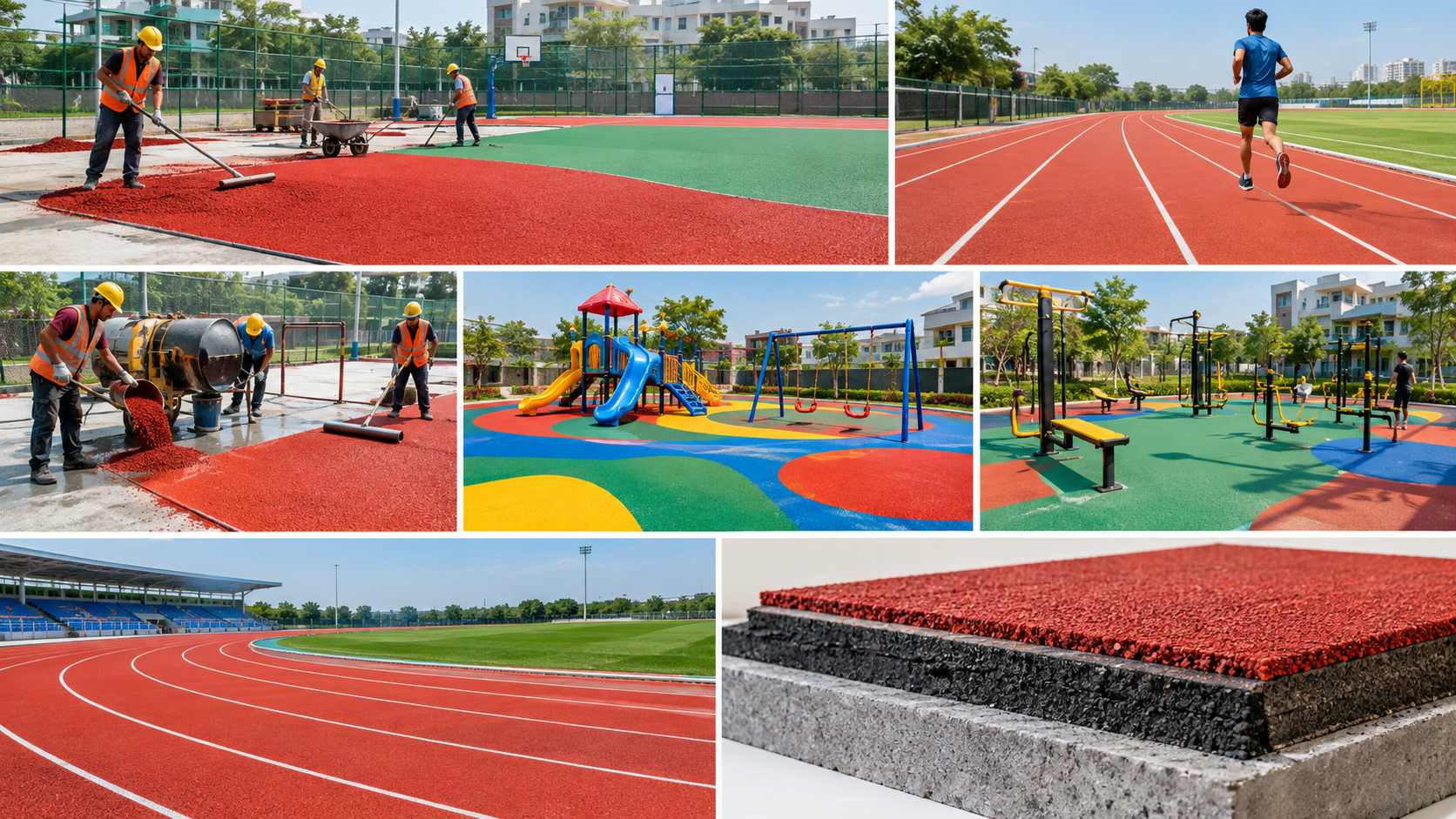
EPDM flooring has become a popular choice for playgrounds, school campuses, jogging tracks, fitness areas, residential societies, and outdoor recreational spaces across India. Its colourful finish, flexible surface, weather resistance, and cushioning properties make it suitable for projects where comfort, appearance, and durability matter.
However, one of the first questions property owners, school administrators, contractors, and facility developers ask is: What is the EPDM flooring cost per square foot in India?
The answer depends on several factors, including flooring thickness, the quality of rubber granules, the type of polyurethane binder, the condition of the existing base, and the complexity of the installation. A simple coloured rubber surface over a prepared floor will not cost the same as a thick, impact-absorbing playground system with multiple colours and a newly constructed concrete foundation.
In this guide, we explain EPDM flooring prices in India, estimated project budgets, installation costs, material specifications, and the factors to consider before choosing a supplier.
What Is the Cost of EPDM Flooring per Square Foot in India?
The indicative price of EPDM flooring in India generally ranges from approximately ₹100 to ₹250 or more per square foot for many standard projects. Thick playground safety systems, jogging tracks with specialised specifications, and projects requiring extensive civil work may cost more.
For example, published Indian supplier listings show rates around ₹165 per square foot for certain installed playground flooring products, while other suppliers quote different prices according to thickness, system design, and the scope of work. These are reference prices, not guaranteed market rates. Supplier pricing references and published EPDM pricing guidance illustrate why specifications must be compared carefully.
The following table provides a preliminary budgeting guide.
| EPDM flooring application | Indicative budget per sq. ft. |
|---|---|
| Basic EPDM surfacing over a suitable prepared base | ₹100–₹150 |
| Standard coloured EPDM flooring | ₹150–₹200 |
| Playground flooring with additional cushioning | ₹180–₹280 |
| Thick, impact-absorbing playground systems | ₹250–₹450+ |
| Specialised running tracks and customised installations | Project-specific quotation |
These are broad planning estimates rather than verified universal rates. The categories can overlap, and the final price depends on the thickness of each layer, safety requirements, material quality, civil work, transportation, and installation scope. GST may be additional.
Before comparing quotations, confirm whether the quoted amount covers only the EPDM material or the complete installed flooring system.
What Is EPDM Flooring?
EPDM stands for Ethylene Propylene Diene Monomer, a synthetic rubber used in a variety of outdoor and recreational surfacing applications.
EPDM flooring is commonly created by mixing coloured rubber granules with a suitable polyurethane binder and installing the mixture over a prepared base. Many systems use a lower layer of SBR rubber granules for cushioning and an upper layer of coloured EPDM granules for the visible finish.
The completed surface can be installed in different colours, patterns, and thicknesses. This makes it useful for children’s play areas, school activity zones, parks, walking paths, jogging tracks, and selected fitness facilities.
Unlike conventional ceramic tiles or many hard paving materials, poured-in-place EPDM flooring can create a continuous surface without conventional tile joints. Its actual impact absorption, slip resistance, and durability depend on the complete system design and workmanship.
Factors That Affect EPDM Flooring Cost in India
1. Flooring Thickness
Thickness is one of the most important factors affecting the total cost. A thicker system generally requires more rubber granules and binder, increasing material consumption and installation time.
A relatively thin surface may be suitable for certain walking areas or applications with limited impact requirements. A playground with climbing equipment, slides, or elevated platforms may require a considerably thicker shock-absorbing system.
The appropriate thickness should be selected according to the intended use, equipment fall height, substrate, and applicable safety requirements. It should never be determined by price alone.
2. Quality of EPDM Rubber Granules
The quality and consistency of the rubber granules influence the appearance, flexibility, colour retention, and expected performance of the finished floor.
Higher-quality granules may provide more consistent colour and better resistance to outdoor exposure. However, the term “premium EPDM” alone does not prove product quality.
Ask suppliers about the material’s technical specifications, UV and weather-resistance data, granule composition, and suitability for your intended application. Where relevant, request test reports or independent certification.
3. SBR Base Layer and Cushioning
Many EPDM flooring systems use SBR, or styrene-butadiene rubber, as a lower cushioning layer. Coloured EPDM granules are then applied as the wearing surface.
This layered approach can help balance material costs and surface performance. However, the thickness and density of the base layer matter just as much as the appearance of the top layer.
When reviewing a quotation, check the thickness of the SBR base, the thickness of the EPDM top layer, and whether the supplier has specified these measurements separately.
4. Polyurethane Binder Quality
A polyurethane binder holds the rubber granules together and helps form a stable, flexible surface.
Binder quality, consumption, compatibility with the rubber granules, and suitability for outdoor exposure can affect the finished installation. A quotation that uses less binder than the specified system requires may initially appear economical but can compromise surface integrity.
For outdoor applications exposed to strong sunlight, ask whether the proposed binder and complete system are suitable for prolonged UV exposure.
5. Existing Base and Civil Work
EPDM flooring requires a suitable, stable, and properly prepared base. Depending on the project, this may be concrete, asphalt, or another approved substrate.
If the existing surface is level, structurally sound, clean, and adequately drained, preparation costs may be relatively limited. Cracks, loose material, uneven levels, water accumulation, or a damaged foundation can increase the project budget.
For a new playground or outdoor recreational area, the quotation may also need to include excavation, sub-base preparation, compaction, concrete work, and drainage provisions.
6. Colour Combinations and Custom Designs
Single-colour flooring is generally simpler to install than a detailed multicolour design. Patterns, logos, borders, educational graphics, and separate activity zones require additional planning and installation precision.
For example, a school may want different colours for play zones, walking paths, hopscotch markings, and activity areas. These features can improve the usability of the space, but they may increase labour and material costs.
7. Project Size and Location
Large projects can sometimes achieve a lower rate per square foot because transportation, mobilisation, equipment, and labour setup costs are distributed across a larger area.
Smaller projects may have a higher per-square-foot price because certain minimum installation expenses remain unchanged.
Location also matters. Freight charges, the availability of experienced installers, site accessibility, and accommodation or travel costs can influence the final quotation.
EPDM Flooring Price According to Application
EPDM Playground Flooring
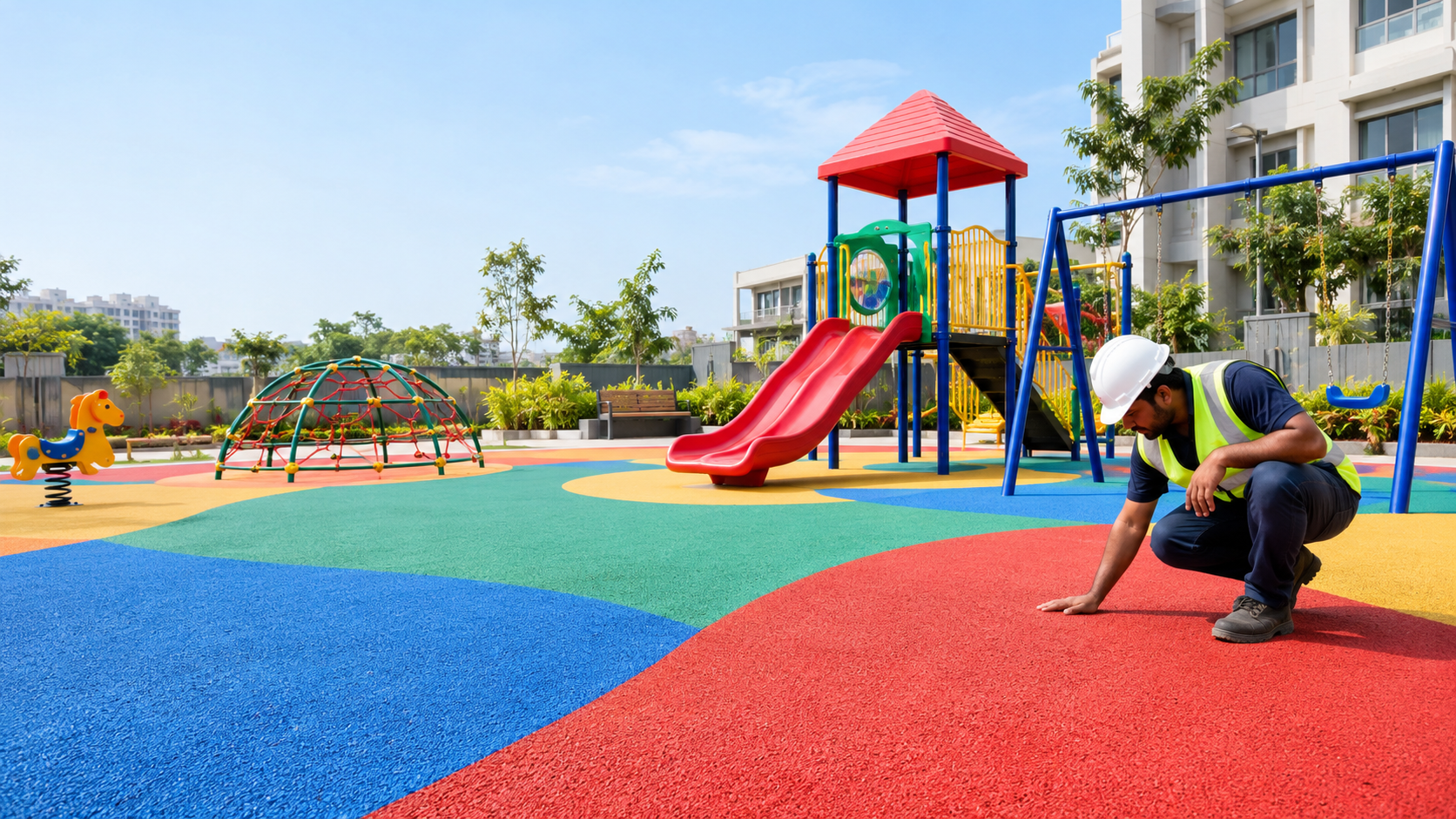
Playground flooring is designed to provide a more forgiving surface for children’s activities. It is commonly installed in schools, preschools, residential societies, public parks, and recreational facilities.
The required system depends on the play equipment and the height from which a child could fall. A thin decorative surface should not automatically be treated as adequate safety flooring.
When budgeting, consider the specified impact-absorbing thickness, the condition of the base, drainage, colour design, and any required safety testing.
EPDM Flooring for Schools
Schools often need flooring that can accommodate regular foot traffic, outdoor exposure, and multiple recreational activities.
EPDM flooring can be used in selected play zones, activity areas, and outdoor pathways. School projects may also include colourful educational patterns, games, and separate zones for different age groups.
The best specification balances the available budget with the intended use, expected traffic, maintenance requirements, and relevant safety criteria.
EPDM Jogging Track Flooring
EPDM rubber surfacing is also used for jogging tracks in parks, residential complexes, educational institutions, and fitness facilities.
Track construction involves more than selecting a coloured rubber surface. The foundation, drainage, surface consistency, thickness, and line markings all affect the finished result.
A recreational jogging loop and a competition-standard athletics track may require different systems. Confirm the intended performance requirements before comparing prices.
EPDM Flooring for Gyms and Fitness Areas
In selected gyms and outdoor fitness zones, rubber flooring can help provide a resilient surface for exercise activities. The correct system depends on the equipment, expected impact, load, and whether the installation is indoors or outdoors.
For areas where heavy weights are dropped regularly, compare purpose-designed gym rubber flooring with poured-in-place EPDM rather than assuming every EPDM playground system is suitable for weight training.
How Much Does EPDM Flooring Cost for Different Areas?
The easiest way to estimate the project budget is to multiply the measured floor area by the applicable installed rate.
Formula: Total flooring cost = Total area in square feet × Rate per square foot
The examples below use three illustrative rates to show how the budget changes. They are mathematical estimates, not supplier quotations.
| Flooring area | At ₹120/sq. ft. | At ₹180/sq. ft. | At ₹250/sq. ft. |
|---|---|---|---|
| 300 sq. ft. | ₹36,000 | ₹54,000 | ₹75,000 |
| 500 sq. ft. | ₹60,000 | ₹90,000 | ₹1,25,000 |
| 1,000 sq. ft. | ₹1,20,000 | ₹1,80,000 | ₹2,50,000 |
| 2,000 sq. ft. | ₹2,40,000 | ₹3,60,000 | ₹5,00,000 |
| 5,000 sq. ft. | ₹6,00,000 | ₹9,00,000 | ₹12,50,000 |
These totals assume that the selected rate covers the intended scope of work. They do not automatically include GST, major civil construction, additional drainage, or other excluded items.
For example, if you are developing a 1,000-square-foot children’s play area, a quotation of ₹180 per square foot produces a preliminary flooring budget of ₹1,80,000. If the site requires a new concrete foundation, the total investment could be higher.
Always request an itemised quotation before finalising your budget.
What Is Included in EPDM Flooring Installation?
A professional EPDM flooring quotation may include several components, depending on the project.
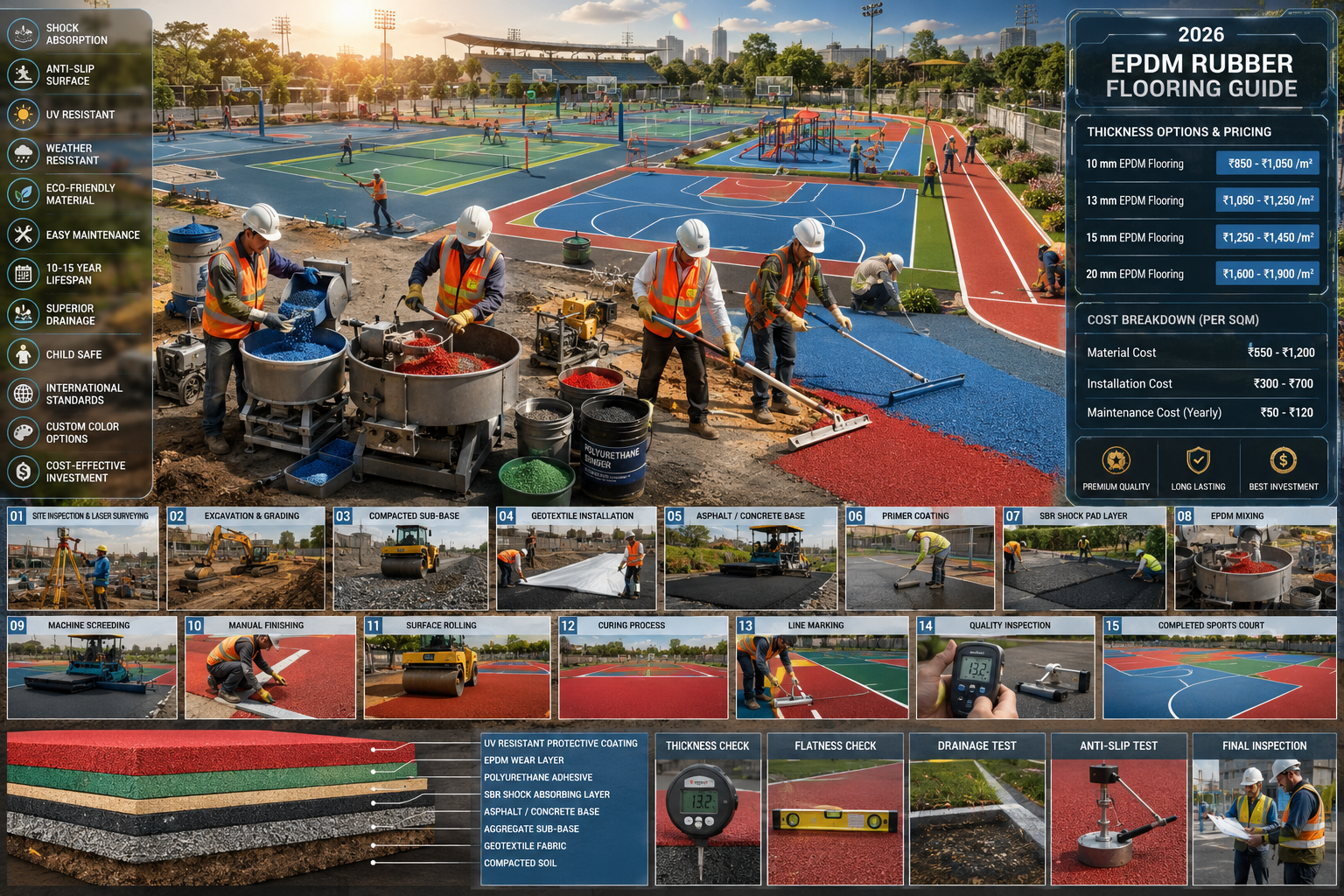
Site inspection and measurement: The contractor checks the area, existing surface, access conditions, and drainage requirements.
Base preparation: The surface is cleaned, repaired, and levelled as required. New construction may involve additional civil work.
Material supply: EPDM granules, SBR granules where specified, polyurethane binder, and other approved materials are supplied.
Layer installation: The specified base and top layers are mixed, placed, and finished according to the system requirements.
Pattern and edge finishing: Colour zones, borders, markings, and transitions are completed according to the approved design.
Curing and handover: The installed surface is protected while the binder cures. The contractor then checks the finish and provides applicable maintenance and warranty information.
Not every contractor includes all these services in the quoted rate. Ask for written confirmation of inclusions and exclusions.
EPDM Flooring Installation Process
Understanding the installation process helps you evaluate quotations and recognise why proper workmanship matters.
Site Assessment
The contractor measures the area and checks the condition of the existing base. Outdoor projects should also be assessed for water flow, drainage, and exposure to weather.
Base Preparation
Loose material, dust, and unsuitable surface coatings are removed. Cracks and damaged areas are repaired, and the base is prepared according to the selected system.
Primer Application
Where required, a compatible primer is applied to improve adhesion between the prepared substrate and the flooring system.
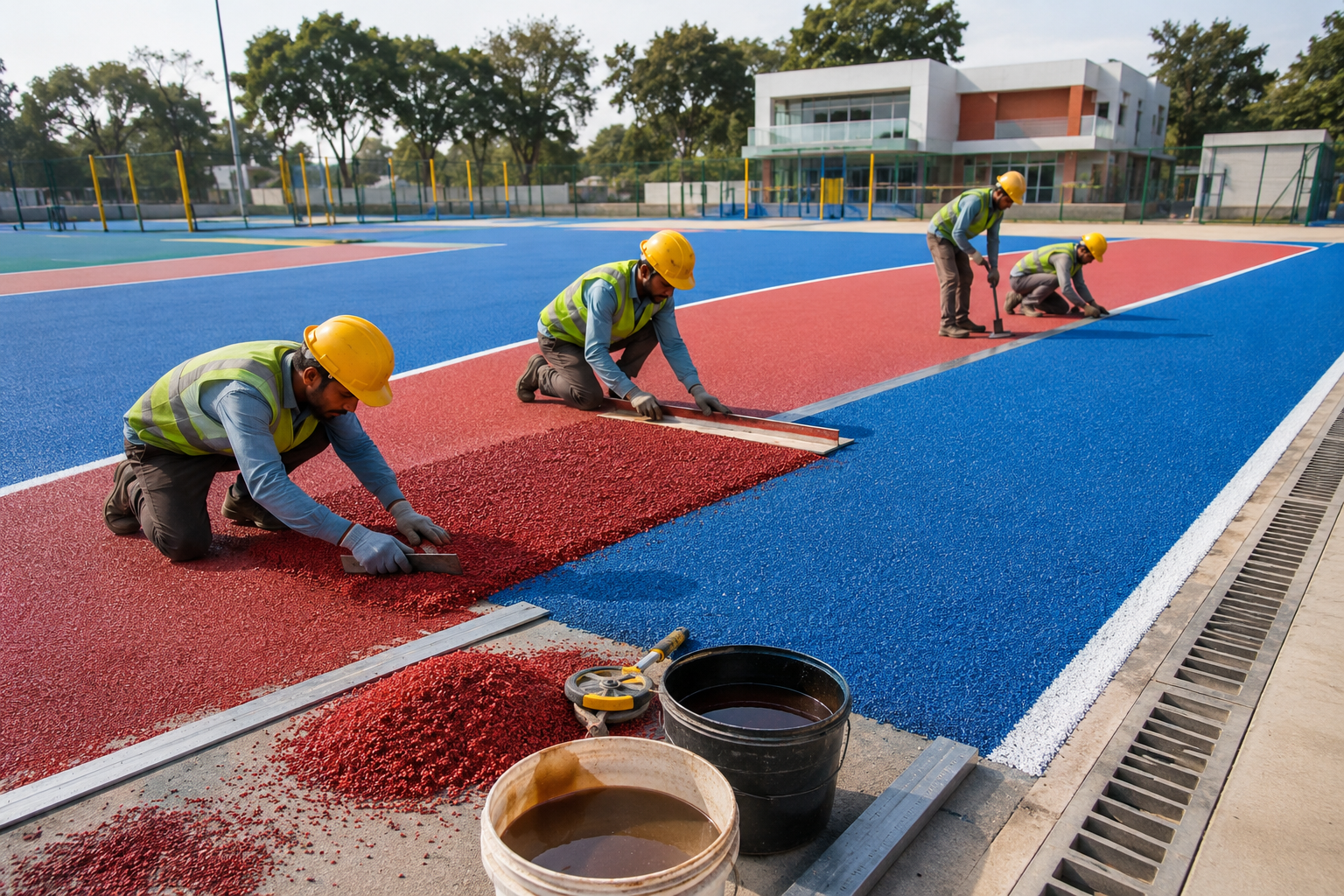
Rubber Layer Installation
SBR cushioning and EPDM wearing layers are installed according to the approved design. The granules and binder must be mixed in the correct proportions and distributed evenly.
Finishing and Curing
The surface is finished to the required thickness and texture. The installer allows adequate curing time before permitting normal use.
Installation schedules vary according to area, weather, system thickness, substrate condition, and the amount of civil work involved.
EPDM Flooring vs Other Flooring Options
Choosing a flooring system based only on its initial price can lead to the wrong decision. Compare the intended use, maintenance requirements, expected performance, and total installed cost.
EPDM flooring: Suitable for colourful outdoor play areas, recreational surfaces, and selected jogging tracks. It offers design flexibility and can be installed as a continuous rubber surface.
Rubber tiles: Often useful for gyms and selected play areas where modular installation or individual tile replacement is preferred. Joints may remain visible.
Artificial grass: Commonly selected for landscaping, recreational zones, and certain sports areas. Its cushioning and suitability depend on the grass system, infill, and any shock pad underneath.
Concrete or conventional paving: May be economical for general pathways and hardstanding areas, but it does not provide the same cushioning as a properly specified impact-absorbing rubber system.
The right choice depends on the intended application rather than a universal ranking of materials.
How to Reduce EPDM Flooring Cost Without Compromising Quality
There are several practical ways to control project expenses.
- Measure the site accurately. Avoid unnecessary material orders and last-minute design changes.
- Choose the right thickness. Use a specification appropriate for the intended activity instead of paying for an unsuitable system or reducing necessary cushioning.
- Keep the design practical. A simpler colour scheme may reduce installation complexity.
- Prepare the base correctly. Addressing drainage and surface defects before installation can help avoid future repair expenses.
- Compare equivalent quotations. Make sure each contractor quotes the same thickness, layer composition, material specification, and installation scope.
- Review the warranty. Check what is covered, how long coverage lasts, and which maintenance conditions apply.
- Plan for long-term maintenance. Follow the supplier’s cleaning and inspection recommendations to help protect the installed surface.
The lowest quotation is not always the most economical option over the life of the flooring. Material quality, workmanship, drainage, and the suitability of the system can all influence future maintenance expenses.
How to Choose the Right EPDM Flooring Contractor
Before hiring an EPDM flooring contractor, ask for a detailed written proposal rather than relying on a verbal price.
Check the following points:
- The exact thickness of the EPDM wearing layer and any SBR base layer.
- The type and specification of the rubber granules and binder.
- Whether site preparation, primer, labour, transport, and civil work are included.
- The proposed drainage and substrate requirements.
- Relevant project photographs, references, and installation experience.
- Applicable product test reports and safety documentation.
- The expected installation schedule and curing period.
- Warranty conditions, maintenance guidance, and repair arrangements.
- GST, freight, and any additional charges.
- Safety testing requirements for playgrounds, including assessment of the complete system where applicable.
For children’s play areas, confirm that the installed system’s impact-attenuation performance is appropriate for the equipment’s fall height. A supplier’s general claim that the surface is “shock absorbing” is not a substitute for relevant test evidence.
Frequently Asked Questions About EPDM Flooring Cost in India
1. What is the EPDM flooring cost per square foot in India?
The cost varies with the thickness, material quality, application, base condition, and installation scope. Broad planning estimates range from around ₹100 to ₹250 or more per square foot for many systems, while thicker playground installations and projects involving additional civil work can cost more.
2. What is the price of EPDM playground flooring?
EPDM playground flooring may cost approximately ₹150–₹300 per square foot for many projects, with thick or specialised safety systems potentially exceeding this range. The appropriate price depends on the required impact protection, layer composition, and site conditions.
3. Does EPDM flooring price include installation?
Not always. Some quotations include material, labour, and installation, while others cover only selected materials or the wearing layer. Confirm the scope in writing before comparing prices.
4. Which EPDM flooring thickness is best for a playground?
There is no single thickness suitable for every playground. The required system should be selected according to equipment fall height, impact-attenuation requirements, and relevant safety standards. Ask for documentation supporting the proposed specification.
5. Is EPDM flooring suitable for outdoor use in India?
EPDM systems are commonly used outdoors because appropriately formulated rubber granules can offer good weather and UV resistance. The performance of the completed installation also depends on the binder, substrate, drainage, and workmanship.
6. How long does EPDM flooring last?
Service life depends on material quality, thickness, installation quality, traffic, weather exposure, and maintenance. Ask the contractor for a realistic service-life estimate for the specific system and obtain the warranty terms in writing.
7. Is EPDM flooring waterproof?
EPDM rubber itself is water-resistant, but a poured rubber flooring system should not automatically be treated as a waterproofing membrane. Water movement depends on the complete installation, substrate, joints or edges, and drainage design. Outdoor installations need appropriate water management.
8. How can I calculate the total EPDM flooring budget?
Multiply the total measured area by the quoted installed rate per square foot. Then add any excluded expenses, such as GST, civil work, drainage, transport, or additional equipment.
For example, 2,000 square feet at ₹180 per square foot gives a preliminary flooring cost of ₹3,60,000 before any excluded charges.
9. Is EPDM flooring better than rubber tiles?
EPDM poured-in-place flooring provides a continuous surface with flexible design options, while rubber tiles offer a modular format that may be easier to replace in individual sections. The best option depends on the location, intended use, maintenance preferences, and required performance.
10. What should I check before accepting an EPDM flooring quotation?
Check the total thickness, individual layer specifications, binder quality, base preparation, drainage, installation inclusions, taxes, warranty, and relevant safety documentation. Compare quotations only when they cover equivalent specifications.
Conclusion
EPDM flooring can be a practical investment for playgrounds, schools, parks, jogging tracks, and selected recreational spaces. However, the cost per square foot in India depends on much more than the visible coloured rubber layer.
Thickness, rubber quality, binder selection, substrate preparation, drainage, design complexity, and installation standards all contribute to the final project cost.
Before placing an order, define the intended use, measure the site, establish the appropriate technical specification, and obtain itemised quotations from experienced contractors. This approach makes it easier to compare offers accurately and select a flooring system that fits both the project budget and its performance requirements.
Planning an EPDM flooring project? Request a site-specific quotation that clearly lists the flooring thickness, layer composition, material specifications, installation charges, taxes, and any additional civil work. A detailed estimate will help you understand the actual investment required for your project.